

- AI Development
- AI App Development
- AI Consulting
- AI Software Development
- ChatBot Development
- Enterprise AI ChatBot
- AI Chatbot Development
- LLM Development
- Machine Learning Development
- AI Copilot Development
- MLOps Consulting Services
- AI Agent Development
- Deep Learning Development
- AI Deployment Services
- Deep Learning Consulting
- AI Token Development
- AI Development Company
- AI Development Company in Saudi Arabia
- AI Integration Services
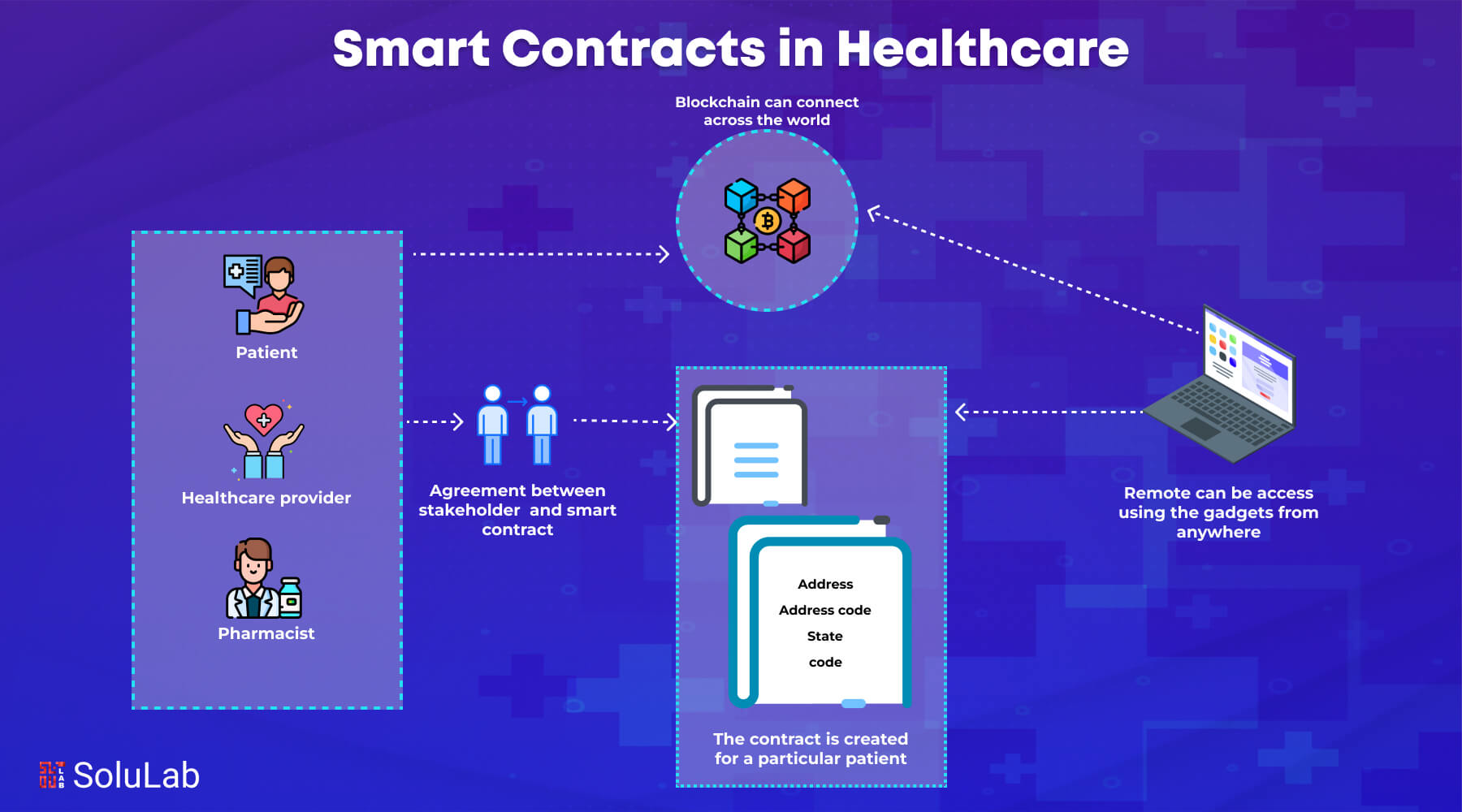
Smart contracts and blockchain technology are changing the game when it comes to making it easier and faster to store and manage health data. These tools are always getting better, which means that there are more ways to use them, specifically in healthcare.
As Johns Hopkins Medicine says around 10% of deaths in the U.S. are caused by medical mistakes. So, if smart contracts were used to make sure that patient medical records were correct, to speed up the supply chain for medicines, and to help doctors work together better, these improvements could help save tens of thousands of lives every year. Plus, you no longer need to do manual processes.
Hiring competent engineers specializing in AI and blockchain platforms might be costly. However, having a knowledgeable team is essential for navigating the complexity of stablecoin development and achieving a positive end.
What is a Smart Contract?
A smart contract is a program built on the blockchain that can run itself. It does deals on its own when certain conditions are met, so there’s no need to do anything manually. This not only saves money but also makes things safer. Smart contracts are permanent deals that can’t be changed once they’re put into action. They’re usually written in languages like Solidity.
Smart contracts platforms are used in many areas, from healthcare to business. Things are running more quickly without having to rely on a third party because they’re making things more efficient and clear. The technology is giving many fields new opportunities and ways to do things.
These agreements use blockchain technology, which is a decentralized record that can’t be changed. This makes sure that all parties can safely and easily check transactions and data transfers.
Smart contracts are a new way to solve many problems that have been around for a long time in healthcare. They can automate complicated tasks and make sure that certain conditions are met, like making sure that a patient has insurance before a medical treatment or only giving medical data to people who are allowed to see it.
How Can Smart Contracts Be Used in the Healthcare Industry?
In the healthcare field, smart contracts can be used in many ways to make different processes more efficient and safe.
- Automated Payment Processing: By automating the payment process, smart contracts can make sure that healthcare professionals and staff get paid on time and correctly.
- Patient Information Management: They help keep patient records safe on the blockchain and make sure that only authorized medical professionals can access and change information as the need occurs.
- Insurance Claims and Billing: Smart contracts can let insurance companies know about overdue medical bills and can automate the claims process by sending the right patient data to get paid.
- Treatment History and Safety: Keeping patient profiles on the blockchain lets doctors see medical histories, which helps them make better decisions, keeps patients safer, and lowers the risk of medical malpractice.
How to Implement Smart Contracts in Healthcare?
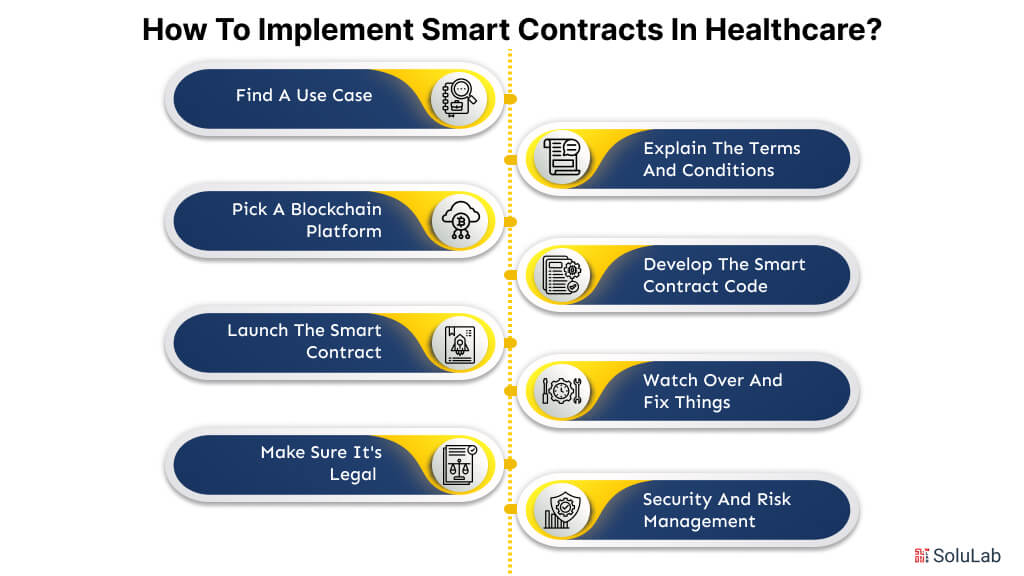
Follow this step-by-step guide to implementing smart contracts in healthcare:
-
Find a Use Case
To begin, think of a situation where a smart contract could be useful. They work well when the rules are clear and can be followed automatically. Think about business deals, supply lines, real estate deals, and even voting systems. The goal is to make things easier and more automated. Some of the top blockchain use cases involve these areas, where the efficiency of smart contracts can save time, reduce human error, and increase transparency.
-
Explain the Terms and Conditions of the Contract
Set the information once you know the use case. What makes the deal happen? In what ways should it act? Who is taking part? Make sure the smart contract does exactly what you want it to do by leaving no room for doubt.
-
Pick a Blockchain Platform
It’s important to pick the right blockchain. Select the cryptocurrency platform that meets your needs based on price, ability to grow, safety, and community support. It could be Ethereum, Binance Smart Chain, or something else. Smart contracts can be programmed in different ways on each platform.
-
Develop the Smart Contract Code
Write the code for the smart contract. This is where the actual work is done. Most of the time, you’ll write the contract in a language that works with blockchains, like Vyper or Solidity (for Ethereum). You can always work with smart contract writers if you don’t like writing code. Don’t forget to test everything carefully to find any bugs or weak spots.
-
Launch the Smart Contract
After testing it and making sure it works, you launch the contract on the blockchain of your choice. The contract code needs to be sent to the blockchain and pinto to the ledger there. Don’t forget that putting a contract into motion usually costs money, so keep that in mind.
-
Watch Over and Fix Things
Once the contract is live, it will follow the rules you set on its own. But don’t leave it alone; check on it often to make sure it’s doing what you want it to do. Sometimes, especially if things change, you might need to check it over or make changes to it.
-
Make Sure It’s Legal
Depending on where you are and what the deal is for, make sure it’s legal. Smart contracts may be legally binding, but it’s still a good idea to talk to lawyers to make sure everything is legal in your area.
-
Security and Risk Management
Smart contracts need to be safe. There is no going back on blockchain deals. Your contract will be safer if you do regular code checks and security tests, and keep your keys safe. Also, it’s a good idea to include fail-safe features in case something goes wrong.
Benefits of Smart Contracts in Healthcare
Public blockchains and distributed ledgers offer innovative ways for healthcare providers to enhance medical research and handle patient records. The immutable, encrypted nature of blockchain smart contracts can improve patient privacy while ensuring compliance with laws.
- Stability: Many distributed ledger technologies in healthcare are owned by industry leaders, giving more stability and reliability than traditional health records. Blockchain’s immutable and verifiable nature ensures that healthcare information is instantly available and trustworthy.
- Speed: Slow transfer of medical knowledge can harm patient outcomes. Smart contracts can accelerate access to medical data. Platforms like SAFE use unique health identifiers to protect patient privacy while ensuring validity. Healthcare providers can log real-time data, giving easy access to other providers, employers, and regulators. Using proof-of-stake and DAG-based ledgers means patient data is updated and accessible in seconds, with DAG enabling multiple nodes to update simultaneously.

- Privacy: Maintaining patient confidentiality is important. Encrypted smart contracts help providers meet rules without compromising speed. Digital signatures and decentralized identities keep private data safe. Permissioned blockchains also protect privacy because they need permission from a third party to view data. Once approved, entities can easily access and change patient information on private blockchains, even though they are slower than public ones.
- Timestamps: Accurate timestamps are very important in healthcare. Consensus timestamps from smart contracts and distributed ledgers ensure that events are tracked accurately. For example, IoT-connected devices can keep track of when a patient gets a shot. The data is stored safely on the blockchain with a timestamp, which makes it permanent and easy to find.
- Immutable: Smart contracts keep medical data from being changed and make them easy to find, which stops fraud. Healthcare workers can trust the data because each record is linked to the person who made it. Since changes are lasting, they make audits easier and make sure that compliance and openness are maintained.
Future Trends and Developments in Smart Contracts
The future of smart contracts holds immense potential, with advancements in blockchain in healthcare. Industries like healthcare, finance, and supply chain are improving. Here are some you’ll probably see in the future:
- Better Measures for Security and Privacy: Because patient data is so private, there is a lot of work being done to make security and privacy better. Smart contracts will include advanced security methods to keep patient information safe and make sure that healthcare rules are followed.
- Interoperability and Integration with Healthcare Systems: Smart contracts need to be able to work with current healthcare systems without any problems to be truly useful. This integration is very important because it will make it easy for healthcare workers to use smart contracts in their daily work.
- Integration of IoT Devices for Real-Time Data: As the number of IoT devices grows, smart contracts will begin to receive real-time health data from them. This will be very helpful for keeping an eye on patients from afar, making sure they take their medicine as prescribed and managing their general health.
- Personalized Healthcare Solutions: Smart contracts will give patients more power over their health data by letting them give certain healthcare providers access to it. This will make it easy to make treatment plans that are unique to each person and meet their needs.
- Frameworks For Rules and Following them: Rules will need to catch up with the growing use of blockchain and smart contracts. Healthcare-specific rules will likely change to make sure that the use of smart contracts is organized and follows all the laws.
- Telemedicine and Remote Care: Smart contracts will make telemedicine more efficient by automating the bills and payment process. This will allow more people to use remote healthcare services.
Who Benefits From Smart Contracts in Healthcare?
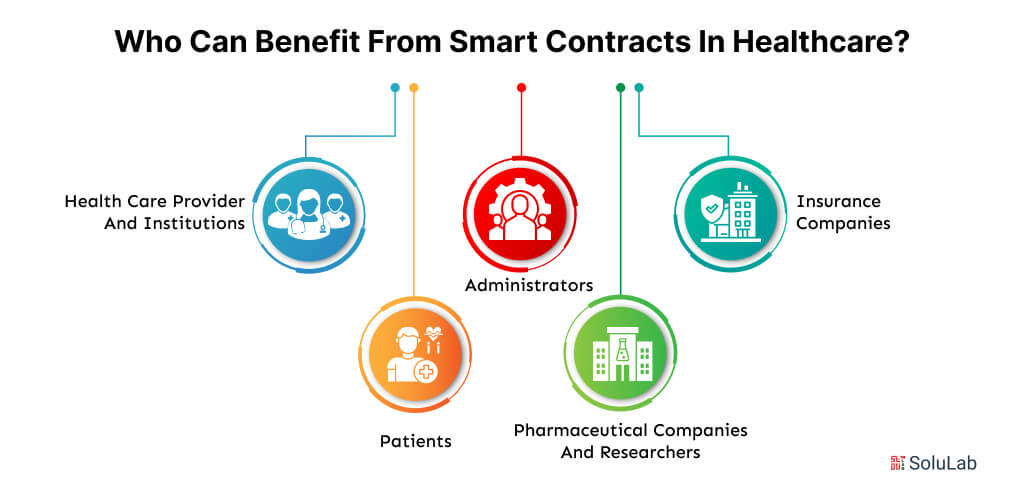
Smart contracts development is transforming healthcare by streamlining operations, enhancing transparency, and improving outcomes for a range of stakeholders. From hospitals to patients and insurance providers, their impact is profound and multifaceted. Below, we explore how smart contracts benefit key players in the healthcare ecosystem.
1. Healthcare Providers and Institutions
Hospitals, clinics, and medical professionals gain several advantages from smart contracts:
- Efficient Resource Allocation: Automates routine tasks, freeing resources for patient care.
- Streamlined Insurance Processing: Speeds up claims with minimal paperwork.
- Error Reduction: Ensures precise management of patient data.
2. Patients
Patients benefit from streamlined care and greater control over their health:
- Controlled Data Sharing: Securely share medical information as needed.
- Efficient Procedures: Faster processes enable timely treatments.
- Personalized Care: Comprehensive histories allow tailored treatment plans.
3. Pharmaceutical Companies and Researchers
Smart contracts empower innovation and integrity in pharmaceutical research:
- Accelerated Clinical Trials: Automates consent and data-sharing to save time.
- Reliable Data: Ensures accurate, unmanipulated data for research purposes.
4. Insurance Companies
Insurance firms see enhanced efficiency and trust with smart contracts:
- Fraud Prevention: Automated processes reduce fraudulent claims.
- Faster Claims: Streamlined workflows improve customer satisfaction.
5. Administrators
Smart contracts simplify administrative tasks and improve decision-making:
- Reduced Workload: Automates repetitive tasks, easing administrative burdens.
- Time Savings: Accurate, faster processes allow focus on strategic goals.
By improving efficiency, transparency, and patient care, smart contracts offer transformative benefits across the healthcare ecosystem, paving the way for a more secure, efficient, and patient-centric future.
What are the Challenges of Using Smart Contracts in Healthcare?
Integrating smart contracts into the healthcare sector presents a range of challenges, both technical and regulatory. Addressing these issues is essential to unlock their full potential while safeguarding patient safety, data security, and compliance with legal standards.
1. Data Privacy and Security Concerns: Healthcare data is highly sensitive, involving personal and medical information subject to stringent regulations. Smart contracts rely on distributed ledgers and blockchain, requiring robust encryption and strict access controls. Innovative measures are needed to ensure patient data remains confidential, protected from unauthorized access, and compliant with regulations such as HIPAA.
2. Interoperability Issues: Healthcare systems often include diverse legacy platforms, electronic health records (EHRs), and varying data formats, making seamless communication a challenge. Standardized protocols that enable consistent data exchange and interpretation across systems are essential to ensure smart contracts work effectively while maintaining data accuracy.
3. Legal and Regulatory Compliance: Aligning smart contract use with healthcare’s legal and regulatory frameworks is complex. Automated agreements must address patient consent, data sharing, and treatment decisions while adhering to established laws. Collaboration between legal experts and technologists is crucial to ensure smart contracts adapt to evolving regulations, uphold patient rights, and meet consent management standards.
4. Technological Complexity: Blockchain networks face challenges like scalability, energy efficiency, and transaction speed. Healthcare operations demand real-time data access and rapid execution, making integration particularly difficult. Optimizing blockchain infrastructure and tailoring smart contracts to healthcare’s time-sensitive needs are necessary to overcome these barriers.
5. Ethical and Moral Implications: Healthcare decisions often require human judgment based on empathy and ethical considerations. Automating processes with smart contracts risks sidelining these critical aspects. Optimizing blockchain infrastructure and tailoring smart contracts to healthcare’s time-sensitive needs are necessary to overcome these barriers.
The Real-World Examples of Smart Contracts in Healthcare
The healthcare blockchain companies field is changing, and smart contracts are a big part of solving some of the biggest problems and making things run more smoothly. Here are some examples from real life that show how they work:
1. Better Access in Developing Countries: Smart contracts make it safe to access patients’ medical records in places with limited healthcare facilities. This makes sure that doctors, hospitals, and clinics have the most up-to-date information and lowers the risk of losing data. This makes healthcare services better.
2. Better Control for Patients Over their Medical Data: Smart contracts are used by platforms like Medicalchain to give patients control over their medical data. Patients decide who can see their information and for how long. This makes privacy better and gives patients more control over their health information.
3. Verification of prescribed Drugs: Smart contracts are being used to fight fake prescribed drugs. They make sure that prescriptions are real and that the right medicine and dose are given. This lowers the chance that patients will get the wrong or fake drugs.
4. Streamlined Claims Handling: Smart contracts are being used by health insurance companies to automate the claims handling process. When certain conditions are met, the contract starts the claims process. This cuts down on paperwork and speeds up reimbursements for both customers and providers.
5. Controlling Patient Consent for Clinical Studies: Smart contracts use a blockchain to keep track of patient consent for clinical studies. When implementing these systems, partnering with clinical trials lawyers can help teams translate protocol requirements into enforceable smart-contract logic, validate consent capture and withdrawal, and ensure HIPAA/GDPR compliance while coordinating IRB/ethics submissions across jurisdictions.
6. Drug Traceability: From production to delivery, smart contracts keep track of the whole drug supply chain. This makes sure that pharmaceutical goods are real. Real-time tracking makes patients safer and lowers the chance of fake drugs.
7. Telemedicine Billing and Payments: Smart contracts automate billing and payment for telemedicine services, ensuring that providers get paid correctly and on time. This improves the effectiveness of telemedicine and makes it easier for people to get care from afar.

Conclusion
Smart contracts are becoming more important as the healthcare business changes. Their adaptability, along with improvements in security and rules, should make healthcare more efficient and improve patient care. Smart contracts will change healthcare by making it more efficient, safe, and patient-centered. They could lead to personalized solutions, streamlined clinical trials, secure pharmaceutical supply lines, and easy access to telemedicine.
Solulab helped The Internet of Things (IoT) to develop a smart continuous glucose monitoring (CGM) system for diabetics. The IoT-based solution sends real-time blood glucose data to multiple platforms, including mobile phones, tablets, and smartwatches. Overcoming challenges in device connectivity and data transfer, the app also enables caregivers to remotely monitor, ensuring convenience and control.
At SoluLab a Smart Contract Development Company we have a team of experts who can create such bots, apply strategies, and gain clarity on your crypto trading objective. So, if you want to work with us contact us today!
FAQs
1. How do smart contracts improve patient data privacy?
Smart contracts enhance privacy by giving patients control over their medical data. They can decide who accesses their information and for how long, ensuring that only authorized entities can view sensitive health records. This approach strengthens data security and ensures compliance with privacy regulations like HIPAA.
2. How are smart contracts used in telemedicine?
In telemedicine, smart contracts automate billing and payment processes. They ensure healthcare providers receive timely compensation by verifying service delivery conditions. This technology also streamlines patient-provider interactions, making telemedicine more efficient and accessible, with automated, transparent transactions.
3. Can smart contracts help with prescription drug verification?
Yes, smart contracts can authenticate prescription drugs by verifying their origin and ensuring they match prescribed dosages. This helps prevent counterfeit medications from entering the market and ensures patients receive the correct drugs, improving safety and trust in pharmaceutical practices.
4. How do smart contracts help streamline insurance claims?
Smart contracts automate the insurance claims process by triggering payments when specific conditions are met, such as the provision of medical services. This reduces paperwork, speeds up reimbursements, and minimizes errors, benefiting both patients and healthcare providers.
5. What role do smart contracts play in clinical trials?
Smart contracts are used to record and manage patient consent for clinical trials on a blockchain. This ensures compliance with regulatory requirements and guarantees transparency. It also simplifies consent management, making it easier for researchers to track approvals and share data securely.

