Ever waited weeks for a government service that could have been done in minutes?
AI is changing that!
Governments around the world are now using Artificial Intelligence to deliver faster, smarter, and more personalized public services. AI is helping public institutions work efficiently while improving transparency and satisfaction.
In 2025, the United Nations reported that over 60% of governments were adopting AI in various sectors, including healthcare, public safety, and taxation. The recent AI-related breakthroughs mark the beginning of a new industrial revolution. Therefore, governments are also focusing on sustainable AI adoption in the public sector. Let’s get into the details on AI in governance and public services!
Why Do Government and Public Services Need AI Solutions?
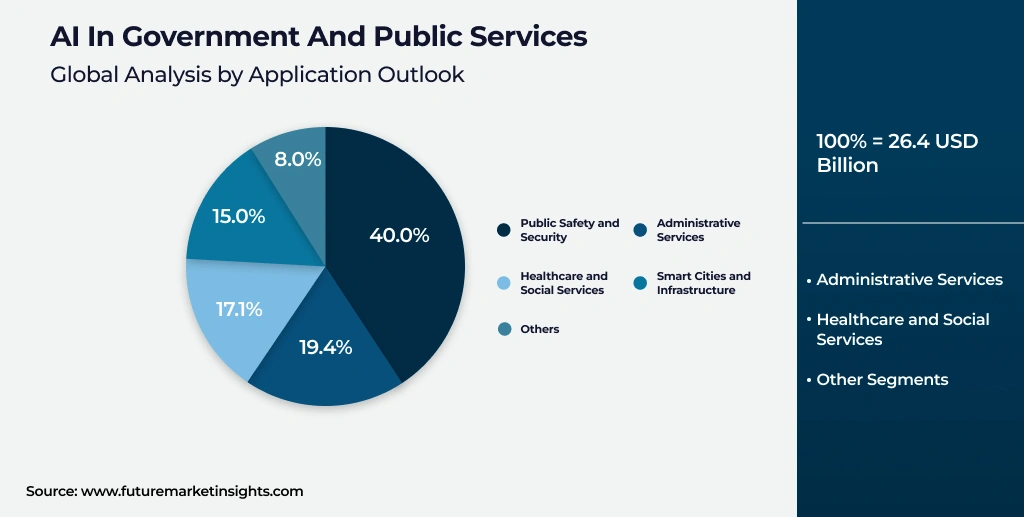
Governments handle large volumes of data and complex processes daily. Manual systems often slow service delivery and increase costs. AI in public sector services addresses these challenges by automating tasks, detecting fraud, and improving decision-making. It ensures transparency and reduces errors while enabling faster citizen support. The need for advanced AI solutions grows as populations demand efficiency and accountability from their leaders.
Role of AI in Public Services
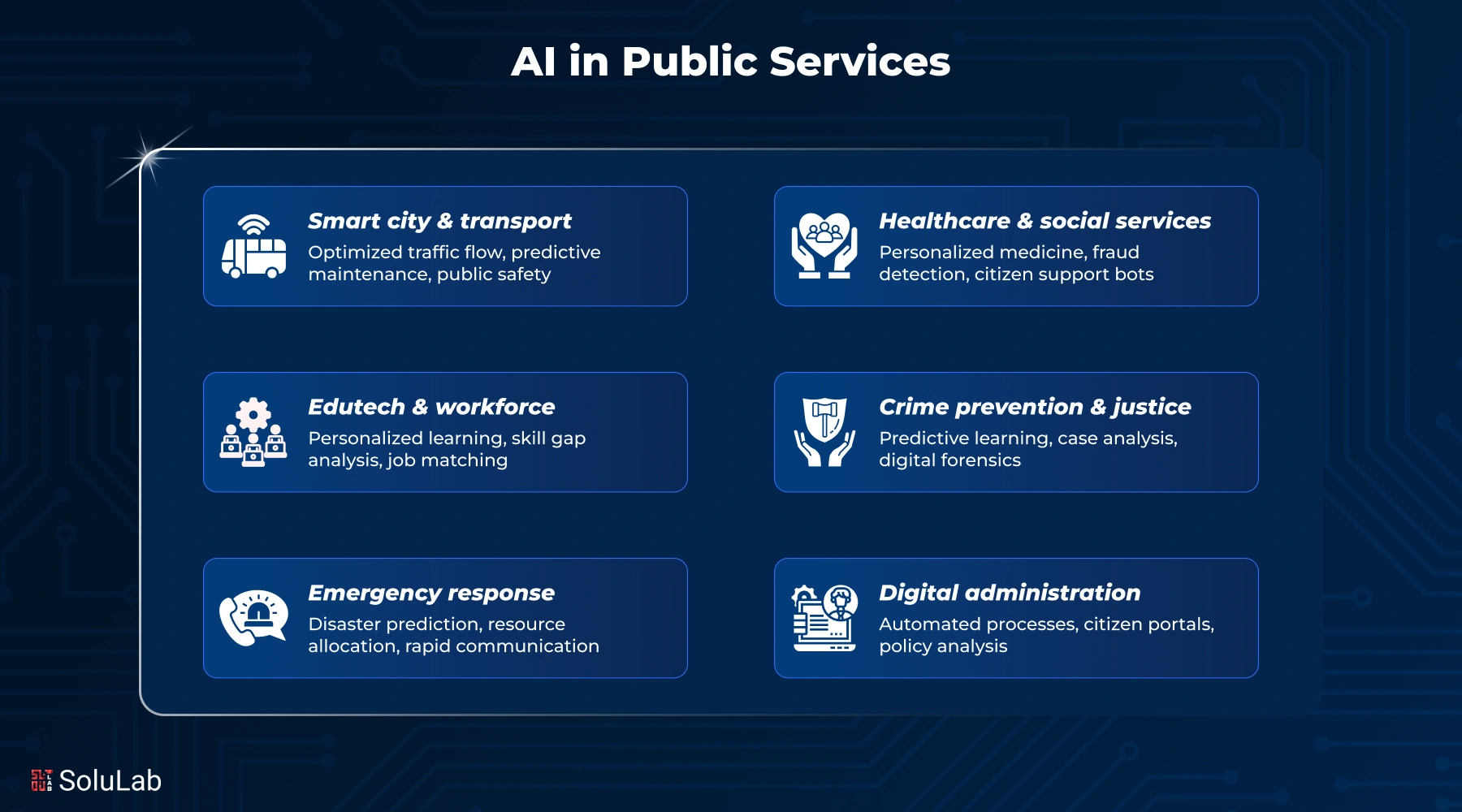
AI in public services often works silently in the background. Tax authorities use digital integration services for fraud detection and compliance checks. Municipalities rely on modern tools in local government to manage traffic flow with smart sensors.
Public health agencies use predictive analytics to track outbreaks. Many citizens interact with such systems daily without realizing it.
Types of AI Used in Public Services To Serve People
Different AI models and solutions support governance, each serving a unique role in improving services. Some important ones are:
-
Machine Learning Models
Governments deploy Machine Learning models to study tax filings, detect unusual financial patterns, and identify possible fraud cases early. This AI-powered solution strengthens revenue systems, reduces tax evasion, and promotes fairness in financial governance.
-
Natural Language Processing
Natural Language Processing powers intelligent AI chatbots that respond to citizen queries, register complaints, and guide people on healthcare, pensions, or welfare benefits. These tools ensure faster resolutions, reduce waiting times, and create more inclusive citizen service experiences.
-
Computer Vision
Public safety departments leverage computer vision for facial recognition and video analytics to monitor crowded areas. This AI technology helps authorities prevent crime, manage emergencies, and improve urban safety without relying solely on traditional manual surveillance.
-
Robotic Process Automation
RPA automates routine tasks such as license renewals, application reviews, or form processing. By eliminating repetitive work, government staff can focus on policy-making and strategic initiatives. Along with direct citizen engagement, leading to faster and more efficient services.
-
Generative Tools in Public Service
Generative AI platforms assist officials by drafting policy notes, reports, or communication documents. This reduces manual paperwork, supports knowledge-sharing across departments, and gives officers more time to focus on decision-making and citizen-centric projects.
Each use case in government demonstrates how technology streamlines services and supports citizens.
Benefits of AI in Government and Public Sector
AI in government and public sector operations provides multiple benefits. It improves accuracy, reduces administrative costs, and enables faster decision-making. It also strengthens transparency and enhances citizen trust in governance.
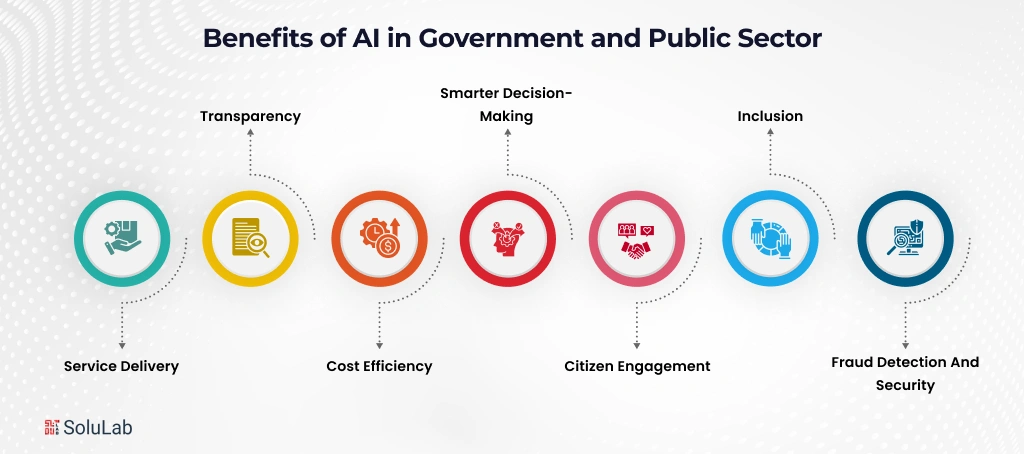
1. Service Delivery: AI chatbots reduce waiting time and improve efficiency. AI solutions streamline delivery for large citizen volumes.
2. Transparency: Open data portals reduce corruption in governance. Real-time information builds citizen trust in services.
3. Cost Efficiency: RPA cuts costs by automating repetitive tasks. Faster processing frees resources for key projects.
4. Smarter Decision-Making: Predictive analytics forecast healthcare and resource needs. Data-driven insights improve planning and crisis control.
5. Citizen Engagement: Mobile apps improve communication with state authorities. Feedback systems ensure policies reflect citizen needs.
6. Inclusion: Remote e-learning provides rural populations with equal access. Generative AI creates content for diverse communities.
7. Fraud Detection and Security: AI detects fraud in taxation and compliance. Computer vision strengthens public safety monitoring.
Global Examples of AI in Public Services
Countries worldwide are adopting digital solutions and AI to modernize governance. In September 2025, Albania made shocking headlines. The country took AI to the next level. They appointed the world’s first AI-generated minister for anti-corruption.
Albania’s Prime Minister Edi Rama announced AI as the digital minister. This digital assistant is named “Diella” (Sun). This varied adoption reflects both local priorities and the benefits of technology in government services.
Here are some more examples that highlight the global momentum toward AI-powered governance.
How are Countries Adopting AI in Governance?
Countries are adopting modern AI tools in government and public sector services at different speeds, depending on readiness.
1. United States: The Social Security Administration uses technology to speed up claims processing. Federal agencies integrate systems for fraud detection and defense intelligence, supported by partnerships with development companies.
2. United Kingdom: Local councils implement digital traffic systems, reducing congestion and improving air quality. Public services rely on AI integration services to modernize healthcare and law enforcement.
3. China: Smart city projects use digital solutions to reduce traffic jams, monitor pollution, and improve urban planning. This creates more sustainable and livable cities for citizens.
4. Singapore: AI for healthcare services predicts hospital admission surges, helping authorities allocate resources effectively and ensuring patients receive timely, quality medical care when demand suddenly rises.
5. India: Municipal corporations deploy technology to manage waste collection routes efficiently. AI-powered app development collaborations with the government create agriculture advisory systems for farmers.
6. Estonia: Leads in digital governance, using advanced platforms for e-governance, secure judicial processes, and efficient public services, making government interactions faster, transparent, and citizen-friendly.
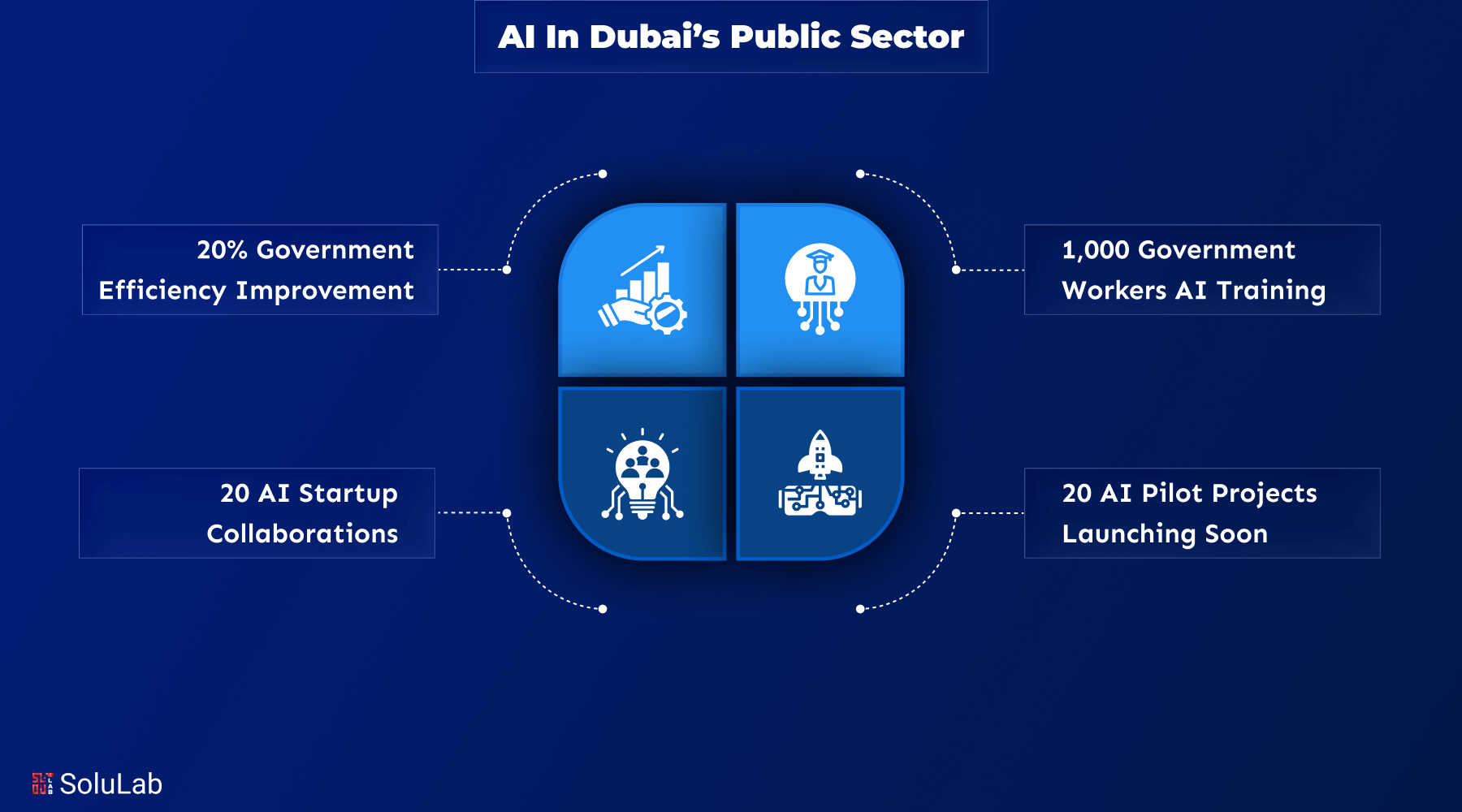
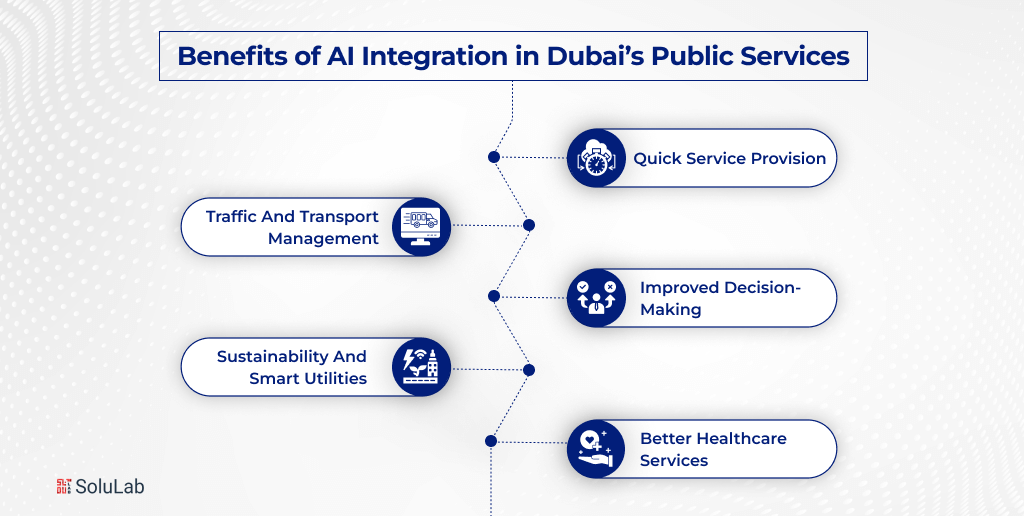
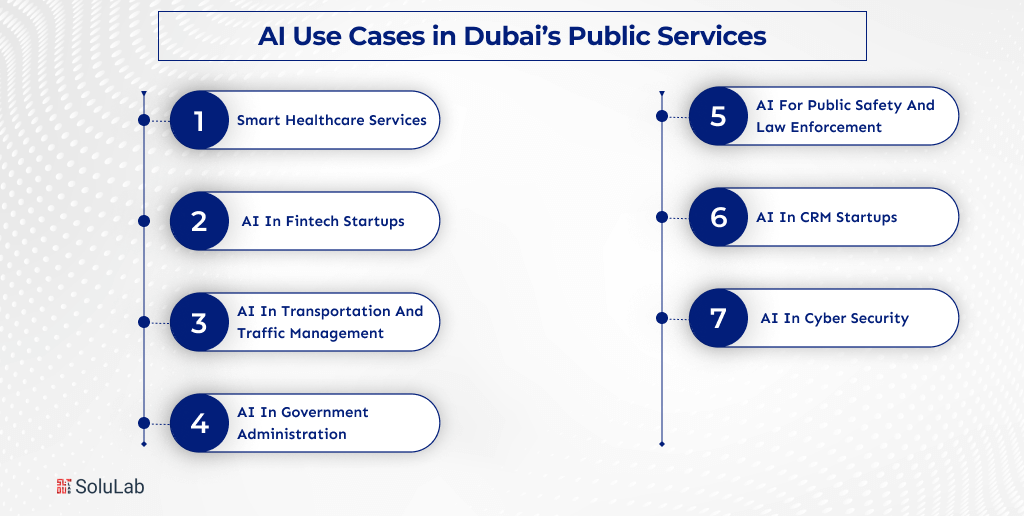
7. United Arab Emirates: AI for public services in Dubai, UAE utilizes chatbots, AI assistants, and digital platforms focused on citizen happiness, offering smoother, quicker, and more personalized government interactions daily.
8. Australia: Australia applies AI for disaster management, predictive healthcare, and smart transport systems, ensuring better preparedness, improved safety, and responsive governance for communities.
Not just these, each country adopts other strategies and implements them in their government to make things simple for people. Therefore, AI in public services is not just any myth; now it’s happening.
Ethical and Responsible Use of AI in Public Services
Digital governance cannot succeed without accountability and fairness. Decisions made through algorithms must remain unbiased, especially in welfare distribution, policing, or justice.
Key principles for implementing technology in the public sector include:
- Data Privacy: Strong safeguards to protect citizen information.
- Transparency: Clear communication about how digital government solutions make decisions.
- Independent Audits: Regular checks to ensure compliance and fairness.
- Explainable Models: Systems that allow officials and citizens to understand outcomes.
- Human Oversight: Critical checks to avoid over-reliance on machines.
Trust in digital operations will grow only if these principles remain central. Responsible adoption ensures the benefits of modern governance are delivered fairly.
The Latest on AI in Governance and Public Services
Public services are entering a new phase where innovation meets scale. Governments are now investing in future-ready applications.
Emerging trends include:
1. Generative Tools in Public Service: Automating legal drafts, policy notes, and education materials to reduce administrative load.
2. Virtual Assistants: ChatGPT development solutions that enable personalized citizen interactions through chatbots and voice-based platforms.
3. Predictive Analytics: Early warnings for health crises, natural disasters, or economic risks.
4. Cross-Department Integration: A professional AI consulting company can help scale integration services across multiple ministries by exploring newer use cases.
5. AI-Powered Contract Management: Solutions like CRM for government contractors from Creatio use Generative, Predictive, and Agentic AI to automate RFP preparation, assess win probability, and forecast revenue, helping agencies and contractors streamline operations and make data-driven decisions.
According to McKinsey, efficiency gains from digital public services may save up to $1 trillion globally within five years. This highlights the growing role of modern government solutions in shaping the future of governance.
Conclusion
From the above discussion, you might have understood the role of AI in public services and governance. No matter how AI has already become part of day-to-day life, using it ethically for people’s purposes is an ideal way. Platforms like InfuseNet highlight how businesses and governments can seamlessly integrate data, enhance decision-making, and drive secure, transparent growth.
If you are also looking to build AI models or want to integrate, SoluLab is here to assist you. We, at SoluLab, a top AI development company, build scalable, secure, and transparent solutions. From chatbots to high-level ML models, our expert team is here to help you.
Contact us today to learn about AI integration and solutions that can bring your idea to life!
FAQs
1. How does AI improve public services?
Tools like AI in public services help automate routine work, spot fraud, and predict problems. Services become faster, cheaper, and more accurate. Staff can focus on complex cases while citizens get quicker, clearer responses.
2. What are the main risks of using AI in government?
Key risks include biased decisions, weak data privacy, and over-reliance on automated systems. Poor audits can cause unfair outcomes. Strong safeguards, clear rules, and human oversight lower those risks and protect public trust.
3. Which countries lead in using AI for public services?
Many countries use smart government tools. The United States, the United Kingdom, the UAE, Singapore, Estonia, China, and India show wide adoption. Each country focuses on local needs, from health to traffic and e-governance experiments.
4. How can SoluLab help a government adopt AI?
SoluLab builds secure, scalable, and transparent smart systems for governments. Services include chatbots, predictive models, and system integration. The team helps plan, test, and launch tools while keeping ethics and data privacy central.
5. How can citizens check if a government decision used AI?
Citizens can ask for plain explanations, request audit reports, and check open data portals. Look for transparency statements and contact ombudsmen if needed. Clear public info and oversight make systems fair and understandable.