Talk to an Expert

Top 10 AI Development Companies in Dubai 2026

Every business now wants to integrate AI into its business. However, integrating AI into business is not easy. It requires expertise, specific domain knowledge, and strategic implementation. 

Choosing the wrong company can mean wasted time, money, and missed opportunities. From poor model performance to a lack of scalability, these missteps can cost businesses their competitive edge, especially in a market like Dubai, which is undergoing smart city and digital transformation initiatives.

To help you make the right choice, we’ve curated a list of the top 10 AI development companies in Dubai. Let’s get started!

Why Dubai Is a Global Hub for AI-Based Companies?

Dubai is a global hub for AI-based companies, driven by strategic government initiatives, investor-friendly policies, and infrastructure.

1. Government Initiatives: UAE AI Strategy 2031

The UAE’s National Artificial Intelligence Strategy 2031 aims to position the country as a global leader in AI by integrating AI technologies into various sectors for innovation and enhancing economic growth. 

2. Tax Benefits and Investor-Friendly Policies

Dubai offers a favorable tax environment, including zero personal income tax and corporate tax exemptions in many free zones, making it an attractive destination for AI startups and investors.

3. Advanced Infrastructure and Smart City Projects

With its infrastructure and smart city projects like the Dubai Live platform and AI-powered urban management systems that improve sustainability and efficiency, Dubai has shown its dedication to artificial intelligence.

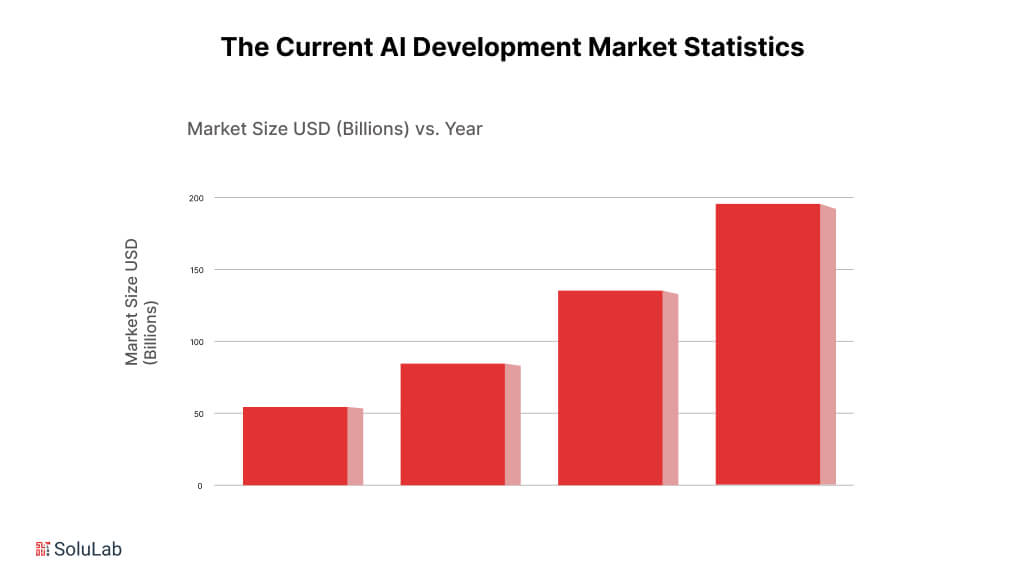
The Current AI Development Market Statistics

According to the Accenture analysis, artificial intelligence may contribute US $182 billion to the national economy by 2035 and increase economic growth in the United Arab Emirates by 1.6 percentage points.

AI is also anticipated to have an impact on Saudi Arabia, whose GVA is predicted to rise by US $215 billion. The UAE’s AI market is expected to grow at a CAGR of 43.9% from 2024 to 2030, reaching USD 46.3 billion by 2030.

The Current AI Development Market Statistics

Criteria for Selecting the Best AI Companies in Dubai

Choosing the best AI companies in Dubai requires evaluating more than just technical expertise. The right partner should combine innovation, reliability, and domain experience to deliver scalable, impactful AI solutions. To get along with the market, it’s a must to pick a professional development company that excels in the following factors:

  • Technical Expertise: Assess the company’s experience in AI domains like machine learning, NLP, and computer vision to ensure they can handle your specific project requirements.
  • Industry Experience: Choose firms that have successfully delivered AI projects in your industry, ensuring they understand your business challenges and regulatory environment.
  • Innovation & R&D Focus: Leading AI firms continuously invest in research and innovation to stay ahead of technological trends and provide future-ready solutions.
  • Client Portfolio & Case Studies: Review their past projects and case studies to evaluate performance, project outcomes, and client satisfaction levels.
  • Scalability & Support: Ensure the company provides long-term scalability, maintenance, and post-deployment support for AI system upgrades.

Top 10 AI Development Companies in Dubai to Consider in 2026

Dubai, a hub for AI development companies, has several companies that stand out for their expertise, reliability, and innovative solutions. Here’s a curated list of the top 10 AI development companies to consider before 2025 ends:

1. SoluLab

SoluLab is an AI development company with 10+ years of experience in AI, blockchain, IoT, and associated technologies. They have delivered 40+ AI software projects for 500+ global clients, using a team of over 250 developers.

Their services span generative AI, NLP, computer vision, predictive analytics, AI assistants/chatbots, and deep learning model deployment. They position themselves well for startups and enterprises seeking cost-effective yet capable AI partners.


$25 – $49


50 – 249


2014


Dubai


Gradient, Digital Quest

CodeBrew

2. CodeBrew

Code Brew Labs is a Dubai-based AI development company, founded in 2013. They specialize in mobile & web app development, AI integration (chatbots, predictive models, automation), blockchain, IoT, UX/UI design, and full-cycle product delivery.

Their strength lies in delivering scalable, secure, and custom solutions tuned to business goals with a strong focus on user experience, industry-varied domain experience (fintech, health, retail, etc.), and long-term client collaboration.


$70 / hr


200


2013


Dubai, UAE

G42

3. G42

G42 is a leading AI development company based in Abu Dhabi. Founded in 2018, the company specializes in AI infrastructure, data analytics, cloud computing, and smart city solutions. With innovations spanning healthcare, finance, and public services.

G42 enables governments and enterprises to adopt intelligent, secure, and scalable AI systems. Its commitment to responsible AI and global partnerships makes it a part of Dubai’s AI-driven future.


$40 / hr


25000


2018


Abu Dhabi, UAE

Autviz Solutions

4. Autviz Solutions

Autviz Solutions is a Dubai-based AI development company specializing in delivering intelligent automation, data analytics, and custom AI solutions for businesses of all sizes. Their offerings include machine learning models, predictive analytics, and AI-powered software designed to enhance efficiency, decision-making, and customer experience.

Organizations looking to integrate AI into operations, Autviz Solutions combines technical expertise with industry-focused strategies to help clients achieve measurable business impact.


$15/hr – $24 / hr


51-200


2020


UAE

Quytech

5. Quytech

Quytech is an AI development company known for delivering innovative solutions in artificial intelligence, machine learning, and IoT. The company specializes in custom AI applications, predictive analytics, and intelligent automation, helping businesses operate.

Quytech combines technical expertise with a client-focused approach to deliver impactful, future-ready technology. Their services are particularly suited for industries like healthcare, finance, retail, and logistics.


$25 – $49 / hr


50-249


2010


UAE

Innowise

6. Innowise

Innowise is an AI development company known for delivering custom software and automation solutions. Their expertise spans AI-powered analytics, machine learning, and process optimization.

Businesses seeking scalable AI applications, Innowise combines technology with flexible development approaches to enhance efficiency and decision-making. With a focus on innovation and client-centric solutions, they cater to startups and enterprises aiming to leverage AI for competitive advantage.


$51 – $100 / hr


1000-5000


2007


UAE

Diginix AI IT Solutions

7. Diginix AI IT Solutions

Diginix AI IT Solutions is an AI development company specializing in automation, machine learning, and data-driven solutions. Their expertise spans predictive analytics, natural language processing, and custom AI software development, making them ideal for businesses seeking to optimize operations, enhance customer experiences, and implement scalable AI-driven strategies.

With a strong focus on innovation and industry-specific solutions, Diginix AI IT Solutions helps enterprises turn complex data into actionable insights, driving efficiency and growth in competitive markets.


N/A


61-200


2013


Al Muteena, Dubai, UAE

Apptunix

8. Apptunix

Apptunix is a Dubai-based AI development company specializing in AI and mobile app development. Known for providing innovative and scalable solutions, it excels in machine learning, NLP, and predictive analytics.

Apptunix combines technical expertise with user-focused design to enhance operational efficiency. Its solutions are suitable for startups, SMEs, and large enterprises looking to implement intelligent automation and data-driven strategies.


$25 – $49 / hr


200+


2013


Dubai, UAE

Q3 Technologies

9. Q3 Technologies

Q3 Technologies is an AI solutions provider known for providing scalable artificial intelligence applications. The company specializes in machine learning, data analytics, and intelligent automation, helping businesses optimize operations.

Ideal for enterprises seeking custom AI solutions, Q3 Technologies focuses on creating predictive models, smart chatbots, and AI-powered analytics platforms. With a client-centric approach and strong expertise across industries.


$5/ hr


50–249


1996


Dubai

Openxcell

10. Openxcell

OpenXcell is an AI development company known for delivering customized, high-quality solutions. They specialize in AI-driven applications, machine learning models, and enterprise automation.

For startups and enterprises seeking scalable, innovative AI solutions, OpenXcell offers deep technical expertise with a client-focused approach to create impactful, future-ready digital products.


N/A


50+


2009


Dubai, UAE

Why Choose Experts to Build Your AI Solutions in Dubai?

Partnering with AI experts ensures you’re not just following trends but building future-ready solutions. Here’s how they add value:

  • Enhanced Customer Intelligence: AI experts use advanced analytics and machine learning to help you understand customer behavior, preferences, and pain points, enabling hyper-personalized experiences and smarter marketing strategies.
  • Smarter Business Processes: From automation to predictive insights, experts streamline your operations with AI models that reduce manual effort, increase accuracy, and improve overall efficiency.
  • Quick AI Development: With a deep understanding of frameworks and tools, AI experts accelerate the development lifecycle, bringing your solution to market faster without compromising quality.
  • Solid and Secure Integrations: Experts ensure your AI tools are securely integrated with your existing systems, maintaining data integrity and protecting against potential vulnerabilities.

AI Development Services in Dubai

Conclusion

From startups driving niche solutions to established firms powering large-scale enterprise projects, these companies are shaping the city’s vision of becoming a true AI-driven economy. 

SoluLab, an AI development company in Dubai, is a top choice for companies looking for a reliable partner since it provides specialized solutions and a committed group of professionals.  

In Dubai’s tough digital economy, your company can stay competitive in this competitive market if you partner with us.

FAQs

1. What makes Dubai a leading destination for AI solution development?

Dubai has invested heavily in becoming a tech-first economy, with initiatives like the UAE National Strategy for Artificial Intelligence 2031 and Dubai’s Smart City vision. Its access to global talent, innovation-friendly policies, and advanced infrastructure make it an ideal location for building AI solutions.

2. How much does it cost to build a custom AI solution in Dubai?

Costs can vary depending on complexity, features, data requirements, and integration needs. A basic AI prototype might cost between $10,000 to $30,000, while enterprise-level systems can range upwards of $100,000+. Contact us for a customized quote!

3. How long does it take to build an AI solution with expert developers?

Development timelines depend on project size. A simple chatbot or predictive model might take 4–6 weeks, while full-scale AI platforms could take 3–6 months. Expert teams follow agile methods to deliver faster with continuous feedback.

4. What kind of ROI can I expect from investing in AI solutions?

AI can automate tasks, cut costs, improve decision-making, enhance customer experiences, and boost operational efficiency. With the right use case, businesses often see a measurable ROI within months of deployment.

5. Can SoluLab’s AI experts handle industry-specific projects?

Absolutely! Our AI developers in Dubai have niche experience across sectors and build solutions like predictive healthcare platforms, fraud detection systems, supply chain optimization tools, and more, all tailored to specific business needs.

Voice AI Agent Training Guide

Voice AI Agent Training

So, how do you train a voice AI agent on a voice AI platform? The idea might sound tricky, but it can be explained in a very simple way. Think of it as teaching someone a new language or showing a tourist how to get around a new city. You break it into steps, keep things clear, and make sure there’s practice along the way. This guide walks through the whole process, from planning to testing, with examples that feel easy to follow.

Knowing What a Voice AI Platform Does

A voice AI platform is software that helps create and train digital agents that can talk with people. Instead of only pressing buttons or typing messages, customers can simply speak. The agent listens, understands, and gives answers in real time. It can work in call centres, sales, or even customer service for small businesses.

The main goal is to make conversations smoother. But just like teaching someone how to read a map, the agent needs training before it can handle real customers. That’s why setup and guidance matter so much.

Starting With Clear Goals

Before you train an agent, you need to decide what you want it to do. Do you want it to answer basic questions, handle bookings, or maybe support sales calls? Having a clear goal is like knowing which city you are visiting. Without that, you could get lost.

For example, if you run a hotel, the agent might need to answer questions about check-in times or room availability. If you run a store, the agent might help with order updates or return policies. Each case will have its own plan.

Getting the Basics Ready

When you travel, you make sure you have tickets, clothes, and money. For training an AI agent, you also prepare. You need good data, examples of customer conversations, and scripts. The platform uses this information to learn.

Start with simple phrases. Customers may say “I need help with my order” or “What are your hours?” Teaching these basics first makes the agent stronger. Later, you can move on to more complex cases.

How Training Usually Works

Training a voice AI agent is like practice runs before the real trip. You speak to the agent, test responses, and correct mistakes. Over time, it becomes better.

Most platforms give you dashboards where you can enter phrases, set replies, and even test the voice output. Some also connect with CRM systems so the agent has customer details ready. That makes conversations more personal and saves time.

Choosing the Right Voice AI Platform

There are many platforms you can use. Plura AI, Retell.ai, and Vapi.ai are some common names. They all offer features like voice agents, CRM integration, and support for SMS or chat. The best choice depends on your goals and budget.

Plura AI is one of several platforms that offer a full suite of tools. It may support customer engagement and operational efficiency by bringing calling, SMS, and CRM together. Retell.ai focuses on flexible integration, while Vapi.ai has strong voice automation tools. Looking at them side by side helps you see what fits your business best.

Why Plura Stands Out

Even though there are many options, Plura often stands out because it combines calling, SMS, and CRM in one place. That means you don’t have to juggle multiple tools. It’s an AI contact center platform that also supports AI calling and SMS automation.

It’s not about being the only option. Instead, it’s about being one of the platforms that try to make operations smoother. That can be useful if your team wants everything in one setup.

Preparing Your Team

When you travel, you don’t just pack your own bag—you also remind others what to bring. The same goes here. Your staff should know how the agent works. They should understand that AI is here to help, not replace.

Hold short sessions to explain the software. Show them how it answers calls, how it pulls details from the CRM, and when they need to step in. The more comfortable they are, the smoother the rollout will be.

Running Pilot Tests

No one books a long vacation without trying short trips first. Pilot tests let you see how the AI agent performs. Start small, maybe with one department or a limited set of calls. Listen to recordings, check the reports, and look at customer feedback.

You may notice that some phrases confuse the AI. Adjust those scripts. You may also find that some customers prefer speaking to a human for certain issues. In that case, you set up quick transfers so they don’t wait long.

Watching the Results

Training doesn’t stop after the first round. You keep checking. Reports can show you call length, drop rate, or how many issues are solved without human help. If the numbers improve, you know the training is working.

If not, you make small changes. Add more training phrases, adjust responses, or improve the voice tone. Over time, the agent becomes more natural. It’s like how a tourist learns more about a city each time they visit.

Handling Common Challenges

There are always bumps along the way. Sometimes the AI misunderstands accents. Sometimes background noise makes things harder. These can be fixed with better data and tuning.

Costs can also be a challenge. Some platforms charge per user, others by minutes or calls. Planning your budget early helps avoid surprises. Training staff also takes time, but it pays off once everyone is confident.

Tips for a Smooth Rollout

Start with simple tasks. Let the agent answer common questions first. Add complex ones later. This builds confidence for both staff and customers.

Also, keep testing in different conditions. Calls in winter, calls at busy times, and calls in quieter hours can all sound different. The more varied the training, the stronger the agent becomes.

Wrapping Up the Journey

So, how do you train a voice AI agent with a voice AI platform? You start with clear goals, prepare your data, and choose a platform that fits your needs. You run small tests, train the AI, and check results often.

Platforms like Plura AI, Retell.ai, and Vapi.ai all bring useful tools. Plura stands out as one of the platforms that bundle many features together. It may support customer engagement and efficiency when connected with CRM and SMS automation.

In the end, training a voice AI agent is less about machines and more about planning, practice, and patience. Just like a trip, the journey gets easier the more you prepare.

The Evolution of AI in Cybersecurity: From Rules to Deep Learning

The Evolution of AI in Cybersecurity: From Rule Based Systems to Deep Learning

In the ever-expanding digital landscape, the importance of robust cybersecurity measures cannot be overstated. With cyber threats becoming increasingly sophisticated, the need for intelligent, adaptable defense mechanisms has grown exponentially. Artificial Intelligence (AI) has emerged as a game-changer in this realm, revolutionizing the way we protect our digital assets. 

This blog delves into the captivating journey of AI in cybersecurity, tracing its evolution from the rudimentary rule-based systems to the cutting-edge realm of deep learning.

Rule-Based Systems in Cybersecurity

Before AI made its presence felt, cybersecurity heavily relied on rule-based systems. These systems operated on predefined sets of rules and signatures. They were effective to some extent in thwarting known threats but had glaring limitations, which is why many companies today depend on managed IT services Dallas providers for proactive protection. Rule-based systems struggled with zero-day attacks and evolved threats that didn’t fit neatly into predetermined patterns.

For example, an antivirus software employing rule-based systems could detect and quarantine a virus only if it matched a predefined signature. If a new strain of malware emerged, the system remained blind to it until a new rule was created. This reactive approach left systems vulnerable during the crucial time gap between a new threat’s emergence and the update of the security rules.

Machine Learning in Cybersecurity

Machine learning marked the first significant leap in AI cybersecurity. Unlike rule-based systems, machine learning systems/algorithms could learn from data. They analyzed patterns, anomalies, and behaviors to detect threats, even those with no predefined rules. This proactive approach opened new possibilities in the battle against cyber adversaries.

Supervised learning, a branch of machine learning, allowed security systems to be trained on labeled datasets. By learning from historical data, these systems could make informed decisions about the nature of incoming data and identify potential threats. For instance, a supervised learning model could identify known phishing emails by recognizing common characteristics shared among them.

Unsupervised learning algorithms, on the other hand, didn’t rely on labeled data. They analyzed incoming data to identify anomalies or deviations from the norm. This made them effective in detecting novel threats or insider attacks, where the patterns might not be predefined.

Semi-supervised learning blended the best of both worlds, combining labeled data for known threats with unsupervised techniques to uncover new ones. This approach improved detection accuracy and reduced false positives.

Reinforcement learning, often associated with AI in gaming, found its application in cybersecurity as well. It enabled systems to adapt and learn in real-time, making them more agile in responding to evolving threats.

CTA1

Emergence of Deep Learning

Deep learning, a subset of machine learning, brought about a paradigm shift in AI cyber-security. At its core were neural networks, models inspired by the human brain’s interconnected neurons. These networks could process vast amounts of data, automatically extract features, and make complex decisions.

Neural networks, with their ability to analyze unstructured data like images, texts, and network traffic, became invaluable in cybersecurity systems. They excelled in tasks such as anomaly detection, where identifying subtle deviations from normal behavior was critical. Deep learning models could recognize not only known malware but also previously unseen variants based on their underlying characteristics.

Deep learning also revolutionized the fight against phishing attacks. Neural networks could analyze email content, sender behavior, and contextual information to flag potentially malicious emails, even if they lacked familiar hallmarks of phishing attempts.

The use of deep learning in malware detection was another breakthrough. These models could identify malicious code by scrutinizing its structure and behavior, without relying on predefined signatures.

Challenges in Implementing Deep Learning for Cybersecurity

Challenges in Implementing Deep Learning for Cybersecurity

While deep learning has ushered in a new era of AI development companies, it’s not without its challenges and ethical considerations.

  • Data Quality and Quantity: Deep learning models hunger for data. In AI cybersecurity services, obtaining large, high-quality labeled datasets for training can be a significant hurdle. Additionally, the fast-paced nature of cyber threats demands real-time data, making the challenge even more daunting.
  • Interpretability: Deep learning models, particularly deep neural networks, are often considered “black boxes.” Their decision-making processes are complex and not easily interpretable. This opacity can be problematic when trying to understand why a model flagged a certain activity as malicious, hindering incident response and forensic analysis.
  • Adversarial Attacks: Cyber adversaries are getting smarter. They can craft attacks specifically designed to bypass deep learning models. Adversarial attacks manipulate input data in subtle ways to deceive the model, making them a serious concern.
  • Resource Intensiveness: Training and deploying deep learning models require substantial computational resources. This can be a roadblock for smaller organizations with limited IT infrastructure.

Ethical Concerns Surrounding AI in Cybersecurity

  • Privacy: AI systems, particularly those using deep learning, can process vast amounts of personal data. The line between legitimate cybersecurity monitoring and privacy invasion can become blurry. Striking the right balance between security and privacy is crucial.
  • Bias and Fairness: Deep learning models are susceptible to biases present in training data. If the data used to train these models is biased in terms of race, gender, or other attributes, the AI cybersecurity system can unintentionally discriminate against certain groups.
  • Transparency: As mentioned earlier, deep learning models are often seen as black boxes. This lack of transparency can hinder accountability and make it difficult to comply with regulations that require explanations for decisions made by AI systems.
  • Over-Reliance on AI: While AI can enhance cybersecurity, an over-reliance on AI systems without human oversight can lead to complacency. Cybersecurity professionals should always be in the loop to make critical decisions and understand the context.

Real-World Examples

Despite these challenges and ethical concerns, numerous organisations have embraced deep learning for cybersecurity, achieving remarkable results:

  • Darktrace: Darktrace utilises unsupervised machine learning and AI to detect and respond to cyber threats in real-time. Its “Enterprise Immune System” learns and understands the unique behaviours of a network and can identify deviations indicative of attacks.
  • Cylance: Acquired by BlackBerry, Cylance employs AI-driven threat detection to prevent malware and other security threats. Its approach is based on Generative AI tools trained to recognize both known and unknown threats.
  • FireEye: FireEye’s Mandiant Threat Intelligence uses AI and machine learning for cybersecurity i.e. to detect and respond to cyber threats. It leverages deep learning for rapid threat detection and offers automated response capabilities.
  • Google’s Chronicle: Chronicle, a subsidiary of Google, offers a cybersecurity platform that employs machine learning to help organizations analyze and detect threats in their network data.

These examples illustrate the practical application of deep learning in real-world cybersecurity scenarios. Organizations are increasingly relying on AI to bolster their defenses and respond swiftly to emerging threats.

The Future of AI in Cybersecurity

Future of AI in Cybersecurity

As we look ahead, the future of AI in cybersecurity promises continued evolution and transformation. Several key trends and developments are shaping the landscape:

  • AI-Driven Threat Hunting: AI-powered threat-hunting tools are becoming more sophisticated. Implementing these AI-driven detection capabilities typically requires robust managed security operations center (SOC) services that combine automated monitoring with expert human oversight.
  • Enhanced Anomaly Detection: Deep learning models are continuously improving in their ability to detect subtle anomalies and deviations from normal behavior, making them invaluable for identifying sophisticated threats.
  • Natural Language Processing (NLP): NLP techniques are being applied to cybersecurity to analyze text-based threats, such as phishing emails or social engineering attempts. This helps in the early detection and mitigation of such threats.
  • Automated Incident Response: AI is being used to automate incident response processes. AI-driven systems can not only detect threats but also take actions to mitigate them in real time, reducing the burden on cybersecurity teams.
  • AI in IoT Security: With the proliferation of Internet of Things (IoT) devices, AI is being used to secure these interconnected devices and networks. Machine learning models can detect unusual behavior or vulnerabilities in IoT ecosystems.
  • Zero Trust Security: AI plays a pivotal role in implementing the zero-trust security model. It continuously verifies the identity and security posture of devices and users accessing a network, enhancing overall security.
  • Federated Learning: This emerging approach allows organizations to collaborate on threat detection without sharing sensitive data. Generative AI models are trained collectively, enhancing the security of shared threat intelligence.

The Evolving Role of Human Experts

While AI is a powerful ally in the fight against cyber threats, human expertise remains irreplaceable:

  • Contextual Understanding: Human experts bring context to cybersecurity. They can understand the unique nuances of an organization’s environment, making judgment calls that AI may struggle with.
  • Adaptation and Innovation: Cyber adversaries continually evolve their tactics. Human cybersecurity professionals can adapt strategies and innovate responses, staying one step ahead.
  • Ethical Decision-Making: Ethical considerations in cybersecurity often require human judgment. Decisions regarding privacy, compliance, and the ethical use of AI are guided by human values.
  • Complex Investigations: In complex cyber incidents, human investigators are essential. They can piece together the puzzle, combining technical analysis with a broader understanding of the threat landscape.

In essence, the future of AI in cybersecurity is a collaboration between human expertise and artificial intelligence. AI enhances the capabilities of cybersecurity professionals, enabling them to work more efficiently and effectively.

CTA2

Conclusion

The evolution of AI in cybersecurity, from rule-based systems to deep learning, has been a remarkable journey. It has equipped us with powerful tools to defend against an ever-evolving threat landscape. As AI continues to advance, we must remain vigilant, addressing challenges such as data privacy and bias, while also recognizing the crucial role that human experts play in keeping our digital world secure.

In this era of rapid technological change, the fusion of human intelligence and AI-driven automation will be the key to staying resilient in the face of cyber threats. As we move forward, the synergy between human expertise and AI innovation will be our strongest defense in the dynamic and complex world of cybersecurity.

SoluLab, a forward-thinking technology company, is renowned for innovative solutions across domains, including cybersecurity. They excel in AI development services and hire AI developers, contributing significantly to AI’s evolution in cybersecurity. Leveraging advanced AI and deep learning, they shape a proactive defense against evolving threats. SoluLab exemplifies how tech companies integrate AI to create adaptive, proactive, and robust defense mechanisms, shaping the future of cybersecurity and providing AI development services and AI developer hiring solutions for organizations.

FAQs

1. What is the primary difference between rule-based systems and deep learning in cybersecurity?

Rule-based systems rely on predefined rules and signatures to detect threats, while deep learning uses neural networks to analyze data and make decisions based on learned patterns. Deep learning is more adaptable to evolving threats.

2. How does AI in cybersecurity address ethical concerns, such as privacy and bias?

AI in cybersecurity must be implemented with strict privacy policies and data protection measures. To address bias, diverse and unbiased training data should be used, and models should be regularly audited for fairness.

3. Can AI completely replace human cybersecurity professionals?

No, AI complements human expertise but cannot replace it entirely. Human professionals bring contextual understanding, ethical decision-making, and adaptability that AI lacks. They play a vital role in complex investigations and decision-making.

4. What are some real-world examples of organisations successfully using AI for cybersecurity?

Organisations like Darktrace, Cylance, FireEye, and Google’s Chronicle have successfully implemented AI-driven cybersecurity solutions. These companies employ AI for threat detection, incident response, and real-time monitoring.

5. What are the key trends shaping the future of AI in cybersecurity?

The future of AI in cybersecurity is marked by trends such as AI-driven threat hunting, enhanced anomaly detection, natural language processing (NLP), automated incident response, AI in IoT security, zero-trust security models, and federated learning for threat intelligence sharing. These trends aim to bolster cyber defenses and adapt to evolving threats.

Future of Conversational AI: Trends and Innovations in Chatbot Development

The Future of Conversational AI: Trends and Innovations in Chatbot Development

In an age where digital interactions have become integral to our lives, the rise of conversational AI, powered by chatbots, has been nothing short of transformative. These intelligent virtual agents have transcended their initial role as simple chat interfaces and have evolved into sophisticated conversational partners. As we look ahead, the future of conversational AI promises even greater marvels, with an array of trends and innovations poised to redefine the way we interact with technology.

To comprehend the breathtaking future of conversational AI, it’s essential to grasp its present state. Chatbots, with their ability to engage users in dynamic, human-like conversations, are already omnipresent across industries. They assist in customer support, streamline e-commerce experiences, offer healthcare advice, and even provide financial guidance. But the real excitement lies in what lies ahead.

Emerging Trends in Chatbot Development

Emerging Trends in Chatbot Development

  • Advancements in Natural Language Processing (NLP)

The heartbeat of conversational AI is Natural Language Processing, and it’s beating stronger than ever. With the advent of deep learning and the surge in NLP models, chatbots are getting better at understanding the nuances of human language. This means more accurate responses, improved sentiment analysis, and the capacity to converse fluently in multiple languages.

For chatbot developers, the advancement in NLP models like GPT-3 has been a game-changer. These models can comprehend context, generate coherent responses, and even exhibit a semblance of common sense. As a result, users are now interacting with chatbots that feel more human-like, making the conversational experience smoother and more intuitive.

A key development in NLP is multilingual chatbots. These bots can seamlessly switch between languages, breaking down language barriers and facilitating global communication. Whether you’re conversing in English, Spanish, or Mandarin, chatbots can comprehend and respond in your preferred language.

In addition, the impact of chatbots is becoming proficient at sentiment analysis. They can gauge the emotional tone of a conversation, allowing them to respond more empathetically. This capability has significant implications for industries such as customer service, where understanding and responding to customer emotions is crucial.

The ongoing advancements in NLP empower chatbots to engage users on a deeper level, opening doors to more sophisticated applications across various sectors.

  • Personalization and User Experience

Imagine a chatbot that knows you better than you know yourself. The future of chatbots is all about personalization. These virtual assistants will be context-aware, able to remember past interactions, and even predict your needs.

What does this mean for you? A more user-centric experience. If you’re a regular customer of an e-commerce platform, your chatbot might remember your preferences, previous purchases, and even the items you were browsing but didn’t buy. This level of personalization allows chatbots to offer tailored recommendations and make your shopping experience smoother.

In healthcare, context-aware chatbots can take into account your medical history, current symptoms, and even your emotional state to provide more relevant advice. In finance, they can help manage your investments based on your risk tolerance and financial goals.

Read Our Blog: Top 10 AI Development Companies

User-centric design principles are at the forefront of chatbot development. These bots will adapt to your unique needs and preferences, making the digital experience feel more intuitive and human-like.

As chatbots become adept at understanding context and providing personalized assistance, they’re set to become an indispensable part of our daily lives.

  • Integration with Voice Assistants

Voice-controlled smart speakers and devices are on the rise. It’s a natural progression for chatbots to extend into the realm of voice assistants. This integration is blurring the lines between chatbots and voice-activated virtual assistants like Siri, Alexa, and Google Assistant.

Picture this: You’re in the kitchen, your hands covered in flour, and you need a recipe. You don’t have to touch your phone or computer. You simply say, “Hey [Your Favorite Voice Assistant], find me a bread recipe.” In seconds, you have the recipe spoken to you step by step. This is the future of voice-controlled chatbots.

Voice-controlled chatbots can also be part of your smart home. You can ask them to adjust your thermostat, play music, or even lock your doors—all through natural language commands.

The implications of this integration go beyond convenience. It’s shaping the future of voice commerce, enabling you to make purchases, book services, and complete tasks with a simple voice command. It’s a transformative development that promises a future where technology is seamlessly integrated into our lives.

  • Multimodal and Rich Media Integration

In the world of future chatbots, it’s not just about text-based conversations. It’s also about rich media experiences. Chatbots are expanding their repertoire to include images, videos, and interactive content.

Visual chatbots are becoming increasingly common. They can process images you send, analyze them, and provide information or assistance based on those images. For instance, you can take a picture of a plant in your garden, and a chatbot can identify the plant species and offer care instructions.

But it doesn’t stop at static images. Chatbots are venturing into videos and animations, providing engaging content that goes beyond words. Whether it’s educational content, product demonstrations, or entertainment, chatbots are becoming versatile content deliverers.

For marketers, this opens up new horizons. Interactive content, guided tours, and immersive experiences can be delivered through chatbots. Imagine exploring a virtual art gallery guided by a chatbot, or trying on virtual clothes with a chatbot helping you choose the perfect outfit.

The implications are profound in fields like e-learning, where chatbots can deliver dynamic and interactive lessons. From tutorials to simulations, chatbots are turning learning into a more engaging and personalized experience.

As chatbots evolve to incorporate rich media, their capacity to engage users will expand, making them essential in various domains like education, marketing, and customer support.

CTA1

  • AI Ethics and Responsible AI

As chatbots grow more sophisticated, ethical considerations become paramount. We must ensure that the power of AI is harnessed responsibly, protecting user privacy, mitigating bias, and upholding transparency.

One of the core ethical concerns in chatbot development is data privacy. Chatbots often handle sensitive information, from personal health data in healthcare chatbots to financial information in banking chatbots. Ensuring compliance with data protection regulations is essential. Users must have confidence that their data is secure and used responsibly.

Read Blog: How to Build an AI-Powered Chatbot For Your Business?

Bias mitigation is another significant challenge. Chatbots learn from vast datasets, and if those datasets contain biases, the chatbot may inadvertently perpetuate them. This can result in discriminatory or unfair behavior. Developers must actively work to eliminate biases and ensure that chatbots treat all users fairly.

Transparency and explainability are ethical imperatives. Users should understand that they’re interacting with a chatbot and not a human. Furthermore, chatbots should be able to explain their reasoning and decision-making processes when necessary.

As we move into the future, the responsible development of chatbots is central to their success. Responsible AI doesn’t just protect users; it also ensures that chatbots continue to gain trust and provide valuable services.

Industry-Specific Applications

Industry-Specific Applications

The potential of chatbots isn’t confined to any single domain. Their adaptability and versatility make them valuable across various industries, from healthcare to finance and beyond. Let’s explore how chatbots are making a significant impact in these sectors.

  • Healthcare

Healthcare chatbots are becoming a vital tool in providing medical information, remote consultations, and even mental health support. They offer a unique blend of accessibility, efficiency, and empathy. Here’s how they are revolutionizing healthcare:

1. Virtual Health Assistants: Chatbots in Healthcare are playing the role of virtual health assistants, helping users monitor their health, set medication reminders, and even track symptoms.

2. Telemedicine Support: Telemedicine is on the rise, and healthcare chatbots are an integral part of this trend. They can help users schedule appointments, connect with doctors, and offer pre-consultation guidance.

3. Mental Health Support: Mental health chatbots are offering users a listening ear. They provide support, coping strategies, and even early intervention for mental health issues.

  •  E-commerce

E-commerce chatbots are streamlining the online shopping experience and driving sales. They are the virtual shop assistants of the future. Here’s how they are reshaping the world of online retail:

1. Enhanced Customer Service: E-commerce chatbots offer real-time customer support, answering product-related queries, assisting with order tracking, and resolving issues swiftly.

2. Personalized Shopping Experiences: These chatbots analyze user preferences and past shopping behaviors to recommend products that align with individual tastes, boosting sales and customer satisfaction.

Read Our Blog: AI Use Cases and Applications in Key Industries

  • Customer Support

Customer support chatbots are reducing response times and enhancing customer experiences. They provide efficient, round-the-clock assistance. Their applications include:

1. Automated Issue Resolution: These chatbots can handle routine customer inquiries, such as password resets, order tracking, and billing inquiries, leaving human agents to tackle more complex issues.

2. Improved Self-Service Options: By guiding users through troubleshooting steps or providing step-by-step instructions, customer support chatbots empower users to resolve issues independently.

  • Finance

Chatbots are becoming financial advisors and fraud detectors in the finance industry. They offer a range of benefits, from investment guidance to security. Here’s how they’re transforming finance:

1. Chatbots for Financial Advice: Personal finance chatbots assist users in budgeting, saving, and making informed investment decisions based on their financial goals and risk tolerance.

2. Fraud Detection and Prevention: In the battle against financial fraud, chatbots can actively monitor accounts for suspicious activity and alert users to potential threats.

The versatility of chatbots is what makes them so powerful. They are customizable to fit the specific needs and requirements of various industries. Whether it’s healthcare, e-commerce, customer support, or finance, chatbots are becoming essential tools for enhancing services, reducing costs, and improving user experiences.

Read Blog: AI in Finance: The Future of Smart Investments and Risk Management

Innovations in Chatbot Platforms

The future of conversational AI is not solely reliant on chatbots themselves but also on the platforms that enable their development and deployment. In this section, we’ll explore some significant innovations in chatbot platforms that are propelling the technology forward.

  • Low-Code/No-Code Chatbot Development

Traditionally, chatbot development required a deep understanding of programming and AI. However, the emergence of low-code and no-code development platforms has democratized chatbot creation, making it accessible to non-technical users.

1. Accessibility for Non-Technical Users: Low-code and no-code platforms allow individuals with minimal programming knowledge to design and develop chatbots. This means that subject matter experts and business professionals can directly contribute to chatbot creation.

2. Rapid Prototyping: These platforms enable the rapid prototyping of chatbots. This results in quicker development cycles, allowing businesses to experiment and innovate at a faster pace.

  • Open-Source Solutions

Open-source chatbot platforms are fostering community-driven development and collaborative innovation. These platforms, often backed by communities of developers, offer several advantages.

1. Benefits and Limitations: Open-source solutions provide transparency, customization, and a wide range of pre-built components. However, they may require a deeper technical understanding and ongoing maintenance.

2. Community-Driven Development: The collaborative nature of open-source development means that numerous contributors work on improving and extending these platforms. This leads to a wealth of options and innovations.

Read Our Blog: 10 Benefits of Incorporating Generative AI in the Manufacturing Process

Open-source chatbot platforms are becoming pivotal in the landscape of Conversational AI, especially in contexts where unique requirements demand customization and community-driven solutions.

These innovations in chatbot platforms are pivotal in shaping the future of conversational AI. They make the development process more inclusive and empower businesses and individuals to create and deploy chatbots that address their specific needs and preferences.

As chatbot platforms continue to evolve and become more accessible, we can expect an even wider range of applications, from small business chatbots to enterprise-level virtual assistants, all tailored to meet unique requirements.

The innovations in low-code/no-code development and open-source solutions are setting the stage for a more dynamic and diverse chatbot ecosystem. These platforms are the foundation upon which future chatbots will be built, expanding their reach and relevance across various industries and applications.

Challenges and Future Directions

Challenges and Future Directions

As we explore the fascinating world of conversational AI and chatbot development, it’s imperative to recognize the challenges and chart the course for future directions. The road ahead is filled with opportunities, but it’s also beset with hurdles that demand our attention.

  • Data Privacy and Security

The rise of chatbots means that more of our personal data is being processed and stored. This intensifies the need for robust data privacy and security measures.

1. Compliance with Regulations: Developers must ensure that chatbots adhere to data protection regulations like GDPR and HIPAA, depending on the industry they serve.

2. Protecting User Data: Users must have confidence that their data is being handled responsibly. This involves secure data storage, encryption, and secure data transmission.

Read Blog: Top 7 Generative AI Integration Services For Your Business

  • Interoperability and Standards

The chatbot ecosystem is expanding, and as it does, interoperability and standards become crucial.

1. Developing Cross-Platform Standards: Chatbots should seamlessly work across various platforms, devices, and operating systems. Standards and interoperability agreements must be established to ensure chatbots can interact cohesively in this diverse landscape.

2. Ensuring Chatbot Compatibility: A user’s experience should not be fragmented when switching between different chatbots. Standardized communication protocols can make sure chatbots understand and build upon each other’s interactions.

  • The Road to AGI (Artificial General Intelligence)

The grand vision for chatbots is the development of Artificial General Intelligence, or AGI, which would endow them with human-like cognitive abilities.

1. The Long-Term Vision: AGI chatbots aim to not just understand context but also reason, learn from experience, and exhibit human-like common sense. Achieving AGI is a significant undertaking with profound implications.

2. Ethical Considerations: The pursuit of AI-powered chatbots involves addressing ethical challenges, such as ensuring the responsible use of advanced AI and mitigating any negative impacts.

As we look to the future of conversational AI and chatbot development, we must remain mindful of these challenges and tread carefully as we embark on the path to AGI. Responsible development and adherence to ethical guidelines will be paramount.

CTA2

Conclusion

The future of conversational AI and chatbot development is a journey marked by innovation, inclusion, and responsibility. We’re on the brink of an era where chatbots will be more human-like, more versatile, and more intertwined with our daily lives.

These AI-driven virtual companions will transform industries, streamline processes, and improve user experiences. They’ll enhance healthcare, revolutionize e-commerce, refine customer support, and offer invaluable financial guidance. But we must not forget the ethical considerations that come with these advancements. Privacy and security, interoperability, and responsible AI development are all non-negotiable aspects of our journey into the future of chatbots.

Looking to lead the way in the Conversational AI revolution? SoluLab is your premier AI development service and chatbot development company. With a proven track record of innovation and expertise, we specialize in crafting cutting-edge chatbot solutions that cater to your unique needs. Partner with SoluLab to harness the power of AI-driven virtual companions and stay ahead in the dynamic world of technology.

FAQs

1. What is conversational AI, and how does it differ from traditional chatbots?

Conversational AI refers to artificial intelligence systems designed for human-like interactions. While traditional chatbots are rule-based and follow predetermined scripts, conversational AI leverages advanced natural language processing (NLP) and machine learning to engage in more dynamic, context-aware conversations, making interactions feel more human-like and intuitive.

2. What industries can benefit from chatbot integration, and in what ways?

Chatbots have versatile applications across various industries. In healthcare, they assist with appointment scheduling and provide telemedicine support. E-commerce benefits from chatbots by offering personalized shopping experiences and efficient customer support. In customer service, chatbots automate issue resolution, and in finance, they offer financial advice and help detect fraud.

3. What are low-code/no-code platforms, and how do they affect chatbot development?

Low-code/no-code platforms are tools that simplify the development of applications, including chatbots, by reducing the need for extensive programming knowledge. They empower non-technical users to create chatbots, resulting in quicker development cycles and greater accessibility for a wide range of users, including business professionals and subject matter experts.

4. What ethical considerations should be addressed in chatbot development?

Ethical considerations in chatbot development include data privacy and security to protect user information, the development of standards and interoperability to ensure seamless chatbot interactions, and the responsible pursuit of Artificial General Intelligence (AGI) to mitigate potential negative impacts. Transparency, fairness, and bias mitigation are also crucial in ethical chatbot development.

5. What does the future hold for chatbots, and how will they continue to evolve?

The future of chatbots is characterized by enhanced user personalization, integration with voice assistants, the adoption of rich media, and a focus on responsible AI development. Chatbots are expected to expand their reach in various industries, offering more dynamic and diverse applications. Further innovations in natural language processing, along with ethical considerations, will shape their evolution.


Generative AI and Human-AI Collaboration: A Look into the Future

Generative AI and Human-AI Collaboration: A Look into the Future

Generative Artificial Intelligence (AI), often referred to as Generative AI, is a cutting-edge branch of artificial intelligence that revolves around the creation of autonomous systems capable of producing content that is original, creative, and indistinguishable from human-generated output. Unlike traditional AI models, which primarily focus on data analysis and pattern recognition, Generative AI seeks to simulate human creativity and generate content autonomously, such as text, images, music, and even entire narratives.

Generative AI leverages deep learning techniques, including neural networks such as Generative Adversarial Networks (GANs) and Transformers, to understand patterns, styles, and contexts from vast datasets. This understanding allows it to generate content that is contextually relevant, coherent, and, in many cases, aesthetically pleasing. Whether it’s generating realistic images from textual descriptions or composing coherent and context-aware text, Generative AI holds immense potential to reshape various industries and human-machine interactions.

This blog intends to shed light on the revolutionary influence of generative artificial intelligence, how it is positioned to revolutionize numerous sectors, and the ways in which it might enhance human skills. Additionally, it emphasizes the necessity for the ethical and responsible integration of AI technology into our daily lives while exploring the collaboration possibilities of humans and AI.

Read Our Blog Post: Exploring the Current State of Generative AI: An In-Depth Analysis

How Does Generative AI Contribute to the Collaboration Between Humans and AI?

The journey of AI development has been a remarkable odyssey marked by ingenuity, persistence, and the pursuit of emulating human intelligence. The roots of AI can be traced back to ancient civilizations, where myths and legends often featured artificial beings, embodying mankind’s fascination with creating intelligent life. However, the modern era of AI development took shape in the mid-20th century.

In the 1950s and 1960s, the foundational concepts of AI were established, including symbolic reasoning and problem-solving. Pioneers like Alan Turing and John McCarthy laid the groundwork for AI by proposing theories and developing early computer programs that demonstrated machine learning capabilities.

What are the Key Advancements in AI Technology Over the Years?

Key Advancements in AI Technology

The journey of AI development has been a remarkable odyssey marked by ingenuity, persistence, and the pursuit of emulating human intelligence. The roots of AI can be traced back to ancient civilizations, where myths and legends often featured artificial beings, embodying mankind’s fascination with creating intelligent life. However, the modern era of AI development took shape in the mid-20th century.

In the 1950s and 1960s, the foundational concepts of AI were established, including symbolic reasoning and problem-solving. Pioneers like Alan Turing and John McCarthy laid the groundwork for AI by proposing theories and developing early computer programs that demonstrated machine learning capabilities.

Advancements in AI Technology

Advancements in AI technology have been nothing short of revolutionary, particularly in the past few decades. The evolution of AI can be categorized into several key phases:

CTA1

  • Expert Systems

In the 1970s and 1980s, AI development saw the rise of expert systems, and rule-based programs that could simulate human expertise in specific domains. This era marked the first practical applications of AI in fields like medicine and finance.

  • Machine Learning

The late 20th century saw a shift toward machine learning approaches, where AI systems learned from data. Techniques such as neural networks and decision trees emerged, enabling AI to make predictions and classify data with increasing accuracy.

  • Big Data

The advent of big data in the 21st century provided AI with massive datasets to train on. This led to breakthroughs in natural language processing, computer vision, and recommendation systems, transforming industries like e-commerce, healthcare, and entertainment.

  • Deep Learning

Deep learning, characterized by deep neural networks, emerged as a dominant AI paradigm. This technology powered significant advancements in image recognition, speech synthesis, and autonomous vehicles.

What is the Role of Generative AI in AI Development?

Role of Generative AI in AI Development

Generative AI stands at the forefront of AI development, playing a pivotal role in shaping the future of human-AI collaboration and the quest for artificial general intelligence (AGI). Generative AI encompasses a wide range of generative AI models, including Generative Adversarial Networks (GANs) and Transformers, which have revolutionized content generation and manipulation.

1. Human-AI Collaboration

Generative AI fosters collaboration between humans and machines by augmenting human creativity and productivity. It enables artists, writers, and designers to generate novel content, while also assisting professionals in tasks like data augmentation and content generation.

2. AI Development Services

The growth of Generative AI has spurred the emergence of specialized AI development services. Companies and organizations can now leverage these services to harness the power of Generative AI in their projects, further accelerating AI development across industries.

3. AGI Aspiration

Generative AI plays a crucial role in the pursuit of artificial general intelligence. Its ability to generate coherent and context-aware content brings us closer to creating AI systems that can understand and perform tasks across diverse domains, ultimately blurring the lines between AI and human intelligence.

4. Ethical Considerations

The rapid development of Generative AI also raises ethical concerns, particularly in terms of content manipulation and potential misuse. Thus, as the Generative AI landscape continues to evolve, ethical frameworks and responsible practices must be integral to AI development.

What are the Benefits of Collaboration Between Humans and AI?

Benefits of Collaboration Between Humans and AI

Collaboration between humans and AI, often referred to as human-AI collaboration, offers a multitude of benefits and advantages in the field of AI development and its real-world applications. Here’s a detailed exploration of these advantages:

  • Complementary Skillsets

Collaborative artificial intelligence leverages the strengths of both humans and AI. While humans excel in creativity, emotional intelligence, and contextual understanding, AI systems possess rapid data processing capabilities, precision, and scalability. Together, they can complement each other’s skill sets.

  • Enhanced Decision-Making

In various industries such as healthcare, finance, and cybersecurity, human-AI collaboration results in improved decision-making. AI can process vast amounts of data quickly, providing insights that humans might miss. Humans, on the other hand, can add critical judgment and ethical considerations to AI-generated recommendations.

  • Efficiency and Productivity

AI can automate repetitive and time-consuming tasks, freeing up human workers to focus on more complex and creative aspects of their jobs. This leads to increased efficiency and productivity in the workplace.

  • Cost Reduction

Integrating AI into processes can significantly reduce operational costs. AI-powered chatbots, for example, can handle customer queries 24/7, reducing the need for round-the-clock human customer support.

  • Personalization

Human-AI collaboration enables businesses to offer personalized experiences to their customers. AI algorithms can analyze user data and preferences to provide tailored recommendations, while humans can ensure that these recommendations align with brand values.

  • Risk Mitigation

In industries like aviation and healthcare, the collaboration between humans and AI helps in risk mitigation. Pilots and doctors, for instance, can rely on AI systems for real-time data analysis and diagnosis, reducing the chances of human errors.

  • Innovation and Creativity

AI can assist humans in creative tasks, such as content generation, art creation, and product design. Generative AI tools empower artists and designers by providing new perspectives and ideas. In the field of writing, for example, creators often use an AI to human text converter or an AI text humanizer to ensure that AI-generated content sounds natural, context-appropriate, and aligned with human tone and expression.

What are the Real-World Applications of Human-AI Collaboration?

Real-World Applications of Human-AI Collaboration

Human-AI collaboration has rapidly emerged as a transformative force across various industries, revolutionizing the way we approach problem-solving, decision-making, and innovation. The fusion of human expertise with the capabilities of AI development services and Generative AI tools has led to remarkable real-world applications. Here, we explore some of these applications:

1. Healthcare

  • Diagnostic Assistance

Human-AI collaboration aids healthcare professionals in diagnosing diseases more accurately. AI algorithms analyze medical images, such as X-rays and MRIs, and highlight potential issues for doctors to review.

  • Drug Discovery

AI systems process vast datasets to identify potential drug candidates, expediting the drug development process and enhancing the discovery of novel treatments.

2. Finance

  • Algorithmic Trading

Financial institutions use AI-powered algorithms to make split-second trading decisions, maximizing returns and minimizing risks.

  • Customer Service

Chatbots and virtual assistants handle customer inquiries, streamline account management, and offer financial advice, improving customer service efficiency.

Read Our Case Study: Generative AI in Banking and Finance

3. Manufacturing

  • Collaborative Robotics

Collaborative artificial intelligence robots (cobots) work alongside human workers on factory floors, automating repetitive tasks and ensuring precision in manufacturing processes.

  • Predictive Maintenance

AI predicts when machinery in manufacturing plants requires maintenance, reducing downtime and improving overall equipment efficiency.

4. Customer Service

  • Personalized Support

AI-driven systems analyze customer data to provide personalized recommendations and assistance, enhancing customer satisfaction.

  • Language Translation

AI-powered language translation tools enable businesses to communicate effectively with global customers and partners.

5. Education

  • Personalized Learning

AI in education adapts educational content to individual students’ abilities and learning styles, improving engagement and learning outcomes.

  • AI Tutors

AI tutors assist students in understanding complex topics and provide instant feedback on assignments and quizzes.

6. Content Creation

  • Text Generation

Generative AI tools generate high-quality written content for marketing, journalism, and creative writing.

  • Art and Design

AI-powered tools assist artists and designers in generating visual content and creative concepts.

7. Transportation

  • Autonomous Vehicles

Self-driving cars and trucks utilize AI to navigate roads, enhancing safety and potentially reducing traffic congestion.

  • Traffic Management

AI systems optimize traffic flow in smart cities, reducing commute times and improving transportation efficiency.

Related: The impact of AI in Transportation

8. Space Exploration

  • Data Analysis

AI processes and analyzes data from space missions, aiding scientists in discovering new insights about our universe.

  • Robotics

AI-powered robots are deployed on celestial bodies to conduct experiments and gather data.

How Will Human-AI Collaboration Change in the Future?

How Will Human-AI Collaboration Change in the Future?

The future of AI development and collaboration between humans and AI systems holds immense promise and transformative potential. As we look ahead, several Generative AI trends are poised to shape the landscape of Human-AI collaboration:

  • Advanced Generative AI

Generative AI tools will continue to evolve, enabling machines to create content with even greater sophistication. These AI systems will be able to generate high-quality text, images, videos, and music, revolutionizing content creation and artistic endeavors.

  • AI Development Services

The demand for AI development services will surge, driven by businesses seeking to harness the power of AI for automation, optimization, and innovation. AI development companies will play a crucial role in providing tailored solutions across industries.

  • Artificial General Intelligence (AGI)

While AGI remains a long-term goal, we can expect progress toward systems with broader problem-solving capabilities. AGI could revolutionize fields like healthcare, finance, and research, where complex decision-making is crucial.

  • Ethical Frameworks

Ethical considerations in Collaborative artificial intelligence will gain prominence. The development of responsible AI, privacy safeguards, and AI transparency will be key areas of focus to ensure that AI benefits society without causing harm.

  • Cross-Industry Impact

AI will continue to permeate various industries, including healthcare, finance, manufacturing, and education. In healthcare, AI-powered diagnostics and personalized treatments will improve patient outcomes. In finance, AI will enhance fraud detection and investment strategies.

  • Human-AI Synergy

Rather than replacing human jobs, AI will increasingly augment human capabilities. Collaborative artificial intelligence robots and AI assistants will become commonplace in workplaces, helping humans perform tasks more efficiently.

  • Generative AI Development Services

SoluLab is at the forefront of providing cutting-edge Generative AI development services that empower businesses to harness the full potential of AI-driven generative technologies. As a trusted partner in AI development solutions, SoluLab offers a comprehensive suite of services that cater to diverse industry needs, ensuring innovation, efficiency, and competitiveness.

Ethical Considerations in Human-AI Collaboration

The growth of Human-AI collaboration brings forth critical ethical considerations:

  • Bias Mitigation

Ethical AI development will prioritize the mitigation of biases in AI algorithms, ensuring fair and unbiased decision-making across diverse populations.

  • Data Privacy

Protecting individuals’ data privacy will remain paramount. Stricter regulations and robust data protection mechanisms will be implemented to safeguard user information.

  • Transparency

AI systems must be transparent, providing explanations for their decisions. This transparency is crucial for accountability and user trust.

  • Accountability

Establishing clear lines of accountability for AI systems’ actions will be essential. When AI is involved in critical decisions, responsibility must be clearly defined.

  • Job Displacement

Addressing the potential displacement of jobs due to automation, retraining programs, and policies to support affected workers will be crucial.

Potential Impact of Human-AI Collaboration on Various Industries

The impact of Human-AI collaboration will vary across industries:

  • Healthcare

AI will accelerate drug discovery, enhance diagnostics, and personalize treatment plans, improving patient outcomes and reducing healthcare costs.

  • Finance

AI will enhance risk assessment, fraud detection, and investment strategies, making financial systems more efficient and secure.

  • Manufacturing

Smart factories powered by AI will optimize production processes, leading to increased productivity and reduced waste.

Check Out Our Blog: Generative AI in Manufacturing – Benefits and Use Cases

  • Education

AI-driven personalized learning platforms will cater to individual student needs, improving educational outcomes.

  • Entertainment

Generative AI will transform content creation, enabling the production of highly customized and engaging media.

  • Transportation

Self-driving vehicles and AI-optimized traffic management will improve road safety and reduce congestion.

CTA2

Conclusion

In conclusion, the future of AI development and human-artificial intelligence collaboration holds immense promise, and SoluLab stands at the forefront of this transformative journey. 

With its expertise in Generative AI and a dedicated team of Generative AI developers, SoluLab is well-equipped to lead the way in harnessing the potential of generative AI tools. The synergy between Generative AI and Human collaboration not only paves the path towards achieving artificial general intelligence but also fosters a future where AI augments and complements human intelligence.

SoluLab’s commitment to providing top-notch Generative AI development services reaffirms their dedication to empowering businesses and industries with cutting-edge AI solutions. As we embark on this exciting journey into the future, SoluLab’s role as a trailblazer in the realm of Generative AI and human-AI collaboration is pivotal. 

So, if you’re looking to unlock the full potential of Generative AI, there’s no better choice than to hire the top Generative AI developers at SoluLab. Together, we can shape a world where the fusion of AI and human intelligence leads to unprecedented advancements and possibilities. Connect with SoluLab today to embark on this transformative journey.

FAQs

1. What is Generative AI, and how does it relate to Human-AI Collaboration?

Generative AI is a subset of artificial intelligence development that focuses on creating systems capable of generating content, such as text, images, or music, autonomously. Human-AI collaboration refers to the synergy between human intelligence and AI technologies. In the future, Generative AI will play a crucial role in enhancing this collaboration by assisting and augmenting human creativity and productivity.

2. How can Generative AI tools benefit the Development of Artificial Intelligence?

Generative AI tools can streamline the AI development process by automating the generation of code, data, and even design elements. They can assist AI developers in creating models, generating datasets, and optimizing algorithms, making the entire AI development cycle more efficient and productive.

3. What are the potential applications of Generative AI and Human-AI Collaboration?

The applications are vast, ranging from content generation, data analysis, and creative arts to scientific research, healthcare, and autonomous systems. Human-AI collaboration can bring about groundbreaking innovations and efficiencies across various industries.

4. Can Generative AI contribute to the development of artificial general intelligence (AGI)?

Yes, Generative AI plays a role in AGI development. It aids in creating more capable and versatile AI systems, which is a step towards achieving artificial general intelligence. Human-AI collaboration will be instrumental in advancing AGI research.

5. How can I find Generative AI development services or hire top Generative AI developers?

You can find Generative AI development services and hire skilled developers through AI development agencies, freelance platforms, or by reaching out to AI research institutions. Ensure that you assess the expertise, portfolio, and experience of developers or service providers to meet your specific project needs.

6. Are there any ethical concerns related to Generative AI and Human-AI Collaboration?

Yes, ethical concerns such as bias in AI-generated content, job displacement, and privacy issues must be addressed. Human-AI collaboration requires careful consideration of ethical guidelines and regulations to ensure responsible and fair AI development and usage.

Metaverse AI: Integrating Artificial Intelligence into Virtual Worlds

Metaverse AI: Integrating Artificial Intelligence into Virtual Worlds

In the digital age, the convergence of artificial intelligence and virtual reality metaverse has given birth to a concept that is reshaping our digital landscape: the Metaverse. The Metaverse, a collective virtual shared space, is becoming more than just a futuristic vision—it is becoming a tangible reality. At the heart of this evolution lies the seamless integration of Artificial Intelligence, creating what can be termed as “Metaverse AI.” This groundbreaking combination has the potential to revolutionize the way we interact, socialize, work, and experience the digital world.

The Rise of the Metaverse and AI 

The Metaverse, often depicted in science fiction, is a network of interconnected virtual worlds where users can immerse themselves in diverse experiences, from entertainment and education to commerce and social interaction. As the technology to build such immersive environments becomes increasingly sophisticated, AI development services are stepping in to enhance the functionality and realism of these virtual worlds.

Artificial Intelligence (AI) has become a driving force in transforming industries across the board, and its integration into the Metaverse is no exception. AI’s ability to learn, adapt, and make intelligent decisions provides a dynamic layer of interaction within these virtual realms. Through the use of AI, the Metaverse can evolve beyond mere simulations to become intelligent, responsive, and engaging environments.

Synergy between AI and Metaverse 

Metaverse development services, often provided by specialized Metaverse developers, play a pivotal role in bringing these virtual worlds to life. These developers create digital landscapes where users can explore, interact, and engage. However, the true magic happens when AI and Metaverse development converge.

Read Alos: Metaverse Use Cases and Benefits

Imagine stepping into a virtual city bustling with AI-driven characters that respond to your actions and queries in real-time. From virtual shopkeepers who recommend products tailored to your preferences to AI-powered companions who assist you on your virtual quests, the possibilities are limited only by our imagination and the extent of AI development.

Enhancing User Experience with Metaverse AI

Enhancing User Experience with Metaverse AI

The integration of AI into the Metaverse enhances user experiences in various ways:

Personalization: AI algorithms can analyze user behavior, preferences, and interactions to offer personalized content and recommendations. This could range from suggesting virtual events based on your interests to creating AI-driven avatars that mirror your real-life mannerisms.

Realism: AI can simulate realistic human behaviors and reactions, creating a more immersive and believable virtual environment. This can be particularly impactful in educational simulations, training scenarios, and virtual events.

Problem Solving: Within the Metaverse, AI can create challenging puzzles, mysteries, and interactive narratives that respond to users’ decisions, enabling them to engage in problem-solving activities that evolve with their choices.

Social Interaction: AI-driven characters can simulate meaningful conversations and interactions, fostering a sense of connection and community within the Metaverse. These AI companions could become integral parts of a user’s digital life, providing companionship and support.

Automation: AI can handle routine tasks within the Metaverse, such as managing virtual economies, organizing events, or moderating interactions. This frees users to focus on more meaningful and engaging activities.

CTA1

Building the Future: AI and Metaverse Developers

The development of Metaverse AI requires a synergy between specialized Metaverse developers and AI experts. Metaverse developers are responsible for crafting the virtual environments, designing interactive elements, and ensuring a seamless user experience. On the other hand, AI experts contribute by creating algorithms, models, and systems that power the AI-driven interactions within these virtual worlds.

Hiring the best Metaverse developers and top AI developers is crucial to ensure the success of these innovative projects. The unique skill set required for Metaverse development encompasses a deep understanding of virtual environments, user experience design, and emerging technologies. Similarly, AI developers need expertise in machine learning, natural language processing, computer vision, and other AI-related fields.

AI and Metaverse Applications: Unlocking the Potential of Immersive Technologies

AI and Metaverse Applications: Unlocking the Potential of Immersive Technologies

The intersection of Artificial Intelligence (AI) and the Metaverse presents a realm of unprecedented possibilities, where innovation knows no bounds. As technology advances and our digital experiences become more immersive, the applications of AI within the Metaverse are emerging as game-changers across various domains. In this exploration, we delve into the diverse applications of AI in the Metaverse, showcasing how this powerful fusion is transforming the way we interact, learn, work, and entertain.

Read Our Blog: Top 10 Metaverse Development Companies in 2024

1. Immersive Education:

Education is undergoing a transformative shift with the integration of AI into the Metaverse. AI-powered virtual classrooms offer personalized learning experiences by adapting content to individual student needs, learning paces, and cognitive levels. Imagine an AI-driven tutor guiding students through complex subjects, responding to queries in real-time, and tailoring lessons based on their progress. Such environments provide interactive simulations and visualizations, allowing students to explore historical events, scientific phenomena, and abstract concepts in ways that textbooks never could.

2. Dynamic Entertainment:

AI is revolutionizing the entertainment landscape within the Metaverse. Game worlds are becoming more lifelike and unpredictable, thanks to AI-driven non-player characters (NPCs) that adapt to player behavior and make the virtual experience engaging and challenging. These NPCs can exhibit emotional responses, and decision-making abilities, and even learn from player interactions, leading to dynamic and immersive gameplay.

3. Virtual Shopping Experiences:

In virtual marketplaces within the Metaverse, AI algorithms enhance the shopping experience by analyzing user preferences, purchase history, and browsing behavior. This enables the creation of AI shopkeepers that offer personalized recommendations and guide users through virtual storefronts. AI-powered fashion advisors can help users explore clothing options that align with their style, size, and preferences, enhancing the retail experience.

4. Collaborative Workspaces:

The Metaverse serves as a hub for remote collaboration, transcending geographical barriers. AI technologies enable seamless virtual meetings, where AI-driven transcription and translation services break down language barriers. AI assistants can automate routine tasks, manage schedules, and provide real-time insights during virtual meetings, enhancing productivity and streamlining communication.

Read Also: Top 10 AI Development Companies in 2024

5. Healthcare Simulations:

Within the Metaverse, AI-driven healthcare simulations offer medical students and professionals immersive training environments. AI-controlled patient avatars exhibit realistic symptoms, responses, and medical histories, enabling learners to practice diagnosis and treatment in a risk-free setting. These simulations accelerate learning, enhance clinical skills, and promote evidence-based decision-making.

6. Social Interaction and Emotional AI:

AI-driven avatars and characters in the Metaverse can exhibit emotions and simulate meaningful interactions. These AI companions can serve as digital friends, confidants, or even therapy tools, providing emotional support and companionship to users. Emotional AI can gauge users’ moods and tailor interactions to provide comfort, entertainment, or advice, enriching the emotional aspects of virtual experiences.

7. Art and Creativity:

AI-powered tools within the Metaverse amplify human creativity. AI-generated art, music, and virtual environments inspire new forms of artistic expression. Collaborative AI tools enable artists to create in real-time with virtual brushes, palettes, and sculpting tools, leading to dynamic and interactive artistic experiences.

8. Real-time Translation and Communication:

The Metaverse brings together individuals from diverse linguistic backgrounds. AI-powered translation services facilitate seamless communication by providing real-time translations during conversations, enabling users to engage in meaningful interactions without language barriers.

Check Out Our Press Release: SoluLab Bridging the Gap Between Technology And Innovation

9. Personal Assistants and AI Companions:

AI-driven personal assistants can navigate the Metaverse on behalf of users, managing tasks, scheduling events, and providing information. These AI companions offer a new level of convenience, ensuring that users can focus on meaningful experiences within the virtual realm.

10. Virtual Tourism and Exploration:

AI-powered tour guides within the Metaverse can lead users through immersive virtual travel experiences. These guides provide historical context, cultural insights, and engaging narratives, enriching users’ exploration of virtual destinations.

Opportunities for Integration of AI into the Metaverse

Opportunities for Integration of AI into the Metaverse

As with any emerging technology, the integration of AI into the Metaverse comes with its own set of opportunities:

Innovative Education: AI-powered Metaverse environments can provide immersive educational experiences, simulating historical events, scientific phenomena, and cultural interactions in unprecedented ways.

Read Also: Everything You Need to Know About Metaverse NFT Marketplace Development

Economic Ecosystems: AI can power virtual economies within the Metaverse, enabling users to trade virtual goods and services. This creates opportunities for new business models and entrepreneurship.

Entertainment Evolution: The integration of AI can lead to entirely new forms of entertainment, such as interactive AI-driven storylines, dynamic game environments, and personalized media experiences.

Global Collaboration: The Metaverse can serve as a hub for global collaboration, transcending geographical boundaries. AI-powered translation and communication tools can facilitate cross-cultural interactions.

The Road Ahead: Metaverse AI as a Catalyst for Change

As AI continues to evolve and Metaverse development progresses, the concept of Metaverse AI holds immense promise. It has the potential to reshape the way we interact with digital spaces, learn, work, and socialize. From revolutionizing education to transforming entertainment, the Metaverse AI is poised to become a catalyst for positive change in our increasingly digital world.

Hiring the best Metaverse developers and top AI developers will be crucial to unlocking this potential. These professionals will collaborate to create immersive, intelligent, and engaging virtual environments that captivate users and provide value across a spectrum of industries.

Read Also: 5 Ways To Develop A Metaverse Digital Real Estate

Shaping Tomorrow with Metaverse Developers and Top AI Developers

In the vibrant realm where the Metaverse and AI intersect, a remarkable journey is underway—one that promises to transform the digital landscape as we know it. As we’ve explored the integration of AI into virtual worlds, it’s evident that the potential for innovation and advancement is boundless. The synergy between Metaverse Developers and top AI Developers holds the key to unlocking this potential and ushering in a new era of human interaction, creativity, and engagement.

The Metaverse Developers, with their specialized expertise in crafting immersive digital environments, are the architects of our virtual dreams. Their keen understanding of design principles, user experience, and technological intricacies lays the foundation upon which the Metaverse AI is built. It is through their vision and skill that the virtual realms of the Metaverse come alive with endless possibilities.

Read Our Blog: Top 15 Metaverse Startups to Watch out in 2024

However, the true magic emerges when we invite the brilliance of top AI Developers into this equation. These experts in the realm of artificial intelligence bring forth the algorithms, models, and innovations that infuse intelligence and responsiveness into the Metaverse. Their expertise in AI development services empowers us to create AI-driven characters, experiences, and interactions that not only reflect our aspirations but also adapt to our actions, preferences, and needs.

To fully harness the potential of Metaverse AI, the need to hire the best Metaverse Developers and top AI Developers cannot be overstated. These individuals are the trailblazers who are shaping the future of technology and human experience. Their collaboration is not merely about assembling lines of code; it’s about constructing a tapestry of creativity, innovation, and transformative potential.

So, as we stand at the crossroads of possibility, let us recognize the significance of our choices. To create Metaverse environments that captivate, inspire, and empower, we must invest in the people behind the scenes—the Metaverse Developers and AI Developers who envision, innovate, and bring forth the future.

CTA2

Conclusion

In the ever-evolving landscape of technology, the fusion of AI and the Metaverse marks a turning point in how we engage with the digital world. The journey ahead will undoubtedly be marked by challenges, breakthroughs, and uncharted territories. Yet, with the collective brilliance of Metaverse Developers and top AI Developers leading the way, we can confidently stride into a future where virtual worlds mirror our aspirations and AI-driven interactions reshape our understanding of possibility.

So, whether you seek to explore the Metaverse, embark on virtual adventures, revolutionize education, or redefine entertainment, remember that the future is shaped by the minds you choose to embrace. Hire the best Metaverse Developers to craft the landscapes of your dreams, and enlist the expertise of top AI Developers to infuse intelligence into those dreams. Together, they are the architects of a tomorrow where imagination knows no bounds, and technology seamlessly integrates with the human experience. The Metaverse AI awaits, ready to be explored, experienced, and embraced—powered by the brilliance of those who dare to create the extraordinary.

SoluLab, a reputable provider of Metaverse development services and Artificial Intelligence solutions, invites users to turn their Metaverse dreams into reality. By harnessing cutting-edge tools and advanced technologies, SoluLab’s best Metaverse developers offer tailored solutions that cater to diverse project needs. With a strong commitment to agile development and delivering outstanding business outcomes, SoluLab stands out in the field of AI development.

Businesses seeking innovative AI solutions, including intelligent chatbots, predictive analytics, and machine learning algorithms, can rely on SoluLab’s experienced AI developers to create custom solutions that align with industry-specific requirements. To embark on a transformative digital journey, individuals and businesses are encouraged to get in touch with SoluLab and explore the opportunities in the Metaverse and AI development realm.

FAQs

1. What is the Metaverse, and how does AI enhance its applications?

The Metaverse is a collective virtual shared space that encompasses interconnected virtual worlds. AI enhances the Metaverse by infusing it with intelligence, allowing AI-driven characters, simulations, and interactions that respond dynamically to user actions and preferences. This integration transforms the Metaverse into an immersive, responsive, and engaging environment.

2. How does AI revolutionize education within the Metaverse?

AI within the Metaverse revolutionizes education by offering personalized learning experiences. AI-powered virtual classrooms adapt content to individual student needs, making learning more efficient and engaging. Additionally, AI-driven tutors and simulations create interactive and dynamic environments for exploring complex subjects, historical events, and scientific phenomena.

3. What impact does AI have on entertainment experiences in the Metaverse?

AI transforms entertainment in the Metaverse by creating lifelike and unpredictable scenarios. AI-driven non-player characters (NPCs) adapt to player behavior, resulting in dynamic and immersive gameplay. These NPCs exhibit emotions, decision-making abilities, and learning from player interactions, enhancing the depth and engagement of virtual entertainment.

4. How does AI enhance collaborative workspaces within the Metaverse?

Collaborative workspaces within the Metaverse benefit from AI-driven technologies that streamline communication and productivity. AI-powered transcription and translation services facilitate seamless virtual meetings, breaking down language barriers. Additionally, AI assistants automate routine tasks, manage schedules, and provide real-time insights, enhancing the efficiency of remote collaboration.

5. Can AI-driven avatars and characters in the Metaverse exhibit emotions?

Yes, AI-driven avatars and characters in the Metaverse can exhibit emotions through Emotional AI. These AI companions simulate meaningful interactions and can serve as digital friends or therapy tools, providing emotional support and companionship to users. Emotional AI can gauge users’ moods and tailor interactions to offer comfort, entertainment, or advice, enhancing the emotional dimension of virtual experiences.

Top 10 AI Development Companies 2026

Artificial Intelligence is helping solve complex problems, automate processes, and get new growth opportunities. From predictive analytics to intelligent automation, AI is changing how companies innovate and compete.

However, to truly benefit from AI, you need more than just technology—you need the right expertise, accuracy, and creativity. And that’s exactly where top AI development companies step in. With so many providers out there, choosing the right partner can feel overwhelming. Which company has the skills, experience, and vision to turn your idea into reality?

In this blog, we’ve listed the top 10 AI development companies in 2026. Whether you’re a startup building your first AI-powered product or an enterprise looking to scale with solutions, these companies bring the expertise and proven track record you can trust.

Things to Consider Before Selecting an AI Development Company

Selecting the right AI development company isn’t just about cost. You need to find a trusted partner with the right skills, experience, and approach to turn your vision into reality. The global AI market is projected to grow from $757.58 billion in 2025 to approximately $3.68 trillion by 2034, reflecting a compound annual growth rate (CAGR) of 19.20%.

1. Technical Expertise: Ensure the company has strong technical expertise in AI, machine learning, and data science. Their team should be proficient in advanced frameworks, algorithms, and tools to build scalable, innovative solutions as per your needs.

2. Industry Experience: A company with experience in your industry will understand its unique challenges and opportunities. Their domain knowledge ensures they can design AI solutions aligned with your specific business goals and workflows.

3. Portfolio & Track Record: Review their portfolio and past projects to evaluate quality, creativity, and success. A proven track record shows reliability, problem-solving capabilities, and the ability to deliver impactful AI-driven solutions.

4. Communication & Transparency: Clear communication and transparent processes are crucial for smooth collaboration. The right company should provide regular updates, involve you in decision-making, and maintain honesty about timelines, costs, and potential challenges.

5. Data Security & Compliance: AI development involves handling sensitive data. Make sure the company follows strict security measures and complies with regulations like GDPR, HIPAA, or industry-specific standards to protect your data integrity.

6. Post-Deployment Support: Artificial Intelligence projects don’t end at launch. Reliable post-deployment support ensures bug fixes, updates, performance monitoring, and scalability, keeping your solution effective and relevant as your business evolves.

How Did We Compile the List of Top AI Development Companies?

It’s never too easy to assess an IT vendor, as many may specialize in different aspects of modern AI technology. However, we have considered several factors that give info not only on a vendor’s technical capabilities but also their approach, passion, and work attitude to give you the top Artificial Intelligence development companies in the market, and this includes:

  • Years of experience in the market
  • Client testimonials
  • Quality of delivered products
  • The size of the team
  • Variety of industries the company has worked with
  • The number of AI products delivered
  • Expertise in understanding business and market development
  • Technology Stack

Top 10 AI Development Companies 2026

1. SoluLab

One of the top AI development firms, SoluLab, specializes in providing technological solutions that utilize AI’s potential to meet a range of corporate objectives. They offer a variety of AI services for many businesses, including AI consultancy, app development, chatbot development, agent development, etc. Healthcare, logistics, oil and gas, education, transportation, wellness, and fitness are a few of these.

As a developing AI development company, SoluLab wants to offer dependable, creative, and expandable technological solutions that solve practical issues and promote corporate expansion. ShopSmart, an AI-powered retail software that revolutionizes consumers’ shopping experiences, is one of the well-known solutions SoluLab has created.


$25 – $49


50 – 249


2014


Los Angeles, CA, USA


Gradient, Digital Quest

MentTech

2. MentTech

At MentTech, we don’t just build AI; we help businesses solve real problems with intelligent systems that are built to scale, adapt, and deliver measurable results. Whether you’re trying to reduce manual tasks, personalize customer journeys, or make smarter decisions with your data, we’re here to turn your ideas into working solutions.

Our team uses trusted platforms like AWS, Azure, and Google Cloud, along with advanced frameworks like C++ and ThingWorx, to bring your vision to life. As your dedicated AI solutions provider, MentTech delivers clarity, speed, and measurable impact exactly where you need it most.


$25 – $49 / hr


50 – 249


2018


CA, USA


BlockSTO, OrdinalHive, SkyDog, Sportfolio

OpenXcell

3. OpenXcell

OpenXcell is a top AI development company that builds next-gen, custom AI solutions for industries like healthcare, retail, eCommerce, and education. The team takes time to understand your project needs and leverages AI’s full potential to create solutions that drive business growth.

Their services include Generative AI, Custom LLM development, AI App Development, Data Engineering, GPT integration, and more. Backed by skilled AI engineers, designers, and developers, OpenXcell stays updated with the latest tools, technologies, and trends to deliver impactful results.


$775 / hr


500+


2009


USA

10Clouds

4. 10Clouds

10Clouds is a trusted AI development company that helps businesses transform ideas into intelligent digital solutions. With expertise in AI, machine learning, and blockchain, they specialize in building innovative apps and products that scale.

Their services include AI-powered automation, product design, cloud solutions, and data-driven applications. Backed by a multidisciplinary team of engineers, designers, and strategists, 10Clouds is known for delivering impactful results across industries. It’s an ideal choice for startups and enterprises looking to combine creativity with AI expertise.


$50 – $99 / hr


50 – 249


2009


Poland

DataToBiz

5. DataToBiz

DataToBiz is an AI development company that guarantees quantifiable outcomes and sustainable growth throughout the partnership. They have a group of experts with backgrounds in digital transformation, business intelligence, AI & NLP development, and data engineering.

Together with machine learning, natural language processing, computer vision, and other technologies, they use the power of AI to provide AI solutions that support data-driven decision-making, optimize processes, and spur company expansion. Additionally, some of the top Fortune 500 clients have benefited from their services.


$25 – $52 / hr


10 – 49


2018


India

DataRootLabs

6. DataRootLabs

DataRoot Labs is a dedicated Research & Development center specializing in AI-based services for startups. The company offers end-to-end solutions, including AI consulting, architecture design, R&D setup, model training, deployment, and system monitoring.

With expertise in developing custom AI and ML solutions, DataRoot Labs caters to industries like healthcare, HR tech, retail, logistics, and renewable energy. Their strength lies in building scalable, innovative solutions tailored to business goals. Ideal for startups seeking a reliable AI partner to accelerate growth and innovation.


$99 / hr


10 – 49


2016


Kyiv, Ukraine

InData Labs

7. InData Labs

One of the leading artificial intelligence development firms in the United States is InData Labs. They offer startups, small and medium-sized enterprises, and enterprise-level companies data science, AI consulting, and custom software development services driven by AI.

Natural language processing, generative AI, data science, machine learning, AI strategy consulting, data engineering, AI chatbot creation, and business intelligence are just a few of the services in which the company specializes.


$50 – $99 / hr


80+


2014


USA

Systango

8. Systango

Systango is an AI development company known for delivering smart, scalable, and business-focused solutions. Their expertise spans AI, machine learning, blockchain, and automation, helping businesses drive innovation and efficiency. With services like Generative AI, predictive analytics, and AI-powered apps, Systango blends technology with strategy to solve complex business challenges.

Their team excels in building custom solutions tailored to industries like fintech, healthcare, and eCommerce. Ideal for startups and enterprises alike, Systango is a trusted partner for organizations aiming to future-proof their business with AI.


$25 – $49 / hr


50 – 249


2007


United Kingdom

9. Addepto

Addepto is an AI development company specializing in custom machine learning, data science, and business intelligence solutions. Known for its end-to-end approach, the company helps enterprises turn raw data into actionable insights. Its expertise spans AI consulting, predictive analytics, computer vision, and natural language processing.

Addepto stands out for building scalable, data-driven systems tailored to complex business needs. Ideal for enterprises seeking advanced analytics, AI-powered automation, and long-term digital transformation.


$70 – $150 / hr


50 – 249


2018


Warszawa, Poland


JABIIL, SITA, J2 Global

10Pearls

10. 10Pearls

10Pearls supports companies in the technological revolution, product development, and design. The business uses some of the newest technologies, including speech recognition, machine learning, artificial intelligence, connected devices, and augmented reality, to provide data-driven insights, intelligent automation, and improved consumer experiences in a variety of industries.

In addition to AI, the company provides a range of additional services for a variety of industries, including health care, energy, education, financial services, technology, telecom, and retail, providing strategy and consulting, software development, digital marketing, and data analytics.


$49 / hr


500 – 999


2004


United Arab Emirates

AI Development Company

Conclusion

Choosing the right AI Development Company in USA can make or break your technology initiatives. From AI-powered cloud solutions to machine learning and data engineering, these companies provide tailored services that drive efficiency, growth, and competitive advantage. Evaluating factors like portfolio, communication, data security, and post-deployment support ensures you partner with a company that aligns with your business goals. 

Digital Quest, a travel business, partnered with SoluLab to develop an AI-powered chatbot using Generative AI. The chatbot enhanced customer engagement by offering real-time, personalized travel recommendations and hassle-free reservations. It also integrated user feedback and multi-language support, resulting in improved user experience and high ROI.

SoluLab is an AI development company that helps businesses across industries integrate AI, automating tasks and saving valuable time. Get in touch with us today to learn more.

FAQs

1. What are the top artificial intelligence development companies in 2026?

Some of the top AI development companies in 2026 include SoluLab, SumatoSoft, Markovate, Avenga, Botscrew, Sigmoidal LLC, Ekkel AI, Nexocode, and Addepto. These companies specialize in AI-driven solutions such as machine learning, natural language processing (NLP), and custom AI model development, catering to a range of industries from healthcare to finance.

2. How do I choose the right AI development company?

When selecting an AI development company, consider factors like their expertise in AI technologies (e.g., machine learning, NLP), industry experience, and previous client reviews. You should also look for companies offering end-to-end development services, transparent communication, and post-deployment support, which ensures the long-term success of AI projects.

3. What industries benefit most from AI solutions offered by these companies?

AI solutions are widely used across multiple industries, including healthcare, finance, retail, manufacturing, and e-commerce. Companies like BairesDev and InData Labs specialize in implementing AI technologies to optimize processes such as predictive analytics, computer vision, and customer support automation for businesses across these sectors.

4. What types of AI services do these companies provide?

Leading AI development companies offer a variety of services such as custom AI model development, AI-powered chatbots, machine learning algorithms, computer vision solutions, and automation tools. Some companies also focus on integrating AI into existing business systems for enhanced operational efficiency and customer experience.

5. What is the cost of hiring an AI development company?

The cost of hiring an AI development company varies based on factors like the complexity of the project, the technologies involved, and the company’s reputation. For example, companies like Markovate and Leeway Hertz charge anywhere between $50 to $300 per hour depending on the scope and expertise required. Custom AI solutions can range from $10,000 to $50,000+ for mid-size projects.

6. How long does it take to develop AI solutions?

The timeline for AI development can vary based on the complexity and scope of the project. Simple AI integrations, like adding AI chatbots or implementing machine learning models, may take a few weeks, while more complex AI solutions such as custom predictive models or computer vision systems could take several months to complete.