
In an initial coin offering (ICO), a company creates and sells a digital asset, called a token, to investors using blockchain technology. Willet pioneered the method back in 2013 with MasterCoin, later renamed OMNI, raising $500,000 worth of Bitcoin in the process. The funds went toward development, rewarding contributors, and other critical work. Things hit a real milestone in 2015 when Ethereum introduced a standard for implementing tokens (ERC20), which made the ICO process much simpler. From there the market exploded, going from just 9 ICOs in 2015 to over 1,000 by 2018. ICOs are digital tokens that young ventures issue in exchange for crypto-assets or traditional currency, a way for early-stage projects to secure funding and speed up their growth.
What is Initial Coin Offering (ICO)?
In cryptocurrency and blockchain, Initial Coin Offerings (ICOs) have become a real way for startups and businesses to raise capital. ICO initial coin offerings opened up investing to anyone with internet access, letting them get into early-stage blockchain projects that used to be out of reach. Traditional fundraising usually means navigating complex regulations and layers of intermediaries. ICOs skip most of that, offering a direct, decentralized approach that’s grabbed the attention of investors and entrepreneurs alike.
An Initial Coin Offering (ICO) is a fundraising method where new projects sell their own cryptocurrency tokens for capital. These tokens can do different things depending on the project: grant access to a service, carry voting rights, or work as currency inside the project’s ecosystem. The ICO process resembles an Initial Public Offering (IPO) in the stock market, but with a few key differences rooted in the decentralized nature of blockchain technology.
How Initial Coin Offerings Work? A Step-by-Step Process
Before you get into the ICO process, take the time to actually understand blockchain technology, regulations, and token economics. That groundwork is what lets you make informed decisions and navigate the ICO journey without getting burned.
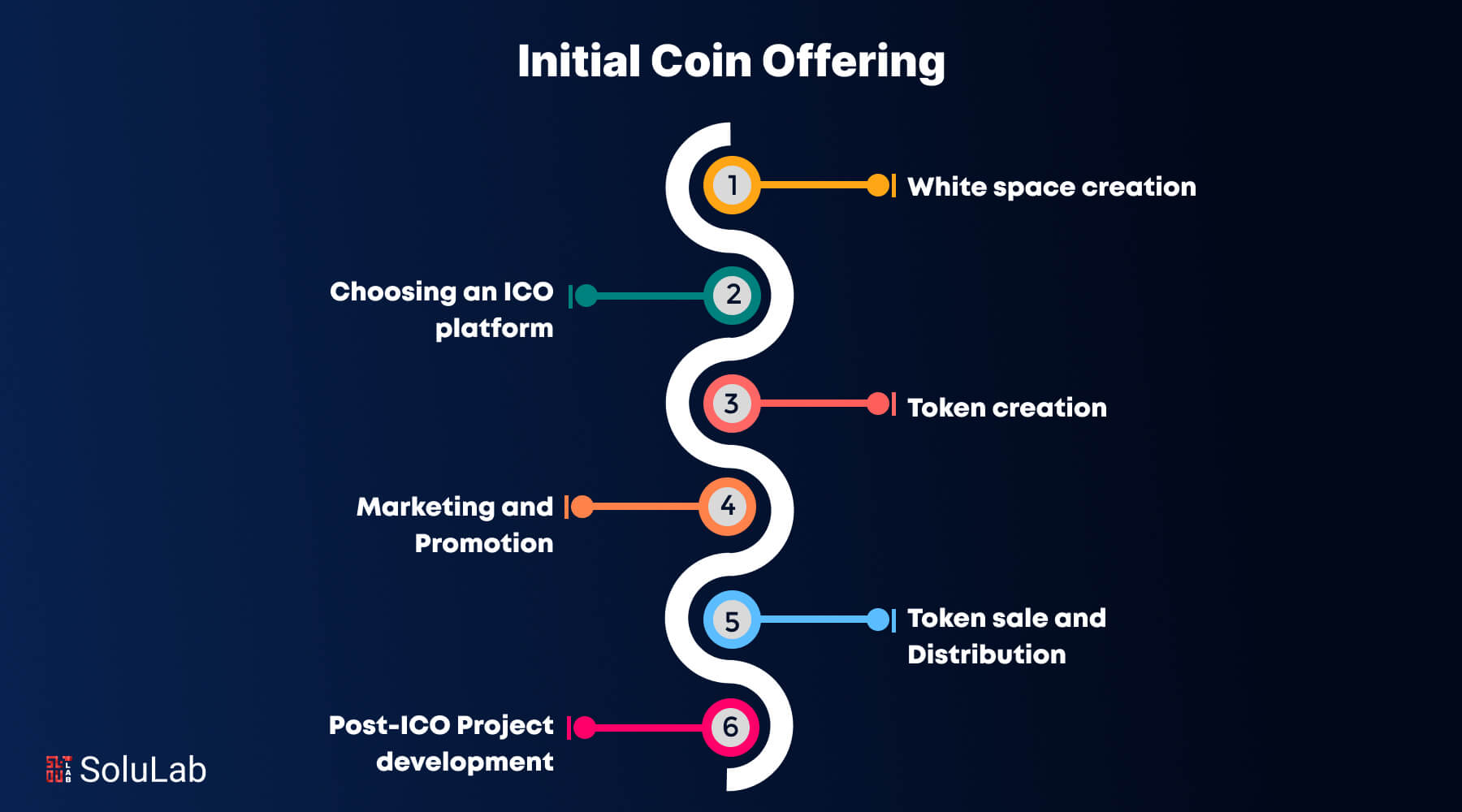
1. Whitepaper Creation
Launching an ICO starts with drafting a solid whitepaper. This document lays out the project’s goals, the technology behind it, the team, and the tokenomics: details on the token’s distribution, supply, and use cases. The whitepaper is what builds investor confidence and provides real transparency on what is an initial coin offering and how an initial coin offering works.
2. Choosing an ICO Platform
Projects usually pick a blockchain platform to host their ICO. The Ethereum blockchain, with its ERC-20 token standard, is one of the most popular choices thanks to its solid smart contract capabilities. These smart contracts automate the ICO process, keeping transactions secure and making sure tokens get distributed correctly once the ICO wraps up.
3. Token Creation
The project team builds the digital tokens that get sold during the ICO. These are often utility tokens that unlock access to a product or service inside the project’s ecosystem. They can also be security tokens representing an ownership stake, closer to a traditional security.
4. Marketing and Promotion
Attracting investors takes real marketing effort. That means listing the ICO on ICO initial coin offering lists, pushing it on social media, and showing up at blockchain events. The goal: build a community around the project and generate enough buzz to carry the ICO to success.
5. Token Sale and Distribution
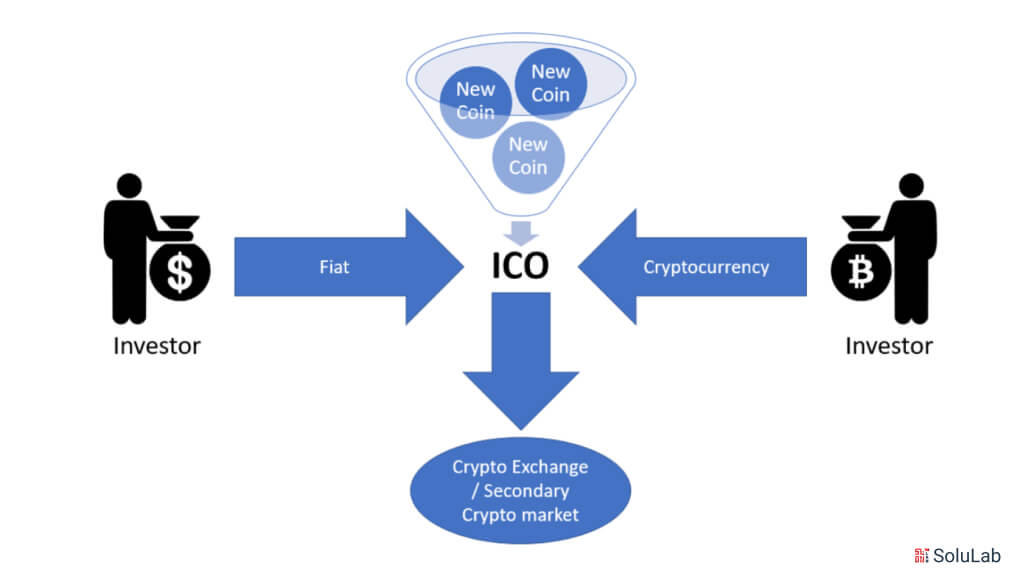
During the ICO, investors buy tokens in exchange for cryptocurrency, usually Bitcoin or Ethereum. The sale itself can take different forms: a fixed-price sale where every token goes for a set price, or a Dutch auction where the price drops over time until everything sells.
6. Post-ICO Project Development
Once the ICO wraps, the team puts the funds raised toward building out the product or service the whitepaper promised. Investors usually track progress through team updates and community engagement, keeping a close eye on how ICO works.

Types of ICOs
ICOs come in a few different flavors, each with its own characteristics and regulatory baggage. Here’s a quick rundown of the most common types:
- Public ICOs
Public ICOs are open to anyone who wants in. They’re highly inclusive and tend to draw a large number of small investors. That openness also means heavier regulatory scrutiny, and often compliance with securities laws across multiple jurisdictions.
- Private ICOs
Private ICOs are limited to a select group, usually institutional investors or high-net-worth individuals. They tend to raise bigger sums but stay out of reach for the general public.
- Security Token Offerings (STOs)
STOs are ICOs where the tokens are classified as securities. That means stringent regulatory oversight, which gives investors a higher degree of legal protection. Many see STOs as a safer, more regulated alternative to a standard ICO.
- Utility Token ICOs
Utility tokens are built for use inside the project’s own ecosystem. A utility token might be what you need to access a service, cover transaction fees, or vote on governance decisions within the platform. They don’t carry ownership rights or dividends, which is what sets them apart from security tokens.
Benefits of ICOs
Before getting into the benefits, it helps to understand how ICOs actually work and what types are out there.
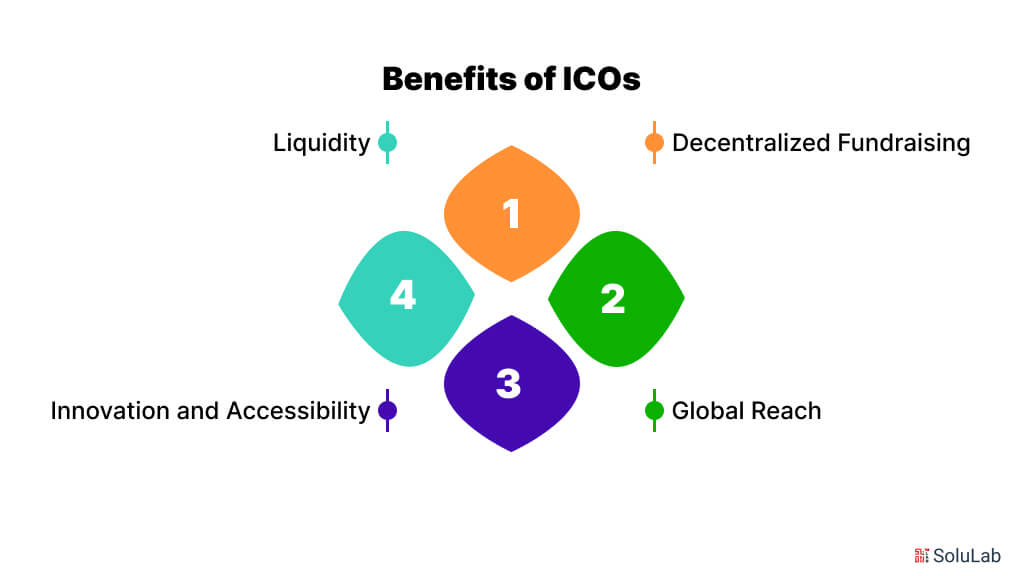
- Decentralized Fundraising
ICOs cut out traditional financial intermediaries like banks and venture capitalists. That decentralization lets projects raise funds directly from the public, which brings costs down and opens the door wider.
- Global Reach
ICOs pull in a global audience, letting projects attract investors from anywhere. That reach raises the ceiling on how much capital a project can raise and helps build an international community around it.
- Liquidity
Tokens issued in an ICO can often trade on cryptocurrency exchanges, which gives investors liquidity. That means buying or selling tokens whenever they want, potentially cashing in returns before the project is even fully built.
- Innovation and Accessibility
ICOs let projects secure funding without needing traditional venture capital at all. That’s fueled a surge of creativity and new projects across the blockchain space, pushing the whole industry forward.
| Year | ICOs Published | Funds Raised |
| 2016 | 29 | $90 million |
| 2017 | 875 | $6 billion |
| 2018 | 1,253 | $7.5 billion |
| 2019 | 109 | $370 million |
| 2020 | 14 | $55.6 million |
| 2021 | 320 | $378 million |
| 2022 | 217 | $117 million |
Who Can Launch an ICO?
Technically anyone can launch an ICO, though developed nations like the U.S. keep a close eye on registration requirements. That said, it’s not hard to set up an ICO as a scam, including faking registration documents, so investors need to stay sharp. Before launching an ICO, entrepreneurs should honestly assess whether their business actually needs one. Filing a security registration with the SEC is often a necessary part of doing this right.
Buying Into an ICO
Before putting money into a new ICO, do the research. Start by verifying who’s actually behind it and whether they’re accountable. Then look into the project leaders’ track record in crypto and blockchain. Be wary of projects that can’t show anyone with verifiable, relevant experience in the field. That’s often a red flag for a scam.
Identifying ICOs and Scams
ICO activity dropped off sharply in 2019, mostly because the legal landscape around them got so uncertain. There’s no foolproof way to track every new initial coin offering out there, but interested people can still research and participate. Sites like TopICOlist.com compare different ICOs side by side. Investors can also check registered cryptocurrency exchanges for insight into newly listed and unlisted coins, since many exchanges vet coins thoroughly before listing them, which adds a real layer of safety.
Cryptocurrency aggregators can help spot potential scams or genuine opportunities. Worth noting: aggregators don’t vet the coins themselves, they just provide informational services. They usually link out to a project’s GitHub pages, websites, and social media, laying out the problems the project claims to solve. If a coin has no dedicated section explaining it and the only available information is a string of nonsensical phrases, that’s usually a sign to walk away.
DO YOU KNOW?
“The U.S. Securities and Exchange Commission (SEC) can intervene in an ICO if necessary. For example, after the creator of Telegram raised $1.7 billion in an ICO in 2018 and 2019, the SEC filed an emergency action and obtained a temporary restraining order, alleging illegal activity on the part of the development team.4 In March 2020, the U.S. District Court for the Southern District of New York issued a preliminary injunction. Telegram was ordered to return $1.2 billion to investors and pay a civil penalty of $18.5 million.”
Investing in an ICO never comes with a guarantee you’ll avoid a scam. Still, there are steps you can take to lower that risk:
- Scrutinize the Project’s Goals: Successful ICOs usually lay out clear, concise goals in a whitepaper that’s easy to actually understand. Make sure the developers can state their objectives plainly.
- Demand Transparency: Expect full transparency from any company launching an ICO. Verify the team’s identities, backgrounds, and qualifications, and look for real evidence of experience in the relevant industry.
- Review the ICO’s Terms and Conditions: Regulations here keep shifting, so it’s on you to confirm an ICO is legitimate. Read the terms and conditions carefully, especially token distribution, fundraising goals, and the refund policy.
- Secure Escrow Wallet: Favor ICOs that store funds in an escrow wallet requiring multiple access keys. That adds real protection against scams.
- Consider Cryptocurrency Purchases: Some ICOs require investment in another cryptocurrency first. Be ready to buy those coins if you want to participate.
ICO Hyping
Initial Coin Offerings often generate serious buzz, pulling investors into online forums to debate potential opportunities. Prominent figures like Steven Seagal have pushed their followers toward popular ICOs. But the SEC has warned celebrities that endorsing an ICO on social media without disclosing compensation is illegal.
Notable cases include boxing legend Floyd Mayweather Jr. and music mogul DJ Khaled, who promoted Centra Tech, an ICO that raised $32 million in late 2017. Centra Tech later turned out to be a scam, leading to settlements with U.S. regulators for Mayweather and Khaled, and guilty pleas from three Centra Tech founders on ICO fraud charges.
Before jumping into an ICO, investors should genuinely educate themselves on cryptocurrencies and the specific ICO in question. Fake ICOs tend to get caught after the fact rather than stopped beforehand, so caution matters more than optimism here.
How ICOs Differ from IPOs?
While ICOs and IPOs share some similarities, both raise capital from the public, they differ in a few key ways:
- Regulation: IPOs answer to heavy regulation from financial authorities, while ICOs operate in a more decentralized, less regulated space.
- Ownership: IPOs sell shares of a company, handing investors real ownership rights. ICOs typically offer utility tokens that grant access to a product or service instead of ownership.
- Accessibility: ICOs stay more accessible to the public, open to anyone holding cryptocurrency. IPOs usually require investors to meet specific financial criteria first.

Conclusion
Initial Coin Offerings (ICOs) represent a genuinely different approach to fundraising in the digital age: decentralized, accessible, a real way for projects to secure capital and for investors to take part in the growth of the blockchain ecosystem. That said, an ICO’s success still comes down to careful planning, regulatory compliance, and marketing that actually works.
At SoluLab, we specialize in ICO development and offer end-to-end solutions to help your project succeed. From drafting a compelling whitepaper to building solid smart contracts and a customized ICO platform, our team of blockchain experts guides you through every step. With a proven track record and deep crypto expertise, SoluLab is a partner you can trust to launch a successful ICO.
Whether you’re an entrepreneur with an idea or an established company exploring new fundraising avenues, contact SoluLab to learn how we can help you hit your goals with a tailor-made ICO strategy.
FAQs
Bhavya is driving growth through data-backed demand generation for AI and Web3 solutions. With 9+ years in digital marketing, he has spearheaded initiatives that led to a 40% increase in qualified inbound leads. Bhavya shares insights on marketing ROI and scaling a digital presence via AI workflows. He is open to connecting with startups and enterprise teams to help them overcome their challenges.