Picking an IoT partner in 2026 isn’t simple. There are too many vendors, too many overlapping claims, and one wrong pick can cost you delays, a data breach, or a system that never quite integrates the way you needed it to.
Not every company is good at the same thing. Some are strong in industrial automation, others lead in smart homes or connected healthcare. You need a partner who understands your business specifically and can actually deliver something secure, scalable, and built to last.
| IOT market size is expected to reach $1.35 trillion in 2025, with an expected growth to $2.72 trillion by 2030 at a CAGR of 15.12%. |
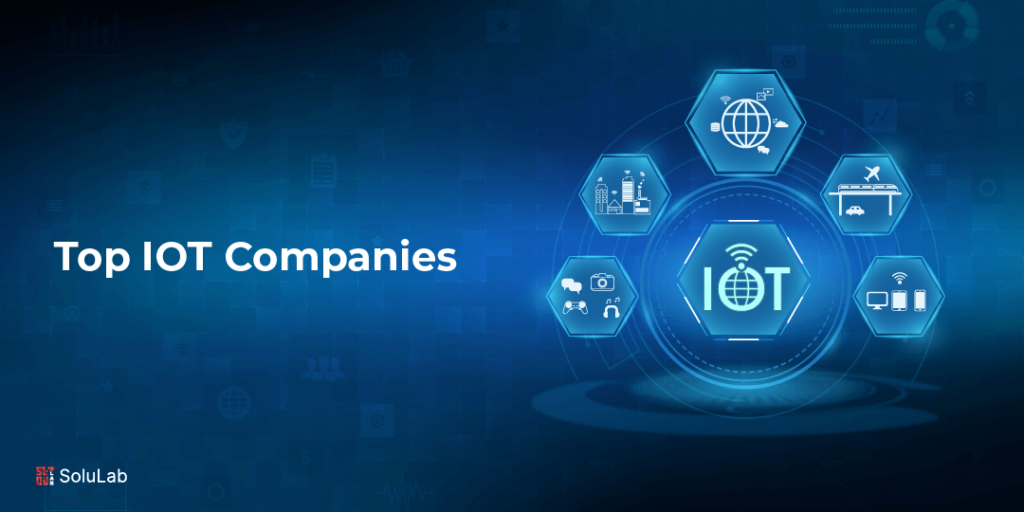
That’s why we put together this list: the top 10 IoT companies in 2026, ranked on innovation, expertise, client feedback, and real-world results. Startup or enterprise, this should help you make a faster, better call.
How to Select the Best IOT Company?
A few things worth checking before you sign anything:
- Check Industry Experience: Look for a company that’s already worked in your industry. They’ll get your problem faster and won’t need to learn your business from scratch.
- Evaluate Technical Expertise: Sensors, connectivity, cloud, analytics, security, a real IoT team needs to be solid across all of it, not just one piece.
- Review Past Projects: Ask for case studies or project portfolios. Nothing tells you more about a company than how they’ve actually solved problems for past clients.
- Focus on Security Standards: IoT lives and dies on security. Look for encryption, device authentication, and a real pattern of regular updates, not just a checkbox on a slide.
- Check Integration Capabilities: The solution has to fit into what you already run, ERP, CRM, whatever your stack is. Bolt-on systems that don’t talk to each other aren’t worth the trouble.
- Consider Scalability: Pick a company that builds IoT systems for where you’re headed, not just where you are now. More devices, more users, the system should handle it without a rebuild.
- Assess Support & Maintenance: Deployment day isn’t the finish line. Ask whether they offer 24/7 support, updates, and troubleshooting so downtime stays rare.
- Understand Pricing Structure: Get the full picture: setup costs, subscription fees, maintenance charges. Surprises in the invoice are a red flag, not a detail.
Top 10 IOT Companies in 2026

1. SoluLab
 $25-$49/ hr
 50-249
 2014
2014
 USA
USA
SoluLab builds IoT systems that actually scale, and they specialize in smart device integration, cloud infrastructure, and real-time data analytics.
They lean hard into user-centric design and security, which means clients get faster decisions and smoother operations without cutting corners. Strategy, prototyping, deployment, maintenance, SoluLab covers the whole lifecycle, which is why both startups and larger enterprises keep coming back.
2. AWS IoT
NA
10,000+
2016
USA
AWS runs IoT services built to link and manage billions of devices across industrial, consumer, commercial, and automotive use cases.
The stack covers everything from device management and storage to analytics and secure communication. AWS IoT Device Defender lets teams audit and monitor setups continuously, while encryption and access controls keep device data locked down.

3. Microsoft Azure
$200-$500/ hr
10,000+
1975
USA
Azure IoT has the biggest ecosystem in the space, backed by thousands of partners and hundreds of ready-to-deploy solutions. Teams can connect and monitor billions of devices on a fully managed platform without building infrastructure from zero.
The Azure IoT Hub is the core piece, a cloud-hosted backend that connects almost any device. It also handles edge computing, with per-device authentication, built-in device management, and provisioning that scales as you grow.
4. Cisco
$400-$500/ hr
10,000+
1984
USA
Cisco’s IoT stack gives businesses an end-to-end architecture for connecting devices, securing and automating OT activity, and managing all that data in one place.
Smart cities, manufacturing, utilities, Cisco’s solutions cover a lot of ground. Clients like Audi have used Cisco’s sensors and smart processes to genuinely change how they operate, pushing sustainability and efficiency at the same time.
5. Siemens
$200-$500/ hr
10,000+
1847
Germany
Siemens covers a broad range of IoT needs, from smart buildings to industrial IoT, built to fit different kinds of organizations.
Insights Hub, previously Mindsphere, drives smart manufacturing through the industrial Internet of Things, giving teams access to operational and asset data they can actually act on. On the building side, Siemens’ IoT tools improve space and asset use, lift employee productivity, and make buildings run better for the people inside them.
6. Intel
$200-$500/ hr
10,000+
1968
USA
Intel is combining edge computing, 5G, and AI to make IoT solutions faster and smarter. They lean on industry standards and a wide network of ecosystem partners to ship ready-to-deploy solutions that speed up insights and keep data secure.
Telehealth, medical imaging, diagnostics, Intel’s IoT technologies show up across healthcare and retail alike, all aimed at improving patient outcomes.
7. Huawei
$700+/ hr
10,000+
1968
USA
Huawei’s IoT strategy centers on infrastructure and ecosystem building, pulling in cloud services, AI, and broad connectivity. Its global network of IoT cloud services helps carriers get to market with IoT services faster and turn a profit doing it.
Predictive maintenance, public utilities, connected vehicles, Huawei’s Internet of Things solutions span a wide range of use cases.

8. Bosch
$500-$800/ hr
10,000+
1987
Germany
Bosch’s IoT package handles sensors, gateways, and devices under one roof, with an open platform that works across domains and locks down secure access control.
Bosch IoT Insights is a fully managed cloud service that gathers, analyzes, and stores IoT data for later use. It’s a self-service setup, so businesses can manage their own data without waiting on outside help.
9. Qualcomm
$25-$70/ hr
10,000+
1985
USA
Qualcomm builds on the Connected Intelligent Edge to ship end-to-end, ready-to-deploy IoT solutions, helping businesses cut costs, open new revenue streams, and run leaner operations.
By pulling previously disconnected devices online, Qualcomm makes near real-time data collection and smarter decisions possible. On-device AI does the heavy lifting, processing large volumes of data, video included, fast enough for real-time use.

10. SoftTeco
$55-$99/ hr
500+
2008
Lithuania
SoftTeco is a global software development company that focuses on end-to-end IoT solutions, with over 15 years in the field covering consulting, embedded software, mobile apps, and system integration.
Their work spans multiple industries, and the throughline is always operational efficiency and data-driven decisions. SoluTeco leans hard on security and scalability, which lets businesses adopt IoT without second-guessing the foundation it’s built on.
Future of IoT in 2026
2026 is shaping up to be a real turning point for IoT, with new technology integrations pushing its reach further into everyday industry.
- AI and Edge Computing Integration
Pairing Artificial Intelligence (AI) with IoT, what people call AIoT, is speeding up real-time data processing. Edge computing means data gets processed closer to where it’s generated, cutting latency and boosting efficiency in healthcare, manufacturing, and urban development.
- Expansion of IoT Devices
Connected IoT devices are expected to top 21 billion by 2025, a huge jump in how interconnected everything is becoming.
- Enhanced Connectivity with 5G
5G rollout means faster, more reliable connections, and that’s letting IoT devices run smoothly even in applications that need high bandwidth and near-zero latency.
- Advancements in Healthcare Applications
IoT is revolutionizing healthcare through remote patient monitoring, wearables, and real-time health data analysis is genuinely improving patient care and how efficiently clinics operate.
Conclusion
The right IoT company can make or break how your business grows. Manufacturing, healthcare, retail, logistics, whatever your industry, these companies bring the tools and know-how to deliver real-time data, sharper efficiency, and a real competitive edge.
IoT keeps evolving, so finding a trusted, future-ready partner matters more than ever. Take a hard look at your own needs before you decide, and match them against what each company actually does well.
SoluLab, an IOT development company, can help you integrate smart devices and make sense of real-time data. Get in touch and let’s talk through it.
FAQs
Shipra Garg is a tech-focused content strategist and copywriter specializing in Web3, blockchain, and artificial intelligence. She has worked with startups and enterprise teams to craft high-conversion content that bridges deep tech with business impact. Her work translates complex innovations into clear, credible, and engaging narratives that drive growth and build trust in emerging tech markets.