

- AI Development
- AI App Development
- AI Consulting
- AI Software Development
- ChatBot Development
- Enterprise AI ChatBot
- AI Chatbot Development
- LLM Development
- Machine Learning Development
- AI Copilot Development
- MLOps Consulting Services
- AI Agent Development
- Deep Learning Development
- AI Deployment Services
- Deep Learning Consulting
- AI Token Development
- AI Development Company
- AI Development Company in Saudi Arabia
- AI Integration Services
What if fans were able to get involved as stakeholders rather than as collectors in the upcoming major record release, movie release, or concert tour?
From streaming royalties to concert tickets, the entertainment industry has always thrived on exclusivity. But now, blockchain is changing the game. Real-world asset (RWA) tokenization—once limited to finance and real estate—is quickly making its way into media and entertainment.
The global Blockchain in Media, Advertising, and Entertainment Market is projected to grow from USD 2.68 billion in 2025 to USD 48.50 billion by 2030, reflecting a CAGR of 78.49%.
It’s giving artists new ways to earn from their work and offering fans more than just a front-row seat. Now, they can invest in, trade, and actively participate in the success of the content they love.
This enables the safe and open management of assets such as concert tickets, music royalties, and exclusive products in the entertainment industry. In this blog, we’ll explore what tokenization entertainment is, why it matters and more.
What Is Tokenization in Entertainment?
Tokenization in entertainment refers to the process of converting rights or ownership of creative assets such as films, music, or publishing rights into digital tokens using blockchain technology. These tokens can represent fractional ownership, revenue shares, or access rights, making it easier for creators to raise funds and for fans or investors to participate in a project’s success.
In the entertainment industry, tokenization enables creators to digitize various rights associated with their work. For example, a filmmaker can tokenize a movie’s potential revenue streams, like box office earnings, streaming royalties, or merchandise sales, into digital tokens.
These tokens can then be sold to investors, providing upfront capital for the project. In return, token holders may receive a share of the profits generated by the film.
Why are RWAs in the Entertainment Industry Important?
Here’s why RWAs are important in the entertainment industry, especially when it comes to the benefits of tokenization for movie investors:
- Democratized Investment Opportunities: Tokenization allows fans and small investors to own fractions of entertainment assets, such as films or music rights, enabling broader participation in the industry.
- Enhanced Liquidity: Traditionally illiquid assets like film rights become more liquid through tokenization, facilitating easier buying and selling of ownership stakes.
- Transparent Royalty Distribution: Smart contracts on blockchain ensure automated and transparent royalty payments to rights holders, reducing disputes and ensuring timely compensation.
- Global Accessibility: Tokenized assets can be accessed and traded globally, breaking down geographical barriers and attracting a diverse pool of investors.
- Cost Efficiency: By eliminating intermediaries, tokenization reduces transaction costs and streamlines processes like fundraising and rights management.
- New Revenue Streams: Artists and creators can monetize their work in innovative ways, such as selling NFTs or offering exclusive content to token holders.
- Fan Engagement and Community Building: Token holders often gain access to exclusive content or decision-making processes, fostering a deeper connection between creators and their audience.
Real-World Assets in Media & Film: What’s Being Tokenized?
The entertainment industry is experiencing a revolutionary shift as blockchain technology enables the tokenization of various real-world assets in media and film. This transformation is creating new ownership models, funding mechanisms, and fan engagement opportunities.
Here’s what’s happening in the types of entertainment tokenization of movie and film assets:
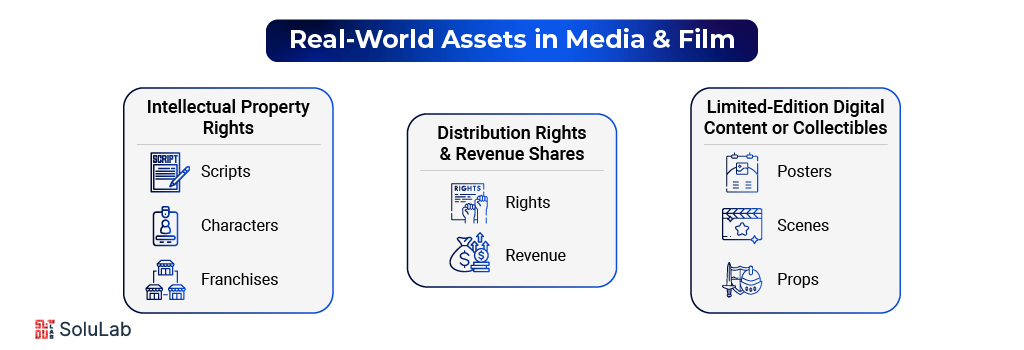
1. Intellectual Property Rights (Scripts, Characters, Franchises)
- Fractional Ownership: Filmmakers and studios are tokenizing IP rights, allowing investors to own a fraction of scripts, characters, or entire franchises. This democratizes investment opportunities in the film.
- Smart Contracts for Royalties: By embedding IP rights into smart contracts, creators ensure automated and transparent royalty distributions whenever the content is used or monetized.
For example, Marvel Studios collaborated with VeVe to release Spider-Man digital collectibles as NFTs, offering fans a new way to engage with the franchise.
2. Distribution Rights and Revenue Shares
- Tokenized Revenue Streams: Films are now offering tokens that represent a share in future revenues, allowing fans and investors to earn alongside the success of the movie.
Example: The documentary “Atari: Game Over” tokenized its post-release revenue rights, enabling fans to purchase fractional ownership in the film’s income from streaming and distribution.
3. Limited-Edition Digital Content or Collectibles
- Exclusive Digital Assets: Studios are creating limited-edition NFTs of posters, scenes, or props, providing fans with unique digital memorabilia.
Real-World Example: Warner Bros. released “The Lord of the Rings: Fellowship of the Ring” as an NFT bundle, including the 4K extended edition and behind-the-scenes footage.
How does Tokenization help Artists?
With tokenization, artists can manage, monetize, and share their creations. By converting creative works into digital tokens on a blockchain, artists get new opportunities for revenue, ownership, and audience engagement. Let’s see the benefits of tokenization for artists and the film industry:
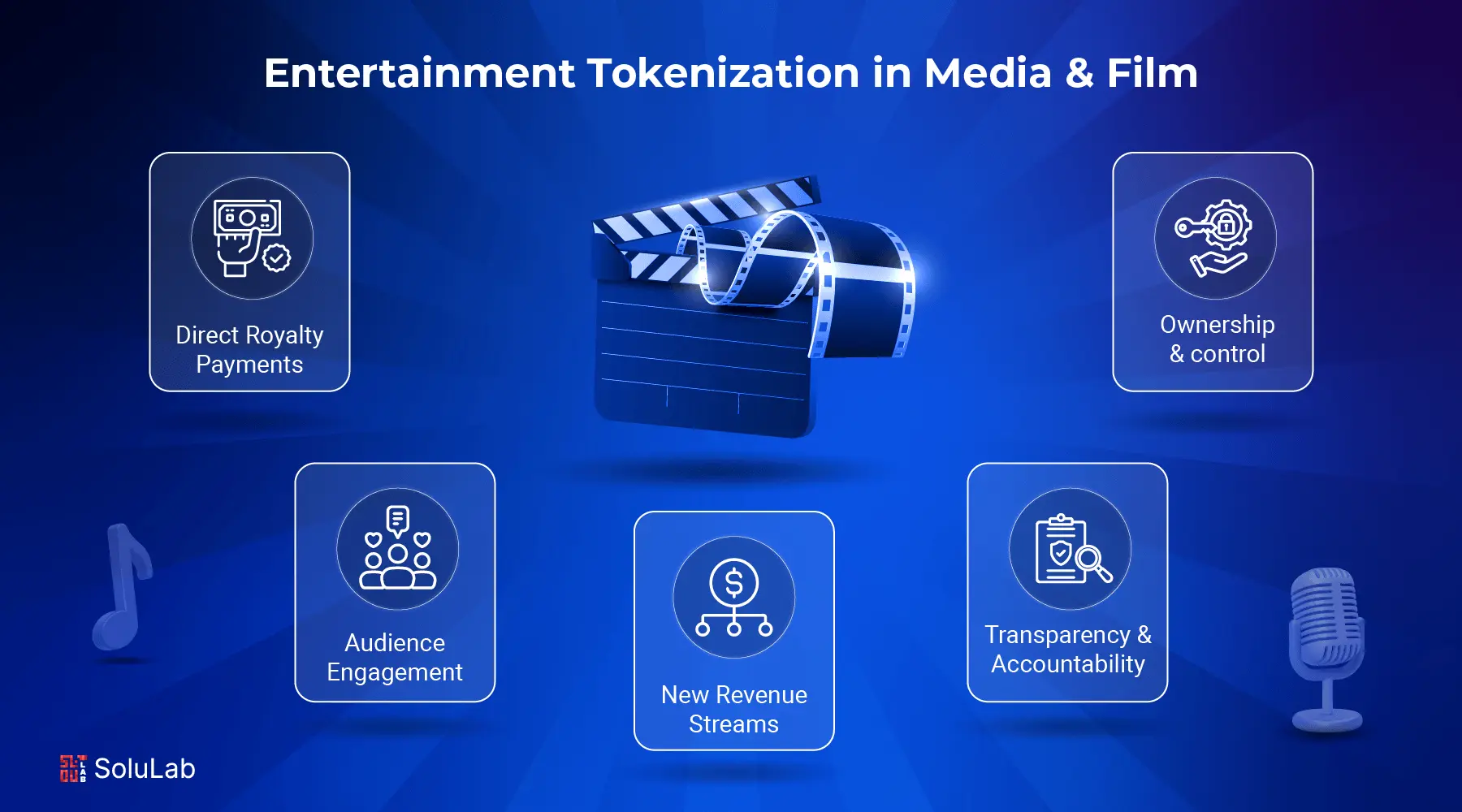
- Direct and Faster Access to Royalty Payments: Tokenizing music royalties enables artists to receive direct and instant payments from token holders, eliminating intermediaries and reducing delays in royalty distribution.
- Increased Transparency and Accountability: Blockchain’s transparency allows artists to have a clear view of their royalty earnings. Smart contracts can automate royalty calculations and distribution, ensuring accurate and transparent payments.
- Retention of Ownership and Control Over Intellectual Property: Through asset tokenization, artists can retain ownership of their intellectual property while monetizing it. They can set terms for token holders, maintaining control over how their work is used and licensed.
- Broader Audience Engagement and Fan Interaction: Tokenization fosters a closer relationship between artists and their fans. By offering tokens, artists can involve their fan base in their success, providing exclusive benefits and fostering a sense of community.
- New Revenue Streams: Artists can monetize their work in innovative ways, such as selling fractions of their artwork or offering exclusive content to token holders, opening up additional income avenues.
Read Also: How Real-World Asset Tokenization is Transforming Investments?
The Platforms Shaping the Tokenized Entertainment
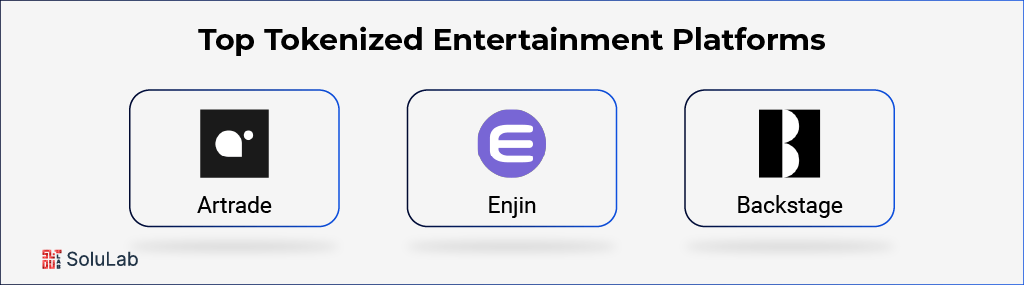
1. Artrade
Artrade is changing the way that artists and art consumers engage with tangible pieces of art by integrating them into the blockchain environment. Through the REAL protocol (Reliable Electronic Artwork Ledger) of the platform, each physical piece is matched with a digital counterpart.
Artrade only takes 5% of commissions, whereas established marketplaces frequently charge up to 50%, allowing artists to keep more of the value of their work.
2. Enjin
George Murphy and the Rising Sons are among the musicians who have partnered with Enjin, a blockchain company that is well-known for its work in digital assets and games, to tokenize actual vinyl recordings.
Artists can sell their albums directly to fans by converting them into NFTs, which offer on-chain ownership and verified authenticity.
3. Backstage
Real-world asset (RWA) tokenization is being introduced to live entertainment through the full-cycle platform Backstage. It improves operations for artists and promoters by utilizing blockchain technology to enable revenue-sharing, smart ticketing, and event-related benefits like hotel reservations and VIP access.
Backstage is changing the way local economies interact with live events in ways that go beyond ticketing. Conventionally, local eateries and hotel chains profit from fan spending, but promoters and musicians don’t. By integrating hotel and travel reservations directly into its ecosystem, Backstage challenges this model. The platform turns hospitality into a shared financial engine by generating new revenue streams for creators with each reservation.
Read More: Why Is Real-World Asset Tokenization Gaining Global Popularity?
Future of Tokenized Entertainment
The future of tokenized entertainment is poised to redefine how we experience, fund, and interact with media. By converting film assets, rights, and profits into digital tokens managed securely on blockchain platforms, tokenization enables fractional ownership and opens up investment opportunities to a global audience. This democratization allows fans and investors alike to participate in the success of their favorite projects.
Moreover, tokenization facilitates transparent and efficient royalty distribution through smart contracts, ensuring creators are fairly compensated. As the market for tokenized assets continues to grow, with projections estimating it could reach $24 trillion by 2027, the entertainment industry stands to benefit from this shift.
Tokenization is not just a technological advancement; it’s an approach that allows creators and audiences to pave the way for a more participatory entertainment ecosystem.
Conclusion
Entertainment tokenization is gaining momentum because it’s changing how we create, fund, and experience content. Fans are no longer just viewers, they’re becoming part owners and stakeholders. This shift is creating deeper engagement, as people now have a personal stake in a film’s success.
For creators, it’s opening up new funding avenues without relying solely on studios. Plus, blockchain ensures transparency and trust, something the industry has long struggled with.
As digital collectibles and token-based access grow, the lines between audience and investor are blurring. It’s clear: tokenization isn’t a trend—it’s the future of storytelling and fan-powered entertainment.
SoluLab, an RWA tokenization development company, can help you grab the best opportunities with ultimate tokenization services. Have an idea? Connect now!
FAQs
1. Can fans own a part of a movie?
Yes! Due to the tokenization of entertainment assets, fans can now own fractional shares in movies, scripts, or music projects. This means they’re not just viewers—they can earn a return if the project succeeds.
2. What kind of assets can be tokenized in entertainment?
In entertainment, almost anything can be tokenized—IP rights like characters and scripts, revenue from distribution, limited-edition digital collectibles, event tickets, and even exclusive behind-the-scenes content. These digital tokens allow fans and investors to own, trade, or profit from pieces of the entertainment ecosystem.
3. Is tokenization only for big-budget films?
Not at all! Tokenization has become a powerful tool for indie filmmakers, too. It helps them raise funds directly from their audience, bypassing traditional gatekeepers. This model also builds a loyal fan base early in the production process.
4. What’s the role of blockchain in all this?
Blockchain is the tech backbone of tokenization. It ensures every transaction, whether it’s about ownership, royalties, or content usage, is secure, transparent, and tamper-proof. It also enables smart contracts that automatically manage royalty payouts and asset transfers, reducing the need for middlemen and increasing trust in the system.
5. Where can I explore tokenized entertainment projects?
You can explore tokenized entertainment on platforms like Filmio, Mogul Productions, and FilmBlox. These platforms allow users to invest in upcoming films, earn rewards, and sometimes even vote on creative decisions.

