Talk to an Expert

How Will Blockchain Interoperability Impact Enterprise Adoption in 2025?

Blockchain Interoperability’s Impact on Enterprise Adoption

By 2025, enterprises will not only be investigating blockchain but also insisting on more intelligent, interconnected platforms. As enterprises progressively utilize decentralized technology, a significant difficulty will arise: How can these isolated blockchains efficiently interact with one another? This is where blockchain interoperability becomes relevant.

Blockchain interoperability solutions enable several blockchains to transfer data and assets independently of centralized middlemen. This capability of communicating effortlessly across platforms enhances productivity and facilitates creative corporate applications in supply chain, finance, and healthcare.

This blog will examine how blockchain interoperability is set to transform enterprise adoption in 2025. We will explore the real-world impacts of interoperability on decentralized ecosystems, from facilitating frictionless data interchange to enhancing cooperation.

What is Blockchain Interoperability? 

Blockchain interoperability means that different blockchain networks can talk to each other, share data, and work together without any problems. When there are many blockchains, each with its own protocols, consensus methods, and use cases, interoperability makes sure that these networks don’t stay separate but work together as a whole.

In the next few years, the blockchain interoperability market is expected to grow at a rate of 28.30% per year, rising from USD 0.83 billion in 2025 to USD 7.90 billion by 2034. There was also a blockchain interoperability market that was worth USD 0.65 billion in 2024.

Earlier, blockchain systems worked alone, with a limited network. Businesses that wanted to use multi-chain plans or add decentralized systems to current platforms had a hard time. Compatibility is important as it lets you exchange money, share smart contracts, and control your name or assets in a unified way across multiple networks.

For example, Chainlink’s Cross-Chain Interoperability Protocol (CCIP) lets different blockchains talk to each other in a safe and scalable way. These methods make it easier for businesses to work together and open up new services, such as multi-chain DeFi platforms, tracking the global supply chain, and making payments across borders.

CTA1

Why Blockchain Interoperability Matters for Enterprises?

Blockchain interoperability is not just a technological benefit for businesses; it is also a strategic need. Maximizing efficiency, lowering costs, and preserving a competitive advantage depend on integrating many systems and chains as companies use blockchain technologies across departments and worldwide operations. Cross-chain interoperability, therefore, helps to link otherwise separated systems into a coherent digital infrastructure.

Read Also: Difference Between Cross-chain And Multichain

Here’s why enterprises need interoperability:

  • Seamless Data Exchange: Interoperability lets enterprises move data across many blockchain systems, therefore ensuring consistent and coordinated information flow across platforms.
  • Multi-Chain Operations: Enterprises sometimes use many blockchains for different purposes—supply chain, finance, identification, etc., even if they are related. 
  • Enhanced Efficiency: Cross-chain interoperability simplifies operations and speeds decision-making by lowering the requirement for manual reconciliation and outside intermediaries.
  • Scalable Innovation: Interoperability gives the flexibility to embrace new chains and technologies as they develop without redesigning current infrastructure, hence facilitating long-term scalability.
  • Improved User Experience: Whether they are shared loyalty programs or cross-chain payments, interoperability helps consumers, partners, and stakeholders to have better interactions.
  • Future-Proofing Investments: Blockchain standards may change, but interoperability ensures that business solutions stay flexible and relevant, therefore safeguarding long-term technological investments.

How Blockchain Interoperability Works?
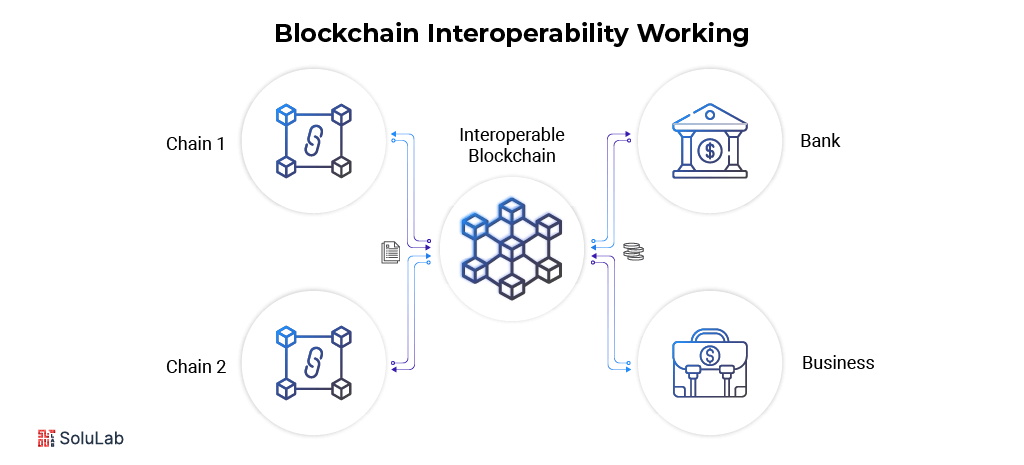
Blockchain Interoperability Working

Blockchain interoperability facilitates communication and information exchange among diverse blockchain networks, each with distinct rules, consensus methods, and data formats, without the need for centralized intermediaries. This intercommunication is essential in corporate settings where many blockchains serve distinct purposes, and cohesive data flow is imperative for efficient operations.

This approach fundamentally relies on distributed ledger technology (DLT), which offers safe data recording and maintenance over a decentralized network. However, because each blockchain functions autonomously, interoperability layers or protocols are required to connect these distinct ledgers.

This is the normal operation of interoperability within blockchain ecosystems:

  • Relays and Bridges: These are methods based on interoperable smart contracts that enable one blockchain to oversee and authenticate data from another. Relays function as intermediaries, transmitting transaction verifications between chains in a trustless manner.
  • Atomic Swaps: A technique that facilitates direct P2P transactions of assets across disparate blockchains without the necessity of a centralized exchange. This is crucial for DeFi interoperability, enabling users to exchange assets across decentralized platforms such as Ethereum and Binance Smart Chain.
  • Middleware Protocols: Interoperability solutions like Polkadot, Cosmos, and Hyperledger interoperability frameworks offer a unified layer that links several blockchains. These function as a universal translator, facilitating smooth communication and value transfer across enterprise and public blockchains.
  • Inter-Blockchain collaboration (IBC): A protocol utilized by Cosmos, IBC establishes standards for inter-blockchain messaging, facilitating secure and organized collaboration.
  • APIs and SDKs: In corporate applications, APIs are frequently utilized to facilitate interaction between legacy systems and blockchain networks. These technologies facilitate the standardization of interoperability without necessitating extensive protocol-level integration.
  • Oracles: External data feeds, such as Chainlink, provide the utilization of real-world data or outputs from one blockchain by another to initiate smart contract executions, hence augmenting the functionality of interoperable systems.

Approaches to Achieve Blockchain Interoperability
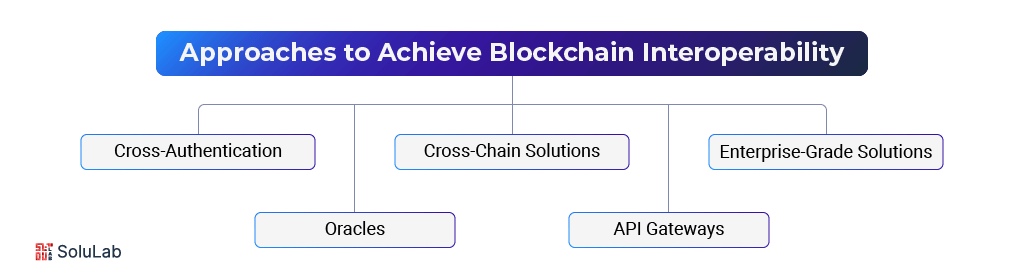
Blockchain Interoperability Approaches

Today, many methods and tools can be used to make blockchain systems work with each other. This can be done in two ways: directly by changing the infrastructures of blockchains so that transactions follow the same business logic across multiple networks; or indirectly by using external interoperability protocols that connect blockchains securely and make it possible for data, tokens, and messages to be sent between them. Here are some of the main methods that were used to make this feature work.

  • Cross-Authentication

With cross-authentication, a separate, trusted network acts as a go-between for blockchain networks to check transactions and shared data between chains. Third-party blockchain tools, such as trust methods, token links, or sidechains, are often used to handle this.

In a notary-based model, the transaction is approved by a notary on one blockchain, who then sends proof of this to the target chain. Single-signature and multi-signature notaries are the two types of notaries that are used in these kinds of programs. This makes the system more trustworthy and resilient.

  • Oracles

Oracles are very important for DeFi interoperability because they connect blockchain systems to outside data sources and even other blockchains. As trusted messengers, they send data from the real world to smart contracts or events that happen on the blockchain to other blockchain networks.

For instance, if two people use a smart contract to bet on a sports game, the smart contract itself can’t see how the game turns out. Then, oracles come in—they get the match result from a trusted outside source and send it safely to the smart contract, setting off the right outcome. In this way, oracles are the building blocks of connecting blockchains and off-chain systems.

  • API Gateways

API gateways act as software that makes it easier for blockchain protocols and external apps to talk to each other. They basically act as interpreters, taking requests from outside the blockchain network, like transaction directions or data questions, and putting them in the right shape for that network.

When the gateway gets a request, it figures out which blockchain it should send the command to and changes the style of the command so that it works with that network’s protocol. These interfaces are very important for letting global ledgers and off-chain business apps talk to each other in real time.

  • Cross-Chain Solutions

Cross-chain interoperability solutions set up a way for blockchain apps to talk to each other so that they can share data, coins, and contract calls across different blockchain platforms. These solutions create a standard interface that can be used across different networks. They do this by using token links and built-in Oracle services to make exchanges safe and reliable.

Cosmos, Polkadot, Chainlink, and Wanchain are just a few of the new message and transfer platforms that have made it easier for assets and information to move between chains. At the heart of getting efficient and useful blockchain collaboration are these options.

Related: What is Cross-Chain Compatibility? 

  • Enterprise-Grade Solutions 

Enterprise blockchains are usually private and require permissions to access, unlike public chains like Ethereum or Bitcoin. This makes it harder for them to connect to other networks. Interoperability, on the other hand, lets these companies use the blockchain technology that is already in place, so they don’t have to build new systems from scratch.

Also, enterprise-level sharing makes it easier for companies to share data safely and quickly. This is especially important in sensitive fields like healthcare and finance. When you use enterprise-grade cross-chain interoperability, you can be sure of strong privacy, data control, and compliance, and you can still work together easily with people from different environments.

The Future of Blockchain Interoperability in Enterprise Adoption

As 2025 goes on and beyond, blockchain interoperability is likely to become an essential requirement. Multi-chain methods are being used more and more by businesses to improve processes across departments, areas, and sectors. Finance, supply chains, healthcare, and the government are all realizing they need blockchain communities that are all linked and can talk to each other easily. 

Making open, safe, and accepted standards that allow people to work together across chains without losing privacy, compliance, or performance is what the future holds for blockchain interoperability. Companies that want to use blockchain in the long term will need to work with an experienced enterprise blockchain development company

These companies offer both blockchain development services and consultation on how to set up scalable, open infrastructure that fits the modern needs. Businesses that invest early in these systems will gain a competitive edge as interoperability improves. This is because they will be able to use real-time automation, cross-platform data access, and new income models powered by connected blockchain networks.

CTA2

The Bottom Line

Blockchain interoperability is no longer an idea from the future; it’s a business must. As enterprises move from test projects to full-scale blockchain integration, their ability to connect to each other over various networks will determine how well their digital transformation efforts work. This builds the foundation for better, more connected processes in many fields.

SoluLab, as a leading enterprise blockchain development company, helps businesses adapt to this change by providing custom blockchain solutions that put growth and connectivity first. Our work on the OBORTECH Smart Hub project is a great example of this because it uses Blockchain-as-a-Service (BaaS) to make things run more smoothly. This latest technology platform lets businesses create decentralized apps using third-party cloud infrastructure. 

Now is the time to act if your business is looking into blockchain or wants to expand current projects with solutions that work with each other. To find out how SoluLab can help you build cross-chain skills while discovering the real value of using blockchain in your business, get in touch with us!

FAQs

1. How is blockchain interoperability different from traditional system integration?

Traditional system integration connects centralized databases or platforms using middleware. Blockchain interoperability, on the other hand, enables decentralized networks—often with different consensus mechanisms and protocols—to securely share data and interact without intermediaries.

2. Can blockchain interoperability support compliance with industry regulations?

Yes, when designed with governance in mind, interoperable blockchain development services can enhance regulatory compliance. They allow traceable, auditable data exchange across networks, which is particularly useful in industries like finance and healthcare that demand strict compliance protocols.

3. How does blockchain interoperability influence data privacy for enterprises?

Interoperability solutions can be designed to maintain strict data privacy controls by enabling selective data sharing and encryption. Enterprises can retain sensitive information on private chains while still interacting with public or consortium networks as needed.

4. Is blockchain interoperability only relevant for large enterprises?

Not at all. While large organizations often lead adoption, small and mid-sized businesses can also benefit by integrating with larger ecosystems, automating transactions, and accessing shared data and services without rebuilding infrastructure from scratch.

5. How does blockchain interoperability affect supply chain transparency?

It enhances supply chain transparency by enabling real-time data sharing between different stakeholders, even if they use different blockchain platforms. This ensures consistent tracking, verification, and visibility across the entire supply chain network.

Introduction to Cross-Chain Bridges and Platform Solutions

Cross-Chain Bridges

With decentralized applications running on hundreds of distinct blockchains and second-layer solutions, each with security and trust strategies, the Web3 ecosystem is increasing cross-chain compatibility. Recent events demonstrate how crucial the cross-chain protocol has become since its introduction in 2021. Wormhole, a well-known cross-chain messaging technology has transported over $39 billion across its token bridge and just reached $1 billion cross-chain communications. Similarly, Axelar has grown significantly within the last year with active addresses rising by 430% and interchain transactions rising by 478%.

Communication across blockchain platforms is not a native feature. Therefore, blockchain interoperability is essential for a multi-chain ecosystem to reach its full potential. Cross-chain messaging protocols are the foundation of blockchain interoperability since they allow smart contracts to read and write data from different blockchains. Web3 requires strong cross-chain interoperability solutions to allow tokens and data to flow securely.

This article will discuss cross chain bridging, the types of it, and why you need to incorporate it to overcome the constraints while operating.

What are Cross-Chain Bridges and Their Types?

cross-chain bridging

Software programs known as cross-chain bridges make it possible for transactions to take place between different blockchains. Cross-chain bridges are crucial components of any transaction that involves the transfer of Bitcoin, NFTs, and Decentralized Finance (DeFi) within blockchain networks. A significantly wider digital ecosystem is produced by cross-chain bridges, which allow inter-network transactions even while the majority of digital assets are linked to a particular blockchain. 

Many other creative activities can take place with the help of cross-chain bridges, but there are security issues with them because hackers have targeted these programs Cross-chain bridges are technical, therefore it’s advisable to utilize them only if you know what you are doing and how they work. There are three primary types of cross-chain bridges:

  • As a type of IOU, lock and mint involves a user locking tokens within a smart contract on the origin chain and the minting wrapped replicas of these locked tokens on the destination chain. Oppositely, the original coins on the source chain are unlocked by burning the wrapped tokens. 
  • The same native tokens are reissued or minted from the destination chain after a user burns them on the source chain. 
  • After locking tokens on the same source chain, a user unlocks the same tokens on the destination chain from a liquidity pool. Typically, these kinds of cross-chain bridges draw cash from both parties via revenue sharing. 

After the bridge function is finished, programmable token bridges allow for more intricate cross-chain capabilities. Within the same transaction in which the bridging function is performed, the tokens can be swapped, lent, staked, or deposited in a smart contract onto the destination chain. 

Cross-chain bridge technology can also be categorized by looking at where they fall on the trust-minimization spectrum in terms of sending the resulting transaction to the recipient blockchain and verifying the status of the source blockchain.

Main Cross-Chain Bridges

Main Cross-Chain Bridges

Users should confirm that the particular blockchain network, coin, or NFT they want to bridge is supported before selecting a cross-chain bridge. Additionally, the costs charged by various networks vary and are subject to sudden changes. The following are well-known cross-chain bridges:

1. Celer cBridge

The celer cBridge facilitates liquidity across many blockchains by utilizing the celer state guardian network. It supports a wide array of blockchain networks such as Boba network, Heco, Clover, Moonbean, Shiden, Aurora, Polygon, etc. These are a few cryptocurrency tokens supported by Celer cBridge Binance USD, Dodo, Unified Society, Lyra, etc. 

2. Portal Token Bridge 

A wormhole protocol, which facilitates tokens and NFT transfers between chains, powers the portal token bridge. Acala, Fantom, Aurora, and Binance smart chains are among the supported blockchain networks.  These are among the cryptocurrency tokens that support the portal token bridge Tether, Frax protocol token, the sandbox, and Uniswap. 

3. Synapse Bridge

The synapse protocol’s universal interoperability concept makes secure cross-chain communication possible. Ethereum, Cronos, Optimism, Polygon, Boba network, and Moonriver are among the supported blockchain networks. 

Read Blog: Multi-Chain Vs. Cross-Chain

4. MultiChainq

Multichain earlier known as Fantom Anyswap, bills itself as a cross-chain router technology that facilitates the transfer of assets and data between several blockchain networks. This provides a greater variety of token kinds than any other cross chain bridging service. 

What are Cross-Chain Bridge Platform Solutions?

Blockchain cross-chain solutions are crucial components of the blockchain ecosystem since they allow for smooth communication across various blockchain networks. These platforms get around the drawbacks of siloed systems by enabling the exchange of information and assets between different blockchains.

  • Transactions between blockchain networks are made possible by cross-chain bridge platform solutions. 
  • Cryptocurrency along with other digital assets and Defi protocols is used by the software that powers the cross-chain platform solutions.
  • Cross-chain bridge platform solutions are open to security including hacking. 

Cross-Chain Case Study

How Cross-chain Bridges Work?

The blockchain bridge platform essentially functions by locking or burning tokens on the blockchain (the source) and then unlocking or creating equal-wrapped copies of these valuables on a different network (the target). The original asset is represented by this “wrapped” token, which is always redeemable or exchangeable. By utilizing decentralized protocols, validators, and smart contracts, this procedure can be customized to incorporate various chains. Here is the breakdown of how cross-chain bridges work:

1. Bridging Mechanisms 

To make it easier to move assets and data between different blockchain platforms, cross-chain bridge platform solutions make use of oracles, smart contracts, and various other platforms.

2. Navigate Bridge Tokens 

In the bridging procedure, a native token is essential. To secure the bridge and guarantee the integrity of the transaction, it is reinforced as collateral and symbolizes the transferred value. 

3. Consensus Mechanisms

Cross-chain bridge development solutions mostly use consensus techniques, such as multi-signature wallets and threshold signatures, to guarantee the legitimacy of transactions over several chains. 

4. Relayers or Validators 

These individuals ensure consensus among the involved networks and validate transactions. They may be reputable third-party validators or independent organizations compensated for their involvement. 

5. Decentralized Oracles 

To enable cross-chain data or asset transfers, sophisticated cross-chain bridge platform solutions use decentralized oracles to retrieve real-time data from off-chain sources or external blockchain networks. 

6. Locking and Unlocking of Assets

To ensure process security and integrity, the asset transfers between various blockchain platforms via this interoperability solution frequently entail locking in the items in question in the source as well as unlocking them on the destination chain. 

7. Security and Governance Models 

The development of cross-chain bridge solutions can be combined with governance models in which participants vote on ideas that determine how the bridge will function. S cross-chain bridges are hacker honeypots, security procedures like audits are essential to ensure their credibility. 

8. User Experience

To move assets between blockchains, users interact directly with cross-chain bridge platforms. Therefore, to facilitate easy accessibility of notifications, transaction records, etc, cross-chain bridge-building companies must carefully design user-friendly interfaces.  

Read Also: Blockchain in Water Management

Do You Require A Cross-Chain Bridge Platform Solution?

Cross-chain bridge platform solutions are essential in various ways for different blockchain stakeholders as they facilitate improved interoperability and user engagement. Expanding operations over several networks can greatly help Decentralized Finance (DeFi) and Decentralized applications (dApp) projects by reaching a wider audience and employing a variety of blockchain technologies.

Both centralized and decentralized cryptocurrency exchanges improve user experiences by enabling smooth trade between several blockchains through cross-chain swaps. These systems are used by NFT marketplaces to provide NFT trading over many networks, hence expanding liquidity and market reach. Additionally, by including cross-chain functionality decentralized apps can draw users from various networks and provide more adaptable services. By enabling users to move in-game assets between networks, cross-chain bridges help gaming platforms create a more flexible gaming environment. 

Major Benefits of Cross-Chain Bridge Platform Development

Cross-chain bridges offer users real benefits and are more than simply technological achievements. Here are the following benefits of a multi-chain bridge platform:

1. Increased Liquidity

By facilitating the exchange of assets between various blockchain networks, cross-chain bridges increase liquidity and give consumers new ways to access and use their cryptocurrency holdings. 

Increased token utility contributes to the expansion of economic activity in the decentralized finance (DeFi) space, and cross-chain liquidity also helps to avoid economic barriers. 

2. Availability of Several Ecosystems 

Cross-chain bridges act as entry points to various blockchain environments. They allow users to engage with various ecosystems by opening up opportunities for decentralized apps(Dapps) on several blockchains.

They improve the user experience overall and promote a more linked Web3 environment by enabling users to make use of the distinct qualities and advantages of various blockchain platforms. 

3. Benefits of Cost and Speed

Cross-chain bridges provide scalability and efficiency in addition to connectivity. By facilitating the adoption of more effective blockchains and removing the need to exchange,  bridges can speed up transactions. 

By dividing up transaction loads and speeding up processing, bridges can increase scalability. When opposed to transactions on expensive networks like the Ethereum mainnet, bridges that support Ethereum Layer-2 methods of scaling can also offer a more affordable alternative. 

4. No Single-Chain Reliance 

By facilitating asset allocation and diversification over several blockchain platforms, cross-chain bridges can help reduce the risks connected with single-chain dependence. It could be especially helpful to diversify across multiple chains in case of network disruptions, that are known to happen on Solana blockchains.

Mechanisms Under Cross-Chain Bridges

Mechanisms Under Cross-Chain Bridges

The blockchain development solution makes it possible for assets and data to be transferred between dissimilar systems facilitating interoperability between various blockchain networks. Enhancing blockchain functionality, scalability, and usefulness requires these mechanisms:

  • Atomic Swaps

These fundamental principles enable individuals to trade cryptocurrencies from various blockchains without the assistance of a reliable third party. This procedure reduces the possibility of loss during the exchange by guaranteeing that both transactions take place or neither does. 

  • Smart Contracts

Smart contracts also known as Hash Time-Locked Contracts (HTLCs) use a cryptographic hash function to ensure that transactions are only carried out when specific requirements are satisfied within a predetermined window of time. By freezing money until both parties meet their responsibilities, this approach improves security. 

  • Relay Chains

Relay chains serve as bridges between blockchains and are used by certain cross-chain platforms. These chains keep an eye on several networks and help with cross-network communication and transaction validation. This design preserves each blockchain’s integrity while enabling smooth asset transfers. 

  • SideChains

These allow assets to be transferred between a secondary chain and a primary blockchain. Scalability and experimentation are made possible by this approach without clogging the main network. Sidechains increase flexibility by being able to be customized for certain use cases. 

What Impact Does Cross-Chain Bridges Have?

The blockchain ecosystem is transformed by cross-chain bridges, which solve important issues with security, simplicity, diversification, and interoperability.

1. Diversification

Cross-chain bridges let users diversify their distributed ledger portfolios by facilitating the bridging of assets across several blockchain ecosystems. For managing risks in the unstable Bitcoin market, this diversification is essential. Users are not limited only to a single ecosystem and can access different tokens and Decentralized Finance (DeFi) chances across numerous chains. Therefore, by utilizing the distinct benefits of various blockchains such as reduced fees or quicker transaction speeds, investors can minimize their plans.

2. Interoperability

Communication and asset transfers between various blockchain networks are made easier by cross-chain bridges. The expansion of Defi platforms depends on this interoperability, which enables users to transfer assets between platforms without restriction. To increase the usefulness of their assets, a user can, for example, make use of Bitcoin’s liquidity according to DeFi protocols.

3. Simplicity

By enabling people to avoid the difficulties of directly managing numerous native assets, cross-chain bridges make the user experience simpler. Users may engage with a single interface that takes away the underlying complexity, rather than navigating different wallets and interfaces for every blockchain. By lowering obstacles to entry for newcomers, this simplified strategy not only improves user convenience but also promotes wider involvement in the cryptocurrency field. 

4. Safety

When it comes to cross-chain blockchain platform transactions, security is crucial. Improves security features are incorporated into these bridges to safeguard users when transferring assets. Cross-chain bridges make sure that transactions are carried out securely and dependably by using tools such as smart contracts and cryptographic protocols. Users are more inclined to participate in cross-chain activities without worrying about fraud or loss as a result of this emphasis on security.

Blockchain Solutions

How is SoluLab Helping With the Development of Cross-Chain Platform Solutions?

In the creation of cross-chain platform solutions, SoluLab is essential, as demonstrated by their creation of Morpheus Network, which is primarily focused on simplifying and securing logistics by spearheading the shift for logistics companies into the new decentralized reality. This promises to provide logistics companies with increased efficiency, real-time insights, and strategy that streamlines operations and improves supply chain management. 

SoluLab uses modern and developed technologies to improve communication and asset transfers by enabling smooth interoperability across various blockchain ecosystems. Their proficiency in developing strong, safe, and intuitive platforms guarantees that companies can successfully negotiate the challenges of cross-chain transactions. 

Working with an experienced team like SoluLab can help encourage growth and accomplish strategic objectives as the need for decentralized solutions continues to increase. Contact us today to discover the possibilities of blockchain technology for your needs and requirements or to investigate how cross-chain platforms might help your business. 

FAQs

1. What exactly is a blockchain bridge?

In the realm of digital assets, a blockchain bridge is crucial for a technological tool that connects various blockchain networks.  It enables data, assets, and smart contracts to be shared and transferred between different blockchain ecosystems. 

2. What are blockchain interoperability platforms?

The capacity of various blockchain networks to interact and share information is known as blockchain interoperability. Since interoperability, helps get over present obstacles and realize the full potential of decentralized networks, it is essential for the advancement of blockchain technology

3. What are Cross-Chain Bridges in Web3? 

Decentralized tools that let users move assets between blockchain networks. After Bitcoin and Ethereum, every Web3 blockchain usually includes its bridge, such as Base, Arrbitum (ARB), Avalanche (AVAX), and polygon (MATIC). These improve interoperability by facilitating smooth money transfers and boosting liquidity on several platforms. 

4. What are the main examples of cross-chain bridges?

Cross-chain bridge examples are Polkadot bridges, which allow interoperability across several blockchains, RenBridge which facilitates the transfer of several assets to Ethereum, and Polygon Bridge, which links Ethereum and Polygon. 

5. How is SoluLab helping with blockchain development for organizations? 

SoluLab provides customized solutions for every need and preference which includes smart contracts development, development of Dapps, and integration of blockchain services that help your business with blockchain development. 


What is Cross-Chain Compatibility? 

Cross-Chain Compatibility

In the upcoming years, there may be thousands more public and private blockchains with trillions of dollars in value moving onchain, adding to the hundreds of public blockchains, layer1 vs. layer2 networks, appchains, and other types of networks that make up the multi-chain blockchain ecosystem. As per the latest news, LayerZero announced the activation of its cross-chain interoperability protocol on the Unichain testnet, enabling connections with over 90 blockchains. This integration aims to improve decentralized finance by enhancing scalability, accessibility, and cross-chain solutions

It has never been more crucial to have smooth cross-chain exchanges and interactions between blockchains, especially in light of the rapidly growing number of distinct on-chain ecosystems. Cross-chain compatibility is now a fundamental component of the blockchain ecosystem as a result.

Cross-chain compatibility refers to the capacity of several blockchains to comprehend the information and resources of one another. We will look into what is cross-chain compatibility along with its working and applications. 

Understanding Cross-Chain Compatibility in Blockchain

Cross-chain compatibility is becoming a vital concept within blockchain technology, as it enables seamless communication and interaction between different blockchain networks. Essentially, it refers to blockchain cross-chain technology that allows for the exchange of assets and data between diverse blockchains, without relying on third-party intermediaries.

In a cross-chain network, the goal is to create an interconnected ecosystem where digital assets, tokens, and even smart contract information can be transferred across various blockchain protocols. This opens the door to a more integrated and accessible blockchain world.

The importance of cross-chain integration can be compared to the way smartphones function across different platforms. Just like an iPhone user can communicate with an Android user, blockchain systems with cross-chain compatibility allow users on different networks, such as Ethereum, Polkadot, or Binance Smart Chain, to exchange assets or data efficiently.

With cross-chain compatibility, the boundaries between blockchain ecosystems dissolve, facilitating innovation and expanding the possibilities for decentralized finance (DeFi), NFTs, and other blockchain-based applications.

Benefits of Cross-Chain Compatibility

Cross-chain compatibility offers several key advantages that are transforming the blockchain ecosystem. As top blockchain development companies and platforms continue to explore new innovations, the demand for seamless blockchain interoperability has grown significantly. Here are some of the major benefits of cross-chain compatibility:

1. Enhanced Liquidity: By enabling the transfer of assets between different blockchains, cross-chain compatibility increases the overall liquidity of digital assets. This fosters greater accessibility for traders, investors, and users across various blockchain ecosystems, allowing them to engage in DeFi development across multiple platforms without restrictions.

2. Reduced Fragmentation: The blockchain space is often siloed, with each network functioning independently. Cross-chain solutions reduce fragmentation by creating a unified network where blockchains can interact and exchange value. This encourages collaboration between blockchains, enriching the ecosystem with new use cases and solutions.

3. Greater Innovation and Flexibility: As Blockchain-as-a-Service (BaaS) providers integrate cross-chain capabilities, developers gain access to a wider range of tools and features. This flexibility promotes innovation, as developers can use the strengths of various blockchain protocols to build more versatile decentralized applications (dApps).

4. Cost Efficiency: Cross-chain solutions can lower transaction fees by allowing users to switch between networks to take advantage of lower costs, increasing the efficiency of the overall system. This creates opportunities for a blockchain consulting company to deliver cost-effective solutions for their clients.

5. Interoperable Ecosystems: Cross-chain compatibility fosters the creation of interoperable ecosystems where different blockchain platforms, such as Ethereum, Binance Smart Chain, and Polkadot, can work together. This interconnectedness expands the possibilities for decentralized applications and services, driving the growth of blockchain technology.

By enabling multiple blockchains to interact, cross-chain compatibility ultimately brings more opportunities for growth, innovation, and the wider adoption of blockchain technology in industries across the globe.

Importance of Cross-Chain Compatibility

Cross-chain compatibility is fundamental for the future of blockchain technology, as it facilitates seamless communication and interaction between various blockchain networks. This interoperability is crucial in ensuring that blockchain ecosystems do not remain siloed but instead operate within an interconnected framework. Here are key reasons why cross-chain interoperability is so important:

  • Enabling Asset Transfers Across Blockchains: With cross-chain bridges, users can transfer assets like tokens or NFTs between different blockchain platforms. For instance, moving a token from the Ethereum network to the Binance Smart Chain or using Bitcoin on decentralized applications (dApps) that exist on other blockchains becomes possible through these bridges. This promotes greater flexibility and accessibility across platforms.
  • Facilitating Innovation Across Chains: Cross-chain platforms open the door for developers to create decentralized applications (dApps) that can use the strengths of multiple blockchains. For example, one chain might offer superior speed, while another ensures security or scalability. By connecting these ecosystems through cross-chain bridges, developers can build solutions that combine the best of each network, fostering innovation and creativity.
  • Expanding Liquidity and Market Reach: Interoperable blockchain ecosystems allow liquidity to flow more freely across networks. This helps enhance liquidity in decentralized finance (DeFi) markets and boosts user participation across multiple blockchains. With increased liquidity, DeFi ecosystem projects can scale more effectively, offering better services such as lower fees and more secure trading.
  • Reducing Fragmentation in the Blockchain Space: The existence of many blockchains often leads to fragmentation, where users and developers are locked into specific ecosystems. Cross-chain platforms aim to solve this issue by enabling seamless interaction between various blockchains, thereby promoting a more unified blockchain technology.
  • Boosting Adoption of Blockchain Technology: As blockchain platforms become more interoperable, the user experience improves. Cross-chain compatibility simplifies the process for users and businesses to engage with different blockchain networks without needing extensive technical knowledge. This ease of access is crucial in driving the widespread adoption of blockchain technology in industries such as finance, supply chain, and more.

CTA1

Cross-Chain Compatibility and Interoperability

In the blockchain ecosystem, cross-chain compatibility and blockchain interoperability have emerged as critical enablers of decentralized collaboration. These two concepts allow various blockchain networks, which often operate under different architectures and protocols, to interact seamlessly. This level of connectivity is crucial for unlocking the full potential of blockchain technology, creating an interconnected digital world where data, assets, and smart contracts can flow freely across platforms.

1. What is Interoperability?

Blockchain interoperability refers to the ability of different blockchain networks to work together, allowing them to exchange information, assets, and transactions seamlessly across platforms. This interaction is fundamental to creating interoperable blockchains, where diverse systems, despite varying architectures, can collaborate efficiently. By enabling these connections, interoperability fosters a more inclusive and dynamic digital ecosystem, where users and businesses can interact with multiple blockchains without being locked into one specific platform.

2. Importance of Interoperability in Cryptocurrency Exchanges

Interoperability is especially important for cryptocurrency exchanges. Without it, users are restricted to assets available on specific blockchain networks, limiting trading opportunities. Blockchain interoperability removes these barriers, allowing exchanges to provide access to a broader range of digital assets from different blockchain ecosystems. This enhanced access improves liquidity, which can lead to more efficient markets and better price discovery. Furthermore, as blockchain bridges and interoperable solutions become more widely adopted, users can benefit from reduced transaction fees and faster processing times, further enhancing the trading experience.

3. Role of Cross-Chain Compatibility in Interoperability

Cross-chain compatibility is a critical enabler of blockchain interoperability. Through cross-chain bridges, different blockchains can communicate and transfer assets directly, allowing users to move tokens, data, and smart contracts between networks. This compatibility eliminates the fragmentation of blockchain ecosystems, enabling innovations from one platform to be utilized across others. This interconnectedness accelerates technological advancements and improves the accessibility of blockchain applications.

How Cross-Chain Wallets Work?

Cross-Chain Wallets Working

Cross-chain wallets are essential tools for managing assets across multiple blockchain networks in a seamless and secure manner. By using advanced technologies such as atomic swaps, blockchain bridges, and interoperability protocols, these wallets enable users to move assets between distinct blockchain ecosystems without the need for intermediaries or switching between wallets for different chains.

Key Components of Cross-Chain Wallets

  • Multi-Network Compatibility: A core feature of cross-chain wallets is their ability to support multiple blockchains within a single interface. Users can access and manage assets across different chains, such as Ethereum, Binance Smart Chain, and Solana, from one wallet, thanks to the integration of a cross-chain network that connects various blockchain protocols.
  • Atomic Swaps: Cross-chain wallets often implement atomic swaps, which allow users to exchange cryptocurrencies directly between two different blockchains without needing centralized exchanges. Atomic swaps use smart contracts to lock and release funds only when both parties meet the conditions, ensuring trustless and decentralized transactions between blockchains.
  • Blockchain Bridges: Cross-chain bridges are another critical component of these wallets. They facilitate the movement of tokens and assets between separate blockchains. The process involves locking assets on the originating chain and minting equivalent tokens on the destination chain, allowing users to transfer value between ecosystems seamlessly.
  • Interoperability Protocols: Cross-chain wallets rely on interoperability protocols to connect and interact with different blockchains. These protocols serve as the backbone for communication between distinct networks, enabling the wallet to facilitate transactions, data sharing, and smart contract execution across multiple blockchains without compatibility issues.
  • Security and Decentralization: To ensure the safety of funds and data, cross-chain wallets typically employ decentralized security measures, such as cryptographic algorithms and smart contracts. These features help safeguard user assets while reducing reliance on central authorities, keeping transactions within the cross-chain network transparent and secure.
  • Unified Interface: Users benefit from a unified interface that consolidates all their blockchain assets and interactions into one platform. This makes it easy to switch between blockchains, send and receive tokens, and track balances without having to use multiple wallets.

Related: Multichain Tokenization Platform for Web3 Projects

Examples of Successful Cross-Chain Projects

As the demand for blockchain interoperability grows, several projects have emerged that effectively implement cross-chain networks to connect distinct blockchain ecosystems. These projects use blockchain bridges and cross-chain integration to allow seamless asset transfers and communication between otherwise isolated blockchains. Below are some notable examples of successful cross-chain projects:

  • Polkadot: One of the most prominent projects in the cross-chain space, Polkadot is a decentralized platform designed to enable different blockchains to transfer messages and value in a trustless manner. Through its cross-chain network, Polkadot connects multiple blockchains, ensuring blockchain interoperability. Its unique parachain architecture allows independent blockchains to communicate with each other, share data, and transfer assets, making it one of the leading solutions for cross-chain integration.
  • Cosmos (ATOM): Often referred to as the “Internet of Blockchains,” Cosmos focuses on creating a network of blockchains that can interact with each other. It uses the Inter-Blockchain Communication (IBC) protocol to enable communication between chains, allowing for the transfer of tokens and data across various blockchains. This enhances interoperability and brings different ecosystems closer together through a robust cross-chain network.
  • Wanchain: Wanchain is a project that focuses on building blockchain bridges to facilitate secure, decentralized asset transfers between different blockchains. It enables cross-chain smart contracts and decentralized financial applications, providing a comprehensive solution for cross-chain integration. Wanchain’s infrastructure bridges multiple chains, including Bitcoin, Ethereum, and Binance Smart Chain, driving cross-blockchain asset movement.
  • Thorchain: Thorchain is a decentralized liquidity protocol that allows the transfer of assets across various blockchains in a cross-chain network. It is designed to enable the swap of cryptocurrencies without relying on centralized exchanges or custodians. Thorchain uses its native token, RUNE, to facilitate transactions across multiple chains, thereby supporting decentralized finance (DeFi) through cross-chain integration.
  • Avalanche: Known for its high throughput and low latency, Avalanche has developed blockchain bridges to connect with Ethereum and other blockchains. This allows users to move assets between Avalanche and Ethereum, enhancing the ecosystem’s interoperability and usability. Avalanche’s cross-chain functionality is a key component in its strategy to create a more connected blockchain world.

Impact of Cross-Chain Compatibility on the Future of Cryptocurrency Exchanges

Cross-chain compatibility is transforming the future of cryptocurrency exchanges by enabling seamless interaction between different blockchain networks. As the demand for more flexible and interoperable blockchain ecosystems grows, the need for cross-chain networks becomes crucial. Traditional cryptocurrency exchanges are often limited by the constraints of operating within single-chain ecosystems, which leads to inefficiencies in trading across multiple blockchains. However, the development of cross-chain compatibility allows these platforms to overcome such limitations.

An interoperable blockchain infrastructure facilitates direct asset transfers between different blockchain networks without requiring intermediaries or centralized exchanges. This enhances liquidity across exchanges and minimizes the time and costs associated with moving digital assets. For instance, with cross-chain compatibility, users can trade Bitcoin on Ethereum-based exchanges or swap tokens across various blockchains in a frictionless manner. This not only improves the user experience but also opens up new opportunities for decentralized finance (DeFi) platforms and decentralized exchanges (DEXs).

Blockchain development companies are now at the forefront of building these cross-chain solutions, offering technologies that enhance network interoperability and bridge gaps between isolated ecosystems. These solutions will be critical in shaping the future of cryptocurrency exchanges by making them more scalable, user-friendly, and accessible across a variety of blockchain protocols.

Furthermore, cross-chain networks enable developers to innovate with multi-chain applications, creating decentralized ecosystems where users can easily switch between blockchain platforms. The development of interoperable blockchains and cross-chain networks is set to significantly change cryptocurrency exchanges. By allowing different blockchains to work together smoothly, users will be able to move assets between platforms without the current hassles or limitations. This increased connectivity will boost liquidity, meaning there will be more fluid trading and access to funds across exchanges. It will also help streamline trading by reducing delays and inefficiencies that come from operating within a single blockchain ecosystem.

In simple terms, cross-chain networks open the door to new innovations, especially in decentralized finance (DeFi) and other blockchain applications. Developers will be able to build more powerful and versatile platforms, where users can seamlessly interact across various blockchain networks. As a result, the future of cryptocurrency exchanges will be more interconnected, efficient, and ready to support the next generation of blockchain technology.

Use Cases of Cross-Chain Compatibility

Cross-Chain Compatibility Use Cases

Cross-chain compatibility unlocks a wide range of use cases, enhancing the functionality and reach of blockchain ecosystems. Here are some key cross-chain blockchain use cases:

1. Interoperable Decentralized Finance (DeFi): One of the most promising use cases is in the DeFi sector. Cross-chain networks enable users to access a variety of DeFi protocols across multiple blockchains. For example, a user can lend assets on Ethereum, borrow on Binance Smart Chain, and swap tokens on Avalanche—all without leaving a single platform. This broadens the range of opportunities for earning, trading, and investing while enhancing liquidity across platforms.

2. Cross-Chain Asset Transfers: Traditionally, transferring assets like Bitcoin to an Ethereum-based exchange required a complex process involving wrapped tokens or intermediaries. With cross-chain compatibility, users can now move assets directly between blockchains. This makes the process faster, more secure, and less costly, enabling smoother transactions across different ecosystems.

3. Multi-Chain Decentralized Applications (dApps): Developers can create decentralized applications that run on multiple blockchains simultaneously, allowing users to access these apps from any blockchain network. For instance, a gaming dApp might allow players to earn rewards on one blockchain and spend them on another, providing a more fluid and accessible experience for users.

4. Improved Exchange Liquidity: Cross-chain networks allow decentralized exchanges (DEXs) to connect liquidity pools across multiple blockchains. This means that traders can access larger pools of capital, improving liquidity and reducing price slippage. Cross-chain compatibility is particularly beneficial for decentralized exchanges looking to compete with centralized counterparts by offering better prices and deeper markets.

5. Enhanced NFT Marketplaces: Cross-chain compatibility enables the trading of non-fungible tokens (NFTs) across different blockchain platforms. Users can buy, sell, and trade NFTs on multiple chains, unlocking a global market for digital assets. This interoperability could also make it easier to move NFTs between different blockchains, preserving ownership and value as users switch ecosystems.

6. Cross-Chain Governance: Decentralized autonomous organizations (DAOs) and other blockchain governance structures can benefit from cross-chain compatibility by allowing token holders to participate in governance activities across multiple blockchains. This enables a more inclusive and diverse decision-making process, ensuring that stakeholders from various ecosystems can have a say in project governance.

7. Bridging Isolated Blockchain Communities: Many blockchain networks operate in isolation, but cross-chain technology helps bridge these isolated communities. By allowing different blockchains to interact, projects can collaborate, share resources, and tap into a broader user base. This fosters greater innovation and adoption across the blockchain industry.

Cross-Chain Interoperability Protocols

Cross-chain interoperability protocols have become essential in the blockchain space, allowing various blockchain networks to communicate and operate seamlessly with one another. These protocols are key in promoting collaboration, expanding potential use cases, and improving the overall efficiency of decentralized applications.

  • Layerzero

Layerzero is an advanced cross-chain interoperability protocol that facilitates smooth asset transfers and data sharing between different blockchain platforms. Utilizing technologies such as sidechains, Layerzero enables fast and secure transactions across chains, boosting scalability and ease of use for decentralized applications. Its decentralized governance model encourages network participants to actively contribute to the growth of the cross-chain integration ecosystem.

  • Wormhole

Wormhole, developed by the Solana team, is a powerful cross-chain protocol that supports the transfer of assets and data across various blockchain networks, such as Ethereum and Solana. Through its token bridge mechanism, Wormhole enables secure and efficient blockchain bridges, unlocking new opportunities for developers and users. Wormhole also enhances its functionality by supporting decentralized autonomous organizations (DAOs) and smart contracts, increasing its value within the multi-chain compatibility environment.

  • Chainlink

Chainlink is a decentralized oracle network that plays a crucial role in cross-chain communication by delivering reliable and secure data feeds to smart contracts across different blockchain ecosystems. With Chainlink’s Oracle solutions, developers gain access to real-world data on-chain, enabling the execution of intricate cross-chain transactions. Chainlink’s widespread network of oracles and focus on data privacy make it a trusted option for projects requiring smooth cross-chain interactions.

  • Quant

Quant is a leading cross-chain interoperability protocol that seeks to connect various blockchain networks through its Overledger technology. Acting as a universal gateway, Quant facilitates seamless communication and asset transfers between blockchains, encouraging cross-chain collaboration and interoperability. Quant’s focus on security, scalability, and regulatory compliance places it at the forefront of cross-chain integration.

  • Flare

Flare is a decentralized network designed to enable trustless asset transfers and smart contract execution across multiple blockchains. Using its unique network architecture, Flare allows users to securely exchange assets and carry out complex cross-chain transactions. Its integration with Ethereum Virtual Machine (EVM) compatibility broadens the scope for developers interested in building cross-chain decentralized applications (dApps).

  • THORChain

THORChain is an innovative cross-chain interoperability protocol that uses cutting-edge cryptographic techniques to enable secure and efficient asset exchanges between blockchain networks. THORChain’s focus on scalability and privacy ensures users can move assets between chains without compromising on security or performance. Its decentralized governance and commitment to open standards make it a strong solution for seamless multi-chain compatibility.

  • Zetachain

Zetachain is a next-generation cross-chain protocol that aims to bridge the gap between different blockchain ecosystems using a decentralized infrastructure. Zetachain offers secure and efficient asset transfers and data exchange, fostering smooth communication and collaboration across blockchain bridges. Its strong focus on user privacy, decentralization, and scalability establishes Zetachain as a key player in the cross-chain integration space.

Future Trends and Developments in Cross-Chain Compatibility

As we look toward the future, cross-chain compatibility is set to play a crucial role in shaping the evolution of blockchain technology and cryptocurrency exchanges. Here are some key trends and advancements to keep an eye on.

  • Cross-Chain Bridges and Global Transactions: The rise of cross-chain bridges is making international transactions faster and more efficient. These bridges enable seamless asset transfers across different blockchain networks, eliminating the need for intermediaries and reducing transaction fees. This development is expected to revolutionize global trade and financial transfers, making them more streamlined and cost-effective.
  • Cross-Chain Decentralized Finance (DeFi): Cross-chain compatibility is about to bring major changes to the DeFi space. By allowing liquidity and assets to move freely across multiple blockchains, DeFi platforms will be able to offer a wider array of services, drawing in a more diverse user base. This enhanced interoperability is expected to fuel further innovation, making financial services more accessible and adaptable to users’ needs.
  • Scalability and Cross-Chain Solutions: Scalability has long been a significant challenge in blockchain technology, but cross-chain solutions are emerging as a potential solution. By linking different blockchain networks and allowing them to share resources, these solutions can boost transaction speeds and increase overall network capacity. As more projects embrace cross-chain technology, the scalability issues currently hindering blockchain development could become a thing of the past, paving the way for a new generation of blockchain-based applications and services.

CTA2

How SoluLab is Leading the Way in Blockchain and Cross-Chain Solutions?

SoluLab is a leader in blockchain development, helping businesses tap into the potential of cross-chain technology to streamline operations and enable seamless asset transfers between different blockchain networks. By developing innovative solutions like blockchain bridges and ensuring multi-chain compatibility, SoluLab- as a blockchain development company, makes it easier for companies to adopt decentralized finance (DeFi), NFTs, and smart contracts. This means better scalability, improved efficiency, and stronger security for your business.

At SoluLab, we recently launched a project on Morpheus.Network, a blockchain-powered SaaS solution designed to simplify and secure logistics. By integrating blockchain, IoT, and SMS notifications, Morpheus.Network bridges the gap between legacy and emerging technologies, empowering logistics businesses with real-time visibility, enhanced efficiency, and optimized supply chain management. This innovative platform is driving the future of decentralized logistics solutions.

We tailor our solutions to meet the unique needs of each client, whether you’re a startup or an established enterprise. From building custom cross-chain protocols to optimizing your current blockchain infrastructure, we’ve got you covered. Ready to future-proof your business with the latest blockchain solutions?

FAQs

1. What is cross-chain compatibility, and why is it important for blockchain?

Cross-chain compatibility allows different blockchain networks to communicate and transfer assets seamlessly. This is important because it eliminates the need for intermediaries, reduces transaction costs, and enables greater liquidity across platforms. It also opens up more opportunities for decentralized finance (DeFi) and other blockchain applications.

2. How can cross-chain technology benefit my business?

Cross-chain technology can enhance the scalability and flexibility of your operations by allowing your business to interact with multiple blockchain networks. This means you can access new markets, leverage decentralized finance (DeFi) platforms, and use digital assets from different ecosystems without the need for complex conversions or third-party services. It’s a way to future-proof your business in the rapidly evolving blockchain space.

3. What is the difference between cross-chain compatibility and traditional blockchain networks?

Traditional blockchain networks operate in isolation, meaning they cannot directly communicate or transfer assets with other blockchains. Cross-chain compatibility, on the other hand, allows different blockchain networks to interact, enabling the seamless transfer of assets and data between them. This leads to improved scalability, efficiency, and the creation of a more interconnected blockchain ecosystem.

4. How does cross-chain compatibility enhance decentralized finance (DeFi)?

Cross-chain compatibility boosts DeFi by allowing liquidity and assets to flow freely across different blockchain networks. This increases access to a broader range of financial products and services, enabling users to engage with various DeFi platforms without being confined to a single blockchain. It also helps in improving liquidity, reducing fees, and expanding opportunities for innovation in decentralized financial systems.

5. What kind of cross-chain solutions does SoluLab provide?

SoluLab offers a range of cross-chain solutions, including blockchain bridges for seamless asset transfers, multi-chain decentralized applications (dApps), and smart contract development that operates across various blockchain networks. Our solutions are designed to enhance scalability, improve efficiency, and ensure the security of your operations, all tailored to your business needs.

6. How can SoluLab help my business implement cross-chain technology?

SoluLab specializes in integrating cross-chain technology with your existing blockchain infrastructure. We can help your business connect with multiple blockchain networks, enabling smoother asset transfers, improving scalability, and giving you access to decentralized finance (DeFi) platforms and other blockchain innovations. Reach out to us for custom solutions that align with your goals.