

- AI Development
- AI App Development
- AI Consulting
- AI Software Development
- ChatBot Development
- Enterprise AI ChatBot
- AI Chatbot Development
- LLM Development
- Machine Learning Development
- AI Copilot Development
- MLOps Consulting Services
- AI Agent Development
- Deep Learning Development
- AI Deployment Services
- Deep Learning Consulting
- AI Token Development
- AI Development Company
- AI Development Company in Saudi Arabia
- AI Integration Services
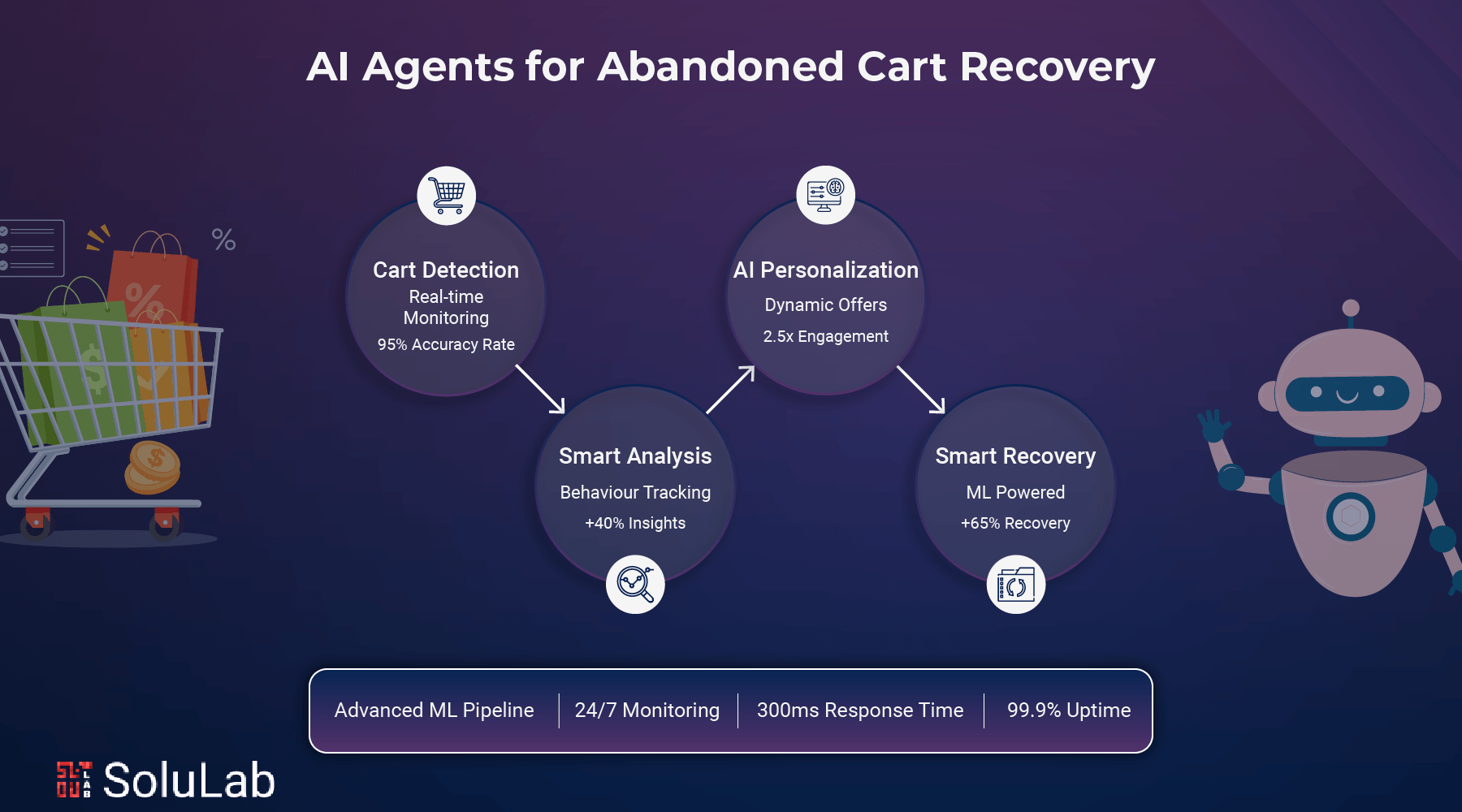
Customers often put their items on wishlists or add them to their cart but never purchase them. Re-engaging clients who have added things to their shopping carts but left the website without completing the transaction is the goal of abandoned cart recovery, a crucial e-commerce component.
With an average cart abandonment rate of almost 70%, abandoned cart recovery is a major problem in e-commerce. The use of AI agents has been successful in solving this problem. Unexpected shipping charges, difficult checkout procedures, a lack of payment choices, and disruptions or diversions throughout the buying experience are just a few of the many possible causes of cart abandonment.
Businesses are increasingly using technologies, like AI agents, to address this dilemma because of the substantial lost revenue. This blog helps you understand what is abandoned cart recovery, its use cases, benefits, and future trends.
What is Abandoned Cart Recovery?
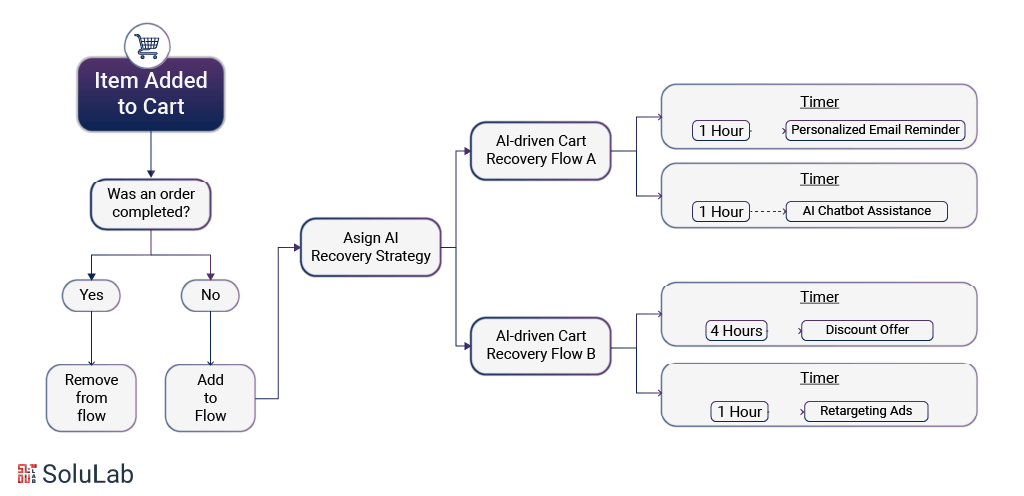
Abandoned cart recovery refers to encouraging customers who added items to their online shopping cart but did not complete the purchase to return and complete their transaction. It’s a strategy e-commerce businesses use to reduce cart abandonment rates and recover lost sales.
Common Methods of Cart Recovery:
- Email Reminders: Sending follow-up emails reminding the customer of the items left in their cart.
- Push Notifications: Triggering mobile or desktop notifications about abandoned items.
- Discount Offers: Offering a discount or free shipping as an incentive to complete the purchase.
- Retargeting Ads: Displaying ads featuring the abandoned products to bring customers back to the store.
Use Cases of AI Agents for Abandoned Cart Recovery
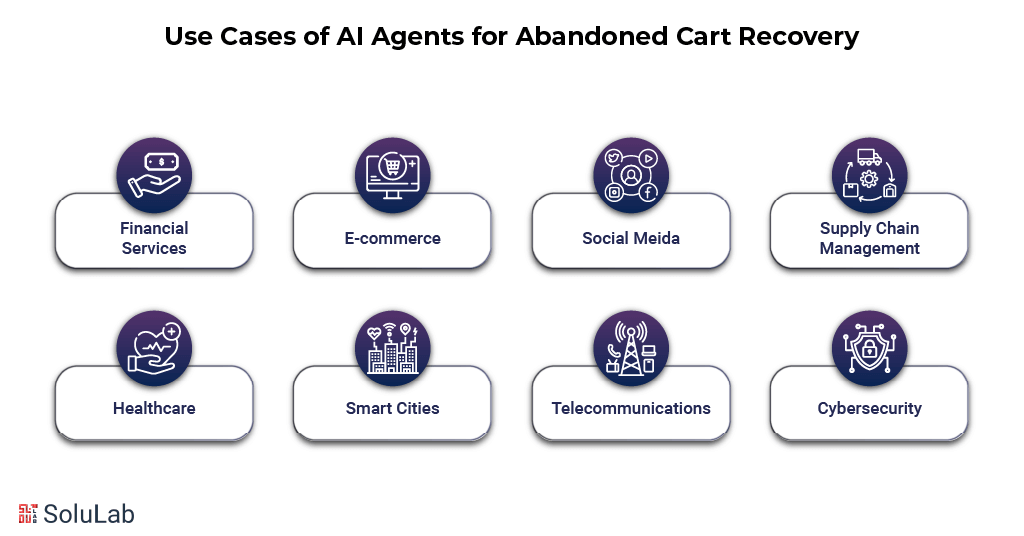
Here are some of the AI agents use cases of for abandoned cart recovery listed below:
1. Financial Services
Imagine you’re playing a game where you have to spot the bad guy quickly! In banks, real-time processing works like that. It watches how people spend money and find anything strange right away. This keeps everyone’s money safe and builds trust. Cool tools like Apache Kafka and Spark Streaming help make this happen fast!
2. Healthcare
Real-time data helps doctors keep patients safe! It watches important things like heartbeats and sends alerts if something’s wrong. This allows doctors to act quickly to save lives. Special programs AI in healthcare, like Python, are used to predict what care patients might need in the future.
3. E-commerce
Ever noticed how online shopping sites seem to know what you like? That’s real-time processing in action! It checks what you click on and suggests things you might want to buy. This makes shopping fun and helps stores sell more. Techniques like real-time data enrichment help stores learn what they enjoy most.
4. Smart Cities
Imagine a city where traffic lights work together like a team to make sure cars move smoothly. Real-time processing helps cities do this! Sensors check traffic and make changes to avoid traffic jams. It also keeps the city safer and cleaner. Tools like real-time stream analytics help cities run better.
5. Social Media
Social media apps like Instagram or YouTube know what you love to watch. How? They use real-time processing to study your likes, comments, and shares. This way, they show you more fun stuff to keep you happy. Python is often used to make this happen quickly!
6. Telecommunications
When you make a call or send a text, telecom companies check their networks to make sure everything works fine. Real-time processing helps them fix problems quickly, so you don’t have to wait. This makes using phones and the internet smoother and faster.
7. Supply Chain Management
AI Agents in the supply chain track items in real-time so they know when to restock or deliver, making everything work faster and smarter. That’s what real-time processing does for companies!
Read Blog: The Role of an AI Agents for Procurement
8. Cybersecurity
Processing works like a security token offerings guard for computers. It checks everything coming in and out to catch any bad stuff, like viruses, before they cause trouble. This keeps data safe and hackers away. Near real-time ETL processes are like the guard’s tools for spotting dangers.

Benefits and Value Proposition for AI Agents for Abandoned Cart Recovery
Here are a few benefits of abandoned cart recovery:
1. Revenue Recovery
Revenue recovery means getting back money that a business loses for different reasons. This could happen because customers stop using the service, don’t pay their bills, or return products. Getting this money back is very important for a business to keep running.
Getting back lost money helps businesses make more profit. It’s also easier when they use tools like automated reminders for bills. Plus, these practices help businesses follow financial rules and avoid trouble.
2. Customer Retention
Customer retention means keeping your customers happy so they stick with your business. When customers stay, it’s a sign they like what you offer and trust you.
When customers are happy, they tell their friends about the business for free! Businesses can also learn from customer feedback to make their products and services better.
Making customers feel special helps them stay loyal. Businesses can create fun activities like social media games, events, or rewards for loyal customers. Helping customers with their problems quickly also makes them trust the business more.
3. Personalization at Scale
Personalization at scale means making products and services feel special for each customer, even when there are lots of customers.
- Data Insights: Businesses look at what customers like and create special offers just for them.
- Content: Emails or ads can change based on what a customer likes, making it more interesting.
- Automation Tools: Smart tools send messages to customers at the right time with just the right offer.
- Customer Journey Mapping: Businesses figure out when to share special messages that make customers happy.
When businesses do this, customers feel like the business really knows them. This makes them want to come back and buy more!
4. Cost Efficiency
Cost efficiency means saving money while running a business well. Businesses save money and use it better when they follow these tips!
- Smart Workflows: Finding easier ways to work saves time and money.
- Tech Tools: Using computers and cloud systems costs less than old-fashioned ways.
- Buying in Bulk: Buying a lot at once can get businesses better deals.
- Outsourcing: Hiring experts for specific tasks saves money on hiring and training full-time staff.
- Energy Saving: Using less electricity and getting rewards for being eco-friendly can save money.
5. Enhanced Customer Experience
Enhanced customer experience means making customers feel great every time they connect with a business.
- Easy Support: Letting customers call, email, or chat anytime makes them happy.
- Friendly Websites: Websites and apps should be easy to use so customers can quickly find what they want.
- Listening to Feedback: Asking customers what they like or don’t like helps improve the business.
- Personal Touch: Calling customers by their name or remembering their favorite things makes them feel special.
- Keeping Them Updated: Sending messages about their orders or any news shows the business cares about them.
6. Data-Driven Decision Making
Data-driven decision-making means using facts and numbers to make smart business choices. This helps businesses focus on what works best and grow faster!
- Data-Driven Insights: To find patterns and preferences, businesses can examine enormous volumes of consumer data. This makes it possible to run focused marketing efforts that appeal to particular audience segments, which eventually raises conversion rates and boosts return on investment. Adobe personalization at scale, for example, demonstrates how data may inform successful marketing tactics.
- Content: Companies can employ content in emails, websites, and ads that change according to the choices and actions of users. This increases engagement and boosts revenue by guaranteeing that clients receive pertinent information that suits their demands. To provide such customized information, the idea of customization at scale is essential.
- Automation Tools: Companies may send customized messages at scale with marketing automation tools. These solutions ensure timely and relevant interactions that promote client loyalty by segmenting audiences and triggering notifications based on user behaviors. Businesses such as McKinsey personalizing at scale emphasize how crucial automation is to accomplishing these objectives.
Advanced Personalization Techniques of AI Agents for Abandoned Cart Recovery
Advanced customization is essential for customized client experiences. In digital marketing for SEO, data, and technology may help firms produce more relevant content and offers, increasing engagement and conversions.
1. Segmentation: Segment your audience by demographics, behavior, or preferences. This allows group-specific communications. Our AI solutions precisely segment your marketing efforts to reach the correct audience, including SEO website design enthusiasts.
2. Content: User behavior or choices should drive content. Customized email content or product recommendations are examples.
3. User Activity Tracking: Track user behavior on your website or app. Data may personalize experiences and offerings. In internet marketing SEO, our blockchain solutions securely store and manage user data, delivering insights while respecting privacy.
4. Predictive Analytics: Predict client needs and preferences. It can assist create proactive marketing tactics that meet user expectations. Our powerful AI models estimate trends based on previous data, helping firms remain ahead in online marketing and SEO.
5. Omnichannel Personalization: Personalize email, social media, and your website. It streamlines the consumer experience.
Advanced customization helps organizations connect with their customers, increasing loyalty and conversion rates.
Components of AI Agents for Abandoned Cart Recovery
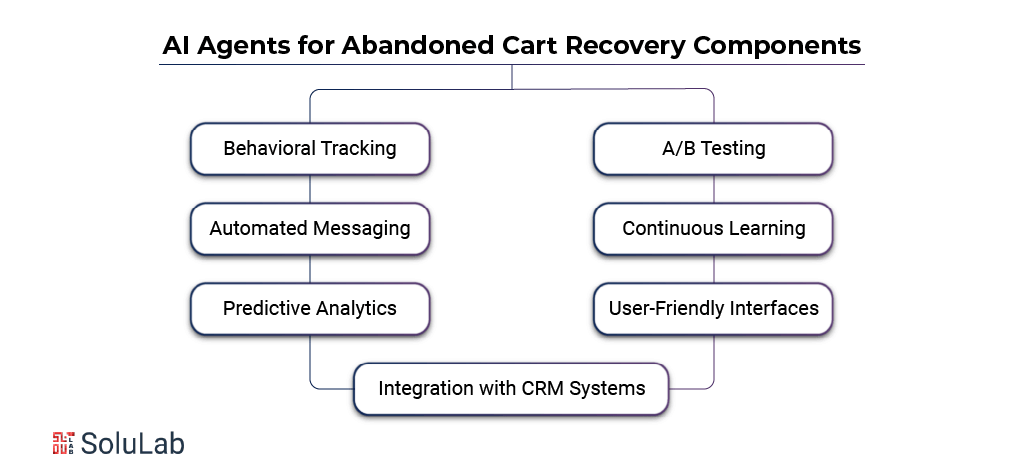
AI cart recovery agents are like little helpers for online shopping websites. They help stop people from leaving their shopping carts behind without buying anything. These smart helpers use cool tricks to bring customers back and make sure they buy what’s in their cart.
1. Behavioral Tracking
These smart agents watch how people shop on the website. They look for clues, like when someone adds something to their cart but doesn’t check out. This helps the agents figure out when to step in and help.
2. Automated Messaging
When someone forgets about their cart, the AI agent sends them a little reminder. This could be an email or a message saying, “Hey, don’t forget your cool stuff!” Sometimes, they even add a discount to make it extra tempting.
3. Predictive Analytics
AI helpers are like fortune tellers. They check what customers did in the past and guess who might leave their cart behind. This way, they can send a message before the customer even thinks about leaving.
4. A/B Testing
AI agents try different ways to talk to customers. For example, they might send one person a discount message and another person a friendly reminder to see which one works better.
5. Integration with CRM Systems
AI agents also talk to the store’s computer systems to learn more about customers. This helps them send personalized messages, like calling a customer by their name or suggesting something they might love.
6. User-Friendly Interfaces
A good AI agent is easy to use. It makes shopping simple and fun, so customers don’t get confused or frustrated.
7. Continuous Learning
Based on consumer interactions and feedback, AI cart recovery bots use machine learning to continuously enhance their tactics. This flexibility guarantees that companies continue to respond to the changing needs of their clientele. In line with the general model of consumer behavior.
Challenges and Limitations of AI Agents for Abandoned Cart Recovery
Although predictive customer journey mapping has many benefits, firms must also deal with several drawbacks and restrictions.
The quality of the data gathered has a significant impact on how accurate the forecasts are. Erroneous strategies can result from incomplete or faulty data. Predictive analytics integration into current systems can be difficult and resource-intensive.
Predictive customer journey mapping must be implemented carefully in light of these difficulties. To adjust to shifting market conditions, businesses need to make significant investments in sound data management procedures and constantly improve their models.
1. Privacy Issues with Data
One major barrier in the field of predictive customer journey mapping is data privacy issues. Businesses must manage the intricacies of data privacy laws and customer expectations as they gather and examine enormous volumes of customer data.
- Personalization: To prevent legal ramifications, adherence to laws like the CCPA and GDPR is crucial. Consumers may be reluctant to divulge personal information as they become more conscious of their data rights. To gain the trust of consumers, data collection and use must be transparent. Businesses should implement data privacy best practices.
- Data security: Putting strong data Asset-Backed Securities (ABS) vs. Mortgage-Backed Securities (MBS) mechanisms in place to safeguard client data. Establishing brief and unambiguous privacy policies that specify the use of data. Granting clients authority over their data, including the option to refuse data gathering.
- Predictive Analysis: Businesses may increase customer loyalty and trust while using predictive analytics to improve the customer journey by putting data protection first. In many domains, but especially in software development, data administration, and system integration, technical complexity can be found. These intricacies have the potential to impede project advancement and impact overall success.
2. Diverse Technologies
Because technology is developing so quickly, there are many different tools and platforms available, making it difficult to choose the best ones for a project. Legacy Systems: Many businesses continue to use antiquated systems that are incompatible with contemporary technologies and are challenging to integrate.
- Scalability Problems: As projects expand, it can be difficult to make sure that systems can grow efficiently without seeing a decline in performance.
- Data Administration: Strong data architecture and management techniques are necessary for handling massive amounts of data to guarantee data accessibility and integrity.
- Security Issues: Implementing safe systems while preserving functionality adds another level of complexity in light of the growing threat of cyberattacks. This is particularly crucial when thinking about integration technology. Take into consideration our AI consulting services for professional assistance in navigating these complications.
3. Difficulties with Integration
When combining several applications, systems, or technologies, integration issues are frequently encountered. If these issues are not adequately resolved, they may result in inefficiencies and higher expenses.
- System Compatibility: It can be challenging to integrate systems when they employ different protocols and data formats.
- Data Silos: Data is frequently kept in separate systems within organizations, which can make it difficult for departments to collaborate and share information.
- Change Management: Employees may object to workflow and process modifications that are frequently necessary for the integration of new systems.
- Resource Allocation: Integration projects can be labor-intensive and time-consuming, putting a strain on available resources.
- Testing and Validation: Extensive testing, which can be difficult and time-consuming, is necessary to guarantee that integrated systems operate as intended.
Technology and business operations must consider ethics since they affect stakeholder trust and decision-making. For growth to be sustainable, these factors must be taken into account.
4. Ethical Considerations
Technology and business operations must consider ethics since they affect stakeholder trust and decision-making. For growth to be sustainable, these factors must be taken into account.
- Data Privacy: To preserve user privacy, organizations must make sure they handle personal data responsibly and adhere to laws like the GDPR.
- Algorithmic Bias: If algorithms are used in decision-making without close vision, they may produce biased results, which raises moral questions regarding equality and justice.
- Transparency: To build trust with customers and stakeholders, businesses should be open and honest about how they use data and algorithms
- Environmental Impact: To reduce damage to the earth, the technology industry must take into account its environmental impact and encourage sustainable practices.
- Social Responsibility: Companies should make sure that their operations impact communities by using socially responsible practices.
5. Enhancement of Performance
Improving a website or application’s speed and efficiency requires performance optimization. It includes several tactics and methods, such as website performance optimization and website speed optimization, that are intended to enhance load times, responsiveness, and the user experience in general.
- Minimize HTTP Requests: Page load times can be considerably shortened by reducing the number of elements on a page. Combining files, utilizing CSS sprites, and reducing the number of images used can all help achieve this.
- Optimize Photos: Websites with large photos may load more slowly. To increase website performance optimization, use formats like WebP, compress photos, and make sure they are the right size for the web.
- Use Browser Caching: You can speed up load times for repeat visitors by allowing caching, which lets browsers save specific parts of your website.
- Employ a Material Delivery Network (CDN): CDNs disperse your material among several servers across the globe, guaranteeing quicker delivery to consumers according to their region, which is crucial for optimizing site speed.
- Use Hyvä Theme: For Magento-based websites, adopting Hyvä Theme Development — a modern, lightweight frontend — can drastically improve load times and overall performance without sacrificing design flexibility.
- Minify HTML, CSS, and JavaScript: Cutting extraneous characters from code can speed up load times and minimize file sizes, which helps optimize a website’s overall performance.
- Use Lazy Loading: This method can greatly increase site speed optimization and initial load times by delaying the loading of images and videos until they are required.
- Optimize Server Response Time: To guarantee fast response times, which are essential for enhancing website performance, pick a reputable hosting company and adjust your server settings.
- Regularly Check Performance: With an emphasis on page speed optimization, use tools such as Google PageSpeed Insights or GTmetrix to assess your website’s performance regularly and pinpoint areas that require work.
Future Trends of AI Agents for Abandoned Cart Recovery
As we look ahead, several trends are shaping the future of various industries. Understanding these trends is crucial for businesses to remain competitive and relevant in a rapidly changing environment.
1. Predictive Commerce and Artificial Intelligence
Businesses’ approaches to commerce are being completely transformed by artificial intelligence (AI), especially in the area of predictive analytics. AI algorithms are used in predictive commerce to evaluate data and predict future customer behavior, empowering companies to make well-informed choices.
- Improved Customer Insights: AI can examine enormous volumes of data to find trends and patterns in customer behavior, which enables companies to customize their products.
- Better Inventory Control: By predicting demand and minimizing surplus stock and stockouts, predictive analytics assists companies in optimizing inventory levels.
- Customized Marketing Plans: AI helps companies develop focused advertising campaigns according to the tastes and actions of their target audience, which raises conversion rates.
- Pricing Models: AI can maximize income by instantly modifying prices in response to competition, demand, and other variables.
- Simplified Supply Chain Operations: By foreseeing interruptions and improving logistics, predictive analytics helps improve generative AI in the supply chain industry.
2. Conversational Commerce
Using voice assistants, chatbots, and messaging apps to make Internet purchasing easier is known as conversational commerce. Due to consumers’ growing preference for individualized and interactive purchasing experiences, this trend is quickly gaining popularity.
- Improves Consumer Interaction: Conversational commerce enables brands to interact with consumers in real time, offering prompt answers to questions and tailored suggestions. Consumer interactions and increasing customer happiness and brand loyalty.
- Improve Conversion Rates: Companies may lower friction and raise the possibility of closing a deal by streamlining the purchasing process with chat interfaces
- Encourages Availability: Chatbots can work around the clock to make sure that clients get help when they need it, which may increase client happiness.
- Data Collection: Through conversational commerce, organizations can obtain useful information about consumer preferences and behavior, which they can then utilize to enhance product offerings and customize marketing campaigns. The client can use this data to inform their business decisions.
- Popular Platforms: Businesses can reach a larger audience by using messaging apps like Facebook Messenger, WhatsApp, and WeChat, which are frequently used for conversational commerce.
3. Blockchain Integration
Because blockchain technology offers safe, transparent, and effective transaction mechanisms, it is transforming several industries, including e-commerce. Its incorporation into e-commerce sites can improve security and expedite processes.
- Increased Security: Because blockchain technology is decentralized, hackers find it challenging to change transaction data, creating a safe environment for online transactions.
- Increased Transparency: All transactions are documented on a public ledger, enabling buyers to confirm the legitimacy of goods and the chain’s integrity.
- Decreased Transaction Costs: Blockchain can reduce transaction fees by doing away with middlemen, which makes it more affordable for consumers and enterprises alike.
- Smart Contracts: By eliminating the need for human intervention and expediting the transaction process, these self-executing smart contracts development automatically execute agreements when criteria are satisfied.
- Acceptance of Cryptocurrencies: Businesses may now take cryptocurrencies thanks to blockchain integration, which appeals to an increasing number of tech-savvy customers.
4. Experiences With Augmented Reality
By superimposing digital data on the physical world, augmented reality (AR) is improving how customers engage with products. Shopping is improved by this technology, which makes it more captivating and immersive.
- Virtual Try-ons: AR lowers the possibility of returns by enabling customers to see how items, like clothes or makeup, will appear on them before making a purchase. AR solutions that improve product visualization and raise consumer happiness can be developed quickly.
- Interactive Product Demos: By using augmented reality (AR), brands may more effectively highlight the characteristics and advantages of their products, assisting consumers in making well-informed choices.
- Improved Storytelling: AR can produce compelling product stories that let companies engage with customers more deeply on an emotional level. Enhanced consumer engagement: AR may draw in customers and entice them to spend more time perusing products by offering distinctive and interactive experiences.
- Popular Applications: AR technology has been successfully incorporated by retailers such as Sephora and IKEA, enabling customers to visually experiment with makeup or see furniture in their homes.
5. Advanced Personalization Technologies
Businesses’ interactions with their customers are changing as a result of advanced personalization tools. These technologies combine machine learning, artificial intelligence (AI), and data analytics to produce customized experiences that appeal to certain users.
- Data-Driven Insights: Businesses can obtain insights that guide customized marketing tactics by examining consumer behavior, preferences, and demographics. This information may originate from several sources, such as past purchases, social media activity, and website interactions.
- Delivery of Content: Thanks to sophisticated personalization technology, users can receive content that is and adapts to their actions. E-commerce websites, for instance, can increase conversion rates by displaying various product recommendations depending on a user’s browsing history.
- Predictive Analytics: By using predictive analytics, companies may foresee the wants and demands of their clients. This technology allows businesses to proactively provide goods or services that match the preferences of their customers by analyzing past behaviors to predict future actions.
- AI-Powered Chatbots: By comprehending user inquiries and providing customized answers, AI powdered chatbots can deliver individualized customer support. Higher customer satisfaction levels may result from this improved user experience.
- Targeting and Segmentation: More accurate audience segmentation is made possible by advanced personalization technology. Companies can develop campaigns that are specifically tailored to target audiences, increasing engagement and conversion rates.
- Real-Time Personalization: Companies can instantly modify their marketing plans thanks to real-time data processing. This implies that the content of a website or app may instantaneously adapt to the user’s preferences as they engage with it.
- Omnichannel Experience: A smooth experience across several channels is guaranteed by advanced customization. Customers may have a consistent and customized experience whether they are buying in-store, on the internet, or a mobile device thanks to customization technologies.
- Ethical Issues: Although customization technologies have many advantages, they also give rise to ethical questions about data privacy. Companies must make sure they abide by rules and keep customers informed about how their data is handled.

Conclusion
AI is providing highly personalized customer experiences, which is altering how brands handle cart abandonment. By using advanced algorithms, personalized messaging, and engagement, these tools can help recover lost sales. They work tirelessly to re-engage customers with targeted offers, reminders, and even chatbot assistance, ensuring a great shopping experience.
Including AI agents in your e-commerce strategy is no longer a luxury—it’s a necessity for staying competitive. Whether you’re a small business or a large retailer, these intelligent solutions can significantly boost your revenue, enhance customer satisfaction, and streamline operations.
SoluLab, helped a travel company integrate an AI-powered chatbot to improve customer support and personalization. Faced with high query volumes, slow response times, and a lack of customized travel recommendations, the company sought to book and offer a unique, efficient customer experience. SoluLab an AI Agent development company has a team of experts to solve your business problems contact us today.
FAQs
1. How do you retarget abandoned carts?
Retargeting abandoned carts entails contacting buyers who did not buy. Remind customers of pending products with targeted email, push notifications, or retargeting advertisements. To get people to buy again, provide discounts or free shipping. AI agents can automate this by evaluating customer behavior and giving timely messages.
2. How to solve cart abandonment?
Make shopping easy to reduce cart abandonment. Provide several payment methods, an easy checkout experience, and transparent pricing (including taxes and delivery). Real-time AI chatbots may answer client questions and remember incomplete transactions. Improve user experience by optimizing website speed and mobile compatibility.
3. How to recover abandoned carts?
Reengage abandoned carts with tailored emails or SMS campaigns. Highlight leftover products, add a simple return link, and offer limited-time discounts. AI-powered recovery technologies can identify high-priority consumers and provide automatic, behavior-based communications to boost recovery.
4. How to track cart abandonment?
Google Analytics tracks cart abandonment rates and user activity. Built-in functionality on e-commerce systems tracks this measure. Track where clients drop off in the sales funnel and optimize those processes to reduce abandonment. Pattern analysis and actionable insights from AI can boost retention methods.
5. Are AI agents effective in increasing sales?
Yes, AI agents can significantly boost sales by recovering a large percentage of abandoned carts. They use data-driven strategies and personalization to increase conversion rates and improve overall customer satisfaction.

