Talk to an Expert

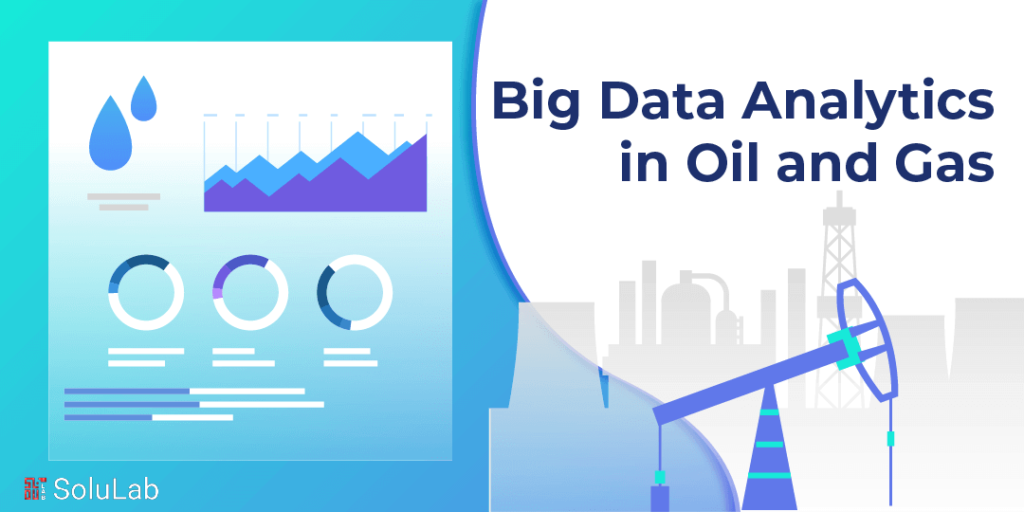
How Big Data Analytics is Powering the Oil and Gas Industry? 

Big Data Analytics in oil and gas

Big data is changing how companies make decisions in almost every industry. It helps them figure out what’s working, what’s not, and how to do things better. While some industries are just starting to use big data, oil and gas companies have been doing it for a long time. They’ve always relied on tons of data to make smart choices. These companies use tools like visualization software and seismic technology to study what’s hidden deep under the Earth.

But now, with more data than ever before, they know they need even smarter analytics to stay ahead. By improving how they use data, they can boost their operations and make more money.

In this article, we’ll explore how big data is helping the oil and gas industry become faster and more efficient.

A report by Globe Newswire says the big data analytics market will hit $1.2 trillion by 2032, growing by 14.5% every year. That’s a lot of data!

Big Data Analytics in the Oil and Gas Industry: Overview

The world is going through a lot of technological shifts, with an increasing amount of work being done online for anything from grocery shopping to fighting wars. This online activity can now be tracked, monitored, and stored. The vast amount of data generated has given rise to the concept of big data, which refers to massive datasets that are challenging to manage using traditional methods.

The data produced by the oil and gas sector must include at least a number of the big data attributes mentioned above to be used for big data analytics. Let’s examine each of the traits that are shown by the data produced by the oil and gas sector. Big data is defined by six key characteristics, often referred to as the six Vs:

v6 in big data Analytics

  • Volume: The development of data recording sensors is what creates big data in the oil and gas sector. Better data collection is made possible by these sensors during the drilling, exploration, and prediction processes.
  • Variety: Big data can contain unstructured, semi-structured, or structured data, as was covered in the preceding section. Through applications about surveys, exploration data, and other production-related aspects, the oil and gas sector produces structured data. Emails, market feeds, site images, and other sources provide the semi-structured data.
  • Velocity: Because there is a substantial risk of death and serious injury in the oil sector, real-time decision-making is crucial. Because of this, the oil sector places a strong focus on combining and synthesizing various data sources, which significantly increases the rate of data output.
  • Veracity: The oil and gas sector can benefit from the effective application of big data analytics in several ways, including seismic processing, reservoir modeling, and sensor calibration, which support various phases of the production, delivery, transportation, and exploration of oil.
  • Variability: Data in the oil business can take many different forms, as was previously discussed. As the earth’s surface is scanned for oil, the data may be in the form of pictures and movies, or it may be produced by sensors and other surveys as conventional structured numerical data.
  • Value: Finally, the oil business benefits greatly from investments in big data analytics. It aids in oil exploration, navigation, and visualization and improves drilling procedures to lower costs, increase safety, boost output, etc.

Benefits of Big Data Analytics in the Oil and Gas 

Big data analytics has completely changed the oil and gas sector. When it comes to big data use cases in oil and gas, multifarious concepts use this high-tech feature. Not just that, it offers many advantages that improve productivity, security, and profitability. Here are a few of the main benefits: ​

1. Drilling and Exploration 

Businesses can cut down on the time and expense of exploration by using large databases to drive their drilling decisions. For instance, by using data analytics and sensor deployment, ConocoPhillips achieved a 50% reduction in drilling time in the Eagle Ford shale region in South Texas. 

2. Predictive management

Predictive maintenance is made possible by big data analytics, which forecasts possible problems by examining equipment data. This method lowers maintenance expenses and decreases unscheduled downtime. Predictive analytics, for example, has been utilized by the oil and gas industries to reduce maintenance costs and downtime of processing equipment. 

3. Optimization of Operations

Businesses can find inefficiencies and procedures by analyzing data from many operations. Cost reductions and better resource management result from this. Businesses can use big data analytics to turn massive datasets into wise exploratory choices and lower operating expenses. 

4. Mitigation of Risk

By examining trends and irregularities in data, big data analytics assists in spotting possible hazards. This proactive strategy lowers environmental risks and improves safety procedures. Predictive analytics, for instance, can detect operational disruptions and hazard events during industrial operations, enabling prompt responses. 

5. Decision Making

Decision-makers are empowered with actionable insights when they have access to real-time data and advanced analytics. As a result, choices are made more quickly and accurately, improving overall corporate performance. Businesses can enhance resource management, optimize drilling procedures, and forecast equipment breakdowns by applying advanced data analysis techniques. 

6. Cost Reduction

Significant cost savings across a range of businesses can result from the use of big data analytics.  To improve exploratory decision-making and possibly lower operating costs, BP and Palantir Technologies, for example, have partnered to use artificial intelligence

In conclusion, big data analytics has a lot to offer the oil and gas sector, from improving the effectiveness of exploration to lowering operating expenses and risks. Using data analytics will be essential for sustaining competitiveness and attaining sustainable growth as the industry develops further.

Components of Big Data Analytics in the Oil and Gas

Data Analytics in Oil and Gas Components

Application of big data analysis in oil and gas industry enables oil and gas companies to find new growth prospects. It cannot function in a vacuum. Let’s examine the various components of big data analytics that have the potential to revolutionize the following industries.

1. Data Collection

Data collection, which can take the form of structured or unstructured data gathered from various sources such as IoT sensors, seismic surveys, satellite imaging, mobile applications, and cloud services, is the first crucial step towards data analytics in the oil and gas sector.

To automatically assign metadata for improved accessibility and management, enterprises must modify their data-gathering tactics and merge data from many sources into centralized repositories. DBMS software, data lakes, and data warehouses are examples of these centralized data stores.

2. Information Processing

Processing the data, organizing, extracting, and loading it into storage systems like MongoDB, NoSQL, Google Cloud Storage, Apache Cassandra, etc., becomes essential after it has been gathered.

Data processing uses data aggregation and type conversion to change raw data into a format that can be used. Large volumes of dispersed datasets can be processed more quickly and efficiently with the aid of tools like Apache Spark and Hadoop.

Businesses can process enormous volumes of data over long periods and smaller volumes of data in real time with the use of strategies like batch processing and stream processing.

3. Advanced Analytics Techniques

Extracting insights from historical and real-time data requires the use of sophisticated analytical techniques, including data mining algorithms, machine learning, deep learning, and predictive analytics.

These methods help companies make well-informed decisions by allowing them to spot trends, estimate production results, anticipate equipment faults, and more.

4. Tools for Visualization

Visualization tools are another crucial component of big data analytics. To obtain a comprehensive grasp of the present operational stage, these technologies assist businesses in converting complex data into actionable insights through dashboards, reports, interactive operational data, etc.

In addition, incorporating 3D modeling tools into the oil and gas industry allows for the precise visualization of reservoirs and drilling operations, which helps engineers and geoscientists plan and execute operations effectively.

5. Governance and Data Security

Because of the growing dangers of cyberattacks, data security is crucial in today’s environment. Access control systems and encryption technologies are essential for avoiding unwanted access to sensitive data in software used by the oil and gas sector.

Effective data quality management techniques are also essential for fostering data accuracy, consistency, and dependability, all of which support well-informed decision-making and regulatory compliance. 

CTA1

Real-life examples of  Big Data Analytics in the Oil and Gas

Big data is improving the oil and gas industry, helping companies improve efficiency, reduce risks, and make smarter decisions. Here are some real-life examples of how it’s being used.

1. Royal Dutch Shell 

Shell uses big data to make smarter decisions. They have thousands of oil wells, and keeping them running smoothly is a big challenge. By using data from sensors, Shell can predict when a machine might break down.

This helps them fix it before it causes a problem, saving time and money. Plus, they use data to find the best drilling spots by analyzing rock formations and underground conditions.

2. Bharat Petroleum

Bharat Petroleum uses big data to improve fuel quality and customer service. They collect data from their fuel stations to track fuel demand, pricing, and customer behavior

With this information, they can make better decisions about where to open new stations or how to adjust fuel prices. They also use data to prevent fuel theft by spotting unusual patterns.

Future Trends of  Big Data Analytics in Oil and Gas

Big data analytics is leading the way in innovation and productivity within the oil and gas industry.  The following major trends are shaping how big data analytics will improve in this sector in the future:

1. Integration of ML and AI

Since they make more precise predictions and facilitate automatic decision-making, AI and ML are becoming essential components of big data analytics for the oil and gas industry.  Through the utilization of large language models to sift through operational information and deliver actionable insights, companies like BP are pushing the frontiers of AI application to refine decision-making processes.

2.  Computing and real-time data processing

Computing is enabling the processing of data in real time at far-flung locations, including oil rigs and drilling pads.  The innovation reduces latency and improves decision-making through feedback on ambient conditions and equipment performance.

3. Predictive Maintenance

Companies can minimize downtime and maintenance expenses by foreseeing equipment failure and applying big data analytics for predictive maintenance. Drones with AI, for example, are now employed for distant monitoring, making it possible for immediate interventions to be made while reducing operational stoppages.

Read Also: How to Build a Predictive Analytics Model?

4. Data-Driven Sustainability Initiatives

By optimizing resource use and minimizing environmental footprint, big data analytics is also a key driver of sustainability. Companies are aligning their operations with international sustainability objectives by making investments in low-carbon technology and leveraging data to track and reduce emissions.

5. Supply Chain Efficiency

Companies can recognize inefficiencies and improve logistics by analyzing data along the supply chain, which reduces costs and accelerates delivery. Supply chain performance is improved by big data analysis that allows for improved inventory management and forecasting demand.

Conclusion

The oil and gas sector, like many others, is becoming more aware of the advantages of big data analytics. Big data analytics uses a range of data, including production rates, seismic data, drilling rig data, frack performance data, and more, to help the oil and gas industry make well-informed decisions. 

Big data analytics will most certainly play a significant role in oil and gas organizations in the future, though, given the advantages of identifying possible oil sources, producing oil efficiently, lowering costs and risk, and improving compliance and decision-making. 

SoluLab, being the pioneer in software development, holds years of experience and is backed by a team of professionals who are always ready to cater to your business needs. Even in the case of the oil and gas industry, we are rendering on-demand applications to ease your business operations with high tech solutions. Still unsure of your business plan, get in touch with experts and get started today!

FAQs

1. How is big data analytics shaping the oil and gas industry?

It boosts efficiency, reduces downtime, improves exploration accuracy, and helps companies make data-driven decisions for better performance and profitability.

2. What is the cost of developing big data analytics software for oil and gas companies?

It ranges from $50,000 to $500,000+, depending on the complexity, features, and customization required.

3. What are the major big data analytics trends that will improve operations in the oil and gas industry?

AI, computing, predictive maintenance, real-time monitoring, and sustainability analytics are changing operations and boosting efficiency.

4. Why must oil and gas companies act on analytics?

To stay competitive, reduce costs, boost productivity, and make smarter, faster decisions based on real-time insights.

5. What is data analytics in the oil and gas industry?

Data analytics in the oil and gas industry means using data from drilling, production, and operations to make smarter decisions. It helps improve efficiency, reduce costs, predict failures, and boost profits.

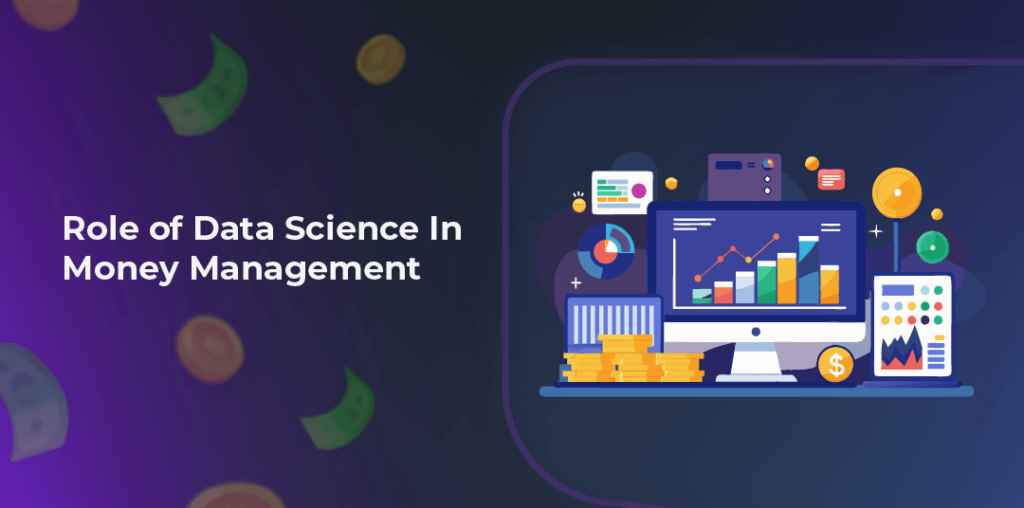
Modern Tools for Money Management: The Role of Data Science

Role of Data Science In Money Management

Managing personal finances has always been a critical aspect of financial well-being. Personal finance management is no exception in today’s world, where technology and data are reshaping industries. Data science has emerged as a powerful tool, enabling individuals to make smarter financial decisions, save efficiently, and achieve monetary goals. By analyzing vast amounts of data and uncovering actionable insights, data science is transforming the way people interact with their money.

This article explores the various applications of data science in personal finance management, delving into how these innovations are helping individuals manage budgets, monitor spending, and plan for a secure financial future.

1. Budgeting Tools Powered by Data Science

Budgeting is the cornerstone of personal finance management, and data science is pivotal in making this process more intuitive and personalized. With advanced algorithms and machine learning, budgeting tools can provide tailored recommendations based on an individual’s financial habits.

  • Personalized Budget Recommendations

Data science enables budgeting apps to analyze spending patterns and categorize expenses automatically. For instance, machine learning models can learn how much you spend on groceries, dining out, or utilities and provide insights into areas where you might overspend. This customization helps users create realistic budgets that align with their financial goals.

  • Predictive Spending Alerts

Another critical application is predictive spending. Data-driven tools can forecast future expenses based on past behavior. For example, if the system identifies that you usually spend more during the holiday season, it might suggest setting aside extra funds in advance. These alerts empower users to anticipate financial shortfalls and avoid overspending. In building such capabilities, companies often rely on financial software development services to ensure accuracy, scalability, and integration with broader financial ecosystems.

2. Financial Planning for the Future

Planning for future financial needs, such as retirement or homeownership, can be daunting. Data science simplifies this process by providing accurate projections and actionable advice.

  • Retirement Planning Models

Data science applications in retirement planning are particularly beneficial. Tools can calculate how much you need to save based on factors like age, current income, and lifestyle expectations. These systems also account for inflation, market trends, and other variables, offering users a comprehensive roadmap to a financially secure retirement.

  • Answering Critical Questions

A frequent concern in personal finance is maintaining the right balance between liquidity and idle cash. For instance, data science can help answer practical questions like “How much should I have in my checking account? by analyzing spending habits, income patterns, and recurring financial commitments. Advanced tools identify patterns to recommend an optimal balance—enough to cover regular expenses and unexpected emergencies while minimizing unproductive cash that could be earning interest elsewhere.

3. Expense Tracking and Spending Analysis

Tracking expenses manually can be tedious and prone to error. Data science simplifies this by automating the tracking process and offering in-depth analysis of spending habits.

  • Automated Categorization

Modern finance apps use natural language processing (NLP) and machine learning to automatically categorize transactions. Whether it’s a coffee purchase or a utility bill, these tools ensure every expense is accurately logged. This automation not only saves time but also provides users with a clear picture of their spending patterns.

  • Insights Through Visualization

Data visualization is another strength of data science in personal finance. Pie charts, bar graphs, and other visual tools make it easier for users to comprehend where their money is going. Creating these clear and impactful visuals is made easier with AI charts for PowerPoint, which help transform complex data into engaging, easy-to-understand presentations.

4. Savings Optimization and Goal Setting

Saving money requires discipline and planning. Data science enhances savings by offering strategies that are personalized and achievable.

  • Identifying Opportunities for Savings

Data-driven apps can analyze your financial history and suggest practical ways to save. For example, an app might notice that you’re spending excessively on subscription services and recommend canceling unused ones. This granular analysis helps users identify small changes that can lead to substantial savings over time.

  • Setting and Tracking Financial Goals

Goal-setting tools leverage data science to help users define and monitor financial objectives. Whether it’s saving for a vacation or building an emergency fund, these tools calculate how much you need to save weekly or monthly to hit your target. Progress tracking keeps you motivated by showing how close you are to achieving your goals.

5. Fraud Detection and Financial Security

Security is a growing concern in personal finance management. Data science is instrumental in identifying and preventing fraudulent activities.

  • Real-Time Fraud Alerts

Financial institutions leverage data science to monitor account activity in real time. Machine learning models analyze transaction patterns and flag anomalies, such as unusually large purchases or transactions from unfamiliar locations. These alerts can prevent fraud before significant damage occurs.

  • Enhanced Data Encryption

In addition to fraud detection, data science improves security protocols like encryption. Algorithms ensure that sensitive financial data remains protected from breaches, giving users confidence in managing their money digitally.

6. Credit Score Management

A good credit score is essential for securing loans, credit cards, and favorable interest rates. Data science tools simplify the process of monitoring and improving credit scores.

  • Credit Score Tracking and Insights

Modern apps provide real-time credit score updates and detailed breakdowns of factors influencing the score, such as payment history and credit utilization. These insights empower users to make informed decisions that positively impact their creditworthiness.

  • Personalized Credit Recommendations

By analyzing a user’s financial behavior, data-driven tools can suggest strategies for improving credit. For instance, they might recommend paying down high-interest debt or reducing credit card usage to maintain an optimal utilization rate.

7. Managing Entertainment and Discretionary Spending

Many people struggle with balancing discretionary spending on entertainment, dining, and leisure activities. Data science can provide valuable insights into where money is being spent and suggest adjustments.

Smart Spending on Leisure Activities

For instance, if a user frequently spends money on entertainment options like casino games or streaming services, data-driven apps can analyze patterns and suggest budget-friendly alternatives. These insights help individuals maintain a balance between enjoyment and financial responsibility without compromising long-term savings goals.

Conclusion

Data science is revolutionizing personal finance management by providing tools and insights that empower individuals to take control of their financial futures. From budgeting and savings to fraud detection and credit management, the applications are vast and impactful. These innovations not only simplify complex financial tasks but also foster better decision-making and long-term financial stability. By leveraging the power of data science, individuals can navigate the complexities of personal finance with confidence and clarity.

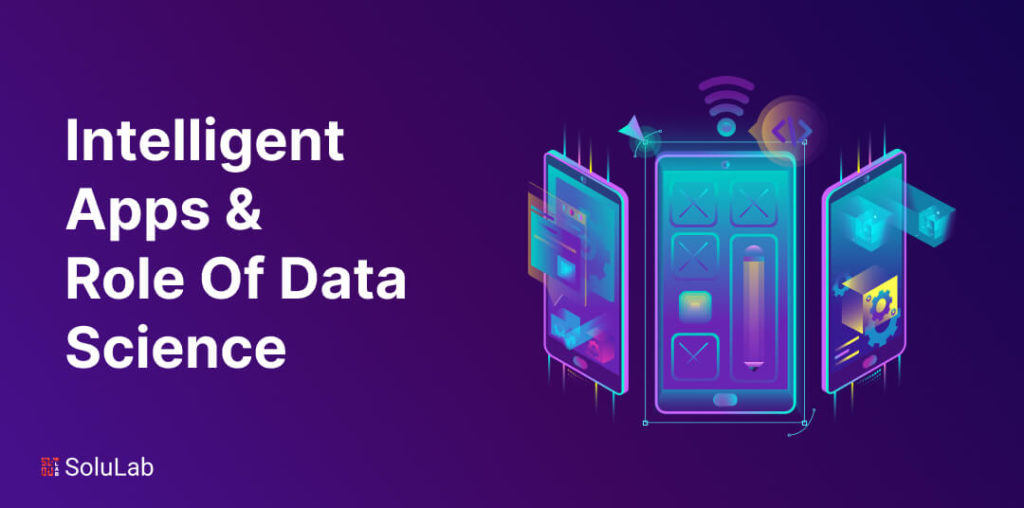
What are intelligent apps? What is the role of data science in them?

Intelligent apps & Role of data science

Intelligent applications created with AI development services are being used more frequently to offer improved features and unique user interactions using AI and machine learning algorithms integration and data analysis as technology continues to advance quickly in this modern digital age. These applications have enormous promise since they boost efficiency across many industry sectors by automating various operations and enhancing decision-making processes. 

The AI market is expected to rise significantly from its predicted $86.9 billion in revenue in 2022 to $407 billion by 2027. This has a direct role in the exponential rise in the number of intelligent apps in marketplaces across the globe that have adopted this developed technology. 

With the increasing integration of technology in the mobile environment, everyone is anticipating good chances in the way of experiences but there is also a doubt the capabilities of standard mobile apps. 

Intelligent Apps market

What are Intelligent Apps?

AI-powered apps or smart applications are other terms for intelligent applications. These are computer programs that make use of machine learning and artificial intelligence altogether to evaluate data, learn from user interactions, and deliver wise answers to actions. Intelligent mobile apps are essentially AI-powered features that offer a customized and flexible user experience.

Intelligent apps combine the most user-centric designs and app development tools with the power of consumer data, operational data, modern technology, and predictive analysis to provide an exceptional user experience.  Consumers, clients, owners, architects, and developers may have different experiences with them in the future as GenAI demonstrates machines learn from feedback and become more self-sufficient. 

How Does Intelligent Apps Work?

Intelligent Apps Working

Intelligent applications follow a methodical set of steps that allow them to provide customized experiences to users. Here is the breakdown of starting to end of how intelligent apps work:

1. Collection Of Data

Like every other artificial intelligence application, the initial stage of intelligent apps is also gathering relevant data from various sources which are as follows:

  • User Interactions: Monitoring the clicks, searches, and preferences of the user as they interact with the app. 
  • External Data: Adding to the dataset by including data from social media, APIs, and Internet of Things devices. 
  • Historical Data: Examining previous user activity to spot patterns and trends. 

2. Information Processing And Archiving 

Once the data is acquired, it undergoes processing and storage, this is made possible by removing discrepancies and irrelevant details to guarantee high-quality data. Strong vast amounts of data securely and making them easily retrievable by using datasets or cloud storage. 

3. Evaluation Of Information

The software uses sophisticated analytical algorithms after processing. Alphabets for machine learning to find correlations and patterns in the data, these algorithms examine it. Algorithms for clustering, for instance, can group users who behave similarly. This makes use of past data to predict user behavior or preferences in the future. 

4. Understanding Context

Intelligent apps make use of natural language processing to enhance user interaction. This enables the app to comprehend and interpret user inputs, including text messages and voice instructions. Context awareness evaluates the current context be it time, place, or a device, and offers pertinent answers.

5. User Communication

According to the insights it generates, the app engages the user in conversation, involving users with simple-to-use interfaces that make interaction and navigation simple. Making use of voice assistants or chatbots to have natural conversations with users. 

6. Continuous Learning

The last phase entails the constant development of these applications via user feedback on their interactions is gathered to improve algorithms and models are updated based on fresh data to increase accuracy over time. 

CTA1

Do You Really Need Intelligent Apps?

Now that you are aware of what are intelligent apps and how they work a bigger question arises do you really need them? Intelligent apps are rising due to their ability to provide users with a larger part of creativity, cost-cutting, and more value. More and more technology companies are going beyond the idea of merely adding new features to their programs and infusing intelligence into them. 

If you are looking to be a part of this MLops consulting company’s tactical change that can set you apart from the crowded market and prompt broader acceptance intelligence apps are exactly what you need. If you are an independent vendor, you will be able to enter the market as a result of declining costs related to creating intelligent apps and services. A wider variety of enterprises can now more easily access intelligent solutions thanks to intelligent apps. 

Furthermore, if you require AI-powered solutions across a range of industries you should go for intelligent apps. It has been made possible with the growing expectation of business value, which is partly driven by the hype surrounding generative AI. Intelligent apps are becoming more common as businesses look to enhance experiences and streamline operations. 

Top 4 Examples of Intelligent Apps

Apart from the definition of intelligent applications and their work here are some intelligent applications examples to help you understand better:

  • ElsaAI 

An artificial intelligence app program was created to assist users in pronouncing words correctly in English. It offers individualized feedback and support for language acquisition through the use of machine learning and speed recognition technology. With the help of real-time feedback and corrections, users may practice speaking English while using the app that focuses on pronunciation instruction. ElsaAI evaluates the user’s pronunciation, pinpoints areas that need extra work, and offers fun activities and lessons that specifically address particular areas. 

Read Also: How to Integrate AI Into Your App?

  • Youper

The artificial intelligence apps that can act as a personal mental wellness helper. In addition to offering mental support, it makes use of natural language processing and AI to offer guidance and methods for handling emotional well-being. The goal of the software is to assist users in better understanding and managing their emotions, which can lower anxiety and enhance mental health in general.

  • IRIS 

IRIS is an illustration of how artificial intelligence is used in mobile apps to provide sufficient services. Paint Technology Solutions is the developer of this app, this is an iOS and Android app for intelligent reporting designed for managers, team leaders, and colleagues on any given project. They can view any team member’s support using this program. One advantage is that numerous people can view the same document simultaneously even from different synced devices. 

  • Hound  

Another great example of how adaptive AI in mobile apps is here to make your life easier is Hound. Its program uses voice commands to carry out various tasks such as learning which restaurants, hotels, and doctors are the best. The ability of this iOS app to convert audio into text and vice versa is another intriguing feature.  

Benefits of Using Intelligent Apps

Below is the list of benefits of intelligent apps

Benefit Description 
Taking Initiative  These apps don’t wait for users to take every action, rather they leverage the abilities of predictive analytics to analyze behavior and deliver customized relevant results which also reduces user disagreement. 
Data-Oriented  Provides a data-driven output and gathers data in real-time from several sources including mobile apps and websites. Provides users with precise answers for nearly all queries as a result of this. 
Leaving Out Keyboard Inputs Since these apps work to provide maximum comfort they also encourage the possibility of issuing commands without the need of any keyboard. This indicates that these applications react to voice, picture, gesture, and other kinds of commands. 
Omnichannel  These apps are aware that no matter which platform they are using, people prefer a comfortable and familiar experience. This guarantees that they have the same experience across all channels of communication.

Intelligent Apps Used In Businesses

Smart apps present businesses with numerous opportunities to improve the BI’s and CEMs of businesses. For instance, a Sales Scorecard App allows tracking of the sales rep’s performance in real-time and reveals visually what aspects need to be changed. Having a Sales incentive Transparency App may help the sales teams set more strategic goals and make better decisions about their incentive deals. 

In addition, the achievement of efforts against performance goals which is facilitated by a Campaigns App helps marketers to design better campaigns. There are many areas of store operations that a Retail Store Performance App can be beneficial to retailers including tracking sales, inventory, and staff working hours among others. Individuals managing franchises can get the latest position in every one of the franchise outlets by employing the use of the Franchise Performance App.  

When it comes to creating forms and questionnaires for both internal and external usage, an app is also useful. That is, by using an inline editing app, users can edit datasets without having any coding experience thus making data management easier. A billing review app also enables teams to review and edit customer invoices more centrally since the invoices can be edited right within the app. 

Last but not least, through the usage of a Talent Management App, even the HR departments of a company can track potential employees throughout the application, interview, and selection process. All of these illustrations demonstrate the vast opportunity that intelligent apps have in changing company processes and enhancing both the decision-making involved and the experiences of clients, as well as the employees themselves.

The Impact of Intelligent Apps On Businesses

NLP applications are still a key factor in fulfilling today’s business environment due to many compliments in customer experience and changes in organizational performance. These apps employ machine learning (ML) and artificial intelligence (AI) proprietary technologies to enhance user experience, decision-making processes, and instant analysis. Here are the major impacts of intelligent apps: 

  • There is an increased ability among companies to optimize the general availability and adapt to new problems in the organization.
  • In addition, intelligent apps also influence other kinds of added value and loyal and happy consumers with customer service automation. From this point of view, these applications can offer personalized experiences that will satisfy the specific demand of every user, based on the information introduced by the AI system.
  • Preventive measures make service delivery more efficient; organizations that employ intelligent software, for instance, have found out that the number of tickets to their customer support hotlines dropped by 40 percent. 
  • Intelligent apps also engage staff members with AI workflow automation, as well as liberate them, by automating usual processes, thereby providing them with more time for meaningful work. Besides increasing output, it fosters an environment that is creative at the workplace. 
  • Moreover, due to converged systems and enhanced security parameters, these applications enable IT to become streamlined and have reduced disruption and consequently increased availability.
  • Companies can, therefore, implement the technologies to analyze data for resource allocation and risk optimization of their operations. All things considered, one may conclude that intelligent applications transform the contemporary economy and change the way clients are dealt with as well as tasks solved by companies.

What Is The Future Of Intelligent Apps?

Anyone in a company is going to be able to develop rich, data-based experiences and make smarter business decisions with the help of intelligent apps and AI-powered tools. Apps with Intelligence will not be able to replace trained developers, rather they will facilitate the delivery of programs faster and more effortlessly, and they will encourage developers to increase their productivity. 

Over the next few years, most businesses will integrate these intelligent apps into their daily life operations. Intelligent apps will be successful in the future if they can overcome the constraints faced by them and change the perception of the role that software plays in our daily lives at work. In addition to providing efficiency gains, intelligent applications will undoubtedly continue to push the envelope of what is convincible as we anticipate the next wave of technological developments producing unquestionable value in the facets of business operations. 

Is SoluLab Working On The Development Of Intelligent Apps?

SoluLab a data science development company’s dedication to incorporating artificial intelligence within mobile applications is indicative of its creative problem-solving methodology. The creation of a chatbot in partnership with a non-profit organization serves as a case study on how intelligent applications might transform the provision of services in vital domains such as mental health. This partnership aimed to improve mental health outcomes emphasizes how important intelligent apps are today for solving problems and even helping in making well-informed decisions. We had the approach to create an online chatbot that can help people in real-time and bridge the gap between them and mental health providers. 

With the proper use of analytics and chatbot development, this intelligent app software provides personalized help, increasing the accessibility of mental health services for a wide range of users. Through the application of data-driven insights, these chatbots can modify their responses to interact with the users. These apps not only increase user engagement but also give your user access to crucial mental health-related information. 

As the technologies advance, they have the potential to greatly enhance outcomes for users by giving them all the relevant resources that they might require to successfully manage their obstacles. For engaging in such developed apps experiences contact SoluLab today. 

FAQs

1. What do you mean by intelligent applications?

They are a change from old software, which was a set of passive tools. Unlike historical apps, which require us to take action, intelligent apps act gradually to improve their autonomous replies.

2. What are the major applications of intelligent systems?

Under AI, intelligent systems refer to a wide class of systems that have algorithms installed that enable them to carry out tasks that normally humans fail to. This application ranges from data analysis to robotics and many other different industries. 

3. What are AI-powered features?

Features that provide automation and informed decision-making are known as AI-powered features such as machine learning, natural language processing, chatbots, robotics, and computer vision. 

4. What apps have artificial intelligence?

Apps that can function on their own and use the power of artificial intelligence such as ChatGPT, Amazon Alexa, Google Assistant, and Youper.

5. How is SoluLab using artificial intelligence for apps? 

By making use of machine learning algorithms and analyzing large amounts of data SoluLab utilizes artificial intelligence for developing apps which not only makes things easier for users but also gives them an informed insight on making better decisions.


What benefits Data Science can offer Real Estate Industry?

Data Science in Real Estate

You would probably already know that data science s is a trend that has been gaining momentum in a variety of fields. And it is actively used in digital technology development. Huge data volumes are processed every day by machines to help us get a result that we need.

Today, data science  can be used in completely different sectors. Including the real estate sector. But if you’re asking questions like – what is the potential of data science  in the real estate sector? Why is data analytics needed and what are its advantages? This article will spell everything out.

Revolution in real estate

One of the ways data analytics can drastically change the real estate field is the way specialists build a business model, manage human resources better and optimize expenditures. The commercial real estate market would go to a completely new level. With a new and different set of services provided.

In fact, quite a few countries have already started to apply data science and analytics technology to manage, evaluate and monitor the real estate field. The new process automates the analysis of volumes of data. Which are received from multiple sources?

Potential

There are many ways of how data science  can be used in the real estate sector.

  • First, data science  helps customers and real estate agents quickly find an appropriate building with indicated parameters;
  • Also, data science  makes it possible for customers to appraise how profitable the purchase of a house or apartment will be for them;
  • Also, machine learning capabilities come into force as well – a huge amount of data now can be analyzed and processed much faster.

In fact, data science  in the real estate field makes the workflow faster and more efficient. By the way, new technologies also allow real estate agents to find a good location for building a new house from scratch.

It will be a better option if we single out each advantage separately to define a total benefit of data science  usage in the real estate.

Risks mitigation

Real estate market is tightly connected with risks, and it is very important for specialists not to let their customers down. Reduction of financial risks ranks one of the first positions in this list.

Predictive analytics comes to the rescue. Real estate companies can use predictive analytics to analyze the condition of the building considering all nuances, its age, information about the owner and so on. Given all the capabilities, specialists can provide a buyer with detailed information about a house without any dark spots.

Customers become more engaged

Predictive analytics helps real estate agents understand customers better and provide them with services they really need. Special algorithms can collect the data and requirements of each customer to provide all of them with a personal offer. Thus, customers’ engagement becomes stronger and trust towards real estate companies increases.

Accurate appraisals

Unfortunately, when people buy a house, they can receive not complete information about a house, and then it leads to misunderstanding and deal non-starter. Analytical tools that use data science  help agents make accurate appraisals and show customers a real price for that or another building. Also, data science allows agents to collect other useful information about a district, neighborhood, so customers will have all the information they want to know. As a result, if the price is real and it is estimated considering all the factors above, both parties get their profit. Bingo!

Artificial intelligence with Data Science

Machine learning algorithms also improve the processing of data and accelerate it a few times. Business processes become more transparent, light-fingered real estate agents will have to quit the game. AI and data science-enabled algorithms select actual information for the indicated period of time, and artificial intelligence makes an optimal decision based on all possible options. AI algorithms should be integrated during real estate application development. So unfair game is impossible, fair business comes first, and it is implemented due to new technologies.

Improvement of a marketing strategy

The marketing side of a real estate business also becomes improved. Real estate agents often monitor social networks to collect more information about a customer and data science  algorithms help them extract all information faster and more precisely. When agents get all the information they need, they can contact a person at the right moment and make a profitable and tempting offer. In addition, real estate agents always have all actual prices that are real for a current period time period, and data science  plays not the last role in this process.

A new level of insurance services

Some people use insurance service to ensure their houses and it is a widespread process. So, no wonder that insurance companies also apply data science  to analyze what insurance plans are better options for different regions. For example, data science help insurance agents offer dwellers in various regions the right kind of insurance type, depending on specific particularities of that or another place. And both parties benefit again.

Use cases of data science  in real estate

Many real estate companies already use data science  for their business, and we will consider the main use cases and a couple of real examples.

Transparent data democratization

It means that all real estate companies want to provide their customers with transparent data and work on data democratization. Companies like Trulia, Zillow, Redfin, and many others fill their website with all topical information like recent surveys, lists of homes for sales or rent, and other info that can be important for sellers or buyers. All information should be real-time and authentic, so data science  processing is performed by many companies to let customers perform real estate operations efficiently.

We can single out Zillow company as the one that applies data science  processing. Zestimate tool makes it possible for customers to estimate the real value of that or another apartment or house in a specific region. In addition, the Zestimate tool will be able to predict a possible potential price of selected property in future due to artificial intelligence algorithms that use data science.

Advanced filters

These are the filters that allow buyers to find a property in the region they need and find out everything about that region. You may imagine that it requires processing of huge amount of data, so data science  processing comes to the rescue.

Certain peculiarities

For example, customers may find out everything about the neighborhood, what universities are located nearby, high schools and other educational establishments. Moreover, it is possible to filter these establishments by rating to see what universities or schools are more prestigious

Crime rate

Data science  processing is also used to detect the crime rate in the region, so users may learn in advance how criminal the district is.

Smart homes

Do you probably know what the Internet of Things is? When one device is connected with others and they together can implement many useful operations. Home with IoT is called a smart home. So many sensors around house collect different information and then data science  is used to process this data quickly and efficiently.

So data science  in real estate plays a very important role and it simply cannot be ignored.

Sales growth

Real estate companies use data science  also to understand their customers better, and in turn, it helps them gain more profit and achieve new heights. Trulia provides its customers with Trulia Insight service that helps analyze customers’ preferences, financial status, purchase history and so on. Thus, real estate companies can offer their buyers and sellers the best conditions and tempting offers, and it leads to higher trust and customers’ loyalty to the company.

As you can see, the potential of data science  is limitless. And in the (hopefully foreseeable) future, the number of use cases of data science  in real estate will be increased for sure.

Ways in which Data Science is transforming Healthcare Industry

Data Science is rapidly growing to occupy all the industries of the world today. In this topic, we will understand how data science is transforming the healthcare sector. We will understand various underlying concepts of data science, used in medicine and biotechnology.

Medicine and healthcare are two of the most important part of our human lives. Traditionally, medicine solely relied on the discretion advised by the doctors. For example, a doctor would have to suggest suitable treatments based on a patient’s symptoms. However, this wasn’t always correct and was prone to human errors. However, with the advancements in computers and in particular, Data Science, it is now possible to obtain accurate diagnostic measures. There are several fields in healthcare such as medical imaging, drug discovery, genetics, predictive diagnosis and several others that make use of data science. We will go through each field one by one, with examples.

Data Science in Healthcare

Let’ explore how data science is used in healthcare sectors –

1. Data Science for Medical Imaging

The primary and foremost use of data science in the health industry is through medical imaging. There are various imaging techniques like X-Ray, MRI and CT Scan. All these techniques visualize the inner parts of the human body. Traditionally, doctors would manually inspect these images and find irregularities within them. However, it was often difficult to find microscopic deformities and as a result, doctors could not suggest a proper diagnosis.

With the advent of deep learning technologies in data science, it is now possible to find such microscopic deformities in the scanned images. Through image segmentation, it is possible to search for defects present in the scanned images. Other than this, there are also other image processing techniques like image recognition using Support Vector Machines, image enhancement and reconstruction, edge detection etc.

There are several other methods that are applied to enhance the images and improve the accuracy of the outcome. Big Data platforms like Hadoop apply MapReduce to find parameters that can be used in various tasks. For data science enthusiasts beginning with image analysis, there are several open datasets of brain imaging that you can utilize for gaining a practical experience

2. Data Science for Genomics

Genomics is the study of sequencing and analysis of genomes. A genome consists of the DNA and all the genes of the organisms. Ever since the compilation of the Human Genome Project, the research has been advancing rapidly and has inculcated itself in the realms of big data and data science. Before the availability of powerful computation, the organizations spent a lot of time and money on analyzing the sequence of genes. This was an expensive and tedious process. However, with the advanced data science tools, it is now possible to analyze and derive insights from the human gene in a much shorter period of time and in a much lower cost.

The goal of research scientists is to analyze the genomic strands and search for irregularities and defects in it. Then, they find connections between genetics and health of the person. In general, researchers use data science to analyze the genetic sequences and try to find a correlation between the parameters contained within it and the disease. Furthermore, research in genomics also involves finding the right drug which provides a deeper insight in the way a drug reacts to a particular genetic issue. There is in fact, a recent discipline that combines data science and genetics called Bioinformatics.

There are several data science tools like MapReduce, SQL, Galaxy, Bioconductor etc. MapReduce processes the genetic data and reduces the time it takes to process genetic sequences. SQL is a relational database language that we use to perform querying and retrieve data from genomic databases. Galaxy is an open source, GUI based biomedical research application that allows you to perform various operations on genomes. And finally, Bioconductor is an open-source software developed for the analysis and comprehension of genomic data.

The research that has been conducted in the field of computational biology and bioinformatics, there is still a lot of ocean that still remains uncharted. There are advanced fields that are still being researched such as genetic risk prediction, gene expression prediction etc.

3. Drug Discovery with Data Science

Drug Discovery is a highly complicated discipline. Pharmaceutical industries are heavily relying on data science to solve their problems and create better drugs for the people. Drug Discovery is a time-consuming process that also involves heavy financial expenditure and heavy testing. Data Science and Machine Learning algorithms are revolutionizing this process and providing extensive insights into optimizing and increasing the success rate of predictions.

Pharmaceutical companies use the insights from the patient information such as mutation profiles and patient metadata. This information helps the researchers to develop models and find statistical relationships between the attributes. This way, companies can design drugs that address the key mutations in the genetic sequences. Also, deep learning algorithms can find the probability of the development of disease in the human system.

The data science algorithms can also help to simulate how the drugs will act in the human body that takes away the long laboratory experimentations. With the advancements in the data-science facilitated drug discovery, it is now possible to improve the collection of historical data to assist in the drug development process. With a combination of genetics and drug-protein binding databases, it is possible to develop new innovations in this field. Furthermore, using data science, researchers can analyze and test the chemical compounds against a combination of different cells, genetic mutations etc. Usage of machine learning algorithms, researchers can develop models that compute the prediction from the given variables.

4. Predictive Analytics in Healthcare

Healthcare is an important domain for predictive analytics. It is one of the most popular topics in health analytics. A predictive model uses historical data, learns from it, finds patterns and generates accurate predictions from it. It finds various correlations and association of symptoms, finds habits, diseases and then makes meaningful predictions.

Predictive Analytics is playing an important role in improving patient care, chronic disease management and increasing the efficiency of supply chains and pharmaceutical logistics. Population health management is becoming an increasingly popular topic in predictive analytics. It is a data-driven approach focusing on prevention of diseases that are commonly prevalent in society.

With data science, hospitals can predict the deterioration in patient’s health and provide preventive measures and start an early treatment that will assist in reducing the risk of the further aggravation of patient health. Furthermore, predictive analytics plays an important role in monitoring the logistic supply of hospitals and pharmaceutical departments.

5. Monitoring Patient Health

Data Science plays a vital role in IoT (Internet of Things). These IoT devices, that are present as wearable devices that track heartbeat, temperature and other medical parameters of the users. The data that is collected is analyzed with the help of data science. With the help of analytical tools, doctors are able to keep track of patient’s circadian cycle, their blood pressure as well as their calorie intake.

Other than wearable monitoring sensors, doctor can monitor a patient’s health through home devices. For patients that are chronically ill, there are several systems that track patient’s movements, monitor their physical parameters and analyze the patterns that are present in the data. It makes use of real-time analytics to predict if the patient will face any problem based on the present condition. Furthermore, it helps the doctors to take the necessary decisions to help the patients in distress.

6. Tracking & Preventing Diseases

Data Science plays a pivotal role in monitoring patient’s health and notifying necessary steps to be taken in order to prevent potential diseases from taking place. Data Scientists are using powerful predictive analytical tools to detect chronic diseases at an early level. In many extreme cases, there are instances where due to negligibility, diseases are not caught at an early stage.

This proves to be highly detrimental to not only the patient’s health but also the economic costs. As the disease grows, the cost of curing it also increases. Therefore, data science plays a huge role in optimizing the economic spending on healthcare. There are several instances where AI has played a huge role in detecting diseases at an early stage. Researchers at the University of Campinas in Brazil have developed an AI platform that can diagnose Zika virus using metabolic markers. Several other companies like IQuity are using machine learning to detect autoimmune diseases.

7. Providing Virtual Assistance

With the help of the disease predictive modeling, data scientists have developed a comprehensive virtual platform that provides assistance to the patients. With the help of these platforms, a patient can enter his or her symptoms in the input and get insights about the various possible diseases based on the confidence rate.

Furthermore, patients who suffer from psychological problems like depression, anxiety and neurodegenerative diseases like Alzheimer’s can make use of virtual applications to help them in their daily tasks. Some popular examples of virtual assistants are Ada – A startup based in Berlin that predicts diseases based on the user’s symptoms. And, Woebot – a chatbot developed at Stanford University that provides therapy treatments to patients who suffer from depression.

So, this was how data science is used in healthcare sectors.

Summary

In the end, we conclude that data science has many applications in healthcare. The medicine and healthcare industry has heavily utilized Data Science for the improving lifestyle of patients and predicting diseases at an early stage. Furthermore, with advancements in medical image analysis, it is possible for the doctors to find out microscopic tumors that were otherwise hard to find. Therefore, data science has revolutionized healthcare and the medical industry in large ways.

How is Data Science Revolutionizing the Finance Industry?

In recent years, the ability of data science and machine learning to cope with a number of principal financial tasks has become an especially important point at issue. Companies want to know more what improvements the technologies bring and how they can reshape their business strategies.

To help you answer these questions, we have prepared a list of data science use cases that have the highest impact on the finance sector. They cover very diverse business aspects from data management to trading strategies, but the common thing for them is the huge prospects to enhance financial solutions.

Automating risk management

Risk management is an enormously important area for financial institutions, responsible for company’s security, trustworthiness, and strategic decisions. The approaches to handling risk management have changed significantly over the past years, transforming the nature of finance sector. As never before, machine learning models today define the vectors of business development.

There are many origins from which risks can come, such as competitors, investors, regulators, or company’s customers. Also, risks can differ in importance and potential losses. Therefore, the main steps are identifying, prioritizing, and monitoring risks, which are the perfect tasks for machine learning. With training on the huge amount of customer data, financial lending, and insurance results, algorithms can not only increase the risk scoring models but also enhance cost efficiency and sustainability.

Among the most important applications of data science and artificial intelligence (AI) in risk management is identifying the creditworthiness of potential customers. To establish the appropriate credit amount for a particular customer, companies use machine learning algorithms that can analyze past spending behavior and patterns. This approach is also useful while working with new customers or the ones with a brief credit history.

Although digitalization and automatization of risk management processes in finance are in the early stages, the potential is extremely huge. Financial institutions still need to prepare for this change by automating core financial processes, improving analytical skills of the finance team, and making strategic technology investments. But as soon as the company starts to move in this direction, the profit will not make itself wait.

Managing customer data

For financial firms, data is the most important resource. Therefore, efficient data management is a key to business success. Today, there is a massive volume of financial data diversity in structure and volume: from social media activity and mobile interactions to market data and transaction details. Financial specialists often have to work with semi-structured or unstructured data and there is a big challenge to process it manually.

However, it’s obvious for most companies that integrating machine learning techniques to managing process is simply a necessity to extract real intelligence from data. AI tools, in particular, natural language processing, data mining, and text analytics, help to transform data into information contributing in smarter data governance and better business solutions, and as a result – increased profitability. For instance, machine learning algorithms can analyze the influence of some specific financial trends and market developments by learning from customers financial historical data. Finally, these techniques can be used to generate automated reports.

Predictive analytics

Analytics is now at the core of financial services. Special attention deserves predictive analytics that reveals patterns in the data that foresee the future event that can be acted upon now. Through understanding social media, news trends, and other data sources these sophisticated analytics conquered the main applications such as predicting prices and customers lifetime value, future life events, anticipated churn, and the stock market moves. Most importantly such techniques can help answer the complicated question – how best to intervene.

Real-time analytics

Real-time analytics fundamentally transform financial processes by analyzing large amounts of data from different sources and quickly identifying any changes and finding the best reaction to them. There are 3 main directions for real-time analytics application in finance:

Fraud detection

It’s an obligation for financial firms to guarantee the highest level of security to its users. The main challenge for companies is to find a good fraud detecting system with criminals always hacking new ways and setting up new traps. Only qualified data scientists can create perfect algorithms for detection and prevention of any anomalies in user behavior or ongoing working processes in this diversity of frauds. For instance, alerts for unusual financial purchases for a particular user, or large cash withdrawals will lead to blocking those actions, until the customer confirms them. In the stock market, machine learning tools can identify patterns in trading data that might indicate manipulations and alert staff to investigate. However, the greatest thing of such algorithms is the ability of self-teaching, becoming more and more effective and intelligent over time.

Consumer analytics

Real-time analytics also help with better understanding of customers and effective personalization. Sophisticated machine learning algorithms and customer sentiment analysis techniques can generate insights from clients behavior, social media interaction, their feedbacks and opinions and improve personalization and enhance the profit. Since the amount of data is enormously huge, only experienced data scientists can make precise breakdown.

Algorithmic trading

This area probably has the biggest impact from real-time analytics since every second is at stake here. Based on the most recent information from analyzing both traditional and non-traditional data, financial institutions can make real-time beneficial decisions. And because this data is often only valuable for a short time, being competitive in this sector means having the fastest methods of analyzing it.

Another prospective opens when combining real-time and predictive analytics in this area. It used to be a popular practice for financial companies have to hire mathematicians who can develop statistical models and use historical data to create trading algorithms that forecast market opportunities. However, today artificial intelligence offers techniques to make this process faster and what is especially important – constantly improving.

Therefore, data science and AI made a revolution in the trading sector, starting up the algorithmic trading strategies. Most world exchanges use computers that make decisions based on algorithms and correct strategies taking into account new data. Artificial intelligence infinitely processes tons of information, including tweets, financial indicators, data from news and books, and even TV programs. Consequently, it understands today’s worldwide trends and continuously enhances the predictions about financial markets.

All in all, real-time and predictive analytics significantly change the situation in different financial areas. With technologies such as Hadoop, NoSQL and Storm, traditional and non-traditional datasets, and the most precise algorithms, data engineers are changing the way finance used to work.

Deep personalization and customization

Firms realize that one of the key steps to being competitive in today’s market is to raise engagement through high-quality, personalized relationships with their customers. The idea is to analyze digital client experience and modify it taking into account client’s interests and preferences. AI is making significant improvements in understanding human language and emotion, which brings customer personalization to a whole new level. Data engineers can also build models that study the consumers’ behavior and discover situations where customers needed financial advice. The combination of predictive analytic tools and advanced digital delivery options can help with this complicated task, guiding the customer to the best financial solution at the most opportune time and suggesting personalize offerings based on spending habits, social-demographic trends, location, and other preferences.

Conclusion

For financial institutions, the usage of data science techniques provides a huge opportunity to stand out from the competition and reinvent their businesses. There are vast amounts of continuously changing financial data which creates a necessity for engaging machine learning and AI tools into different aspects of the business.

Five ways in which Governments are using Data Science globally

Data Science in Government

  • Fraud Detection and Financial Market Analysis
  • Health-Related Research
  • Government Oversight and Education
  • Fighting Crime
  • Environmental Protection and Energy Exploration

Today, the government uses data science and its applications to improve its provision of basic services to the masses. Here are the highlights of how the government uses data science.

1. Fraud Detection and Financial Market Analysis

The Federal Housing Authority (FHA) utilizes data science to forecast claim rates, default rates, and repayment rates. They further use collected data to build cash flow models which help to determine the amount of premium in order to maintain positive cash flow.

The Social Security Administration (SSA) uses big data strategy to analyze disability claims and identify suspected fraudulent claims, while the Securities Exchange Commission uses the same strategy to monitor the financial market and identify nefarious trading activities.

2. Health-Related Research

The National Institutes of Health (NIH) introduced an initiative dubbed the Big Data to Knowledge (BD2K) to enhance biomedical research. BD2K also serves to maximize community involvement and to facilitate discovery of new knowledge. It provides the ability to harvest, manipulate, and analyze biomedical big data in order to better understand diseases and human health.

The Food and Drug Administration (FDA) uses big data technologies in a newly-launched Technology Transfer program to break down and understand the patterns of foodborne illnesses. It also uses data science to respond more effectively to contaminated products in the food supply. The Center for Disease Control (CDC) forages through social media to track the spread of illnesses, while the government is funding a project that can detect the early signs of suicidal tendencies from social media behavior.

3. Government Oversight and Education

The U. S. Department of Education is developing learning analytics and data mining systems that can monitor and correct an online student’s study pattern and detect boredom from patterns of key clicks in real time.

The Notice and Comment Project employs natural language processing and advanced analytics to track changes in laws, policies, and regulations so as to update the four million plus government documents that it avails to the public.

4. Fighting Crime

The U. S. Department of Homeland Security (DHS) is among the leading users of data science in the government. The agency uses big data strategies that include interoperability to integrate and compare data from various security agencies in order to predict or identify potential threats to the country.

The CIA-funded Palantir Technologies is responsible for an analytical software that fights terrorism by locating roadside bombs and combats cyber fraud by tracking transactions exhibiting fraudulent-like patterns. All law enforcement agencies have access to the Automated License Plate Recognition (ALPR) that identifies cars owned by people with outstanding warranties. Predictive tech also helps to link particular repeat offenders to particular crimes.

Perhaps the most famous instance when law enforcement used data science was after the Boston Marathon bombing. They utilized Big Data tech to rapidly analyze over 480,000 images and isolate a few based on codes and algorithms written based on the available descriptions of the suspect.

5. Environmental Protection and Energy Exploration

The National Center for Atmospheric Research integrates data and research from universities, utility companies, and interested parties using Big Data strategies to provide more accurate weather forecasts and, consequentially, determine energy production and needs.

The National Aeronautics and Space Administration (NASA) is working in liaison with the U.S. Forest Service to improve an integrated data strategy that predicts ground conditions, the weather, and risks of forest fires.

Despite privacy concerns, the government continues to employ data science in its day-to-day operations. As demonstrated above, with the right balances, data science can do more good than harm. A publication of the Smart Data Collective highlights a report by White House officials charged with the task of evaluating the effects and potential of Big Data which concludes that, “Positive benefits of the technology are (or can be) greater than any new harms.”

How retail industries are being transformed by Data Science Technology

Nowadays data proves to be a powerful pushing force of the industry. Big companies representing diverse trade spheres seek to make use of the beneficial value of the data.

Thus, data has become of great importance for those willing to take profitable decisions concerning business. Moreover, a thorough analysis of a vast amount of data allows influencing or rather manipulating the customers’ decisions. Numerous flows of information, along with channels of communication, are used for this purpose.

The sphere of the retail develops rapidly. The retailers manage to analyze data and develop a peculiar psychological portrait of a customer to learn his or her sore points. Thereby, a customer tends to be easily influenced by the tricks developed by the retailers.

Recommendation engines

Recommendation engines proved to be of great use for the retailers as the tools for customers’ behavior prediction. The retailers tend to use recommendation engines as one of the main leverages on the customers’ opinion. Providing recommendations enables the retailers to increase sales and to dictate trends.

Recommendation engines manage to adjust depending on the choices made by the customers. Recommendation engines make a great deal of data filtering to get the insights. Usually, recommendation engines use either collaborative or content-based filtering. In this regard, the customer’s past behavior or the series of the product characteristics are under consideration. Besides, various types of data such as demographic data, usefulness, preferences, needs, previous shopping experience, etc. go via the past data learning algorithm.

Then the collaborative and content filtering association links are built. The recommendation engines compute a similarity index in the customers’ preferences and offer the goods or services accordingly. The up-sell and cross-sell recommendations depend on the detailed analysis of an online customer’s profile.

Market basket analysis

Market basket analysis may be regarded as a traditional tool of data analysis in the retail. The retailers have been making a profit out of it for years.

This process mainly depends on the organization of a considerable amount of data collected via customers’ transactions. Future decisions and choices may be predicted on a large scale by this tool. Knowledge of the present items in the basket along with all likes, dislikes, and previews is beneficial for a retailer in the spheres of layout organization, prices making and content placement. The analysis is usually conducted via rule mining algorithm. Beforehand the data undertakes transformation from data frame format to simple transactions. A specially tailored function accepts the data, splits it according to some differentiating factors and deletes useless. This data is input. On its basis, the association links between the products are built. It becomes possible due to the association rule application.

The insight information largely contributes to the improvement of the development strategies and marketing techniques of the retailers. Also, the efficiency of the selling efforts reaches its peak.

Warranty analytics

Warranty analytics entered the sphere of the retail as a tool of warranty claims monitoring, detection of fraudulent activity, reducing costs and increasing quality. This process involves data and text mining for further identification of claims patterns and problem areas. The data is transformed into actionable real-time plans, insight, and recommendations via segmentation analysis.

The methods of detecting are quite complicated, as far as they deal with vague and intensive data flows. They concentrate on the detecting anomalies in the warranty claims.  Powerful internet data platforms speed up the analysis process of a significant amount of warranty claims. This is an excellent chance for the retailers to turn warranty challenges into actionable intelligence.

Price optimization

Having a right price both for the customer and the retailer is a significant advantage brought by the optimization mechanisms. The price formation process depends not only on the costs to produce an item but on the wallet of a typical customer and the competitors’ offers. The tools for data analysis bring this issue to a new level of its approaching.

Price optimization tools include numerous online tricks as well as secret customers approach. The data gained from the multichannel sources define the flexibility of prices, taking into consideration the location, an individual buying attitude of a customer, seasoning and the competitors’ pricing. The computation of the extremes in values along with frequency tables are the appropriate instruments to make the variable evaluation and perfect distributions for the predictors and the profit response.

The algorithm presupposes customers segmentation to define the response to changes in prices. Thus, the costs that meet corporates goals may be determined. Using the model of a real-time optimization the retailers have an opportunity to attract the customers, to retain the attention and to realize personal pricing schemes.

Inventory management

Inventory, as it is, concerns stocking goods for their future use. Inventory management, in its turn, refers to stocking goods in order to use them in time of crisis. The retailers aim to provide a proper product at a right time, in a proper condition, at a proper place. In this regard, the stock and the supply chains are deeply analyzed.

Powerful machine learning algorithms and data analysis platforms detect patterns, correlations among the elements and supply chains. Via constantly adjusting and developing parameters and values the algorithm defines the optimal stock and inventory strategies. The analysts spot the patterns of high demand and develop strategies for emerging sales trends, optimize delivery and manage the stock implementing the data received.

Location of new stores

Data science proves to be extremely efficient about the issue of the new store’s location. Usually, to make such a decision a great deal of data analysis is to be done.

The algorithm is simple, though very efficient. The analysts explore the online customers’ data, paying great attention to the demographic factor. The coincidences in ZIP code and location give a basis for understanding the potential of the market. Also, special settings concerning the location of other shops are taken into account. As well as that, the retailer’s network analysis is performed. The algorithms find the solution by connection all these points. The retailer easily adds this data to its platform to enrich the analysis opportunities for another sphere of its activity.

Customer sentiment analysis

Customer sentiment analysis is not a brand-new tool in this industry. However, since the active implementation of data science, it has become less expensive and time-consuming. Nowadays, the use of focus groups and customers polls is no longer needed. Machine learning algorithms provide the basis for sentiment analysis.

The analysts can perform the brand-customer sentiment analysis by data received from social networks and online services feedbacks. Social media sources are readily available. That is why it is much easier to implement analytics on social platforms. Sentiment analytics uses language processing to track words bearing a positive or negative attitude of a customer. These feedbacks become a background for services improvement.

The analysts perform sentiment analysis on the basis of natural language processing, text analysis to extract defining positive, neutral or negative sentiments. The algorithms go through all the meaningful layers of speech. All the spotted sentiments belong to certain categories or buckets and degrees. The output is the sentiment rating in one of the categories mentioned above and the overall sentiment of the text.

Merchandising

Merchandising has become an essential part of the retail business. This notion covers a vast majority of activities and strategies aimed at increase of sales and promotion of the product.

The implementation of the merchandising tricks helps to influence the customer’s decision-making process via visual channels. Rotating merchandise helps to keep the assortment always fresh and renewed. Attractive packaging and branding retain customers’ attention and enhance visual appeal. A great deal of data science analysis remains behind the scenes in this case.

The merchandising mechanisms go through the data picking up the insights and forming the priority sets for the customers, taking into account seasonality, relevancy and trends.

Lifetime value prediction

In retail, customer lifetime value (CLV) is a total value of the customer’s profit to the company over the entire customer-business relationship. Particular attention is paid to the revenues, as far as they are not so predictable as costs. By the direct purchases two significant customer methodologies of lifetime predictions are made: historical and predictive.

All the forecasts are made on the past data leading up to the most recent transactions. Thus the algorithms of a customer’s lifespan within one brand are defined and analyzed. Usually, the CLV models collect, classify and clean the data concerning customers’ preferences, expenses, recent purchases and behavior to structure them into the input. After processing this data we receive a linear presentation of the possible value of the existing and possible customers. The algorithm also spots the interdependencies between the customer’s characteristics and their choices.

The application of the statistical methodology helps to identify the customer’s buying pattern up until he or she stops making purchases. Data science and machine learning assure the retailer’s understanding of his customer, the improvement in services and definition of priorities.

Fraud detection

The detection of fraud and fraud rings is a challenging activity of a reliable retailer. The main reason for fraud detection is a great financial loss caused. And this is only a tip of an iceberg. The conducted profound National Retail Security Survey goes deeply into details. The customer might suffer from fraud in returns and delivery, the abuse of rights, the credit risk and many other fraud cases that do nothing but ruin the retailer’s reputation. Once being a victim of such situations may destroy a precious trust of the customer forever.

The only efficient way to protect your company’s reputation is to be one step ahead of the fraudsters. Big data platforms provide continuous monitoring of the activity and ensure the detection of the fraudulent activity.

The algorithm developed for fraud detection should not only recognize fraud and flag it to be banned but to predict future fraudulent activities. That is why deep neural networks prove to be so efficient. The platforms apply the common dimensionality reduction techniques to identify hidden patterns, to label activities and to cluster fraudulent transactions.

Using the data analysis mechanisms within fraud detection schemes brings benefits and somewhat improves the retailer’s ability to protect the customer and the company as it is.

Conclusions

Data science seeks its implementation in various sphere of human life. The companies implement different models of data analysis to enhance the customers’ shopping experiences. In this regard, all the transactions, e-mails, and search inquiries, previous purchases, etc. are analyzed and processed to optimize the marketing moves and merchandising processes.

We attempted to highlight the top 10 data science use cases in the retail. These data science use cases prove the statement that data science and analysis have entered the sphere of the retail rapidly and still preserve its leading positions.

Application of Data Science Technology in the Travel Industry

Data science has brought new marvelous opportunities to many industries. Along with these possibilities it has also brought constant changes and challenges. Travel and tourism industry is no exception here.

Travel is on its rise nowadays. This may be explained by the fact that it has become affordable to a broader audience. Thus, the target market has changed dramatically by getting more extensive than ever before. It is no more a privilege of the rich and noble. Moreover, travel and tourism have become a worldwide trend.

To satisfy all the needs of the growing number of consumers and process enormous data chunks the data science algorithms are vital. Big data becomes a critical tool as far as airlines, hotels, reservation and booking websites and many others are striving to improve their services every day. Let’s consider several of widespread and efficient data science use cases in the travel industry.

Personalized marketing and customer segmentation

People in some way tend to appreciate travel experience personalization. Customer segmentation entails dividing all your customers according to their preferences and adaptation of the general stack of services to satisfy the needs of every group. Thus, the key idea is to find one solution that would fit all cases. In its turn, personalization is a trick that allows providing a specific service to a particular person. Thus, personalization makes this process deeper.

Personalized marketing and customer segmentation are all about collection users behavioral and metadata, CRM data, geolocation, social media data to unify, process and assume the user’s preferences in the future. For the travel industry this knowledge is essential.

Customer sentiment analysis

Sentiment analysis is a branch of unsupervised learning aimed at analyzing textual data and recognizing emotional elements in the text. Sentiment analysis allows the company owner or the service provider to learn about the real attitude of the customers towards their brands. Regarding the travel industry, customers reviews play a huge role. Travelers often read reviews posted on various web platforms and websites and make decisions on their basis. That is why a lot of modern booking website offer sentiment analysis as a part of their service package for those travel agencies, hotels and hostels eager to cooperate with.

Recommendation engines

Some specialists often regard this use case as one of the most efficient and promising. Significant travel and booking web platforms are actively using recommendation engines in their day-to-day work.

These recommendations are often provided by matching the client’s wishes and needs with the available offers. Generally speaking, applying the data-powered recommendation engines solutions the travel and tourism companies can offer the rental deals, alternative travel dates, new routes, destinations and attractions based on previous search and preferences. Due to recommendation engines the travel agencies and booking service providers can make suitable offers to all their customers.

Route optimization

Route optimization plays a significant role in the travel and tourism industry. Trip planning, taking into account different destinations, schedules, working hours and distances may be quite challenging. Here comes travel route optimization.

Key objectives of this optimization are as follows:

  • minimization of the travel costs
  • time-management
  • minimization of distance.

Thus, travel route optimization largely contributes to customer satisfaction.

Travel support bots

Nowadays, travel bots are truly changing the travel industry by providing exceptional assistance in travel arrangements and support for the clients. An AI-powered travel bot can answer questions, save user’s time and money, organize the trip and suggest new places to visit. The 24/7 accessibility mode and support of multiple languages make a travel bot the best possible solution for customers support.

The most important factor to mention here is that these bots are constantly learning, therefore they become smarter and even more helpful every day. Thus, chatbot is capable of solving major travel and tourism tasks. Integration of a bot into your website would prove to be very beneficial. Such companies like JetBlue, Marriott, Ryanair, Hyatt, Hipmunk, Kayak, Booking and many others know this for sure.

Analytics

In getting competitive advantages the companies seek to use big data with maximum benefit. In making decisions and actions travel and tourism companies largely rely on analytics. Both real-time and predictive analytics have many applications in the travel industry.

Real-time analytics

One of the most vivid use cases of real-time analytics in travel is tourism analytics. Tourism forecasting models allow predicting travel activity for specific periods and customer segments. Their principal task is to identify long-term and short-term opportunities for new deals. Due to the analysis of the previous clients’ activities, preferences and purchases the companies can predict future opportunities for business expansion.

Predictive analytics

Predictive analytics finds its implementation in dynamic pricing and fair forecasting. The practices of dynamic pricing and fair forecasting are not new to the travel industry. Every year more and more companies apply this technique to attract as many clients as it is possible.

As we all know the prices are the subject for the continuous changes depending on the season, weather, provider and the availability of places, seats, and rooms. With the help of smart tools, simultaneous monitoring of these price changes on multiple websites becomes possible. Self-learning algorithms are capable to collect historical data and predict future price movements taking into account all the external factors.

For instance, in the hotel industry these algorithms are often used to carry out the following tasks:

  • to avoid discounts for the days that do not need special promotion
  • to increase the weekend rates
  • to maintain the information relevance between the official websites and third-party booking service providers.

Conclusion

Data science is changing the face of the travel industry. It helps travel and tourism businesses to provide unique travel experience and high satisfaction rates, preserving personal touch. In recent years data science has become one of the most promising technologies bringing changes to various industries. It has shifted the way we travel and our attitude toward traveling arrangements. The use cases presented in this article are only the tip of an iceberg. With a vast variety of solutions provided by the application of data science and machine learning, travel business can learn their clients’ needs and preferences to provide them with the best possible services and offers.

How Data Science is disrupting Supply Chain Management Industry

No doubt, there are tremendous opportunities for data scientists to disrupt banking, insurance, health care, retail, and the government sector. But does the same hold true for supply chain professionals? As the two fields begin to intersect, the answer is increasingly “yes.” Read on to learn how advances in data science are solving some of the most complex supply chain management challenges and increasing the demand for professionals in the field.

A New Era of Supply Chain Management

Supply chain management saw tremendous progress in the ‘90s, driven by academic research and large corporations like Walmart and Proctor & Gamble. While some companies are still on their way to implementing best practices, the global supply chain is already undergoing another major transformation enabled by Big Data and powered by data science teams using advanced technologies like artificial intelligence, blockchain, and robotics.

These promising advancements—often marked and summarized by terms like “Industry 4.0,” “Supply Chain 4.0,” and “Supply Chain Digitization”—promise to shorten replenishment and lead times, fully automate demand forecasting, lower inventories, and improve on-time production and delivery. In short, these advancements intend to make the supply chain more agile, predictable, and cost efficient for organizations, leading to overall higher profitability and competitiveness.

Data Science is Turning Supply Chain into a Strategic Advantage

Today’s executives have rightly realized the need to move supply chain higher up on their priority list. What has traditionally been seen as a purely operational function is now emerging as a strategic competitive advantage for many industries and businesses. New investments like Internet of Things (IoT) technologies and IT infrastructure allow companies to gather more data than ever before, enabling them to build applications to tackle continuous business challenges.

Some of the supply chain challenges that data science is helping to solve include:

  • Making the supply chain greener to minimize the environmental impact of global sourcing (e.g., shorter distances or consolidated shipments)
  • Increasing visibility into the supply chain and response time (e.g., through blockchain)
  • Adapting to demographic changes and customer expectations (e.g., free same day deliveries)
  • Allowing manufacturers to decrease their product life-cycle times (e.g., through better market insights and smart sourcing) to react to trends and demand more quickly
  • Increasing the product portfolio to serve not only the mass market but the entire demand curve (e.g., through mass-customization)
  • The future supply chain will get closer to gathering the right information at the right time with the right tool to get the right insights to make the (optimal) real-time decision with minimal human intervention.

So how are AI and data science impacting companies? For supply chain and operations, the major advantage is generated through improved efficiency and lower cost in the following two ways:

  • Augmentation: Assisting existing process steps to support human decision-making by providing automated analysis of various scenarios, ultimately helping speed up processes and minimize human error or bias.
  • Automation: AI taking over the decision-making function and fully automating the process step.

Moving forward into the future, these efficiencies are expected to increase, allowing faster and improved decision-making and allowing for better visibility into the various supply chain functions.

The Impact of Data Science on Supply Chain Functions

The list of exciting data science applications (and challenges) is endless. Some of the most promising applications that today’s students are working on are expected to disrupt many supply chain functions, including demand forecasting, distribution, call centers, procurement, and pricing.

The list of exciting data science applications (and challenges) is endless. Some of the most promising applications that today’s students are working on are expected to disrupt many supply chain functions, including demand forecasting, distribution, call centers, procurement, and pricing.

Demand Forecasting

With the ability to integrate more data with higher granularity, companies can utilize predictive and prescriptive analysis to improve the accuracy of demand forecasting. This includes driving improvements for finding optimal forecasting aggregation levels, optimizing for various forecasting horizons, or utilizing advanced forecasting algorithms. Today’s companies need to be able to know how promotional activities by customers, competitors, and their own marketing department affect demand over various sales channels.

At the same time, the demand behavior is constantly being changed by external factors like product innovation, trends (e.g., demographic change), or governments (e.g., tariffs or new laws) to readjust their own product portfolio to the market demand. The improvement in demand forecasting accuracy directly translates to improved performance for production scheduling and the correct inventory safety and cycle stock (e.g., more accurate data and automated parameter adjustments).

Distribution

Powered by real-time data, a more agile supply chain is able to optimize and reroute shipments that are affected by disruptions (like port congestions or weather) and automatically share these changes along the supply chain and inform direct customers. In distribution centers, more intelligent stocking in the network (e.g., bundling of shipments), improved sorting, as well as improved visual inspection allows businesses to lower cost and increase on-time delivery.

Call Centers

Data science and AI enable maximization of customer support (to suppliers, consumers, wholesalers, and sales forces) through technologies like chatbots or voice-activated assistants to provide more accurate information more quickly (e.g., expected delivery times). AI, blockchain, and advances in data integration will also support the detection of warranty and procurement fraud. “Smart contracts” will help to solve disputes quicker and increase compliance.

Sourcing/Procurement

Cognitive sourcing or procurement naturally is a data-rich function and will support improved supplier selection, including a fluid re-evaluation of opportunities. Augmentation and automation in this area will drive responsiveness and speed in product development cycles, exploit and increase production efficiencies to lower costs, increase product quality, and foster deeper relationships with suppliers.

Pricing

Dynamic pricing will allow companies to further maximize exploration of the customer demand curve, react to market behavior, and gain market growth. Furthermore, it will allow companies to control demand according to the real-time capacity of the supply chain and the best revenue stream.

Overall, this is an exciting time for supply chain professionals and those with data science knowledge to advance the necessary academic research in the area and to develop ideas and industry tools to drive sustainable, practical impact.