Tokenized real estate is growing from just an idea to an innovative investment model. XRPL plays a major role in this shift due to its speed, low fees, ecosystem growth, and compliance-ready design. For businesses exploring tokenization, XRPL lowers operational barriers and supports scalable, regulated property markets.
As global adoption rises, from the UAE’s government-backed initiatives to institutional pilots. XRPL blockchain development gives companies a practical path to launch secure and accessible real estate tokenization platforms.
Key Takeaways
|
Why XRPL Excels For Tokenized Real Estate?
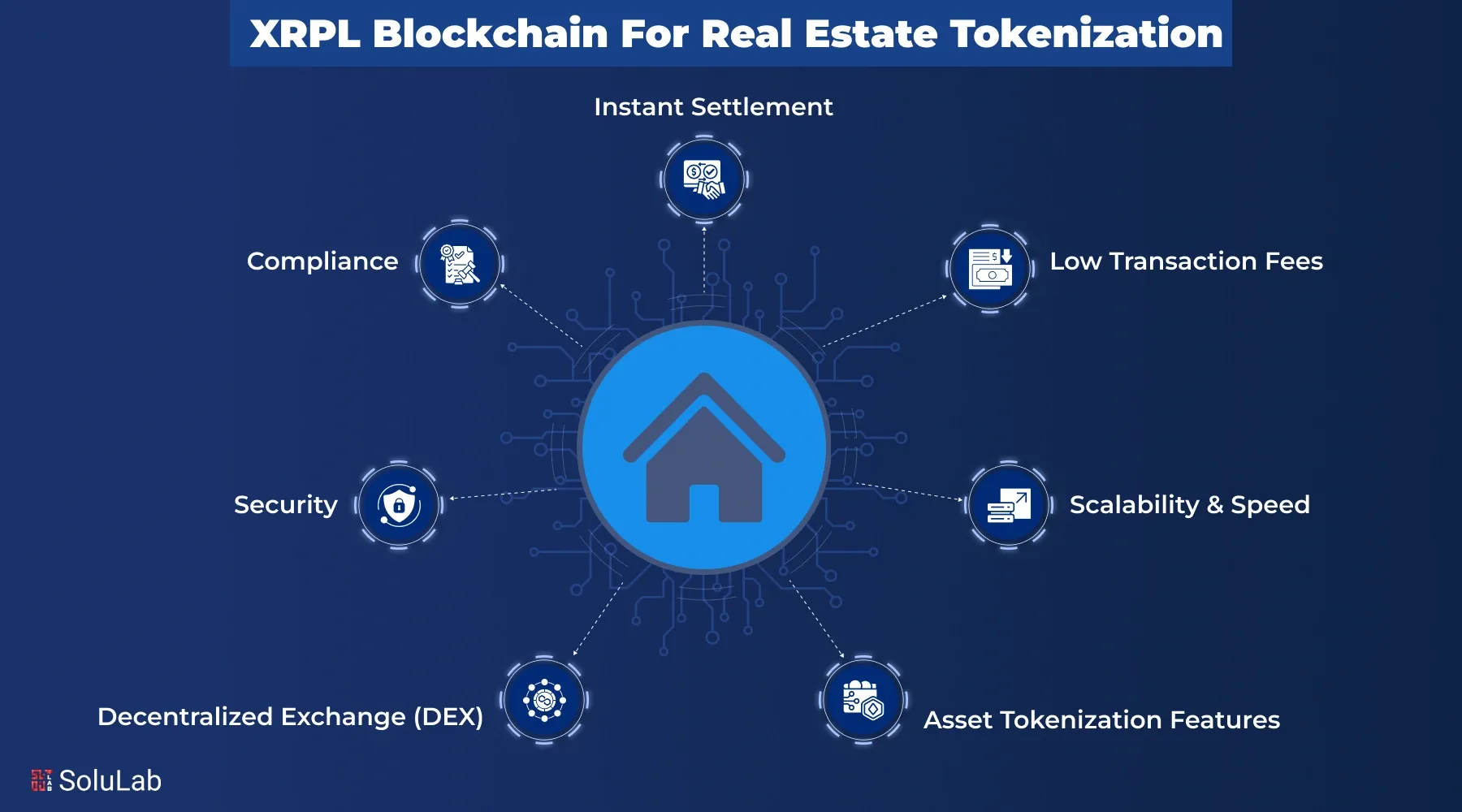
XRPL delivers features that align with real-world property needs. These features help businesses reduce friction, improve liquidity, and scale across markets. XRPL services also simplify asset issuance and compliance, which is crucial when dealing with high-value assets like real estate.
- Fast confirmation time (3–5 seconds): Property transactions settle instantly, helping platforms move investors through onboarding and trading without delays.
- Low transaction fees (often below a cent, $0.0002): Fractional trades and smaller payouts become affordable, supporting global retail participation.
- Native issuance for XRPL tokens: Issued Currencies let teams mint real estate tokens on-ledger without relying on complex smart contracts.
- Built-in trading infrastructure: The XRPL Dex exchange and AMMs support secondary markets without needing external liquidity engines.
- Compliance-ready structure: With authorized trust lines, clawback, freeze, and transfer controls, businesses can build regulated Tokenized Real Estate Platforms that match jurisdictional rules.
- Energy-efficient consensus: An eco-friendly model helps companies appeal to institutions and ESG-aligned investors.
- High reliability: With over a decade of uptime, the XRP ledger supports platforms that need uninterrupted, secure operations.
XRPL Native DEX And AMM Liquidity Advantages
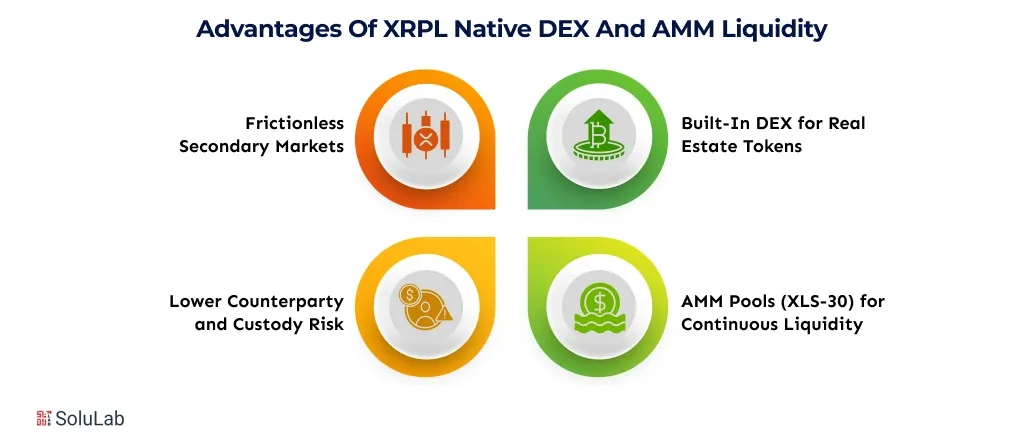
Liquidity is often the biggest challenge in tokenized real estate. XRPL solves this at the protocol level, not through external tooling. This gives platforms stronger liquidity flow and predictable performance.
-
Built-In DEX for Real Estate Tokens
The XRPL DEX enables direct trading of XRPL tokens on the ledger. There is no off-chain engine, no external orderbook dependency, and no custody gap. This approach improves transparency, which matters for regulated asset markets. Businesses benefit from predictable execution, auditable pricing, and lower operational effort.
-
AMM Pools (XLS-30) for Continuous Liquidity
XRPL AMM liquidity real estate pools allow property tokens to pair with XRP or stablecoins. These pools support continuous buy-sell activity. AMMs reduce slippage and maintain active pricing even when trading volumes fluctuate. Liquidity providers earn a share of fees, which encourages long-term pool participation.
-
Frictionless Secondary Markets
Real estate has always struggled with resale liquidity. Using a DEX on XRPL solves this problem by making token transfers instant and trustless. Buyers and sellers interact directly on-chain. This creates a real secondary market where tokens no longer sit idle.
-
Lower Counterparty and Custody Risk
Since all trades settle on the ledger, custody risks shrink. Transfers become transparent and verifiable. This is helpful for enterprises building regulated marketplaces and for investors who want clear audit trails.
Roadmap For Launching An XRPL Tokenization Platform
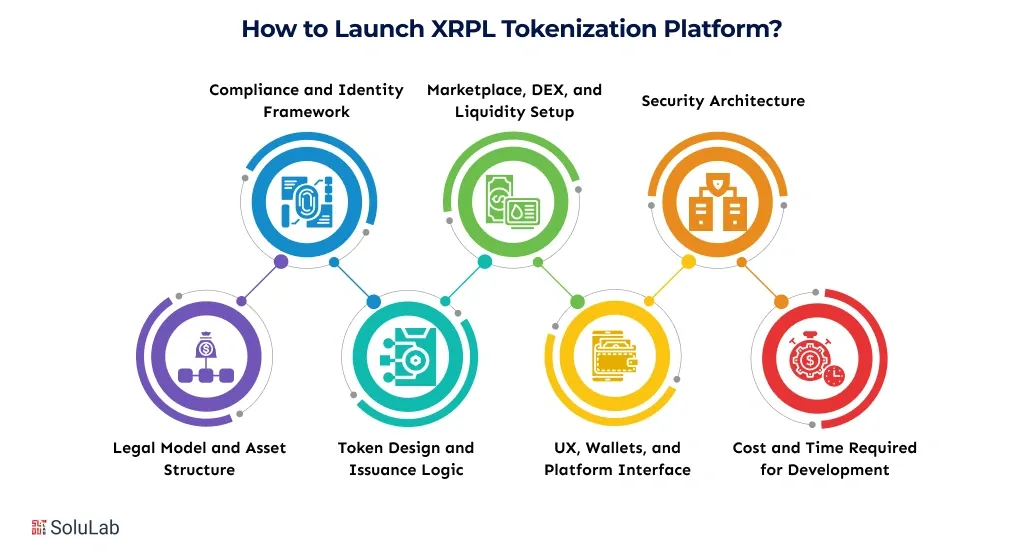
Building a real estate tokenization platform requires legal clarity, technical execution, and smooth onboarding for users. Below is a step-by-step structure that businesses can follow.
1. Legal Model and Asset Structure
Start by selecting a legal wrapper. SPVs, trusts, or REIT-style structures work well. Map investor rights, dividend rules, liquidation logic, and governance. Match the wrapper with the chosen token type: fungible tokens for fractional units or NFTs for whole-property structures.
2. Compliance and Identity Framework
Set up workflows for KYC and AML. Use authorized trust lines to limit access only to verified investors. Build jurisdiction-based restrictions according to markets like the US (SEC), EU (MiCA), UAE (VARA), or Singapore (MAS). Protect investors with clear legal terms that align with token logic.
3. Token Design and Issuance Logic
Use XRPL Issued Currencies to mint real estate tokens. Apply freeze or clawback controls if required by regulations. Write token distribution flows for dividends, rental income, and voting. Align tokenomics with business goals such as buy-back programs or liquidity incentives.
4. Marketplace, DEX, and Liquidity Setup
Enable listing on the XRPL Dex. Activate AMM pools for deeper liquidity. Form partnerships with fintech apps, RWA platforms, and exchanges. Add LP rewards that encourage long-term liquidity. Balance incentives across retail and institutional investors.
5. UX, Wallets, and Platform Interface
Investors should use a simple interface. Support wallets like Xumm or institutional custodial wallets. Build investor dashboards that show holdings, yield, and property documents. Add multilingual support and a clean UI to reduce onboarding friction.
6. Security Architecture
Use multi-sig wallets for issuer accounts. Secure private keys through hardware-based storage. Conduct audits for every core module. Add monitoring modules for suspicious transfers and failed access attempts.
7. Cost and Time Required for Development
A basic real estate tokenization platform on XRPL usually takes 4 to 5 weeks. This includes legal coordination, token issuance, basic dashboards, and compliance setup. And costs $15k.
A full-scale XRPL Tokenization Platform with multi-country compliance, custody integration, and liquidity engineering can take 3 to 5 months.
Costs vary by scope. Advanced builds with institutional security, cross-chain support, and AMM engineering require more budget. The best thing to do is to contact a tokenization development company that has expertise and is low-cost.
XRPL Compliance Features Simplify Cross-Border Regulations
Compliance is a major barrier in tokenization. XRPL helps businesses reduce complexity through native tools that enforce rules at the token level.
1. Built-In Tools for Regulatory Enforcement
Authorized trust lines ensure tokens only reach approved investors. Freeze and clawback features support legal action and dispute settlements. These tools allow platforms to stay aligned with the SEC, MiCA, VARA, and MAS frameworks.
2. Automated KYC and Identity Mapping
Integration with identity providers allows KYC data to connect with trust lines. Transactions remain transparent, and on-chain activity becomes auditable. This simplifies cross-border investor onboarding. Typical fees can be as low as $0.0002 per transaction. These metrics make high-volume trading and microdividend payouts economical and auditable.
3. Smart Restrictions Based on Jurisdiction
Using Hooks or sidechains, businesses can apply geographic limits or enforce rule sets depending on investor location. This is useful when dealing with the US (strict securities rules), the EU (MiCA), or the UAE (real estate licensing via DLD and VARA).
4. Government and Institutional Adoption Validates Compliance
There are some on going adoption news that prove XRPL supports regulated global markets:
- Dubai Land Department launched a licensed XRPL real estate tokenization platform in 2025.
- MUFG, Japan’s largest bank, is exploring XRPL real estate tokenization for large-scale assets.
- RealFI shows retail adoption through fractional XRPL-based property trades.
Future Opportunities For XRPL Real Estate Platforms
XRPL enables practical business models and product features that will shape the market:
- Fractional ownership marketplaces: Global investors can buy fractional shares with low entry points. This widens capital pools for developers.
- On-chain dividend automation: Rent and cash flows can be distributed on-chain with transparent audit logs. This simplifies investor reporting.
- Cross-border investment products: Combine legal wrappers with on-chain compliance to offer region-specific funds and listings.
- Sustainable asset labeling: Tokenize ESG-certified properties and offer sustainability-linked products to impact investors.
- Hybrid platforms and cross-chain bridges: Connect XRPL liquidity to Ethereum DeFi and custodial exchanges for broader distribution.
Conclusion
Technology is evolving fast, and XRPL is shaping a new era of secure, scalable, and compliant tokenized real estate. To keep pace with market shifts, you need a development partner who understands XRPL blockchain, regulatory needs, and real estate workflows. That is where SoluLab helps you.
At SoluLab, the leading real estate tokenization development company, we help you build reliable marketplaces, automate compliance, and unlock global liquidity. Whether you plan to tokenize property on XRPL or launch a full XRPL Tokenization Platform, our experts guide you through every step.
If you are ready to turn your vision into a live platform, connect with SoluLab today.
FAQs
1. Which types of businesses can benefit from XRPL real estate tokenization?
Real estate developers, property managers, REITs, brokers, fintech platforms, and investment firms benefit most. XRPL reduces settlement delays, lowers transaction costs, and supports fractional ownership for global investors.
2. How does XRPL help businesses stay compliant in different countries?
XRPL uses trust lines, freeze controls, clawback, and automated KYC checks to meet regional rules. This makes it easier to follow US, EU, UAE, and Singapore regulations without complex customs systems.
3. Why should businesses choose SoluLab for XRPL-based platforms?
SoluLab brings strong Web3 expertise, clear compliance support, and reliable engineering. The team delivers secure XRPL platforms, scalable architectures, and smooth user experiences tailored for property and investment businesses.
4. What is the typical cost to build an XRPL tokenization platform?
A basic build starts in the lower six figures. Complex platforms with multiple jurisdictions, automated compliance, dashboards, liquidity pools, and advanced security move toward the mid-to-high six-figure range.
5. How can businesses use XRPL in ways that create new revenue opportunities?
Companies can tokenize rental income streams, launch global property marketplaces, create ESG investment products, offer fractional pre-sale tokens, or use AMM-based rewards to attract long-term investors.