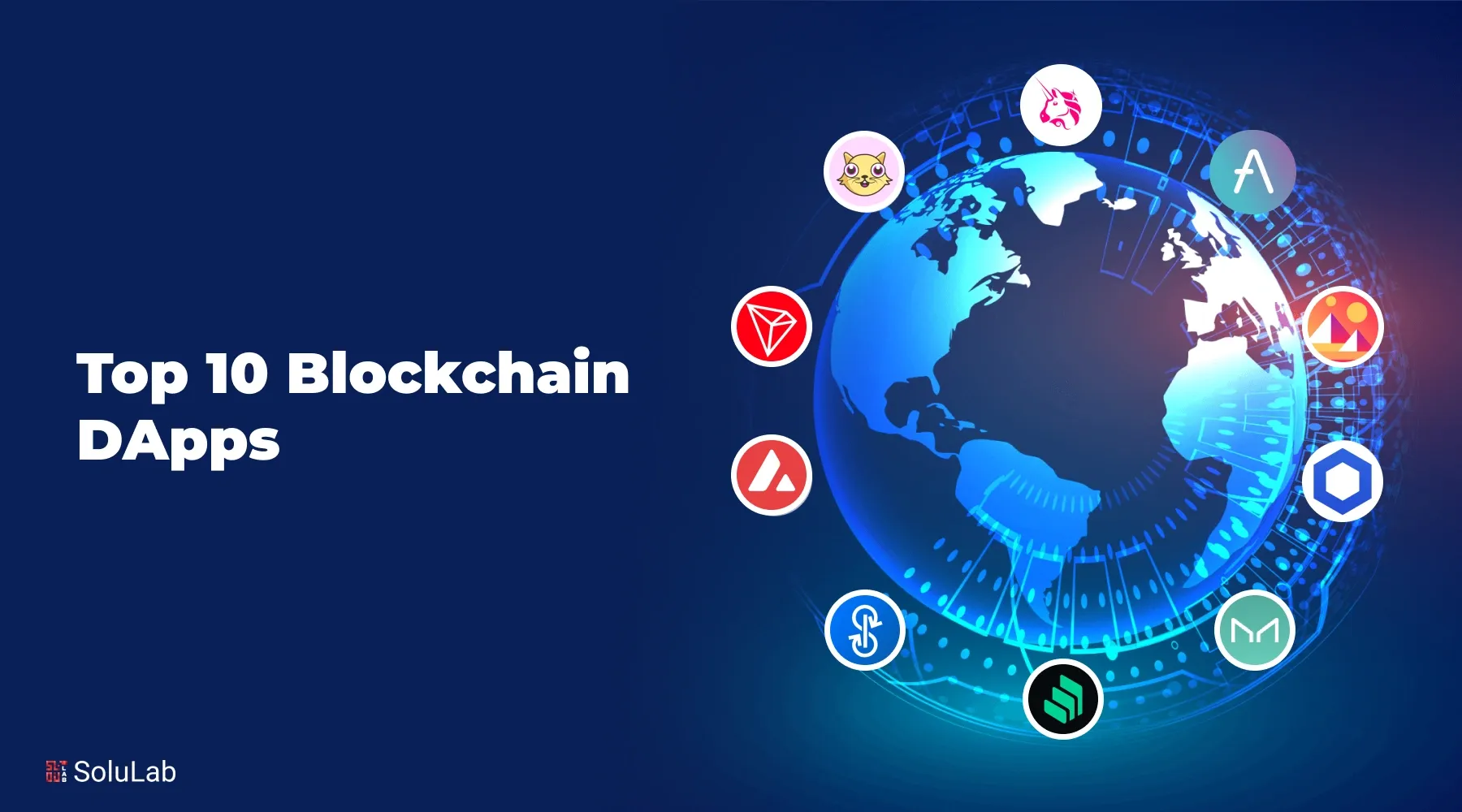
Blockchain dApps are no longer limited to crypto enthusiasts or early adopters. By 2026, decentralized applications will have evolved into platforms used across finance, gaming, social media, healthcare, and supply chains.
These dApps remove intermediaries, improve transparency, and give users greater control over their data and digital assets. However, with thousands of blockchain applications available, identifying reliable and high-performing dApps can be a challenging task.
Some deliver real value, while others struggle with security, scalability, or adoption. That’s why choosing the right dApps matters. In this blog, we’ve curated a list of the top 10 blockchain dApps in 2026, based on real-world utility, user adoption, and security.
The Criteria We Used to Shortlist Top Blockchain dApps
To identify the best blockchain dApps, we evaluated each platform using clear, practical criteria that focus on real-world value, user adoption, security, scalability, and long-term sustainability.
- User Adoption & Active Users: Daily active wallets interacting with dApps reached about 25 million in mid-2025, one of the highest activity levels since a previous market peak.
- Security & Smart Contract Audits: Security was a top priority. We checked whether smart contracts were audited by trusted firms and reviewed past vulnerabilities or security incidents.
- Use Case & Real-World Utility: We evaluated whether the dApp solves a real problem, delivers measurable value, and has practical use beyond speculation or hype.
- Blockchain Network & Scalability: We considered the underlying blockchain’s speed, fees, scalability, and reliability to ensure the dApp can support long-term growth.
- User Experience & Interface: A simple, intuitive interface matters. We assessed ease of onboarding, wallet integration, and overall usability for both beginners and advanced users.
- Community & Developer Support: Strong communities and active developer engagement indicate sustainability. We reviewed GitHub activity, updates, and community participation across platforms.
Top 10 Blockchain dApps Worth Considering in 2026
The table below gives a quick comparison of the top blockchain dApps in 2026, highlighting their core use cases, supported networks, standout features, and ideal users.
|
dApp |
Category |
Primary Function | Key Blockchain(s) |
|
Uniswap |
DEX |
Token swaps via AMM liquidity pools |
Ethereum, Polygon, Optimism |
|
Aave |
Lending |
Flash loans and collateralized borrowing |
Ethereum, Polygon |
|
Decentraland |
Metaverse |
Virtual land ownership and events |
Ethereum |
|
Chainlink |
Oracle |
Secure off-chain data feeds for smart contracts |
Multi-chain |
|
MakerDAO |
Stablecoin |
DAI issuance via over-collateralized vaults |
Ethereum |
|
Compound |
Lending |
Algorithmic money markets for lending |
Ethereum, Base |
|
Yearn.finance |
Yield Aggregator |
Automated yield optimization across protocols |
Ethereum, Arbitrum |
|
Avalanche |
Layer 1 |
High-throughput subnets for dApps |
Avalanche |
|
Tron |
Layer 1 |
Low-cost transactions for content dApps |
Tron |
|
CryptoKitties |
NFT Game |
Collectible breeding and trading game |
Ethereum, Flow |
This comparison makes it easier to understand how each dApp stands out, helping you choose the right platform based on functionality, adoption, and your specific blockchain needs.
1. Uniswap
Uniswap is a leading decentralized exchange (DEX) that enables users to trade cryptocurrencies directly from their wallets, eliminating the need for intermediaries. Built on blockchain technology, it offers permissionless, trustless token swaps with high liquidity. In 2026, Uniswap continues to be a core DeFi platform for on-chain trading.
Key Features:
- Automated Market Maker (AMM) model enabling instant, permissionless token swaps
- Deep liquidity pools with competitive pricing for major and emerging tokens
- Multi-chain support improves scalability and reduces transaction costs
Best For:
- DeFi traders looking for decentralized token swaps
- Users who prefer self-custody and wallet-based trading
- Liquidity providers aiming to earn fees on crypto assets
2. Aave
Aave is a decentralized finance (DeFi) dApp that allows users to lend, borrow, and earn interest on crypto assets without relying on traditional banks. It operates through smart contracts, ensuring transparency and security.
Key Features:
- Decentralized lending and borrowing with competitive interest rates
- Support for multiple cryptocurrencies across various blockchains
- Flash loans that enable instant, collateral-free borrowing
Best For:
- DeFi users looking to earn passive income
- Traders needing quick liquidity
- Advanced users exploring flash loan strategies
3. Decentraland
This Decentraland is a leading blockchain-based platform designed to solve a specific problem in the Web3 ecosystem. It offers secure, decentralized functionality with a strong focus on usability and scalability. By 2026, it will continue to see growing adoption across global users.
Key Features:
- Virtual land ownership using blockchain NFTs
- User-created experiences, games, and environments
- In-platform economy powered by MANA token
Best For:
- Specific industries or use cases it serves well.
- Beginners or advanced users, depending on complexity.
4. Chainlink
Chainlink is a decentralized oracle network that connects smart contracts with real-world data. It enables blockchains to securely access off-chain information like prices, APIs, and events. This makes complex dApps reliable and functional.
Key Features:
- Decentralized oracles that ensure accurate, tamper-resistant data feeds
- Cross-Chain Interoperability Protocol (CCIP) for secure data and token transfers
- Widely adopted price feeds are used across major DeFi platforms
Best For:
- DeFi applications need reliable price data
- Developers building data-driven smart contracts
- Cross-chain and enterprise blockchain solutions
5. MakerDAO
MakerDAO is a leading decentralized finance (DeFi) dApp that allows users to generate stablecoins without relying on traditional banks. Built on Ethereum, it enables permissionless borrowing through smart contracts. MakerDAO plays a key role in maintaining decentralized financial stability.
Key Features:
- Allows users to mint DAI, a decentralized stablecoin pegged to the US dollar
- Uses smart contracts and collateralized debt positions for trustless lending
- Governed by the community through MKR token-based voting
Best For:
- DeFi users seeking decentralized lending options
- Users looking for a stable, crypto-backed alternative to fiat currencies
- Governance-focused crypto participants
6. Compound
Compound is a leading DeFi dApp that allows users to lend and borrow cryptocurrencies without intermediaries. It uses smart contracts to automate interest rates based on market demand. By 2026, Compound will remain a trusted platform for decentralized lending.
Key Features:
- Algorithmic interest rates that adjust automatically based on supply and demand
- Support for multiple cryptocurrencies and stablecoins
- Non-custodial lending with full user control over the asset
Best For:
- Users looking to earn passive income on crypto holdings
- Borrowers who want decentralized, permissionless loans
7. Yearn. finance
Yearn.Finance is a popular DeFi dApp that helps users maximize returns on their crypto assets through automated yield farming strategies. It simplifies complex DeFi processes by managing investments on behalf of users. By automatically shifting funds across lending protocols, Yearn.finance helps users earn better yields with minimal effort and active monitoring.
Key Features:
- Automatically optimizes yield by moving funds across multiple DeFi lending platforms
- Vault-based strategy system that manages risk and returns efficiently
- Community-governed protocol powered by the YFI token
Best For:
- DeFi users looking for passive income
- Investors who want automated yield optimization
- Users with limited time to manage DeFi strategies
8. Avalanche
Avalanche is a high-performance blockchain platform designed for fast, secure, and scalable decentralized applications. It supports custom blockchains and DeFi ecosystems with near-instant finality. In 2026, Avalanche continues to attract developers building enterprise-grade and Web3 applications.
Key Features:
- High transaction speed with sub-second finality
- Low transaction fees compared to traditional Layer 1 blockchains
- Customizable subnets for building application-specific blockchains
Best For:
- DeFi platforms require high throughput
- Enterprises building private or custom blockchains
- Developers looking for scalable Layer 1 infrastructure
9. Tron
Tron is a blockchain-based dApp ecosystem focused on fast, low-cost transactions and decentralized content sharing. It aims to empower creators by removing intermediaries and giving users full control over digital assets. Tron is widely used in DeFi, gaming, and stablecoin transfers.
Key Features:
- High-speed transactions with near-zero fees, ideal for frequent transfers
- Strong support for stablecoins like USDT with high daily transaction volume
- Scalable infrastructure for DeFi apps, games, and entertainment platforms
Best For:
- Low-cost crypto transfers and payments
- DeFi users seeking fast transactions
- Developers building scalable dApps
10. CryptoKitties
CryptoKitties is one of the earliest and most popular NFT-based dApps built on blockchain technology. It allows users to collect, breed, and trade unique digital cats, each represented as a non-fungible token. The platform introduced NFTs to a mainstream audience and showed real digital ownership.
Key Features:
- Unique NFT cats with distinct traits stored securely on the blockchain
- Breeding mechanics that create new, rare CryptoKitties
- Marketplace for buying, selling, and trading digital collectibles
Best For:
- NFT collectors and enthusiasts
- Beginners exploring blockchain gaming
- Users interested in digital ownership and collectibles
Conclusion
Blockchain dApps are moving beyond experimentation and becoming essential tools across finance, gaming, identity, and digital ownership. These applications show how decentralized technology is changing digital experiences.
Whether you’re a developer, investor, or everyday user, understanding these platforms helps you make smarter decisions. The dApp ecosystem is evolving, and staying updated with the leading platforms will help you spot opportunities early and stay ahead in the decentralized future.
SoluLab, a dapp development company can help you design, build, and scale blockchain solutions. Contact us today to discuss further!
FAQs
Shipra Garg is a tech-focused content strategist and copywriter specializing in Web3, blockchain, and artificial intelligence. She has worked with startups and enterprise teams to craft high-conversion content that bridges deep tech with business impact. Her work translates complex innovations into clear, credible, and engaging narratives that drive growth and build trust in emerging tech markets.