A Soulbound Token (SBT) is a blockchain token that can’t leave the wallet it was issued to. Ever. That’s the whole difference from a normal NFT: you can’t sell an SBT or move it once it’s minted, so it works for things that should stick to a person instead of chasing a market price. Think university degrees, professional certifications, on-chain reputation scores, or proof you showed up to an event. Vitalik Buterin, E. Glen Weyl, and Puja Ohlhaver set the idea down formally in a 2022 paper, pitching SBTs as the base layer for what they called a Decentralized Society (DeSoc).
What Are Soulbound Tokens?
Digital and decentralized IDs (DIDs) have occupied some sharp people for years now, well-known individuals like Jack Dorsey and Vitalik Buterin among them, the latter being Ethereum’s co-founder. Buterin is the one who proposed soulbound tokens: NFTs you can’t transfer, built to stand for who a person is and what they’ve done on Web3.
His timeline was ambitious. Buterin wants to have the Soulbound tokens (SBTs) ready for early use on Ethereum by the end of this year, and the larger plan aims at a “decentralized society” by 2024.
The Significance of Soulbound NFTs
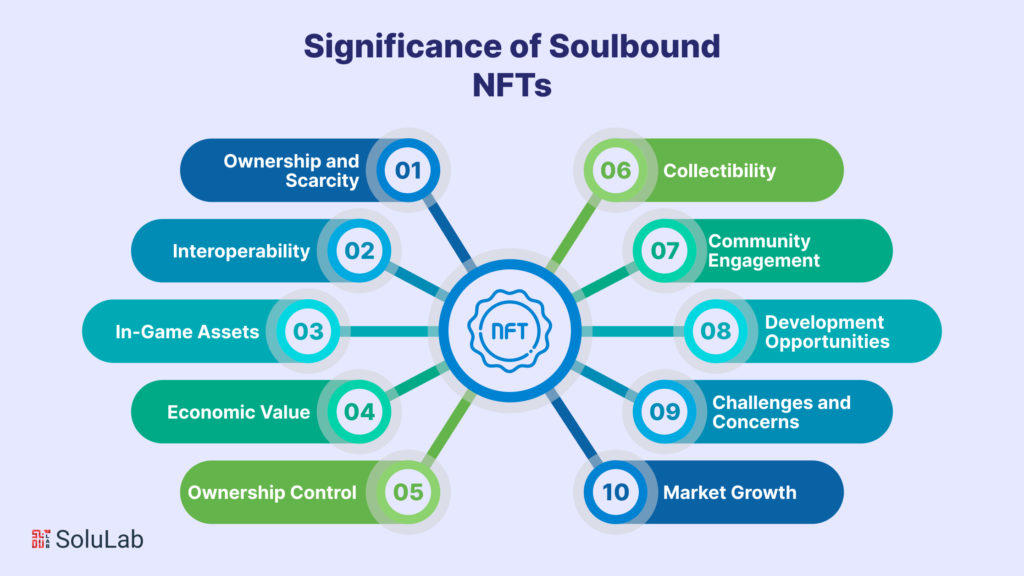
Soulbound NFTs (short for “Soulbound Non-Fungible Tokens”) are one of the more interesting turns blockchain and digital assets have taken. You’ll mostly see them discussed around virtual worlds, video games, and similar digital spaces, where they bring some distinct advantages. Here’s why people pay attention to them:
- Ownership and Scarcity: A Soulbound NFT belongs to one specific character or entity inside a game or virtual world. The blockchain records that ownership, which is what keeps the item scarce and one of a kind. Some games only ever mint a handful, and that makes them even more exclusive.
Read Our Blog: Top NFT Development Companies To Look At In 2025
- Interoperability: Within one family of games or virtual worlds, the same Soulbound NFT can often travel with you. Hop from one environment to the next and your assets come along, which makes the experience better and the item worth more.
- In-Game Assets: Usually these NFTs stand in for things you use while playing: characters, weapons, skins, virtual land. They aren’t just decoration. They can change how the game plays, how it looks, and how it feels.
- Economic Value: The money involved can be serious. The most wanted items have gone for thousands of dollars, a few for millions. One example: in Decentraland, a virtual world, a virtual estate sold for over $900,000 in 2021.

- Ownership Control: Players fully control their Soulbound NFTs. Trade them, sell them, use them however they like, provided the game’s rules permit it (and with a true SBT, those rules usually won’t allow a sale).
- Collectibility: People collect them the way they’d collect stamps or trading cards. Rarity counts. So do looks and history.
Read Also: Building Trust and Transparency in Your NFT Marketplace Ecosystem
- Community Engagement: Tight communities tend to form around these assets. Players trade, compete, and team up, and the NFTs give them something concrete to rally around.
- Development Opportunities: Game studios and content creators got a new toolkit out of this. They can design and mint NFTs that make the game richer, and get paid for what they make.
- Challenges and Concerns: It isn’t all upside. Critics point to the energy blockchains burn, open regulatory questions, and the scams and fraud that still plague the NFT market.
- Market Growth: And the market keeps getting bigger. The market size for Non-Fungible Tokens (NFTs) was estimated at USD 16 billion in 2021 and is expected to climb from USD 21.39 billion in 2022 to USD 212 billion by 2030, a CAGR of 33.7% across the 2023-2030 forecast window.
Put simply, Soulbound NFTs sit where blockchain, gaming, and digital ownership overlap. What makes them matter is the ownership model itself, plus portability between worlds, real economic value, and the communities they pull together. One caveat, though. This corner of the NFT market moves fast and can flip quickly, so if you’re serious about it, keep reading and keep checking.
Soulbound Token Development
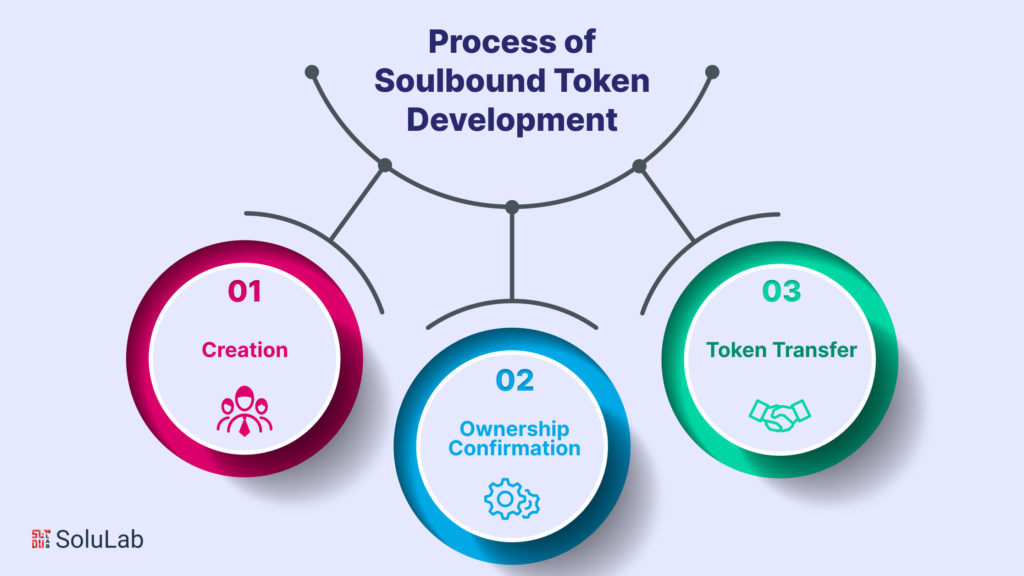
Building an SBT is more involved than minting a regular NFT, because blockchain mechanics get mixed with identity checks. Stripped down, the process goes like this:
- Creation: An artist or creator mints the SBT and bakes a piece of their own identity into it. Cryptography usually does the heavy lifting here, so the link is secure and can’t be tampered with.
Read Also: The Future of NFT Marketplaces: Trends and Innovations
- Ownership Confirmation: Whoever is going to hold the token goes through identity verification first, to prove they’re eligible. That check is what keeps the bond between person and token honest.
- Token Transfer: Once it lands in the owner’s wallet, that’s it. No transfers, no copies. The bond is permanent and belongs to that one person.
Limitations of Soulbound Tokens
What happens when someone loses their Soul? Right now, nobody has a fully proven answer, and that’s one of the bigger obstacles to wider adoption. The whitepaper by Vitalik Buterin, Glen Weyl, and Puja Ohlhaver floats several recovery ideas. None of them has been properly tested or broadly accepted yet.
Take community recovery. Under that model, getting a Soul’s private keys back might require sign-off from a qualified majority of the Soul’s communities (or a random subset of them).
Then there’s the uncomfortable one. A reputation-based community could slide into something like a social credit system, where high scorers collect the perks and everyone else risks being blacklisted. That’s an ethical problem. It also makes it harder for people to move past their record and grow.
Real-life Applications of Soulbound NFT Tokens
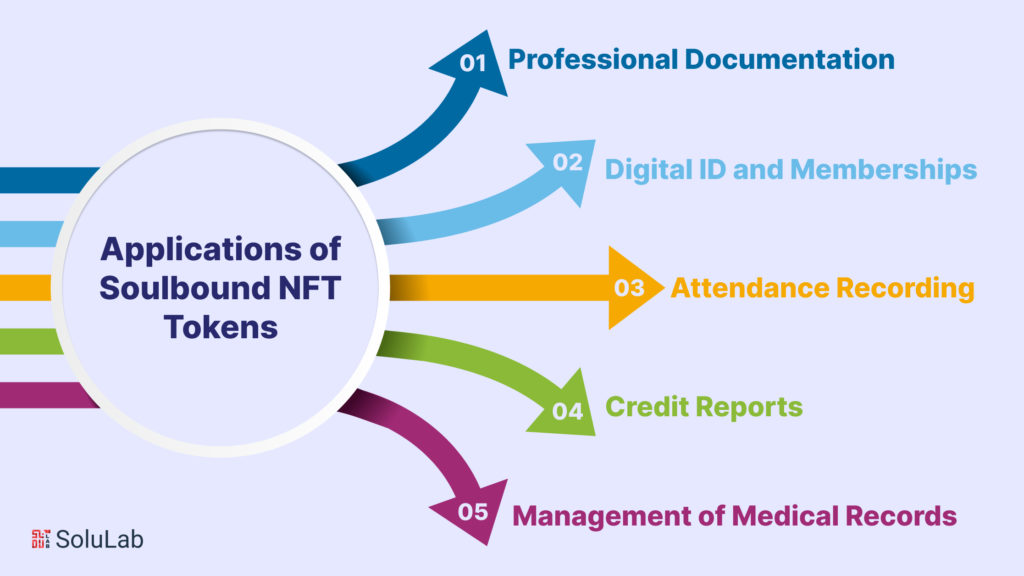
SBTs are still new, and there isn’t much documentation of them in actual use. The idea, though, is a link between a digital token and something in the real world, whether an object or an experience. NFTs bend to a lot of purposes, so it isn’t hard to picture where this could go. A few candidates:
Professional Documentation
Picture your CV, but on-chain. The twist is that someone other than you, possibly several someones, can issue or vouch for each entry. An employer could hand a departing worker a reference letter as an SBT, for example.
Now imagine colleges issuing degrees this way and employers doing the same for their staff. Impersonation gets a lot harder when credentials can’t be copied or handed over. The point is to give each person a social identity built from badges that are theirs alone and can’t be swapped.
Read Also: A Guide to Asset Tokenization
Digital ID and Memberships
ID documents and membership cards fit the model neatly. Gyms, libraries, sports clubs, practically any public venue or facility could issue members an SBT that lives in their wallet. The member keeps it for life, along with their data and visit history.
There’s a small everyday win too: one digital wallet holding every ID, instead of a leather one bulging with plastic cards.
Attendance Recording
Something close to this already exists: the Proof of Attendance Protocol, or POAP. The difference is in intent. Businesses use a POAP, which is an NFT, for loyalty programs and marketing campaigns. An SBT’s main job is simpler. It confirms the person really was there.
Credit Reports
Need a loan? You could let the lender see a credit profile made up of SBTs. They’d check your history quickly and approve or decline based on how reliably you’ve paid in the past.
Read Our Blog Post: What are the Benefits of Using Digital Identity with Blockchain in the Future?
Management of Medical Records
Being sick is bad enough. Nobody wants to also hunt for a doctor, recite their medical history from memory, and argue with an insurer. If doctors and patients kept records as SBTs, much of that hassle could go away.
The patient would own the records outright. They could prove who they are in seconds and share their history with a new doctor straight away, which matters most when switching hospitals or doctors, or applying for insurance. No printing stacks of paper. A few clicks to grant access, a few more to take it back.
The Future of Soulbound Tokens
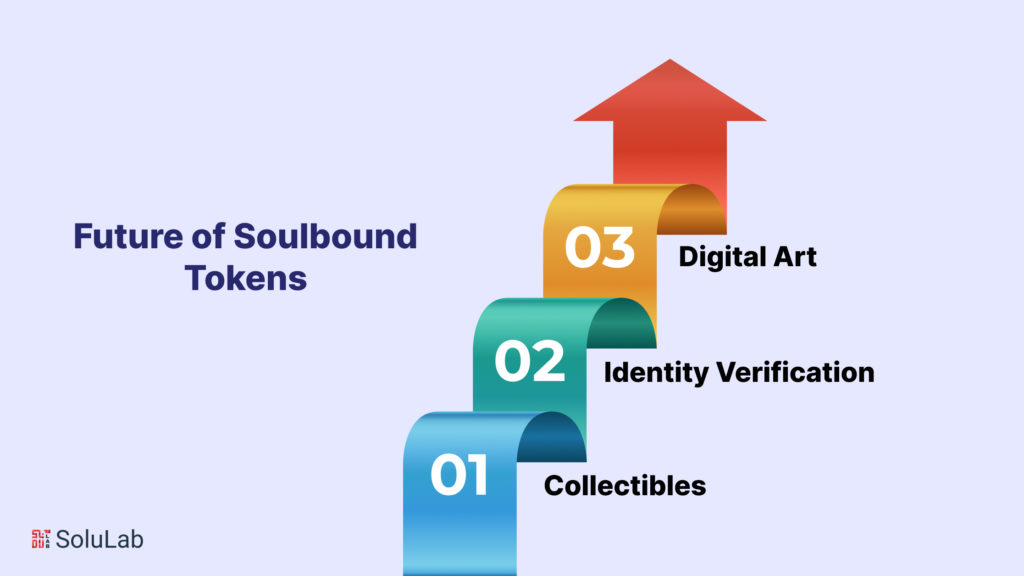
Blockchain and NFTs keep changing, and SBTs could end up in a lot of places. A few where the impact might be biggest:
- Collectibles: SBTs could change digital collecting from the ground up, tying collectors much more closely to the pieces they value most.
Check Out Our Blog: Top NFT Marketplaces of 2025
- Identity Verification: This could be where SBTs matter most: a secure, tamper-proof way to prove you are who you say you are.
- Digital Art: The art market might shift in a big way, with artists and collectors bound together through SBTs in relationships that actually last.
Conclusion
SBTs pull three threads together: blockchain, identity verification, and digital ownership. They change what “owning” something digital even means, because the token is about the holder as much as the asset. As recognition grows and the tooling matures, blockchain and NFTs get a lot more interesting. Watch this space. SBTs could well change how people see and use digital assets.
Here’s the shift in one line: soulbound tokens give NFTs identity and meaning, which lifts them past the “tradeable JPEG” idea most people still carry around.
Under the hood, advanced cryptography ties each token to exactly one owner. That tie is more than a question of who holds what, and it reaches past the screen. For collectors and creators, every SBT carries a new kind of value and authenticity, and it’s good evidence of how inventive the blockchain industry can be.
Want to go further with SBTs? SoluLab is a recognized name in Soulbound token development services. As an established Soulbound token development company, we pair current technology with a real grasp of what soulbound status means inside the NFT space. That experience with Soulbound token development services is how we help individuals and companies create, manage, and get real value out of Soulbound NFTs for themselves. Partner with SoluLab today and see what Soulbound Tokens could do for you.
FAQs
Shipra Garg is a tech-focused content strategist and copywriter specializing in Web3, blockchain, and artificial intelligence. She has worked with startups and enterprise teams to craft high-conversion content that bridges deep tech with business impact. Her work translates complex innovations into clear, credible, and engaging narratives that drive growth and build trust in emerging tech markets.