The AR-based treatment facilities allowed our client to reduce surgical planning time by 40% and significantly improve patient recovery rates.

Augmented reality plays a significant role in the healthcare sector by enhancing the treatment facilities offered to patients with specialized solutions based on AR and 3D modeling.
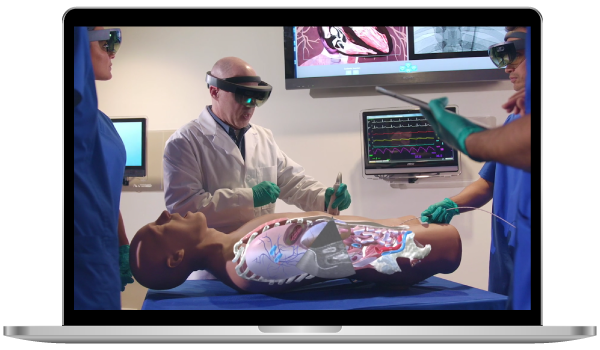










AR or augmented reality, along with 3D modeling and virtual reality or VR, is all set to bring about a revolution in providing treatment facilities to patients.
Medical imaging techniques have radically evolved over the past few decades with advances in technology like MRIs, but AR will play a pivotal role.
Augmented reality and virtual reality happen to be the two most promising platforms for surgery as well as surgical planning for the spine and bones.
Our client, based in California, offers advanced treatment facilities for spinal injuries and joint damage using stimulating computerized environments.
Customization and personalization are two vital elements in patient care. Therefore, creating a model accordingly was a tough task.
Achieving precise spatial alignment between 3D models and a patient's real-time anatomy in a computerized surgical environment.

Patient-specific skeletal visualization for precise surgical navigation.

Interactive surgical environments allowing surgeons to practice complex maneuvers.

Digital monitoring tools to track bone and spine recovery post-operation.
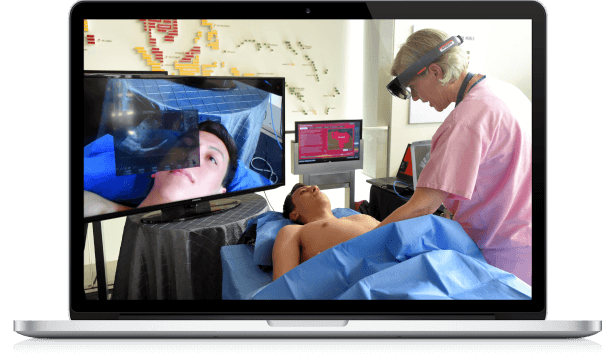
Interactive 3D spine visualization allowing for multi-angle diagnostic review.
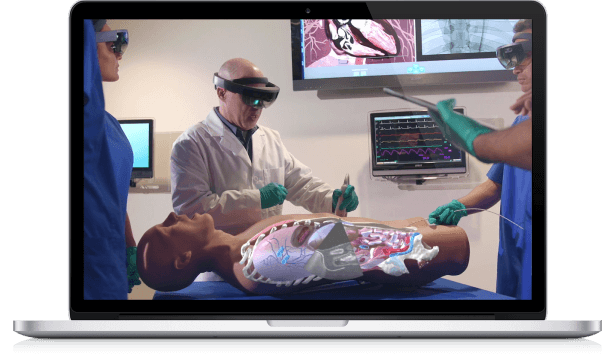
Real-time overlay of digital medical imagery onto physical patient skeletal structures
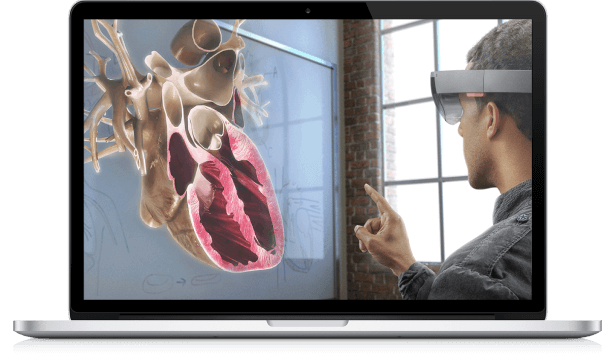
Remote surgical planning modules for collaboration between specialized orthopedic clinics.
The AR-based treatment facilities allowed our client to reduce surgical planning time by 40% and significantly improve patient recovery rates.
The solution successfully digitized orthopedic care for the California-based clinic, setting a benchmark for AR adoption in specialized medical treatments.