Key Takeaways
- RWA tokenization in the USA is no longer just a technology initiative; it’s a compliance-first strategy. Successful projects must align with federal and state regulations before launching tokenized assets.
- Tokenization consulting helps businesses navigate complex regulatory frameworks, including securities laws, AML/KYC requirements, custody regulations, and investor protection standards.
- BitLicense remains a key consideration for businesses operating in or serving customers in New York, making regulatory planning essential from the earliest stages of development.
- Legal structuring, smart contract audits, and compliance automation should be integrated into the tokenization roadmap from day one, rather than treated as post-launch requirements.
- Businesses that proactively address compliance challenges are better positioned to scale, secure partnerships, and access emerging opportunities in the tokenized asset ecosystem.
- Choosing the right tokenization consulting partner, like SoluLab, can significantly reduce regulatory uncertainty, shorten time-to-market, and improve the chances of a successful RWA launch.
Let’s be honest. If you’re reading this, you probably feel caught between two forces. You see the market moving fast. Tokenized real-world assets are shifting from hype to actual money. Early 2026 reports show the sector entering a real institutional phase, with pilots turning into repeatable products and on-chain value climbing into the tens of billions. But you also know that one wrong move on the legal side can shut your whole project down before it even launches.
That is the reality of building RWA products in the United States in 2026.
The biggest risk for you is not picking the wrong chain or writing buggy smart contracts. It is structuring the token, the offering, and the platform in a way that conflicts with federal securities law, state licensing rules, or broker-dealer requirements. When that happens, it does not matter how good your product is. You cannot raise capital, you cannot onboard users, and you cannot scale.
This guide is for you if you are a founder, CTO, asset owner, or fund manager trying to navigate tokenization consulting services in the U.S. without getting lost in legal theory or generic compliance decks. It explains what real consulting should do, how BitLicense actually affects you, where the SEC and FINRA cut in, and how to avoid the mistakes that are still costing smart people millions before their first launch.
If you plan to launch a tokenization platform in the USA, you need more than a compliance checklist. You need a coherent strategy that ties your business model, legal structure, and product design into one executable plan.
What Tokenization Consulting Actually Is (and Why Most Firms Fail at It)
RWA tokenization consulting is not just “legal advice plus blockchain buzzwords.” It is the work of turning a real-world asset into a legally valid, operationally workable digital instrument that can be issued, held, transferred, and serviced without triggering regulatory landmines.
In the U.S., the first question you must answer is not “which chain?” or “what token standard?” It is this: what are you actually creating?
- Is it a digital security that falls under federal securities law?
- Is it a non-security crypto asset with its own set of obligations?
- Or is it a hybrid that touches money transmission, custodial services, and platform controls in ways that create multiple regulatory exposures?
That distinction is everything. If your token is a security, you are dealing with SEC obligations, exemption design, transfer restrictions, and potential FINRA involvement when broker-dealers or ATS are part of the picture. If your platform handles custody, transmission, or exchange functions, you can also face state money transmission or virtual currency licensing issues, including BitLicense exposure in New York.
Most tokenization projects fail early because consultants skip this step. They jump straight to UX, smart contracts, or tokenomics slides without clarifying the legal architecture. That is a red flag. If a firm starts talking about chain selection before classification, walk away.
Good tokenization consulting helps you make hard decisions in the right order:
- Decide what the token represents before you design the product.
- Map federal and state exposure before you pick launch geographies.
- Choose your exemption path (Reg D, Reg A+, etc.) based on your investor base, not your crowdfunding dreams.
- Build transfer restrictions, investor eligibility checks, and compliance controls into the platform, not as an afterthought.

BitLicense Explained: What It Actually Means for Your Tokenization Project
The BitLicense is a New York State Department of Financial Services license for businesses engaged in virtual currency business activities involving New York or New York residents.
The key thing to understand is that BitLicense is not about “crypto ideology.” It is about specific activities:
- Receiving or transmitting virtual currency on behalf of others.
- Custody or control of virtual currency for customers.
- Buying and selling virtual currency as a business.
- Exchange services between fiat and crypto or crypto-to-crypto.
- Controlling, administering, or issuing a virtual currency.
If your platform is purely custom software development for an issuer, and you do not hold customer keys, manage custody, or run exchange functions, your BitLicense exposure is lower. That is because software development alone is not a virtual currency business activity in itself.
The moment you start handling customer assets, managing wallets, or running exchange-like features, the analysis changes fast. If your RWA platform touches New York users and your model involves custody, transfers, exchange services, or direct issuance, BitLicense can become a real go-to-market constraint.
Here is how to think about it:
| Your role | BitLicense risk |
| Only software development for issuers | Lower, because software alone is not virtual currency business activity. |
| Custody of tokens or private keys for investors | Higher, because custody is a listed activity. |
| Running exchange or conversion features | Higher, because exchange services are listed. |
| Issuing or administering the token directly | Potentially high, because issuing virtual currency is listed. |
BitLicense compliance is not a checkbox. It is a business model design problem. The smartest projects either reduce exposure by design, ring-fence New York activity, or use regulated partners instead of trying to build everything in-house.
This is where RWA Legal Consulting earns its keep. You need a licensing strategy that matches your wallet model, revenue model, investor geography, and servicing stack. For a well prepped strategy, it’s better to have a tokenization consulting checklist handy.
The U.S. Regulatory Landscape for RWA Tokenization in Plain English
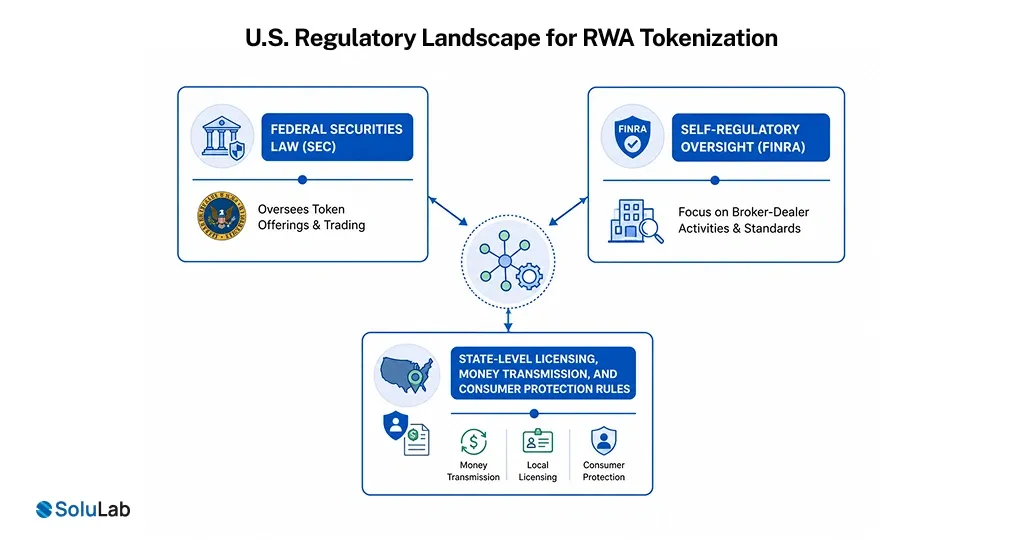
You are not dealing with one regulator. You are dealing with overlapping layers:
- Federal securities law (SEC).
- Self-regulatory oversight for broker-dealers (FINRA).
- State-level licensing, money transmission, and consumer protection rules.
SEC, Howey, and Exemption Paths
The SEC’s approach is still based on economic reality, not labels. Under the Howey test, a digital asset transaction can be a securities offering when there is an investment of money in a common enterprise with a reasonable expectation of profits derived from the efforts of others.
In 2026, SEC interpretive guidance describes digital securities, including tokenized assets, as securities, while confirming that Howey remains central to transaction-specific analysis.
For most U.S. RWA offerings, you have three realistic paths:
- Reg D: Private offerings to accredited investors with transfer restrictions and a tighter investor base.
- Reg A+: Broader capital raising with heavier disclosure, cost, and ongoing reporting obligations.
- Full registration: Rare for early-stage tokenization projects due to cost and complexity.
If your consultant cannot explain why your deal should be Reg D instead of Reg A+, or why secondary liquidity timing changes your exemption design, you are not getting strategic advice.
FINRA and Broker-Dealer Implications
FINRA states that member firms engaged in crypto asset activities may face obligations even where securities status is still being analyzed. Firms contemplating crypto-related business lines may need a New Membership Application or Continuing Membership Application, depending on the facts.
FINRA also highlights touchpoints, including:
- Private placements of crypto asset securities.
- ATS activity for digital asset securities.
- Special-purpose broker-dealer custody frameworks.
If your model includes placement, distribution, secondary trading, or custody of tokenized securities, you probably need regulated intermediaries, not just a software stack.
Federal vs State
Federal law usually governs whether your tokenized instrument is a security and how it can be offered. State law can still control money transmission, virtual currency licensing, blue-sky filings, consumer protection, and servicing obligations.
That is why blockchain regulatory consulting should never stop at SEC analysis. A platform can be clean on securities exemptions and still fail at the state-operations layer.
Key Compliance Challenges You Will Face in Practice
Most tokenization projects do not fail because the asset is bad. They fail because the compliance model is vague, fragmented, or contradicted by the product design.
- Securities Classification
If your token represents equity, debt, fund interests, revenue rights, or profit expectations tied to managerial efforts, assume securities analysis is central. The SEC’s 2026 interpretive guidance is helpful, but it does not give you permission to ignore fact-specific review.
- AML and KYC
Even when your token is clearly a security, investor onboarding, sanctions screening, source-of-funds review, accreditation checks, and suspicious activity escalation still matter. The market has outgrown the fantasy that “on-chain transparency” replaces compliance operations.
- Custody and Ownership
Custody is where elegant whitepapers go to die. If you do not clearly define who holds the asset, who controls the token, what your off-chain legal records say, how transfers are approved, and what happens on default or loss, you do not have asset tokenization but a dispute waiting to happen.
- Tax and Reporting
Tax treatment depends on asset type, issuer structure, investor class, and transaction flow. You need tax counsel aligned with legal structuring before launch, not after your first subscriptions close. Poor tax design can destroy investor appetite faster than any smart contract bug.
Your practical checklist should include:
- Written token classification memo.
- Offering exemption memo and investor eligibility rules.
- State licensing heatmap, especially for New York.
- Custody and control matrix.
- AML/KYC and sanctions workflow with escalation rules.
- Transfer restriction logic embedded in platform rules.
- Secondary trading pathway assessment with broker-dealer or ATS implications.
What Real Tokenization Consulting Services Include?
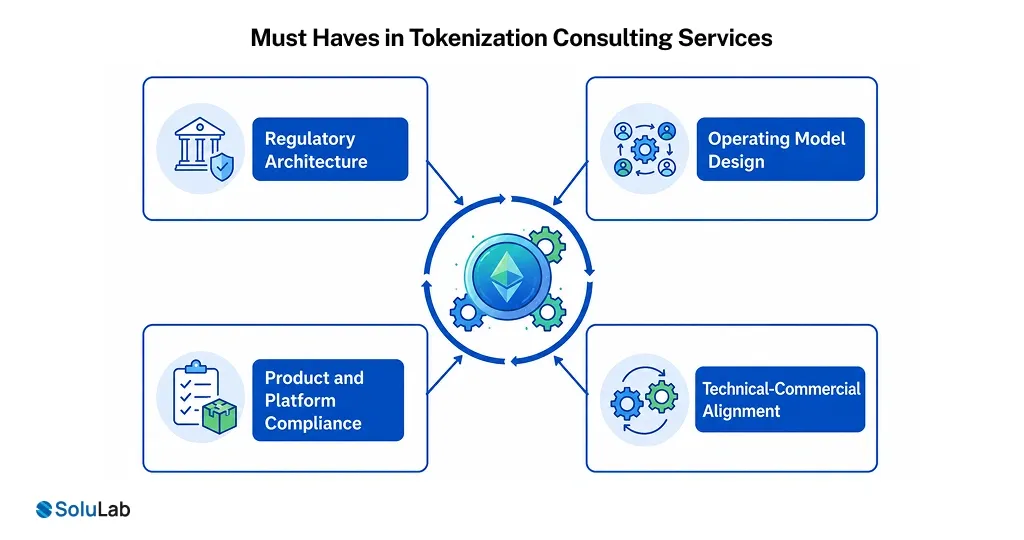
Good tokenization consulting services go far beyond legal introductions and architecture diagrams. They should connect your business model, issuance structure, compliance stack, and product roadmap into one executable plan.
A serious scope of work should include:
Regulatory Architecture
- Token classification and transaction mapping under securities law.
- Exemption strategy, such as Reg D or Reg A+ pathway design.
- State-by-state licensing analysis, including BitLicense exposure.
- FINRA and broker-dealer pathway review where distribution or trading is involved.
Product and Platform Compliance
- Onboarding and investor eligibility design.
- Wallet, custody, and asset-control architecture.
- Transfer restrictions, whitelisting, lockups, and resale controls aligned with exemption rules.
- Disclosure workflows, audit logs, and governance procedures.
Operating Model Design
- Service-provider selection for legal, broker-dealer, ATS, KYC, custody, transfer agent, and tax support.
- Compliance roles and RACI mapping.
- Launch sequencing by state, investor segment, and asset class.
- Incident response and regulator-facing documentation.
Technical-Commercial Alignment
This is where many “Blockchain Compliance Consulting” firms are weak. Your legal structure must inform your platform features. If your exemption restricts resale, your smart contract and transfer approval layer should enforce that. If you depend on regulated intermediaries, your API and permissions design should reflect those operational handoffs.
If you are comparing providers, review Asset Tokenization Development Companies and ask which ones can actually bridge legal workflows, capital-raising constraints, and platform execution instead of outsourcing the hardest parts.
How to Choose the Right Tokenization Consulting Company?
You should choose a tokenization consulting company the same way you would choose structuring counsel for a complex fund or regulated financial product: by depth, not branding.
Look for a partner that can prove experience in:
- U.S. securities structuring for tokenized assets.
- New York BitLicense and state licensing analysis.
- Broker-dealer, ATS, or FINRA-aware product design.
- Asset classes such as real estate, private funds, debt, commodities, or gold-backed structures.
- Converting legal rules into technical specifications.
Here is a simple scoring table:
| Evaluation factor | What good looks like |
| U.S. legal depth | Can explain Howey, exemptions, transfer limits, and regulatory roles in plain English. |
| State licensing knowledge | Flags New York issues early and does not treat BitLicense as an afterthought. |
| Product literacy | Understands wallets, cap tables, whitelists, settlement, and compliance automation. |
| Execution model | Can coordinate legal, technical, and operations workstreams into one launch plan. |
| Commercial realism | Gives you launch phases, costs, timelines, and trade-offs instead of vague optimism. |
Questions to Ask Tokenization Consultants
Use these questions before you sign anyone:
- How would you classify my token and why?
- Which securities exemption fits my asset and investor base best?
- Do I trigger BitLicense or other state licensing risk if I onboard New York users?
- Do I need a broker-dealer, ATS, transfer agent, or qualified custodian for my design?
- How will transfer restrictions and investor eligibility be enforced technically?
- What legal documents, policies, and operating procedures are required before launch?
- What is the realistic launch timeline if legal, compliance, and technology are all done properly?
If a consultant answers these with “it depends” and then stops, you are not getting advice. Good advisors explain the dependencies and give you a decision tree with options, costs, and timelines.
Read more – Questions to Ask Tokenization Consultants
Tokenization Use Cases That Make Sense in the U.S. Now
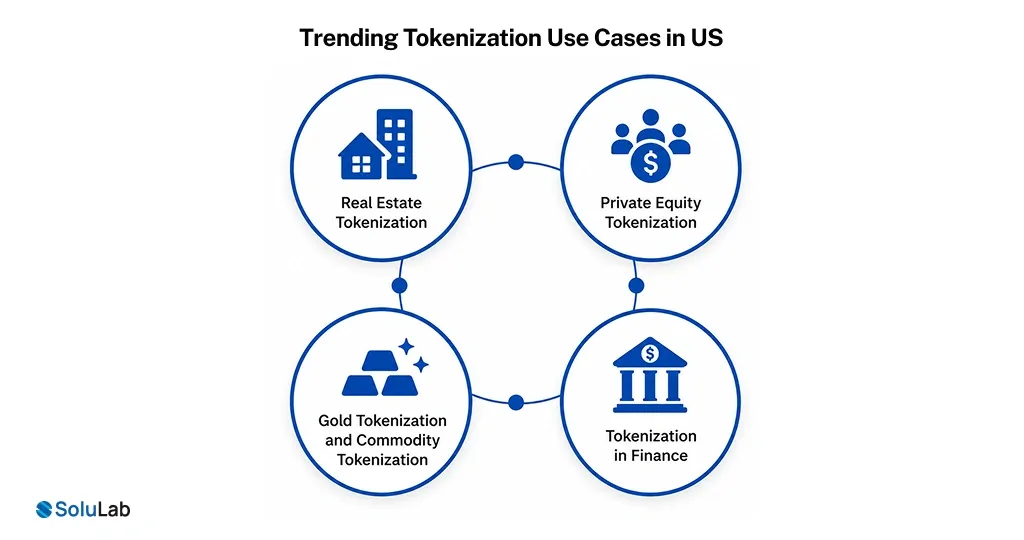
The best U.S. tokenization opportunities are the ones where digitization solves a real friction problem, not where blockchain is used as a fundraising costume.
Real Estate Tokenization
Real estate tokenization remains a strong fit because it naturally benefits from fractional ownership, investor access controls, and improved distribution of economic rights. In the U.S., though, most serious structures still look like securities offerings, which means exemption planning, disclosure discipline, and transfer controls matter from day one.
Private Equity Tokenization
Private fund tokenization interests and SPV-based structures can benefit from streamlined cap table management and programmable transfer restrictions. This works best when your investor base is already sophisticated, and your compliance perimeter is tightly managed.
Gold Tokenization and Commodity Tokenization
Gold tokenization models can work well when ownership, storage, redemption rights, and auditability are clearly documented. If the token economics start emphasizing appreciation based on issuer efforts rather than direct asset-backed rights, your securities analysis becomes more sensitive.
Tokenization in Finance
Debt instruments, receivables, structured products, and fund shares are where institutional-scale fund tokenization is heading because they align more naturally with programmable servicing and capital markets workflows. This is also where your compliance burden increases, because once you look like financial infrastructure, regulators expect you to behave like it.
Building Compliant RWA Platforms: Where Technology Meets Regulation
The old model was “build fast, lawyer later.” In U.S. RWA tokenization, that model is dead.
Your technology decisions need to flow from your regulatory structure:
- Permissioned vs public access should align with investor eligibility and transfer controls.
- Wallet architecture should align with custody assumptions and licensing exposure.
- Secondary trading modules should align with broker-dealer and ATS realities.
- Audit trails and governance logs should support diligence, examinations, and dispute resolution.
This is where AI Native Strategy becomes useful, but only if it is grounded in compliance. AI can improve onboarding review, anomaly detection, document extraction, investor support, and workflow orchestration. It cannot rescue a bad legal structure.
You should also think carefully about the delivery model:
- Tokenization as a Service (TaaS) can reduce time to market, but only if the provider supports compliance controls, role segregation, and integration with legal workflows.
- White-Label Tokenization Development can work for faster launches, but you must still own the regulatory design.
- If your roadmap includes a Crypto Exchange with tokenization, expect a much heavier compliance conversation around trading, custody, customer protection, and licensing.
If you want a serious tokenization platform development company, choose one that starts with compliance architecture and not just chain integrations.
Cost and Timeline for Tokenization Compliance Projects
You should budget tokenization compliance like a regulated product launch, not a normal software sprint. Timing and cost vary by asset class, exemption path, investor geography, custody model, and whether New York is in scope.
A realistic planning view looks like this:
| Project type | Typical timeline | Cost pressure drivers |
| Private pilot with accredited investors | 8 to 16 weeks | Legal structuring, offering docs, KYC stack, transfer controls |
| Multi-state commercial launch | 3 to 6 months | State analysis, vendor onboarding, operating procedures, and audits |
| New York-inclusive or trading-enabled platform | 6+ months | BitLicense strategy, regulated intermediaries, custody, FINRA/ATS complexity |
Your main cost buckets usually include:
- Securities and regulatory counsel.
- State licensing analysis.
- Compliance tooling and onboarding vendors.
- Platform customization for restrictions and reporting.
- Custody, transfer agent, broker-dealer, or ATS partners where needed.
The most expensive route is pretending you can skip this work, launching anyway, and rebuilding the platform after counsel tells you half the user flows are noncompliant. So, think carefully and plan your execution roadmap with experts.
What to Expect from the U.S. Regulatory Outlook in 2026 and Beyond?
The direction of travel is clear. U.S. regulators and market infrastructure players are moving toward sharper classification, more formalized compliance expectations, and more institutional participation in tokenized assets. That is good news for serious issuers and bad news for hobbyist operators.
Three trends matter most:
- Tokenized securities will be treated more explicitly as securities, with less tolerance for vague “utility” positioning where economics say otherwise.
- FINRA-linked market participation will grow as broker-dealers, ATS operators, and institutional service providers expand digital asset capabilities.
- State-level friction, especially New York licensing exposure, will continue to shape market-entry strategy for platforms that want broad U.S. reach.blogs.
The winners in 2026 will not be the loudest tokenization brands. They will be the firms that combine legal precision, operational discipline, and product execution early.
Final Thoughts: How to Move Forward Without Getting Stuck
If you want regulatory success in U.S. RWA tokenization, you need to stop thinking about compliance as a cost center and start treating it as your product foundation. The right tokenization consulting partner helps you classify the asset correctly, choose the right exemption, manage BitLicense and state exposure, align technology with legal constraints, and build a platform that institutions can trust.
That is where SoluLab stands out. With deep focus on RWA tokenization development, and Advisory and Consulting Services, the company is well positioned to help you turn a tokenization idea into a compliant U.S. launch plan with real commercial legs.
If you are serious about execution, start with strategy, legal architecture, and compliance design before you write a single production smart contract.
Do not let another quarter go by trying to figure this out on your own or with a generic “crypto advisor.” Talk to a Tokenization Consulting Company that has actually launched compliant U.S. products and can show you the operator-level details, not just the marketing slides.
FAQs
Shipra Garg is a tech-focused content strategist and copywriter specializing in Web3, blockchain, and artificial intelligence. She has worked with startups and enterprise teams to craft high-conversion content that bridges deep tech with business impact. Her work translates complex innovations into clear, credible, and engaging narratives that drive growth and build trust in emerging tech markets.