Key Takeaways
- ERC-7943 introduces a universal framework for tokenizing real-world assets across multiple industries.
- The standard balances regulatory compliance with blockchain interoperability, reducing integration complexity.
- Financial institutions can enforce investor restrictions and jurisdictional rules without sacrificing transfer efficiency.
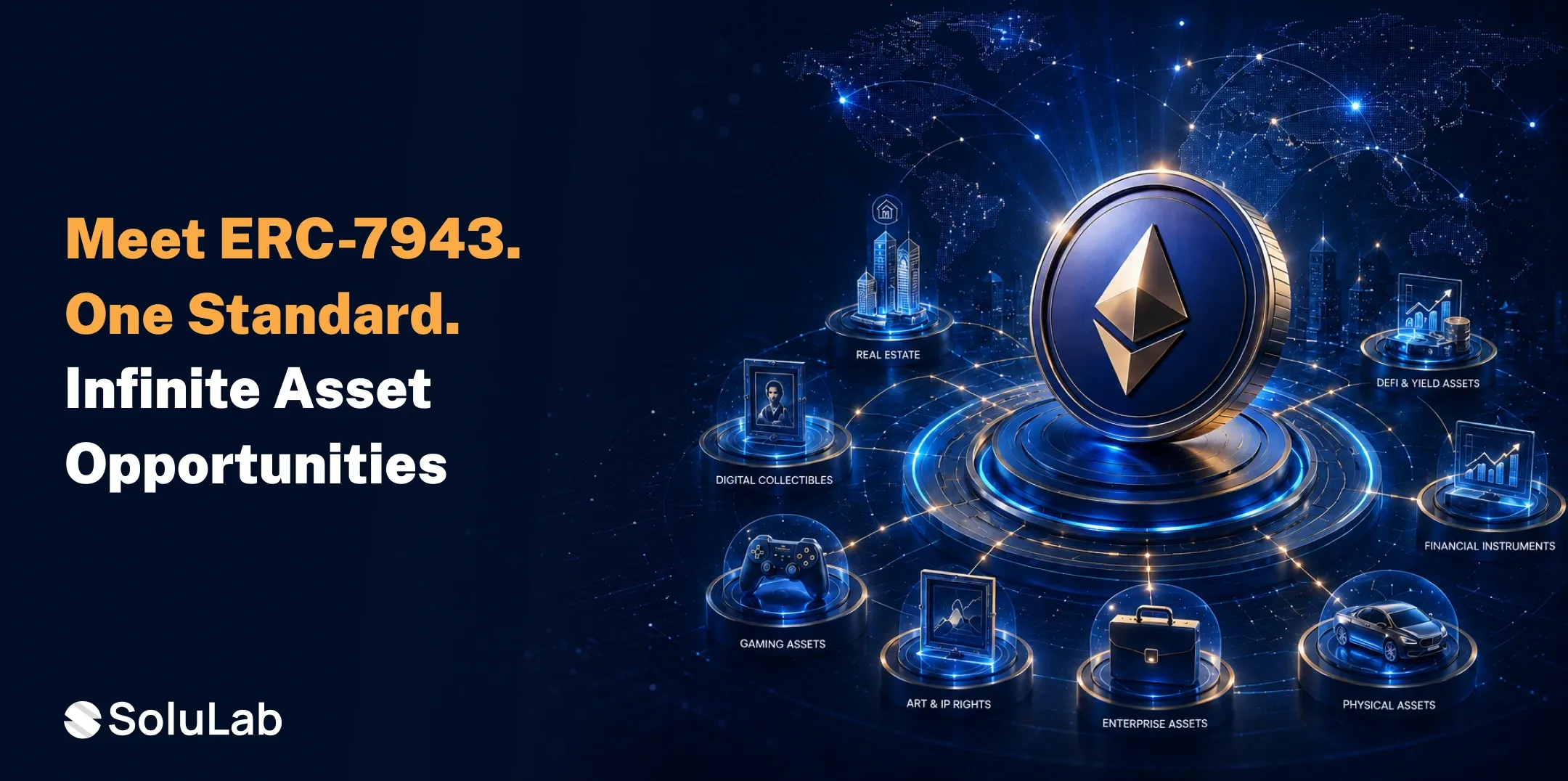
- ERC-7943 supports tokenized assets such as real estate, private credit, commodities, and treasury products.
- The standard is designed to accelerate institutional adoption of blockchain-based asset tokenization ecosystems. Tokenizing Luxury Hotels in the Maldives at an institutional level.
The rise of ERC-7943 is closely linked to the rapid growth of the Real-World Asset (RWA) market. Tokenized assets have become one of the fastest-growing areas of blockchain adoption, with sectors such as private credit, U.S. Treasuries, commodities, and real estate driving institutional interest.
As more banks, asset managers, and financial institutions enter the market, regulatory compliance has become a major challenge. Organizations must manage investor eligibility, ownership restrictions, sanctions screening, and jurisdiction-specific regulations while maintaining efficient asset transfers.
ERC-7943 addresses these requirements through a flexible compliance framework that supports interoperability across blockchain ecosystems. Standardizing how tokenized assets are represented and managed, it helps enterprises launch compliant, scalable, and institution-ready real-world asset tokenization solutions.
What Is ERC-7943 and Why Was It Created?
The uRWA token standard is an Ethereum blockchain’s improvement standard specifically designed for regulated and compliant asset issuance.
- At its core, ERC-7943 tokenization focuses on one simple objective: creating a universal framework for compliance controls while preserving interoperability across the Ethereum ecosystem.
Traditional token standards were never designed for institutional finance.
- An ERC-20 token can be transferred between wallets instantly. However, it cannot determine whether the recipient passed KYC requirements, belongs to a sanctioned jurisdiction, or exceeds ownership restrictions.
Meanwhile, existing security token standards often introduced complex architectures that tied issuers to specific identity systems and compliance frameworks.
- The Universal Real World Assets (uRWA) approach addresses these issues by introducing a common set of compliance primitives. This allows organizations to choose their own identity providers, Oracle systems, governance models, and regulatory workflows.
This creates a more flexible path for tokenized assets operating across different countries and regulatory environments.
How Did RWA Tokenization Evolve Before ERC-7943?
The journey toward the ERC-7943 blockchain standard can be understood through three major stages.
First Generation: ERC-20, ERC-721, and ERC-1155
The first generation relied on existing token standards.
ERC-20 supported fungible assets such as tokenized funds and stablecoins.
ERC-721 enabled unique ownership structures for real estate deeds, collectibles, and asset certificates.
ERC-1155 combined multiple asset types within a single smart contract.
While these standards created the foundation for asset tokenization, they lacked compliance functionality. Once a transfer occurred, issuers had little ability to intervene.
Second Generation: ERC-1400 and ERC-3643
The second generation focused on regulated finance.
These standards introduced identity verification, partition management, transfer restrictions, and recovery mechanisms.
However, many implementations became tightly connected to specific compliance providers.
As adoption increased, issuers faced concerns regarding vendor dependency, infrastructure complexity, gas efficiency, and interoperability.
Read More: ERC-3643 vs ERC-1400 vs ERC-20
Third Generation: ERC-7943 uRWA
The ERC-7943 uRWA framework takes a different approach.
Rather than replacing existing token infrastructure, it acts as a universal compliance layer.
This architecture allows enterprises to maintain regulatory controls while continuing to leverage existing Ethereum tooling, wallets, custodians, exchanges, and DeFi ecosystem.
Why Does the Market Need the ERC-7943 Standard?
The growth of tokenized real-world assets has exposed several operational challenges.
Financial institutions require compliance controls that can adapt to different jurisdictions without requiring a complete token migration.
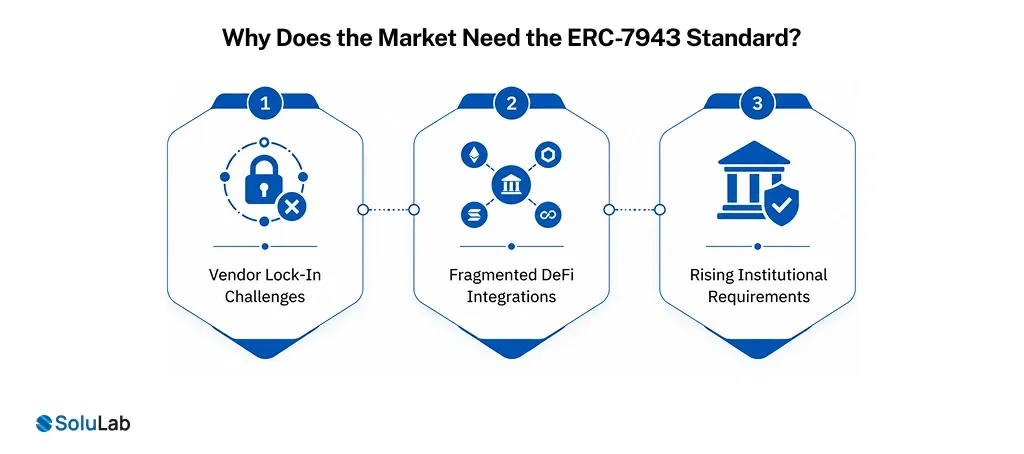
1. Vendor Lock-In Challenges
Many earlier frameworks required organizations to depend on a specific compliance provider.
Changing identity systems often meant rebuilding significant portions of the infrastructure.
The ERC-7943 protocol separates compliance logic from token ownership, giving issuers greater flexibility.
2. Fragmented DeFi Integrations
Decentralized applications frequently struggled to determine whether a transaction would succeed.
Without standardized compliance interfaces, exchanges, liquidity pools, and DeFi lending platforms needed custom integrations.
The ERC-7943 interoperability model introduces predictable compliance checks that can be evaluated before transfers occur.
3. Rising Institutional Requirements
Regulated entities require mechanisms for:
- Investor accreditation
- Sanctions screening
- Jurisdiction controls
- Court-ordered transfers
- Asset freezes
- Regulatory reporting
The Real World Asset token standard was designed specifically to address these requirements.
How Does ERC-7943 Work?
The ERC-7943 smart contracts architecture introduces five core compliance functions.
These functions act as a regulatory layer above the underlying token standard.
1. Eligibility Verification
Before a transfer proceeds, the protocol can evaluate whether an account is eligible to participate.
This allows integration with KYC systems, digital identity networks, and compliance engines.
2. Transfer Validation
The transfer validation mechanism checks whether a transaction satisfies predefined regulatory policies.
Examples include:
- Geographic restrictions
- Ownership thresholds
- Investor qualification requirements
- Velocity controls
3. Asset Freeze Controls
Issuers can freeze specific balances when required by legal or regulatory authorities.
This functionality supports institutional compliance requirements while preserving transparency.
4. Forced Transfer Mechanisms
A standardized transfer recovery process helps organizations address:
- Lost private keys
- Court orders
- Bankruptcy proceedings
- Legal ownership disputes
5. Compliance Transparency
The tokenization framework allows external applications to assess transfer eligibility before submitting transactions.
This improves integration with exchanges, custodians, and liquidity protocols.
What Happens During an ERC-7943 Transfer?
Every transfer follows a structured validation process.
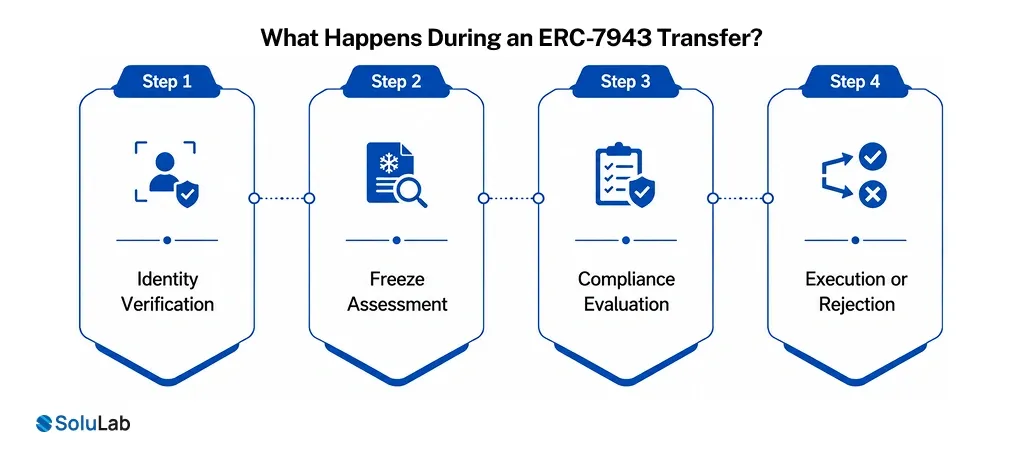
Step 1: Identity Verification
The protocol evaluates whether the sender and recipient meet participation requirements.
Step 2: Freeze Assessment
The system verifies that no frozen balances prevent the transaction.
Step 3: Compliance Evaluation
The transfer is tested against regulatory and policy rules.
Step 4: Execution or Rejection
The transfer either proceeds successfully or returns a standardized error response.
This predictable workflow is one reason many organizations view ERC-7943 implementation as a practical solution for institutional-scale deployments.
ERC-7943 vs Other Ethereum Token Standards
| Feature | ERC-20 / ERC-721 / ERC-1155 | ERC-3643 | ERC-7943 |
|---|---|---|---|
| Primary Purpose | General token issuance | Security token framework | Universal compliance layer |
| Identity Model | None | Provider-dependent | Provider agnostic |
| Compliance Controls | Limited | Extensive | Standardized and lightweight |
| DeFi Compatibility | High | Moderate | High |
| Transfer Validation | No | Yes | Yes |
| Forced Transfers | No | Yes | Yes |
| Vendor Independence | High | Lower | High |
| Institutional Adoption Potential | Moderate | High | High |
What Are the Five Core Compliance Functions Within ERC-7943?
The ERC-7943 standard simplifies regulatory enforcement by reducing compliance logic to five essential functions. Together, these functions establish the operational foundation of the ERC-7943 tokenization framework.
canTransact(): Verifying Investor Eligibility
This function determines whether a wallet is eligible to participate in the ecosystem.
Compliance engines may use this check to evaluate KYC completion, investor accreditation, sanctions screening, or jurisdiction-specific requirements before allowing a transaction.
canTransfer(): Evaluating Transfer Rules
This function validates whether a specific transfer can occur between two participants.
Examples include country restrictions, investor concentration limits, ownership caps, or transaction velocity controls.
getFrozenTokens(): Reviewing Restricted Balances
This function enables administrators and compliance systems to identify tokens that have been frozen due to legal, regulatory, or operational requirements.
setFrozenTokens(): Managing Compliance Restrictions
Authorized administrators can freeze token balances when required by court orders, investigations, regulatory actions, or legal disputes.
forcedTransfer(): Supporting Legal Ownership Recovery
This function enables approved administrators to transfer ownership under legally recognized circumstances, such as lost private keys, inheritance claims, bankruptcy proceedings, or judicial orders.
Together, these functions establish a common compliance language across the growing ERC-7943 ecosystem.
Which Assets Can Use the uRWA Tokenization Framework?
One of the biggest advantages of the uRWA tokenization framework is flexibility.
The standard can support multiple asset categories.
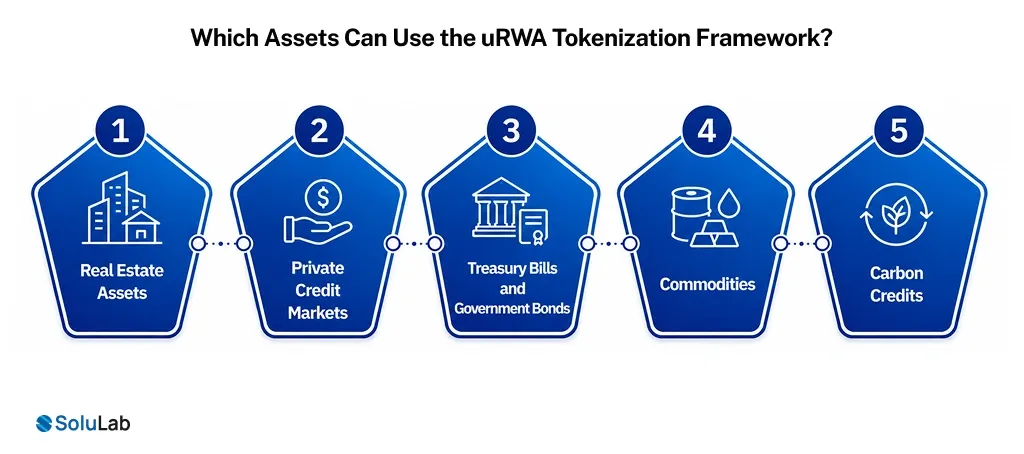
1. Real Estate Assets
Property developers and asset owners can leverage real estate tokenization to convert commercial buildings, residential projects, REITs, and infrastructure investments into tradable digital assets.
Ownership restrictions can be enforced automatically through compliance rules.
2. Private Credit Markets
Through private credit tokenization, private debt instruments, corporate loans, and alternative investment products can be issued as compliant digital securities.
3. Treasury Bills and Government Bonds
Financial institutions can utilize bond tokenization and treasury bill tokenization to bring yield-bearing government securities on-chain.
4. Commodities
Organizations can adopt commodity tokenization to digitize gold, silver, oil, natural gas, agricultural products, and other physical assets.
5. Carbon Credits
The ERC-7943 framework can accelerate carbon credit tokenization by enabling compliant issuance, transfer, and management of environmental assets on-chain.
How Are Institutions Implementing ERC-7943?
The ERC-7943 ecosystem has attracted support from several organizations involved in digital asset infrastructure.
1. Brickken
Under the leadership of co-founder Dario Lo Buglio, Brickken contributed significantly to the development of the Universal Real-World Asset (uRWA) standard.
2. CMTA
The Capital Markets and Technology Association integrated ERC-7943 concepts into institutional tokenization frameworks, helping align blockchain assets with Swiss legal requirements.
3. Chainlink
Chainlink compatibility enables compliance engines and external data systems to interact with on-chain transfer validation processes.
4. Industry Contributors
Organizations including DigiShares, Bit2Me, Stobox, Casper Network, Zoth, Hacken, and QuillAudits have participated in broader ecosystem development and adoption discussions.

How Does ERC-7943 Support Global Regulations?
One of the most compelling advantages of the ERC-7943 for RWA tokenization model is its ability to support multiple regulatory environments simultaneously.
1. European Union (MiCA Compliance):
MiCA demands strict, unalterable reverse capabilities for disputed or illicit asset flows. To fulfill this, infrastructure provider DigiShares and protocol architect Brickken utilize ERC-7943’s forcedTransfer function. This acts as a standardized legal “escape hatch,” enabling compliant clawbacks directly inside European DeFi pipelines.
2. Switzerland & The DLT Framework:
The Capital Markets and Technology Association (CMTA) formally incorporated ERC-7943 primitives into its CMTAT tokenization framework. This allows Swiss corporations to issue tokenized equity that remains natively compliant with Swiss corporate ledger laws.
3. United States & Asia-Pacific (SEC, CFTC, & Localized Rules):
Rather than locking issuers into rigid identity setups, Chainlink integrated ERC-7943 with its Asset Compliance Engine (ACE).
For example, a US issuer targeting accredited investors can program the canTransfer hook to verify wallet credentials via local oracles, then instantly adjust those same hooks to obey velocity and sanction limits across Singapore or Australia.
This modular, plug-and-play design is a primary catalyst propelling the on-chain RWA ecosystem to $34 billion.
What Infrastructure Is Required for ERC-7943 Development?
Successful ERC-7943 development extends beyond smart contracts. Also, it’s not just about what others are doing; you must know which features you want and then partner with a tokenization development company that can help you align standards with the country.
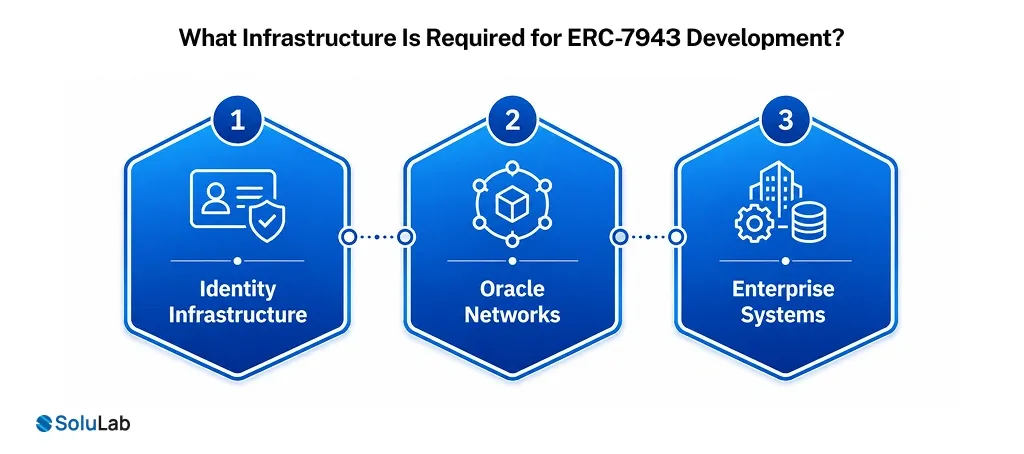
1. Identity Infrastructure
Digital identity solutions, decentralized identifiers (DIDs), and verifiable credentials play an important role in proving eligibility.
2. Oracle Networks
External compliance data must be available to on-chain systems.
Oracle providers help connect sanctions databases, legal registries, and regulatory data sources.
3. Enterprise Systems
Organizations must synchronize blockchain activity with:
- Core banking platforms
- Fund administration systems
- ERP software
- Legal registries
- Compliance monitoring tools
This integration is essential for enterprise-grade Tokenization Platform Development.
What Are the Biggest Risks Associated With ERC-7943?
While the standard provides powerful capabilities, organizations must implement strong governance.
1. Administrative Control Risks
Functions such as forced transfers and asset freezes introduce significant responsibility.
If administrative keys are compromised, assets could be affected.
2. Governance Requirements
Institutions should implement:
- Multi-signature authorization
- Timelock mechanisms
- Role-based permissions
- Independent audits
3. Oracle Dependency
External compliance systems must remain reliable.
Organizations should establish redundant data providers and monitoring systems.
4. Smart Contract Security
Every ERC-7943 token development project should undergo extensive testing and professional auditing before deployment.
What Does the Future Look Like for ERC-7943?
The tokenization industry is entering a period where interoperability, compliance, and institutional readiness matter more than simple asset digitization.
As the market expands beyond early-stage adoption, organizations are looking for standards capable of supporting global capital flows, regulated financial products, and cross-border asset ownership.
The ERC-7943 standard addresses these needs by creating a common language for compliance while preserving flexibility.
Future growth is expected to focus on:
- Cross-chain compliance verification
- Institutional liquidity networks
- Permissioned DeFi environments
- Global tokenized securities markets
- Multi-jurisdictional asset issuance
As more financial institutions enter the market, the Official Ethereum Standard is positioned to become a foundational layer for the next generation of real-world asset (RWA) tokenization infrastructure.
Conclusion
As real-world asset tokenization gains institutional adoption, ERC-7943 provides a standardized framework for representing, managing, and transferring tokenized assets on-chain. By combining asset metadata, compliance controls, ownership tracking, and interoperability, it enables organizations to build transparent, scalable, and compliant RWA ecosystems.
At SoluLab, we help enterprises implement ERC-7943 alongside other leading standards, including
- ERC-20,
- ERC-721,
- ERC-1155,
- ERC-1400,
- ERC-3643, and
- ERC-4626.
From real estate and private credit to commodities and alternative investments, our experts deliver end-to-end token development solutions, compliance automation, and platform development to help businesses launch secure and future-ready digital asset ecosystems.
FAQs
Deepika is a content writer who blends storytelling with strategic thinking. She explores topics across digital innovation, emerging tech, and the evolving blockchain industry. She enjoys breaking down complex ideas into simple, engaging narratives in the growing global markets.