Key Takeaways
- AI-powered virtual tour platforms help real estate and hospitality businesses deliver immersive digital experiences with 360° visuals, virtual navigation, and personalized recommendations.
- Features like interactive floor plans, AR/VR integration, multilingual support, and real-time analytics can significantly improve user retention and conversion rates.
- A scalable AI-powered virtual tour platform typically uses technologies like AI/ML models, cloud infrastructure, 3D rendering tools, WebGL, and secure backend frameworks.
- Businesses adopting AI virtual tour technology can reduce physical visit dependency, expand global reach, and accelerate decision-making for buyers and travelers.
- Industries benefiting from AI virtual tours include real estate, hospitality, education, healthcare, tourism, retail, and commercial property management.
- SoluLab provides #1 AI development solutions for immersive virtual tour platforms, helping businesses integrate AI, AR/VR, automation, and scalable digital infrastructure into customer experiences.
Buying a property or booking a hotel no longer starts with a physical visit. People want to explore spaces online, compare options quickly, and make decisions with confidence.
This shift has accelerated the demand for advanced AI development solutions that power immersive and personalized digital experiences across industries. AI-powered virtual tour platforms combine 360° visuals, interactive elements, and smart recommendations to create highly engaging user journeys.
For real estate and hospitality businesses, this means better engagement, faster conversions, and wider reach. From AI-driven property recommendations to intelligent navigation and real-time personalization, these platforms are transforming how customers explore spaces online.
In this blog, we’ll break down how to build an AI-powered virtual tour platform, covering essential features, AI development solutions, tech stack considerations, and practical steps to get started.
What Is an AI-Powered Virtual Tour Platform?
An AI-powered virtual tour platform enables users to explore properties or spaces digitally through 360° visuals, AI-generated environments, and interactive elements without being physically present.
- Virtual tours allow remote exploration of properties and hotels
- Used widely in the real estate and hospitality industries
- Combines artificial intelligence with 3D visualization and web-based interaction
The global virtual tour market is projected to reach USD 74,355.3 million by 2030.
Key Features of AI Virtual Tours
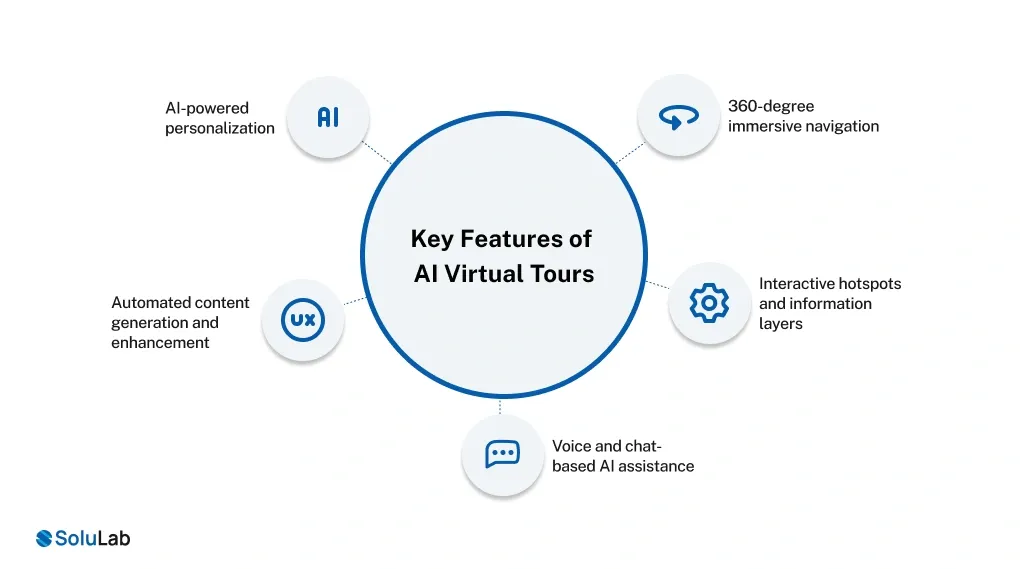
AI-powered solutions like this combine visuals to deliver interactive experiences, helping users explore properties remotely while improving engagement, personalization, and decision-making across real estate and hospitality platforms.
- 360-degree immersive navigation: AI virtual tours provide interactive 360° views that allow users to explore spaces naturally, improving engagement and helping them understand layouts without physically visiting the property or location.
- AI-powered personalization: These platforms analyze user behavior and preferences to recommend relevant rooms, properties, or amenities. Properties with virtual tours receive 87% more views compared to listings without them.
- Interactive hotspots and information layers: Virtual tours include clickable hotspots that display details like pricing, features, or amenities, helping users access
ss important information instantly without leaving the immersive experience. - Voice and chat-based AI assistance: Built-in AI assistants guide users through tours, answer questions in real time, and provide contextual insights, making the experience more interactive and user-friendly.
Read More: AI Assistants in Business
- Automated content generation and enhancement: AI can generate virtual environments from images or improve visual quality, reducing production costs and enabling faster creation of high-quality virtual tour experiences.

Why Are Virtual Tour Platforms Important for Real Estate and Hospitality?
Virtual tour platforms are changing how AI in hospitality is explored, helping businesses reach global audiences, improve user experience, and operations without relying on constant physical visits.
- 24/7 property accessibility for global buyers: Virtual tours allow users to explore properties anytime from anywhere, removing location and time barriers while expanding reach to international buyers and travelers effortlessly.
- Improves engagement and decision-making: Interactive tours keep users engaged longer, offering detailed visual insights that help them understand spaces better and make faster, more confident booking or buying decisions.
- Reduces physical visits and operational costs: By enabling remote property exploration, virtual tours cut down unnecessary site visits, saving time, lowering operational expenses, and optimizing resources for both businesses and customers.
Step-by-Step Process to Build an AI Virtual Tour Platform
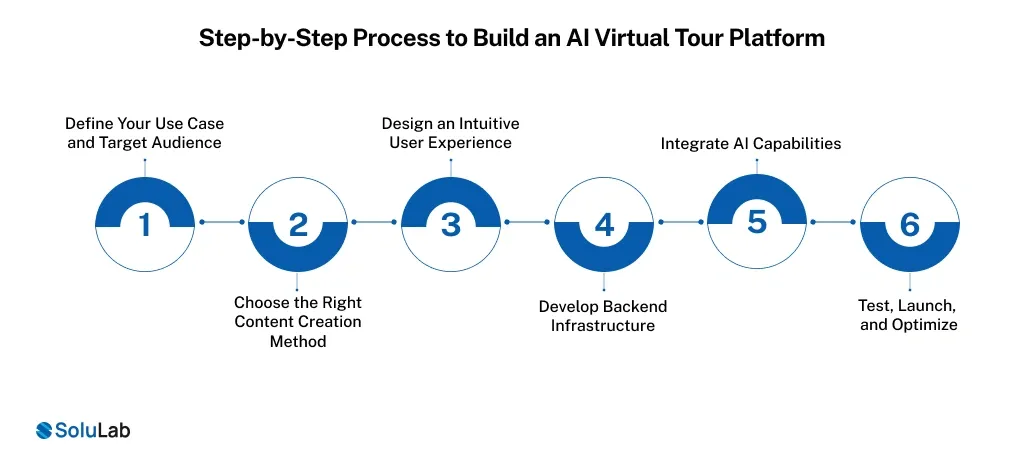
Building an AI virtual tour platform requires the right blend of AI tech stack, user experience, and automation to create immersive, interactive environments that drive engagement and improve decision-making for users.
Step 1. Define Your Use Case and Target Audience
With expert AI consulting, identify whether your platform is for real estate, hospitality, or both. Understanding user needs helps shape features, design flow, and overall functionality for better engagement and outcomes.
Step 2. Choose the Right Content Creation Method
Decide between 360° cameras, 3D modeling, or AI-generated environments. Each method impacts cost, scalability, and realism, making it a critical step in AI virtual tour platform development.
Step 3. Design an Intuitive User Experience
Focus on smooth navigation, interactive hotspots, and mobile responsiveness. A clean, easy-to-use interface ensures users can explore spaces effortlessly, increasing engagement and retention.
Step 4. Develop Backend Infrastructure
Set up secure servers, cloud storage, and APIs to manage large media files. A strong backend ensures scalability, fast loading times, and seamless performance across devices.
Step 5. Integrate AI Capabilities
Incorporate AI for image enhancement, scene generation, and personalized recommendations. This step adds intelligence and automation, making your virtual tour software development more advanced and efficient.
Step 6. Test, Launch, and Optimize
Conduct thorough testing for performance, usability, and compatibility. After launch, continuously improve based on user feedback, analytics, and evolving AI technology trends to stay competitive.
What Are the Benefits of AI Virtual Tour Platforms?
AI-powered virtual reality platforms are changing how people explore properties and spaces by making experiences interactive, accessible, and efficient, helping businesses reach more users while improving decision-making and marketing outcomes.
- Global reach without physical visits: AI-powered platforms allow users to explore properties from anywhere, eliminating geographical barriers and enabling real estate and hospitality businesses to connect with a wider, global audience effortlessly
- Faster decision-making for buyers: With immersive visuals and detailed insights, buyers can evaluate properties quickly, compare options efficiently, and make confident decisions without multiple site visits, saving both time and effort.
- Cost-effective marketing solution: AI-Powered Virtual Tours for Real Estate and virtual tour software for real estate reduce the need for repeated physical showings, lowering operational costs while increasing engagement and lead generation.
Use Cases Virtual Tour Software in Real Estate and Hospitality
Virtual tour software is transforming how people explore properties and experiences, helping businesses showcase spaces digitally, attract global audiences, and improve decision-making across real estate and hospitality industries.
1. Property Sales and Rentals
Virtual tours allow buyers and renters to explore properties remotely with full visual context, reducing unnecessary visits and speeding up decisions, making them essential for virtual tour platform development strategies.
2. Hotel Room Previews
Hotels use virtual tours to showcase rooms, amenities, and ambiance, helping guests choose confidently, improving booking rates, and enhancing trust through immersive previews built via virtual tour software development solutions.
3. Tourism Experiences
AI for Tourism platforms offer virtual destination previews, letting users explore attractions before booking, increasing engagement and inspiring travel decisions through interactive and visually rich digital experiences.
4. Pre-Construction Property Visualization
Developers use virtual tours to showcase properties before construction, using 3D and AI-generated visuals to help buyers understand layouts, design, and space, improving early-stage sales and investor confidence.
How Much Does It Cost to Build an AI Virtual Tour Platform?
The cost of building an AI-powered virtual tour platform depends on features, complexity, and scale, ranging from basic setups to advanced AI-driven systems and enterprise-level AI solutions with full customization.
| Platform Type | Estimated Cost | Description |
| Basic platform | $20,000 – $30,000 | Includes core features like 360° tours, simple navigation, and basic UI, suitable for small real estate firms or startups entering the virtual tour space. |
| Advanced AI platform | $30,000 – $40,000+ | Adds AI features like personalization, automated content generation, and interactive elements, ideal for businesses looking to enhance user engagement and conversions. |
| Enterprise-grade | $50,000+ | Fully customized platform with advanced AI, integrations, scalability, and high-end UX, designed for large real estate portals or hospitality chains with complex requirements. |
Future Trends in AI Virtual Tour Platforms
AI virtual tour platforms are evolving rapidly, combining immersive technologies and intelligent automation to deliver more interactive, personalized, and realistic experiences for users across the real estate and hospitality industries.
- AI-generated environments from text: Advanced generative AI can create complete virtual spaces from simple text prompts, reducing dependency on physical assets and enabling faster, cost-effective content creation for scalable platform development.
- VR/AR immersive experiences: Virtual and augmented reality technologies provide highly immersive, real-like walkthroughs, allowing users to explore properties or hotel spaces interactively, improving engagement and decision-making.
- AI-driven personalization: AI analyzes user behavior and preferences to deliver tailored virtual tour experiences, recommending properties, layouts, or amenities that match individual interests, improving engagement and increasing conversion rates.
- Real-time interactive avatars: AI-powered avatars act as virtual guides, interacting with users in real time, answering questions, and enhancing the overall tour experience with human-like communication and assistance.
How can SoluLab Help Build a Virtual Tour Platform?
Building an AI-powered virtual tour platform requires the right mix of technology, design, and expertise, and this is where SoluLab can support end-to-end AI-led development.
- AI-powered virtual tour platform development
- 360° virtual tour software solutions
- AI-based image and scene generation
- EHR/CRM/booking system integrations
- Cloud-based scalable architecture
- AR/VR virtual experience development
- AI chatbot and voice assistant integration
- Custom real estate and hospitality solutions
- Ongoing support and platform optimization
Digital Quest partnered with SoluLab to build an AI-powered chatbot delivering personalized travel recommendations and seamless reservations.
Using generative AI, the solution improved engagement, enabled real-time assistance, and offered multilingual support, feedback loops, and secure integrations, resulting in enhanced user experience and strong ROI.
Connect with us to build an AI-powered virtual tour platform.
Conclusion
Building an AI-powered virtual tour platform for real estate and hospitality is no longer a futuristic idea; it is becoming a standard expectation. With immersive experiences, smarter automation, and better user engagement, these platforms help businesses attract, convert, and retain customers more effectively.
The point is to focus on the right features, user experience, and scalable technology. As competition grows, adopting AI-driven solutions can give your business a strong edge in the market.
If you are planning to build one, SoluLab, an AI app development company, can help your business turn this vision into reality.

FAQs
Neha is a curious content writer with a knack for breaking down complex technologies into meaningful, reader-friendly insights. With experience in blockchain, digital assets, and enterprise tech, she focuses on creating content that informs, connects, and supports strategic decision-making.