AI · INSURTECH · SPECIALTY MGA · UNDERWRITING

Coverline: Underwriting Workpapers for Specialty MGAs

An AI platform that turns every specialty submission into an underwriting-ready workpaper: facts cited to the page, rules named, binds kept inside delegated authority, and every decision approved by an underwriter.

EVIDENCECitedEvery fact linked to its page
EXPLAINABLERulesEvery recommendation names the rule
COMPLIANTAuthorityBinds kept inside the carrier ceiling
GOVERNEDHumanAI drafts; underwriters decide

Project at a Glance

Industry
Insurance · Specialty MGAs
Engagement
AI Platform Development
Platform
Web Application · 10 Workflows · Admin Panel
AI Technology
Document Extraction, Rules Engine, Cited AI Assistant
Core Use Case
Submission Triage to Bind, Bordereaux and Claims Intake
Users
Underwriters, MGA Principals, Administrators

Challenge and solution

The Business Challenge

An MGA underwrites on a carrier’s paper. That means reading every document, staying inside appetite, binding only within delegated authority, and reporting it all back on schedule.

  • ✕Submissions arrive as stacks of applications, loss runs, financials and schedules that are read by hand.
  • ✕Cross-checking facts across documents is slow, and conflicts are easy to miss.
  • ✕A missed appetite rule or a bind over the delegated ceiling puts the carrier relationship at risk.
  • ✕Overrides and the reasons behind them are hard to evidence to the carrier.
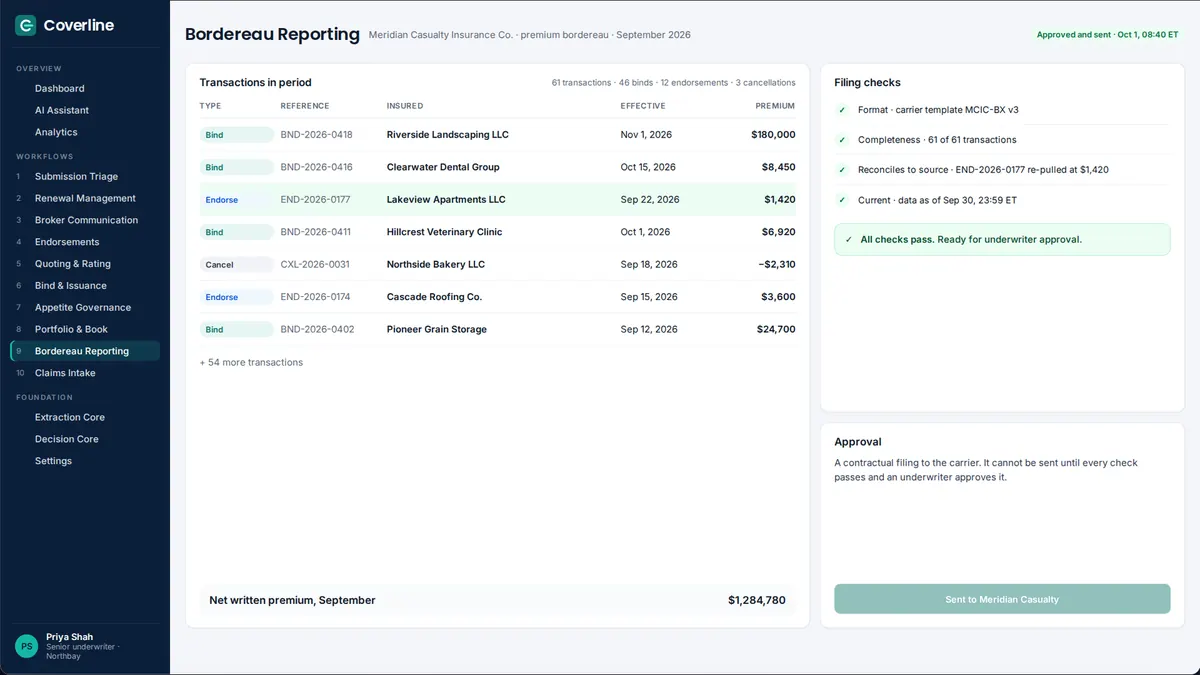
  • ✕Bordereaux must reconcile to the real transactions before they are filed.
The SoluLab Solution

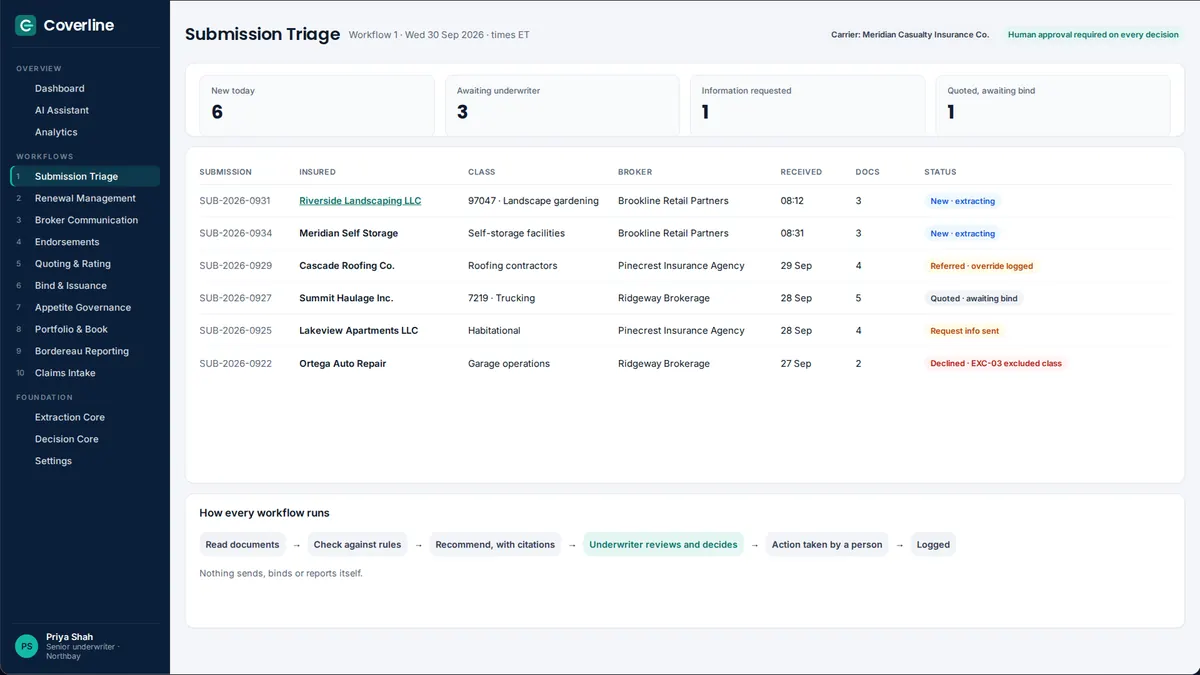
SoluLab built Coverline to automate the reading and checking, with one rule: AI never makes anything up, and never acts on its own.

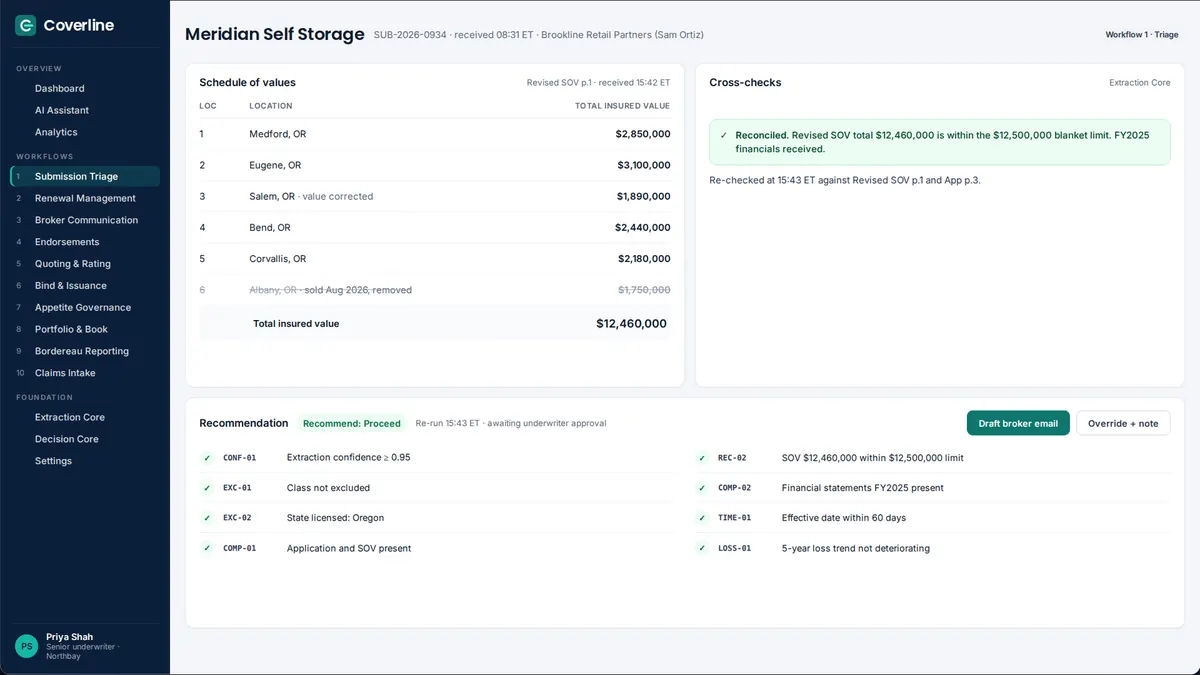
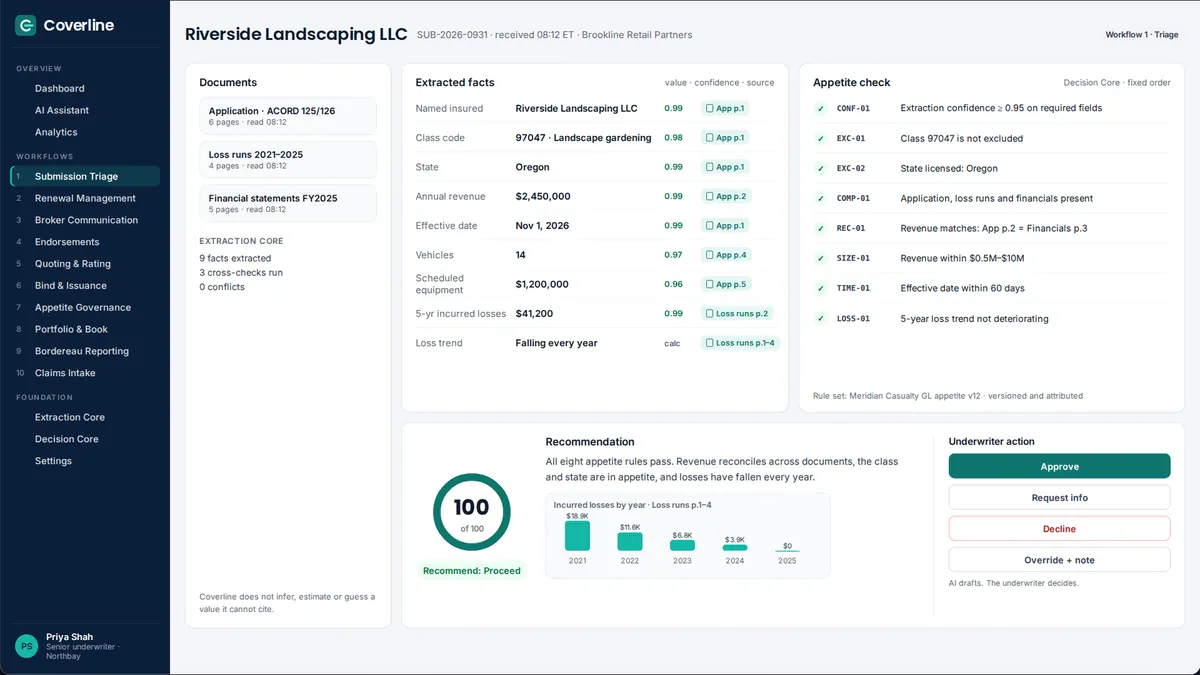
  • ✓Extraction Core reads every document and cites each fact to its page, with a confidence score.
  • ✓Decision Core runs appetite rules in a fixed order, and every outcome names its rule.
  • ✓Conflicts are surfaced, never guessed: both sources are shown for the underwriter.
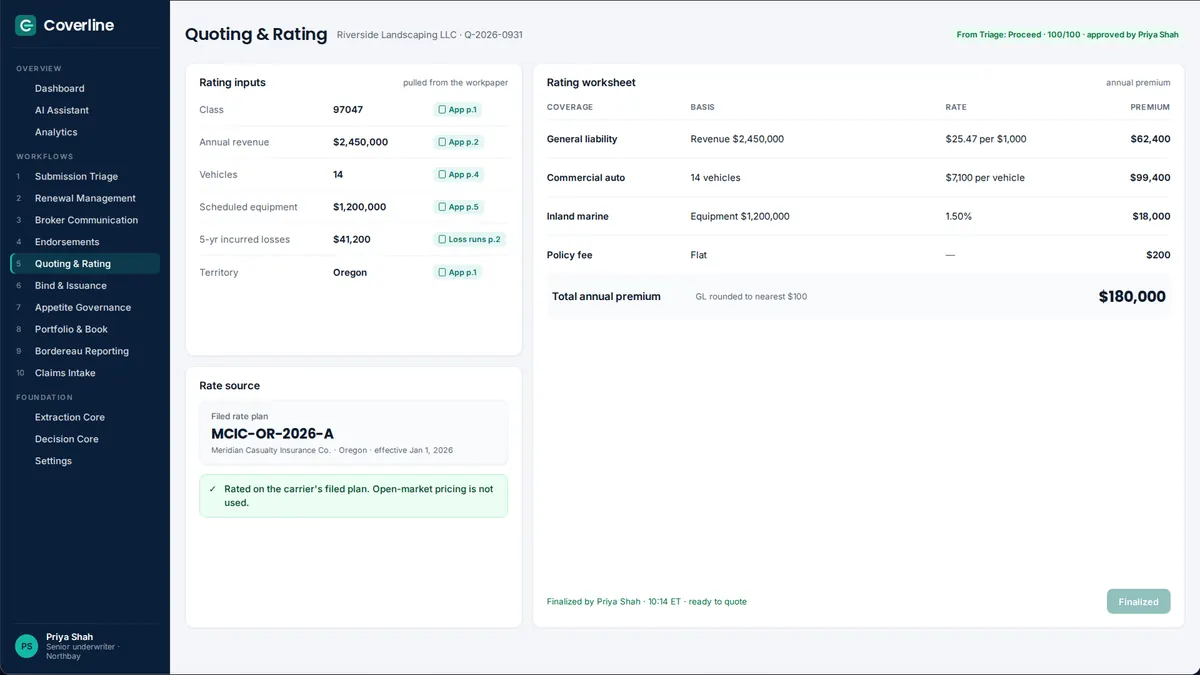
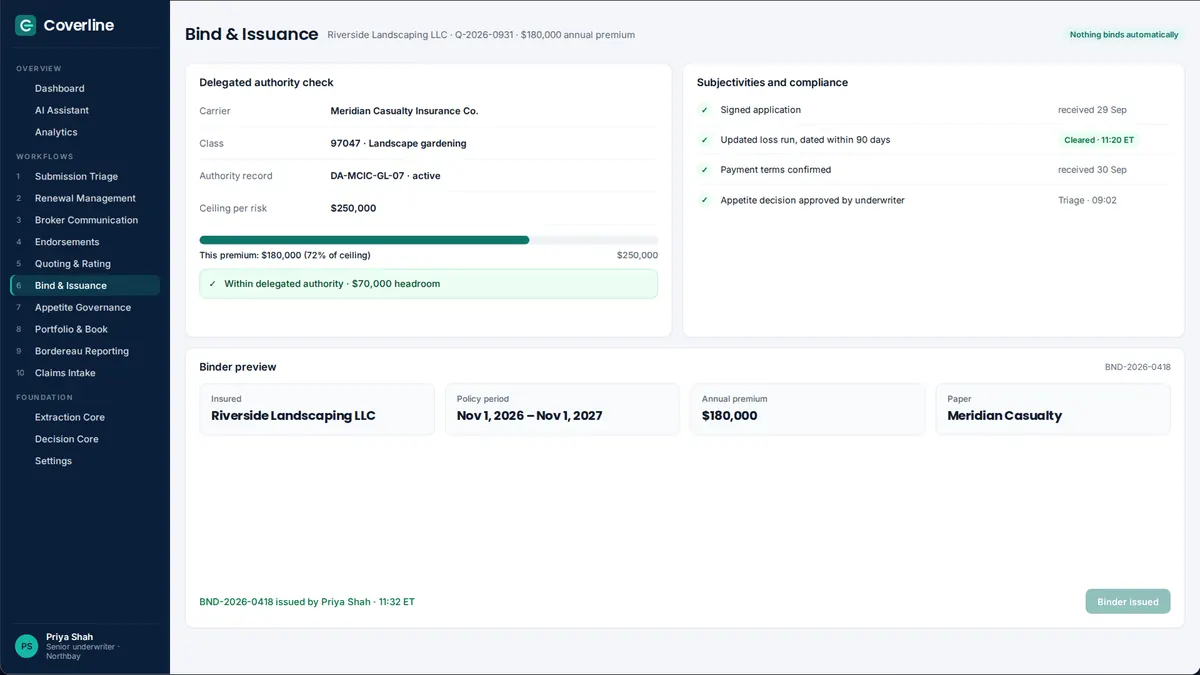
  • ✓Quoting and binding use the carrier’s filed rate plan and check delegated authority before anything binds.
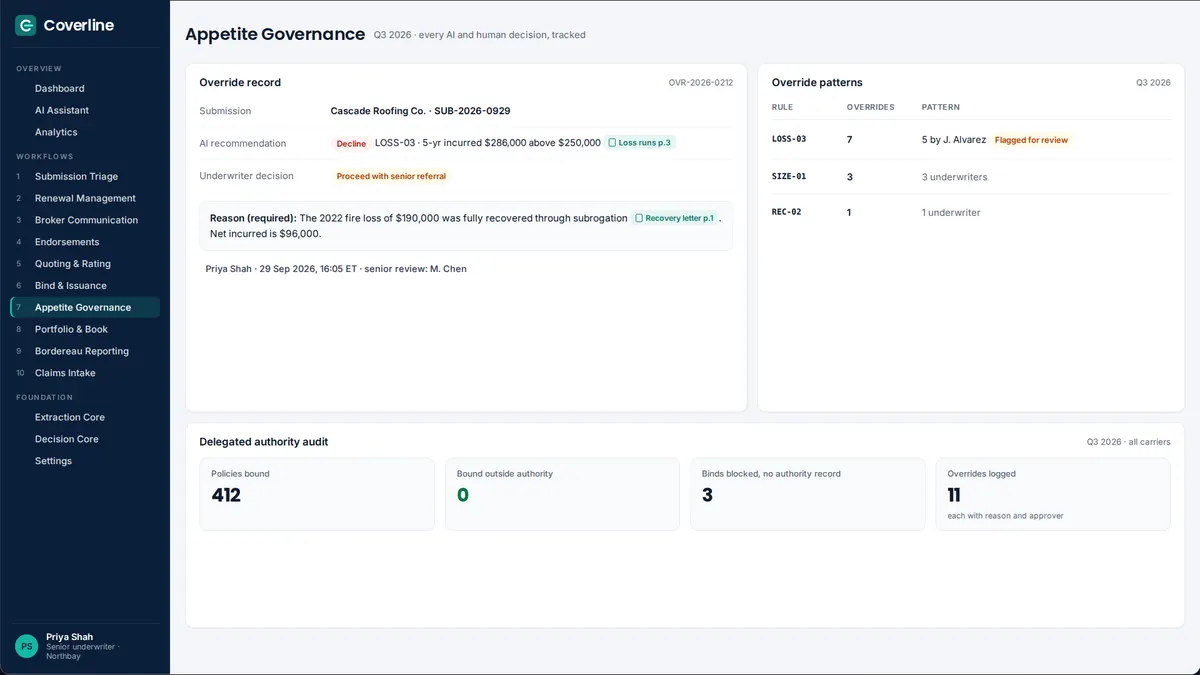
  • ✓Appetite governance logs every override with who, when and why, and flags patterns.
  • ✓Bordereaux are compiled from real transactions and blocked until they reconcile.
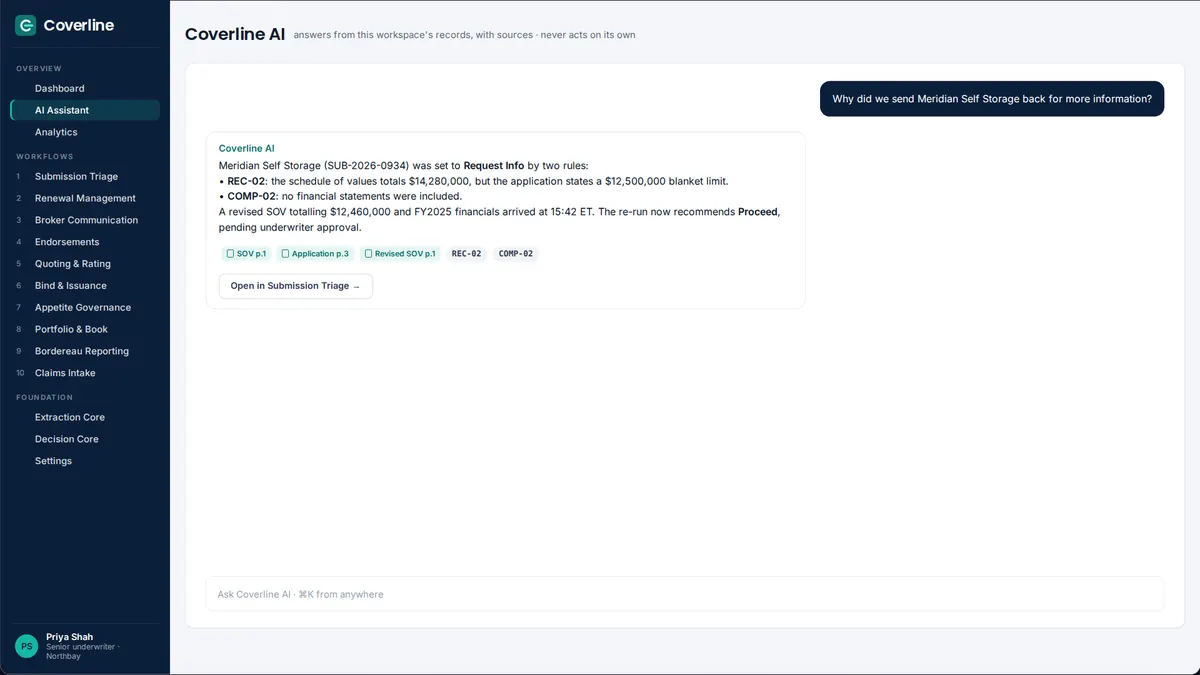
  • ✓Coverline AI answers questions from the records, with rules and pages cited.

Solution Architecture

Why Cited AI and a Rules Engine: Our Technology Decisions

Underwriting on someone else’s paper demands proof. Each technology choice in Coverline exists to make AI useful without making it unaccountable.

Why AI with citations

Reading and cross-checking submissions is where underwriters lose the most time.

Extraction with proof
Every fact carries a page citation and a confidence score, so it can be checked in seconds.
Reconciliation
Facts are compared across documents, and conflicts are shown with both sources instead of being resolved silently.
Drafts, not decisions
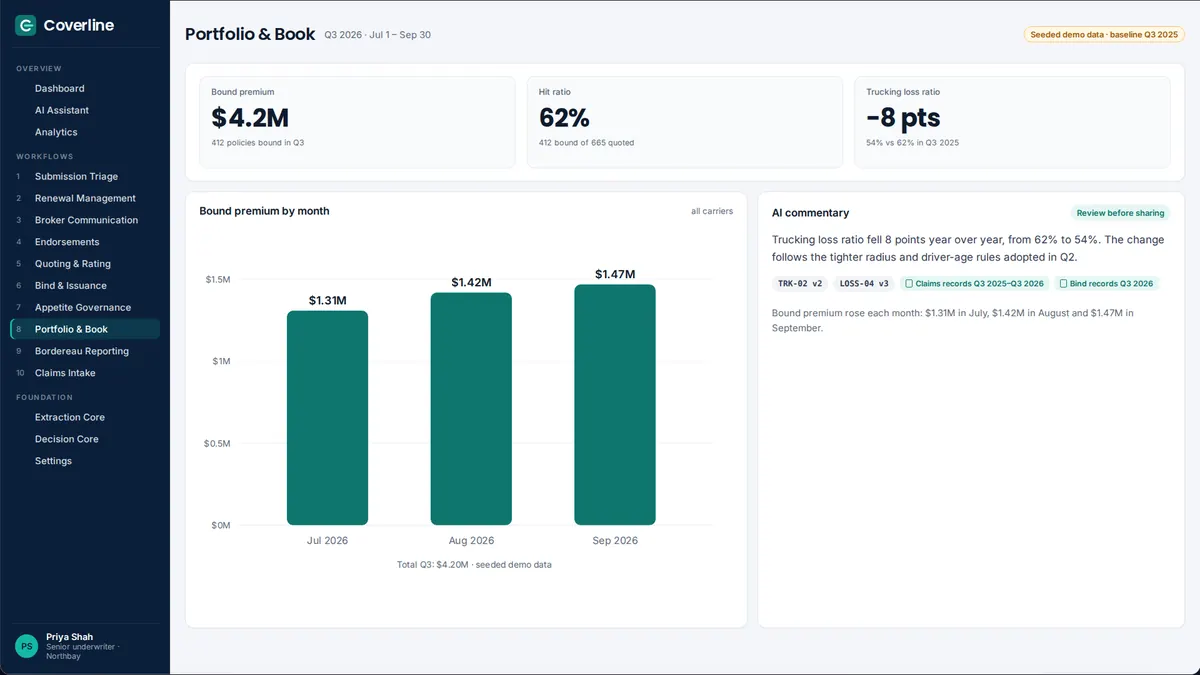
Broker emails and portfolio commentary are drafted from the record and sent only by a person.

Why a rules engine

Appetite and authority are contractual, so they must be applied the same way every time.

Fixed order of checks
Confidence, exclusions, completeness, reconciliation, timing and loss trend, each with a rule code.
Authority as a hard stop
If no authority record exists for a carrier and class, the bind is blocked rather than assumed.
Overrides on record
Underwriters can always overrule a recommendation, with the reason and approver logged.

Key technology choices

DecisionWhy we made it
Shared Extraction CoreOne reading engine for every workflow, so every number traces back to the same cited source.
Versioned rule setsAppetite changes year to year; renewals are re-checked against the rules in force.
No AI narrative on declinesHard-rule declines stand on the rule itself, keeping the reasoning clear and auditable.
Human approval on every actionNothing sends, binds or reports itself, which keeps the MGA accountable to its carrier.

The result: underwriting that moves faster on the reading, and stays disciplined on the decisions.

Product Experience

What SoluLab Delivered

10Underwriting workflows, from triage to claims intake
2Shared engines: Extraction Core and Decision Core
CitedEvery extracted fact linked to its source page
BlockedBinds without an authority record never proceed
HumanEvery send, bind and filing approved by a person

Technology & Integrations

Document AI ExtractionRules EngineCitations & ConfidenceAI AssistantWeb ApplicationREST APIDocument StorageAudit LoggingRole-Based Access

Frequently Asked Questions

1. What is Coverline?

An AI platform that helps a Managing General Agent underwrite and bind business faster, while staying inside the carrier’s appetite and delegated authority.

2. What is an MGA?

A delegated underwriter that quotes, binds and sometimes handles claims on a carrier’s paper, within agreed appetite and premium limits, and reports back to the carrier.

3. Does the AI make decisions?

No. AI drafts and recommends with citations and named rules. An underwriter approves before anything is sent, bound or reported.

4. How are facts extracted?

The Extraction Core reads each document, pulls out key facts with a confidence score, and cites the exact page each fact came from.

5. What happens when documents disagree?

Coverline shows both sources and flags the conflict for the underwriter, rather than picking a value.

6. How are appetite decisions made?

The Decision Core runs rules in a fixed order: extraction confidence, exclusions, completeness, reconciliation, timing and loss trend. Each outcome names its rule.

7. How is delegated authority enforced?

Before a bind, Coverline checks the authority record for that carrier and class. If none exists, the bind is blocked.

8. Can underwriters override a recommendation?

Yes. Overrides require a reason, are logged with who and when, and patterns are surfaced for review.

9. How are bordereaux handled?

They are compiled from bind, endorsement and cancellation records, checked for format, completeness, reconciliation and currency, and filed only after approval.

10. What does Coverline AI do?

It answers questions from the workspace’s records, citing rules and pages, and links to the workflow so a person can act.