



Step 1: Architecture review (1 to 2 weeks).
Use case, data, security needs and approach options, ending in a fixed quote.

A custom LLM is a large language model adapted to your data, terminology, and rules through prompt engineering, retrieval (RAG), fine-tuning, or, rarely, training from scratch. SoluLab designs, builds and deploys custom LLMs in your cloud or on-premises, with evaluation, access control and audit logs built in.













A custom LLM is a general-purpose language model, such as GPT, Claude, Llama, or Mistral, that has been adapted to one organisation's knowledge and tasks. The adaptation can sit in the prompt, in a retrieval layer over your documents, in the model's weights through fine-tuning, or in a model trained on your corpus.
Off-the-shelf models know the public internet. They don't know your product catalogue, your contract templates or the way your compliance team words a finding. A custom LLM closes that gap, so answers use your terms, follow your policies and cite your sources.
Most teams don't need to train a model. In our experience, most custom LLM requests are best solved with RAG plus careful prompting, and fine-tuning pays off only once a narrow task repeats thousands of times. Custom LLM work sits within our wider LLM development services.
SoluLab's custom LLM development services cover LLM strategy and model selection, data preparation, RAG systems, fine-tuning, private deployment, evaluation, and LLMOps. Each engagement starts with an architecture review that matches the approach to your use case, data sensitivity, and budget before any build begins.

We compare GPT, Claude, Gemini, Llama and Mistral on your real tasks, cost per query and hosting limits. You get a recommendation backed by test results, not vendor preference.

Cleaning, de-duplicating and structuring the documents, tickets and records your model will learn from or retrieve, with personal data masked before it reaches any model.

Retrieval layers that let a model answer from contracts, policies and manuals with citations, built on our RAG as a service architecture. It's the fastest route to a custom LLM most teams can trust.
LoRA, QLoRA and instruction tuning on open models when you need a fixed format, a house tone or a narrow skill. We explain when fine-tuning beats RAG before we recommend it.

Open models served in your VPC or data centre with vLLM, so prompts and data never leave your environment. It's the route regulated teams take when they build a private LLM.
Custom LLM prompts, system instructions and output schemas tuned against a test set, plus filters for PII, prompt injection and off-topic answers.

Scored test sets, drift monitoring, cost dashboards and versioned prompts and adapters, so quality is measured after launch rather than assumed.

Choose the lightest approach that meets your accuracy bar. Prompt engineering takes days to two weeks, RAG 4 to 10 weeks, fine-tuning 6 to 12 weeks and training from scratch 6 months or more. Most enterprise use cases land on RAG, sometimes with a fine-tuned model behind it.
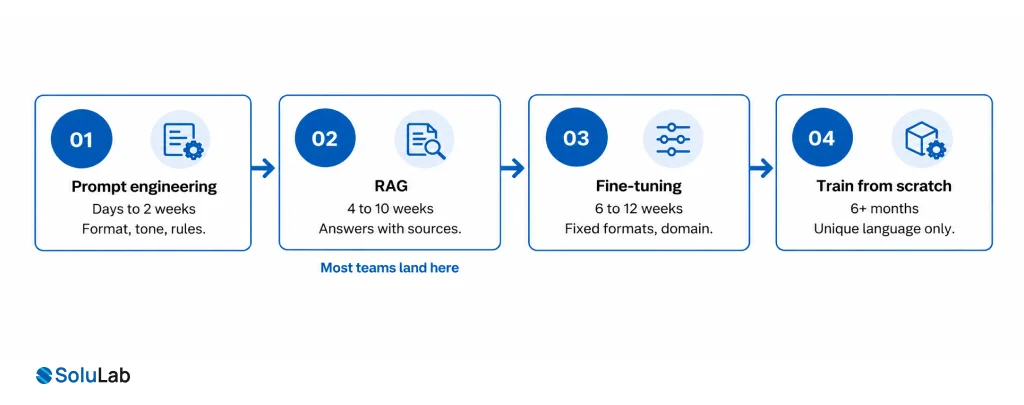
| Approach | Best for | Data you need | Typical timeline |
|---|---|---|---|
| Prompt engineering | Format, tone, simple rules | A few dozen good examples | Days to 2 weeks |
| RAG | Answers from changing documents, with sources | Your documents and access rules | 4 to 10 weeks |
| Fine-tuning (LoRA, QLoRA) | Fixed output formats, domain language, narrow tasks | Hundreds to thousands of labelled examples | 6 to 12 weeks |
| Training from scratch | Unique language or modality no base model covers | Very large proprietary corpus | 6+ months |
We build custom LLMs in five steps: architecture review, data audit, pilot, evaluation, and production with monitoring. The pilot runs on your real data and a test set of your real questions, and ends with a scored report and a go or no-go decision before you fund a full build.
Use case, data, security needs and approach options, ending in a fixed quote.

We check volume, quality, permissions and personal data, and fix what blocks accuracy.
.svg)
A working model on a defined scope, wired to one system.
Accuracy, refusal, latency and cost scored against an agreed bar, including adversarial prompts.
Deployment, access control, logging, monitoring and monthly tuning.
We build custom LLMs for banking and fintech, insurance, healthcare, legal, SaaS and logistics, where language is specialised, documents are long and errors are costly. Each build follows the sector's rules, from RBI and GDPR requirements to HIPAA-aligned handling of patient data.

Support copilots, compliance assistants and regulatory change tools that answer from policies and live account data.


Claims and underwriting assistants that read policy wordings, medical reports and loss documents.


Clinical documentation and patient-query models trained on approved medical content, with PHI kept in your environment.


Contract review, clause extraction and research assistants that use your playbooks and precedent.


In-product assistants and support models that know your product, docs and release notes.

Models that read shipping documents, emails and exceptions, and draft the next action for operations teams.
With SoluLab, a custom LLM pilot typically costs $15,000 to $40,000 over 3 to 6 weeks. A RAG knowledge assistant runs $30,000 to $80,000, a fine-tuned domain model $50,000 to $150,000, and an enterprise private LLM platform $150,000 or more over 4 to 8 months.
| Engagement | Typical cost | Typical timeline |
|---|---|---|
| LLM pilot or proof of concept | $15,000 to $40,000 | 3 to 6 weeks |
| RAG knowledge assistant | $30,000 to $80,000 | 8 to 12 weeks |
| Fine-tuned domain model | $50,000 to $150,000 | 10 to 16 weeks |
| Enterprise private LLM platform | $150,000+ | 4 to 8 months |
Running costs come on top: model API fees or GPU hosting, vector storage, and monitoring. We estimate them during the architecture review and set spend caps at launch.
SoluLab's custom LLM builds run in production: a GPT-4o and Claude support system for One Wallet cut ticket load by 72%, Kavach applies LLM reasoning and a compliance knowledge graph to RBI circulars inside the bank's own environment, and Amanbank's multilingual assistant halved support agent workload.
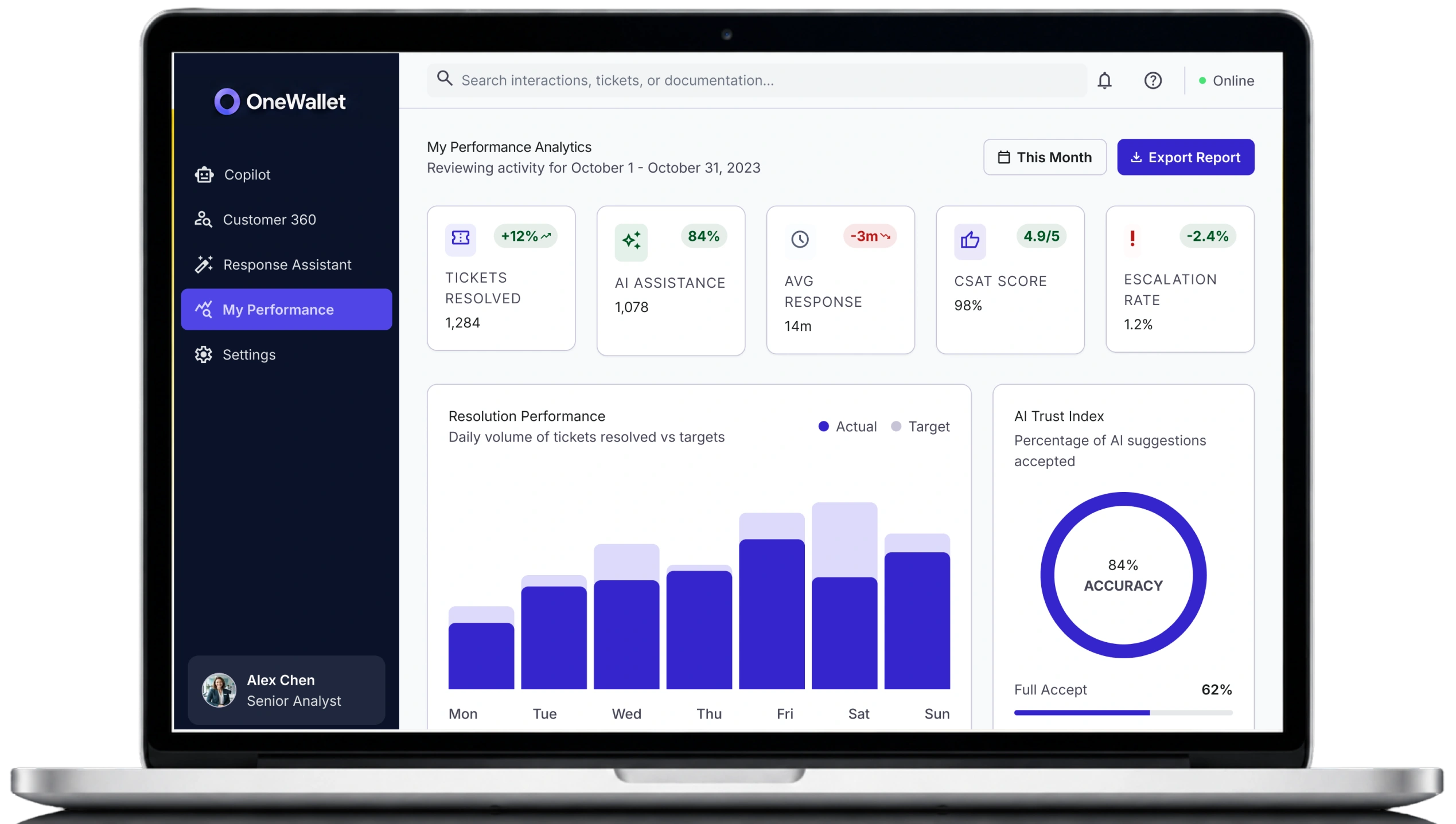
A payments platform with 1.8M+ users needed answers grounded in policies and live transaction data. We combined GPT-4o and Claude with retrieval over 50K+ documents, function calling into payment systems and PII masking.
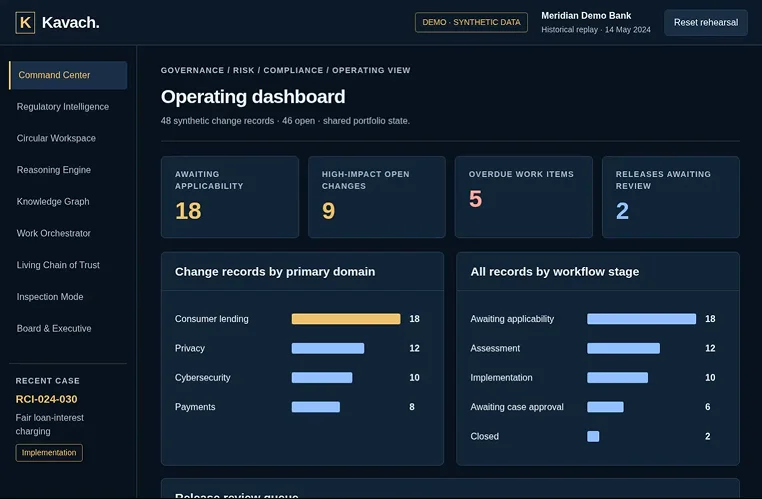
A bank needed RBI circulars turned into traced requirements and verified code changes. We built LLM reasoning with RAG and a compliance knowledge graph, deployed in the bank's own environment, with named approvers on every interpretation. On the published run it caught a failing build before release and traced a ₹900 interest discrepancy to one wrong start event.
Read the Kavach case study →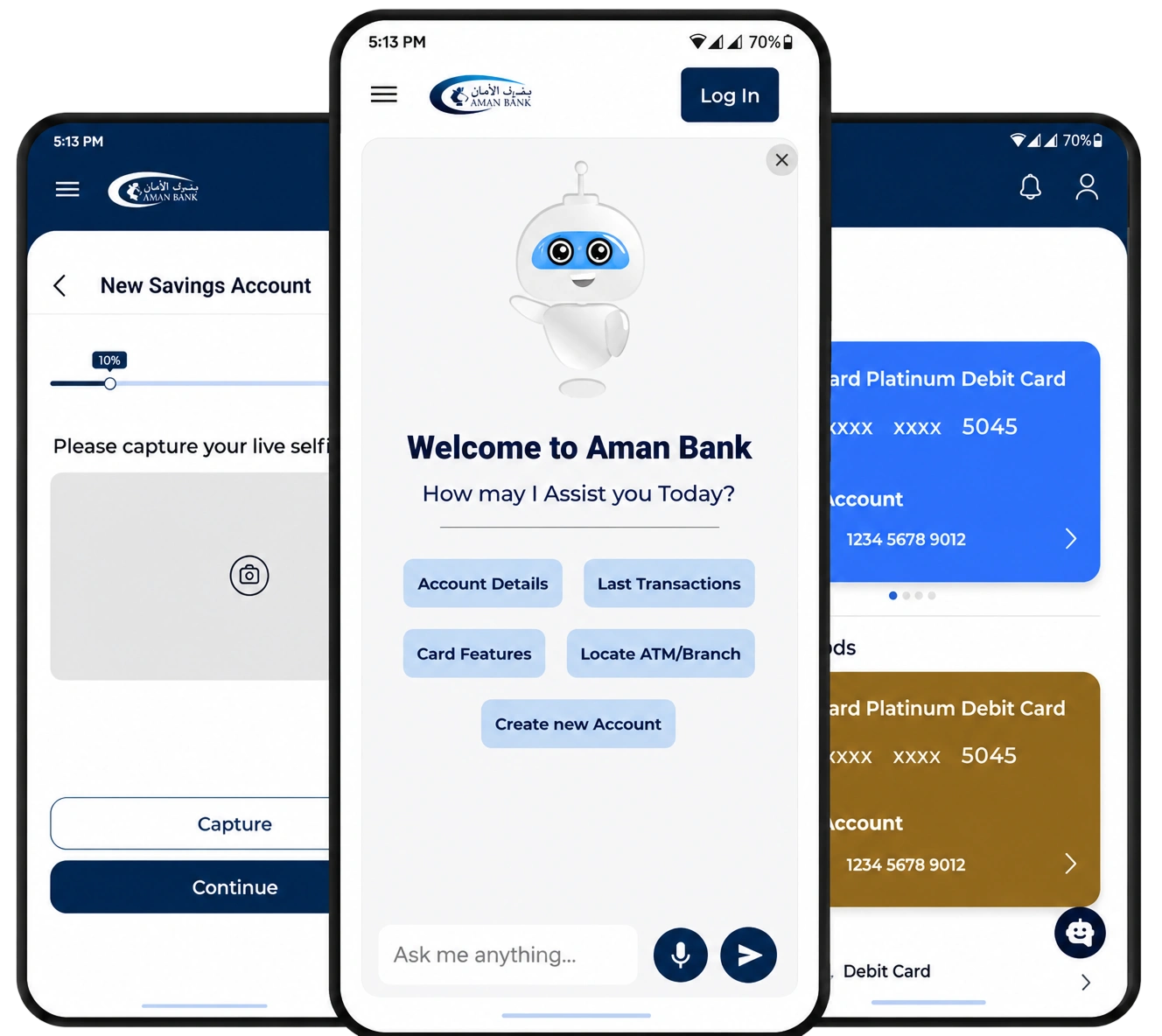
Amanbank, serving about 750,000 customers, needed 24/7 answers in several languages. We built a generative AI chatbot and voice assistant that answers from each customer's own account data. Results: 60% faster onboarding, 50% lower agent workload, 40% faster responses.

Build, fine-tune, and deploy an LLM designed around your specific business requirements.
Talk to an LLM engineerWe build custom LLMs with GPT, Claude, Gemini, Llama and Mistral models, LangChain and LlamaIndex for orchestration, Pinecone, Weaviate, Qdrant or pgvector for retrieval, PyTorch, Hugging Face and PEFT for fine-tuning, vLLM for serving, and AWS Bedrock, Azure OpenAI or Vertex AI for hosting.
 GPT
 Claude
 Gemini
 Llama
 Mistral
 LangChain
 LlamaIndex
 Pinecone
 Weaviate
 Qdrant
 pgvector
 PyTorch
 Hugging Face Transformers
 PEFT (LoRA, QLoRA)
 vLLM
 TensorRT-LLM
 MLflow
 LangSmith
 Ragas
 Evidently
 AWS Bedrock
 Azure OpenAI
 Google Vertex AI
 On-premises
We keep custom LLMs secure by deploying them where your data already lives, masking personal data before it reaches the model, enforcing each user's permissions at retrieval, logging every prompt and answer, and testing for prompt injection. Builds align with GDPR, HIPAA, SOC 2 and the EU AI Act where they apply.
Private deployment in your VPC or on-premises, as in Kavach, where data stays in the bank.

Before prompts reach any model, as in our One Wallet build.
So users only see answers from documents they're allowed to open.
For high-risk outputs, with maker-checker roles where regulators expect them.
Of prompts, sources and answers, retained to your policy.

Against the OWASP Top 10 for LLM Applications before launch.

Under the EU AI Act, obligations for Annex III high-risk systems now apply from 2 December 2027 under the 2026 amending regulation, (EU) 2026/1744. If your use case touches credit, hiring or essential services, we design the logging and oversight for it from the start.
Enterprises choose SoluLab for custom LLM development because we start with the lightest approach that works, publish our prices and run models in production under regulatory scrutiny. Our One Wallet system runs GPT-4o and Claude across 50K+ documents with PII masking, and you own the data, code, prompts and adapters.
We recommend RAG or prompting when fine-tuning isn't worth it.
GPT, Claude, Gemini, Llama or Mistral, chosen by test results.
In your cloud or data centre.

And fixed-scope pilots.

Scored test sets before and after launch.

In banking, fintech and insurance.

"Rajat has spent more than 14 years building platforms used by millions of people. A former principal software architect at Citrix, he heads SoluLab's 50+ member technical organisation and reviews every custom LLM architecture for data exposure, evaluation design and running cost."
SoluLab helped us bring AI directly into the banking experience. From customer onboarding and account assistance to money transfers and card requests, the AI chatbot and voice agents gave customers a much faster way to complete everyday banking tasks. The solution helped us reduce onboarding time while taking significant pressure off our support teams.

CEO, Amanbank
SoluLab turned our verified tax forms into records we can actually prove. Every form, every change, and every approval now has evidence behind it, which has made audit preparation and client conversations far more straightforward.

CEO, ComplyExchange
Since implementing SoluLab's AI-powered chatbot, our user experience has reached new heights. Thanks to SoluLab, our customer interactions have become more efficient and enjoyable.

Director of Sales, Digital Quest
A custom LLM is a large language model adapted to one organisation's data, terminology and rules. The adaptation can come from prompt engineering, a retrieval layer (RAG) over your documents, fine-tuning the model's weights on your examples, or, rarely, training a model from scratch on your own corpus.
SoluLab's custom LLM development services cover an architecture review, model selection, data preparation and PII masking, RAG or fine-tuning, integration with your systems, evaluation against a scored test set, private deployment, and ongoing LLMOps. You own the data, code, prompts, indexes and any fine-tuned weights.
With SoluLab, a custom LLM pilot typically costs $15,000 to $40,000. A RAG knowledge assistant runs $30,000 to $80,000, a fine-tuned domain model $50,000 to $150,000, and an enterprise private LLM platform $150,000 or more. Model or GPU hosting fees continue after launch.
An architecture review takes 1 to 2 weeks and a pilot 3 to 6 weeks. A RAG assistant usually reaches production in 8 to 12 weeks and a fine-tuned domain model in 10 to 16 weeks. An enterprise private LLM platform takes 4 to 8 months.
Use RAG when answers must come from documents that change and need citations. Fine-tune when you need a fixed output format, a house style or a narrow skill repeated at high volume. Many production systems use both: RAG for knowledge and a fine-tuned model for format.
We start with a data audit, then build a labelled set of a few hundred to a few thousand examples from your records. We fine-tune an open model with LoRA or QLoRA, score it against a held-out test set and compare it with a RAG baseline before you commit to production.
Almost never. Training from scratch takes 6 months or more and a very large proprietary corpus, and only makes sense for a unique language or data type no base model handles. GPT, Claude, Llama or Mistral, adapted with RAG or fine-tuning, cover nearly all enterprise use cases.
Yes. We deploy open models such as Llama or Mistral in your VPC or data centre with vLLM, so prompts and data never leave your environment. Kavach, our regulatory change platform for a bank, is deployed inside the bank's own environment, with data and models under the bank's control.
We work with GPT, Claude, Gemini, Llama and Mistral and choose by testing on your tasks, not by preference. Hosted models suit fast pilots; open models suit private deployment and fine-tuning. One Wallet's system, for example, combines GPT-4o and Claude for different steps.
We build a test set from your real questions and expected answers, then score accuracy, citation correctness, refusals, latency and cost per query. Adversarial prompts check for leaks and injection. The same test set runs after every model, prompt or data change, so quality is tracked over time.
Yes. SoluLab builds, deploys and maintains custom LLMs for enterprises in banking, fintech, insurance, healthcare and SaaS. Our GPT-4o and Claude system for One Wallet answers from 50K+ documents and cut support ticket load by 72%. Every project starts with an architecture review.