Key Takeaways
- Maldives hospitality assets combine scarcity-driven pricing power with strong global luxury demand, creating stable yield potential for tokenized structures.
- Early movers gain a competitive advantage in a fast-growing luxury tourism market while benefiting from blockchain-backed transparency and streamlined ownership structures.
- Hotel tokenization improves 60% capital efficiency by diversifying funding sources, lowering capital friction, and expanding access to global accredited investors.
- Compliance-first structuring and disciplined execution are critical to successfully Tokenizing Luxury Hotels in the Maldives at an institutional level.
Reports from large financial institutions estimate that tokenized assets could exceed $16 trillion by 2030, with real estate expected to capture a major share due to its stable income potential.
Platforms such as RealT, Lofty, Brickken, and SolidBlock allow investors to purchase fractional ownership and compliant Defi integrations through blockchain technology.
Because properties can be divided into thousands of digital units, smaller investors can access rental income that previously required large capital.
- However, building a real estate tokenization platform requires more than smart contracts.
- Founders must address compliance, investor onboarding, revenue models, custody infrastructure, and secure payout systems.
- Each of these areas affects investor trust and long-term profitability.
What Is a Real Estate Tokenization Platform Like RealT?
A tokenized real estate platform allows property ownership to be divided into blockchain-based tokens that represent fractional equity in a real estate asset.
Each token usually corresponds to a share in a legally structured entity that owns the property.
| Quick Update: The Trump Organization has partnered with Saudi developer Dar Global to launch the Trump International Hotel project in the Maldives. The development plans to use tokenization in the Maldives so digital investors can buy fractional ownership and participate in the early construction stages. |
In most cases, the platform operates with three main components, as shown below.
1. Asset onboarding layer
A property owner transfers ownership to a legally structured entity. This entity holds the property title and becomes the issuer of digital ownership tokens.
2. Token issuance infrastructure
Building a RealT-style platform requires permissioned ERC-3643 or ERC-1400 standards. To ensure that tokens cannot be transferred to non-KYC’d wallets, thereby automating compliance at the protocol level.
3. Investor marketplace
Investors purchase tokens using stablecoins or fiat payment rails. Rental income from the property is later distributed to token holders automatically.
Platforms involved in real estate tokenization platform development also integrate identity verification systems because regulatory compliance requires investor verification. Due to this, KYC and AML services become part of the onboarding infrastructure.

How Tokenized Real Estate Platforms Generate Revenue?
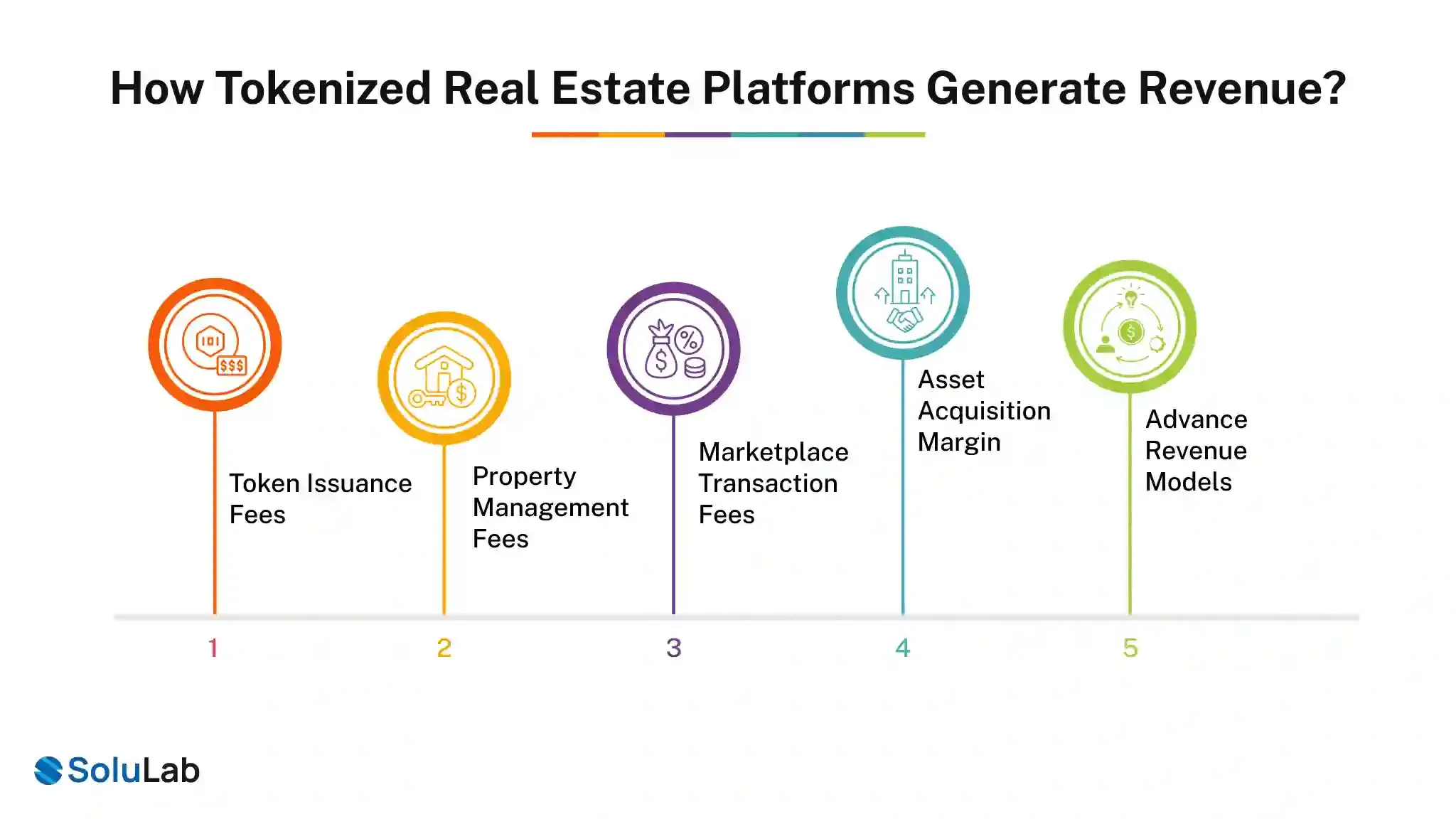
The business model behind a RealT real estate tokenization platform focuses on multiple revenue streams because a single fee model rarely supports platform operations.
Most successful platforms combine four revenue sources.
1. Token issuance fees
When a new property is tokenized, the platform charges a listing or issuance fee. This fee covers token minting, legal structuring, and compliance preparation.
2. Property management fees
Platforms charge a percentage of rental income for asset management. This covers maintenance, tenant management, and distribution of rental revenue.
3. Marketplace transaction fees
When investors trade asset tokens on the platform marketplace, the platform collects small transaction fees. Over time, this creates a steady revenue stream as investor activity increases.
4. Asset acquisition margin
Some platforms purchase properties directly and list them for tokenization at a slightly higher valuation. The difference becomes an additional revenue margin.
5. Advance Revenue Models
Don’t just rely on “Listing Fees.” Modern platforms earn via:
- Yield Spread: If a property earns 8.5%, pays out 8% to investors, and keep 0.5% as an “AUM Fee.”
- Secondary Market Liquidity: Charge a 1% fee when investors trade tokens with each other on your internal Bulletin Board or AMM.
- DeFi Collateralization: Partner with lending protocols to allow users to take a loan against their real estate tokens.
This multi-layer model is widely used by companies offering tokenization platform development services because it creates predictable revenue from both property onboarding and investor activity.
Read More: How US Companies Can Launch SEC-Compliant RWA Tokenization Platforms?
The 3-Layer Legal Structure Required to Launch a Compliant Real Estate Tokenization Platform
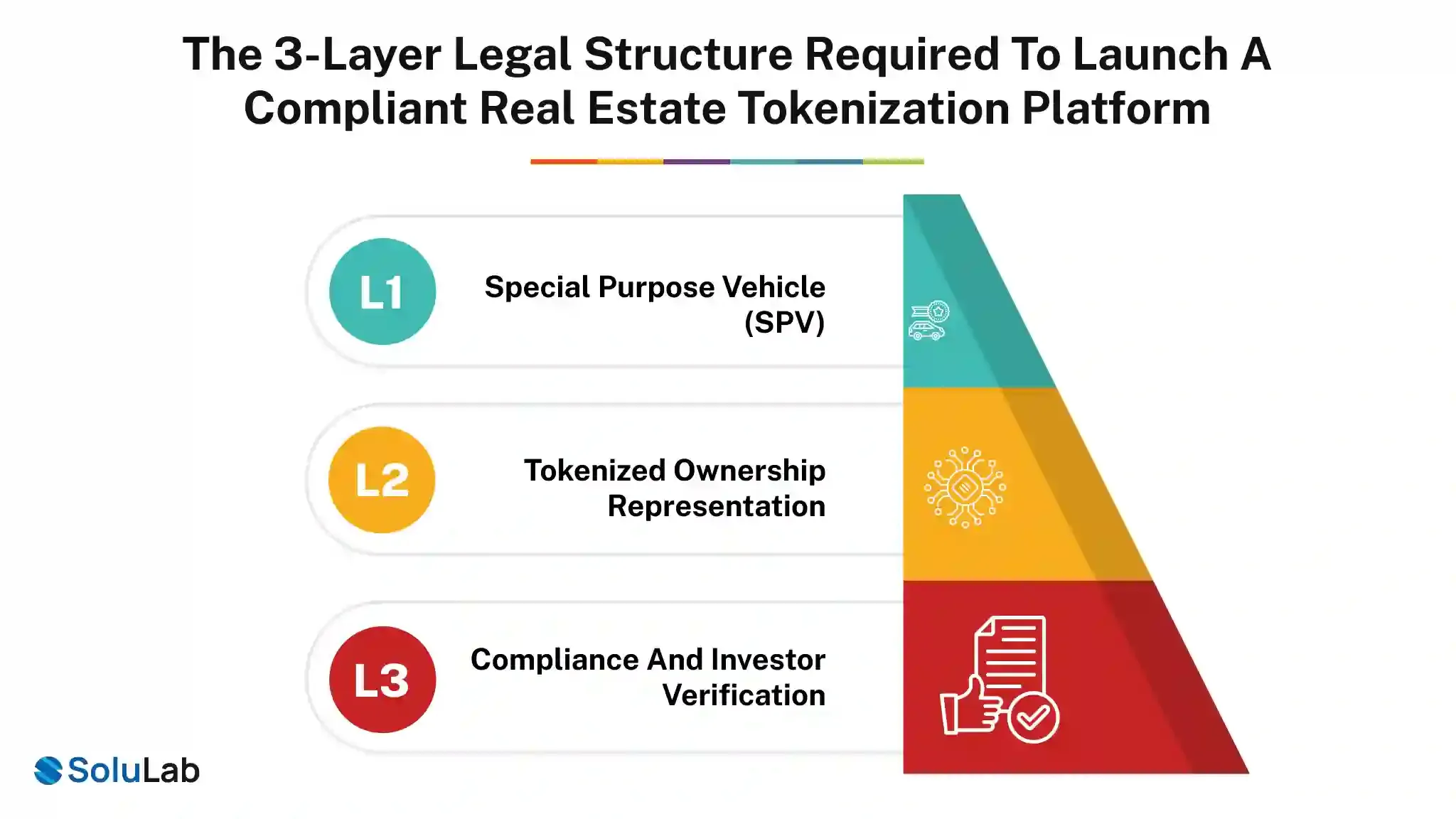
Legal structure is one of the most important foundations of a blockchain real estate tokenization platform. Investors need assurance that token ownership corresponds to legal ownership rights.
Most platforms use a three-layer structure.
Layer 1: Special Purpose Vehicle (SPV)
A property is transferred into a Special Purpose Vehicle, often a limited liability company (LLC) created specifically for that property. The SPV holds the legal title of the property.
Token holders then own shares in this SPV rather than the physical property directly. This structure protects investor interests because ownership rights remain legally enforceable.
Layer 2: Tokenized ownership representation
The platform creates blockchain tokens that represent fractional ownership of the SPV. Each token equals a defined ownership percentage.
Smart contracts manage token issuance and investor distribution logic. Security audits are vital here because flaws in smart contracts can expose investor funds.
Layer 3: Compliance and investor verification
Regulated platforms integrate identity verification systems for investor onboarding. These systems check identity, jurisdiction eligibility, and financial compliance requirements.
For companies building an RWA real estate tokenization platform, compliance frameworks must be implemented early. Without them, platforms face regulatory restrictions that limit investor participation.
RealT vs Other Real Estate Tokenization Platforms: What Founders Should Learn Before Building One
Studying existing platforms helps founders understand market expectations before starting RealT clone platform development.
Several platforms operate with different models depending on investor accessibility and regulatory frameworks.
| Platform | Key Feature | Investor Focus | Distribution Model |
| RealT | Rental income in stablecoins | Global investors | Fractional ownership tokens |
| Lofty | U.S. property tokenization | Retail investors | Automated rental payouts |
| Brickken | Asset tokenization infrastructure | Institutional issuers | Compliance-first token issuance |
| SolidBlock | Institutional property tokenization | Real estate funds | Security token offerings |
- RealT focuses heavily on rental income distribution because passive income attracts long-term investors.
- Lofty prioritizes accessibility by allowing investors to purchase tokens using smaller capital.
- Brickken operates as infrastructure because many asset issuers prefer building platforms using external tokenization frameworks.
- SolidBlock targets institutional investors because large property funds require regulatory-grade tokenization systems.
Founders planning to build a tokenization platform like RealT should study these models carefully because the target investor group determines platform architecture and compliance requirements.
The Real Estate Tokenization Platform Build Lifecycle: Timeline and Cost From SPV Formation to Launch
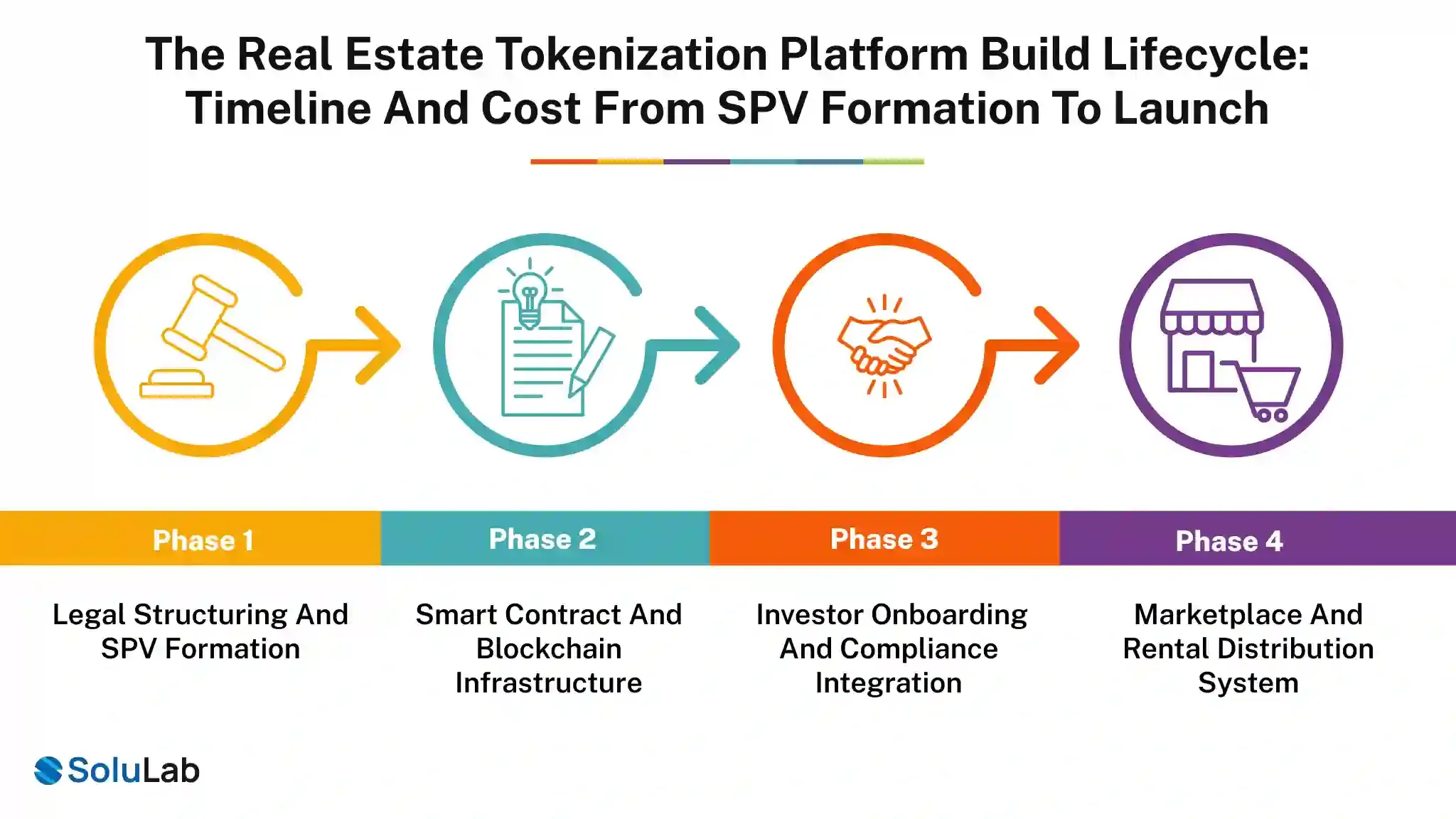
Launching a tokenization platform like RealT usually follows a structured development lifecycle. Each phase includes legal preparation, infrastructure deployment, and investor onboarding systems.
Phase 1: Legal structuring and SPV formation
This phase defines property ownership structure and regulatory compliance strategy.
Typical timeline: 2–3 weeks
Activities include:
- SPV formation
- legal documentation preparation
- compliance framework setup
Phase 2: Smart contract and blockchain infrastructure
Smart contracts manage token issuance and ownership records. These contracts must undergo security audits because vulnerabilities may expose investor funds.
Typical timeline: 3–4 weeks
Development tasks include:
- token contract architecture
- blockchain integration
- wallet infrastructure setup
Phase 3: Investor onboarding and compliance integration
Identity verification systems are integrated into the platform to ensure that investors meet regulatory requirements.
Typical timeline: 2–3 weeks
Tasks include:
- KYC integration
- AML verification services
- Investor Dashboard Development
Phase 4: Marketplace and rental distribution system
Investors require liquidity options and rental income distribution. Therefore, automated payout systems are developed.
Typical timeline: 2–3 weeks
Core components include:
- token trading marketplace
- automated rental distribution system
- payment rail integrations
Total Cost to Build a Real Estate Tokenization Platform
Understand the tokenization platform development costs and plan your budget accordingly.
| Component | Estimated Cost |
| Legal structure & compliance | $5K – $10K |
| Smart contract development | $5K – $10K |
| Investor onboarding systems | $10K – $15K |
| Marketplace & payout engine | $5K – $10K |
Typical platform budget: $20k to $30k plus
By combining legal rigor with high-performance blockchain tech, you can offer investors unprecedented access to passive income.
Read –Asset Tokenization Guide and Gain Regulatory and Token Standard Insights

Conclusion
Finally, the discussion indicates that building a real estate tokenization platform requires more than smart contracts. A successful platform depends on legal SPV structures, investor compliance, secure infrastructure, and transparent revenue distribution.
If you are planning to build a tokenization platform like RealIt, SoluLab provides structured development capabilities through:
- Real-Time Trading Dashboard for monitoring token transactions and investor activity
- AI-Powered Valuation Engine for accurate property price estimation
- Automated KYC/AML verification for compliant investor onboarding
- Asset Liquidity Management for secondary market trading
- Predictive Analytics for Market Trends for informed asset strategies
- AI-Based Fraud Detection to protect investor funds
- White-Label Platform Customization for faster launch
Contact SoluLab to get a strategic real estate tokenization platform development plan tailored to your platform goals.
FAQs
Deepika is a content writer who blends storytelling with strategic thinking. She explores topics across digital innovation, emerging tech, and the evolving blockchain industry. She enjoys breaking down complex ideas into simple, engaging narratives in the growing global markets.