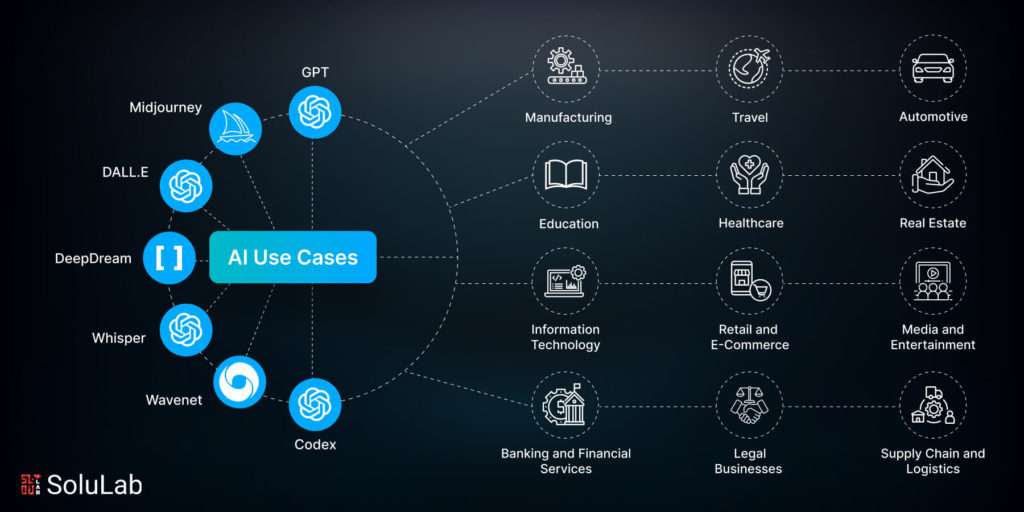
AI applications now span document processing, predictive maintenance, medical imaging, fraud detection, customer service automation, code generation, and supply chain optimization, among dozens of other production uses. What ties them together is one underlying capability: a model trained on historical data makes inferences on new inputs faster and at lower cost than a human analyst. This guide walks through the most impactful AI use cases by industry so you can spot where the technology fits your operations and what it actually takes to deploy it.
AI has become a genuine operational tool, not just a research topic, and there are specific, proven use cases for every major industry. Manufacturing, retail, healthcare, finance: all of them are reworking how they operate. Companies that use artificial intelligence (AI) are pulling ahead on efficiency, gaining clearer reads on customer behavior, and cutting waste out of their processes through machine learning, predictive analytics, and targeted automation. Grand View Research projects the worldwide AI market will grow at a 38.1% CAGR to reach $1,811.8 billion by 2030, up from $136.6 billion in 2022.
This article covers major industries that are already getting real value from AI, and still have substantial room to grow. First, a quick working definition of artificial intelligence for context.
The Function of Artificial Intelligence in Business Management
John McCarthy, the American computer scientist and cognitive researcher who coined the term in 1956, defined artificial intelligence as “the technical and scientific method of making intelligent machines.”
At its core, AI is a computer’s ability to do things we typically associate with human thinking, reasoning, finding meaning, learning from experience. That last one matters most in business contexts.
AI changes how companies operate by taking over repetitive tasks, processing data at a scale no team can match, and supporting better decisions at every level. It surfaces patterns in supply chains, flags equipment before it fails, and builds customer experiences that would have required a full analyst team a decade ago. It is genuinely useful for cybersecurity, talent hiring, and data-backed strategy. And because AI keeps learning as new data comes in, it adapts rather than goes stale. Companies that want to stay competitive need to identify current business uses and application of AI before their competitors do.
AI Use Cases in Different Industries
Here is a look at key AI use cases by industry.
Healthcare
The use cases of AI in healthcare include:
- Medical Imaging: AI reads X-rays and CT scans faster than most radiologists and catches details human eyes miss. The use cases of AI in healthcare here include detecting lung nodules, flagging signs of pneumonia and TB, and identifying osteoporosis markers in X-ray images, reducing the chances of a missed diagnosis on the kind of finding that actually matters.
- Personalized Therapy: AI pulls together patient data, genetic information, and lifestyle factors to map individual illness risks and shape treatment plans accordingly. Future of AI in healthcare industry uses this to pick chemotherapy regimens matched to genetic profiles, and to monitor patients remotely, catching early signals of heart disease or diabetes before they become a crisis.
- Electronic Health Records (EHRs): The real value of electronic health records is not storage, it is what AI can do when it reads across thousands of them at once. It finds patterns in medical history, lifestyle data, and genetics that predict risk for conditions like diabetes or heart disease. It also scans prescription data for dangerous drug interactions before they reach a patient.
Related: AI Agents in Healthcare
Retail and E-Commerce
AI use cases in retail and e-commerce include:
- Personalized Shopping Experience: AI reads browsing behavior, past purchases, and stated preferences to surface product recommendations that actually match what someone wants. Done well, this improves the browsing experience, increases engagement, and converts browsers into buyers, without the customer feeling pushed.
- Dynamic Price Optimization: Retailers use AI to watch real-time market conditions, competitor pricing, and demand signals simultaneously. Artificial intelligence use cases in e-commerce let you adjust prices dynamically, staying competitive, protecting margins, and responding to demand shifts in hours rather than weeks.
- Chatbots for Customer Service: AI chatbots handle order tracking, product questions, and basic support around the clock. They are not a replacement for human agents on complex issues, but for the routine inquiries that eat up support queues, they free your team to focus on the cases that need real judgment. That is a meaningful part of AI in retail use cases.
Read Also: How Generative AI is Transforming the E-Commerce Industry?
Food Technology
AI in the food industry covers several important use cases:
- Supply Chain Optimization: Food spoils. Logistics delays compound. AI addresses both by forecasting demand, managing inventory, and optimizing delivery routing, cutting waste and keeping food moving from fields to customers on schedule.
- Quality Control and Inspection: Computer vision models running on production lines can catch defects, contamination, and irregularities in food products that a manual inspection would miss or slow down. Only high-quality goods reach the market. The inspection runs continuously, at scale.
- Menu Modification in Restaurants: AI is used in the restaurant industry to adapt Digital menu based on customer preferences, dietary restrictions, and order history. The result is a dining experience that feels considered rather than generic, and operators get more precise data on what their customers actually want.
Banking and Financial Services
AI in banking and finance use cases include:
- Fraud Detection and Prevention: AI monitors transaction patterns in real time, spots anomalies, and flags suspicious activity before a fraud completes. Machine learning models update as fraud tactics shift, which matters, because the attack patterns change constantly and static rule sets fall behind fast.
- Credit Scoring and Risk Assessment: Traditional credit scoring misses large portions of the population with thin credit files. AI-powered models pull from additional data sources and apply ML algorithms to produce more accurate creditworthiness assessments for both individuals and businesses. Better scoring means better lending decisions and lower default rates.
- Anti-Money Laundering (AML) Compliance: AML teams deal with transaction volumes no human team can manually review. AI works through that data systematically, flagging patterns consistent with money laundering so analysts can focus their attention where the actual risk sits.
Supply Chain and Logistics
AI in logistics and supply chain use cases include:
- Management of Warehouse Layout and Space Utilization: AI analyzes demand patterns and inventory levels to reorganize warehouse shelving and rack configurations for maximum space efficiency. Different item sizes, different storage requirements, the system accounts for all of it and adjusts as the mix changes.
- Tracking and Monitoring Shipments: Real-time shipment tracking is now standard. What AI adds is proactive alerting: algorithms read shipping data to anticipate delays before they surface, giving operations teams time to act rather than react.
- Resource Management: AI distributes tasks across human workers by reading workload data, order volumes, processing times, individual capacity. The goal is matching tasks to the right people at the right time, cutting bottlenecks without overloading anyone.
Travel
Applications of AI in the travel industry include:
- Personalized Itineraries: AI builds travel plans around what a specific person actually cares about, budget, time constraints, interests pulled from behavior data, rather than defaulting to the same top-10 tourist list everyone gets. For travel companies, this shifts the product from logistics booking to curated experience.
- Real-time Travel Updates and Suggestions: AI gives travelers live updates and location-aware recommendations as they move. AI in travel can act as a local guide, surfacing the quiet cafes, lesser-known galleries, and viewpoints that don’t make it into the standard travel apps, the kind of tip a well-traveled friend would give you.
- Booking Assistance: AI chatbots handle the time-consuming parts of the booking process: comparing options, providing pricing, and walking travelers through decisions based on their schedule and preferences. Support runs continuously, without wait times.
Real Estate
The use cases of AI in real estate include:
- Automated Property Valuation: AI models use historical transaction data, local market conditions, and property characteristics to estimate value. This removes the subjective variation you get with manual appraisals, buyers, sellers, lenders, and investors all benefit from valuations that are consistent and data-grounded.
- Portfolio Optimization in Real Estate Investment: AI processes large datasets to forecast property prices, rental income, and market swings. Risk assessment models watch economic indicators and volatility signals, then adjust portfolio composition dynamically to keep the risk-reward balance in range.
- Automatic Lead Generation: AI makes lead identification faster and sharper. Machine learning algorithms use demographic data, browsing behavior, and property preferences to surface the most relevant prospects. Predictive models then score those leads by conversion likelihood, so agents spend time on the ones most likely to close, not the ones at the bottom of a cold list.
Media and Entertainment
AI in media and entertainment has the following uses:
- AI-powered Music Recommendation Systems: These systems build a profile of each listener based on history, genre preferences, and listening behavior over time. Platforms like Spotify use that profile to generate playlists that feel personally curated rather than algorithmically generic, which is a harder problem than it looks, and one AI handles well.
- AI in Game Design and Play: AI shapes non-player character behavior and refines gameplay mechanics, producing opponents that feel genuinely challenging and levels that hold attention longer. It also generates new content automatically, stages, characters, scenarios, which keeps games fresh without requiring a full production cycle for every update. In the gaming industry, this directly affects engagement and retention.
- Editing Movies: AI identifies high-impact scenes and emotionally charged moments, the kind editors use when cutting trailers. It also applies facial recognition to track key actors through footage, which speeds up editorial work on full-length films considerably. The technology does not replace editorial judgment, but it removes hours of manual work from the front end of the process.
Read Our Blog Post: How Parallel AI Transform Business Operations
Manufacturing
The applications of AI in manufacturing involve:
- Defect Detection: AI adds self-learning capability to defect detection systems, reducing false alarms and cutting the manual inspection burden that slows production lines. Manufacturers get better output quality without proportionally more labor.
- Assembly Line Integration: AI-automated assembly lines run steps in sequence with consistent precision. Human error drops. Throughput goes up. In practice, this is where teams often see the fastest return, not from any single dramatic change, but from removing variability across thousands of daily repetitions.
- Predictive Analytics: By reading sensor data and maintenance records continuously, AI systems can predict equipment failures before they happen and schedule repairs at the least disruptive time. Unplanned downtime is expensive. Avoiding it is one of the clearest ROI cases for AI in manufacturing.
Read more – AI for Demand Forecasting
Automotive
The applications of AI in automotive are:
- Intelligent Traffic Management: AI reads live traffic data from GPS systems and security cameras, then uses that information to adjust signal timing, reduce congestion, and keep traffic moving. When an accident happens, AI route planning algorithms reroute drivers automatically, cutting response times and keeping roads functional while emergency services work the scene.
- Enhanced Navigation: AI navigation goes further than standard GPS. It pulls in real-time traffic, weather, and road condition data to build routes that are actually optimal, not just shortest distance. When conditions change, it reroutes without being asked.
- Personalized Customer Experience: AI tailors the car-buying and ownership experience to each customer by reading past purchases and driving behavior. The result is more relevant suggestions for features, services, and maintenance. AI-powered chatbots handle common questions and guide customers through purchasing or troubleshooting without putting them on hold.
Education
AI has changed how learning works at every level. Here are some of the concrete applications:
- Personalized Learning: AI adapts content and learning paths to each student’s specific needs in real time. Students who are struggling get more support on the concepts they are missing. Students who are ahead move faster. This is genuinely different from a one-size curriculum, and the engagement data shows it.
- Intelligent Tutoring: AI tutoring systems provide targeted feedback as students work, responding to their specific mistakes rather than giving generic hints. These AI in education systems adapt to individual learning styles and give focused support across subjects, without requiring a human tutor for every student.
- Learning Analytics: AI processes student performance data to surface patterns, which concepts trip up the most students, which interventions work, which groups are falling behind. Educators get concrete information they can act on, not just aggregate test scores.
Fashion
The applications of AI in fashion are:
- Trend Predicting and Purchasing: AI reads social media behavior, past sales, and fashion commentary at scale to forecast where trends are heading. Buyers use this to make purchasing decisions grounded in data rather than gut feel, which reduces the chance of being caught with inventory that does not move.
- Design and Product Development: AI tools assist the design process by generating suggestions, optimizing patterns for material efficiency, and producing virtual prototypes quickly. AI in fashion speeds up the iteration cycle, designers can test more ideas and move from concept to production faster than traditional workflows allow.
- Style and Visual Merchandising: AI recommends product pairings and outfit combinations based on what individual shoppers actually prefer. In physical stores and online, virtual try-on tools let customers see how items look without a fitting room. The experience becomes more personal, which tends to convert better.
Information Technology
AI in information technology includes the following use cases:
- IT Support and Helpdesk Automation: AI chatbots and virtual assistants handle the tier-1 issues that fill up IT queues: password resets, device configurations, common software questions. Pursuing an ITIL certification course can further equip IT professionals with the frameworks needed to align such automated service processes with globally recognized ITIL best practices.
- Cybersecurity and Threat Detection: AI monitors network traffic and user behavior continuously, picking up irregularities that point to security incidents. Automated response kicks in faster than any manual process can. The net effect is shorter dwell times for threats and less damage when incidents do occur.
- IT Asset Management: AI automates asset discovery, tracks usage patterns, and anticipates maintenance needs, keeping inventory current without someone manually auditing it. AI-driven asset management also flags compliance gaps with licensing agreements before they become audit problems, and reallocates resources based on actual usage rather than estimates.
Legal Businesses
Applications of AI in legal business include:
- Contract Analysis: AI reads contracts and pulls out the relevant clauses automatically. Legal teams spend less time on document review and more time on the judgment calls that actually require a lawyer.
- Legal Research: AI works through case law, statutes, and precedents far faster than any associate can. It surfaces what matters for a specific question, giving practitioners a cleaner starting point and reducing the time from research request to usable insight.
- E-discovery: Modern litigation can involve millions of electronic documents. AI classifies and categorizes that material systematically, ensuring nothing relevant gets overlooked and cutting the time required to prepare a complete evidence picture.
Read Our Blog: AI Agents in Legal Industry
Hospitality
AI helps hospitality businesses in several practical ways:
- Personalized Suggestions: AI reads guest preferences, past bookings, and search history to recommend specific hotels, dining options, and activities. The suggestion feels relevant rather than generic, which is a meaningful difference when you are competing on experience.
- Revenue Management: AI analyzes market trends, historical occupancy data, and demand patterns to help hotels set prices that hold occupancy high without leaving money on the table. Getting this balance right manually is hard. AI does it continuously.
- Guest Sentiment Analysis: AI in hospitality reads reviews, social comments, and feedback at scale to identify where the experience is falling short. Problems surface faster, and businesses can respond before a pattern of negative feedback becomes visible to prospective guests.

Conclusion
What stands out across all of these industries is not the complexity of the underlying technology, it is how consistently AI addresses the same types of problems: too much data for humans to process manually, decisions that need to happen faster than teams can move, and repetitive work that consumes skilled people who should be doing something else. Healthcare, retail, finance, manufacturing, logistics, entertainment, the specific workflows differ, but the pattern holds. The companies that identify where those problems sit in their own operations and put AI to work on them are the ones pulling ahead. That is not a prediction about the future. It is what is already happening.
As an AI development company, SoluLab works with businesses looking to put AI to work in a concrete way. Whether you need hire AI developers for machine learning, natural language processing, or intelligent automation, our team builds solutions around your actual requirements, not a generic template. If you are ready to move from exploring AI use cases to implementing them, get in touch with our AI developers today.
FAQs
Shipra Garg is a tech-focused content strategist and copywriter specializing in Web3, blockchain, and artificial intelligence. She has worked with startups and enterprise teams to craft high-conversion content that bridges deep tech with business impact. Her work translates complex innovations into clear, credible, and engaging narratives that drive growth and build trust in emerging tech markets.