



Ask what the newest machine learning algorithms are in 2026 and you get a short list: transformer variants, mixture-of-experts architectures, state space models like Mamba, and diffusion models for anything generative. Ask what actually runs in production and the answer flips. Random forest, gradient boosting and k-means still power more live systems than all of those newer families put together.
That gap is the whole story. What gets written about and what gets shipped are rarely the same thing, so this guide covers both sides: the ten classical algorithms that quietly handle most real business problems, and the modern families you should actually understand this year.
What is a Machine Learning Algorithm?
Strip away the hype and a machine learning algorithm is a piece of math. It’s a statistical recipe that lets a computer find patterns in data and then make predictions or decisions from them, without someone hand-writing every rule. These recipes sit underneath most of what people call AI, and they’re what let you automate messy jobs like predictive analytics, image recognition and natural language processing.
Most of them fall into one of four buckets:
- Supervised Learning Algorithms: You hand these labeled examples, inputs paired with the right answers, and they learn the mapping. Think linear regression, decision trees and support vector machines (SVMs).
- Unsupervised Learning Algorithms: No labels here. The algorithm gets raw data and has to find the structure on its own, with no target to aim at. K-means clustering, principal component analysis (PCA) and autoencoders are the usual suspects.
- Semi-Supervised Learning Algorithms: A middle path. You have a small pile of labeled data and a much bigger pile of unlabeled data, and the algorithm uses both to learn more accurately than either would allow alone. Why bother? Because labeling is slow and expensive, and sometimes you simply can’t afford to label everything. Self-training, co-training and graph-based methods all live here.
- Reinforcement Learning Algorithms: These learn by doing. The algorithm acts inside an environment, gets rewarded or penalised, and slowly gets better at making decisions. Q-learning, Deep Q Networks (DQN) and Proximal Policy Optimization (PPO) are well-known examples.
Each one is built for a particular kind of problem. Sorting spam from real email is one. Forecasting market prices is another. And as compute gets cheaper and data piles up, the algorithms keep getting sharper at dealing with the untidy situations real businesses throw at them.
Importance of Machine Learning Algorithms in Real-world Applications
A lot of modern software leans on ML algorithms without advertising it. They automate work, sharpen decisions and make products feel smarter to the people using them. You can see the effect most clearly in healthcare, finance, marketing and cybersecurity, so let’s go through the places where it shows up.
1. Healthcare and Medical Diagnosis
Medicine has changed a lot because of this. Here’s where machine learning is doing real work:
- Disease Prediction and Early Diagnosis: Feed a model medical records, genetic data and scans, and it can help flag conditions like cancer, diabetes and heart disease.
- Therapeutic Strategies Customized: Models can suggest treatment options shaped around a patient’s background and how they’ve responded to care before.
- Medical Imaging Analysis: Radiology, pathology and dermatology teams use it to pick out problems in X-rays, MRIs and CT scans with a high degree of precision.
2. Financial Management and Identity of Fraud
Finance leans on these techniques harder than almost anyone, mostly for security and speed.
- Fraud Detection: A model learns what normal spending looks like, so an odd transaction stands out fast.
- Algorithmic Trading: Trading systems weigh historical performance against what the market is doing right now, then use that to inform investment calls.
- Credit Scoring and Risk Assessment: Lenders look at financial history and behavioural patterns to judge whether an applicant is likely to repay.
3. E-commerce and Recommendation Systems
That “you might also like” row? Machine learning. It shapes what you see in both shopping and entertainment.
- Product Recommendations: Stores like Amazon look at what you browse and buy, then suggest what you’re likely to want next.
- Content Personalization: Netflix and Spotify study listener and viewer feedback so they can tune both their recommendations and the product itself.

4. Cybersecurity and Threat Identification
Security teams can’t eyeball every log line. So they lean on models for:
- Identifying and Mitigating Cyber Threats: Security tools catch malware, phishing and strange network traffic as it happens, which limits the damage.
- Anomaly Detection: Models spot the oddities in access logs, login attempts and transaction records that a human would miss.
- Spam Filtering: The oldest trick in the book. Emails get sorted into spam or legitimate.
5. Travel and Autonomous Vehicles
Transport is being reshaped too, mostly through automation and better safety.
- Autonomous Vehicles: Machine learning models inside self-driving cars read live data from cameras, sensors and GPS so the car can find its way safely.
- Traffic Management: Artificial intelligence smooths traffic flow and predicts where congestion will build, which helps cities keep people moving.
- Route Optimization: Uber and Lyft use it to pick efficient routes and to tune their pricing.
6. Production and Predictive Maintenance
On the factory floor, the payoff is fewer surprises. Machine learning helps with:
- Forecasting Equipment Failures: Models read performance data and warn you before a machine needs attention, so you cut downtime and repair bills.
- Quality Control and Defect Detection: Vision systems catch product flaws on the line, right away, instead of at the end of the batch.
- Supply Chain Optimization: Better demand forecasts mean smarter inventory decisions.
Top 10 Machine Learning Algorithms to Look Out in 2026
Roughly speaking, ML algorithms split into supervised, unsupervised and reinforcement learning. The ten below are the ones you’ll run into again and again, across all kinds of applications.
1. Linear Regression
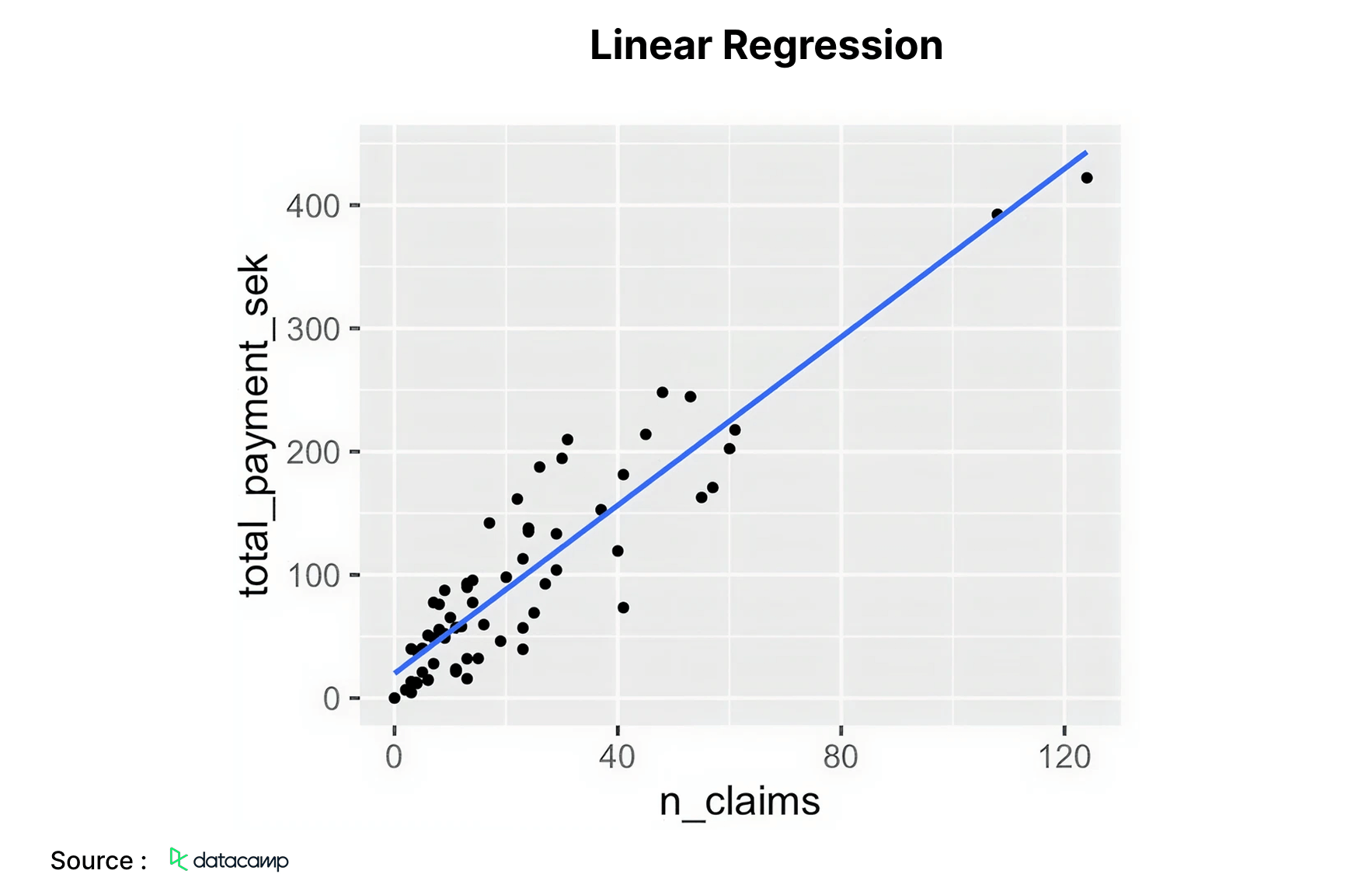
The workhorse. Linear regression draws a straight-line relationship between one or more input variables and a continuous number you want to predict. It trains faster than most other methods. Its real strength, though, is that you can read it: you can see exactly why the model predicted what it did and explain it to someone else. Teams use it to forecast things like customer lifetime value, property prices and stock valuations.
2. Decision Trees
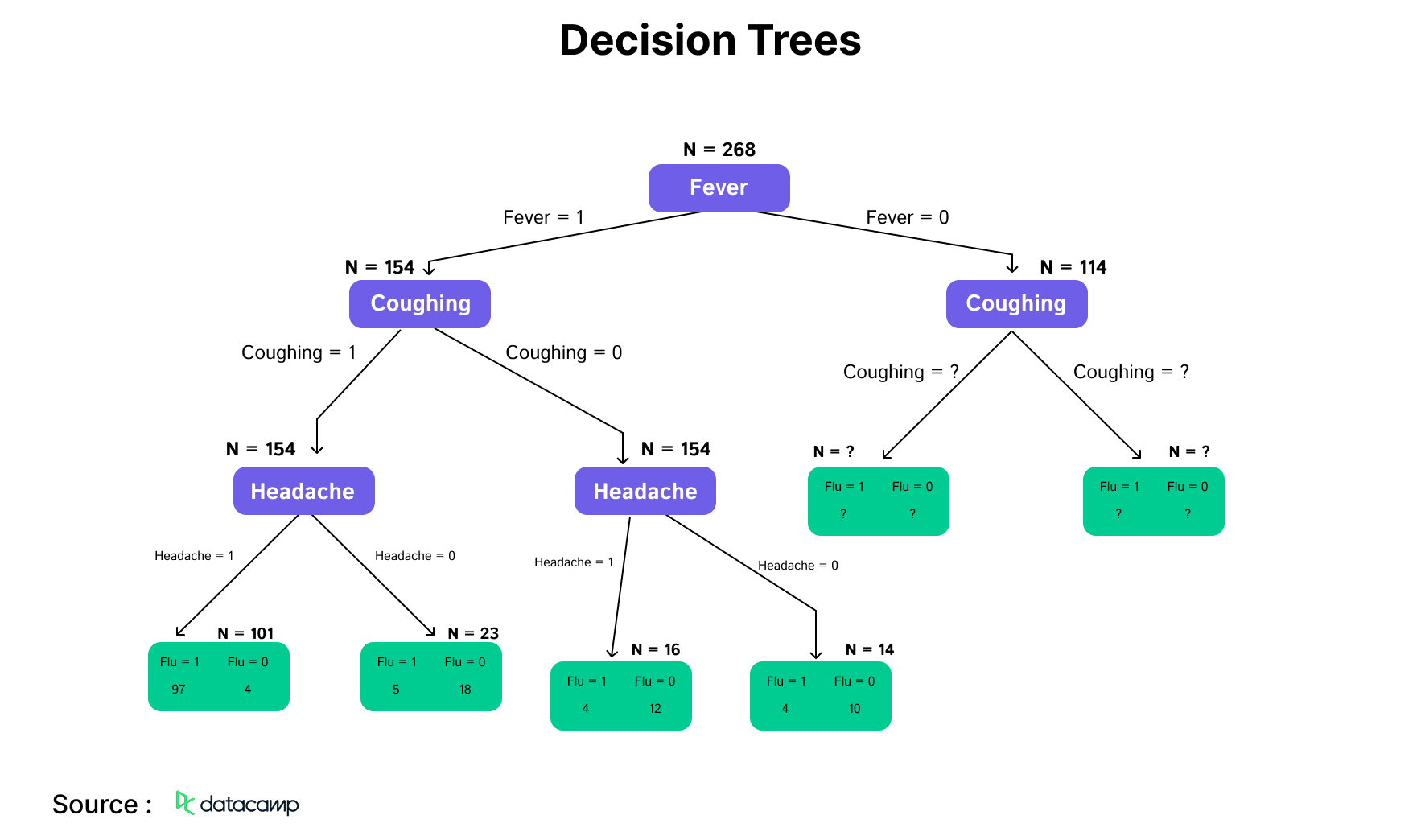
Picture a flowchart of yes/no questions. That’s a decision tree: a stack of rules the model walks through to reach a prediction. It handles both classification and regression. Doctors and clinicians like it for one simple reason. They can trace every branch and see why the model landed where it did.
3. Random Forest
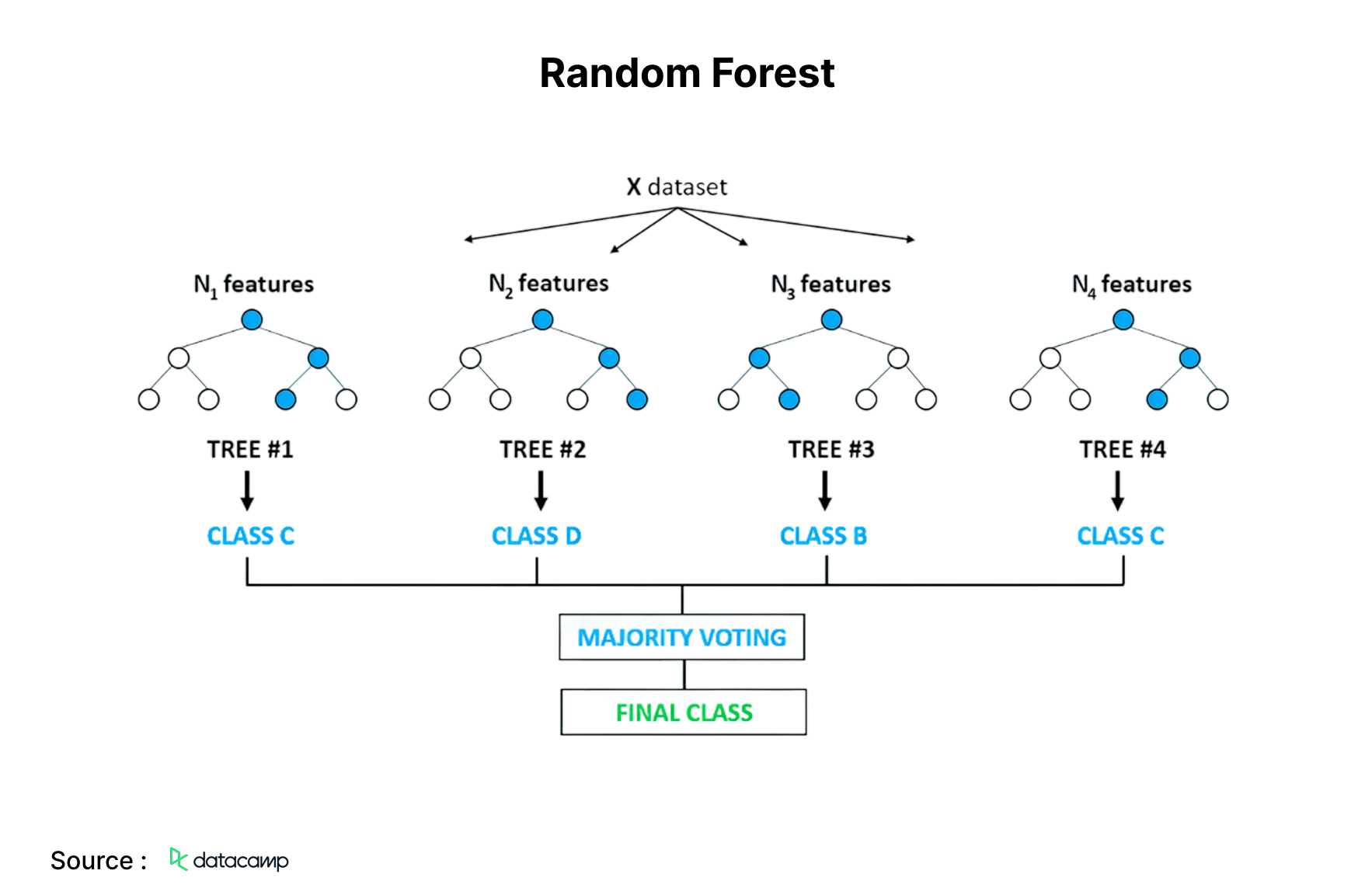
Probably one of the most popular ML algorithms around, and it exists largely to fix the big weakness of single decision trees: overfitting. Overfitting is what happens when a model memorises its training data so closely that it falls apart on anything new. Random forest gets around it by growing lots of trees, each on a random slice of the data.
Then the trees vote. Whatever the majority says becomes the final prediction. It works for classification and regression alike, and you’ll see it used for feature selection, disease detection and plenty more.
4. Support Vector Machines
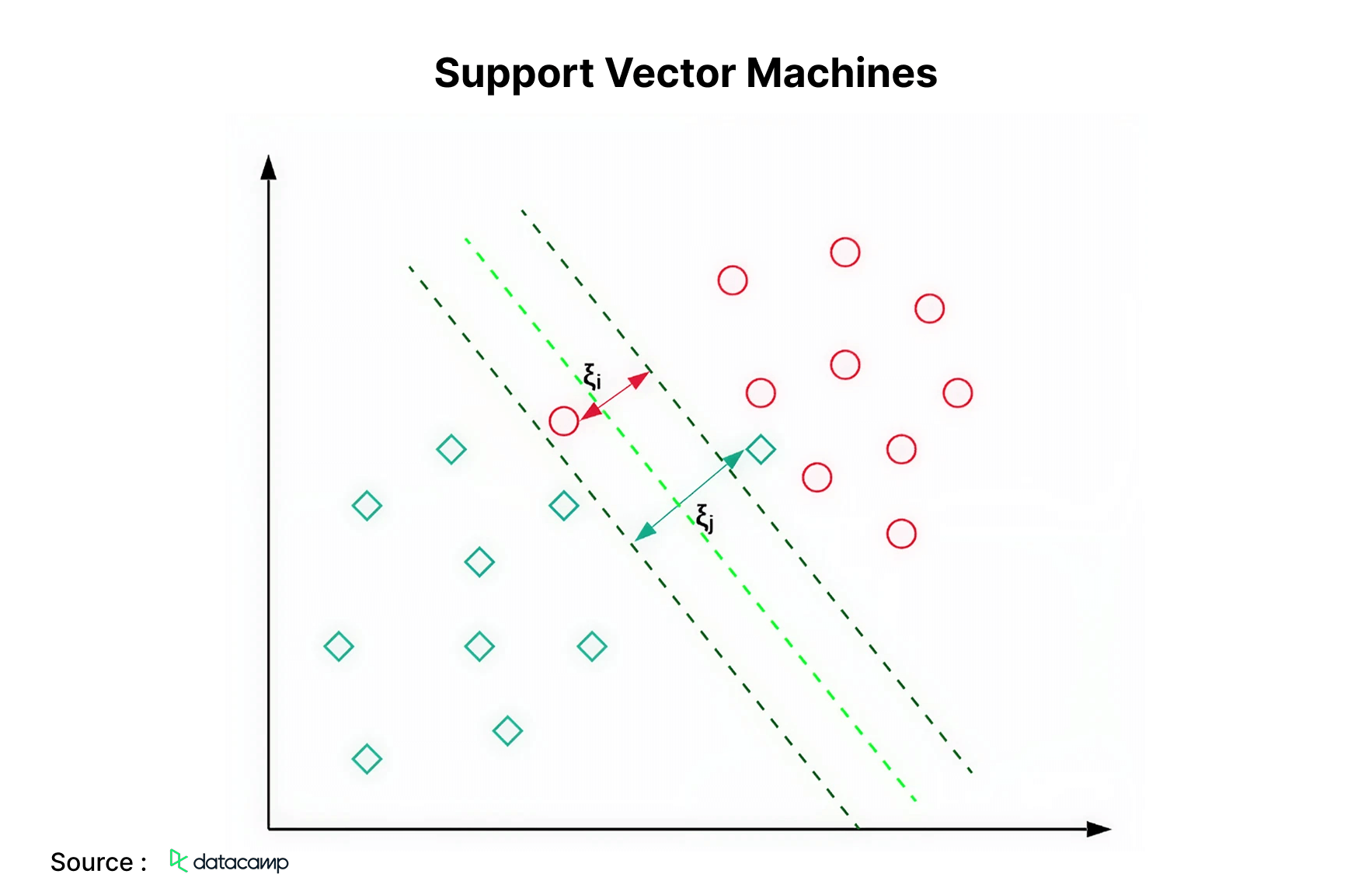
Support Vector Machines, or SVMs, are mostly a classification tool. Look at the machine learning algorithm example below. The SVM finds a hyperplane, here just a line, that splits the red class from the green one, and it places that line so the gap between the two dashed boundaries is as wide as possible. Classification is the main job, though SVMs can be bent to regression problems too. Common uses include sorting news articles and recognising handwriting.
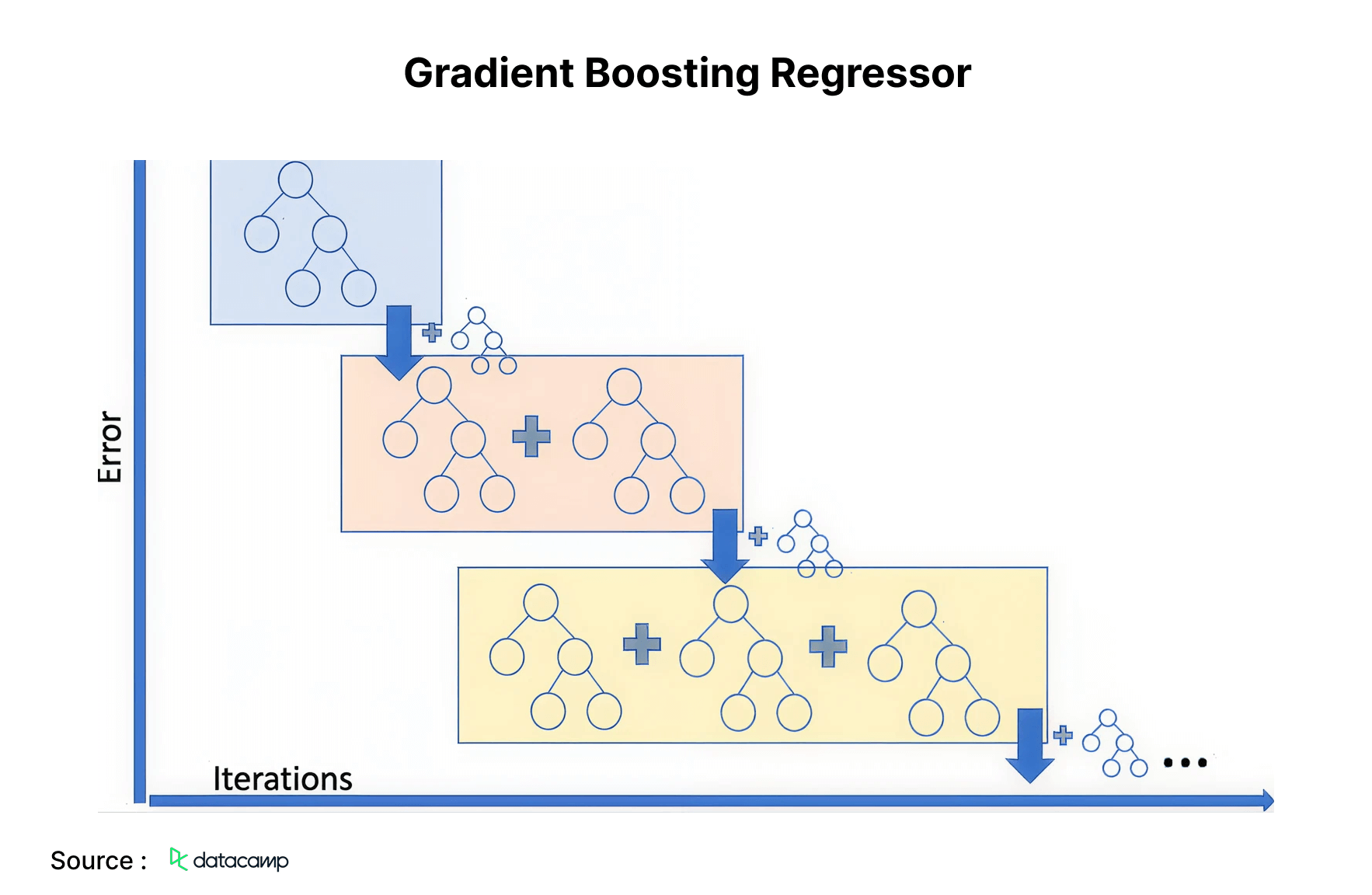
5. Gradient Boosting Regressor
Gradient boosting stacks a lot of weak models, each one correcting the mistakes of the last, until together they make a strong predictor. It copes well with non-linear relationships and with inputs that are tangled up with each other (multicollinearity). A concrete case: a ride-sharing company predicting the fare for a trip.
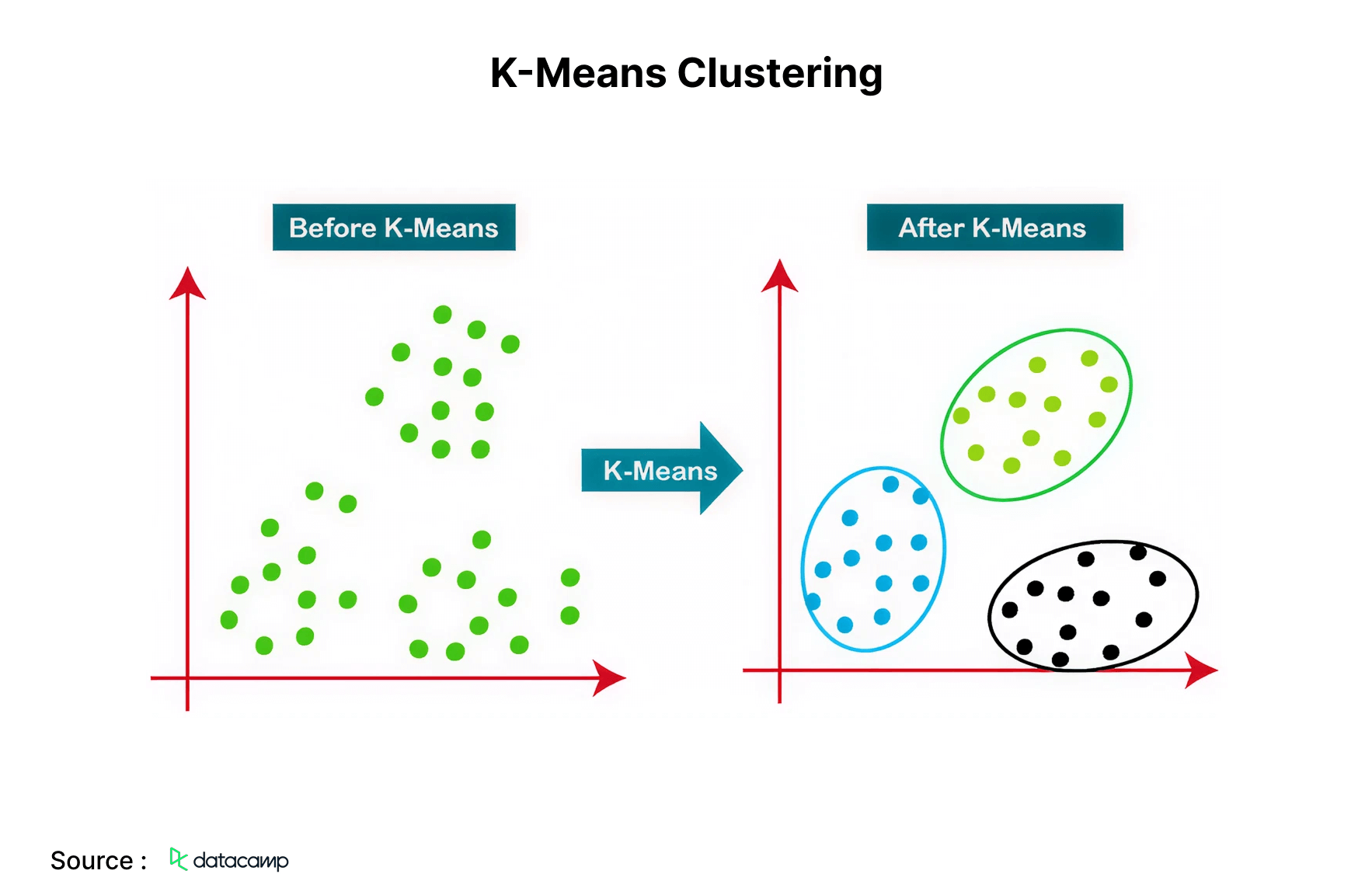
6. K-Means Clustering
The go-to clustering method. You tell K-means how many groups you want, K, and it sorts the data into that many clusters based on Euclidean distance. Customer segmentation and recommendation engines use it constantly.
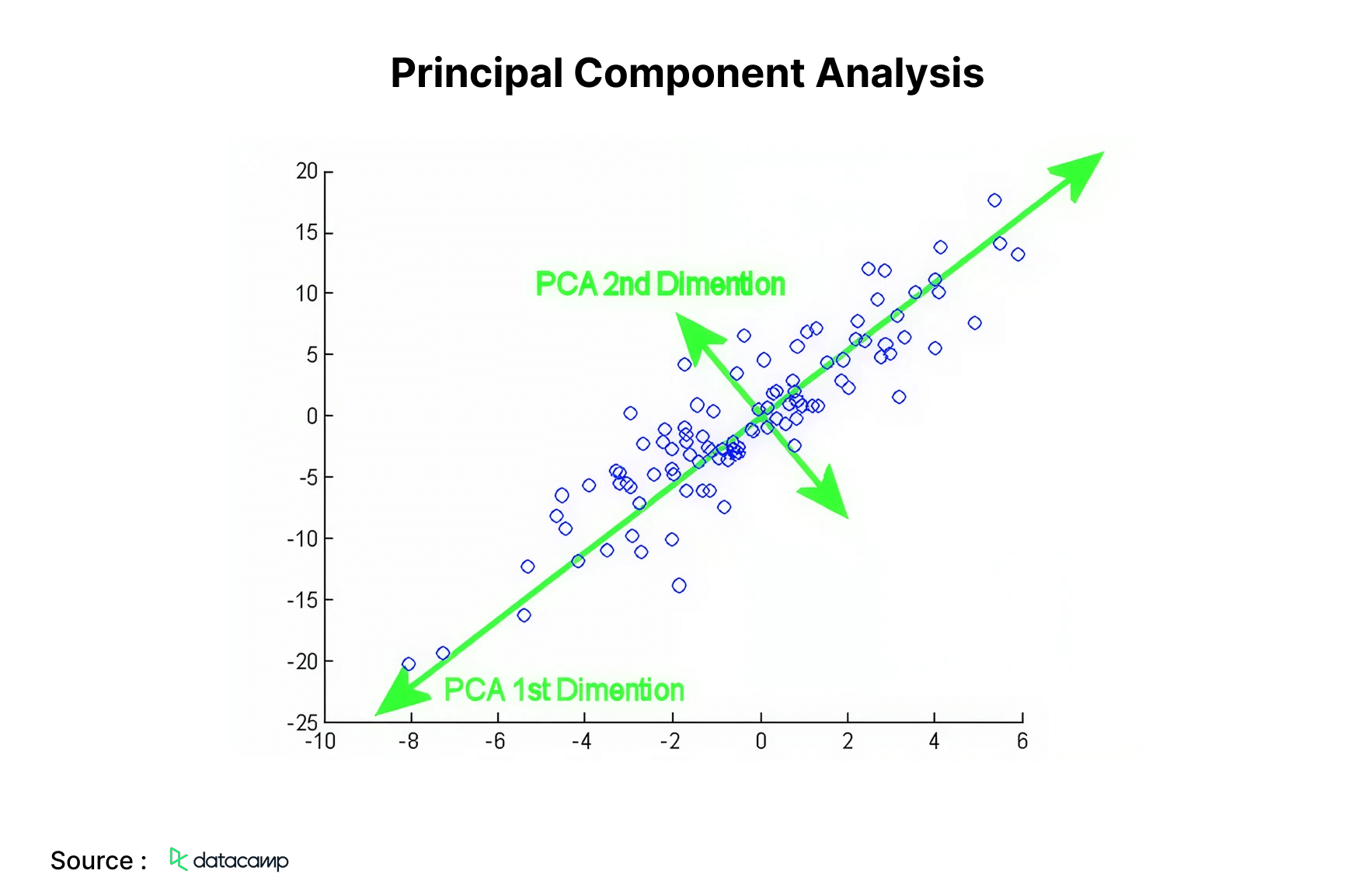
7. Principal Component Analysis
Next on the machine learning algorithms list: principal component analysis, or PCA. Got a dataset with far too many columns? PCA squeezes it down by projecting it into fewer dimensions while holding on to the parts that carry the most information. That’s why people call it a dimensionality reduction technique.
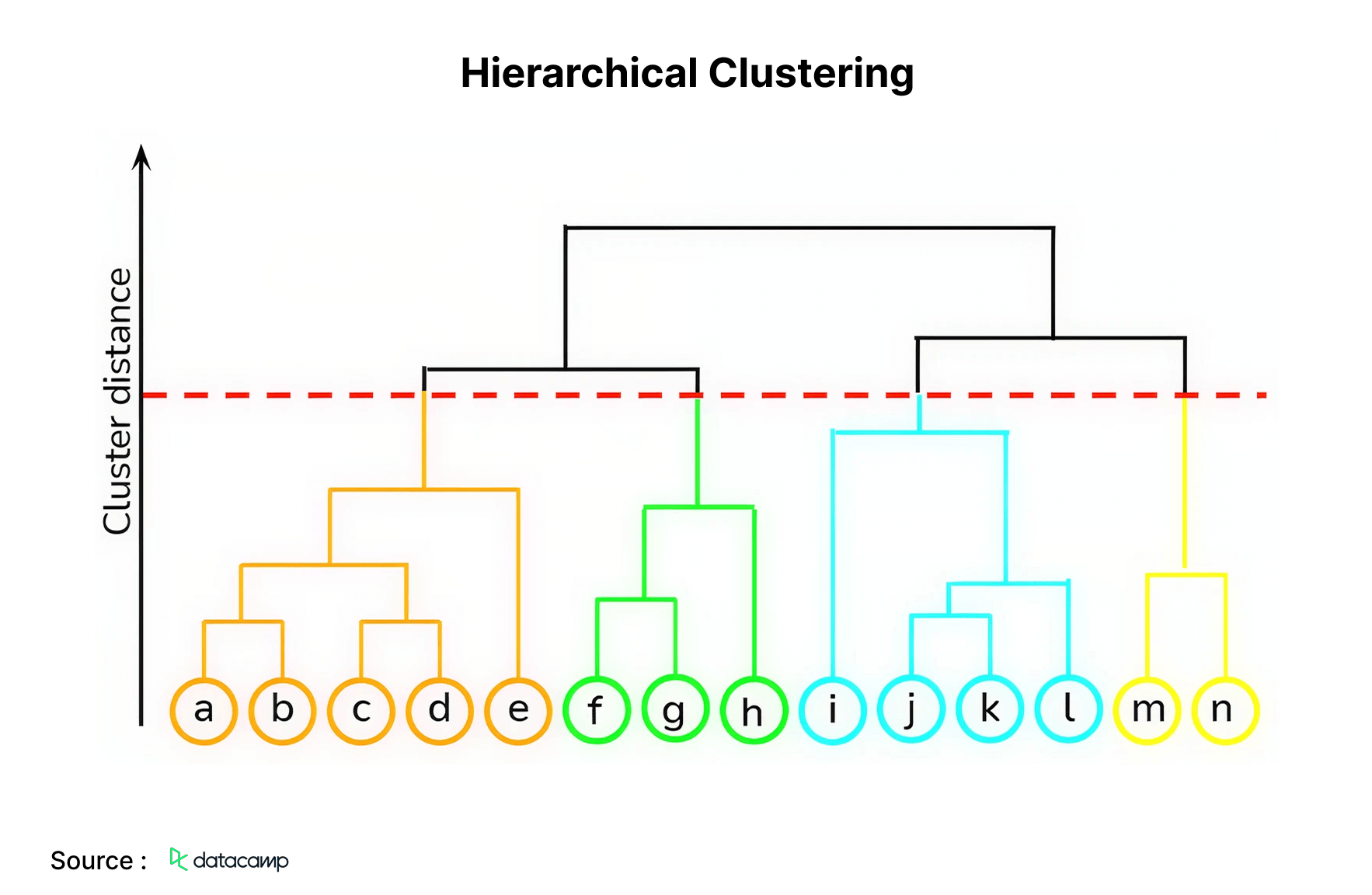
8. Hierarchical Clustering
This one builds from the bottom up. Every data point starts as its own tiny cluster, and the algorithm keeps merging the two closest clusters, over and over. Here’s the nice part compared with K-means: you don’t have to guess the number of clusters before you start. Document clustering, where you want to group similar texts, is a classic use.
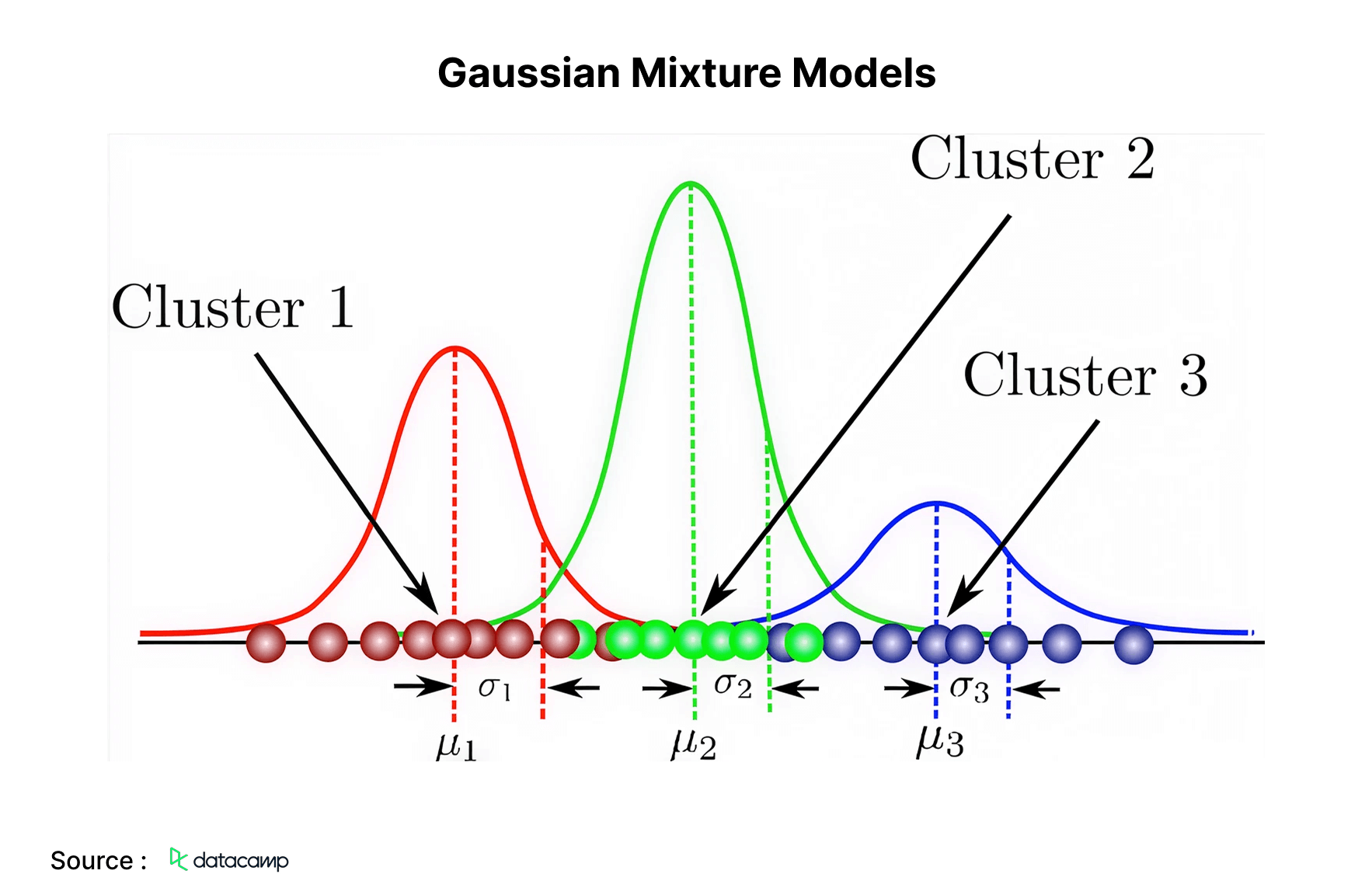
9. Gaussian Mixture Models
Second to last among these top machine learning algorithms is a probabilistic take on clustering, one that models the data as a blend of normally distributed groups. Where standard clustering drops each point into exactly one bucket, a GMM gives you odds. It estimates how likely each observation is to belong to each cluster, and from that you learn something about the sub-populations hiding in your data.
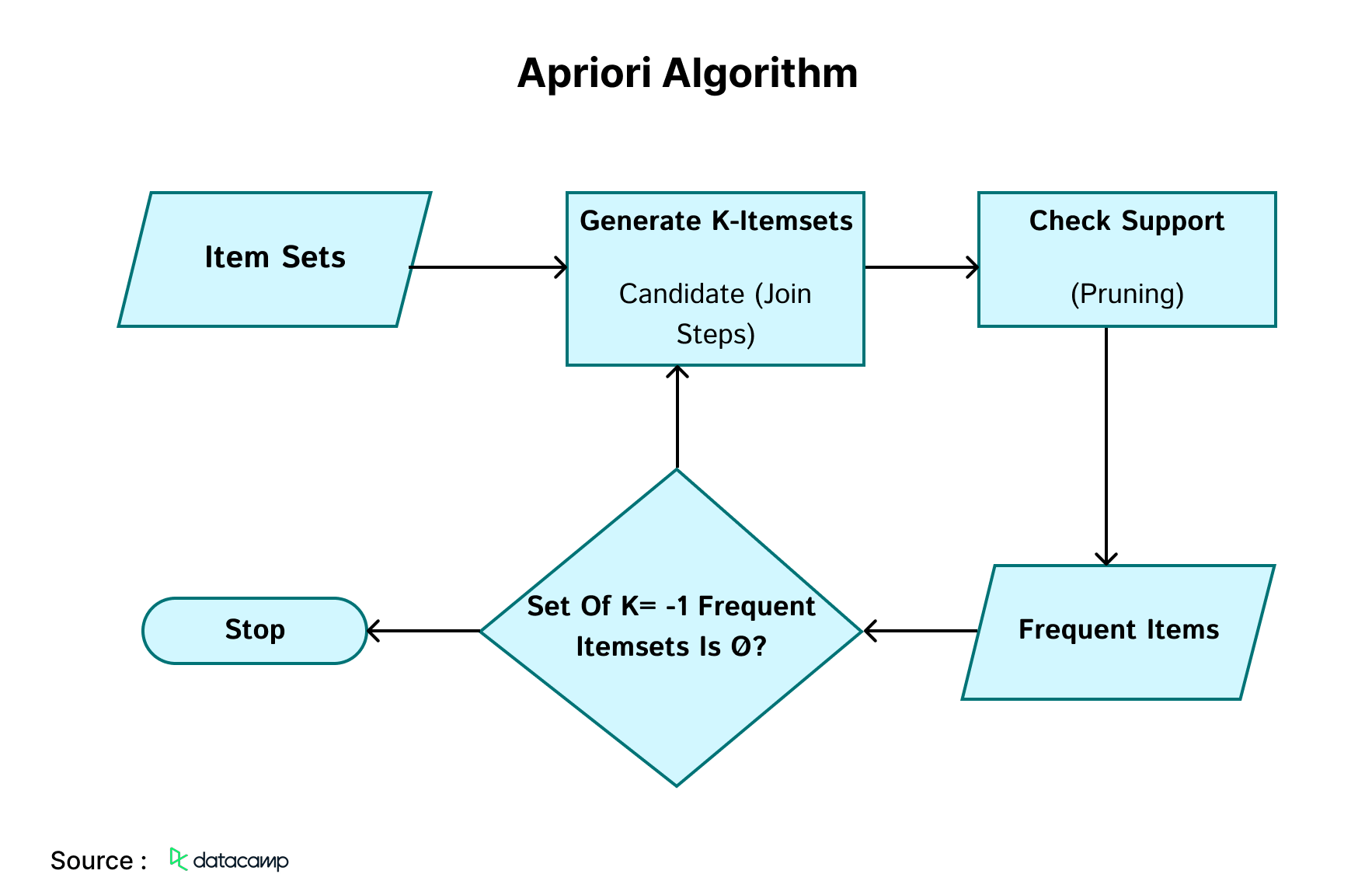
10. Apriori Algorithm
Apriori is rule-based. It hunts for the item combinations that show up together most often in a dataset, using what it already knows about frequent itemsets to prune the search. This is the engine behind market basket analysis, the sort of thing that helps companies like Amazon and Netflix boil mountains of user behaviour down to simple “people who bought this also bought that” rules. It chews through correlations across millions of items and surfaces the patterns worth acting on.
What Are the Latest Machine Learning Algorithms in 2026?
A small warning first. In machine learning, “latest” almost never means “just invented.” It means “recently took over.” The transformer paper came out in 2017, and it took years before it became the default architecture. So here are the families that matter most in 2026, with a straight answer on when each one is more than you need.
Transformers and attention (2017)
The default for language now, and spreading into vision and time series. The catch is cost. Attention grows quadratically with input length, and for a lot of narrow tasks a smaller, cheaper model will do the job just as well.
Mixture-of-Experts (MoE)
Instead of firing every parameter for every token, MoE sends each token to a small subset of “experts.” You get a huge model that runs at a fraction of the inference cost. That’s the trick behind frontier models getting cheaper without shrinking.
State space models (Mamba and successors)
They scale linearly with sequence length, not quadratically. If you’re working with long contexts or streaming data, pay attention to these.
Diffusion models
The standard for generating images, video and audio. They’re also showing up more in structured generation.
Gradient-boosted trees (XGBoost, LightGBM, CatBoost)
Not new, and that’s the point. Give them tabular business data and they still beat deep learning most of the time. Few “latest algorithms” lists will admit that. We think you should hear it.
Preference optimization (RLHF, DPO)
This is how a raw base model turns into something people can actually use. If you’re a non-technical buyer wondering what “alignment” means in practice, this is the answer: the model is tuned toward the responses people prefer.
Factors for Selecting a Machine Learning Algorithm
So how do you actually pick one? Four things decide it:
- Data Classification
Start with what your data looks like. If it’s labeled, meaning you know the right output for each example, supervised methods are on the table. If it isn’t, you’ll need unsupervised methods to dig out whatever structure is buried in there. And if the system has to learn by interacting with something, reinforcement learning starts to make sense.
- The intricacy of the Issue
Next, be honest about how hard the problem really is. Simple problems get simple algorithms. When the relationships in your data are tangled, heavier tools like neural networks or ensemble methods may be worth it. Just know what you’re signing up for: more tuning, more iteration, more time.
- Computational Resources
Then there’s hardware. Deep learning models can eat compute and often need serious machines behind them. Tight budget? Logistic regression or k-nearest neighbors can get you perfectly respectable results without melting your servers.
- Interpretability vs Accuracy
Last, decide whether you need to explain the model or just need it to be right. Decision trees and linear regression are easy to walk a stakeholder through. Neural networks can be more accurate, but good luck explaining one in a board meeting. In practice, this trade-off is where a lot of teams get stuck, so settle it early.

The Bottom Line
Machine learning is making systems smarter and more efficient in pretty much every industry. Deep learning and reinforcement learning are two of the standout advances covered in this list of the Top 10 Machine Learning Algorithms of 2026. As more businesses build AI into how they work, knowing what these algorithms can and can’t do stops being optional if you want to keep up in a market that runs on data.
SoluLab works as a machine learning development company, helping companies put machine learning to work on hard problems and growth. One recent project was with Sight Machine, a well-known AI-powered company in digital manufacturing. Working together, they scaled their operations, tightened up industrial processes and got more efficient using generative AI and machine learning technologies. Need automation, a custom AI build or predictive analytics? Our team can take the idea from sketch to working system.
Want to stay ahead instead of catching up? Book a free consultation with SoluLab and we’ll talk through where machine learning could change your business.
FAQs
Shipra Garg is a tech-focused content strategist and copywriter specializing in Web3, blockchain, and artificial intelligence. She has worked with startups and enterprise teams to craft high-conversion content that bridges deep tech with business impact. Her work translates complex innovations into clear, credible, and engaging narratives that drive growth and build trust in emerging tech markets.


![Top 10 MLOps Consulting Companies in the USA [2026]](https://www.solulab.com/wp-content/uploads/2025/12/Top-MLOps-Consulting-Companies-in-USA.webp)