Key Takeaways
- The problem: Inaccurate demand forecasting causes overproduction, excess inventory, and increased operational costs in packaging processes.
- The solution: Use AI-based predictive models to align packaging output with real-time demand, improving efficiency and reducing unnecessary costs.
- How SoluLab helps: SoluLab is an AI-native company that integrates AI into its own workflows, enabling faster development, reduced costs, and efficient delivery of scalable AI-powered packaging solutions tailored to business needs.
What if your packaging line could predict a defect before it happens and fix it without stopping production?
Today, most packaging operations still rely on manual inspection, reactive maintenance, and guesswork-based scheduling. The result? Costly downtime, inconsistent quality, and razor-thin margins are getting thinner.
Packaging isn’t just a physical process anymore; it’s a data process. Every machine cycle, seal pressure, and label scan generates signals your team is likely ignoring. AI development solutions in packaging turns those signals into decisions faster, smarter, and at a scale no human team can match.
In this guide, you’ll get a practical, step-by-step breakdown of how to implement AI solutions in your packaging operations, from where to start to how to scale.
The Rise of AI in Packaging: A Brief Overview
The rise of AI in packaging is changing how manufacturers approach efficiency, cost control, and sustainability. What was once a manual, material-driven function is now becoming a data-driven, intelligent system powered by machine learning, computer vision, and predictive analytics.
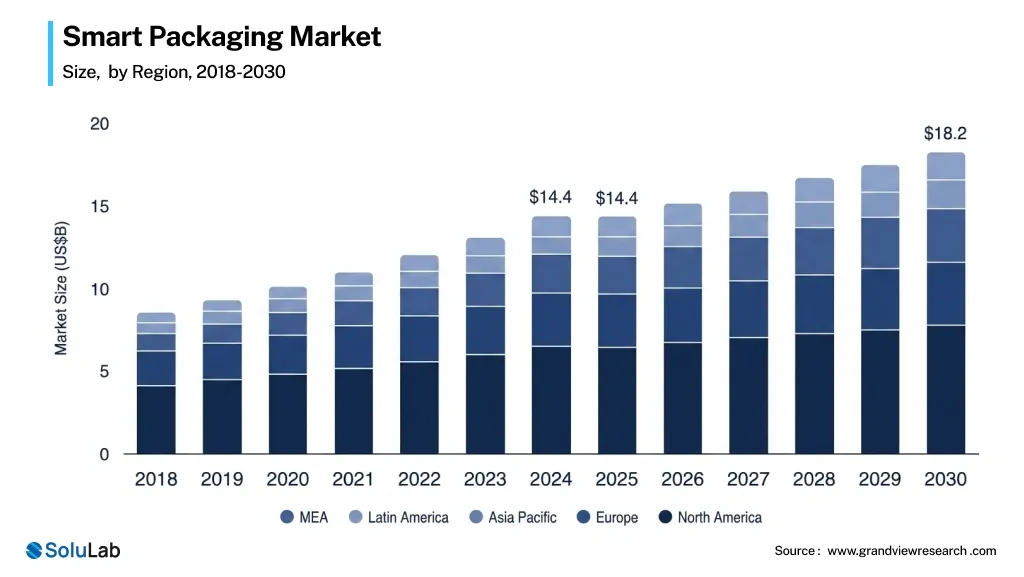
According to Grand View Research, the global smart packaging market is expected to reach over $43.3 billion by 2030, driven by increasing demand for automation and sustainability. Meanwhile, Statista highlights that AI adoption in manufacturing continues to accelerate, with over 35% of industrial companies already integrating AI into operations.
Why Businesses Should Use AI-Powered Packaging Optimization?
By creating a data-driven function for packaging instead of manual operational costs, AI-powered packaging optimization enables businesses to reduce costs, increase efficiency, improve sustainability and make better decisions.
- Cost analytics & margin improvement: AI technology helps to analyze usage of packages and shipping practices, so as to identify opportunities to reduce material waste, lower shipping expenses and maximize margins — all while maintaining product safety and quality standards.
- Quicker and streamlined operations: By reducing manual dependencies and automating processes, real-time decision-making speeds up packaging processes for better throughput while ensuring consistent output across high-volume production environments.
- Better product quality and fewer returns: AI-powered inspection systems identify imperfections early, facilitating enhanced packaging quality, preventing damage during transportation, and decreasing return rates.
Impact of AI on the Packaging Industry
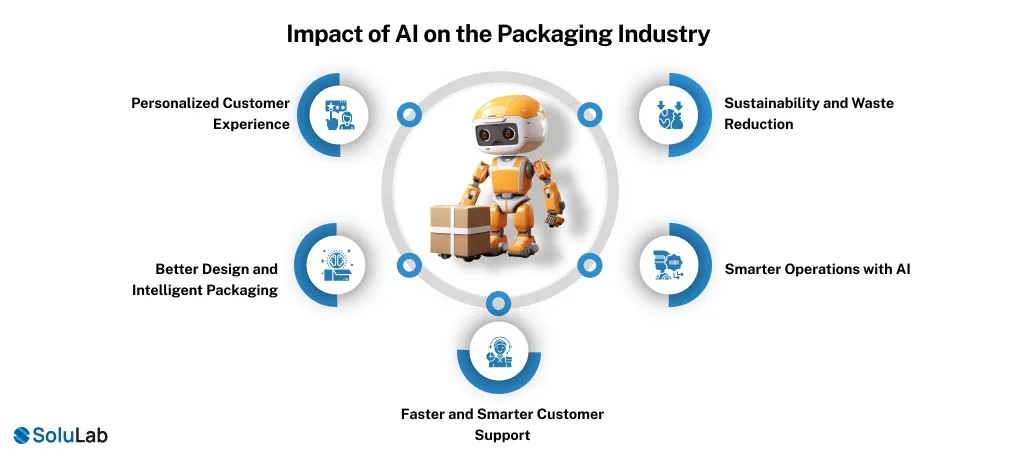
1. Sustainability and Waste Reduction
AI helps companies reduce waste and make eco-friendly choices.
- It suggests better materials and reduces unnecessary packaging.
- Companies like Lenovo have used AI to cut packaging materials significantly.
- AI also tracks the packaging lifecycle, improving recycling and reducing environmental impact.
2. Smarter Operations with AI
AI makes packaging faster, cheaper, and more accurate. It automates tasks that used to take time and effort.
- Supply chain efficiency: AI connects everything from sourcing to delivery, making the entire process smoother.
- Inventory planning: It studies past data to predict demand and avoid overproduction or stock shortages.
- Predictive maintenance: AI spots machine issues early, reducing downtime and keeping production running.
- Quality checks: Cameras and AI tools detect even tiny defects, ensuring high-quality packaging every time.
3. Faster and Smarter Customer Support
AI for customer support improves how packaging companies interact with customers.
- Chatbots and voice systems handle queries quickly and efficiently.
- Businesses gain insights into customer needs, helping them improve services and build stronger relationships.
4. Better Design and Intelligent Packaging
Packaging is no longer one-size-fits-all. AI helps create designs that stand out and work better.
- Creative designs: AI analyzes customer behavior to design packaging that attracts attention and performs well.
- Accurate labeling: It automates labels, reducing errors and ensuring compliance with regulations.
- Smart packaging: Features like sensors and tamper-proof systems improve product safety and user experience.
5. Personalized Customer Experience
AI helps brands create packaging that feels unique to each customer.
It uses customer data to customize design, messaging, and even packaging style.
Smart packaging with QR codes or sensors can make unboxing more interactive and engaging.
Traditional Packaging vs. AI-Powered Packaging
Packaging is shifting from manual, rigid processes to intelligent systems where AI improves speed, reduces costs, and enables smarter, more sustainable packaging decisions across operations.
| Aspect | Traditional Packaging | AI-Powered Packaging |
| Process | Manual and fixed workflows | Automated, adaptive workflows |
| Quality | Batch checks, higher errors | Real-time defect detection |
| Cost | Higher waste and labor costs | Optimized materials, lower costs |
| Forecasting | Based on past data, less accurate | Predictive, demand-driven planning |
| Sustainability | Excess material, limited tracking | Reduced waste, eco-optimized |
| Flexibility | Slow to adapt changes | Quick, scalable adjustments |
| Experience | Standard packaging | Personalized, interactive packaging |
How to Implement AI in Packaging in 5 Easy Steps?

Implementing AI solutions in packaging requires a practical, step-by-step approach focused on solving real operational problems, improving efficiency, reducing costs, and gradually scaling intelligent systems across packaging workflows.
1. Identify High-Impact Areas
Start by analyzing packaging operations to find cost-heavy or inefficient processes such as quality control, material usage, or manual workflows where AI can deliver quick, measurable improvements.
2. Begin with Pilot Projects
Implement AI in one area, like visual inspection or demand forecasting, to test performance, measure ROI, and build confidence before scaling across larger packaging operations.
3. Integrate with existing systems
Connect AI tools with ERP, supply chain, and production systems to ensure smooth data flow, better decision-making, and minimal disruption to current packaging processes.
4. Use Quality Data
AI depends on accurate and structured data, so ensure proper data collection from machines, sensors, and historical records to improve model performance and output reliability.
4. Scale Gradually
Once initial results are proven, expand AI across multiple packaging stages such as design, logistics, and automation to create a fully optimized and intelligent packaging ecosystem.
5. Train Teams and Monitor Performance
Equip teams with the right skills to use AI tools and continuously track performance metrics to refine models, improve efficiency, and ensure long-term success.
Use Cases of Packaging Optimization Using AI
AI use across industries is transforming packaging by improving efficiency, reducing waste, and enabling smarter decisions that align with cost, sustainability, and evolving customer expectations in modern business environments.
- Manufacturing efficiency: In high-volume production, AI in manufacturing packaging improves speed and accuracy by automating workflows, reducing downtime, and ensuring consistent output across packaging lines and operations.
- E-commerce and logistics: AI selects optimal packaging size and materials for each order, reducing shipping costs, minimizing damage, and improving delivery efficiency across large-scale distribution networks.
- Food and beverage industry: AI monitors freshness, temperature, and packaging conditions, helping extend shelf life, reduce spoilage, and maintain product quality during storage and transportation.
- Healthcare and pharmaceuticals: AI ensures precise labeling, tamper-proof packaging, and compliance with strict regulations, reducing risks and improving safety across sensitive medical supply chains.
- Retail and consumer goods: AI enables personalized packaging experiences, helping brands improve engagement through customized designs, targeted messaging, and enhanced unboxing experiences.
- Automation with robotics: AI and robotics in packaging streamline repetitive tasks like sorting, packing, and sealing, improving productivity while reducing manual errors and operational costs.
- Sustainability optimization: With AI for sustainable packaging, businesses analyze materials, reduce waste, and adopt eco-friendly alternatives while maintaining packaging performance and regulatory compliance.
Future of AI-Powered Packaging Optimization
The future of packaging is becoming intelligent, automated, and adaptive, where AI integration solutions enable faster decisions, reduce waste, and create smarter systems that continuously improve performance across manufacturing and supply chains.
- Autonomous packaging lines: Fully automated systems use AI to manage packaging operations end-to-end, reducing human intervention, improving speed, and ensuring consistent output across high-volume production environments in the AI In Packaging Industry.
- Self-optimizing materials: AI analyzes performance data to adjust material composition and structure, ensuring durability while reducing excess usage, helping businesses achieve cost efficiency and sustainability through AI-Powered Packaging Optimization.
- AI-driven circular packaging systems: AI tracks packaging lifecycle from production to recycling, identifying inefficiencies and enabling reuse strategies that reduce waste and support circular economy goals across industries.
- Real-time adaptive packaging: AI adjusts packaging size, design, and materials based on product requirements, logistics conditions, and demand patterns, improving efficiency while minimizing damage and shipping costs.
How SoluLab Helps in AI in Packaging?
SoluLab with its AI native startegy, helps businesses move from manual packaging processes to intelligent, scalable systems using AI-driven technologies tailored for real-world manufacturing challenges.
- AI strategy and consulting: SoluLab identifies high-impact areas in packaging operations and designs a clear roadmap to implement AI-native solutions aligned with business goals and ROI.
- Computer vision for quality control: AI-driven inspection systems detect defects in real time, reducing errors, minimizing waste, and ensuring consistent packaging quality across production lines.
- Predictive analytics and optimization: Builds AI-driven models to forecast demand, optimize material usage, and streamline packaging workflows for better efficiency and cost savings.
- Smart packaging integration: From IoT-enabled packaging to QR-based tracking, SoluLab follows AI led development for intelligent systems that enhance traceability, security, and customer engagement.
- End-to-end implementation: From data integration to deployment and scaling, SoluLab ensures seamless adoption of AI-driven packaging systems with minimal disruption to existing operations.
- Continuous improvement: With ongoing monitoring and model optimization, SoluLab helps businesses evolve their AI-native packaging systems to stay competitive and future-ready.

Conclusion
AI in packaging is no longer a future concept. It is a practical step toward improving efficiency, reducing costs, and building more sustainable operations. By starting with the right use case, integrating data systems, and scaling gradually, businesses can get measurable value without disrupting existing workflows.
The real advantage lies in using AI to make packaging smarter, faster, and more responsive to changing demands. Companies that adopt early will gain a clear competitive edge in both operations and customer experience.
If you are planning to implement AI in packaging, SoluLab, an AI development company, can help your business design and deploy the right solutions.
FAQs
Neha is a curious content writer with a knack for breaking down complex technologies into meaningful, reader-friendly insights. With experience in blockchain, digital assets, and enterprise tech, she focuses on creating content that informs, connects, and supports strategic decision-making.