





























Last updated: August 2026

Agentic AI Development Company

Agentic AI development services build systems in which AI agents set sub-goals, choose tools and carry out multi-step work on their own, within limits you define. SoluLab designs the agent architecture, tool and data integrations, memory, guardrails and evaluation, then deploys and monitors the agents in production.

  • 65% Workflow Automation
  • 45% Faster Decision Cycles
  • 35% Reduced Operational Overhead
Forbes
CoinDesk
Bloomberg
TechCrunch

What Is Agentic AI and How Does It Work?

Agentic AI is a system that pursues a goal on its own. It breaks the goal into steps, uses tools and data to act, checks the result, and adjusts. A large language model does the reasoning, while guardrails, memory, and human approval points keep its actions within limits you set.

Every autonomous agent runs the same loop:

01

Goal intake

The agent receives an outcome, not a script. For example: "onboard this vendor."

02

Planning

A large language model breaks the goal into sub-tasks and decides the order.

03

Tool use

The agent acts through APIs and connected systems such as your CRM, ERP, ticketing tool, or email.

04

Memory

Short-term context tracks the current task. Long-term memory, usually a vector database, stores past cases and policies.

05

Verification

The agent checks each result against the goal and its rules before moving on.

06

Escalation

When it's blocked, unsure, or about to take a high-risk action, it hands off to a person with full context.

Agentic AI Development Services We Offer to Grow Your Business

Build intelligent, self-driven AI systems that plan, execute, and optimize tasks independently, helping your organization scale operations, reduce manual effort, and unlock measurable performance gains across critical workflows.

Agentic AI Strategy Consulting

Agentic AI Strategy Consulting

Define use cases, architecture, governance models, and ROI frameworks to implement scalable agentic systems aligned with business goals.

Agentic AI Integration Services

Agentic AI Integration Services

Integrate autonomous agents into CRM, ERP, APIs, and enterprise tools for unified data flow and execution.

Conversational AI Agents

Conversational AI Agents

Deploy intelligent, context-aware agents that manage customer conversations, resolve queries, and continuously improve response accuracy.

Autonomous Workflow Automation

Autonomous Workflow Automation

Design AI agents that independently plan tasks, trigger actions, and optimize multi-step business processes end-to-end.

Multi-Agent Collaboration

Multi-Agent Collaboration

Build coordinated ecosystems with multi-agent AI development where multiple agents communicate, delegate responsibilities, and solve complex operational challenges.

Agentic AI Maintenance and Support

Agentic AI Maintenance and Support

Ensure continuous monitoring, retraining, performance tuning, and upgrades for long-term stability and reliable AI agent development solutions.

AI CTA Background

Is Your Business Ready for Agentic AI?

Discover how prepared your organization is to deploy autonomous AI agents that can reason, act, and deliver measurable business outcomes.

Evaluate Your AI, Data, And Automation Maturity
Identify Opportunities For High-Impact AI Adoption
Receive Actionable Recommendations
Check Your AI Readiness Score NOW

Agentic AI vs. AI Agents: What Business Leaders Should Know

Agentic AI and AI agents are terms that seem similar, but functionally, they are very different. Here is the complete differentiation to help you choose the right solution for your business:

Parameter

Traditional

AI Agents

Advanced

Agentic AI

Autonomy Level
✕ Task-based autonomy
✓ Fully goal-driven autonomy
Decision Scope
✕ Single-task execution
✓ Multi-step strategic planning
Learning Ability
✕ Limited contextual learning
✓ Continuous self-optimization
Collaboration
✕ Operates independently
✓ Multi-agent coordination
Business Impact
✕ Workflow-level automation
✓ End-to-end process transformation

Agentic AI Development Projects We Excelled In

We have completed a variety of projects with our custom agentic AI development services across different industries. Some agentic AI development projects that show our experience and expertise are:

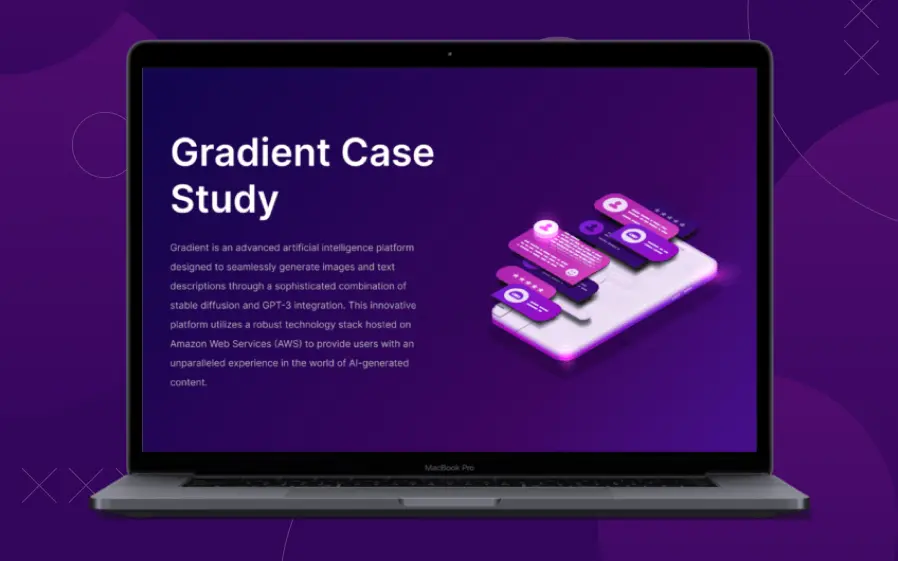
Gradient Case Study

Gradient

Gradient is an advanced artificial intelligence platform designed to seamlessly generate images and text descriptions through a sophisticated combination of stable diffusion and GPT-3 integration.

10x Faster AI-Powered Image
2 Ai Models Integrated (Stable Diffusion + GPT-3)
10+ AWS Services Orchestrated
2x Faster Creative Production
Read More →
InfuseNet Case Study

InfuseNet

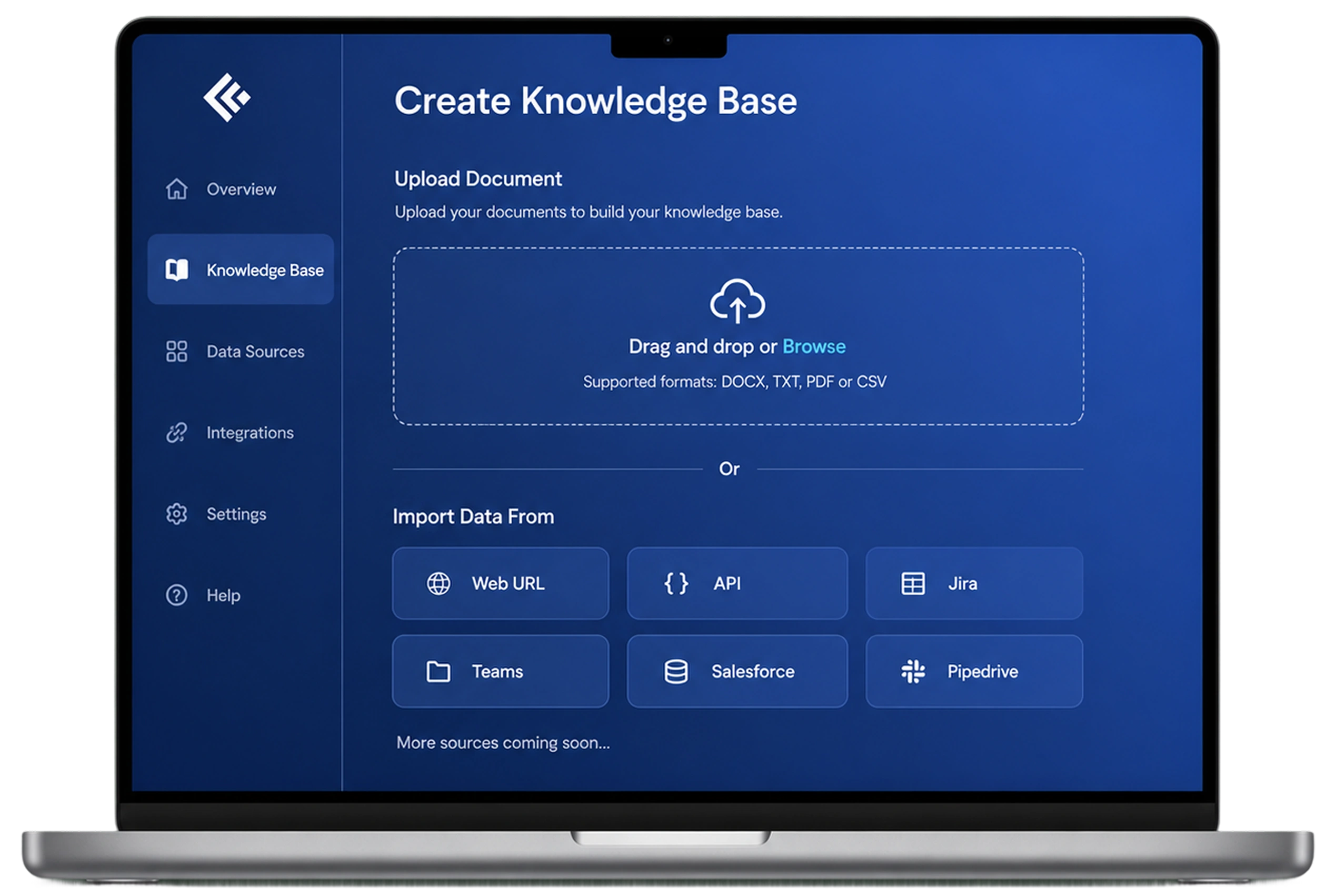
Discover data empowerment with the InfuseNet AI platform. Seamlessly import from texts, images, documents, and APIs, infusing operations with advanced models like GPT-4, FLAN, and GPT-NeoX. Illuminate decision-making and simplify productivity while ensuring data security.

2× Faster Business Decision-Making
70% More Efficient Workflow Execution
Multi-LLM Powered Automation
GPT-4, FLAN & GPT-NeoX integration
Read More →
Digital Quest Case Study

Digital Quest

Digital Quest is a travel business that partnered with SoluLab, an innovative software development company, to create an AI-powered ChatGPT that provides users with communication and enhanced engagement for travel recommendations.

24/7 AI-Powered Travel Assistance
100% Personalized Destination Recommendations
3x Faster Reservation And Inquiry Handling
Multilingual Customer Support
Read More →

Our Latest Agentic AI Tech Stack to Grow Businesses

Industries We Specialize in for Agentic AI Development Services

How We Ensure 100% Ethical AI in Our Agentic AI Services?

We build agentic AI solutions with responsibility at the core, combining technical safeguards, human oversight, and transparent governance to ensure ethical, secure, and accountable autonomous decision-making at scale.

Autonomous Action Validation

Autonomous Action Validation

Every agent action is pre-validated through rule engines, policy constraints, and sandbox testing before live deployment.

Secure Knowledge & Memory Management

Secure Knowledge & Memory Management

Encrypted storage, access controls, and data minimization protect sensitive knowledge and prevent unauthorized memory retrieval.

Continuous Behavioral Monitoring

Continuous Behavioral Monitoring

Real-time tracking detects anomalies, bias patterns, or unsafe actions, triggering automated alerts and corrective workflows.

Adaptive Human Oversight

Adaptive Human Oversight

Human reviewers intervene in high-risk scenarios, maintaining control over critical decisions and sensitive operations.

Explainable Decision Trails

Explainable Decision Trails

Transparent logs document reasoning paths, enabling audits, compliance reviews, and clear explanations for stakeholders.

How Much Does Agentic AI Development Cost?

At SoluLab, a single-agent pilot costs $25,000 to $50,000 and takes 6 to 10 weeks. Multi-agent enterprise systems start around $50,000, can reach six figures, and take 3 to 6 months. The main cost drivers are integrations, data preparation, and compliance scope.

Engagement Scope Cost Timeline
Agentic AI consulting Use-case ranking, architecture, governance plan, ROI model $15,000 2–3 weeks
Single-agent pilot One agent, 2–4 tool integrations, human approval gates $25,000–$50,000 6–10 weeks
Multi-agent enterprise system Orchestrated agents across departments, enterprise integrations, compliance $50,000 to six figures 3–6 months
Ongoing support Monitoring, evaluation, retraining, new tools $50,000+ Ongoing
AI CTA Background

Turn AI Into an Active Member of Your Team!

Build intelligent agents capable of planning, reasoning, and executing tasks across departments without constant human supervision.

Talk to Agentic AI Experts

Our Proven Agentic AI Development Process for Your Business Success

We follow a structured, client-focused approach to custom agentic AI development, ensuring every stage delivers value, clarity, and long-term success for your business. Here’s our process for AI agent development:

Strategic Discovery and Use Case Prioritization
Detailed Mapping and Model Design
AI Model Development
Integration and Quality Assurance
Rigorous Testing and Validation
Deployment and Activation
Integration and Deployment
Monitoring, Feedback, and Iteration

Why Choose SoluLab As Your Custom Agentic AI Company?

SoluLab is an agentic AI development company in the USA with agents running in production across procurement, IT operations, lending, and customer onboarding. Every engagement starts with a measurable baseline and a pilot, so autonomy is earned before it's expanded.

Advanced AI Technology Expertise

Advanced AI Technology Expertise

100% Global Client Trust

100% Global Client Trust

System Integration

System Integration

Human-in-the-Loop by Default

Human-in-the-Loop by Default

GDPR & EU AI Act-Aligned

GDPR & EU AI Act-Aligned

Custom AI Development Solutions

Custom AI Development Solutions

Data Privacy Commitment

Data Privacy Commitment

Compliance and Standard

Compliance and Standard

What our clients say

SoluLab helped us turn fragmented business data into a centralized AI-powered knowledge system. What previously took hours of manual analysis can now be accomplished in minutes. The platform has significantly improved how our teams access information and make decisions.

We wanted AI that could do more than answer questions. SoluLab built autonomous agents capable of retrieving data, executing workflows, and supporting operational decisions. The impact on productivity and process efficiency was immediate.

The AI assistant developed by SoluLab transformed how we engage with customers. Personalized recommendations, real-time responses, and seamless user interactions have helped us deliver a significantly better customer experience.

What impressed us most was SoluLab's ability to design AI agents that work across multiple systems and departments. The agents automate repetitive tasks, surface insights proactively, and allow our teams to focus on higher-value work.

1 / 4
FAQ

Helpful resource to grow your business

Agentic AI is AI that works toward a goal instead of just answering a prompt. In simple terms, you tell it the outcome you want, and it plans the steps, uses tools like your CRM or email, checks its own results, and adjusts until the task is done, within limits you set.

An IT service desk agent is a common example. It reads an incoming ticket, classifies it, resets a password or provisions access through connected systems, writes a knowledge-base article, and escalates anything it can't resolve. In one SoluLab deployment, agents resolved 74% of tickets automatically.

Agentic AI runs a loop. It takes a goal, uses a large language model to break it into steps, calls tools or APIs to act, stores what it learns in memory, and checks results against the goal. Guardrails limit what it can do, and people approve high-risk actions.

Generative AI creates content, such as text, images, or code, when prompted. Agentic AI uses generative models as its reasoning engine but goes further: it plans, takes actions in other systems, and pursues a goal across many steps. Generative AI drafts the email. Agentic AI sends it, logs it, and follows up.

Start with one workflow that has a clear goal and a measurable outcome. Map the tools and data the agent needs, choose a model and an orchestration framework such as LangGraph or the OpenAI Agents SDK, define guardrails and approval points, then test against real cases before production. building apps with agentic AI.

Pick a repetitive, multi-step process that spans several systems and has a measurable cost, such as vendor onboarding, ticket triage, or loan document checks. Run a scoped pilot with human approval on every action, compare results with the old process, then expand autonomy only where the agent proves reliable.

An agentic AI development company builds autonomous systems that plan, reason, and act across business software. That includes agent logic, tool and API integrations, memory, guardrails, monitoring, and evaluation. The result goes beyond a chatbot: agents complete multi-step workflows across platforms with limited human oversight.

A single-agent pilot usually takes 6 to 10 weeks. Multi-agent enterprise systems take 3 to 6 months, covering discovery, architecture, integration, testing, and staged rollout. The biggest timeline variables are how many systems the agents connect to and how well the current process is documented.

At SoluLab, a single-agent pilot typically costs $25,000 to $50,000. Multi-agent enterprise systems start around $50,000 and can reach six figures, depending on integrations, data preparation, and compliance scope. Budget for ongoing model usage too, since agents make several model calls per task.

Well-built agents are designed to stop, not guess. When an input is missing, a tool call fails, or confidence falls below a set threshold, the agent retries within limits, then routes the case to a person with full context. Every exception is logged so the workflow can be improved.

It can be, if compliance is designed in. We build agents with GDPR-aligned data minimization, encryption, role-based access, and audit logs of every decision. For the EU AI Act, we classify the system's risk level, document it, and build human oversight into high-impact actions.

Yes. In a multi-agent system, specialized agents each own one task, such as research, drafting, compliance checks, or approvals, and an orchestrator coordinates them. In one procurement deployment, this cut procurement cycle time by 67%. We usually start with one agent and add more once it proves reliable.

We choose the model for each task. Hosted models like OpenAI GPT, Anthropic Claude, and Google Gemini handle complex reasoning. Smaller or open-weight models like Llama and Mistral handle routine steps at lower cost or run inside your own infrastructure. Every model is tested on your real cases first.

Articles

Latest Insights from Experts