The tokenization has ceased to be restricted to real estate, bonds, or equities. Within the past years, the on-chain movement of physical assets that were previously described as niche has gradually shifted to on-chain. Jewellery and gemstones are not an exception.
Enterprises are viewing diamonds, gold, emeralds, silver, copper, and other precious metals as ownership, trading, and management. Also, they are trying to modernize asset tokenization through blockchain. Various market research reports have suggested that the market in gemstone tokenization will expand by nearly 19% CAGR until 2033. Mainly due to the need to have fractional ownership, transparent supply chains, and other forms of investment models.
This blog gets down to the real meaning of gemstone tokenization and why businesses are embracing this in 2026. How it will be performed, the regulatory environment, and the future of the market.
Key Takeaways
- Status Quo: Without tokenization, gemstones remain hard to trade, fractionalize, or integrate into digital financial systems.
- ROI opportunity: Tokenized gemstones unlock new liquidity pools, broader investor access, and transparent pricing—boosting asset utility and returns.
- How SoluLab helps: SoluLab enables enterprises to build scalable, compliant gemstone tokenization platforms with audit-ready smart contracts, secure wallets, and investor-friendly interfaces.
What Is Gemstone Tokenization and How Does It Work?
Gemstone tokenization is the process of converting ownership rights of physical gemstones into digital tokens on a blockchain. One token can have a full or fractional ownership of a proven and physical gemstone locked away in a safe deposit.
To simplify the explanation, a real diamond, a ruby, or a sapphire is being associated with a digital asset. Then the digital asset can be transferred, bought, or stored like other blockchain-based tokens.
How Tokenized Gemstones are Structured?
Tokenized gemstones typically rely on three core components:
- A verified physical asset
The gemstone is graded, certified, and appraised by recognized authorities. - A digital token
A token is issued on a blockchain, representing ownership or economic rights tied to that gemstone. - A legal wrapper
Contracts define what the token holder owns, whether it is direct ownership, beneficial interest, or a value claim.
This model applies not just to diamonds. It also extends to silver tokenization, copper tokenization, metal tokenization, and broader precious metals tokenization, where physical commodities are digitized for more efficient market access.
For enterprises, tokenization platform development acts as the bridge between physical custody and digital ownership.

Why Businesses and Investors Are Turning to Gemstone Tokenization Development in 2026?
Interest in gemstone and jewellery gem tokenization has accelerated for several practical reasons, not hype-driven ones.
1. Fractional ownership unlocks new capital
High-value gemstones have always been difficult to access. A single investment-grade diamond can cost millions, restricting participation to a small pool of buyers.
Through asset tokenization for gemstones, enterprises can fractionalize ownership. Investors can own smaller portions, while issuers unlock liquidity without selling the entire asset.This same logic is already proven in Real World Asset (RWA) Tokenization across real estate and private credit.
2. Liquidity in an otherwise illiquid market
Usually, trading in gemstones is based on private dealers, auctions and extensive settlement processes. Digitally traded tokenized gemstones are more effective in price discovery and less in friction.
Market studies estimate that illiquid asset classes see 20–30% faster settlement cycles once tokenized, depending on infrastructure and compliance models.
3. Transparent provenance and traceability
Provenance is one of the largest issues in the jewellery business. Jewellery and gemstones tokenization through blockchain will enable businesses to track their assets between the source and the final consumer.
This proves particularly useful in the case of ethical sourcing of diamonds, conflict-free minerals, and controlled chains of supply.
4. Portfolio diversification for investors
Gem tokenization offers exposure to tangible assets that historically hedge against inflation and currency volatility. Diamonds, silver, and copper tokenization are increasingly seen as alternative stores of value when tokenized properly.
How Gemstones Are Tokenized: Process, Technology, and Custody Models
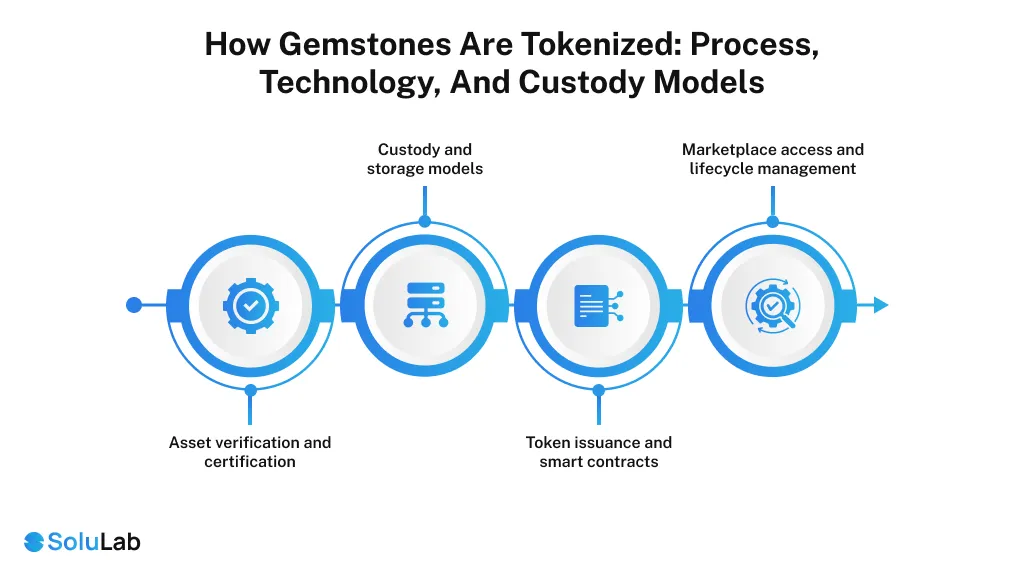
While platforms vary, most gemstone tokenization projects follow a similar operational flow.
1. Asset verification and certification
Every asset tokenization development process starts with physical verification. Independent grading labs evaluate the gemstone for quality, origin, and authenticity. This data becomes part of the digital record.
Without credible certification, tokenized gemstones lose trust. Enterprises that succeed here prioritize third-party validation.
2. Custody and storage models
The physical gemstone is stored in secure vaults or with regulated custodians. Custody transparency is critical, especially for B2B and institutional use cases.
Common custody models include:
- Third-party regulated vaults
- Trust-based custodial structures
- Hybrid custody with insurance coverage
3. Token issuance and smart contracts
Once custody is established, tokens are minted on a blockchain. Smart contracts define:
- Ownership rights
- Transfer rules
- Redemption or buyback conditions
- Compliance checks
This is where gemstone tokenisation platforms differentiate themselves based on flexibility and scalability.
4. Marketplace access and lifecycle management
Tokens may be listed on private marketplaces, institutional platforms, or permissioned exchanges. Some platforms also allow token holders to redeem physical assets under specific conditions.
This same framework is increasingly used in diamond tokenization, silver tokenization, and precious metals tokenization projects globally.
Regulations and Compliance for Gemstone Tokenization Across Markets
Regulation is one of the most misunderstood aspects of gemstone tokenization. The key principle is simple: tokenization does not remove regulatory obligations.
1. Securities and investment laws
If tokenized gemstones offer profit expectations or shared returns, regulators may classify them as securities. This is especially relevant in the US and EU.
Enterprises must assess:
- Whether tokens represent ownership or investment contracts
- Investor eligibility rules
- Disclosure and reporting obligations
2. Commodity and trade regulations
Gemstones, metals, and jewellery already fall under trade and customs laws. Tokenization adds a digital layer but does not bypass existing frameworks.
This is particularly relevant for metal tokenization, copper tokenization, and cross-border silver trade.
3. Regional approaches
- United States: Securities laws are used when tokens fit the investment criteria. Custody and protection of investors still hold centre stage.
- European Union: MiCA brings clarity to the issue of crypto assets, yet asset-backed tokens must comply with financial regulations.
- Middle East: jurisdictions such as the UAE are actively looking into RWA tokenization modernizations, such as commodities.
- India: Regulatory bodies focus on collective investment structures, with growing discussion around compliant tokenization models.
For enterprises, working with legal counsel early is non-negotiable.
The Future of Gemstone Tokenization in the Real-World Asset Economy
Gemstone tokenization is not an isolated trend. It is part of a broader shift toward digitizing physical assets.
1. Integration with institutional finance
Gemstones and precious metals will trail as banks and asset managers use RWA tokens. According to the estimates of tokenized real-world asset market researchers, it can reach more than 16 trillion dollars worldwide by 2030, and commodities will have a significant share of this market.
2. Expansion beyond diamonds
While diamond tokenization for investors leads today, future growth will come from other trending assets:
- Silver and copper tokenization for industrial and investment use
- Tokenization of jewellery collections and luxury assets
Hybrid platforms combining metals, gems, and collectibles
3. Enterprise-grade platforms will dominate
Early experiments are giving way to regulated, scalable gemstone tokenization platforms. Enterprises that focus on compliance, custody transparency, and user trust will shape the market.
4. Tokenization as infrastructure, not hype
The biggest shift is in mindset. Tokenization is moving from “crypto innovation” to financial infrastructure. For enterprises, this means long-term systems, not short-term pilots.
Conclusion
For businesses in mining, jewellery, fintech, asset management, or blockchain services, gemstone tokenisation is a great opportunity, as discussed.
Those who approach tokenized gemstones, precious metals tokenization, and jewellery gems tokenization with a long-term, enterprise-first mindset will be best positioned as the market matures. To achieve this, all you need is a the ebay tokenization development company like SoluLab.
SoluLab built a tokenized gold and silver platform that reduced entry barriers by 75%, making participation easier for both retail and institutional users. Our experts help clients achieve 50% higher trade volume, 24/7 global trading, and 60% faster settlements through blockchain-based workflows. 100% audited asset backing and 90% system uptime, aligning physical gold and silver custody with secure, always-on digital infrastructure.
To discuss your goals and futuristic vision, contact us today!
FAQs
Deepika is a content writer who blends storytelling with strategic thinking. She explores topics across digital innovation, emerging tech, and the evolving blockchain industry. She enjoys breaking down complex ideas into simple, engaging narratives in the growing global markets.