


AI software turns up everywhere now, in boardrooms and on sofas alike. Most people meet it as a voice assistant or a chatbot on their phone. Companies have picked it up too, and it has made their sales, marketing, and customer service teams noticeably sharper.
Here is what the Research Center’s 2017 study found:
- 55% of users say the main reason they use voice assistants is hands-free control of their devices.
- 22% of users would rather talk to a voice assistant than type.
- 26% of users rely on voice assistants to connect remotely with other systems.
- 39% of users say voice assistants get their commands right.
In 2020, devices around the world were running a total of 4.2 billion voice assistants, according to Statista. That same year, a Statista survey found that 75% of senior IT executives across a range of countries believe adopting AI will strengthen network security. Statista also suggests that putting AI to work on environmental applications could push global net employment growth higher.
What Is Sentiment Analysis?
Sentiment analysis, which you will also hear called opinion mining, is a way of spotting and measuring the feelings inside a piece of text. The question it answers is blunt: does this person feel good, bad, or indifferent about a given topic, product, or service? Getting there takes ai in sentiment analysis plus natural language processing (NLP), which together untangle the messiness of human language so a machine can pick up on our emotions and react to them.
Picture a huge pile of raw data with little pockets of feeling buried in it. Those pockets are where the useful business insight lives. A basic sentiment pass only skims the top layer. Advanced AI techniques let a business dig much further down.
A few examples make it concrete:
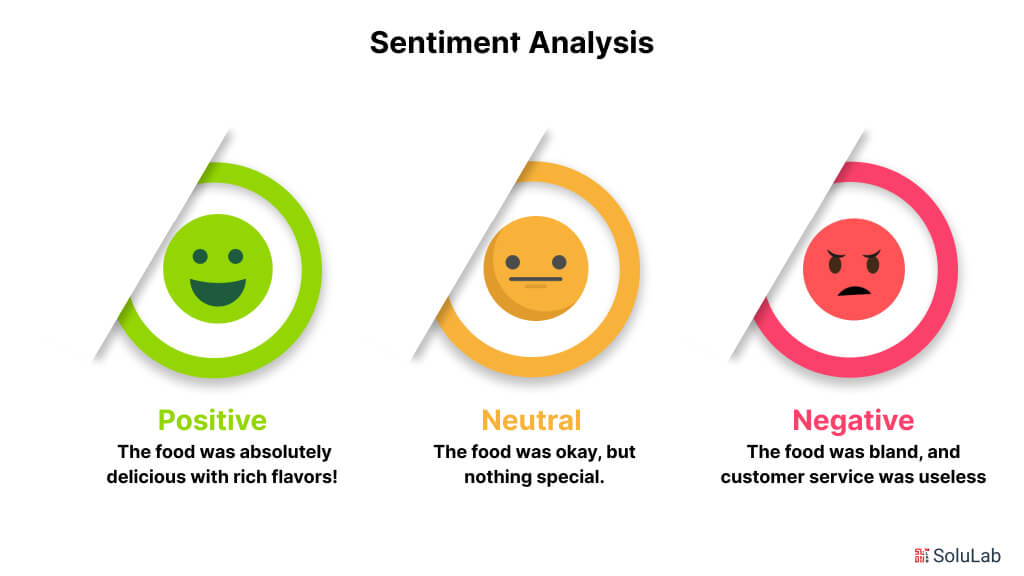
- At its core, sentiment analysis sorts customer reviews and social media comments into positive, negative, or neutral.
- Positive sentiment shows up in words like “love,” “friendly,” and “quick.” A review such as “I love the friendly staff and quick service at this restaurant” is about as clear as it gets.
- Mixed sentiment is when one review praises and complains at once. “The laptop is good, but it overheats too quickly.” Both halves matter.
- Neutral sentiment carries no real opinion either way, for example “The book was received on time.”
- Done well, it takes a business past surface metrics and pulls genuinely useful insight out of customer conversations and social media.
- The result? A much clearer read on how customers feel, which feeds straight into better experiences and better products or services.
Types Of Sentiment Analysis
Sentiment analysis is not one method. It is a family of them, each built to read the feeling or emotional undertone behind text in a slightly different way. Four are worth knowing:
1. Aspect-Based Sentiment Analysis: Here the focus narrows to particular parts of a product or service. A single “positive” or “negative” label is not enough. Instead, it asks how people feel about each feature on its own. At a restaurant, those features might be “food quality,” “ambiance,” and “service speed,” and a diner can love one while hating another.
2. Fine-Grained Sentiment Analysis: This one cares about degree. Rather than three buckets, it uses finer ones: “very positive,” “somewhat positive,” “neutral,” “somewhat negative,” and “very negative.” That extra resolution pays off when you are combing through reviews or star ratings and need to know whether customers are mildly annoyed or genuinely furious.
3. Emotion Detection: Positive and negative are set aside entirely. The goal is to name the actual emotion in the text: joy, surprise, anger, sadness, fear, and so on. You come away with a far richer sense of the state the writer was in.
4. Intent Analysis: What does the writer want to happen next? Intent analysis tries to answer that. Once you know the goal behind a message, you can read customer behavior, anticipate what someone will do, and adjust your plans to match. Customer service is the obvious fit, because predicting a customer’s next move makes it far easier to plan the right response.
What Is AI-based Sentiment Analysis?
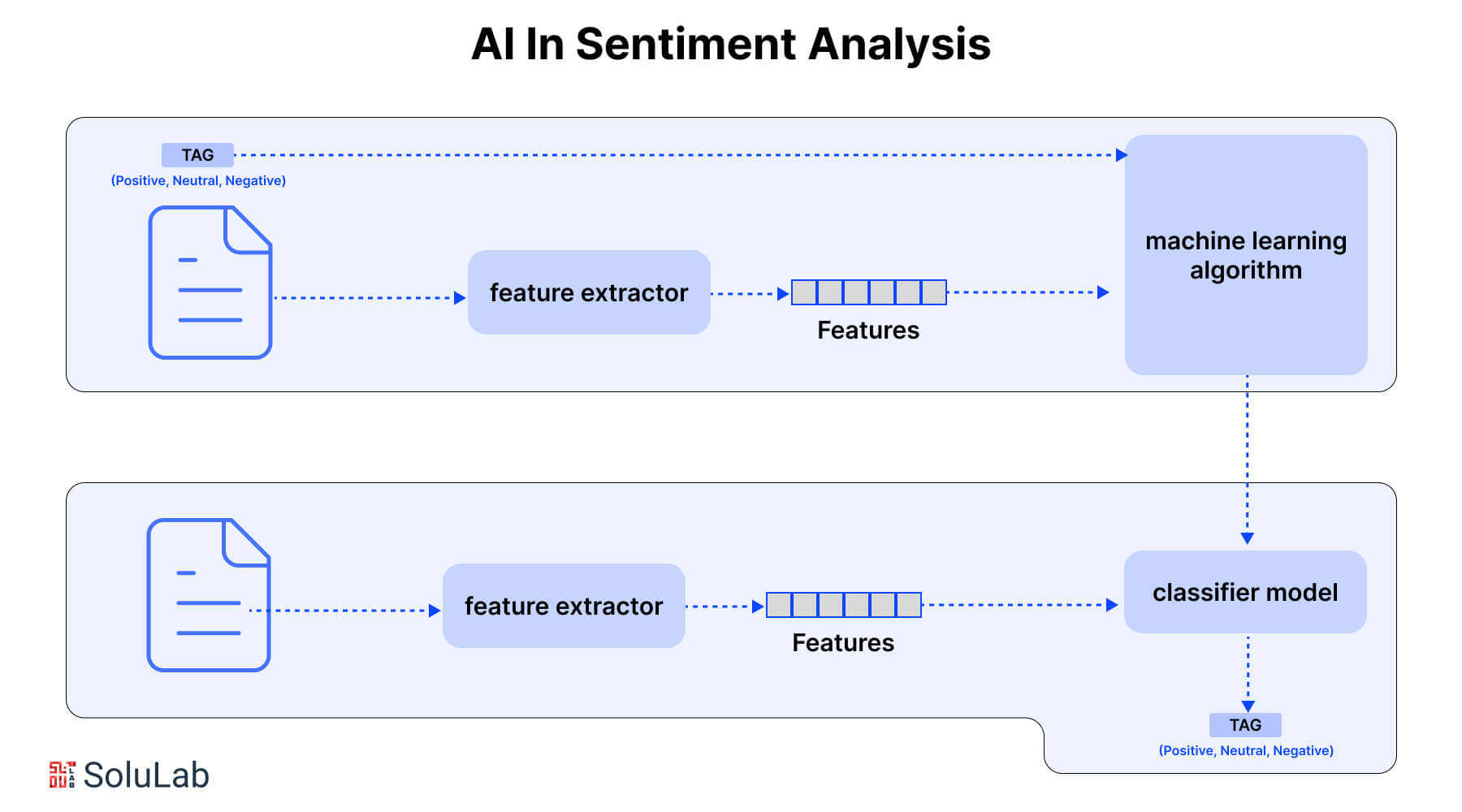
What is sentiment analysis in AI, exactly? It is the use of Natural Language Processing (NLP) to work through huge volumes of digital text and figure out the emotional context behind it. As a subset of artificial intelligence, it relies on tools that scan the text, pick out keywords, and give each keyword a score tied to the emotion it carries. That score decides whether a sentence is labeled positive, negative, or neutral. Some sentences also get a “mixed” label, which has no score attached. For a longer document, the sentence scores are rolled up into one overall sentiment.
Why Do We Need AI-based Sentiment Analysis?
You cannot fix a product if you do not know what people think of it. For years, companies found out through surveys and focus groups. Then feedback started pouring in from every channel at once, and reading it all by hand became slow, painful, and frankly unrealistic. Big data analytics brought in AI tools that can chew through that volume and give a truer picture of what customers think. Sentiment analysis in AI delivers that picture objectively, at scale, and in real time.
Take a support chatbot in the middle of a conversation. It watches the keywords in each customer message and works out the emotional tone as it goes. Because the tracking is live, AI chatbots and virtual assistants can shift their replies on the fly. Customer getting annoyed? The bot can answer with some empathy and offer a fix that fits the mood it picked up. Over time, that same data makes the chatbot better, and the conversations feel more like talking to a person.
DO YOU KNOW?
The global AI market is expected to reach $1.81 trillion by 2030.
How Does AI In Sentiment Analysis Work?
Bringing AI into sentiment analysis means wiring together several parts. Each one has a job: make text data easier to analyze, pull out insight that actually means something, and support better decisions. What sets this approach apart from older methods is that it runs on capable AI Tools for Sentiment Analysis and connects them directly to an organization’s own knowledge base. So the system does not just count happy and angry words. It reads context, nuance, and the emotion sitting underneath the text, carefully. Businesses end up with a fuller view of sentiment and can make decisions that genuinely move their performance. Here is how the process runs, step by step, on this LLM-based architecture:
- Data comes in from many places: social media, customer reviews, surveys, call center transcripts.
- Data pipelines take it in, clean it up, and give it structure.
- Embedding models turn the processed data into numerical vectors.
- Those vectors go into a vector database.
- APIs and plugins add extra functions and tie the pieces together.
- An orchestration layer runs the workflow.
- Users send their queries to the sentiment analysis app.
- The orchestration layer pulls what it needs from the vector database and the LLM cache.
- The right LLM is picked depending on what kind of query it is.
- The LLM generates an output from the query and the data it was handed.
- Once verified, that output reaches users through the sentiment analysis app.
- User feedback loops back in, so accuracy and relevance keep improving.
- AI agents tackle the harder problems, interact with their environment, and push learning further.
- Supporting tools cache information people ask for often, log actions, and keep an eye on performance.
- Validation tools check that results are accurate and reliable.
- LLM APIs and hosting platforms carry out the sentiment analysis tasks and host the app itself.
- Put together, the setup draws on varied data sources and advanced tooling to produce precise, usable insight into how customers feel.
Benefits Of AI-based Sentiment Analysis
Quick recap before the benefits. Sentiment analysis, a branch of AI, applies Natural Language Processing (NLP) to large amounts of digital text to work out its emotional context. It scans for keywords and scores each one by the emotion attached. Each sentence gets a label from that score, and a document’s overall sentiment comes from adding the sentence scores together.
So what do you actually get out of AI-based sentiment analysis? Quite a lot:
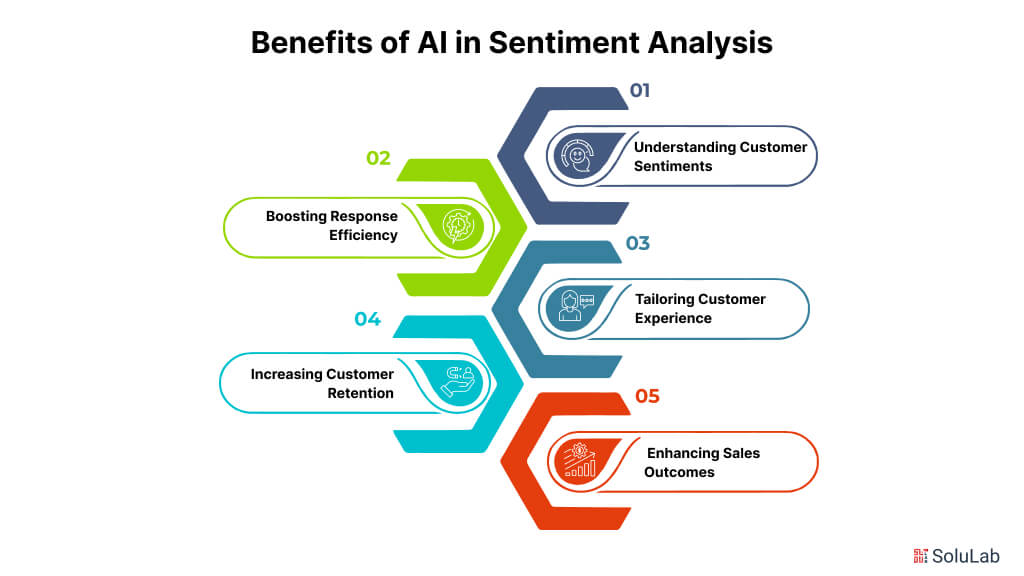
1. Understanding Customer Sentiments
AI sentiment analysis use cases powered by AI let a business see how customers feel while the conversation is still happening. Tone, word choice, intensity: weigh those together and you can tell a delighted customer from a frustrated or let-down one. Armed with that, support reps can match their replies to the customer’s mood, and the whole exchange feels kinder and goes better.
2. Boosting Response Efficiency
Some messages cannot wait. By reading sentiment, these tools flag the urgent or serious ones that need a human right now. Teams can then triage, jumping on things like product defects first. Faster answers where they count.
3. Tailoring Customer Experience
Sentiment analysis opens the door to personalized customer service experience. From each service interaction, the tools piece together what a customer is interested in, what they prefer, and where they are struggling. That lets a business shape its replies and suggestions to the individual, and the experience is better for it.
4. Increasing Customer Retention
Why do customers leave? Sentiment analysis helps answer that by tracing unhappiness back to its roots. Look at enough sentiment data and the recurring problems and trends behind churn start to stand out. Knowing them lets you act before customers walk, which lifts both satisfaction and loyalty.
5. Enhancing Sales Outcomes
Applications of AI Sentiment Analysis can change sales results in a real way. When you analyze the sentiment in sales calls and outreach, you learn what buyers prefer, where it hurts for them, and how they react emotionally to your pitch. Sales teams can then tailor their approach, build stronger relationships, and close more deals. Sales leaders get something too: a view of how customer sentiment shifts over time, which gives them hard data to shape strategy with. The end result is sales conversations that are more personal and more effective, happier customers, and better numbers.
Examples of implementing AI in Sentiment Analysis
With AI behind it, sentiment analysis lets a business work through mountains of text and surface the feelings and emotions tucked inside. That matters for three very practical things: making sense of customer feedback, running better customer service, and deciding with evidence instead of hunches. Here is how it looks in practice.
- Social Media Analysis: AI tools can read the chatter on platforms like Twitter and spot trends and swings in how people feel about particular products, brands, or whole industries. A restaurant, say, can follow mentions of “food quality,” “ambiance,” or “service speed” and see where public opinion is heading before it hardens.
- News and Content Analysis: AI can plow through enormous amounts of news and online content, catching new topics, keywords, and changes in sentiment within a given industry. Businesses stay on top of market trends and can adjust course when the mood shifts.
- Customer Behavior Analysis: Feed AI large datasets of customer interactions, purchase histories, and online activity, and patterns in behavior start to appear. From there, a business can predict what customers will do, plan marketing and messaging that actually lands, and make better-grounded decisions.
- AI-Powered Sentiment Analysis: Is your brand’s messaging landing the way you think it is? This analysis checks that against what customers actually perceive. When sentiment shifts, companies can rework how they communicate, put the customer at the center, and build a brand image their audience connects with. NLP sentiment analysis does much of the heavy work here, picking apart the nuance of language and context in customer feedback.
Use cases of AI-enabled sentiment analysis across industry verticals
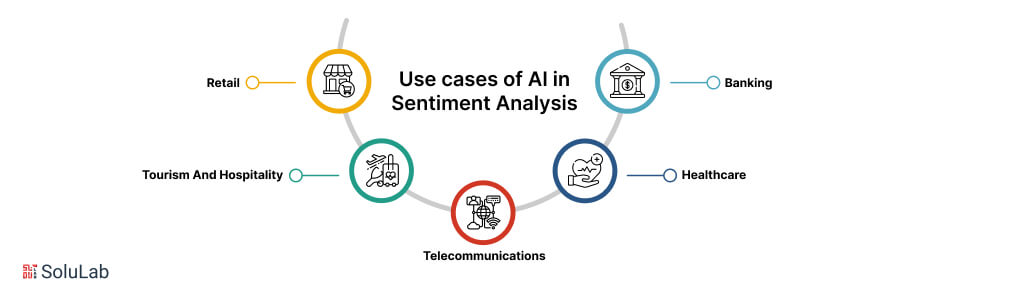
For a business trying to understand what customers feel and think, sentiment analysis is a strong tool. It reads text and works out the sentiment the writer expressed. The benefits covered above, understanding customers, faster responses, tailored experiences, better retention, and stronger sales, play out differently depending on the industry. A few examples.
1. Retail
AI-Powered Sentiment Analysis shows retailers how customers see their brand and where the market is moving. The main uses: reading customer reviews, personalizing campaigns, sharpening customer service, steering product development, sizing up competitors, and forecasting trends. It surfaces strengths, weak spots, and openings. Customers end up happier, marketing works harder, products fit better, and market position improves. Retailers who act on these insights make smarter calls, grow steadily, and pull ahead of competitors.
Check Out Our Case Study: GenAI in Retail Industry
2. Tourism And Hospitality
Hospitality has a lot to gain. AI-powered sentiment analysis helps businesses make sense of guest feedback, improve stays, recover from service slips in real time, plan strategy, watch competitors, and catch trends early. With it, AI in tourism and hospitality businesses learn what guests really think, raise satisfaction, and keep their edge.
3. Telecommunications
Telecom is a churn business, and sentiment analysis fits it well. AI-driven analysis helps providers improve customer experience, run operations better, and make sharper strategic calls. They can analyze customer interactions, predict who is about to leave, lift service quality, study competitors, shape new products, tune marketing and sales, and decide in real time. By putting AI in sentiment analysis to work, telecom providers learn what customers feel and prefer, and that translates into better experiences, more customers staying, and stronger business results.
Read Also: DePIN In the Telecom Industry
4. Healthcare
In healthcare, the uses run wide, from patient care to service delivery to day-to-day operations. AI sentiment analysis can read patient feedback, help personalize care, support pharmacovigilance, monitor clinical trials, inform healthcare marketing, guide policy, and help assess mental health. When AI in healthcare providers understand how patients actually feel, they can improve the patient experience, refine treatment plans, and raise the quality of care overall.
5. Banking
Banking has changed because of AI sentiment analysis, across customer experience, risk management, and brand perception. AI in Banking main use cases include improving customer service by analyzing feedback from many channels, spotting early warning signs in credit risk, learning customer preferences to shape products and services, understanding how the brand is seen overall, fine-tuning marketing, segmenting customers for targeted communication, and lending indirect support to fraud detection. The upshot is simple. Banks decide with better information and serve customers better.
Enhancing Sentiment Analysis Efficiency with GenAI
Generative AI started as a far-off idea. Now it is a serious force, poised to change sentiment analysis dramatically. It trims workflows and surfaces much deeper insight, and it is shifting, at a basic level, how we understand and react to what customers feel and think.
It also takes a team. These are the people typically involved in sentiment analysis, and how their roles fit together:
1. Sentiment Analysis Business Analyst: Turns business goals into AI-powered analysis goals, then reads the results and pulls out insights people can act on.
2. Marketing Manager: Uses sentiment insight to sharpen marketing strategy, campaigns, and brand perception with AI-Powered Sentiment Analysis.
3. Sentiment Analysis Project Manager: Owns the whole lifecycle, from scoping the project to tuning it and keeping stakeholders in the loop.
4. Sentiment Analysis Data Scientist: Builds, refines, and tunes the technical models behind NLP sentiment analysis.
5. Workflow Integration Engineer: Makes sure sentiment analysis slots cleanly into the wider data workflows and systems.
Working together, these roles put GenAI to real use. The business gets a deeper read on customer sentiment, makes better decisions, and sees results that matter.
Challenges with sentiment analysis
Useful? Very. Flawless? No. Anyone using sentiment analysis runs into a few hard problems:
1. Contextual Understanding: Artificial Intelligence (AI) does not always get the context behind language, so it can misread how someone feels. Sarcasm, irony, and cultural nuance are where it trips most often. “Great, another delay” is not a compliment, and a model has to know that.
2. Dataset Privacy: Collecting and analyzing customer data for sentiment work brings real questions about privacy and security.
3. Bias: People can bake their biases into training data, and AI models may pick them up. Unfair results follow. Work to cut bias and keep sentiment analysis fair is still going on.
Business Success with AI-Powered Sentiment Analysis
Knowing how customers feel is what lets a business make good calls and stay in front of its competitors. AI-powered sentiment analysis has changed how companies read feedback, opinions, and emotions. With AI development company sentiment analysis, businesses can find insight they would otherwise miss, see exactly where to improve, and build personalized experiences that keep customers loyal and grow revenue.
At SoluLab, we have seen what AI can do for sentiment analysis. Our team has deep experience building and rolling out Hire AI Developers solutions that help businesses like yours get real value out of their customer data. With our technology and know-how, you can:
- Get a much clearer picture of what your customers need and prefer
- Spot trends and patterns in how customers feel
- Build targeted marketing that actually connects with your audience
- Raise customer satisfaction and loyalty
- Grow the business and its revenue
Work with SoluLab and you get access to what AI-powered sentiment analysis can really do, and a clear path to running a customer-centric, data-driven organization. Our solutions scale, flex, and are built around your specific needs, so your customer data pulls its full weight.
Take the First Step Towards Business Success
Your customers are already telling you what they think. Most of it sits unread. SoluLab can help you put AI-powered sentiment analysis on that data and find the opportunities hiding in it. Contact us today to hear more about our solutions and how we can help you hit your business goals.
Let’s start listening to your customers together.
FAQs
Bhavya is driving growth through data-backed demand generation for AI and Web3 solutions. With 9+ years in digital marketing, he has spearheaded initiatives that led to a 40% increase in qualified inbound leads. Bhavya shares insights on marketing ROI and scaling a digital presence via AI workflows. He is open to connecting with startups and enterprise teams to help them overcome their challenges.

![Top 10 Examples of AI Being Integrated in the Real World [2026 Edition]](https://www.solulab.com/wp-content/uploads/2026/09/Examples-of-AI-Being-Integrated-in-the-Real-World.webp)