Key Takeaways
- Real estate tokenization in Australia enables fractional ownership, improves liquidity, and opens property investment to a broader investor base.
- ASIC regulations make tokenized real estate compliant but require structured legal frameworks like SPVs, MIS, and AFSL licensing.
- Enterprises are building tokenization platforms to unlock new revenue streams through transaction fees, asset onboarding, and secondary trading.
Australia’s real estate market has crossed AUD 10.9 trillion in value (2026), making it one of the most valuable asset classes globally. Yet, for decades, access to this market has been restricted to institutions and high-net-worth individuals due to high capital requirements.
That’s starting to change.
Asset Tokenization in Australia is opening the market to a wider pool of investors by enabling fractional ownership through blockchain-based tokens. Instead of buying an entire property, investors can now own a fraction of it, with investments starting from a few hundred dollars.
For enterprises, this shift is bigger than just accessibility. It’s about building new financial infrastructure where real estate becomes liquid, programmable, and globally tradable.

How Does Real Estate Tokenization Work Under ASIC Regulations?
Australia has taken a structured approach to regulating digital assets. By 2026, tokenized real estate will no longer be experimental. It is treated as a regulated financial product.
Understanding the Legal Structure
SPV or Unit Trust Model
- The physical property is owned by a Special Purpose Vehicle (SPV) or trust
- Investors hold tokens that represent ownership in that entity
- This ensures legal clarity and investor protection
Token Issuance
- Tokens are issued on blockchain networks like Ethereum or Polygon
- Each token represents a fractional share of the property
Compliance Framework
To operate legally, platforms must comply with:
- Corporations Act 2001
- Managed Investment Scheme (MIS) regulations
- AFSL (Australian Financial Services License) requirements
- AUSTRAC-based KYC/AML compliance
The 2026 Regulatory Shift
ASIC has introduced transitional support mechanisms, allowing compliant platforms to operate while adapting to evolving asset tokenization frameworks around digital securities and settlement layers.
Key Compliance Requirements (Australia)
| Requirement | Details |
| Licensing | Australian Financial Services License (AFSL) required |
| Investor Protection | Disclosure statements (PDS) are mandatory |
| KYC/AML | AUSTRAC compliance |
| Custody | Regulated custody solutions for tokens |
Insight: In Australia, most tokenized real estate offerings are treated as financial products, not just digital assets.

Best Fractional Property Investment Platforms in Australia 2026
The market has evolved significantly from simple crowdfunding platforms to full-scale tokenization ecosystems.

Leading Real Estate Tokenization Platforms in Australia
- DomaCom – One of the earliest platforms enabling fractional property investment through managed funds
- BrickX – Allows investors to buy “bricks” in residential properties
- Bricklet – A newer entrant moving toward tokenized ownership models
What Makes a Modern Tokenization Platform?
Strong real estate tokenization platforms in 2026 are defined by:
1. Compliance by Design
Instead of handling compliance manually, modern platforms embed rules directly into tokens.
For example, tokens can:
- Only be transferred to verified investors
- Automatically block non-compliant transactions
2. Real-Time Transparency
Investors no longer wait for quarterly reports.
They can:
- Track ownership in real-time
- Monitor rental yields and property performance
3. Secondary Liquidity
Earlier, fractional investments were locked.
Now, tokenized assets can be traded on:
- Internal marketplaces
- Emerging regulated digital exchanges
| Example Shift Traditional model: Investor buys into a property → locked for years Tokenized model: Investor buys tokens → trades them anytime (subject to regulations) |
This shift is what makes tokenized real estate fundamentally different.
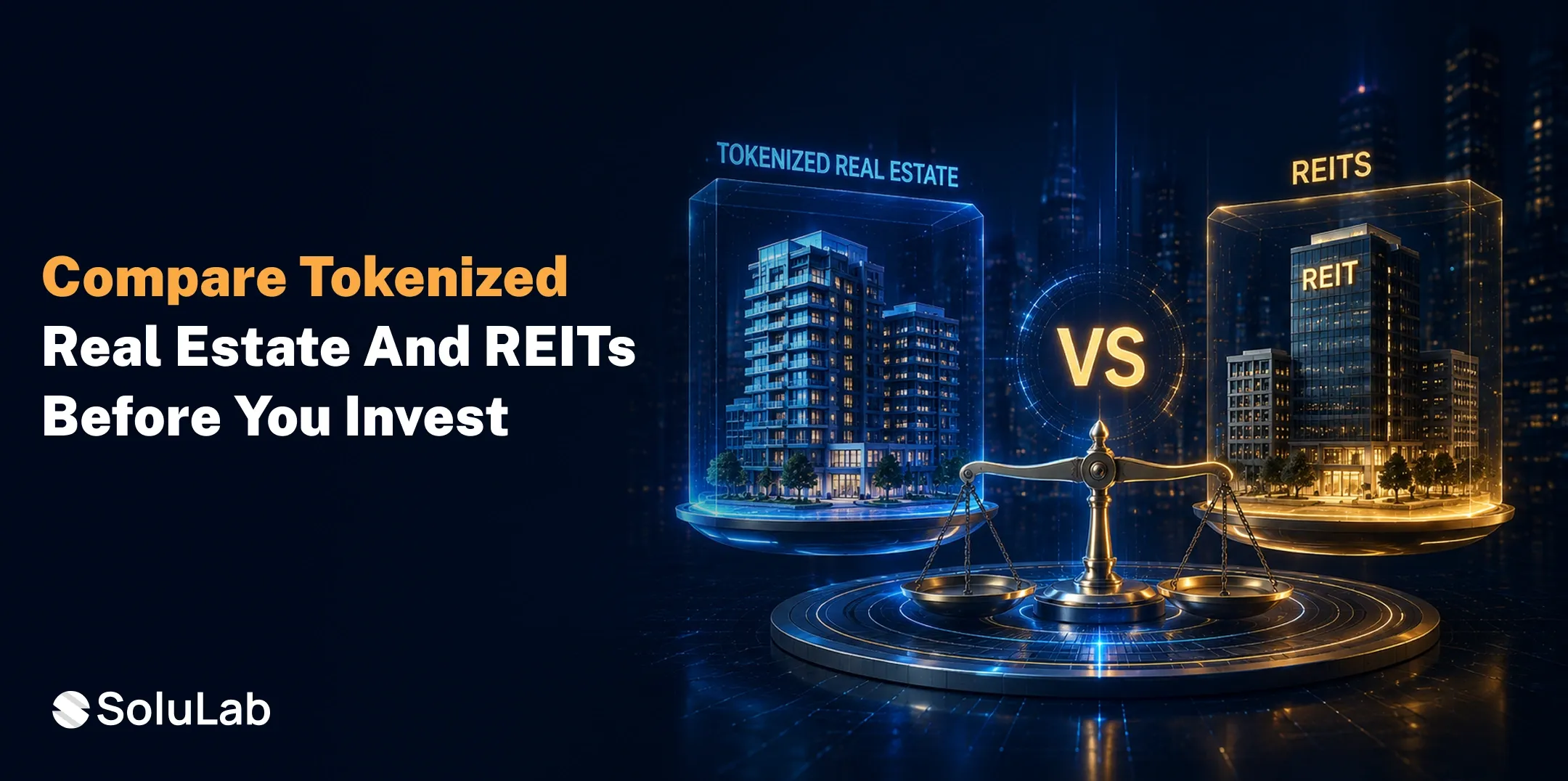
Real Estate Tokens vs. REITs: Which is Better for Your Portfolio?
REITs have been the default choice for indirect real estate investment. But asset tokenization is introducing a more granular alternative.
Key Differences Explained
| Factor | Real Estate Tokens | REITs |
| Ownership | Direct fractional | Fund-based |
| Asset Selection | Specific property | Portfolio |
| Transparency | Blockchain-based | Periodic reports |
| Flexibility | High | Limited |
Where Tokens Win
- You can invest in a specific suburb or property type
- Smart contracts enable automated rental distribution
- Ownership is transparent and verifiable
Where REITs Still Hold Strength
- Higher liquidity via stock exchanges
- Established regulatory familiarity
Market Insight
The tokenized real estate market is growing at ~22% CAGR, driven by demand for:
- Direct ownership
- Better yield visibility
- Programmable investment models
A strong example is the increasing adoption among Self-Managed Super Funds (SMSFs), which are looking for diversified exposure without locking in large capital.

Top 5 High-Yield Suburbs for Fractional Property Investing in Australia

Even in a digital world, physical location dictates the underlying value of tokenized real estate. According to the current 2026 market indices, several Australian sub-markets are outperforming national averages:
- Perth Metro (WA): Leading the nation with a 22% YoY growth in median dwelling values, driven by tight stock and mining sector resilience.
- Brisbane Inner North (QLD): Capitalizing on the “Olympic Effect,” with rental yields for tokenized units reaching 6.5%.
- Western Sydney (NSW): Suburbs like Leppington and Austral are seeing massive appreciation due to the opening of the Western Sydney International Airport.
- Adelaide Northern Corridor (SA): Areas like Salisbury remain the “cash-flow kings,” offering stable 5.5% yields for entry-level tokenized portfolios.
- Melbourne West (VIC): While the CBD has stabilized, the western growth corridor remains a hotspot for affordable fractional entry points.
By utilizing real estate tokenization on Australia-based platforms, investors can spread AUD 5,000 across all five of these regions, achieving a level of diversification previously impossible without millions in capital.
How can SoluLab AI+Blockchain+Tokenization Expertise Help You in Building Real Estate Tokenization in Australia?
Building a compliant and scalable tokenization platform requires expertise across multiple layers.
What Businesses Struggle With
- Navigating ASIC regulations
- Ensuring smart contract security
- Building liquidity mechanisms
- Integrating compliance with UX
SoluLab’s Approach
As a real estate tokenization development company in Australia, SoluLab focuses on combining:
AI + Tokenization
- Predictive property valuation
- Yield forecasting
- Automated pricing models
Compliance-First Development
- AFSL-ready architecture
- Built-in KYC/AML systems
- Tax and reporting automation
Scalable Infrastructure
- Multi-asset support
- Secondary trading enablement
- Enterprise-grade dashboards
White-Label vs Custom Development
- White-label solutions
- Faster launch (4-8 weeks)
- Lower upfront cost
- Limited customization
- Custom platforms
- Higher cost
- Full control over features
- Better long-term scalability
Revenue Model for Businesses
Companies building a white label real estate tokenization platform generate revenue through:
- Transaction fees (1–3%)
- Asset onboarding fees
- Secondary trading commissions
- Subscription or management fees
This is why many firms are positioning themselves as a tokenization platform development company in Australia, not just service providers. For integrating the latest services, contact SoluLab today!
FAQs
Deepika is a content writer who blends storytelling with strategic thinking. She explores topics across digital innovation, emerging tech, and the evolving blockchain industry. She enjoys breaking down complex ideas into simple, engaging narratives in the growing global markets.