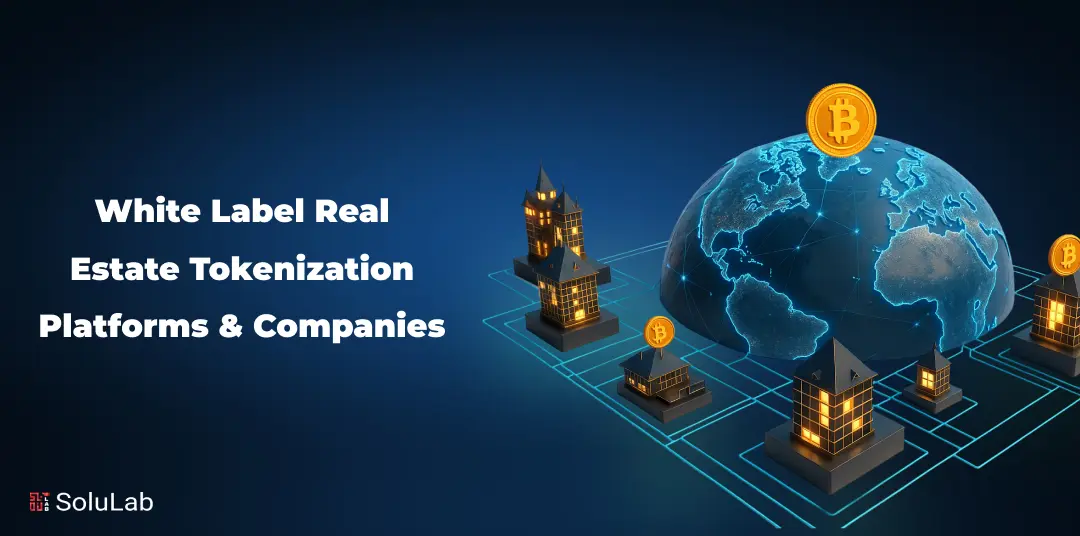
Real estate tokenization is changing how companies raise capital through property. Instead of selling an entire building, businesses can now split it into digital tokens and sell small shares to many investors at once. Faster deals, fewer gatekeepers, and access for buyers who couldn’t afford a whole asset before.
A white label real estate tokenization platform means you don’t start from zero. You get a ready-to-use system, already secure and compliant, that you can brand and configure for your specific project. Go live sooner, cut build costs, and reach investors across markets you’d never tap through traditional channels.
The real estate tokenization market is projected to reach $16 billion by 2030, driven by fractional ownership demand and the shift toward digital investing. Companies that move early get a real head start: new revenue lines, a broader investor pool, and real liquidity on assets that used to sit locked up.
If you need a more scalable way to manage and sell property assets, white label tokenization is a tested path. Lower risk, faster launch, and no need to reinvent the compliance stack.
Key Benefits of White Label Tokenization Platforms
Building a tokenization platform from scratch takes time, money, and a team that knows the regulatory terrain. Most companies don’t have all three. White label changes that math. Here’s where it actually makes a difference:
1. Speed to Market
Getting to market first matters. A white label tokenization platform solution lets you:
- Skip long development and testing phases
- Avoid complex regulatory approval delays
- Start attracting investors faster and generate revenue sooner
2. Customizability & Compliance
No two real estate projects look the same, and neither do their compliance requirements. White label platforms let you:
- Customize investor dashboards for a better user experience
- Implement smart contracts tailored to your business rules
- Enable fractional ownership so investors can buy shares in properties easily
- Adapt compliance modules based on jurisdiction requirements
3. Scalability
When your portfolio grows, your infrastructure has to keep up. A white label solution gives you:
- Modular architecture for easy upgrades and feature additions
- Integration capabilities with various blockchain networks and APIs
- Infrastructure that holds up as transaction volumes climb
4. Lower Costs
Developing a tokenization platform from scratch can eat a year and a significant budget. A white label tokenization platform changes that:
- Save on upfront development expenses
- Reduce ongoing maintenance costs
- Access enterprise-grade technology at a fraction of the price
Read Also: 9 Key Features of Next‑Gen Tokenization Platforms for 2030
Looking for a trusted partner to build your white label real estate tokenization platform?
Book a free consultation call with our experts today and find out how we can get you live faster, keep you compliant, and set you up to grow.
Top 10 White Label Real Estate Tokenization Platforms & Firms in 2026
Real estate tokenization has moved well past the pilot stage. In 2026, businesses are actively choosing platforms and tech partners to launch branded tokenization products. The list below covers the ten providers most worth knowing, with a clear view of what each actually does well.
1. SoluLab

A full-stack platform with compliance and consulting services built in, so you’re not left figuring out the regulatory side on your own.
Key Features:
- SEC-compliant platform ensuring full regulatory adherence
- Smart contract-backed secure ownership
- Real-time investor dashboards & Admin tools
Why Choose?
Good fit for companies new to real estate asset tokenization who want flexibility and hands-on guidance at every stage.
Visit: solulab.com
2. Securitize
Built for institutions. Large-scale, compliant tokenization is the core focus here, not an afterthought.
Key Features:
- Automated investor onboarding for a smooth experience
- Secondary market liquidity to enable token trading
- Scalable, institution-grade infrastructure
Why Choose?
Strong choice for projects targeting institutional investors or high-value assets where compliance can’t slip.
3. Tokeny Solutions
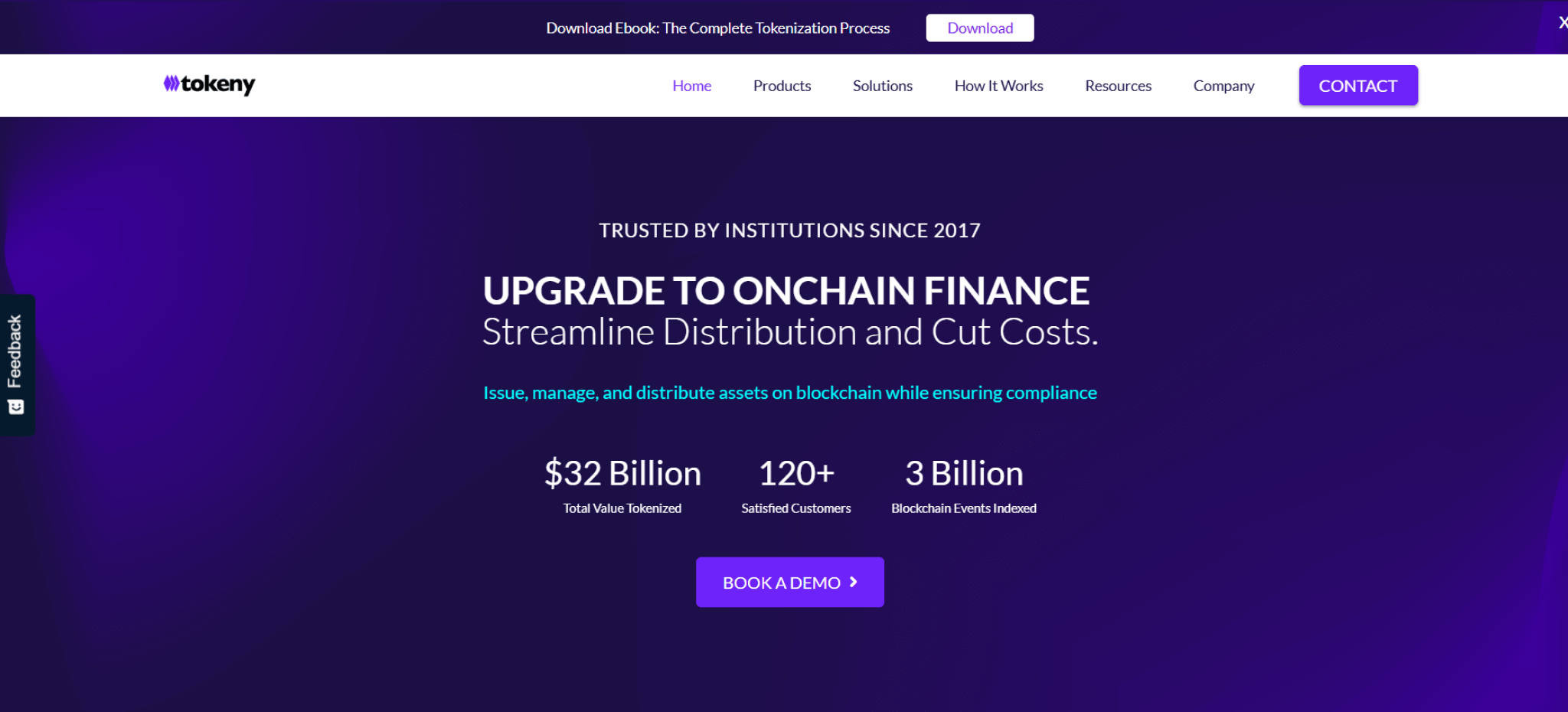
Compliance is the product here, not a bolt-on. Built for regulated markets and enterprise clients who can’t afford gaps.
Key Features:
- Customizable compliance modules for global regulations
- Permissioned token transfers for secure control
- Enterprise-ready infrastructure
Why Choose?
Best for businesses where tight compliance and institutional readiness are non-negotiable from day one.
4. RealT
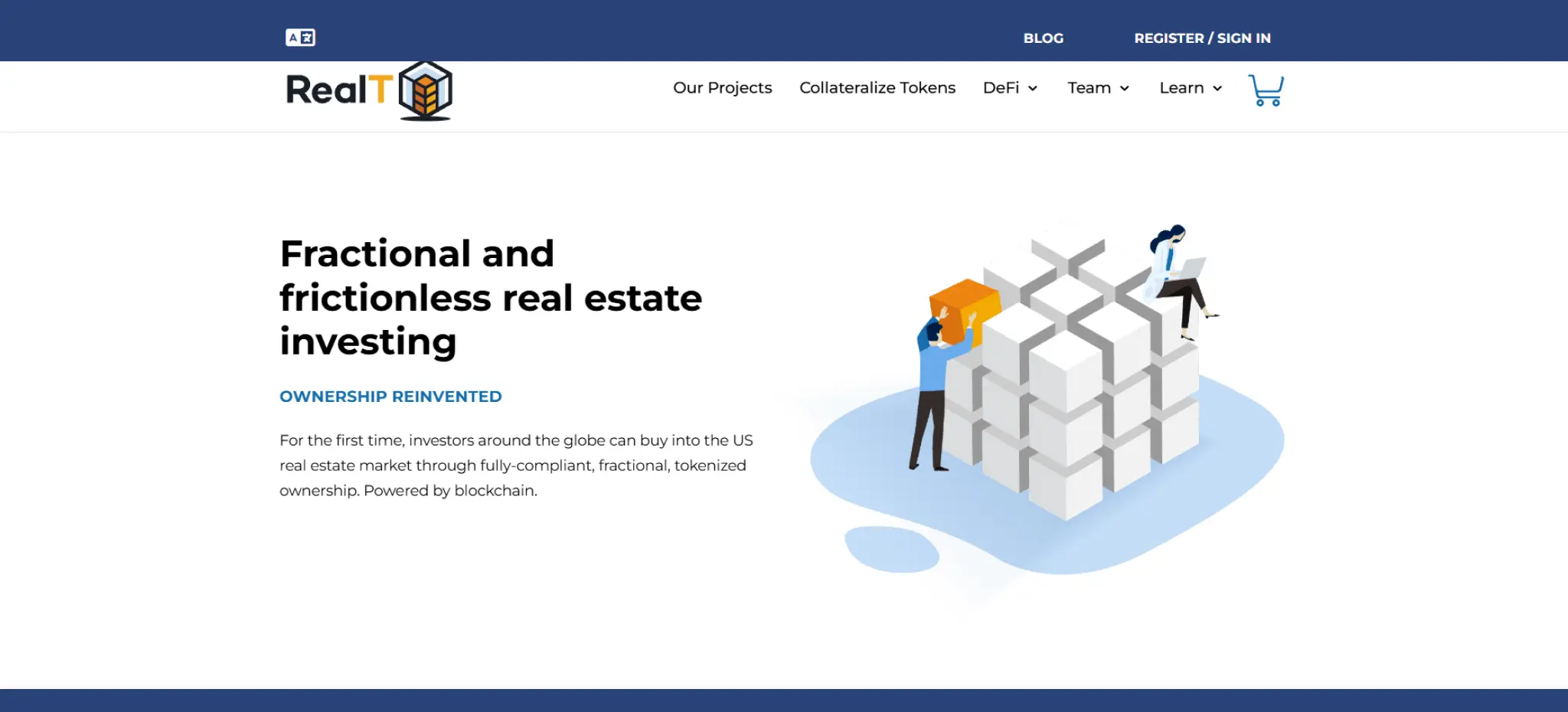
Tokenization plus passive income. Rental payouts go out in stablecoins, which is a genuinely different offering from most platforms on this list.
Key Features:
- White-label platform with income stream integration
- Payouts in USDC, DAI stablecoins
- US real estate access for global investors
Why Choose?
Good pick for investors who want tokenized real estate assets tied to real income generation, not just price appreciation.
5. Polymath
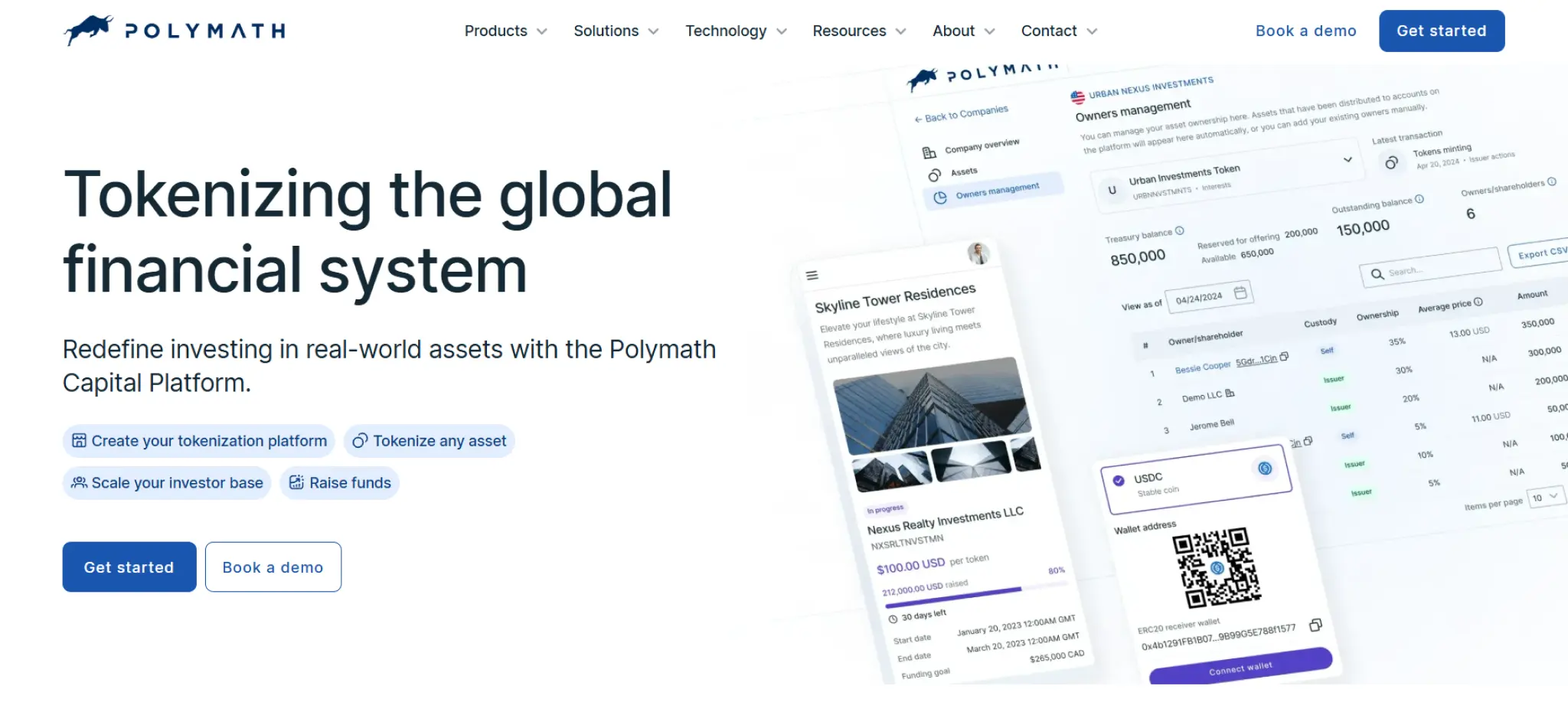
Enterprise tokenization with compliance baked in and the infrastructure to handle large projects without breaking a sweat.
Key Features:
- Institution-first design
- Flexible compliance frameworks
- Built to handle large-scale projects
Why Choose?
Strong choice for businesses that need compliance and scale to work together from the start.
6. Ondo Finance
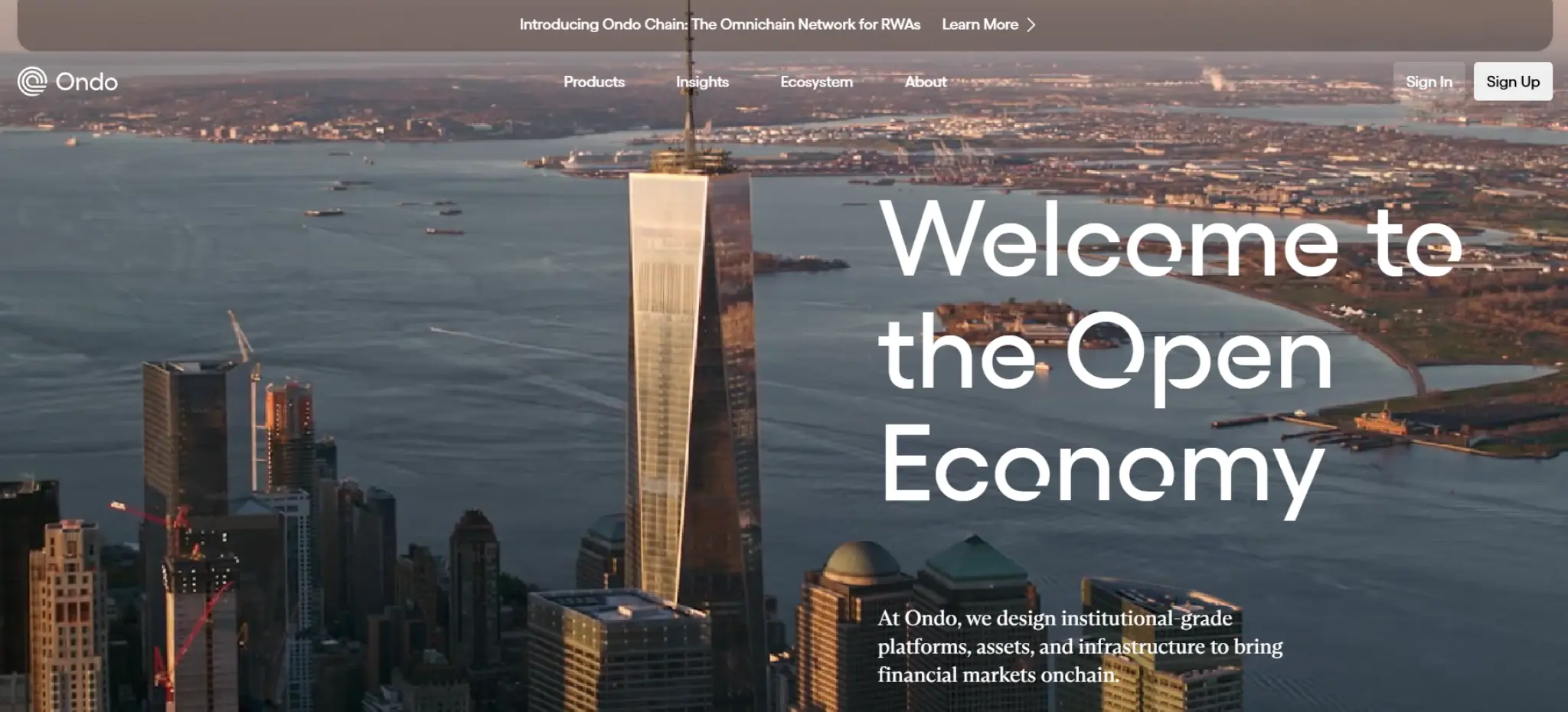
Decentralized, income-focused. Ondo is built around yield generation, which makes it a different beast from the compliance-first platforms above.
Key Features:
- Income-driven tokenization framework
- Secure decentralized design
- Suited for institutional investors
Why Choose?
Worth a look if your strategy is centered on the benefits of tokenized real estate income streams over capital gains.
7. Propy
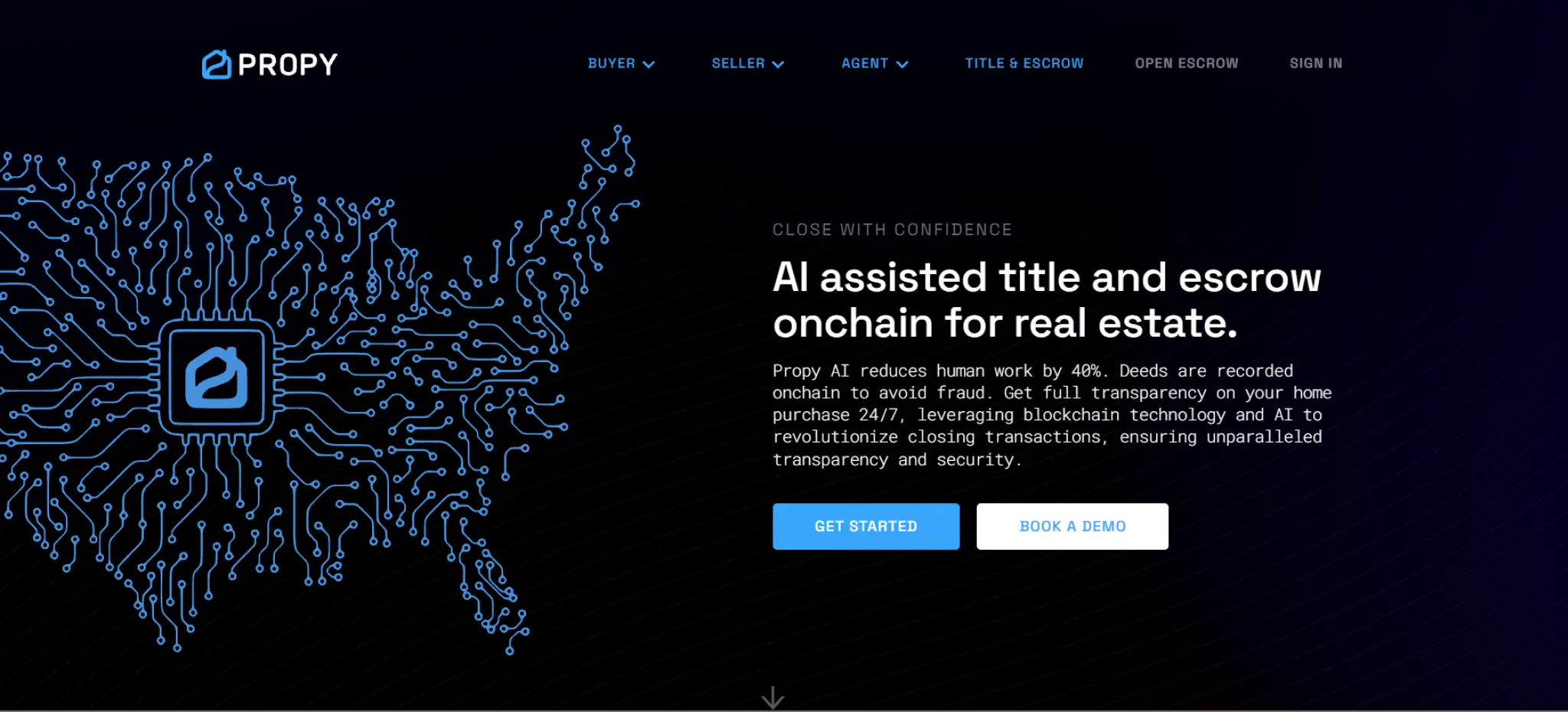
End-to-end transaction automation with NFT-based deeds. The cross-border angle is where Propy really separates from the pack.
Key Features:
- Full real estate transaction automation
- Digital ownership via NFTs
- Cross-border investment support
Why Choose?
Best for global, cross-border real estate tokenization where jurisdiction complexity is the main hurdle.
8. ConsenSys Codefi
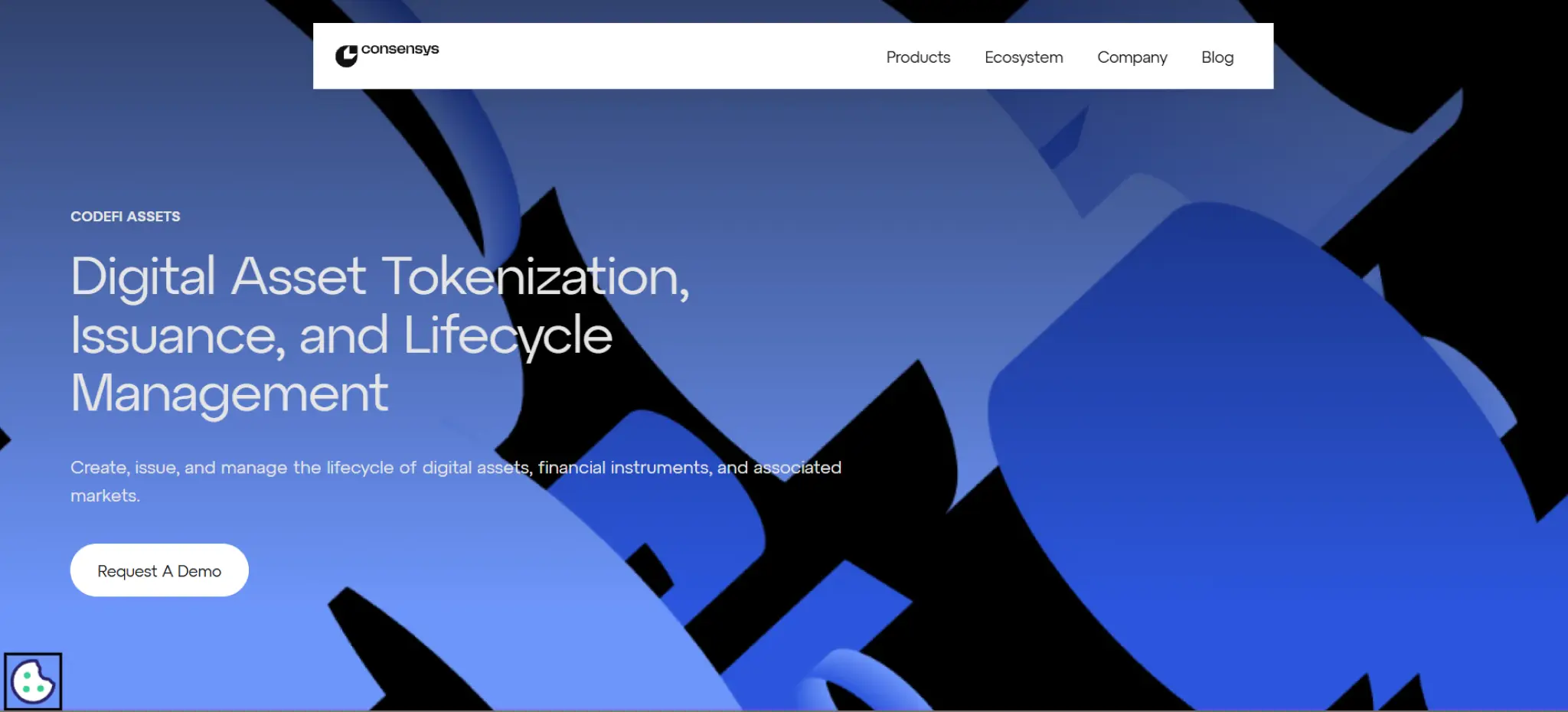
Ethereum-native, with security standards that hold up for government and enterprise deployments. The trust factor is real here.
Key Features:
- Complete tokenization suite
- Deep Ethereum integration
- High security standards
Why Choose?
Right for enterprises and government projects where security standards aren’t negotiable.
9. RedSwan CRE
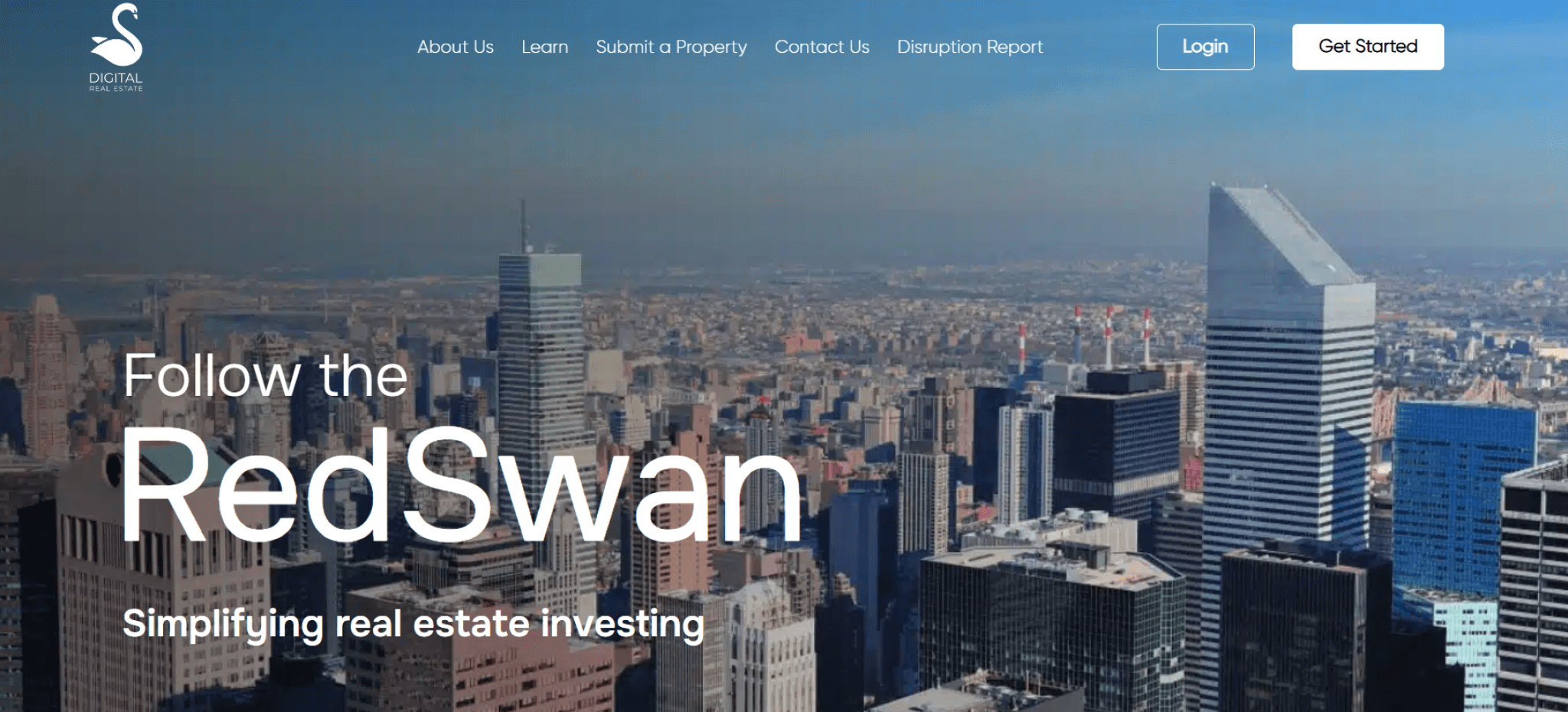
Targets accredited investors with solid portfolio management tools and a platform designed for speed to market. Less setup friction than most institutional-grade options.
Key Features:
- Targeted at accredited investors
- Strong portfolio management tools
- Quick-to-market platform
Why Choose?
Built for high-net-worth investors and teams that need to move fast without sacrificing control.
10. Plume Network
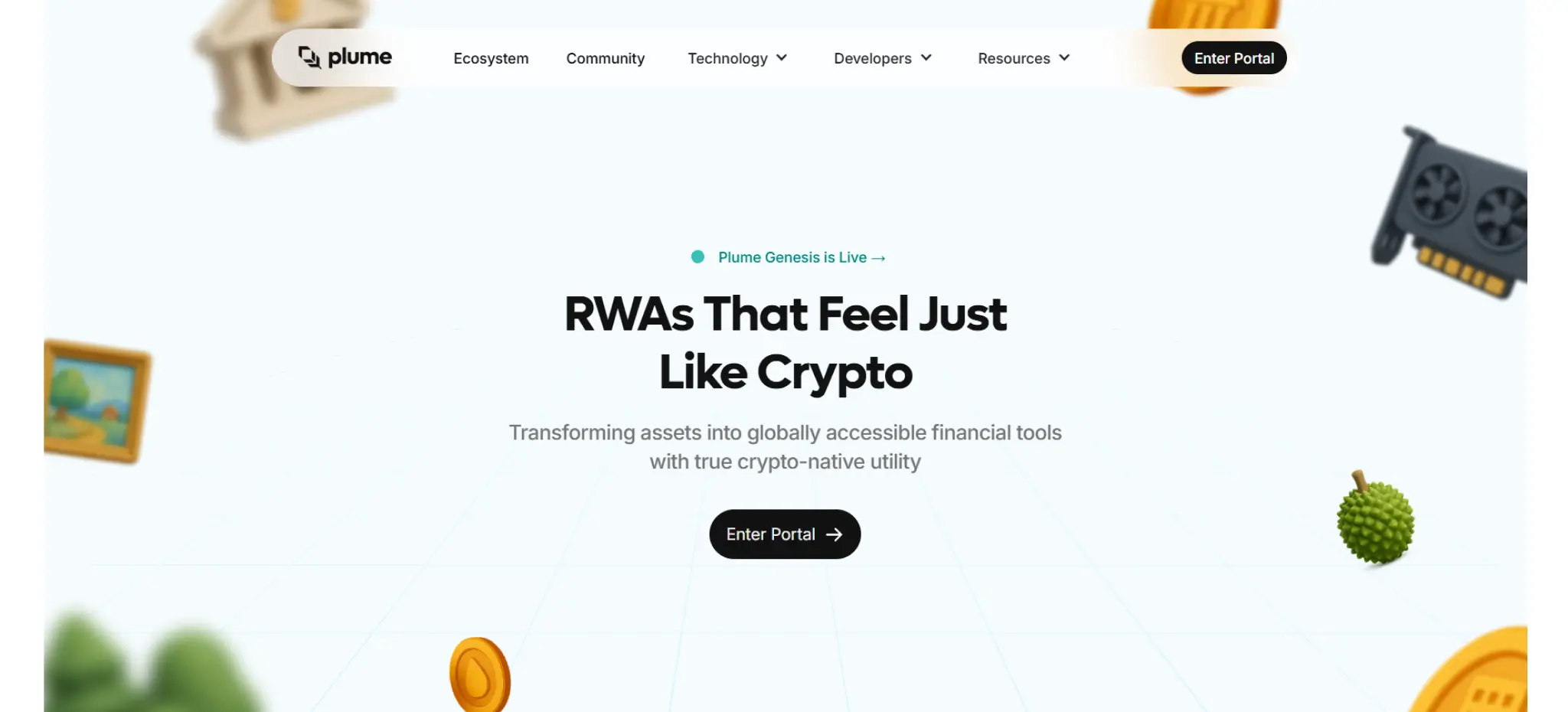
Privacy-first with DeFi integrations and modular customization. If data security is a hard requirement for your investors, Plume deserves a close look.
Key Features:
- Data privacy focused
- Integrated DeFi revenue streams
- Customizable white-label options
Why Choose?
Well suited for investors who put data security first and want yield on top of it.
Read More: Why Is a White Label ICO Platform the Fastest Launch Option in 2026?
How to Choose the Right Platform or Tech Partner?
Picking the right White Label Tokenization Platform Development company isn’t just a features checklist. You want a partner who can carry your project from first conversation through live deployment and beyond. A few things that actually matter:
- The platform must be compliance-first, providing strong regulatory support across different countries.
- The investor dashboard should be customizable and user-friendly to build trust and improve conversions.
- The platform needs to integrate cleanly with other tools and Blockchain-as-a-Service solutions you’re already running.
- Support for popular blockchains like Ethereum, Solana, and Polygon is essential for flexibility and reach.
If that list raises more questions than it answers, you’re better off working with a trusted Tokenization Platform Development Company that brings both the technical depth and the strategic clarity to get it right.
Conclusion
Property doesn’t have to sit locked inside a single transaction anymore. Real estate asset tokenization breaks the ownership model open, and white label platforms make that shift accessible to companies that aren’t starting with a blockchain team and two years to spare.
Fractional ownership, faster liquidity, a global investor pool. These aren’t hypothetical upshots. Tokenized real estate assets are delivering them now, for developers, fund managers, and blockchain-native startups that decided to act rather than wait. Working with a solid Blockchain development company in the USA means you get the technical infrastructure and the regulatory groundwork done right the first time.
If the goal is to move from idea to live platform without burning through budget on a custom build, a White label Tokenization Platform Solution is the shortest route that still gets you there properly.
FAQs
Shipra Garg is a tech-focused content strategist and copywriter specializing in Web3, blockchain, and artificial intelligence. She has worked with startups and enterprise teams to craft high-conversion content that bridges deep tech with business impact. Her work translates complex innovations into clear, credible, and engaging narratives that drive growth and build trust in emerging tech markets.