Talk to an Expert
Get in Touch

Delve into the Concept of NFTs and Their Use Cases

NFT Use Cases

In the midst of the recent surge in interest surrounding blockchain and cryptocurrency assets, there is a growing recognition of the need for individuals, businesses, and governments to prepare themselves for the impending digital economy. For those venturing into the realm of blockchain, the topic of tokens is a common point of discussion, with numerous blogs and articles elucidating the distinctions between coins and tokens.

Presently, the spotlight is on exploring more advanced and innovative token forms, particularly Non-Fungible Tokens (NFTs). Many experts emphasize the transformative potential of NFTs in shaping the future landscape of blockchain technology. Consequently, these unique tokens have captured significant attention from users and enthusiasts across various domains. 

In this article, we aim to delve into the intricacies of Non-Fungible Tokens (NFTs), unraveling their functionalities and examining their substantial contributions in diverse use cases.

So, without any further ado, let’s get started!

What are Non-Fungible Tokens?

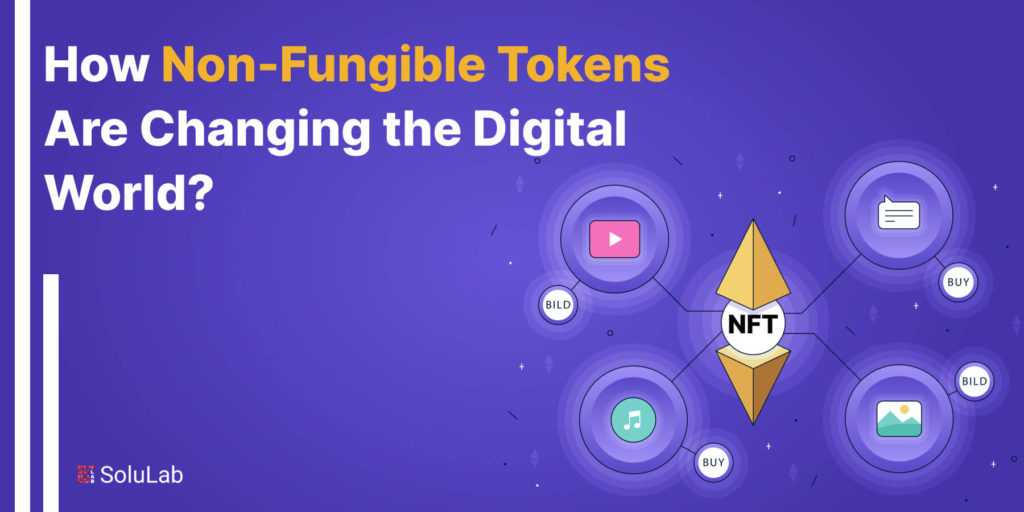
NFT, or non-fungible token, is a specialized form of token created through cryptographic hashing methods, utilizing blockchain technology to associate with a unique digital asset that cannot be duplicated. Unlike major cryptocurrencies such as Monero, Ether, and Bitcoin, non-fungible tokens possess distinct characteristics, making them irreplaceable and non-interchangeable.

Embedded smart contracts development within NFTs play a crucial role in storing exclusive data, setting them apart from other tokens. NFTs are also characterized by their indivisibility; unlike Bitcoins, they cannot be sent in fractional denominations. Consequently, sending a portion of a specific NFT to another person is not feasible.

The uniqueness of non-fungible tokens grants them a distinctive role in the blockchain landscape, particularly in the context of the significant shift toward the next era of blockchain digital transformation. As enterprises gradually embrace blockchain integration into their operations, NFTs emerge as revolutionary entities.

Types of NFT Marketplaces

Types of NFT Marketplaces

Non-fungible tokens (NFTs) come in various types, each serving different purposes and applications. Here are some common types of NFTs:

  • Token Standards

Exploring non-fungible token use cases reveals their versatility in serving various purposes for both digital and real-world entities, converting them into blockchain tokens. Before delving into deeper insights into NFT use cases, understanding the operational aspects is crucial. Developers must adhere to specific blockchain token standards to successfully launch token applications. Ethereum, for instance, provides numerous ERC standards for developers. Let’s examine the different token standards in blockchain that play a vital role in NFT functionality.

  • ERC-20

Cryptocurrency tokens on Ethereum adhere to the ERC-20 token standard. It comprises a set of rules that objects must follow to ensure interoperability and compatibility with exchanges or wallets within the Ethereum ecosystem. In October 2020, the Ethereum network had over 300,000 tokens based on the ERC-20 standard, a number continually on the rise.

  • ERC-721

Compared to the ERC-20 token standard, ERC-721 focuses on a single distinct asset without interchangeability. It represents assets, such as certifications or asset tokenization, that cannot be divisible. Tokens based on ERC-721 standard store information in personalized smart contracts, providing transparency regarding ownership, security, and immutability. Essentially, ERC-721 tokens operate as ‘non-fungible.’

  • ERC-1155

ERC-1155, a crucial token standard, forms the foundation of NFT use cases. While ERC-721 is suitable for creating new assets transferable between wallets, a collection of ERC-721 tokens may be insufficient and slow. ERC-1155, often termed the ‘multi-token standard of the next generation,’ proves beneficial in scenarios involving the trade of multiple artifacts, such as weapons and skins for a specific in-game character. Notably, ERC-1155 supports both fungible and non-fungible token applications.

History of NFTs (Non-Fungible Tokens)

The inception of Non-Fungible Tokens (NFTs) wasn’t an instantaneous phenomenon but rather evolved over the years with various early attempts laying the groundwork for what we now recognize as NFTs.

One contender for the title of the first NFT is the concept of Colored Coins, introduced in 2012. According to investor Andrew Steinworld, some argue that Colored Coins could be considered the initial manifestation of NFTs. While Colored Coins showcased a significant advancement in Bitcoin capabilities, they had limitations. Their value representation was contingent on unanimous agreement, and the scripting language of Bitcoin couldn’t accommodate this behavior within its network.

An alternative claim to the first NFT goes to “Quantum” by Kevin McCoy, minted on the Namecoin Blockchain on May 2, 2014. This digital token is considered by some as the rightful pioneer of the NFT title.

However, it was the advent of “CryptoKitties,” a project by Dapper Labs on the Ethereum blockchain, that brought NFTs into the mainstream. During the crypto boom of 2017, these digital cats gained global attention, with some even fetching a staggering price of 600 ETH (equivalent to USD 172k at the time). This marked a turning point, solidifying NFTs as a viable and valuable digital asset class.

Since the CryptoKitties phenomenon, numerous NFT projects have emerged, each contributing to the expansive success and recognition of non-fungible tokens across various industries.

Use Cases of Non-Fungible Tokens Across Various Industries

Non-Fungible Tokens (NFTs) have become a transformative force in the digital landscape, introducing a novel concept of ownership that extends across diverse industries. In this section, we will delve into the expanding realm of NFT use cases, exploring their impact on art, gaming, music, and various other sectors.

Digital Ownership: Exploring NFT Use Cases in the New Era

NFT Use Cases in the New Era

Non-Fungible Tokens have ushered in a new era of digital ownership, reshaping how creators monetize their work and how collectors acquire unique digital assets. This article aims to unravel the myriad use cases for NFT, showcasing the evolution of digital ownership in the contemporary digital world.

1. NFTs In Art

Within the art world, NFTs have empowered artists to craft extraordinary digital masterpieces, now tradable and saleable akin to physical art. This shift has not only generated fresh revenue streams for artists but has also provided collectors with ownership of exclusive digital creations, verified and authenticated through blockchain technology.

Undoubtedly, NFTs have already left an indelible mark on the art scene, with high-profile sales capturing global attention. A landmark moment occurred in March 2021 when an NFT crafted by digital artist Beeple fetched a record-breaking $69 million at auction. This sale served as a pivotal moment in the acceptance of NFTs within the art domain, illustrating their potential to revolutionize art transactions.

Advantages Of NFTs In Art

  • True Ownership Of Digital Artworks: In the past, digital art lacked uniqueness and intrinsic value. NFTs now allow creators to fashion digital artworks that are distinct and possess genuine ownership, akin to physical art. This transformative shift has profound implications for the perception and valuation of digital art.
  • Bypassing Traditional Gatekeepers: NFTs empower artists to directly sell their works to collectors, eliminating intermediaries like galleries and auction houses. This democratization of the art world holds the promise of enabling more artists to showcase and sell their creations to a broader audience.

In essence, NFTs have unlocked a myriad of possibilities in the realm of art, creating novel avenues for revenue and engagement. The ability to produce, trade, and own unique digital artworks has redefined the dynamics between artists and collectors, marking a revolutionary chapter in the art industry.

2. NFTs in Gaming

The gaming industry, which has witnessed remarkable growth with the advent of mobile phones and gaming platforms, is now experiencing a new wave of innovation with the integration of Non-Fungible Tokens (NFTs). The central question arises: “What exactly do NFTs bring to the gaming arena?” NFTs in gaming represent a groundbreaking fusion, as dedicated developers and gamers explore the potential of NFT-powered games to elevate gameplay and establish innovative revenue channels. In essence, these digital assets within the gaming realm can encompass in-game items, characters, and even entire virtual worlds, providing a fresh dimension to the gaming experience. Such assets can be bought, sold, and traded on blockchain-based marketplaces, introducing novel opportunities for gamers, developers, and investors.

Advantages of NFTs in the Gaming Industry

  • New Revenue Streams for Game Developers: NFT games enable developers to go beyond traditional revenue sources such as game sales and in-game purchases. By crafting unique in-game items that players can own and trade on blockchain-based marketplaces, developers open avenues for additional revenue. This has the potential to establish a more sustainable business model, fostering innovation in game development.
  • Enhanced Transparency and Security for In-Game Assets: The utilization of blockchain technology applications ensures greater transparency and security for in-game assets. Through the tracking of ownership and transfer of assets on the blockchain, players can be confident that their digital possessions are safeguarded and immune to replication or counterfeiting. This instills a sense of trust and fairness in the gaming experience, assuring players that their investments in the virtual game world are well-protected.

Use cases of NFTs in gaming represent not just a technological evolution but a paradigm shift, introducing a layer of ownership, traceability, and security that extends the gaming experience beyond mere entertainment. As the gaming industry continues to embrace NFTs, we anticipate a landscape where creativity flourishes, revenue models diversify, and players engage in more immersive and secure virtual worlds.

3. NFTs in the Music Industry

As a revolutionary trend in the music industry, Non-Fungible Tokens (NFTs) are rapidly becoming a novel avenue for artists to not only monetize their creations but also forge deeper connections with their fan base. NFTs in music encompass digital assets representing music, artwork, concert tickets, and exclusive items related to an artist’s body of work. These assets, imbued with unique value, are traded on blockchain-based marketplaces, providing fans with an opportunity to possess a tangible piece of their favorite artist’s legacy and concurrently establishing innovative revenue channels for musicians.

Advantages of NFTs in Music

  • New Income Source for Artists: NFTs in the music industry unlock a fresh revenue stream for artists. By crafting distinctive NFTs that encapsulate their creative output, artists can sell these digital assets to fans and collectors. This approach extends beyond conventional revenue sources like music sales and streaming royalties, potentially offering a more sustainable income stream for artists amidst the dynamic shifts in the music industry.
  • Unique Fan Engagement: NFTs in music create a personalized and exclusive channel for fans to connect with their favorite artists. Ownership of exclusive NFTs representing a specific album or concert fosters a deeper sense of connection and investment. This unique fan engagement has the potential to cultivate more committed and loyal fan bases, encouraging increased social interaction and trading activities among enthusiasts.

NFTs in the music industry extend beyond mere tokens; they become a conduit for tangible fan experiences and novel revenue models. As artists continue to explore the NFT utility use cases, the music landscape evolves into a realm where creativity meets technology, offering both artists and fans an enriched and interactive music ecosystem.

4. NFTs in Sports

In the dynamic world of sports, Non-Fungible Tokens (NFTs) are redefining how fans connect with their favorite teams and athletes. These digital assets, each possessing unique characteristics, introduce a new layer of fan interaction and provide unprecedented opportunities for sports organizations and enthusiasts. NFTs bring the concept of digital collectibles and memorabilia to sports. Fans can own exclusive digital assets such as virtual trading cards, iconic sports moments, or limited-edition memorabilia, all secured and authenticated through blockchain technology. It also paves the way for virtual stadium experiences. Fans can own virtual seats, granting access to exclusive content, behind-the-scenes footage, and even virtual meet-and-greet opportunities with athletes, creating a more immersive fan experience.

Advantages of NFTs in Sports

  • Authentic Fan Experiences: NFTs redefine the sports fan experience by offering an authentic and immersive connection. Through ownership of unique digital assets like virtual trading cards or exclusive behind-the-scenes content, fans not only gain a sense of authenticity but also form a virtual bond with their favorite teams and athletes. This transcends geographical boundaries, creating a global community united by a shared passion for sports. NFTs become more than just tokens; they become cherished symbols of fandom and shared experiences.
  • New Revenue Streams for Teams: NFTs present a transformative opportunity for sports teams to diversify their revenue streams and ensure financial sustainability. Teams can release limited-edition NFT collectibles, creating a sense of scarcity and exclusivity. Fans, eager to own a piece of sports history, engage in the excitement of acquiring digital assets that commemorate iconic moments or showcase their favorite players. This not only generates revenue but also turns the act of collecting into a dynamic and participatory experience.

As NFTs continue to weave their way into the sports landscape, they bring a wave of innovation, transforming fan engagement and revenue models. From virtual experiences to authentic collectibles, NFTs are reshaping the sports industry, creating new avenues for fan interaction and financial sustainability for teams and athletes alike.

5. NFTs in Real Estate

Just as NFTs have reshaped the art world, they are now making waves in the NFT real world use cases in the sector of real estate, offering a revolutionary approach to property ownership and transactions. These digital assets, underpinned by blockchain technology, present unique opportunities for property developers, investors, and homeowners alike. NFTs enable the tokenization of real estate, breaking down property assets into tradable and divisible digital tokens. This allows for fractional ownership, providing investors with the opportunity to own a portion of high-value properties, and enhancing liquidity in the real estate market. Moreover, real estate developers can utilize NFTs to offer exclusive access and rewards to property owners. NFT holders may receive special privileges, such as access to communal amenities, discounts on property-related services, or even invitations to exclusive events, fostering a sense of community and value.

Advantages of NFTs in Real Estate

  • Fractional Ownership and Accessibility: NFTs democratize real estate investments by introducing fractional ownership, allowing investors to seamlessly buy and trade digital tokens representing fractions of properties. This innovative approach not only broadens participation but also transforms traditionally high-barrier real estate markets into inclusive opportunities for a diverse investor demographic.
  • Transparent Property Transactions: Blockchain technology, integral to NFT-based real estate transactions, goes beyond enhancing transparency. Securely storing ownership records, property details, and transaction history, not only reduces the risk of fraud but also instills confidence in all stakeholders. This heightened transparency, facilitated by blockchain, ensures a secure and reliable platform for conducting property transactions, fostering trust in the real estate market.

Benefits of Non-Fungible Tokens

Benefits of Non-Fungible Tokens

Non-fungible tokens (NFTs) have emerged as a transformative force across various industries, bringing a myriad of benefits that extend beyond traditional forms of ownership and exchange.

1. Digital Ownership and Scarcity: NFTs provide a novel solution to digital ownership, allowing individuals to truly own and verify unique digital assets. Through blockchain technology, the scarcity and uniqueness of these assets are irrefutably established, offering creators and collectors a new paradigm for valuing and exchanging digital content.

2. Fractional Ownership and Accessibility: NFTs introduce the concept of fractional ownership, making high-value assets, such as real estate or high-profile artworks, accessible to a broader audience. Investors can purchase and trade digital tokens representing fractions of these assets, democratizing investment opportunities and fostering financial inclusivity.

3. Smart Contracts and Automation: Smart contracts embedded within NFTs automate and enforce predefined rules, facilitating transparent and trustless transactions. This not only reduces the need for intermediaries but also ensures that the terms and conditions of ownership and transactions are executed seamlessly, bringing efficiency and reliability to diverse industries.

4. Global Reach and Inclusivity: NFTs break down geographical barriers, allowing creators and investors to participate in a global marketplace. Artists can reach a worldwide audience, while investors can diversify their portfolios beyond traditional limitations. This global reach fosters inclusivity, creating opportunities for collaboration and engagement on an international scale.

5. Monetization for Creators: NFTs empower creators to monetize their digital creations directly. Artists, musicians, and other content creators can tokenize their work, allowing fans and collectors to support them by purchasing unique digital assets. This direct creator-to-collector relationship reduces dependence on intermediaries, providing creators with a more direct and sustainable revenue stream.

6. Transparency and Authenticity: Blockchain technology ensures transparency and authenticity in the provenance of NFTs. Ownership records, transaction histories, and details of digital assets are securely stored on the blockchain, mitigating the risk of fraud and counterfeiting. This transparency builds trust among participants in various industries, from art and music to real estate.

7. Innovative Fan Engagement: In the realm of entertainment and sports, NFTs redefine fan engagement. Fans can own exclusive digital collectibles, participate in tokenized loyalty programs, and access unique experiences, creating a dynamic and interactive relationship between creators and their audience.

As Non-Fungible Tokens continue to evolve and find applications in diverse sectors, their benefits reshape how we perceive ownership, value, and engagement in the digital age. Whether in the art world, real estate, or entertainment, NFTs are unlocking new possibilities and transforming traditional paradigms across the spectrum.

Why are Non-Fungible Tokens Popular These Days?

NFTs, although in existence since 2015, have recently surged in popularity due to several factors. Primarily, the widespread acceptance and enthusiasm for cryptocurrencies and blockchain technology have played a pivotal role. The convergence of technological advancements, fan enthusiasm, royalty economics, and the principle of scarcity has fueled this surge. Consumers are keen to participate in owning exclusive digital assets, viewing them not only as unique content but also as potential investments.

The ownership of an NFT grants control over the associated digital content, even though the content can still be circulated online. The visibility of an NFT online contributes to its popularity, ultimately enhancing its value. When an NFT is traded, the original creator receives a 10 percent share, with a portion going to the platform and the majority to the current owner. This model presents the prospect of continuous revenue for creators as digital assets gain traction in buying and selling transactions.

The essence of NFTs lies in authenticity. Each digital collectible possesses unique information that sets it apart, easily verifiable through blockchain technology. Counterfeiting is impractical as the origins of each item can be traced back to its original creator. Unlike cryptocurrencies, NFTs are not interchangeable because each holds its distinct value, akin to the uniqueness of physical collectibles like baseball cards.

NFT Marketplace Development Services

Final Words

In conclusion, the surging popularity of Non-Fungible Tokens (NFTs) marks a transformative shift in how we perceive and engage with digital assets. Propelled by the normalization of cryptocurrencies, blockchain frameworks, and a convergence of technological, economic, and cultural factors, NFTs have become a novel frontier for ownership and investment. The fusion of fandom, the allure of royalties, and the fundamental concept of scarcity have ignited a widespread desire among consumers to possess exclusive digital content, creating a thriving market for NFTs.

As authenticity becomes paramount in the digital realm, NFTs stand as verifiable and unique digital collectibles, immune to counterfeiting due to the traceability provided by blockchain technology. Their popularity isn’t just confined to ownership but extends to their visibility online, contributing to the value they accumulate over time. Creators, platforms, and current owners participate in a symbiotic relationship, paving the way for ongoing revenue streams in the dynamic landscape of digital assets.

If you’re considering venturing into the NFT space, SoluLab stands as a valuable ally. With our expertise in blockchain development and a deep understanding of the evolving NFT marketplace, we can help turn your vision into a reality. From conceptualization to implementation, SoluLab is your trusted partner in navigating the intricacies of NFT marketplace development. Embrace the future of digital ownership and innovation with SoluLab – where possibilities in the NFT non fungible tokens realm are limitless. Contact us today to embark on your journey into the world of NFTs.

FAQs

1. What exactly is an NFT?

An NFT, or Non-Fungible Token, is a unique digital asset that represents ownership or proof of authenticity of a specific item, often digital content such as art, music, or collectibles. Unlike cryptocurrencies, NFTs are indivisible and each has distinct information stored on the blockchain, ensuring its uniqueness and authenticity.

2. Why are NFTs gaining popularity now?

The recent surge in NFT popularity is attributed to the widespread acceptance of cryptocurrencies and blockchain technology. The combination of technological advancements, fan enthusiasm, the allure of royalties, and the scarcity principle has created a perfect storm, making NFTs a sought-after investment and ownership opportunity for consumers.

3. How do NFTs generate ongoing revenue for creators?

When an NFT is sold, the original creator receives a 10 percent cut of the revenue, with a percentage going to the platform and the majority to the current owner. As the digital asset continues to be bought and sold over time, creators stand to gain ongoing revenue, creating a sustainable income stream from their popular digital creations.

4. Can NFTs be counterfeited or replicated?

No, NFTs cannot be counterfeited or replicated. The distinguishing information within each digital collectible makes it unique and easily verifiable through blockchain technology. This traceability ensures that each NFT can be traced back to its original creator, preventing fraudulent replication.

5. How can SoluLab assist in NFT marketplace development?

SoluLab, with its expertise in blockchain development solution, is well-equipped to assist in NFT marketplace development. From conceptualization to implementation, SoluLab provides comprehensive solutions, guiding clients through the intricacies of the NFT space. Contact us to embark on your journey into the world of NFTs, where innovation and digital ownership possibilities are limitless.


Generative AI in Manufacturing – 10 Benefits and Use Cases

Generative AI in Manufacturing

Artificial intelligence is becoming a major driver behind the significant changes within various industries in the quickly changing field of technology. The industrial sector is one of the most notable beneficiaries of AI, leveraging its achievements and potential to improve its operations and create new avenues for growth.

From streamlining production processes to enhancing decision-making, AI has become an indispensable tool for manufacturers seeking to stay competitive in an increasingly complex global market.

Generative AI analyzes complicated data to improve operational strategies at the organizational and factory floor levels, challenging the legacy systems and conventional management practices that underpin traditional manufacturing. Hence, generative AI gives manufacturers the tools they need to solve problems with data quality and fully utilize AI in their process.

As the manufacturing landscape evolves, product design optimization stands out as a critical aspect, and AI plays a pivotal role in this endeavor. Below, we explore the multifaceted facets of AI in manufacturing design optimization, shedding light on Generative AI use cases and the inherent benefits.

Where Gen AI Matters?

There are a lot of potential uses of generative AI in manufacturing, and an image of an AI-driven workplace that offers advantages throughout the plan-make-deliver value stream is starting to take shape. 

1. With Gen AI, demand estimates could improve planning procedures by integrating qualitative analysis from customer experiences and cross-functional insights. It can then suggest the next best production schedules that would help minimize supply chain disruptions. It can also give you real-time recommendations on inventory reduction or insight into the state of the inventory.

2. Generative AI enables the detection of failures and minimizes errors through root-cause analysis, hence increasing industrial productivity using Gen AI. The systems also create simple, dynamic job instructions and improve the operator stations through AI-assisted troubleshooting and operational manuals.

3. Additionally, the automation of document production, confirmation completions before transit, and customer interaction via AI chatbots services for the tracking of orders and creation will be enabled by generative AI, this ensures timely and complete delivery of the products to the consumers.

GenAI in Manufacturing Market

How Can Gen AI be Incorporated Into Workflow?

Effective integration is the key to realizing the possibility of generative AI in corporate processes, which can yield substantial gains in productivity, efficiency, and cost reduction. To successfully integrate Gen AI into manufacturing workflows, enterprises need to exercise greater caution and adhere to a structured approach. 

For successful integration of Gen AI in the production procedures, it is important to assess the current workflow and processes by paying close attention to the major areas with the help of detailed analysis for finding efficiencies, obstacles, and overall issues. Also, prioritize manufacturing operations and tasks that stand to gain most of GenAI integration for predetermining certain use cases. 

Continuous monitoring and keep-ups with customer feedback put together a more reliable form of Generative AI that not alone measures performance but evaluates results too. The use of cross-functional programs has advanced awareness and the global acceptance of GenAI to foster cooperation within domains and experts. 

Use Cases of Gen AI in Manufacturing

Generative AI Use Cases in Manufacturing

1. Research and Development

Generative AI acts as a strong tool with the support of data-driven R&D in manufacturing, offering state-of-the-art techniques for spotting new market trends, assessing product utilization, and a better understanding of what the customer exactly wants. This descriptive analysis provides insight into the previous data along with possible future trends by painting a compact picture of key features of the datasheet. 

2. Conversion of Data into Resources

Manufacturing has only been improved with the integration of generative AI with the help of optimization and data analysis product design guidance. A blend of continuous learning, predictive modeling, and data analysis is made to achieve this, The initial step is to gather the data from all kinds of sources. Once this data is clean and processed, it is normalized and any missing value is handled. This data is prepared for analysis. 

3. Design and Development of Products

Manufacturing product development and design are being redefined by generative AI. Through the successive iterations, it picks up knowledge and learns to create a large number of design variants based on those factors. This approach has a great advantage in that it would result in more innovative and resource-efficient designs, really speed up the process of designing, and mostly better performing-resource-efficient-stronger structurally products.

4. Automation and Optimzation

Data-driven insights and predictive skills of generative AI have brought a major change in the industry with automation and optimization. It starts with gathering a variety of data from machine sensors and the Internet of Things (IoT) devices. The data is important for understanding many facets of the manufacturing process, including the soda ash manufacturing process. Another important use of this is in the computation of overall equipment effectiveness (OEE), which indicates the effectiveness of the production.

How is AI Reshaping the Manufacturing Industry?

In the ever-evolving dynamics of manufacturing, staying ahead requires a constant pursuit of efficiency. Enter Artificial Intelligence (AI), a transformative force amending production processes and propelling the industry into the future. Here are the points to explain the pivotal role of AI in enhancing production efficiency and explore real-world examples showcasing its profound impact.

  • Reducing Downtime Through Predictive Maintenance

One of the significant contributions of gen AI in the manufacturing industry is predictive maintenance. By harnessing machine learning algorithms, manufacturers can predict when equipment is likely to fail, allowing for proactive maintenance. This not only reduces unplanned downtime but also extends the lifespan of machinery, optimizing resource utilization.

Example: A leading automotive manufacturer implemented AI-driven predictive maintenance, resulting in a 20% reduction in downtime and a 15% increase in overall equipment effectiveness.

  • Optimizing Resource Utilization with Smart Automation

AI-driven automation goes beyond repetitive tasks, incorporating machine learning to adapt and improve over time. This ensures that resources are utilized optimally, from raw materials to energy consumption. Smart automation, guided by AI, leads to streamlined production processes and significant cost savings.

Example: A textile factory implemented AI-driven automation to monitor and adjust machine settings in real time. This not only reduced material wastage by 25% but also led to a 30% decrease in energy consumption.

  • A Creative Force in Design and Production

Generative AI is making waves in manufacturing by offering innovative solutions through creative problem-solving. In product design, it aids engineers in generating multiple design iterations and optimizing for efficiency, cost, and performance. This iterative process results in groundbreaking designs that may not be apparent through traditional methods.

Example: An aerospace company utilized generative AI to design aircraft components, leading to a 15% reduction in weight without compromising structural integrity. This not only improved fuel efficiency but also reduced manufacturing costs.

Top 10 Benefits of Gen AI in Manufacturing

Here are the top 10 benefits of implementing generative AI in manufacturing procedures:

  • Sustainability 

Generative AI is so important for low or zero environmental impact, especially for sustainable industrial process realization.  It assists businesses with environmentally friendly practice adoptions that largely reduce carbon emissions, hence benefiting the environment. It contributes by optimizing manufacturing processes, materials, and energy utilization toward sustainability. Their algorithms find ways of minimizing waste and using fewer resources, ending up with production methods that are more environmentally friendly.

  • Supply Chain Optimization

The application of generative AI in supply chain optimization stems from the ability of the former to interpret and assess large-scale data. By using advanced algorithms, it predicts demand trends, which enables the business to adjust its production plans and level of stock. In addition, generative AI optimizes supply chain logistics through route, time, and mode-of-transport optimization. This ensures that goods reach the clients faster due to reduced lead times and transportation costs.

Check Out Our Case Study: GenAI in Supply Chain Management

  • Personalization and Customisation

With generative AI, manufacturers can now better meet the peculiar needs and tastes of every client, greatly enhancing customer satisfaction and loyalty. Today, generative AI can be found in some different business industries with great success stories. It can change items to suit the particular needs of the customers by changing their features, color, size, or shape. This level of personalization exceeds that attainable from conventional methods of manufacturing, where the ability to fulfill individual tastes is normally constrained by economies of scale.

  • Minimizing Expenses and Utilization of Resources

Technology application will result in sustainable and economical production owing to a reduction in material waste and energy use. Generative AI is eager in data and trend analysis, hence will reduce material waste. AI algorithms, in the case of 3D printing, for example, optimize layer placement so that it decreases material usage without affecting structural integrity. This saves money from material costs by a considerable margin.

  • Defect Detection

Manufacturing relies a lot on quality control, and generative AI is at the helm to change this important aspect. Real-time defect identification is where it does exceptionally well, a feature that greatly enhances customer satisfaction and product quality. It flags products quickly with its constant monitoring of sensor data, product photos, and other parameters of quality using sophisticated algorithms.

GenAI Solutions

  • Improved Production

With generative AI, companies can optimize workflows by automating complex operations and increasing productivity through better resource usage. For example, in manufacturing, AI algorithms can create production schedules that are optimized for maximum efficiency and minimal waste. Generative AI also has the potential to greatly enhance the productivity of customer support professionals in contact centers by providing them with ticket summaries, response suggestions, and tone recommendations.

  • Authentic Modeling

Generative AI makes it possible to simulate realistic environments for training, entertainment, and research. For example, AI-powered simulators can effectively simulate driving conditions within the automobile industry, allowing the safe and efficient testing of autonomous vehicles.

Read Blog: The Future of Generative AI in Automotive Industry

  • Enhanced Customer Service 

Generative AI integration can answer with richer and deeper levels of sophistication due to the advanced underlying models that raise the quality of consumer interactions. The generative AI-driven operations can also serve as agents in customer service. They apply NLP to snoop on the agent-customer conversations and fetch relevant information to enhance the interaction.

  • Responsive Adaptation 

These generative AI systems can learn continuously and make improvements based on user feedback and new data. This feature enables outputs that are closer to user preferences and goals, improving over time. For example, generative AI models in personalized education can dynamically revise learning materials and procedures in light of the needs, preferences, and learning styles of every individual student to enhance the effectiveness of the educational experience.

  • Active problem-solving

With generative AI-powered tools, it is now possible to provide real-time monitoring and risk analysis of industrial operations. It ensures that any problem is sorted out promptly and output and efficiency would be maximized in line with that. They are capable of detecting events at the time they happen, and as such, they can present insightful analysis and recommendations to help engineers and operators decide much faster on a solution before it gets worse.

How Can Generative AI Assist With Competitive Advantage?

Many advantages of AI in manufacturing are already noted and aware of, while the competitive advantage is quite overlooked irrespective of the growth and development it brings to businesses and the production industry. Large generative AI models are already generating original texts, graphics, and even code which can be fine-tuned with domain-specific data for creating marketing collateral, presenting new designs of products, and optimizing manufacturing processes. 

1. Concept: Generative AI in manufacturing can be used for ideating concepts that are related to the designs and production of new products. A model can be trained on recent market trends and designs for past success thereby outputting a variety of original ideas that could appeal to buyers. These ideas can be confirmed for their viability by creating rapid prototypes through 3D printing or another manufacturing technique.

2. Participatory: Now, you can use AI to generate engaging marketing collateral illustrating your manufacturing capability. Take existing marketing collateral and consumer data to train a model that will allow you to create customized product videos, social media posts, or sales pitches for specific clients or market segments. This will help differentiate you in an increasingly crowded marketplace and deepen relationships with your clients.

3. Optimization: Other places where generative AI is used include optimizing workflows in manufacturing. You train a model on sensor data from production lines to look for ways to minimize downtime, cut waste, and make further gains in efficiency. It can suggest other temperatures, pressures, and speeds that work better. As it learns over time from the data, this model may become a very valuable tool for continuous improvement.

Contact Us

How is SoluLab Building The Future With Gen AI?

The aim of generative AI in manufacturing is not simply to increase efficiencies but to completely change the production process. Using advanced AI technologies, manufacturers can now innovate optimize, and interact with customers in ways previously unimaginable.

You will be able to use generative AI at your site in collaboration with SoluLab. Our experience in Generative AI development helps ensure that all spheres are growing and simplified, making your establishment competitive in any line of endeavor. Let us create a manufacturing capability revolution and achieve excellence together in your sector.

The benefits of incorporating Generative AI for manufacturing are multifaceted. Firstly, it enhances efficiency by optimizing production workflows, minimizing downtime, and streamlining resource allocation. SoluLab’s expertise in AI applications in manufacturing ensures a seamless integration that not only automates routine tasks but also adapts to evolving production

FAQs

1. What is Generative AI and how is it used in manufacturing?

A kind of generative AI that is highly focused on generative creative and new solutions much different than the existing data. For manufacturing, it can enhance productivity, speed up processes, provide better designs, and enable predictive assistance. 

2. How is generative AI useful in improving product designs?

Generative AI can easily facilitate product designs with rapid creation and evaluation of various design options that are based on specific parameters, which not only results in creative designs but also provides users with exceptional efficiency. 

3. What is the major challenge in impletion of Generative AI in manufacturing? 

There are several challenges faced during the implementation of Generative AI in manufacturing but data quality and integration issues come out as the major ones. High data quality is pivotal for effective AI performance and integration with existing systems is difficult. 

4. How can manufacturers begin with Generative AI? 

One should start with the identification of specific areas in which generative AI will add value like designs, supply chains, and machines. Beginning with small pilot projects can help in gaining experience before implementation. 

5. How can SoluLab assist in implementing Generative AI?

At SoluLab, we specialize in tailored Gen AI solutions for your needs and preferences. If you are looking to optimize production or implement predictive maintenance, our experts are ready to help you navigate the complexities. 


Unlocking Generative AI’s Power in Asset Management

Unlocking Generative AI's Power in Asset Management

Generative AI, or GenAI, has the power to revolutionize the asset management sector.

Think of GenAI as a creative machine. Its underlying models soak in vast amounts of information, grasp context and meaning, answer abstract questions, and even generate new information, such as text and images. 

These models learn rapidly. When deployed on a large scale, GenAI is in a prime position to improve asset management—a knowledge-based industry where information is consumed, processed, and created, and where trillions of dollars in client assets are managed.

This article delves into the various advantages of Generative AI. It demonstrates how GenAI empowers asset managers and firms in asset servicing to foster strategic growth, improve decision-making, and provide unparalleled client experiences.

Understanding Generative Artificial Intelligence

Generative Artificial Intelligence (AI) is a creative force that enables the generation of fresh content through text descriptions, existing images, video, or audio. It employs sophisticated algorithms to discern underlying patterns in the source material. By blending these identified patterns with their interpretations, Generative AI produces unique and representative artworks. The sources for this creativity can be explicitly provided assets or inferred from a text description, functioning as a specification or brief.

For example: Adobe Firefly generates images, showcasing the potential of Generative AI.

The Transformative Power of Generative AI

Generative AI stands out for its versatility and accessibility, demonstrating the ability to create novel, human-like output across various domains. Unlike “traditional” Artificial Intelligence applications such as playing chess or forecasting the weather, Generative AI holds vast real-world applications. Its transformative potential is likened to historical general-purpose technologies like the steam engine and electricity.

Benefits Of Generative AI In Asset Management 

Benefits Of Generative AI In Asset Management 

Asset management involves overseeing a company’s investments, ensuring optimal performance, and mitigating risks. The integration of generative AI in asset management brings about several benefits, making the process more efficient and effective. Here are eight key advantages that even a layman can understand:

  • Data Analysis and Prediction

Generative AI excels at analyzing vast amounts of historical data to identify patterns and trends. In asset management, this capability is invaluable for predicting market movements, assessing risks, and making informed investment decisions. By analyzing past data, the AI can provide insights into potential future market scenarios, helping asset managers make well-informed choices.

  • Risk Management

Asset management inherently involves risks, and generative AI plays a crucial role in assessing and managing these risks. AI algorithms can analyze various risk factors, such as market volatility, economic indicators, and geopolitical events, to provide real-time risk assessments. This enables asset managers to make proactive decisions to protect investments and minimize potential losses.

  • Portfolio Optimization

Generative AI can optimize investment portfolios by considering various factors such as risk tolerance, return expectations, and market conditions. The AI algorithms can suggest adjustments to the portfolio mix, helping to achieve a balance between risk and return. This optimization ensures that the portfolio aligns with the investor’s goals and adapts to changing market conditions.

Read Blog: A Brief Guide to AI in Portfolio Management

  • Cost Reduction

Implementing GenAI in asset management can lead to significant cost reductions. Automation of routine tasks, data analysis, and reporting allows asset managers to operate more efficiently. This not only saves time but also reduces the need for extensive human resources, leading to cost savings that can be passed on to investors or reinvested for better returns.

  • Personalized Investment Strategies

Generative AI can analyze individual investor profiles, considering factors like financial goals, risk tolerance, and time horizon. With this information, AI can generate personalized investment strategies tailored to each investor’s unique needs. This level of personalization enhances the client experience, increasing satisfaction and loyalty.

  • Continuous Learning and Adaptation

Generative AI continuously learns from new data and market developments. This adaptability allows asset management systems to stay current with evolving market conditions. The AI can quickly adjust investment strategies based on real-time information, ensuring that the portfolio remains aligned with the investor’s objectives.

  • Enhanced Decision-Making

By leveraging generative AI, asset managers gain access to sophisticated tools that augment their decision-making processes. AI algorithms can process vast amounts of information and provide actionable insights, empowering asset managers to make well-informed decisions promptly. This leads to better overall performance and outcomes for investors.

  • Regulatory Compliance

The financial industry is subject to various regulations, and adherence to these regulations is crucial for asset managers. One of the benefits of generative AI in asset management is that it can assist in monitoring and ensuring compliance by automating regulatory reporting, tracking changes in legislation, and flagging potential compliance issues. This reduces the risk of regulatory penalties and enhances the overall integrity of asset management operations.

Read Our Blog: An Ultimate Guide to Generative AI for Compliance

Popular Investment Firms Using Generative AI For Asset Management 

  • JPMorgan Chase (JPM)

JPMorgan Chase is using AI to create a nifty software called “IndexGPT.” Similar to the popular ChatGPT, it helps pick investments that suit each client’s needs. They’re training this AI on a massive amount of 100 trillion words related to stocks, earnings reports, and analyst ratings.

  • Morgan Stanley 

Morgan Stanley is teaming up with OpenAI to give their financial advisors quick access to a treasure trove of information. They’re using AI to tap into their research library, making it easier for advisors to help clients by saving time and making smarter decisions.

CTA1

  • Vanguard 

Vanguard’s CEO, Mortimer J. “Tim” Buckley, is embracing AI to revolutionize how they do business. He sees AI taking over routine tasks, freeing up time for more important things. Vanguard is already using AI as a robo-advisor, creating personalized retirement plans for clients using their ETFs.

  • Deutsche Bank

Deutsche Bank is teaming up with Nvidia Corp. for a “multiyear innovation partnership.” This means they’re embedding AI into their financial services, making things smarter and faster. The aim is to speed up risk analysis and let portfolio managers run different investment scenarios at high speed.

  • ING

ING, a Dutch investment firm, has been into AI for a while. Their bond-trading system, Katana, has made trade analysis 90% faster and cut operating costs by 25%. They’re committed to AI, recently hiring a chief analytics officer to keep pushing for seamless, secure, and digital services using analytics.

  • Fidelity

Fidelity, a giant in Boston, is going big on technology. They’re hiring hundreds of tech specialists and using AI to streamline operations. Their AI system, Saifr, is tackling compliance management, giving them a leg up in the regulated financial world. The Fidelity AMP platform, powered by AI and machine learning, is making investment recommendations for clients.

  • Wealthfront

Wealthfront started its AI journey in 2016 and has been expanding its services ever since. Their AI-driven tools now automatically rebalance portfolios, harvest tax losses, and provide holistic financial planning advice through Path. The Self-Driving Money strategy takes it a step further, automating users’ savings and investment plans, and making money management hassle-free.

Common Challenges Faced By Firms in Asset Management

The task of asset management does not come without its hurdles. Here’s a closer look at some of the primary challenges faced by asset management firms:

  • Data Quality and Reliability

Accurate and timely data is the lifeblood of asset management decision-making. Yet, ensuring the quality and reliability of data is no small feat. Issues such as incomplete or erroneous data can lead to flawed investment strategies and subpar performance. Additionally, integrating data from diverse sources poses challenges, necessitating thorough validation processes.

  • Market Volatility and Uncertainty

Financial markets are known for their inherent volatility, subject to swift changes influenced by economic indicators, geopolitical events, and shifts in investor sentiment. Navigating this uncertainty is paramount for asset managers, requiring them to make informed investment decisions that align with clients’ goals and risk tolerance.

  • Evolving Regulatory Landscape

The financial industry operates within a heavily regulated framework designed to ensure investor protection and market stability. Asset managers must stay abreast of constantly evolving regulations affecting their investment strategies, reporting requirements, and compliance practices. Non-compliance could lead to legal repercussions and harm one’s professional reputation.

  • Performance Consistency

Consistently delivering returns over time poses a challenge, especially in dynamic market conditions. Striking the delicate balance between risk and return is complex, and a period of underperformance can result in client dissatisfaction and potential fund outflows.

  • Managing Investor Expectations

Investors often harbor high expectations for returns, and effectively managing these expectations is crucial. Clear communication becomes paramount in explaining the potential risks associated with different investment strategies and establishing realistic performance benchmarks.

  • Customization vs. Scalability

Asset managers are always struggling with finding the right equilibrium between providing tailored investment solutions for individual clients and maintaining scalability to efficiently manage a larger client base.

To address these challenges, asset managers are increasingly turning to GenAI in asset management. 

Generative AI Use Cases in Asset Management 

Generative AI Use Cases in Asset Management 

Artificial Intelligence (AI) emerged as a game-changer in several key areas. Here are several Generative AI use cases in asset management.

  • AI Revolutionizing Investment Research

Traditional investment research processes, often manual, are struggling to keep pace with the demands of big data and fast-moving markets. AI, with its automation capabilities, becomes essential for asset management firms aiming to enhance speed without compromising quality. AI-powered market intelligence platforms offer access to top-tier data sources, sentiment analysis through Natural Language Processing (NLP), intuitive dashboards, intelligent search, automated alerts, and predictive data analytics.

  • Rise of Robo-Advisors for Customization at Scale

Robo-advisors, fueled by AI algorithms, provide automated and personalized investment advice. Their revenue has seen a 15X increase from 2017 to 2023, offering scalability to previously underserved customer segments. While human advisors remain crucial for investor trust, finding the right balance between robo-advisors and human perspectives is vital.

  • Quantamental Insights Blending AI and Human Expertise

Quantamental insights combine machine learning and AI with human knowledge, offering a harmonious blend for investment decision-making. This approach allows asset managers to leverage AI for data analysis while preserving the unique human perspective crucial to informed decisions.

  • AI in Risk Management and Fraud Detection

AI-powered tools excel in real-time risk management, identifying anomalies and potential risks that might go unnoticed by humans. Machine learning algorithms contribute to detecting irregular trading patterns, market disruptions, and fraudulent activities, enhancing market integrity and investor confidence.

  • Generative AI Adoption for Automation and Insights

Generative Artificial Intelligence (genAI) is gaining prominence for automating tasks like data entry, report generation, and compliance monitoring in asset management. It aids in generating insights by identifying patterns and trends that might elude human observation, thus facilitating better investment decisions and risk management.

  • Regulatory and Ethical Considerations with AI

The increased reliance on AI prompts regulatory and ethical considerations. Transparency and explainability are paramount as AI systems play a more significant role in investment decisions. Asset managers must justify AI model usage, ensuring it remains unbiased and complies with market regulations.

  • Talent and Skill Shifts

The integration of AI necessitates a shift in required skills for asset managers. Proficiency in data science, machine learning, and AI techniques is now essential for developing and implementing AI-driven investment strategies. Collaboration between financial professionals and data scientists is on the rise, emphasizing the need for interdisciplinary expertise.

How Generative AI Can Help Businesses? 

Marketing Managers: Designing Engaging Content

Marketing managers can leverage GenAI to design captivating cover pages for reports and create engaging videos for customer presentations. This tool enhances the visual appeal of materials, making them more impactful for retail and institutional customers investing in equities, fixed income, and alternative assets.

Research Analysts and Product Designers: Informed Decision-Making

Research analysts and product designers use GenAI to analyze a plethora of information, from research reports to market data, aiding in the creation of comprehensive research reports. They can also develop, test, and execute automated risk-adjusted investment strategies. GenAI assists in identifying limitations in existing strategies, leading to the formulation of diversified and profitable alternatives.

Traders, Portfolio Managers, and Risk Analysts: Enhancing Efficiency

GenAI improves efficiency in portfolio management activities, including:

  • Portfolio analysis based on geography, industry, sector, and ESG parameters.
  • Personalized recommendations for diverse investments.
  • Risk analysis covering liquidity, credit, and market risks.
  • Tail risk analysis for special situations.
  • Creating training data for stress test scenarios.
  • Performance reports through storytelling for personalized investor communication.

Alternative Asset Managers: Identifying High-Impact Use Cases

GenAI assists alternative asset managers in identifying emerging trends and disruptive technologies by consolidating and comparing information on potential companies for investment. It streamlines data analysis across industries and sectors, supporting comprehensive competitive analysis.

Asset Servicing Firms/Fund Administrators: Streamlining Data Solutions

GenAI enhances visibility into consolidated enterprise data through question-and-answer mechanisms, providing a more efficient way for business users to access and analyze data within asset servicing firms’ data solution platforms.

Customer Service Representatives: Improving Efficiency

GenAI aids customer service representatives by presenting relevant responses during customer queries, leading to efficient issue resolution, improved customer satisfaction, lower costs, and quicker employee onboarding.

Internal Communication and Language Barriers: Enhancing Collaboration

In global organizations with language barriers, GenAI streamlines day-to-day tasks, including information gathering in English, facilitating smoother internal communication.

Popular Generative AI Models 

  • Generative Adversarial Networks (GANs)

Generative Adversarial Networks are powerful tools in finance for creating artificial time series data that closely resembles real market information. This synthetic data is beneficial for simulating market scenarios, stress-testing investment strategies, and expanding datasets for training predictive models. Using GANs enhances the robustness and adaptability of financial models, supporting better decision-making in asset management and trading.

  • Variational Autoencoders (VAEs)

Variational Autoencoders, or VAEs, play a crucial role in asset management by aiding in feature extraction, risk assessment, portfolio optimization, and market sentiment analysis. When combined with algorithms like Reinforcement Learning, VAEs help construct optimized portfolios, simulate market scenarios, and identify anomalies in asset behavior. While VAEs are a valuable tool, their effectiveness depends on specific applications and data quality. They are often used alongside traditional financial models and domain expertise to make informed investment decisions in dynamic financial markets.

  • Auto-Regressive Models

Auto-Regressive, or AR, models are valuable in asset management for forecasting time series data. These models capture temporal dependencies in historical asset price data, enabling predictions of future price movements. AR models, often extended with components like GARCH for volatility modeling, assist in risk assessment and portfolio optimization. By forecasting asset returns and volatility, they help manage portfolios and adjust strategies in response to changing market conditions, ultimately contributing to the development of more informed investment strategies.

  • Transformer-Based Models

Transformer-based models, known for their effectiveness in handling sequences, are valuable in asset management for capturing complex relationships in financial data. They excel in modeling both short and long-term dependencies, making them suitable for predicting asset prices and optimizing portfolios. Transformers efficiently process large-scale financial data, extract meaningful features, and detect patterns, improving decision-making in trading strategies. These models can also be applied to natural language processing tasks, facilitating sentiment analysis of news and social media data for sentiment-based market strategies. By leveraging these capabilities, Transformer-based models contribute to enhancing asset management strategies through improved data-driven insights and decision-making processes.

Generative AI: Future Trends 

Generative AI: Future Trends 

The future of GenAI in asset management holds exciting possibilities, driven by evolving technology and emerging trends:

  • Enhanced Data Generation: Generative AI models are expected to excel in producing synthetic financial data closely resembling real market conditions. This artificial data will prove invaluable for backtesting strategies, conducting stress tests, and training machine learning models, overcoming limitations posed by scarce historical data.
  • Interpretable AI: As AI’s role in asset management expands, there will be a heightened focus on making AI models more interpretable and explainable. Future developments in generative AI aim to enhance transparency in decision-making, providing asset managers with insights into why specific strategies or recommendations are generated.
  • Advanced Risk Management: Generative AI models will play a crucial role in elevating risk management practices. By offering more accurate simulations of market scenarios, these models will empower asset managers to devise resilient strategies capable of withstanding extreme events and unforeseen challenges.
  • Personalized Portfolio Management: Generative AI will enable asset managers to deliver highly personalized investment strategies tailored to individual clients. By leveraging improved predictive capabilities, these strategies will align with clients’ risk tolerance, financial goals, and ethical preferences.
  • Ethical Investing and ESG Integration: Generative AI is poised to streamline the integration of Environmental, Social, and Governance (ESG) criteria into investment decision-making. It will identify ESG-compliant investments and screen out non-compliant ones, aligning portfolios with ethical values.
  • AI-Powered Robo-Advisors: The continued growth of AI-powered robo-advisors is anticipated, with generative AI enhancing these platforms’ sophistication. Retail investors can expect increasingly intelligent and automated investment advice.
  • Market Sentiment Analysis: Natural Language Processing (NLP) techniques within generative AI will advance market sentiment analysis. AI models will adeptly process vast textual data from news, social media, and financial reports, providing accurate insights into market sentiment.
  • Quantitative and Algorithmic Trading: Generative AI models will become integral to quantitative and algorithmic trading strategies, assisting in developing adaptive, data-driven algorithms capable of navigating complex market conditions.
  • Regulatory Compliance: Generative AI will play a pivotal role in automating compliance tasks, and ensuring adherence to ever-evolving financial regulations. This will minimize the risk of human errors and costly regulatory breaches.
  • Global Expansion: The adoption of generative AI in asset management transcends geographical boundaries, becoming a global trend with wider acceptance in various financial markets. This fosters a more level playing field for investors worldwide

Useful Tips to Start Your AI Journey 

Embarking on a successful AI journey is crucial for business survival and growth. Here are 7 practical tips to guide you in starting your AI initiatives effectively:

  • Right-Size Your Start: Begin at a scale that aligns with your company’s size, avoiding the pitfalls of overhyping and overreaching. Starting modestly allows for a more manageable and successful implementation.
  • Stay Informed: Keep abreast of AI technology developments and understand how they can seamlessly integrate into your existing data, technology stack, processes, and operational needs. This ongoing awareness ensures you harness the latest advancements effectively.
  • Consider Workforce Impact: Delve into how AI will influence your workforce, impacting talent acquisition and retention. Understanding these dynamics helps in preparing your team for the changes AI brings and ensures a smooth transition.
  • Focus on Use Cases: Evaluate practical, actionable use cases for AI implementation. Instead of merely applying technology to a problem, envision the tangible business benefits that AI can bring to your organization.
  • Define Internal Use Cases: Identify internal scenarios where AI can make a meaningful impact. Assemble a small, dedicated team of individuals enthusiastic about AI, fostering a collaborative environment for innovation and exploration.
  • Embrace Mistakes and Learn: Adopt a mindset of experimentation. Be open to making mistakes, fail fast, learn from them, and iterate. This iterative approach allows for continuous improvement while staying focused on your ultimate objectives.

CTA2

Take Away 

Generative AI is set to transform asset management, bringing forth an era marked by efficiency, precision, and adaptability. Those asset managers who adopt and utilize generative AI will have a clear advantage in navigating the intricate landscape of financial markets as technology progresses. Incorporating Generative AI into asset management signifies a revolutionary change in decision-making and portfolio management. Embracing these technological advancements opens the door to limitless innovation and growth in the asset management industry. 

Seeking a trustworthy partner to collaborate during your AI journey is crucial. A reliable partner can provide valuable insights, guidance, and support, contributing to the overall success of your AI initiatives. Choosing SoluLab as your AI journey partner ensures seamless and successful integration of artificial intelligence into your business strategies. With a proven track record of delivering innovative solutions, SoluLab brings a wealth of experience in navigating the evolving landscape of AI technology. Their expertise spans various industries, allowing for tailored solutions that precisely fit your business needs. 

SoluLab’s commitment to staying at the forefront of AI advancements guarantees you access to cutting-edge technologies. As your trusted AI development partner, SoluLab is dedicated to guiding you through every step of your AI implementation, fostering growth, efficiency, and sustained success.

Get in touch today! 

FAQs

1. What is Generative AI in the context of Asset Management?

Generative AI in Asset Management refers to the application of artificial intelligence techniques, particularly generative models, to assist in the creation, analysis, and optimization of investment portfolios. These models can generate synthetic data, simulate market scenarios, and aid in decision-making processes within the asset management industry.

2. How can Generative AI enhance portfolio optimization in Asset Management?

Generative AI can improve portfolio optimization by simulating a wide range of market conditions and generating synthetic data for various asset classes. This enables asset managers to assess the robustness of their portfolios under different scenarios, identify potential risks, and optimize asset allocations to achieve better performance.

3. What role does Generative AI play in risk management for asset portfolios?

Generative AI contributes to risk management by generating synthetic datasets that help assess and model different risk factors. Asset managers can use these models to simulate the impact of market fluctuations, economic events, or other uncertainties on their portfolios. This aids in developing more resilient and adaptive risk management strategies.

4. How can Generative AI assist in market forecasting and trend analysis for asset management?

Generative AI models can analyze historical market data and generate forecasts based on learned patterns and trends. This assists asset managers in making informed decisions about potential market movements, identifying investment opportunities, and adapting their strategies to changing market conditions.

5. What challenges and ethical considerations are associated with the use of Generative AI in Asset Management?

While Generative AI  in asset management offers valuable tools, challenges include the potential for biased model outputs, overreliance on historical data, and the interpretability of complex models. Ethical considerations involve ensuring fairness in decision-making, transparency in model behavior, and addressing issues related to data privacy and security.

Building Virtual Assistants – A Guide to Chatbot Development

Chatbot Development

In the era of digital transformation, businesses are constantly seeking innovative ways to enhance customer interactions, streamline processes, and boost productivity. One such technology that has gained prominence is Chatbot Development. AI-powered chatbots, often referred to as Intelligent Virtual Assistants, have become integral components of modern business strategies. In this comprehensive guide, we will delve into the world of Chatbot Development, exploring key concepts, strategies, and best practices to build intelligent virtual assistants that deliver meaningful value.

Understanding the Landscape: Chatbot Development and AI Integration

Chatbots are artificial conversational tools designed to simulate human-like interactions. They have evolved from basic rule-based systems to sophisticated AI-powered models capable of natural language processing (NLP) and machine learning (ML).

The Evolution of Chatbots

The roots of chatbots can be traced back to the early days of computing when simple rule-based systems governed interactions. These early chatbots followed predefined scripts, responding to specific keywords or phrases. Over time, advancements in Artificial Intelligence (AI), particularly in the realms of Natural Language Processing (NLP) and Machine Learning (ML), have propelled chatbots into a new era of sophistication.

Rule-Based vs. AI-Powered Chatbots

Traditional rule-based chatbots operate within the constraints of predefined rules and scripts. While effective for straightforward tasks, they often fall short in handling nuanced conversations or adapting to changing user needs. The advent of AI-powered chatbots marked a paradigm shift. These intelligent virtual assistants leverage NLP to understand the intricacies of human language, enabling them to interpret user intent, context, and sentiment.

Chatbot development services

Key Components of Chatbot Functionality

  • Natural Language Processing (NLP):

NLP forms the bedrock of chatbot intelligence. It enables chatbots to comprehend and interpret human language, breaking down user queries to discern intent and extract relevant information. As NLP algorithms evolve, chatbots become increasingly adept at understanding context, leading to more natural and contextually relevant conversations.

  • Machine Learning (ML):

Machine Learning empowers chatbots to go beyond static rule sets. ML algorithms allow chatbots to learn from user interactions, adapting and improving their responses over time. This continuous learning loop enhances the chatbot’s ability to handle a wide range of queries and provide personalized experiences.

Applications of Chatbots

Applications of Chatbots

  • Customer Service:

Chatbots are widely employed in customer service to provide instant responses to frequently asked questions, troubleshoot issues, and guide users through processes. This not only improves customer satisfaction but also frees up human agents for more complex tasks.

  • E-commerce:

In the realm of e-commerce, chatbots facilitate seamless shopping experiences. They assist users in finding products, offer personalized recommendations, and even handle the checkout process, streamlining the customer journey.

  • Healthcare:

Chatbots play a crucial role in the healthcare sector, offering virtual assistance for symptom checking, medication reminders, and general health inquiries. They contribute to improved accessibility and health awareness.

  • Enterprise Operations:

Within enterprises, chatbots are deployed to automate routine tasks, assist employees with internal queries, and enhance collaboration. They serve as digital assistants, boosting efficiency and productivity.

Advanced Features Implementation in Chatbot Development

Advanced Features Implementation in Chatbot Development

In the rapidly evolving landscape of chatbot development, integrating advanced features is paramount to providing a seamless and sophisticated user experience. Two crucial aspects of this advancement are the integration with third-party services and ensuring multi-channel support for a consistent user experience.

A. Integration with Third-Party Services

One of the hallmarks of a robust chatbot is its ability to seamlessly integrate with third-party services. This feature expands the bot’s capabilities beyond predefined responses, allowing it to access external data and perform tasks that enhance user interactions. Here’s how you can effectively implement integration with third-party services:

1. Identify Key Integration Points:

Define the specific functionalities and data sources from third-party services that align with your chatbot’s objectives. This could include integrating with CRM systems, payment gateways, or external databases.

2. Utilize APIs for Connectivity:

Leverage Application Programming Interfaces (APIs) to establish connectivity between your chatbot and external services. Ensure that the APIs used are secure, well-documented, and capable of handling the expected data volume.

3. Real-Time Data Access:

Enable real-time data access to ensure that the information provided by the chatbot is up-to-date. This is particularly crucial for applications such as e-commerce transactions, where real-time inventory and pricing information are essential.

4. Error Handling and Graceful Degradation:

Implement robust error handling mechanisms to manage situations where third-party services may be temporarily unavailable. Additionally, design the chatbot to gracefully degrade its functionality if certain integrations are not accessible, ensuring a consistent user experience.

B. Multi-Channel Support for Consistent Experience

Modern users interact with brands across various channels, necessitating a chatbot that provides a consistent and cohesive experience irrespective of the platform. Implementing multi-channel support ensures that users can seamlessly transition between different touchpoints while maintaining continuity in their interactions.

1. Platform-Specific Adaptation:

Customize the chatbot’s interface and interaction style based on the specific characteristics of each channel. For example, interactions on a website might differ from those on a social media platform, considering the varying user expectations and interface designs.

2. Unified User Profiles:

Implement a unified user profile system that consolidates user data from different channels. This allows the chatbot to recognize users across platforms, providing a personalized experience based on their historical interactions and preferences.

3. Synchronized Conversations:

Enable synchronized conversations, allowing users to seamlessly switch between channels without losing context. This is particularly important for complex interactions where users may initiate a conversation on one channel and continue it on another.

4. Integration with Messaging Platforms:

If deploying a chatbot on messaging platforms like Facebook Messenger or WhatsApp, ensure seamless integration. Leverage platform-specific features such as quick replies and rich media to enhance the user experience within these channels.

In conclusion, the successful implementation of advanced features, such as integration with third-party services and multi-channel support, is pivotal in elevating the capabilities of your chatbot. By strategically incorporating these elements, you not only enhance the functionality and versatility of your chatbot but also provide users with a consistent and engaging experience across various touchpoints.

Strategies for Effective Chatbot Development

Strategies for Effective Chatbot Development

Effective chatbot development involves a combination of technical prowess, user-centric design, and a commitment to continuous improvement. Here, we delve into detailed strategies to guide your chatbot development process:

1. Define Clear Objectives:

Start by establishing clear objectives for your chatbot. Identify the specific tasks it will perform, whether it’s answering customer queries, providing product information, or facilitating transactions. Clearly defined goals will guide the development process and ensure the chatbot meets user expectations.

2. Understand Your Audience:

Conduct comprehensive audience research to understand the demographics, preferences, and communication styles of your target users. This information is crucial for tailoring the chatbot’s language, tone, and functionality to align with user expectations.

3. Data Collection and Integration:

Implement robust data collection mechanisms to gather valuable insights into user behavior and preferences. Integrate your chatbot with existing databases and systems to access real-time data, ensuring that the information provided is accurate and up-to-date.

4. Natural Language Processing (NLP):

Leverage advanced Natural Language Processing (NLP) techniques to enhance the chatbot’s ability to understand and respond to user queries in a natural and conversational manner. Regularly update the language model to stay current with linguistic trends and nuances.

5. User Feedback Loop:

Establish a continuous feedback loop by collecting user feedback and analyzing it systematically. Use this feedback to identify areas for improvement, address user concerns, and enhance the overall user experience. Regularly iterate on the chatbot based on user input.

6. Machine Learning for Personalization:

Implement machine learning algorithms to personalize user interactions. Analyze user data to predict preferences, offer tailored recommendations, and create a more engaging and personalized experience. This dynamic adaptation is key to keeping users actively engaged.

7. Multi-Channel Integration:

Ensure your chatbot is seamlessly integrated across various channels, including websites, mobile apps, and social media platforms. This multi-channel approach provides users with a consistent experience and expands the reach of your chatbot to meet users where they are.

8. Security and Privacy:

Prioritize data security and user privacy. Implement robust security protocols to protect user data and communicate these measures transparently to build trust. Stay informed about data protection regulations and ensure compliance to safeguard user information.

9.Continuous Testing and Optimization:

Establish a comprehensive testing strategy throughout the development lifecycle. Conduct usability testing, performance testing, and A/B testing to identify and address any issues. Regularly optimize the chatbot based on performance metrics and user feedback.

10. Scalability and Future-Proofing:

Design your chatbot with scalability in mind to accommodate future growth in user interactions. Stay abreast of emerging technologies and industry trends to future-proof your chatbot against evolving user expectations and technological advancements.

Measuring Performance in Chatbot Development

As the adage goes, “what gets measured gets managed.” In the realm of chatbot development, measuring performance is essential for ensuring the effectiveness of the bot and continually enhancing the user experience. This involves monitoring key performance indicators (KPIs) such as response time and user satisfaction, while also establishing user feedback loops for iterative improvement.

A. KPIs: Response Time, User Satisfaction

1. Response Time: Response time refers to the time it takes for the chatbot to generate and deliver a response to the user query.

  • Measurement: Track the average response time and set benchmarks for acceptable levels based on the complexity of queries.
  • Importance: Swift responses contribute to a positive user experience, enhancing user engagement and satisfaction.

2. User Satisfaction: User satisfaction gauges how content users are with their interactions with the chatbot.

  • Measurement: Implement surveys or rating systems to collect direct feedback on user satisfaction. Analyze sentiment from user interactions for a more nuanced understanding.
  • Importance: User satisfaction is a holistic metric that reflects the overall performance and user-friendliness of the chatbot.

B. User Feedback Loops for Iterative Improvement

1. Establishing Feedback Mechanisms:

  • Methods: Implement user feedback mechanisms such as surveys, in-chat feedback options, or post-interaction email surveys.
  • Frequency: Regularly prompt users for feedback after interactions or at key touchpoints.

2. Analyzing Feedback:

  • Quantitative Analysis: Aggregate numerical ratings and quantitative feedback to identify trends and patterns.
  • Qualitative Analysis: Pay attention to qualitative feedback for insights into specific pain points or areas of improvement.

3. Iterative Improvement:

  • Continuous Iteration: Use feedback as a basis for iterative development. Regularly update the chatbot based on user suggestions and pain points identified through feedback.
  • Prioritization: Prioritize feedback based on impact and feasibility, focusing on changes that will have the most significant positive effect on user satisfaction.

4. Adapting to User Preferences:

  • Personalization: Leverage user feedback to personalize interactions. If users consistently request certain features, consider implementing them to enhance user engagement.
  • User-Centric Design: Use feedback to inform the design process, ensuring that the chatbot aligns closely with user expectations and preferences.

Future Trends in Chatbot Development

Future Trends in Chatbot Development

The landscape of chatbot development is continuously evolving, driven by technological advancements and changing user expectations. Two prominent future trends shaping the trajectory of chatbots are the integration of Augmented Reality (AR) and Voice-Activated Devices, as well as their evolving role in E-commerce and Customer Support.

A. AR Integration, Voice-Activated Devices

1. AR Integration: Augmented Reality (AR) integration involves overlaying digital information, such as visuals or data, onto the real-world environment perceived through a device’s camera.

  • Implementation: Chatbots will increasingly leverage AR to provide visual assistance. For instance, in retail, users might use a chatbot to virtually try on clothing items or visualize furniture in their living spaces.
  • Benefits: AR-enhanced chatbots enhance user engagement by providing more immersive and interactive experiences. This is particularly valuable in industries like retail, education, and healthcare.

2. Voice-Activated Devices: The integration of chatbots with voice-activated devices allows users to interact with bots using voice commands.

  • Implementation: Voice-activated chatbots are becoming prevalent in smart speakers, smartphones, and other IoT devices. Users can perform tasks, get information, or make requests through natural language voice interactions.
  • Benefits: Voice-activated chatbots enhance accessibility and convenience. Users can engage with the chatbot hands-free, enabling seamless integration into daily activities.

B. Evolving Role in E-commerce and Customer Support

1. E-commerce Integration:

  • Contextual Recommendations: Chatbots will play a crucial role in providing personalized product recommendations based on user preferences and behavior. This will enhance the overall shopping experience, making it more intuitive and tailored to individual needs.
  • Conversational Commerce: Chatbots will facilitate conversational commerce, allowing users to make purchases directly within chat interfaces. Integration with payment gateways and inventory systems will streamline the transaction process.

2. Customer Support Transformation:

  • Advanced Issue Resolution: Chatbots will evolve to handle more complex customer queries by leveraging advanced Natural Language Processing (NLP) and machine learning. This will reduce the workload on human agents, allowing them to focus on more intricate issues.
  • Seamless Handovers: The integration of chatbots with human agents will become more seamless. Chatbots will intelligently recognize when a query requires human intervention and smoothly transfer the conversation to a live agent.
  • Proactive Engagement: Chatbots will proactively engage users based on predictive analytics and historical interactions. This anticipatory approach will enhance customer satisfaction by addressing potential issues before they escalate.

AI-Chatbot development services

Conclusion

In conclusion, the landscape of AI-powered chatbot development is dynamic and evolving. From custom solutions for enterprises to voice-activated assistants and immersive experiences in virtual reality, the potential for innovation is vast. By understanding the key components, strategies, and challenges, businesses can embark on a journey to create executive virtual assistants that not only meet current needs but also pave the way for the future of human-computer interaction. 

As technology continues to advance, the role of intelligent virtual assistants in shaping the digital landscape is set to become even more profound, redefining the way we communicate, work, and engage with information. Are you aiming to take the forefront in the Conversational AI revolution? SoluLab stands as your top-tier AI development service and chatbot development company. With a demonstrated history of innovation and specialized expertise, we excel in creating state-of-the-art chatbot solutions tailored to meet your specific requirements. Collaborate with SoluLab to leverage the capabilities of AI-driven virtual companions and stay ahead in the ever-evolving realm of technology.

FAQs

1. What is the role of Augmented Reality (AR) in chatbot development?

Augmented Reality (AR) in chatbot development enhances user experiences by overlaying digital information in the real-world environment. This can be applied in various industries, allowing users to virtually try on products, visualize items in their surroundings, and engage with immersive content.

2. How do voice-activated devices integrate with chatbots?

Voice-activated devices integrate with chatbots by allowing users to interact through natural language voice commands. This hands-free approach enables seamless engagement with chatbots on smart speakers, smartphones, and other IoT devices, offering users a more convenient and accessible interaction method.

3. What benefits do AR-enhanced chatbots bring to users?

AR-enhanced chatbots provide more immersive and interactive experiences. Users can visualize products in real-world scenarios, facilitating better decision-making. This technology is particularly valuable in industries like retail, education, and healthcare, where visualizing information is crucial.

4. How can chatbots transform the e-commerce experience?

Chatbots transform e-commerce by offering contextual recommendations based on user preferences and behavior. They facilitate conversational commerce, enabling users to make purchases directly within chat interfaces. This enhances the overall shopping experience by making it more personalized and intuitive.

5. What advancements can we expect in customer support through chatbots?

Chatbots in customer support will advance in handling more complex queries using advanced Natural Language Processing (NLP) and machine learning. They will seamlessly integrate with human agents, recognizing when a query requires human intervention. Proactive engagement will also become a norm, addressing potential issues before they escalate.

6. How do chatbots contribute to seamless multi-channel experiences?

Chatbots contribute to seamless multi-channel experiences by adapting their interface and interaction style based on specific channel characteristics. Unified user profiles enable users to transition between channels without losing context, ensuring consistent and personalized interaction across various touchpoints.

7. What key performance indicators (KPIs) should be monitored for chatbot success?

Key performance indicators for chatbots include response time, measuring the speed of generating and delivering responses, and user satisfaction, gauging how content users are with their interactions. Monitoring these KPIs is crucial for assessing the effectiveness of the chatbot and ensuring a positive user experience.

AI in Finance: A Comprehensive Guide for Financial Leaders

AI in Finance

The financial services sector is changing due to artificial intelligence (AI). It is used everywhere, from improving customer experiences to changing processes and generating substantial cost savings. 

The AI market in finance is expected to grow at a remarkable 30.6% compound annual growth rate (CAGR) from its 2024 valuation of $38.36 billion to $190.33 billion by 2030. This rapid adoption highlights the crucial role AI plays in transforming the financial services industry. ​

In this blog, we’ll explore how artificial intelligence is giving the financial industry a competitive edge. The Current State of AI Implementation in Finance.

The Role of Artificial Intelligence in Finance

Role of AI in Finance

AI in finance is reshaping how financial services are delivered, making them more efficient, accurate, and customer-centric. The integration of AI in financial services allows institutions to handle large datasets, which are essential for making informed decisions. The following are some of the key areas where AI is making a significant impact:

  • Data Analysis and Pattern Recognition

AI systems can process and analyze enormous volumes of financial data far more quickly and accurately than humans. Machine learning algorithms, a core component of AI, are particularly adept at recognizing complex patterns in data. These patterns can provide valuable insights into market trends, customer behavior, and potential risks. By using AI, financial institutions can gain a deeper understanding of the market dynamics and make more informed investment decisions.

  • Predictive Analytics

Predictive analytics is another powerful application of AI in finance. By analyzing historical data, AI algorithms can forecast future market movements, helping investors and financial managers to anticipate changes and adjust their strategies accordingly. This capability is especially useful in high-frequency trading, where split-second decisions can lead to significant gains or losses.

  • Risk Management

Effective risk management is crucial in the financial sector, and AI is enhancing this aspect significantly. AI-powered risk assessment tools can evaluate vast amounts of data to identify potential risks and vulnerabilities. These tools can detect subtle signs of financial instability or fraudulent activities that may not be apparent to human analysts. By providing early warnings, AI helps institutions mitigate risks and protect their assets.

  • Fraud Detection

AI is instrumental in detecting and preventing fraud in financial transactions. Machine learning algorithms can evaluate transaction trends and detect abnormalities that might suggest fraudulent activity. Natural language processing (NLP) can also be used to analyze textual data from emails, social media, and other sources to detect potential fraud schemes. By implementing AI-driven fraud detection systems, financial institutions can significantly reduce the incidence of fraud and enhance the security of their operations.

  • AI and Customer Service in Finance

Customer service is a critical area where AI is making a substantial impact. Financial institutions are using AI to provide more personalized and responsive customer service. 

Read Also: AI in Australian Fintech Industry

  • Chatbots and Virtual Assistants

Chatbots and virtual assistants driven by AI are becoming more prevalent in the financial industry. These tools can handle a wide range of customer queries, from account balances to transaction details, providing instant responses and freeing up human agents to handle more complex issues. Advanced chatbots can also offer personalized financial advice based on the customer’s transaction history and financial goals.

AI Development Solutions

  • Personalized Financial Products

AI allows financial companies to provide individualized financial goods and services. By analyzing customer data, AI can identify individual needs and preferences, allowing institutions to tailor their offerings accordingly. For example, AI can recommend specific investment products, loan options, or insurance policies that best match a customer’s financial situation and goals.

Read Blog: Top 10 AI Development Companies in Finance

  • AI in Investment Strategies

Investment strategies are also being transformed by AI. The ability of AI to process and analyze large datasets allows for more sophisticated and effective investment strategies. Here are some ways AI is optimizing investment decisions:

  • Algorithmic Trading

Algorithmic trading, often known as automated trading, utilizes artificial intelligence algorithms to carry out transactions at ideal moments. These algorithms can analyze market data in real time and execute trades within milliseconds, taking advantage of market opportunities that human traders might miss. This high-speed trading can lead to significant profit gains while minimizing risks.

  • Portfolio Management

AI is also improving portfolio management by continuously monitoring market conditions and adjusting investment portfolios accordingly. Machine learning models can optimize asset allocation to maximize returns and minimize risks. By using AI, portfolio managers can make more informed decisions and achieve better investment outcomes for their clients.

Why Are Fintech Companies Using AI?

Fintech organizations are using Artificial Intelligence (AI) for a variety of reasons. Here are some tangible ways that Artificial Intelligence development services could assist firms in the financial sector:

1. Data Analysis and Decision Making

AI can move vast volumes of data faster and more efficiently than humans. This is significant because fintech organizations sometimes have to make judgments based on rapidly changing and evolving data.

2. Improved Customer Experience

AI enables fintech development businesses to adapt their services for each consumer by knowing their individual wants and preferences. As a result, AI in fintech businesses may offer a more personalized experience, which is expected to increase client happiness and loyalty.

3. Establish a Competitive Edge

The use of artificial intelligence in the financial services industry might help your company stay ahead of the competition. As more firms join the finance market, those who can utilize AI to create a competitive advantage will most likely win in the long term.

4. Fraud Detection and Security

Artificial intelligence systems aid in the detection of fraudulent behavior patterns in real-time. It improves security and mitigates financial hazards. Machine learning algorithms, in conjunction with artificial intelligence, examine massive amounts of data to detect abnormalities and flag questionable transactions.

5. Scalability and Innovation

AI drives technological innovation by allowing fintech businesses to rapidly create and deploy new services. By utilizing AI-driven insights, your company may remain ahead of the competition and respond to changing market needs.

6. Lower Expenses

Artificial intelligence (AI) for financial operations lowers costs in a number of ways, including by automating tedious jobs and identifying and stopping fraud. For instance, banks utilize chatbots driven by AI to answer customer support questions, freeing up human staff to work on more difficult jobs.

Related: Generative AI in Customer Service 

7. Making Additional Services Available

Financial institutions may develop and produce new goods, services, and customer solutions with the use of AI. AI has aided banks in creating Robo-advisory systems, for instance, which utilize algorithms to assist customers in managing their finances.

5 Ways AI Will Change the Investment World

5 Ways AI Will Change the Investment World

Artificial intelligence (AI) will transform the investment landscape by introducing a range of advanced tools and capabilities. Here are seven ways AI will revolutionize the world of investing:

  • Advanced Analytics

AI finance tools excel at analyzing historical data and market trends, providing more accurate predictions of future price movements for stocks, bonds, and other assets. By identifying patterns that were previously undetectable, AI enables investors to make more informed decisions, anticipate market fluctuations, and ultimately enhance their profitability while minimizing losses.

Related: AI Agents in Healthcare

  • Enhanced Risk Assessment and Management

Artificial intelligence in fintech allows investors to evaluate the risks associated with various investment options more accurately. By analyzing factors such as volatility, liquidity, and asset correlation, AI helps investors make safer and smarter choices. This improved risk assessment ensures better-informed investment decisions and enhances overall portfolio management.

  • Personalized Investment Recommendations

AI platforms utilize machine learning techniques to offer personalized investment recommendations based on individual goals, preferences, and risk tolerance. By considering factors like age, income, and investment objectives, these AI-driven systems tailor suggestions to meet unique investment needs, providing a more customized and effective investment strategy.

  • Behavioral Analysis

AI systems can analyze investors’ behavioral patterns and sentiments from various sources, including financial reports. By understanding these sentiments, AI helps investors avoid emotional decision-making and maintain discipline during market fluctuations. This behavioral analysis contributes to more rational and strategic investment decisions.

  • Real-time Market Monitoring

AI in investing enables continuous monitoring of market data and news in real-time, something humans cannot achieve on their own. AI tools can swiftly identify relevant information and significant events, alerting investors immediately. This real-time market monitoring allows investors to react promptly to market shifts and adjust their strategies as needed.

What is ML in Finance?

Machine Learning (ML) in finance refers to the use of algorithms and statistical models that enable computer systems to learn from historical financial data and make predictions or decisions without being explicitly programmed. In simple terms, it helps financial institutions analyze large datasets, identify patterns, and automate tasks. 

For example, banks use ML for credit scoring, fraud detection, algorithmic trading, and customer service chatbots. In investment management, ML models help in predicting stock prices, optimizing portfolios, and managing risk. What makes ML powerful in finance is its ability to continuously improve as more data becomes available, making financial operations faster, smarter, and more accurate.

Leading Industries Using AI Technology

Because of its disruptive potential, artificial intelligence in fintech is widely used across a variety of sectors. Below is a list of a few of these industries:

  • Healthcare: AI assists physicians in diagnosing patients, finding malignant cells, and creating individualized treatment strategies.

Read Blog: Artificial Intelligence in Healthcare

  • Retail Sector: AI-driven chatbots assist with product recommendations, product sales and cross-selling, and customer service.
  • Banking and Finance Sector: Artificial Intelligence for fintech is utilized by banking solution companies for fraud detection, investment advice, and loan approval procedures.
  • Automotive: AI is utilized in the automotive industry for enhanced driver assistance systems, driverless cars, and infotainment systems. 
  • Tourism: Artificial intelligence plays an important part in travel planning by recommending tourist sites based on customer interests and discovering new places.

Real-World Use Cases of AI in Finance

Here are 5 real-world use cases of AI in finance that financial leaders can learn from:

1. JPMorgan Chase – Contract Review Automation (COiN)

JPMorgan uses its AI tool COiN (Contract Intelligence) to review legal documents and extract important data. It processes 12,000+ agreements in seconds, saving over 360,000 hours of legal work annually.

2. HDFC Bank – AI-powered Chatbot “Eva”

HDFC uses Eva, an AI chatbot developed by Senseforth, to handle over 5 million queries from customers, delivering instant responses and reducing the load on customer service teams.

3. ICICI Bank – AI for Fraud Detection

ICICI uses AI and machine learning models to monitor millions of transactions. Their system flags anomalies, helping reduce financial fraud and unauthorized activity.

4. Mastercard – AI for Cybersecurity & Fraud Prevention

Mastercard uses AI algorithms to analyze transaction data and detect fraudulent behavior in milliseconds. This real-time detection helps minimize fraud and protect cardholders globally.

5. Upstox – AI for Stock Recommendations

Indian brokerage Upstox uses AI-driven analytics to give users stock suggestions based on historical data, trends, and sentiment analysis, making investing easier for retail customers.

Future of AI in Finance

The future of AI in finance is bringing rapid changes to the industry. The BFSI sector is using Agentic AI, which enables systems to autonomously interpret scenarios and initiate real-time actions, enhancing customer engagement and operational efficiency. Globally, institutions like JPMorgan Chase are investing heavily in AI, with applications ranging from fraud detection to personalized wealth management.

However, the integration of AI also raises concerns about job displacement. Anthropic’s CEO warns that AI could eliminate up to 50% of entry-level white-collar jobs within the next five years.  Conversely, entrepreneurs like Mark Cuban argue that AI will create new roles, emphasizing the need for strategic implementation. 

As AI continues to grow, financial leaders must balance innovation with ethical considerations, ensuring transparency and fairness in AI-driven decisions. 

Hire AI Developers

The Bottom Line

From risk management to fraud detection and smarter decision-making, AI is changing how the industry operates. The key? Embrace it strategically. Start small, scale wisely, and always keep data ethics in mind. 

This isn’t about replacing people—it’s about empowering them with better tools. So, whether you’re revamping workflows or exploring predictive analytics, now’s the time to lead with innovation. By integrating AI-powered chatbots and Voice AI agents in banking, SoluLab aimed to enhance customer engagement, streamline operations, and provide personalized financial solutions in its recent project named Aman Bank.

SoluLab, an AI development company, with its team of experts, can help you create models for algorithmic trading, fraud detection, risk management, and personalized financial services.

FAQs

1. Can AI help detect financial fraud?

Yes, AI can detect unusual patterns and flag suspicious transactions faster than traditional methods. It continuously learns from new data, making fraud detection smarter and more accurate over time.

2. How does AI improve risk management in the financial sector?

AI improves risk management by analyzing large volumes of data to identify potential risks and predict future risk scenarios. AI models can assess credit risk by evaluating borrower data and transaction patterns, detect market risks through real-time analysis of market conditions, and prevent fraud by identifying unusual transaction patterns. These capabilities enable financial institutions to develop more effective risk mitigation strategies and reduce potential losses.

3. How can financial leaders align AI strategies with business goals?

Start by identifying pain points AI can solve, like reducing costs, improving compliance, or enhancing customer experience. Then, choose AI solutions that directly support those business outcomes.

4. How can financial institutions ensure compliance with regulations using AI?

Financial institutions can use AI to automate the monitoring and reporting processes required for regulatory compliance. AI systems analyze transactions and documents to identify compliance issues, generate necessary reports for regulatory authorities, and ensure adherence to anti-money laundering (AML) regulations. This reduces the risk of regulatory penalties and enhances the institution’s ability to comply with ever-evolving regulatory requirements.

5. How does SoluLab help financial institutions leverage AI?

SoluLab helps financial institutions leverage AI by developing custom AI solutions tailored to the unique challenges of the finance industry. Our expertise includes creating advanced AI models for algorithmic trading, fraud detection, risk management, and personalized financial services. By partnering with SoluLab, financial institutions can access innovative AI tools that enhance their operations, improve decision-making, and offer superior customer experiences. Contact SoluLab today to learn how we can help you harness the power of AI for smarter investments and risk management.


AI for Startups: Use Cases and Role in Early-Stage Success

AI for Startups: Use Cases and Role in Early-Stage Success

In the dynamic landscape of startups, Artificial Intelligence (AI) has emerged as a transformative force, reshaping the way businesses operate and innovate. AI, in its essence, refers to the simulation of human intelligence in machines, allowing them to learn, reason, and make decisions. In the startup ecosystem, the integration of AI has become synonymous with progress and efficiency.

AI for startups encompasses a broad spectrum of technologies and applications designed to augment human capabilities and streamline processes. It involves the development of algorithms that enable machines to analyze data, recognize patterns, and adapt to changing circumstances. From machine learning to natural language processing, AI empowers startups to automate tasks, gain insights, and make data-driven decisions.

For early-stage startups, the adoption of AI is not merely a technological choice but a strategic imperative. The competitive edge that AI provides can be a game-changer, allowing startups to navigate the complexities of the market with agility. By leveraging AI-driven solutions, startups can optimize operations, enhance product offerings, and gain a deeper understanding of customer needs, thereby fostering growth and sustainability.

What is AI’s Fundamental Role in Startups?

In the dynamic landscape of modern entrepreneurship, the integration of Artificial Intelligence (AI) has emerged as a pivotal factor in shaping the success trajectory of startups. From the inception stage, AI offers multifaceted advantages that redefine traditional business operations, providing a competitive edge and fostering innovation.

Benefits of AI in Startup Inception

Benefits of AI in Startup Inception

  • Enhanced Efficiency

AI-powered tools streamline various processes, automating repetitive tasks and allowing startups to allocate resources more efficiently. This not only reduces operational costs but also enables teams to focus on strategic, high-value tasks.

  •  Intelligent Decision-Making

Leveraging AI for market research equips startups with data-driven insights, enabling informed decision-making. Analyzing vast datasets, AI identifies market trends, consumer preferences, and competitor strategies, empowering startups to make strategic moves.

  • AI-Driven Chatbots

Integration of AI-driven chatbots transforms customer interactions. These virtual assistants offer real-time support, handle queries, and personalize user experiences. This not only enhances customer satisfaction but also frees up human resources for more complex tasks.

  • Scalability

Startups often face challenges related to scalability. AI provides scalable solutions that can adapt to growing demands seamlessly. This scalability is particularly crucial for startups experiencing rapid expansion.

CTA1

How Can Startups Harness the Power of AI for Growth and Innovation?

  • Customer Service Enhancement

Startups are increasingly relying on AI-driven chatbots to revolutionize customer service. These virtual assistants provide real-time responses, enhancing engagement and satisfaction. Additionally, personalization through AI-powered recommendations ensures a tailored customer experience, boosting retention rates.

  • Operational Efficiency

AI contributes significantly to operational efficiency by automating routine tasks and minimizing errors. Startups benefit from streamlined operations, allowing teams to focus on strategic initiatives. AI algorithms further optimize workflows, identifying bottlenecks and inefficiencies for improved productivity.

  • Product Development and Innovation

AI plays a pivotal role in product development and innovation for startups. Leveraging AI in product development and for market research provides valuable insights into consumer preferences and market trends. Additionally, AI-powered tools enable predictive analysis and trend forecasting, guiding startups in designing products that align with market demands.

  • Marketing and Sales

In the realm of marketing and sales, AI is a game-changer for startups. AI-driven targeted marketing strategies leverage consumer data for precise campaigns, enhancing marketing ROI and customer engagement. Sales forecasting and lead generation benefit from AI’s analytical capabilities, empowering startups to identify opportunities and challenges in the market.

Incorporating AI into startup operations is not just a trend but a strategic necessity. From enhancing customer interactions to optimizing workflows and driving innovation, startups that integrate AI into their business model position themselves for sustained growth and success in today’s digital landscape.

Read Also: AI In Marketing

How Has the Integration of AI Empowered Early-Stage Success for Startups?

In the dynamic landscape of modern business, the strategic implementation of artificial intelligence (AI) has emerged as a game-changer for startups, propelling them toward unprecedented success. This article explores the impact of AI on early-stage ventures, shedding light on case studies that vividly illustrate how startups have harnessed the power of AI to achieve remarkable growth and scalability.

  • AI for Startups: Catalyst for Growth

Startups are increasingly recognizing AI as an indispensable tool for gaining a competitive edge. The ability of AI to analyze vast datasets, identify patterns, and generate valuable insights has revolutionized decision-making processes. One standout case is that of a tech startup leveraging AI for market research, enabling it to decipher market trends, consumer preferences, and competitor strategies with unparalleled precision.

  • AI-Driven Chatbots: Transforming Customer Interaction

The integration of AI-driven chatbots has become a pivotal strategy for startups aiming to enhance customer engagement. These intelligent chatbots, armed with natural language processing capabilities, not only provide instant responses but also gather valuable customer data. A case study in point involves an e-commerce startup utilizing AI-powered chatbots to provide personalized product recommendations, resulting in a significant boost in sales and customer satisfaction.

  • Scalability Unleashed: AI Tools for Startups

AI tools have proven to be instrumental in enhancing the scalability of startups. Automation of routine tasks, predictive analytics, and process optimization are among the myriad ways AI facilitates operational efficiency. An innovative startup, specializing in logistics, implemented AI integration to optimize route planning, reduce delivery times, and lower operational costs, leading to rapid scalability and market expansion.

  • Unlocking Insights: AI Use Cases in Startups

The transformative potential of AI extends beyond operational efficiency to profound insights generation. Startups engaged in diverse sectors, from healthcare to finance, are leveraging AI for data analysis, uncovering trends, and making data-driven decisions. This article delves into a case study of a healthcare startup that harnessed AI to analyze patient data, leading to groundbreaking discoveries and personalized treatment approaches

How Can Startups Navigate the Complexities of AI Integration to Overcome Challenges?

In the rapidly evolving landscape of technology, startups are increasingly turning to Artificial Intelligence (AI) as a transformative force to gain a competitive edge. While the benefits of AI for startups are undeniable, the journey of integrating AI into business processes is often riddled with complexities. Navigating these challenges strategically is crucial for startups to harness the full potential of AI and unlock new opportunities.

  • Understanding the Landscape: AI for Startups

AI for startups is not a one-size-fits-all solution. Startups must first identify and understand their unique needs and objectives before diving into AI integration. Conducting a thorough assessment of existing processes and pinpointing areas where AI can add value is the initial step. This approach ensures a tailored and efficient integration process.

  • AI Use Cases in Startups: Tailoring Solutions to Needs

Startups must explore diverse AI use cases to find the applications most relevant to their industry and goals. Whether it’s streamlining operations, enhancing customer experiences, or optimizing decision-making, identifying the right AI use cases is pivotal. Startups can leverage AI for market research, gaining valuable insights to inform business strategies and stay ahead in dynamic markets.

Related: Use Cases Of AI Agents

  • The Rise of AI-Driven Chatbots: Personalized Customer Interactions

AI-driven chatbots stand out as a powerful tool for startups looking to enhance customer engagement. These intelligent chatbots not only provide instant responses but also learn from interactions, improving their effectiveness over time. Integrating AI-driven chatbots into customer support and communication channels can significantly boost efficiency and customer satisfaction.

  • Overcoming Integration Challenges: A Strategic Approach

AI integration in business is often met with challenges such as data compatibility, infrastructure limitations, and workforce adaptation. Startups need to approach integration strategically, addressing these challenges one step at a time. Collaborating with AI experts, investing in employee training, and gradually implementing AI tools can facilitate a smoother integration process.

Strategies and Solutions for Overcoming AI Integration Challenges

Strategies and Solutions for Overcoming AI Integration Challenges

In the dynamic realm of business, startups are increasingly turning to Artificial Intelligence (AI) to gain a competitive edge. However, integrating AI into existing business frameworks poses a unique set of challenges. From the inception of AI for startups to leveraging AI tools for market research, businesses must adopt strategic approaches to overcome integration hurdles.

  •  Comprehensive AI Integration Strategy

Developing a comprehensive strategy is fundamental to successful AI integration in startups. Start by conducting a thorough assessment of business processes and identifying areas where AI can enhance efficiency. Prioritize use cases in startups that align with core business objectives, ensuring a focused and impactful implementation.

  • Tailored AI Solutions for Startups

Off-the-shelf AI solutions might not always align with the specific needs of startups. Customized solutions tailored to the unique requirements of the business can ensure seamless integration. This approach maximizes the benefits of AI integration in business by addressing specific pain points and streamlining operations.

  •  Gradual Implementation Approach

Avoiding a rushed integration is crucial, especially for startups with limited resources. Adopt a phased implementation approach, starting with AI-driven chatbots for customer support or basic AI use cases in startups. Gradually scaling up allows for better adaptation, minimizes disruptions, and helps in identifying and resolving integration issues promptly.

  • Employee Training and Involvement

AI integration in startups necessitates a cultural shift within the organization. Provide adequate training to employees to ensure they are well-versed in working alongside AI tools for startups. Encourage a collaborative environment where employees actively participate in the integration process, fostering a smoother transition.

  • Data Security and Privacy Measures

As AI relies heavily on data, ensuring robust security and privacy measures is paramount. Establish protocols for data collection, storage, and usage, adhering to compliance standards. This is particularly crucial for AI integration in business, where customer trust and data integrity play pivotal roles.

  • Continuous Monitoring and Optimization

Post-integration, continuous monitoring is essential for identifying potential issues and optimizing AI algorithms. Regularly evaluate the performance of AI-driven chatbots and other integrated solutions. This iterative process ensures that the AI remains aligned with evolving business needs and market dynamics.

  • Collaboration With AI Experts

For startups venturing into AI for market research or other complex applications, collaborating with AI experts can be invaluable. Seek partnerships with professionals who specialize in AI integration, leveraging their expertise to navigate challenges effectively.

Read More: How Can AI Help Businesses Cut Costs?

How Can Startups Strategically Implement AI Tools to Drive Innovation and Growth?

In the ever-evolving landscape of business, startups are increasingly turning to Artificial Intelligence (AI) as a strategic ally to gain a competitive edge. This article provides an insightful overview of accessible AI tools for startups, emphasizing cost-effective solutions tailored for early-stage companies.

  • AI for Startups: A Game-Changer in Business Strategy

Startups are harnessing the power of AI to revolutionize various aspects of their operations. From streamlining processes to gaining valuable insights, AI is proving to be a versatile tool for enhancing efficiency. One of the prominent AI use cases in startups is its integration into business strategies, transforming how companies operate and engage with their customers.

  • AI-Driven Chatbots: Enhancing Customer Interaction

The integration of AI-driven chatbots has become a cornerstone for startups looking to enhance their customer interaction. These intelligent bots not only provide instant responses to queries but also learn from interactions, improving their performance over time. This cost-effective solution allows startups to provide round-the-clock support and personalized experiences without the need for an extensive human workforce.

  • AI Integration in Business: Maximizing Efficiency

AI integration in business extends beyond customer service. Startups are increasingly adopting AI tools to automate routine tasks, analyze large datasets, and derive actionable insights. This integration enhances decision-making processes, enabling startups to make informed choices based on real-time data. From inventory management to predictive analytics, AI is a transformative force in optimizing business operations.

  • Cost-Effective AI Solutions for Early-Stage Companies

Recognizing the budget constraints of early-stage companies, several AI tools cater specifically to startups. These tools offer a range of functionalities, from basic automation to advanced analytics, at affordable prices. Startups can leverage these cost-effective solutions to kickstart their AI journey without compromising on quality or functionality.

  • AI for Market Research: Unveiling Insights for Growth

Market research is a critical component for startups aiming to understand their target audience and industry dynamics. AI tools for startups in market research provide advanced analytics, sentiment analysis, and predictive modeling. These tools not only save time but also unveil valuable insights that can drive informed decision-making and fuel growth strategies.

  • The Future of AI in Startups

As technology continues to advance, the future of AI in startups will only become more significant. The key lies in strategic integration, choosing the right AI tools, and staying abreast of the latest developments in the field. From enhancing customer experiences with AI-driven chatbots to optimizing business processes through intelligent automation, startups can leverage these resources to pave the way for success in today’s competitive business landscape.

How is the Integration of Artificial Intelligence (AI) Influencing the Trajectory of Startup Ecosystems?

AI integration shapes startup ecosystems' trajectory

In a rapidly evolving technological landscape, the integration of artificial intelligence (AI) is poised to reshape the future of startups, offering innovative solutions and unlocking unprecedented opportunities. Here’s a closer look at the profound impact of AI on startups, highlighting key use cases and benefits:

  • Enhanced Operational Efficiency

Implementation of AI-driven tools and algorithms streamlines various operational processes, reducing manual workload and optimizing resource allocation.

AI integration in business operations automates repetitive tasks, allowing startups to focus on core competencies and strategic initiatives.

  • AI for Market Research

Startups can leverage AI algorithms to gather and analyze vast amounts of market data swiftly and accurately.

AI-driven market research tools provide valuable insights into consumer behavior, preferences, and market trends, enabling startups to make informed decisions and refine their strategies.

  • Customer Engagement with AI-driven chatbots

AI-powered chatbots revolutionize customer interactions, providing personalized and immediate responses.

Startups employing AI-driven chatbots enhance customer satisfaction, improve engagement, and gain a competitive edge in the market.

  • Data-Driven Decision-Making

AI tools for startups enable data analysis on a large scale, facilitating data-driven decision-making processes.

Startups can harness the power of AI to extract meaningful patterns from data, identify trends, and make informed business decisions that drive growth.

  • Optimized Marketing Strategies

AI facilitates targeted marketing campaigns by analyzing customer preferences and behaviors.

Startups can deploy AI algorithms to create personalized marketing strategies, ensuring more effective customer outreach and improved conversion rates.

  • Cost Savings and Scalability

AI integration in startups leads to cost savings through automation, reducing the need for extensive human intervention.

Scalability becomes more achievable as AI systems can adapt and handle increased workloads without a proportional increase in operating costs.

  • Predictive Analytics for Financial Planning

AI-driven predictive analytics assist startups in forecasting financial trends and identifying potential risks.

By integrating AI into financial planning, startups can develop more robust strategies and navigate uncertainties with greater confidence.

  • Customized Product Recommendations

AI algorithms analyze customer preferences and purchase history to provide personalized product recommendations.

Startups can enhance user experience and drive sales by offering tailored suggestions through their AI-driven recommendation systems.

CTA2

Conclusion

In conclusion, the pivotal role of AI for startups cannot be overstated, particularly when examining its diverse use cases and its impact on early-stage success. SoluLab, as a forward-thinking entity, recognizes the transformative potential of AI and has strategically positioned itself to harness its power for the benefit of startups.

The integration of AI in business processes, exemplified by SoluLab’s commitment, underscores its dedication to innovation and efficiency. AI-driven chatbots, a standout use case, play a central role in enhancing customer engagement, streamlining communication, and ultimately contributing to a positive customer experience. This not only establishes a competitive edge for startups but also fosters brand loyalty.

Furthermore, the application of AI in market research stands out as a game-changer. SoluLab’s as an AI development company emphasis on leveraging AI tools for startups facilitates data-driven decision-making, enabling entrepreneurs to glean valuable insights into market trends, consumer behavior, and competitive landscapes. This, in turn, empowers startups to make informed strategic choices and adapt swiftly to dynamic market conditions.

FAQs

1. What is the significance of AI for startups in today’s business landscape?

AI for startups plays a pivotal role in enhancing operational efficiency, automating processes, and gaining a competitive edge. Its ability to analyze vast datasets and provide actionable insights can significantly contribute to early-stage success.

2. How can startups leverage AI use cases to streamline their operations?

Startups can employ AI use cases in various domains, such as customer service, marketing, and product development. AI-driven chatbots, for instance, offer real-time customer support, reducing response times and improving user experience.

3. What are the key AI use cases in startups for market research?

AI empowers startups in market research by automating data analysis, predicting market trends, and extracting valuable insights. This not only saves time but also enables startups to make data-driven decisions that are crucial for their growth.

4. How can AI integration in business impact the scalability of startups?

Integrating AI in business processes can enhance scalability by automating repetitive tasks, allowing startups to focus on strategic initiatives. This integration optimizes resource allocation, fostering growth and adaptability in the dynamic startup environment.

5. Can you provide examples of AI tools tailored for startups?

Several AI tools cater specifically to startups, aiding in tasks like data analytics, customer relationship management, and workflow automation. These tools empower startups to harness the full potential of AI without overwhelming complexity.

6. How does AI for startups contribute to early-stage success in customer engagement?

AI-driven chatbots and virtual assistants are instrumental in customer engagement, offering personalized interactions and quick problem resolution. This not only improves customer satisfaction but also frees up resources for startups to invest in core business activities.


Smart Contracts and Their Role in Blockchain Development

Smart Contracts

Contracts are the linchpin of our professional and personal spheres, serving as the backbone of modern society. They govern myriad aspects of our lives, ensuring order and reliability. Smart Contracts in blockchain emerge as indispensable contributors, playing a pivotal role in elevating the safety and security of transactions. Beyond their fundamental function of facilitating organized exchanges, Smart Contracts extend their impact to enhance the accessibility of applications running on these platforms. Their role transcends transactional facilitation, becoming a cornerstone for a more secure and streamlined digital landscape.

Smart Contracts function as digital agreements that automatically execute and enforce the terms encoded within their code. This automated execution not only eliminates the need for intermediaries but also introduces a new era of trust in transactions, as every step is securely recorded on the blockchain. In this blog, we will delve into the intricacies of Smart Contracts, unraveling their workings, exploring their benefits, and examining real-world applications. From the foundational components that make these contracts possible to the challenges they face and the promising trends that lie on the horizon, this exploration aims to provide a comprehensive understanding of the pivotal role Smart Contracts play in shaping the future of blockchain development.

So, let’s get started!

Evolution of Smart Contracts in Blockchain

The inception of smart contracts on blockchain marked a paradigm shift in the way we conceptualize and execute agreements. To trace the evolution, we need to journey back to the introduction of blockchain technology itself. Originally designed as the underlying infrastructure for digital currencies, blockchain laid the groundwork for a decentralized and transparent ledger system. However, it was with the advent of smart contracts that this technology truly came into its own.

The year 2013 saw the introduction of Ethereum, a groundbreaking blockchain platforms that introduced a revolutionary concept – the ability to execute smart contracts on blockchain. Ethereum’s founder, Vitalik Buterin, envisioned a platform that could go beyond simple currency transactions. By integrating a Turing-complete programming language into its blockchain, Ethereum enabled the creation and execution of smart contracts. This watershed moment marked the evolution of blockchain technology from a singular focus on financial transactions to a broader spectrum of decentralized applications (DApps) powered by self-executing code.

The subsequent years witnessed a rapid proliferation of platforms dedicated to hosting smart contracts on the blockchain, each with its unique features and capabilities. This diversification fueled innovation and experimentation, expanding the use cases for smart contracts beyond simple transactions. The evolution of these contracts on the blockchain reflects not only advancements in technology but also a growing recognition of their transformative potential across various industries, from finance to supply chain management and beyond.

Smart Contract Development Services

Importance of Smart Contracts in Decentralized Systems

In the realm of blockchain technology, the importance of smart contracts in decentralized systems cannot be overstated. At the core of decentralized systems lies the fundamental principle of eliminating intermediaries and fostering peer-to-peer interactions. Smart contracts emerge as a linchpin in realizing this vision, facilitating trustless and automated transactions without the need for traditional intermediaries.

One key facet underscoring the significance of smart contracts in decentralized systems is the enhancement of transparency. The inherent immutability of the blockchain ensures that once a smart contract is deployed, its code and the resulting transactions are permanently recorded and visible to all network participants. This transparency not only fosters trust but also serves as a powerful tool in mitigating fraud and corruption, key challenges that traditional centralized systems often grapple with.

Beyond transparency, the decentralized nature of smart contracts contributes to a more resilient and secure system. Unlike centralized models, where a single point of failure can compromise the entire system, smart contracts on decentralized blockchains distribute their execution across a network of nodes. This decentralized architecture not only enhances security by reducing vulnerabilities but also ensures the continuous operation of the system even in the face of individual node failures or malicious attacks. In essence, the importance of smart contracts in decentralized systems lies in their ability to catalyze a shift towards more transparent, secure, and resilient digital ecosystems.

How Do Smart Contracts Work in Blockchain Development?

Beyond their foundational workings, smart contracts in blockchain technology bring about a revolutionary shift in the dynamics of digital interactions. The self-executing and automated nature of these contracts not only streamlines processes but fundamentally transforms the way agreements are made and executed. This transformation extends beyond mere transactional efficiency to encompass a paradigm where trust is established not through intermediaries but through the immutable logic of code.

In a world increasingly reliant on digital transactions, the precision, and reliability of smart contracts in blockchain contribute to a landscape where parties can engage in agreements with a heightened sense of security and efficiency. The removal of intermediaries reduces costs, minimizes the risk of human error, and accelerates the pace at which transactions are conducted. As we delve deeper into the key components of smart contracts, their role becomes clearer in providing a secure and transparent framework for a multitude of applications, ranging from financial transactions to supply chain management and beyond. The intersection of code execution, automation, and decentralized ledger technology marks a pivotal moment in the evolution of contractual agreements and sets the stage for a more efficient and trustworthy digital future.

Now, let us look at how smart contracts work!

  • Code Execution and Automation

At the heart of smart contracts in blockchain technology lies the concept of code execution and automation. Unlike traditional contracts that rely on human interpretation and enforcement, smart contracts operate on self-executing code. These digital agreements are programmed to execute predefined actions automatically when specific conditions are met. The blockchain, acting as a decentralized and tamper-resistant ledger, ensures that the code’s execution is transparent and verifiable by all participants. This automation not only streamlines processes but also reduces the risk of errors and disputes that may arise from manual execution.

  • Self-executing Contracts

The self-executing nature of smart contracts in blockchain is a game-changer in terms of efficiency and reliability. Once deployed to the blockchain, a smart contract can autonomously execute its coded instructions without the need for intermediaries. This not only removes the delays associated with traditional contract enforcement but also significantly reduces the costs incurred in engaging third parties. The automated execution is triggered by the fulfillment of predefined conditions, providing a trustless and secure framework for the parties involved in the transaction.

Key Components of Smart Contracts

Key Components of Smart Contracts

In addition to their precise conditions and logic, the incorporation of digital signatures stands as a robust layer of security within blockchain in smart contracts. These cryptographic signatures not only authenticate the identity and intent of participants but also fortify the integrity of the transaction. Moreover, the seamless integration of smart contracts with blockchain technology ensures that every step of the contractual process is indelibly recorded on the decentralized ledger, fostering transparency and trust. This harmonious fusion of conditions, digital signatures, and blockchain integration underscores the resilience and efficacy of smart contracts, making them an indispensable tool for a diverse array of decentralized applications and industries.

  • Conditions and Logic

The effectiveness of smart contracts in blockchain is contingent upon the meticulous definition of conditions and logic within their code. These conditions serve as the “if-then” statements, dictating the actions the contract will automatically take when specific criteria are met. The precision in coding conditions and logic is paramount to ensuring the contract operates as intended. Whether it’s releasing funds upon the completion of a task or transferring ownership of a digital asset, the clarity and accuracy of these conditions are vital for the success of the smart contract.

  • Digital Signatures

Security is paramount concerning blockchain in smart contracts. Digital signatures play a pivotal role in ensuring the authenticity and integrity of the contracting parties. Each participant in a smart contract is required to provide a digital signature, which is cryptographic proof of their identity and intent. These digital signatures not only secure the transaction but also serve as an immutable record on the blockchain, providing an auditable trail of actions taken within the contract.

  • Blockchain Integration

The integration of smart contracts in blockchain is a symbiotic relationship. The blockchain serves as the decentralized and distributed ledger that records every transaction and contract execution. This integration ensures that the code, conditions, and outcomes of smart contracts are transparently stored on the blockchain, creating an immutable record accessible to all network participants. The decentralized nature of the blockchain enhances the security and trustworthiness of smart contracts, making them a cornerstone of decentralized applications and systems.

Benefits of Smart Contracts in Blockchain Development

The transformative impact of smart contracts is underscored by a cascade of benefits that redefine the fabric of digital transactions. Offering a bedrock of transparency and security, these contracts leverage the decentralized nature of blockchain to create an unalterable record of transactions. Efficiency and automation, their second hallmark, propel transactions at unprecedented speeds by eliminating intermediaries and automating processes, leading to tangible time savings and reduced operational costs. Crucially, the trust and decentralization they instill revolutionize the dynamics of digital interactions, shifting reliance from intermediaries to code execution and fostering a more equitable ecosystem. The economic benefits, encapsulated in the reduction of costs and time, position smart contracts as a pivotal force reshaping how we conceptualize agreements, catalyzing a future where efficiency, transparency, trust, and financial savings converge seamlessly in the digital realm.

  • Transparency and Security

The foremost among the myriad benefits of smart contracts is their inherent capacity to enhance transparency and security. Operating on the decentralized architecture of blockchain technology, smart contracts ensure that every transaction and contractual execution is permanently recorded and visible to all participants. This transparency not only establishes trust by providing an immutable and auditable record but also acts as a potent deterrent against fraudulent activities. The cryptographic nature of the blockchain ensures that the information within smart contracts is secure, reducing the risks associated with tampering or unauthorized access.

  • Efficiency and Automation

The efficiency gains afforded by smart contracts are monumental, ushering in a new era of streamlined and automated processes. Traditional contract execution often involves multiple intermediaries, leading to delays and increased costs. Smart contracts, however, operate on self-executing code, expediting the entire process. Once predefined conditions are met, these contracts autonomously execute, eliminating the need for intermediaries and reducing the potential for errors. This not only accelerates the pace of transactions but also minimizes the administrative burden, freeing resources for more strategic pursuits.

  • Trust and Decentralization

At the core of the benefits of smart contracts lies the transformation of trust dynamics in digital interactions. By eliminating the need for intermediaries, smart contracts operate in a trustless environment where the execution of agreements is governed by code rather than subjective interpretation. The decentralized nature of these contracts ensures that no single entity has control, mitigating the risk of manipulation or bias. This decentralized trust model empowers participants with a greater degree of confidence in their digital engagements, fostering a more equitable and trustworthy ecosystem.

  • Cost Reduction and Time Savings

Smart contracts contribute significantly to the bottom line by facilitating substantial cost reduction and time savings. The removal of intermediaries, coupled with the automation of processes, leads to operational efficiencies and cost-effectiveness. Parties involved in transactions benefit from reduced fees associated with intermediaries, while the automated execution of contractual terms accelerates the overall process. The efficiency gains translate directly into tangible time savings, enabling businesses to allocate resources more strategically and respond swiftly to market demands. In a landscape where time is money, the cost-effectiveness and time-saving attributes emerge as pivotal benefits of smart contracts.

Use Cases of Smart Contracts

Use Cases of Smart Contracts

Smart contracts, nestled within the framework of blockchain technology, have proven to be dynamic tools with versatile applications across various industries. In financial services, they expedite transactions in banking and payments while streamlining insurance claims through automated payout processes. Supply chain management benefits from enhanced traceability, reducing discrepancies in the movement of goods. Real estate transactions become more secure and transparent with automated contract execution. In healthcare, smart contracts facilitate the secure and compliant sharing of patient data, and the legal industry witnesses increased efficiency as routine processes are automated, expediting legal proceedings. The pervasive application of smart contracts in blockchain exemplifies their transformative impact, ushering in a new era of efficiency, security, and transparency.

In this section, we will delve into the smart contract use cases in more detail!

  • Financial Services

Smart contracts redefine the landscape of financial transactions by streamlining banking processes and expediting payments. From automated fund transfers to seamless loan disbursements, these contracts eliminate intermediaries, ensuring secure and efficient financial transactions. In the insurance sector, smart contracts automate claims processing and policy execution. When predefined conditions are met, such as in the case of an insurable event, the contract autonomously triggers payouts, reducing administrative overhead and enhancing the speed of settlements.

  • Supply Chain Management

Smart contracts revolutionize supply chain management by enhancing transparency and traceability. These contracts automate and authenticate each stage of the supply chain, from manufacturing to distribution, reducing errors and ensuring a tamper-proof record of the product’s journey.

  • Real Estate

In the real estate industry, smart contracts simplify and secure property transactions. These contracts automate the execution of agreements, ensuring that funds are transferred only upon meeting specified conditions. This not only expedites the buying and selling process but also minimizes the risk of fraud.

  • Healthcare

Smart contracts in healthcare facilitate secure and interoperable sharing of patient data. With patient consent encoded in the contract, healthcare providers can access relevant information, ensuring data privacy compliance and fostering a more efficient and collaborative healthcare ecosystem.

  • Legal Industry

The legal industry undergoes a transformation with the application of smart contracts. Routine legal processes, such as contract execution and validation, are automated, reducing the time and resources required for legal proceedings. Smart contracts bring efficiency and transparency to the legal landscape, enabling faster resolution of disputes and contracts.

These diverse use cases exemplify the versatility and transformative potential of smart contracts across industries. By automating processes, enhancing security, and fostering transparency, smart contracts continue to redefine the way business is conducted in various sectors, paving the way for a more efficient and decentralized future.

Popular Smart Contract Platforms

As the demand for decentralized applications (DApps) and smart contracts continues to rise, several blockchain platforms have emerged as pioneers in providing robust smart contract functionalities. Ethereum stands as a trailblazer, offering a versatile platform for decentralized applications. Utilizing the Solidity programming language, Ethereum’s smart contracts power a wide array of applications and digital assets. Noteworthy are the ERC-20 and ERC-721 standards, defining fungible and non-fungible tokens respectively, and contributing to the explosion of the decentralized finance (DeFi) and non-fungible token (NFT) ecosystems. Binance Smart Chain, introduced by the Binance exchange, is gaining traction for its compatibility with the Ethereum Virtual Machine (EVM) and cost-effectiveness. Cardano distinguishes itself with a focus on scalability, sustainability, and interoperability, aiming to provide a secure and scalable environment for smart contract deployment. Polkadot, with its unique approach to interoperability, connects multiple blockchains, allowing for seamless data and asset transfer between different networks. As we explore these platforms, it becomes evident that the choice of a smart contract platforms plays a crucial role in shaping the capabilities and reach of decentralized applications.

Following the introduction to these platforms, it’s essential to delve into the unique features and capabilities of each, showcasing how they contribute to the broader landscape of smart contract development.

1. Ethereum

  • Ethereum Smart Contract Language (Solidity):

Ethereum’s success in the smart contract space is largely attributed to the Solidity programming language. This high-level language is designed explicitly for writing smart contracts, providing developers with a familiar and powerful toolset.

  • ERC-20 and ERC-721 Standards:

The introduction of Ethereum’s token standards, specifically ERC-20 for fungible tokens and ERC-721 for non-fungible tokens, has been instrumental in the creation and standardization of tokens on the blockchain. These standards have played a pivotal role in the explosive growth of the decentralized finance (DeFi) and non-fungible token (NFT) ecosystems.

  • Binance Smart Chain

Binance Smart Chain (BSC) has emerged as a formidable contender in the smart contract landscape, offering a parallel blockchain to Binance Chain with enhanced functionality. Its compatibility with the Ethereum Virtual Machine (EVM) has proven advantageous, as developers can seamlessly migrate decentralized applications (DApps) and smart contracts from Ethereum to BSC, capitalizing on its faster transaction speeds and lower fees. Binance Smart Chain’s consensus algorithm, a variant of Proof of Stake known as Practical Byzantine Fault Tolerance (PBFT), contributes to its efficiency and lower energy consumption compared to some other platforms. The native BNB token plays a pivotal role in facilitating transactions, staking, and participating in the platform’s decentralized finance (DeFi) ecosystem, showcasing the multifaceted nature of the Binance Smart Chain in the decentralized landscape.

  • Cardano

Cardano often hailed for its academic rigor and commitment to scalability, sustainability, and interoperability, positions itself as a unique smart contract platform. Utilizing the Haskell programming language, Cardano’s smart contracts are designed with a focus on security and reliability. The platform introduces the concept of “layers” in its architecture, allowing for future upgrades without disrupting existing functionalities. Cardano’s consensus algorithm, Ouroboros, aims to provide a secure and scalable environment for smart contract deployment. As the platform evolves, Cardano seeks to bring financial services to the unbanked and underserved populations, emphasizing a more inclusive and equitable approach to decentralized finance (DeFi) and smart contract deployment.

  • Polkadot

Polkadot takes a novel approach to smart contracts by focusing on interoperability between multiple blockchains. Founded by Ethereum co-founder Dr. Gavin Wood, Polkadot allows different blockchains to transfer messages and assets in a trust-free fashion. Its relay chain acts as a bridge connecting different blockchains, fostering a more interconnected and collaborative decentralized ecosystem. Polkadot’s unique design enables specialized blockchains, known as parachains, to operate independently while still benefiting from the security and shared features of the overall network. This innovative approach positions Polkadot as a promising solution for scalability and collaboration in the smart contract space.

Future Trends and Innovations in Blockchain Development

Future Trends and Innovations in Blockchain Development

The future of smart contracts on blockchain is characterized by a transformative trajectory, ushering in an era of heightened connectivity and adaptability. As blockchain development matures, the integration of sophisticated smart contract upgrades, cross-chain interoperability, and decentralized governance models emerges as a visionary roadmap, promising to redefine the very fabric of decentralized applications. These trends underscore a relentless pursuit of innovation within the smart contract space, laying the groundwork for a more interconnected, resilient, and community-driven blockchain landscape.

  • Interoperability between Blockchains

Interoperability stands as a pivotal trend, addressing the current challenge of isolated blockchain networks. The future holds the promise of seamless communication and collaboration between diverse blockchains. Initiatives like Polkadot, Cosmos, and interoperability protocols aim to create a connected ecosystem, enabling assets and information to move freely across different blockchain networks. This interoperability not only enhances the overall efficiency of decentralized applications but also fosters a more interconnected and collaborative blockchain landscape.

  • Integration of Oracles for External Data

As smart contracts expand beyond their initial applications, integrating external data becomes increasingly crucial. Oracles, mechanisms that provide smart contracts with real-world data, are emerging as a key innovation. Future smart contracts are likely to leverage oracles for a more comprehensive range of applications, including decentralized finance (DeFi), supply chain management, and insurance. This integration ensures that smart contracts can respond to real-world events and conditions, making them more versatile and applicable to a broader spectrum of use cases.

  • Smart Contract Upgrades and Governance

The ability to upgrade smart contracts post-deployment is becoming a critical focus for blockchain developers. Innovations in smart contract governance models are expected to facilitate transparent and democratic decision-making processes regarding contract upgrades. Projects like DAOs (Decentralized Autonomous Organizations) are pioneering community-driven governance structures, allowing token holders to have a direct say in the evolution of smart contracts. This shift towards decentralized governance ensures that smart contracts can adapt to changing needs and technological advancements without compromising their integrity.

As we look ahead, these trends and innovations in interoperability, data integration, and governance are poised to drive the next wave of advancements in smart contract technology. The future promises a more interconnected, versatile, and community-driven ecosystem that harnesses the full potential of decentralized applications.

Blockchain Solutions

Final Words

In conclusion, the trajectory of smart contracts in blockchain technology is nothing short of revolutionary, paving the way for a decentralized future characterized by transparency, efficiency, and innovation. The identified trends such as interoperability, oracle integration, and decentralized governance stand as pillars guiding the evolution of smart contracts, offering a glimpse into the profound transformations awaiting the decentralized applications landscape. As these technologies mature, the potential applications of smart contracts across diverse industries, from finance and supply chain to healthcare and real estate, will continue to expand, further solidifying their position as a cornerstone of the blockchain ecosystem.

As we navigate this dynamic landscape, SoluLab emerges as a beacon of expertise and innovation in smart contracts on blockchain development. Leveraging a wealth of experience and a dedicated team of blockchain developers, SoluLab is committed to ushering in the future of decentralized applications. Whether it’s harnessing the power of Ethereum’s Solidity programming language, exploring interoperability with platforms like Binance Smart Chain, or crafting customized smart contract solutions, SoluLab stands at the forefront of blockchain innovation. Empowering businesses with tailored smart contract development services, SoluLab ensures that clients not only stay abreast of the latest trends but also carve their paths in the ever-evolving blockchain ecosystem protocols.

Embark on your journey into the world of decentralized applications with SoluLab, where innovation meets expertise. Contact us today to explore how our solutions can elevate your business in the era of smart contracts on the blockchain.

FAQs

1. What are smart contracts, and how do they work in blockchain development?

Smart contracts constitute self-executing digital contracts that are powered by blockchain technology. They automate and enforce the terms of a contract through code, ensuring transparent and tamper-proof execution of predefined conditions. Once deployed on a blockchain, these contracts automatically execute when specific conditions are met, eliminating the need for intermediaries and enhancing the efficiency and security of transactions.

2. What are the key benefits of implementing smart contracts in various industries?

Implementing smart contracts brings numerous benefits, including transparency and security through blockchain’s decentralized nature, efficiency and automation by eliminating intermediaries, trust and decentralization through code execution, and significant cost reduction and time savings. Industries such as finance, supply chain, real estate, healthcare, and legal services can leverage these benefits to streamline processes and enhance overall operational efficiency.

3. How do smart contracts contribute to the evolution of blockchain technology?

Smart contracts contribute to the evolution of blockchain technology by expanding its use beyond simple financial transactions. They enable the creation of decentralized applications (DApps) that go beyond currency exchanges, fostering a broader range of applications such as decentralized finance (DeFi), supply chain management, real estate transactions, and more. This evolution enhances the versatility and applicability of blockchain technology in various sectors.

4. Which are the popular platforms for deploying smart contracts, and what distinguishes them?

Popular platforms for deploying smart contracts include Ethereum, Binance Smart Chain, Cardano, and Polkadot. Ethereum stands out with its Solidity programming language and ERC-20/ERC-721 token standards. Binance Smart Chain emphasizes compatibility with the Ethereum Virtual Machine (EVM) and cost-effectiveness. Cardano focuses on scalability and sustainability, while Polkadot pioneers interoperability between different blockchains, connecting diverse networks seamlessly.

5. What does the future hold for smart contracts, and how can SoluLab assist in their development?

The future of smart contracts involves trends like enhanced interoperability, oracle integration, and decentralized governance. SoluLab, with its wealth of experience and expert blockchain developers, is well-equipped to navigate this evolving landscape. Whether it’s leveraging Ethereum’s Solidity language, exploring interoperability with platforms like Binance Smart Chain, or crafting customized solutions, SoluLab ensures businesses stay at the forefront of blockchain innovation, offering tailored smart contract development services to meet specific needs.

The Future of Work: How AI is Reshaping Careers and Industries

The Future of Work: How AI is Reshaping Careers and Industries

The rapid advancement of technology, particularly in the realm of Artificial Intelligence (AI), has become a defining force in reshaping the landscape of work. As we navigate through the intricacies of this digital age, it is crucial to understand how AI is influencing careers and industries, creating both challenges and unprecedented opportunities. This blog explores the rise of AI development services. 

Current Landscape of Work

In order to grasp the transformative impact of AI in workplace, it’s essential to first understand the backdrop against which this change is unfolding. Traditionally, job structures adhered to well-defined roles and hierarchical frameworks. Employees operated within the confines of established norms, executing tasks that were often routine and predictable.

However, as technology advanced in the pre-AI era, a shift began to occur. The advent of computers and digital systems laid the groundwork for a more interconnected and information-driven work environment. This period of transition witnessed the gradual integration of technology into various industries, altering the nature of tasks and skill requirements.

Fast forward to the present, and we find ourselves in a digital age where the pace of change has accelerated exponentially. The traditional 9-to-5 model is no longer the sole paradigm, with remote work and flexible schedules becoming more prevalent. The current landscape of work is characterized by a fusion of human expertise and technological capabilities, setting the stage for the prominent role that AI is poised to play.

The need for adaptation is palpable. Jobs that were once considered secure are now subject to automation, and the demand for new skill sets is on the rise. The dichotomy between routine, rule-based tasks and those requiring creativity and complex problem-solving is becoming more pronounced. Some professionals are also turning to newer platforms like the Sprout app to explore job opportunities more efficiently, reflecting how technology is quietly reshaping not just the way people work, but how they find work, too.

In navigating this landscape, professionals are confronted with the imperative to upskill and reskill to remain relevant. The dichotomy between routine, rule-based tasks and those requiring creativity and complex problem-solving is becoming more pronounced. The adaptability of the workforce has become a critical factor in determining individual and organizational success.

As we dissect the current state of work, it becomes evident that the intersection of human capabilities and technological advancements is reshaping the very essence of what we consider traditional employment. This sets the stage for a more in-depth exploration of how AI, as a transformative force, is influencing and redefining careers across diverse industries.

AI in Specific Industries

AI in Specific Industries

The transformative influence of Artificial Intelligence (AI) extends its tendrils across various industries, redefining processes, enhancing efficiency, and unlocking new possibilities. As we embark on a sector-specific exploration, it becomes evident that the impact of AI is nuanced, contributing uniquely to the evolution of healthcare, finance, manufacturing, and IT/software development.

  • Healthcare

In the realm of AI use cases in healthcare, it has emerged as a powerful ally in diagnosis, treatment, and patient care. Machine learning algorithms can analyze vast datasets, aiding in the identification of patterns that might elude human observation. This not only expedites the diagnostic process but also contributes to personalized treatment plans. AI-powered robotics are also making strides in surgical procedures, augmenting the precision of operations.

  • Finance

The financial sector has witnessed a paradigm shift with the integration of AI. Automated systems analyze massive datasets at unprecedented speeds, facilitating more accurate AI in risk management and investment strategies. Chatbots powered by AI have become common in customer service, providing instantaneous responses and streamlining financial interactions. The predictive capabilities of AI use cases in finance also play a pivotal role in AI in fraud detection and cybersecurity.

  • Manufacturing

AI-driven robotics has revolutionized the manufacturing landscape. Automation not only enhances production efficiency but also contributes to a reduction in errors and waste. Predictive maintenance, enabled by AI algorithms, ensures that machinery is serviced proactively, minimizing downtime. This integration of AI in manufacturing is not about replacing human workers but optimizing their roles, leading to a more efficient and precise manufacturing process.

CTA1

  • IT and Software Development

In the realm of IT and software development, AI has become an integral part of the creative process. AI tools assist in coding, identifying bugs, and even generating creative solutions. Machine learning algorithms analyze user behavior, enabling the development of more user-centric applications. This collaboration between human creativity and AI-driven efficiency is propelling innovation in the tech industry.

While these sectors showcase the positive impact of AI, it is crucial to acknowledge the challenges and ethical considerations that accompany this integration. The potential biases in algorithms and the need for robust data privacy measures require diligent attention to ensure that the benefits of AI in different industries are harnessed responsibly.

Changing Skill Sets

The pervasive influence of Artificial Intelligence (AI) on industries necessitates a profound shift in the skill sets demanded of the modern workforce. As we navigate this transformative era, it becomes increasingly clear that adaptability and continuous learning are not merely advantageous; they are imperative for professional survival and success.

In the wake of AI Automation integration, certain skills have risen to prominence. Beyond the technical acumen required to interact with AI systems, soft skills such as critical thinking, problem-solving, and creativity have become invaluable. The ability to navigate ambiguity and complex situations, traits inherently human, is now a sought-after asset.

Adaptability, often considered a hallmark of a resilient workforce, has taken on renewed significance. Professionals must be agile in their approach, ready to learn and unlearn as technology evolves. The traditional concept of a static skill set has given way to a more fluid and dynamic model where the capacity to acquire new skills is as crucial as the existing ones.

Reskilling and upskilling initiatives have become central to empowering individuals to thrive in the AI-driven landscape. Continuous learning platforms, online courses, and workshops are essential components of this paradigm shift, ensuring that professionals stay abreast of technological advancements and emerging industry trends.

Moreover, the ability to collaborate with AI systems is emerging as a vital skill. Human-AI collaboration is not just about understanding how to operate AI tools; it involves leveraging AI capabilities to augment human decision-making. This collaborative dynamic opens avenues for enhanced efficiency and innovation across diverse industries.

In this transformative phase, where the contours of job roles are evolving, individuals and organizations alike are faced with the challenge of navigating this new skill terrain. Embracing a mindset of perpetual learning and being receptive to change is instrumental in thriving in this AI era.

The changing skill sets demanded by AI in industries are not a threat but an opportunity for growth and evolution. By acknowledging the significance of both technical and soft skills, professionals can position themselves as contributors to, rather than casualties of, the AI-driven workforce. As we delve deeper into the impact across industries, we will uncover how these evolving skill requirements shape the dynamics of various professions in the ever-evolving landscape of work.

The Rise of Artificial Intelligence

In the ever-expanding landscape of industries, the rise of Artificial Intelligence (AI) has emerged as a revolutionary force, fundamentally altering the way tasks are conceived, executed, and managed. As we delve into this transformative wave, it is crucial to dissect the multifaceted impact of AI across various sectors.

AI’s role is not confined to a specific niche; rather, it permeates diverse industries, leaving an indelible mark on their operational frameworks. One of the key elements of this transformation is automation, where routine and repetitive tasks are seamlessly executed by AI systems. This not only enhances efficiency but also frees up human resources to focus on more intricate and value-driven aspects of their roles.

The integration of AI is most conspicuous in sectors where data analysis and pattern recognition play a pivotal role. In healthcare, for instance, AI algorithms can analyze vast datasets to identify potential trends and correlations, aiding in diagnostics and treatment plans. The financial sector benefits from AI’s ability to process vast amounts of data rapidly, facilitating more accurate risk assessments and investment strategies.

Manufacturing has undergone a paradigm shift with the implementation of AI-driven robotics, streamlining production processes and enhancing precision. In the realm of IT and software development, AI has become an indispensable tool for coding assistance, bug detection, and even generating creative solutions.

This surge in AI adoption is not solely about task automation; it’s also about augmentation. AI systems can complement human capabilities, offering insights, suggestions, and support in decision-making processes. This collaborative dynamic between human workers and AI technologies marks a departure from the traditional narrative of technology replacing jobs, emphasizing instead a synergy that leads to higher productivity and innovation.

The transformative power of AI is not without its challenges, however. As industries embrace these technologies, questions of bias in algorithms, data privacy concerns, and ethical considerations loom large. Addressing these issues is pivotal in ensuring that the integration of AI aligns with ethical standards and societal values.

Job Displacement vs. Job Creation

Job Displacement vs. Job Creation

The integration of Artificial Intelligence (AI) into various industries has sparked legitimate concerns about job displacement. As automation takes center stage, routine tasks that were once carried out by human workers are increasingly being performed by AI-driven systems. This transition has led to apprehensions about a potential decline in job opportunities for traditional roles.

It is crucial, however, to approach these concerns with nuance. While certain routine and repetitive tasks may indeed be automated, the overarching impact on overall employment is more complex. The key lies in acknowledging the shifts in job requirements and preparing the workforce for the evolving demands of the digital era.

  • New Opportunities and Roles Created by AI

Contrary to the narrative of job loss, the rise of AI has also ushered in a wave of new opportunities and roles. The implementation of AI technologies necessitates a workforce equipped with skills in AI development, maintenance, and oversight. Consequently, the demand for professionals with expertise in data science, machine learning, and AI ethics has surged.

Moreover, AI has stimulated the creation of entirely new job categories. Positions dedicated to managing and optimizing AI systems, ensuring ethical AI practices, and devising innovative solutions are emerging. The transition to an AI-centric workforce is, in essence, reshaping the job market rather than diminishing its scope.

  • Balancing the Equation for a Sustainable Workforce

The challenge is to strike a balance between the jobs automated by AI and the new opportunities it creates. This involves a strategic and concerted effort from policymakers, businesses, and educational institutions. Initiatives for reskilling and upskilling the existing workforce become pivotal, enabling individuals to adapt to the changing job landscape.

Moreover, fostering an environment that encourages entrepreneurship and the creation of AI-centric startups can contribute to job creation. The symbiotic relationship between job displacement and job creation requires a forward-thinking approach that recognizes the evolving nature of work in the AI era.

By aligning educational curricula with the demands of AI-driven industries and investing in training programs, societies can better equip their workforce for the jobs of the future. Proactive measures to identify areas where AI can augment human capabilities rather than replace them are crucial for building a sustainable and inclusive job market.

Challenges and Ethical Considerations

The integration of Artificial Intelligence (AI) into our professional landscape comes with a set of challenges and ethical considerations that demand careful consideration. One prevalent challenge is the existence of biases within AI algorithms. These biases can inadvertently perpetuate inequalities if not addressed rigorously. Recognizing and mitigating bias in AI systems is imperative to ensure fair and unbiased outcomes across diverse populations.

Privacy concerns also loom large as AI becomes more pervasive. The collection and utilization of vast amounts of data for AI applications raise questions about the security and confidentiality of personal information. Striking a balance between leveraging data for AI advancements and safeguarding individual privacy is an ongoing challenge that necessitates robust regulatory frameworks and ethical guidelines.

Moreover, the ethical development and deployment of AI demand vigilant oversight. Ensuring that AI technologies adhere to ethical standards is crucial to prevent unintended consequences. Ethical considerations extend to issues such as the responsible use of AI in decision-making processes, particularly in contexts where human lives or significant societal impacts are at stake.

The Future Outlook

As we peer into the future, the symbiotic relationship between humans and AI is poised to deepen. Predictions for the next decade suggest a continued integration of AI into various facets of our professional lives. AI is expected to evolve from being a tool that complements human capabilities to a strategic partner that augments and enhances our decision-making processes.

The future outlook also emphasizes the importance of adaptability. Individuals and businesses that actively engage in upskilling and reskilling initiatives will be better positioned to harness the benefits of AI. Lifelong learning will not only be a personal and professional asset but a prerequisite for thriving in a job market that continues to undergo rapid transformations.

Collaboration between humans and AI is anticipated to be more nuanced, with a focus on tasks that leverage the strengths of both. AI may handle routine and repetitive tasks, allowing humans to concentrate on activities that require emotional intelligence, creativity, and complex problem-solving—traits that uniquely define our humanity.

CTA2

Concluding Remarks

In conclusion, the challenges posed by AI must be met with proactive solutions and ethical frameworks. The future outlook invites us to envision a world where AI is harnessed responsibly, and its transformative potential is leveraged to create a work environment that is not only technologically advanced but also human-centric. As we navigate this future, the key lies in embracing change, fostering adaptability, and actively participating in shaping a harmonious coexistence with AI in the professional realm.

In this ever-evolving landscape where AI in the workplace is a defining force, the concluding vision is one of harmonious coexistence. The challenges presented by AI should be viewed as opportunities for growth, innovation, and a redefinition of professional roles. As we move forward, a collaborative approach between humans and AI will be paramount, emphasizing the unique strengths each brings to the table. By embracing a mindset of continual adaptation, fostering ethical AI practices, and actively participating in shaping the future of work, individuals and organizations can navigate this transformative era with resilience and purpose. The future promises not just technological advancement but a balanced and human-centric integration of AI in the professional realm.

SoluLab, a prominent player in the technology landscape, stands at the forefront of empowering businesses to navigate the dynamic challenges and opportunities presented by AI in the workplace. Through its innovative AI development services, SoluLab is dedicated to creating tailored solutions that align with the evolving needs of industries. By leveraging cutting-edge AI technologies, SoluLab assists organizations in enhancing efficiency, automating routine tasks, and unlocking new dimensions of productivity. Moreover, the company is committed to addressing ethical considerations, and ensuring responsible AI practices that align with societal values. In the realm of AI in different industries, SoluLab’s expertise extends to healthcare, finance, manufacturing, and IT/software development, contributing to the seamless integration of AI into diverse sectors. As industries evolve, SoluLab remains a strategic partner, providing the tools and expertise needed for businesses to thrive in the era of AI-driven transformation.

FAQs

1. How is AI impacting traditional job structures in various industries?

As Artificial Intelligence (AI) continues to advance, it is fundamentally reshaping job structures across industries. Automation, data analysis, and AI-driven robotics are optimizing routine tasks, leading to a shift in traditional roles. However, this evolution is also creating new opportunities and demands for diverse skill sets.

2. What skills are crucial for individuals to thrive in the AI era?

Thriving in the AI era requires a combination of technical and soft skills. Adaptability, critical thinking, and creativity are as essential as technical proficiency. Continuous learning and a proactive approach to reskilling are vital for professionals to stay relevant in an environment where skill requirements are dynamic and evolving.

3. How does AI contribute to collaboration between humans and technology in the workforce?

AI is not about replacing humans but collaborating with them. It augments human capabilities, offering support in decision-making and handling routine tasks. The synergy between human creativity and AI-driven efficiency leads to higher productivity and innovation, defining a collaborative dynamic in the modern workforce.

4. In what specific ways is AI impacting the healthcare sector?

In healthcare, AI is revolutionizing diagnostics, treatment, and patient care. Machine learning algorithms analyze extensive datasets to identify patterns, expediting diagnosis and enabling personalized treatment plans. AI-powered robotics are enhancing precision in surgical procedures, marking a significant advancement in medical practices.

5. What ethical considerations accompany the integration of AI in various industries?

The integration of AI raises ethical concerns, including potential biases in algorithms and data privacy issues. Ensuring responsible AI development company involves addressing these challenges diligently. Industry stakeholders must prioritize ethical standards and societal values to harness the benefits of AI while minimizing risks and safeguarding privacy.

Cloud Migration : Key Points to Consider

Cloud Migration

Deciding to migrate your business the cloud drastically alters how you conduct business operations. This major move requires careful strategic planning and consideration. While potential benefits exist, wrong decisions bring unwanted costs. Cloud migration impacts economics, operations, security, and more. Having answers to these strategic questions allows informed planning to fully leverage cloud promise while managing very real challenges. Deciding requires thoughtful deliberation as this is no minor choice. In this guide, we are going to discuss the key elements that are crucial for a successful cloud migration

Why Do You Need to Migrate to the Cloud? 

There are  transformative cloud migration benefits across key business operations. Regardless of your starting point, transitioning to a cloud platform can greatly enhance performance, agility, scalability, and security. Key potential benefits include:

  • Improved Performance & Scalability

Migrating to the cloud provides flexible access to on-demand computing, storage, and network resources that can scale up and down based on real-time workload demands. Organizations are no longer constrained by fixed on-premises infrastructure capacities and capabilities. Cloud platforms offer near instantaneous access to additional resources when needed, by leveraging the provider’s massive global infrastructure and economies of scale. This enables high-performance workload processing. Cloud data migration also provides auto-scaling, intelligent load balancing across global regions, and optimizing running workloads on the latest high-efficiency hardware.

  • Faster Innovation

The cloud accelerates business innovation through faster ideation, development, and deployment of new products and services. Automated self-service and API access transforms deployment lead times from months to minutes, dramatically accelerating experimentation and implementation. This empowers innovation across all levels of the business, not just IT teams. Many advanced cloud services offer pre-built solutions leveraging technologies like Artificial Intelligence (AI), machine learning, IoT and analytics that can drive innovation. New capabilities can be built, tested and deployed rapidly.

  • Enhanced Resilience

Migrating business systems to the cloud substantially strengthens organizational resilience. Leading cloud providers offer built-in business continuity and disaster recovery capabilities across isolated global regions and availability zones. This includes persistent storage replication and seamless cross-region redundancy providing unprecedented resilience to outages. Cloud also offers many other related continuity capabilities such as automated failover and instance recovery. For most organizations, cloud delivers business resilience well beyond what can realistically be achieved using traditional on-premises models.

  • Advanced Security

Leading cloud providers invest billions in next-generation security tools and global threat intelligence to prevent, detect, and respond to emerging risks. Cloud platforms provide unified security controls including automated policy enforcement, data encryption, role-based access controls, and activity auditing logs across services. System updates, security patches, and compliance controls are applied automatically at global scale. By tapping advanced cloud security capabilities, organizations can reduce risk exposure related to talent shortages, legacy systems, limited budgets and more.

  • Cost Savings

The cloud changes infrastructure spending from high upfront capital investments to flexible ongoing operating expenditure based on consumption. The pay-as-you-go models allow optimal spending aligned to workloads and support accurate cost allocation across teams, applications, and services based on actual usage. Cloud pricing models also benefit enormously from the providers’ economies of scale. Organizations avoid over or under provisioning by purchasing the computing resources needed versus planning for theoretical peak capacity. Cloud billing transparency and recommendation tools further empower organizations to optimize cloud expenditure

Things to Consider Before Migrating to the Cloud

Things to Consider Before Migrating to the Cloud 

  • Building a Strong Foundation

Before moving to the cloud, it’s crucial to establish a solid migration architecture. This involves planning resources, defining cloud requirements, and strategizing for data transfer. The migration architect plays a key role in making critical decisions for a successful migration process through detailed technical planning and structured design.

  • Choosing the Right Cloud Platform

Selecting a cloud platform for critical applications can be challenging. The choice depends on the APIs and technology used in software development. Organizations must assess their business requirements and application technology before deciding on a single or multi-cloud platform.

  • Budgeting Wisely

Setting an affordable budget for cloud migration is essential. Companies need to estimate the total cost of resources and understand the pricing structure of cloud platforms. Evaluating existing infrastructure and internal resources is crucial before committing to a cloud migration approach.  Additionally, exploring available cloud cost monitoring tools can provide insights into potential savings opportunities when migrating to cloud.

  • Making the Right Choice

Making the  right choice of cloud service provider is a crucial step. Companies should analyze providers based on technology, compatibility, international standards, and governing policies. An apt provider can work efficiently with your applications and provide 24/7 support.

  • Ensuring Data Security

Safeguarding confidential data is paramount. Organizations must scrutinize the security policies and regulations of the chosen cloud provider before deploying applications. More than 60% of companies express concerns about the security measures followed by cloud providers, highlighting the importance of thorough evaluation.

R’s Of Cloud Migration

R’s Of Cloud Migration

Broadly categorized as the “six R’s of migration,” these strategies offer various approaches, each tailored to different business needs and priorities. Understanding and choosing the right strategy is crucial for a successful transition to the cloud.

  • Rehosting (“Lift and Shift”)

Rehosting involves lifting your existing infrastructure and shifting it from on-premises hosting to the cloud without making significant modifications. This approach aims for a quick return on investment (ROI) by creating an exact replica of the current environment. It is suitable for companies with a conservative culture or those lacking a long-term strategy for advanced cloud capabilities. The advantage of rehosting lies in its simplicity and speed, making it an efficient strategy for organizations looking for a straightforward migration process.

  • Replatforming

Replatforming, a variation of lift and shift, involves making additional adjustments to optimize your applications for the cloud. While the core architecture remains the same, organizations implementing this strategy aim to enhance performance and efficiency. Replatforming is a good fit for conservative organizations seeking to build trust in the cloud while realizing benefits like increased system performance. It strikes a balance between the simplicity of rehosting and the potential improvements offered by more complex strategies.

  • Repurchasing

Repurchasing entails moving applications to a new, cloud-native product, commonly a Software as a Service (SaaS) platform. For example, migrating a Customer Relationship Management (CRM) system to Salesforce. This strategy can be cost-effective, especially for organizations transitioning from highly customized legacy landscapes. However, it comes with challenges, such as adapting to a new platform and training teams on its usage. Repurchasing is a strategic move for organizations looking to benefit from specialized cloud services provided by third-party vendors.

  • Refactoring (Rearchitecting)

Refactoring, or rearchitecting, involves rebuilding applications from the ground up. This strategy is driven by the need to leverage cloud capabilities not available in the existing environment, such as auto-scaling or serverless computing. While refactoring is generally the most expensive option, it offers compatibility with future versions and allows organizations to fully exploit advanced cloud features. Businesses adopting this strategy prioritize long-term benefits and are willing to invest in overhauling their applications for maximum cloud efficiency.

  • Retiring

After assessing the application portfolio for cloud readiness, organizations may find some applications are no longer useful or relevant. In such cases, the retirement strategy involves simply turning off these applications. The resulting cost savings can potentially strengthen the business case for migrating other applications. This approach is a pragmatic way to streamline the IT landscape, focusing resources on essential and relevant applications, ultimately contributing to cost efficiency and improved overall performance.

  • Retaining

Not all organizations are ready for or find value in immediate cloud adoption. The retaining cloud strategy acknowledges that cloud migration might not currently align with the organization’s priorities or constraints. This could be due to compliance reasons, data sensitivity concerns, or a recent application upgrade. In such cases, organizations plan to revisit cloud computing at a later date when it makes more business sense. Retaining allows businesses to migrate to the cloud at their own pace, aligning with their strategic goals and priorities.

Cloud Migration Process

Cloud Migration Process 

A smooth transition to a new cloud infrastructure requires a comprehensive framework and access to expert guidance. A structured migration plan helps organize the process into manageable phases while ensuring accountability. Here is how to migrate to the cloud.

1. Discovery Phase
This analysis ensures alignment with unique infrastructure demands. Assemble a cross-functional migration team and evaluate priorities from different viewpoints:

Analyze Existing Infrastructure:

  • Catalog all applications, servers, resources in use. Document purposes, hardware/software requirements, licensing costs and operational expenses. Identifies migration readiness.
  • Compare on-premises systems and resources versus assessing suitability for cloud hosting. Analyze performance, security and cost tradeoffs to determine migration candidates.
  • Leverage automated discovery tools to collect technical data on servers, storage systems, networks and application dependencies. Provides a basis for cloud mapping.

Formulate Key Performance Indicators (KPIs):

  • Define quantifiable metrics like system uptime percentage, application response times, error rates per requests to gauge pre-migration baselines.
  • Set infrastructure health baselines using KPIs for legacy systems. Provides comparison points to evaluate post-migration improvements and cloud optimization.
  • KPIs determine success criteria for the migration such as improved uptime, faster processing. Track progress from legacy to cloud systems.

Understand Pain Points:

  • Use infrastructure KPI analysis to identify deficiencies compared to ideals for performance, availability, and recovery capabilities.
  • Highlight issues facing stakeholders such as inadequate disaster recovery provisions, network bottlenecks impeding application response times.
  • Align business and technology teams on priority limitations and challenges to address through the cloud data migration.

Identify Success Drivers:

  • Link stakeholder goals around IT agility, scalability and cost-savings to the definition of a successful migration outcome.
  • Understand must-meet security, compliance, disaster recovery needs and constraints forming the basis for migration decisions.
  • Success drivers guide deployment model selection, vendor evaluation and detailed cloud infrastructure planning.

2. Design Phase 

Select Deployment Model:

  • Public cloud simplicity enables faster migration but less control over resources with possible regulatory compliance limitations.
  • Private cloud facilitates fully customized environments with security and control but requires owning on-premises data centers.
  • Hybrid model blends public and private cloud capabilities allowing workloads placed optimally across environments.
  • Community cloud shares pooled resources between organizations easing costs but limiting configuration options.

Choose Cloud Vendor:

  • Compare vendor service offerings to collected functional needs and non-functional requirements including reliability, security maturity and infrastructure scale.
  • Vet vendor operational policies, customer service reputation, ecosystem integration support and product roadmaps covering future-proofing needs.
  • Select vendor(s) delivering the best combination of technical capabilities, business requirement alignment and budget suitability.

Document Architecture:

  • Map out server types and counts, storage volumes, network topology and connectivity between legacy and cloud environments.
  • Catalog all software applications, databases and services planned for migration or cloud transformation for implementation planning.
  • Architecture blueprint details the full technology stack and data flows for engineers to provision and configure the cloud setup.

Plan Migration Sequence:

  • Schedule order and phases for migrating infrastructure, applications and data migration based on interdependencies and failure impact.
  • Incorporate testing checkpoints, backups and rollback contingency plans across all stages to minimize disruption upon cutover issues.
  • Structure rollout plan aiming to balance minimized legacy environment downtime against total migration timeline

3. Migration Phase

Infrastructure Migration:

  • Backup existing systems before provisioning new cloud network capacity, storage pools, security infrastructure, and compute capabilities.
  • Configure cloud framework encompassing subnets, routing policies, access controls and connectivity back to legacy on-premises systems.
  • Test failover and recovery across cloud infrastructure before migration; simulate workloads.

Application Migration:

  • As per migration plan, directly rehost simpler applications while refactoring others to optimize for scalability, resilience and performance.
  • Shift legacy custom applications in phases performing extensive testing before cutover and routing production traffic.
  • Build in contingencies and rollback steps in case of unanticipated issues or delays during migration.

Data Migration

  • Follow structured ETL process – extract data from legacy systems, transform if necessary, and load into cloud databases.
  • Execute data migration in batches aligned to applications using specialized migration tools.
  • Test accuracy of data transfers; confirm transaction integrity and validation checks before cutover.

4. Going Live

Data Freeze:

  • Halt changes to the legacy environment before go-live, synchronize any final data sets, enforcing change freeze to minimize discrepancies.

Minimize Downtime:

  • Use proxies and load balancers to reroute client and end-user traffic from old infrastructure to cloud applications with minimal downtime.
  • Conduct tests to gauge failover timelines, noting any deltas between test and production environments.

Have Rollback Plan:

  • Define rollback plan with detailed steps and contingencies for all components if migration issues arise necessitating reverting back to legacy systems.

5. Ongoing Support

Regular Updates:

  • Schedule monthly patching and upgrades for cloud infrastructure security, OS, software capabilities per organization policies.

Performance Monitoring:

  • Actively monitor system KPIs around utilization, latency and SLAs while benchmarking workload performance and scalability.

Consider Managed Services:

  • Consider leveraging managed services providers rather than limited internal resources for maintenance, troubleshooting and cloud optimization.

So, these are the cloud migration steps to carefully work on for successfully moving your business to the cloud

Common Challenges Of Cloud Migration

Common Challenges Of Cloud Migration 

Cloud migration is not without challenges, and understanding and mitigating these challenges are crucial for a successful transition. In this comprehensive exploration, we delve into various facets of cloud migration challenges, emphasizing the need for careful planning, expertise, and strategic decision-making.

1. Data Security and Compliance Risks

Moving to a new cloud environment introduces fresh security and compliance risks. While major cloud providers have robust security measures in place, understanding the shared responsibility model is vital, especially when dealing with highly sensitive data. Thorough risk assessments and a clear grasp of the cloud provider’s coverage are essential for maintaining data security during migration. Compliance considerations, such as industry-specific and regulatory requirements, must also be diligently addressed to avoid legal and financial repercussions.

2. Cost Management and Budgeting

Cloud migration is a complex and resource-intensive process that demands meticulous planning to avoid unexpected costs. Businesses must carefully assess their existing infrastructure and applications, identifying potential bottlenecks and compatibility issues. Collaborating with experienced cloud providers and implementing cost management strategies, including rightsizing instances and utilizing cost-saving options, is crucial to control expenses and ensure a successful migration.

3. Wrong Cloud Migration Strategy

A well-planned cloud migration strategy is vital for success. Rushed decisions, such as migrating all workloads at once, can lead to increased costs, prolonged timelines, and disruptions to business operations. A comprehensive strategy should include cost estimates, workload prioritization, realistic timelines, and considerations for necessary human and technical resources. Failing to assess specific organizational needs may result in suboptimal performance and higher-than-necessary costs.

4. Lack Of Internal Capacity 

The lack of internal expertise can impede a smooth migration. Skilled cloud professionals are essential for optimizing resource utilization, troubleshooting, and understanding best practices. Engaging with cloud consultants or managed service providers with proven expertise can provide valuable guidance and support throughout the migration process.

5. Migration Complexities

Cloud migration is inherently complex due to factors such as data type, size, and dependencies. Incompatibility issues, both with data and hardware/software, can arise, requiring careful consideration and resolution. Differences in opinions on migration approaches can add to the complexity, emphasizing the need for a well-thought-out plan.

6. Application Compatibility

Applications that perform well on-premises may face performance issues in the cloud. Identifying and addressing root causes, such as poorly optimized applications or network latency, is crucial to ensure optimal performance and user adoption.

7. Data Transfer and Bandwidth Limitations

Transferring large volumes of data from on-premises to the cloud can lead to significant delays, especially with limited network bandwidth. Efficient data migration strategies, including incremental transfers and data compression techniques, are essential to overcome bandwidth limitations.

8. Cultural Resistance to Change

Organizations may encounter resistance from team members accustomed to legacy systems. Proactively managing change and communication, involving end-users in decision-making, and adopting a phased migration approach can help mitigate cultural resistance.

9. Legacy Systems Migration

Migrating legacy systems poses unique challenges due to outdated technologies and complex interdependencies. Rigorous testing, validation, and a thorough assessment during the planning phase are essential to ensure a seamless integration with modern cloud platforms.

Cloud Computing Services

Conclusion

When choosing a new infrastructure, it’s essential for companies to carefully think about various factors while moving their applications to the cloud. A reliable Cloud service  provider must provide robust security measures to safeguard your company’s sensitive data. While cloud data migration is a vital process, following the appropriate steps with the support of your cloud provider can streamline the transition to a cloud platform.

Elevate your cloud migration experience with SoluLab cloud-based development and migration services. We will guide you through the discovery and design phases, evaluating your current environment and optimizing a bespoke cloud solution.

Subsequently, we will assist you in selecting a platform, deploying your applications, and executing the migration to your new environment. Our experts will then ensure that your cloud environment consistently meets the security and performance standards vital for your business success.

For further details on cloud migration or to initiate the development of a personalized cloud migration plan for your organization, reach out to SoluLab today.

FAQs

1. Can I put secret information in the cloud?

It depends on how important your data is. Sometimes, rules about where and how to store private information, like medical details, might limit your choices.

2. Can I use any technology in the cloud?

If you’re using special technology that belongs to someone else, you might not be allowed to use it in the cloud.

3. Does the cloud slow down apps?

Some apps might be slower depending on where the user and the app are. It’s called latency.

4. Can I see how well my cloud is doing?

Since someone else controls the cloud hardware, you might not have as much control when fixing problems. It can be less clear.

5. Will I ever run out of space in the cloud?

In theory, no. But it depends on your money. Cloud storage can get more expensive, but it’s flexible. You can control costs with tools like calculators and alerts.

6. How good are cloud disaster recovery systems compared to in-house ones?

They are really good. Cloud systems are faster because you don’t need to buy more hardware. They also have plans that follow industry rules.

7. Do I have to update my cloud server software?

Usually not. The cloud provider might do it automatically. Some cloud models also make hard tasks, like backups and updates, easier for you.

Soulbound Tokens: Redefining Ownership in the Digital Realm

Soulbound Tokens - Ownership in the Digital Realm

In the rapidly evolving landscape of the digital world, the concept of Soulbound Tokens has emerged as a groundbreaking development. Soulbound Tokens, also called Soulbound NFT (Non-Fungible Tokens), represent a unique form of digital asset ownership. Unlike traditional tokens, these digital entities are intricately tied to their owners, creating an unparalleled bond between the holder and the asset.

Ownership in the digital realm has taken on a new significance, with Soulbound Tokens at the forefront of this paradigm shift. In an era where digital assets are increasingly prevalent, establishing ownership is not just about possession but also about authenticity and uniqueness. The importance of ownership extends beyond tangible assets, encompassing a wide array of digital properties such as art, music, and virtual real estate.

Soulbound Tokens have catalyzed the transformation of ownership in the digital realm. These tokens, underpinned by blockchain technology, ensure unparalleled security and transparency. The transformation is marked by a departure from centralized control, giving individuals true ownership rights.

What are Soulbound Tokens?

Soulbound Tokens represent a revolutionary concept within the realm of blockchain technology and NFTs. Unlike traditional tokens, Soulbound Tokens are uniquely tied to an individual, creating an immutable and personalized connection between the token and its owner. At their core, these tokens are digital assets that encapsulate the essence and identity of the owner, fostering a deeper and more meaningful interaction with the digital world.

How Do Soulbound Tokens Function?

The functionality of Soulbound Tokens hinges on the principles of blockchain technology. Utilizing smart contracts, these tokens are programmed to establish an unbreakable link between the token and its rightful owner. This ensures that the token cannot be transferred or manipulated without the explicit consent of the owner, adding an extra layer of security and personalization to the digital asset.

Soulbound Tokens operate on decentralized networks, ensuring transparency and immutability. Each transaction involving these tokens is recorded on the blockchain, creating an indelible ledger of ownership and transfer history. This functionality not only enhances the security of the token but also enables seamless verification of ownership.

How Has the Concept of Ownership Undergone a Transformative Evolution in the Digital Era?

Concept of Ownership Undergone a Transformative Evolution in the Digital Era

The rapid advancement of technology in the digital era has brought about a profound evolution in the very essence of ownership. Traditional concepts rooted in tangible possession have given way to a new paradigm where digital assets dominate the landscape.

  • Traditional Concepts vs. Digital Ownership

The shift from traditional ownership concepts to digital ownership has been nothing short of revolutionary. In the traditional sense, ownership was often associated with physical possession – a tangible connection between an individual and their property. However, the digital era has introduced a paradigm shift, challenging these conventional notions.

In the realm of traditional ownership, possessing a physical item equated to control and exclusivity. In contrast, digital ownership involves intangible assets like digital files, which necessitate a reevaluation of the very essence of possession. The rise of Soulbound Tokens, particularly in the form of Soulbound NFT Tokens, has emerged as a transformative solution to bridge the gap between traditional and digital ownership.

  • Challenges in Establishing Digital Ownership

Transitioning to digital ownership presents a myriad of challenges, chief among them being the intangibility and replicability of digital assets. Unlike physical objects, digital files can be easily duplicated and distributed without the owner’s consent, raising significant concerns regarding authenticity and provenance.

The decentralized nature of digital platforms also contributes to the complexity of establishing ownership. The absence of a central authority to govern transactions can lead to disputes and uncertainties. Soulbound Tokens address these challenges by providing a secure and transparent framework for digital ownership. These tokens, embedded with unique identifiers, ensure the authenticity and traceability of digital assets.

  • Advantages of Soulbound Tokens in Resolving Ownership Issues

Soulbound Tokens offer a range of advantages in resolving digital ownership issues. Firstly, they provide a cryptographic and immutable link between the owner and the digital asset, offering unparalleled security. The unique identifiers within Soulbound NFT Tokens act as digital certificates of authenticity, eliminating concerns related to counterfeiting and unauthorized replication.

The decentralized nature of Soulbound Tokens also contributes to their versatility. Use cases of Soulbound Tokens extend beyond digital art and collectibles to encompass various domains, including real estate, intellectual property, and even virtual goods within gaming environments. This broad applicability enhances the utility and value of Soulbound Tokens in the digital ownership landscape.

In practical terms, the advantages of Soulbound Tokens are reflected in their ability to establish clear ownership, facilitate transparent transactions, and enable seamless transfer of digital assets. Their integration into blockchain technology ensures a tamper-proof record of ownership, mitigating disputes and fostering trust in the digital ecosystem.

How are Soulbound Tokens Reshaping and Diversifying Various Industries?

Soulbound Tokens Reshaping and Diversifying Various Industries

In the realm of non-fungible tokens (NFTs) and blockchain technology , Soulbound Tokens have emerged as a groundbreaking concept with a wide array of applications. Let’s delve into the distinct use cases that showcase the versatility and advantages of Soulbound Tokens.

A. Art and Creative Industries

  • Tokenizing Artwork

Soulbound Tokens revolutionize the art world by enabling the tokenization of artwork. Artists can now create unique digital assets, ensuring provenance and authenticity. Each piece is secured on the blockchain, providing an unalterable record of ownership. This not only safeguards the artist’s intellectual property but also introduces a new level of trust in the art market.

  • Impact on Artists and Collectors

For artists, Soulbound Tokens open up new revenue streams. Through tokenized sales, artists receive a percentage of the resale value every time their work changes hands. Collectors, on the other hand, gain the assurance of owning a genuine piece of art with a transparent and traceable history. This dynamic reshapes the relationship between creators and patrons in the art ecosystem.

B. Gaming and Virtual Assets

  • Ownership of In-Game Items

In the gaming sphere, Soulbound Tokens grant players true ownership of in-game items. Gamers can buy, sell, and trade virtual assets securely on the blockchain, transcending the limitations of centralized gaming platforms. This not only empowers players but also introduces a new economic dimension to virtual worlds.

  • Interoperability and Tradable Assets

Soulbound Tokens foster interoperability among different gaming platforms. Players can use their tokens across various games, unlocking cross-game experiences. Tradable assets, backed by blockchain technology, ensure that virtual items have real-world value. This not only benefits gamers but also creates a more dynamic and interconnected gaming ecosystem.

C. Real Estate and Property Rights

  • Tokenized Property Ownership

The application of Soulbound Tokens extends to the real estate sector, where property ownership undergoes a transformative shift. Properties can be tokenized, enabling fractional ownership and facilitating easier transactions. This innovation reduces barriers to entry for investors and enhances liquidity in the real estate market.

  • Implications for Real Estate Market

The introduction of Soulbound Tokens in real estate has far-reaching implications. It streamlines property transactions, reduces fraud, and enhances transparency. These tokens, representing property rights, facilitate a faster and more efficient market. Additionally, the increased liquidity in the real estate sector attracts a broader range of investors, thereby diversifying the market landscape.

How are Laws Adapting to the Unique Challenges Posed by Soulbound Tokens in the Digital Ownership Landscape?

Challenges Posed by Soulbound Tokens in the Digital Landscape

In the rapidly evolving landscape of digital ownership, the intersection of intellectual property rights and emerging technologies like Soulbound Tokens has given rise to a myriad of legal and regulatory considerations. This article delves into the various facets of this complex realm, exploring the intricacies of intellectual property rights, regulatory challenges, and international perspectives surrounding Soulbound Tokens.

  • Intellectual Property Rights and Soulbound Tokens

Soulbound Tokens, a novel form of non-fungible tokens (NFTs), introduce a unique dimension to the realm of digital ownership. These tokens, often associated with digital assets such as art, music, or virtual real estate, prompt a reexamination of traditional notions of intellectual property rights.

As digital entities with distinct characteristics, Soulbound Tokens raise intriguing questions about ownership, licensing, and the protection of creative works. The advantages of Soulbound Tokens lie in their ability to provide verifiable proof of ownership through blockchain technology, ensuring that the true creators and owners are duly recognized.

  • Regulatory Challenges and Solutions

However, the rise of Soulbound Tokens is not without its regulatory challenges. Governments and regulatory bodies around the world are grappling with the need to adapt existing frameworks to encompass the unique features of these tokens. Issues related to taxation, copyright infringement, and consumer protection are at the forefront of regulatory discussions.

To address these challenges, collaborative efforts between industry stakeholders, legal experts, and policymakers are essential. Establishing clear guidelines for the issuance and trading of Soulbound Tokens, along with mechanisms for dispute resolution, is crucial to fostering a regulatory environment that encourages innovation while safeguarding the interests of all parties involved.

  • International Perspectives on Digital Ownership

The international perspective on digital ownership varies, reflecting the diverse approaches of different countries. Some nations have embraced the potential of Soulbound Tokens, providing a conducive regulatory environment to foster innovation. Others remain cautious, concerned about the potential risks and implications for existing legal frameworks.

As the global community continues to grapple with the implications of Soulbound Tokens, collaboration and information exchange between countries become imperative. Harmonizing international regulations will contribute to the development of a cohesive framework that facilitates the responsible growth of this burgeoning digital asset ecosystem.

What Obstacles Does the Implementation of Soulbound Tokens Face in the Blockchain Landscape?

The advent of innovative technologies often brings about a wave of excitement and potential, but it is crucial to acknowledge and address the challenges and limitations that accompany these advancements. In the realm of digital assets and blockchain, the emergence of Soulbound Tokens has not been without its set of hurdles. In this section, we explore some key challenges and limitations associated with Soulbound Tokens, touching upon scalability issues, security concerns, and user adoption and education.

  • Scalability Issues

Soulbound Tokens, while offering unique advantages, face scalability challenges that stem from the growing demand for decentralized applications (DApps) and blockchain networks. The scalability bottleneck arises as the number of transactions and users increases, putting strain on the underlying infrastructure. 

As the popularity of Soulbound Tokens grows, addressing scalability becomes imperative to ensure seamless transactions and maintain a positive user experience. Implementing scalable solutions, such as layer 2 protocols or optimized consensus mechanisms, becomes essential for the widespread adoption of Soulbound Tokens.

  • Security Concerns

Security is paramount in the world of blockchain and digital assets. Soulbound Tokens, despite their potential advantages, are not immune to security vulnerabilities. The decentralized nature of blockchain makes it challenging to implement centralized security measures, exposing Soulbound Tokens to various risks. 

Smart contract vulnerabilities, potential exploits, and unauthorized access to Soulbound NFT Tokens are areas of concern. A comprehensive security framework, including rigorous audits, encryption techniques, and secure wallet practices, is vital to mitigate these risks and build trust among users.

  • User Adoption and Education

The success of any blockchain-based innovation heavily relies on user adoption and education. Soulbound Tokens, being a relatively novel concept, face the challenge of gaining widespread acceptance. Users need to understand what Soulbound Tokens are, their advantages, and how they differ from traditional tokens. 

The term “Soulbound NFT Tokens” introduces the concept of non-fungible tokens (NFTs) into the equation, further necessitating education on NFT use cases and their unique functionalities. Developing user-friendly interfaces, organizing educational campaigns, and fostering a community that actively engages in discussions can contribute to overcoming the hurdles associated with user adoption and education.

Soulbound Tokens represent a unique category of digital assets that bring a new dimension to blockchain ecosystems. Understanding the challenges and limitations, such as scalability issues, security concerns, and user adoption, is crucial for navigating the evolving landscape of Soulbound Tokens. As the technology matures, addressing these challenges will pave the way for a more resilient and widely accepted ecosystem of Soulbound Tokens.

In the evolution of digital ownership through Soulbound Tokens, what predictions can be made?

Predicting the Future of Soulbound Tokens in Digital Ownership

In an era where the digital landscape is continually evolving, the concept of ownership is undergoing a profound transformation, and at the forefront of this revolution are Soulbound Tokens. These unique digital assets, often referred to as Soulbound NFT Tokens, are not merely symbols of ownership; they represent a paradigm shift in the way we perceive and interact with digital property. As we delve into the future, this article explores the groundbreaking innovations anticipated for Soulbound Tokens, their potential impact across diverse industries, and the predictions for the redefinition of digital ownership in the ever-expanding digital realm. 

  • Potential Impact on Various Industries

The ripple effect of Soulbound Tokens is anticipated to reverberate across diverse industries. In gaming, for instance, the concept of soulbound items takes on a literal meaning as digital assets become uniquely tied to their owners. The advantages of Soulbound Tokens, including fraud resistance and transparent provenance, can revolutionize the gaming industry by fostering genuine scarcity and ownership of in-game items.

Similarly, the art world is poised for a digital renaissance with Soulbound NFT Tokens. Artists and creators can leverage these tokens to authenticate and protect their digital creations, ushering in a new era of digital art ownership. The potential impact extends to real estate, where Soulbound Tokens could streamline property transactions, offering a secure and transparent way to transfer ownership.

  • Predictions for the Evolution of Digital Ownership on Soulbound Tokens

Looking forward, the evolution of digital ownership through Soulbound Tokens holds exciting prospects. Predictions suggest a paradigm shift in how we perceive and manage digital assets. The term “Soulbound” takes on a deeper meaning as individuals form profound connections with their digital possessions, knowing that these tokens represent not just ownership but a unique part of their digital identity.

The redefinition of ownership in the digital realm is not just a technological advancement but a cultural shift. Soulbound Tokens have the potential to democratize access to digital assets, empowering individuals to truly own and control their digital footprint. As the concept gains traction, we can expect a proliferation of innovative use cases and applications, expanding the horizons of what is possible in the digital ownership space.

NFT Token Development Services

Conclusion

In conclusion, SoluLab has emerged as a trailblazer in redefining ownership within the digital realm through the concept of Soulbound Tokens. These tokens, aptly named for their intrinsic connection to the owner, represent a revolutionary leap forward in securing digital assets and establishing a new paradigm of trust and authenticity.

Understanding what Soulbound Tokens are is crucial to appreciating their significance. Essentially, Soulbound Tokens are unique digital assets that are inexorably tied to an individual, much like a soul to its owner. This intrinsic link ensures unparalleled security and transparency in the realm of digital ownership.

In essence, SoluLab’s pioneering work with Soulbound Tokens heralds a new era in digital ownership, one characterized by enhanced security, unprecedented transparency, and boundless possibilities. As the digital landscape continues to evolve, the intrinsic connection between Soulbound Tokens and their owners promises to reshape the way we interact with and value our digital possessions. The journey towards redefining ownership in the digital realm has only just begun, and SoluLab stands at the forefront, steering the course towards a more secure and empowered digital future.

FAQs

1. What are Soulbound Tokens?

Soulbound Tokens represent a revolutionary concept in the digital space, where ownership is redefined through blockchain technology. These tokens are unique non-fungible tokens (NFTs) that establish an unbreakable link between the digital asset and its owner. In essence, they imbue a sense of permanence and exclusivity to digital possessions.

2. How do Soulbound Tokens redefine ownership in the digital realm?

Soulbound Tokens redefine ownership by leveraging blockchain’s decentralized and transparent nature. Unlike traditional digital assets, these tokens use smart contracts to bind the owner to the asset permanently. This ensures a tamper-proof record of ownership and eliminates the risk of unauthorized transfers or duplication.

3. What are the advantages of Soulbound Tokens?

The advantages of Soulbound Tokens are multifaceted. Firstly, they provide secure and verifiable proof of ownership. Additionally, they introduce a level of exclusivity, making digital assets truly unique. The decentralized nature of blockchain ensures transparency, reducing the risk of fraud or manipulation. Lastly, Soulbound Tokens empower creators and owners by fostering a direct and transparent relationship.

4. What are the use cases of Soulbound Tokens?

Soulbound Tokens find applications across various industries. In the art world, they authenticate digital art and provide a secure way to transfer ownership. In gaming, these tokens enable true ownership of in-game assets, allowing players to trade or sell them. Furthermore, they are utilized in the entertainment industry to tokenize exclusive content and ensure fair compensation for creators.

5. Can you elaborate on the applications of Soulbound Tokens?

Soulbound Tokens have diverse applications. They are employed in identity verification, enabling secure and tamper-resistant digital identities. In supply chain management, these tokens enhance transparency and traceability. Moreover, they are utilized in tokenizing real-world assets, such as real estate, bringing liquidity to traditionally illiquid markets.

6. How do Soulbound NFT Tokens differ from traditional NFTs?

Soulbound NFT Tokens differ from traditional NFTs in their approach to ownership. While traditional NFTs represent ownership, Soulbound Tokens go a step further by permanently binding the owner to the asset through smart contracts. This ensures a more robust and secure ownership structure, eliminating the risk of fraudulent transactions.

WhatsApp Telegram