Talk to an Expert
Get in Touch

Impact of IoT (Internet of Things) in Real Estate Industry

Owning a home is everyone’s dream and making that dream come true is one of the most important investments one will make in life. Regardless of whether you are purchasing a house that will stick around for a while or getting ownership of that one-lifetime ideal investment property, it comes with its own set of hassles. From going house hunting to adjusting the light according to your convenience after moving in, the Internet of Things makes it easy. IoT applications help both the lenders and buyers in the business.

The Internet of Things is powering its way through a wide range of industries as an ever increasing number of gizmos and gadgets are coming up day by day. The real estate is no exception as it surpasses to the next level. Gone are those days when Real Estate Company was limited to constructing a building with brick and cement for its customer. The Internet of Things is shedding its light on real estate to make this world a better place for people to live, to work and improve their lives.

What is IoT?

Internet of Things simply known as IoT refers to a network of devices where these devices, are connected via the Internet and perform “smart” functions. It is not only helping in improving the lives of its customers but also immensely affecting the real estate industry and thus improving the standard of living.

Let’s see the impact of IoT on the real estate industry

Enhancing energy efficiency

IoT-enabled sensors and monitoring make it feasible to create smarter, more energy efficient spaces according to the owner’s schedule. Smart gadgets provide owners increasingly noteworthy control of household energy use with regards to utilities, for example, lighting, water, electric, and heating and air.

Owners can adjust the lighting at the home depending on some conditions. For instance, lights can immediately turn off when the person leaves the room or turn on when he enters and also dims the light in the room depending on the presence of natural light. Having these smart devices like Wi-Fi enabled water heaters helps owners to monitor when and how long the heaters can be kept on in a day.

These devices hence contribute to using energy efficiently and certainly reduce the energy wastage and cuts down costs.  Owning these smart devices improve the quality of life at home.

A predictive analysis made possible by IoT

What if the homeowners had the power to anticipate the problems way ahead of time? Problems at home are inevitable. All hail to IoT for its predictive analysis. Yes, now people can not only anticipate the issues in advance but also resolve even before they arise.

IoT empowered sensors and energy monitoring keeps track of energy consumption and predicts the maintenance schedule. These sensors can track inconsistencies and send alerts to owners for maintenance.

Buyers can now care freely leave their homes knowing that their home is guarded with technology to find and fix the flaws effortlessly.

Safety and Security

Be it at the building construction site or after the owners have moved in the house, safety and security are major concerns in the real estate industry but again IoT can help. IoT notifies the users about the anticipated danger at the real estate location and helps in resolving it immediately. The technology can keep the track of the workforce at the site and sends emergency alerts if any to the users thus avoiding hazardous incidents.

Introduction of the Internet of Things application for real estate has led to growing expectations in customers. They look for automated solutions that make their lives easier. For example, Smart HVAC systems help in enhancing the user experience and the efficiency of system operation. Likewise, IoT enabled devices to ensure security and safety by sensing and analyzing day to day activities in the house and alerting the owners when there is any irregularity.

Tracking of materials

Real estate industry completely runs on raw materials like bricks, cement, iron, steel and more. To understand the inventory, agents can keep track of the stock availability at the sites. Tracking of materials helps the real estate companies to avoid the unnecessary wastage of material hence cutting down the unnecessary cost on material and investing the money wisely.

IoT boosts house hunting experience

Beacon Technology is another plus point in the real estate industry. Beacons are the Bluetooth devices that transmit information from square footage to photos to a complete 360 degree virtual tours of homes to prospective buyers. It hands down provides all the necessary details required for the buyer on their phone screens. Beacon technology helps the realtors to provide customers a customized buying experience by showing them the information they choose to see. IoT along with Beacon can change the real estate industry. It gives altogether a different house hunting experience to customers.

Quicker and better decisions

IoT devices provide valuable information that realtors can leverage to improve sales. An in-depth, predictive analysis of the home serves as a “report card” of the property’s value. Agents can provide this information to prospective buyers to boost their confidence.

Instead of wasting time by seeing the property multiple times for consideration, prospective buyers can use accessible, informed analytics to make quick and better decisions.

House Canary has a reviving property valuation. Its platform provides lenders and investors with an in-depth analysis of homes of their choices even before they have bought it. This, in turn, leaves prospective buyers with A-Z information to evaluate the home.  Hence, they are well versed to make informed decisions about the property they are interested in.

Conclusion

IoT applications will keep booming and molding the real estate industry in innumerable ways. When selling a home, agents ought to think about whether the home is IoT enabled or not for the offer. It will likewise be fundamental for agents to analyze how IoT innovation can enable them to expand their own activity proficiency and create leads. This Prescient technology will help the realtors and real estate owners make their buildings unique and stand out from their competitors.

Internet of Things (IoT) in Energy Sector

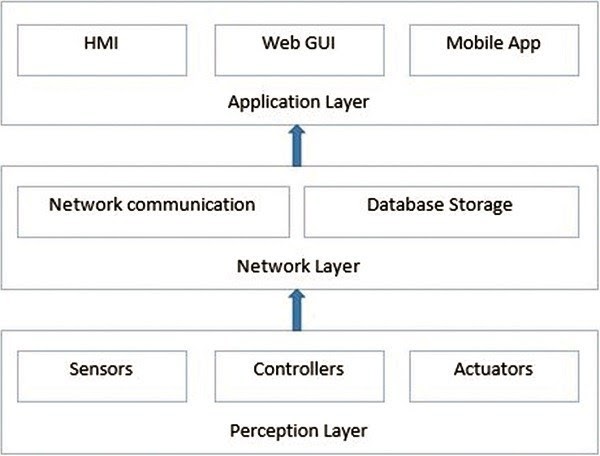
With the advent of technology, there is a vast spread in the use of Internet of Things (IoT) in various segments such as energy, cities, logistics, homes, industries, health, and agriculture. According to Gartner, there will be 26 billion devices using this technology by 2020. IoT is a technology that involves connecting physical things to the Internet thus, enabling them to communicate and transfer data over the Internet. Introduction of IoT has made the grid smarter, reliable, efficient and robust. Several architectures are available for IoT implementation in smart grid (SG). Basic three-layered architecture is shown in figure1.

The smart grid can be divided into four phases: power generation, power transmission, power distribution and consumer consumption. Role of IoT in all the four elements has been discussed below.

Power Generation

In the past few years, countries across the globe have realised the immediate need for setting up renewable energy systems such as solar and wind energy systems. In the case of solar energy, a large amount of area receiving proper sunlight throughout the year is chosen and PV cells are installed thus, making a solar farm. Recently, India has unveiled the world’s largest solar farm, Pavagada solar park with a capacity of 2GW. Also, the government of India has been promoting the installation of PV panels on rooftops of buildings to fulfil ever-increasing energy needs.

Similarly, a large number of wind turbines are installed in areas where wind velocity is relatively high. However, solar and wind power is intermittent in nature and depends highly on weather conditions and location. Therefore, it causes challenges for reliability and predictability of power supply. Here, IoT based systems use sensors such as temperature, humidity and wind speed to collect weather information in real-time and store the sensor data. The data helps in weather forecasting and hence, helps in forecasting energy availability in future.

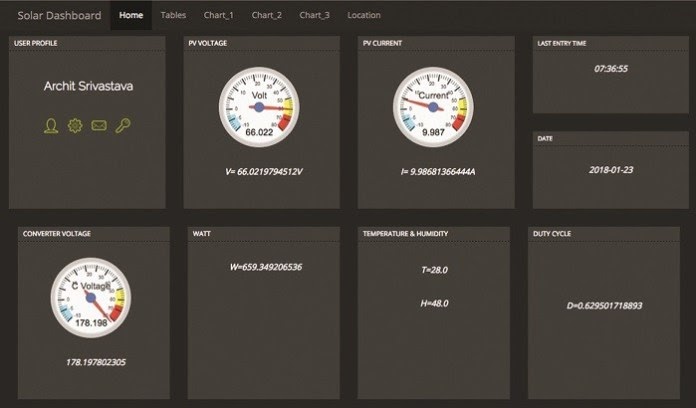
IoT technology helps the end-user to keep a check on electrical parameters like current and voltage. Current and voltage sensors are installed on the PV panel output, DC boost converter output and battery. It is then connected to a control unit. The control unit receives the sensor data and pushes it to a cloud database for storage.

The data is remotely monitored in real-time by the end-user on an app or web interface as shown in figure 2. Here, net metering can be realised more efficiently since the user can make an informed decision about selling stored solar energy back to the grid.  Similarly, IoT based real-time remote monitoring and control systems find uses in the wind, hydroelectric and thermal power plants to monitor the health of machinery, electrical parameters and control equipment over the internet.

Power Transmission

Traditionally, the monitoring of transmission systems was performed manually. Periodic visits were conducted to check the equipment status. Unlike generation and distribution systems, the transmission system is widely spread over a huge area. This poses a great challenge for manual patrolling as towers and lines are located in remote areas. IoT based online monitoring system for transmission towers provides a more robust and reliable means. The tower faces damages due to many factors such as cyclone, thunderstorm, earthquake, illegal construction and theft which might lead to the collapse of the tower. Tilt, vibration, weather sensors and cameras installed on towers can transfer accurate status of tower data to the officials.

The online monitoring of transmission lines facilitates early detection of faults and their resolution. Conductor temperature and wind effect can be monitored to keep a check on the line performance and status. Also, IoT based monitoring of electrical parameters at each tower using power analyser will enable the officials to identify if there’s a greater than expected loss of energy. Greater loss of energy may imply theft of electricity and hence the officials can act accordingly.

Power Distribution

The authorities can distribute power more efficiently in this IoT aided the smart grid era. Smart energy meters send the consumption data to the cloud. Hence, the authorities have complete information regarding the load consumption in each location and at each instant of time. They can reorganise their scheduling plans based on load requirement and make the distribution efficient and optimised. This will improve reliability and cost-effectiveness.

Also, there is a lot of human effort required in physically going and keeping a check on generation, transmission or distribution machinery. This human labour is reduced with the application of IoT devices and systems. The online monitoring helps in identifying the equipment requiring attention and its location. This helps the authorities in state maintenance, staff positioning for patrolling, equipment status reports and weather monitoring.

With the help of IoT, the system can identify faults immediately and take suitable action. A smart distribution grid may have a temperature, humidity, noise sensors for monitoring of distribution grid. Tower tilt sensors are also used to notify the authorities about tilt status of towers and to take action for maintenance if it has reached a certain tilt angle.

Consumer Consumption

The power from the distribution centre is distributed to consumers, both residential and industrial. Role of IoT in making the consumer consumption intelligent is discussed.

Home & Building Automation System

IoT plays a major role in the modern home and building automation systems. The system consists of:

  1. Intelligent lighting system:

    Passive Infrared sensors are used to monitor movement in the room and the lights are switched off automatically if there is no movement for a specified period of time. The light switch is connected to the internet and the end-user can remotely monitor the status of lights in each room and can switch on/off the lights from the web or app interface itself.

    .

  2. Intelligent Appliances:

    The modern-day appliances such as TV, Washing Machine, Refrigerator, and Air Conditioner etc. are connected to the internet thus making them smart. It is now possible to switch on the AC and set it to an optimum temperature over the internet, five minutes before you reach the home from work. Sensors such as power analyzers can be installed at the appliance socket to measure the power consumed by each appliance. The sensor can be connected to a control unit which will act as a gateway and transfer sensor data to the cloud. Thus, the end-user can remotely monitor and control each appliance.

Elevator monitoring system

There are multiple elevators in a building. It is difficult to know the status of each elevator at the same time. The control unit of the elevator can be connected to the internet and hence enable the end-user to check the status of all the lifts in a building on a web or app interface in real-time.

Safety and Security:

Gas and smoke sensors are used to detect fire and raise an alarm. The internet-connected control unit can automatically notify the nearest firefighter unit via automated mail or message over the internet in case sensors cross a specified threshold value. IoT based surveillance systems are used for real-time remote monitoring of home or building.

Smart Energy Meters

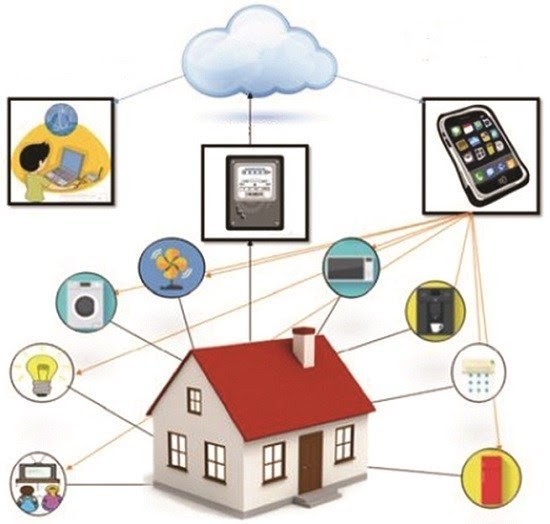
Traditionally, it required human effort to read power consumption at specific intervals from energy meters at consumer premises. It has disadvantages such as additional cost of meter reader, prone to human error and safety issues due to meters being installed inside consumer’s premises. Smart Energy meters are an essential element of the Smart Grid (SG). They send the power consumption data to the cloud. Both the authorities as well as the user can keep a check of the power consumed in real-time via a web or mobile app interface. The user can also perform analytics to predict the monthly bill based on his usage data. This IoT based Advanced Monitoring Infrastructure (AMI) is more reliable, robust, efficient and cost-effective. A block diagram depicting the smart home and smart energy meter are shown in figure 3.

Electric Vehicle Management System

Electric Vehicles (EVs) are gaining popularity and in the near future, the number of Electric Vehicles on road will increase in India. The EVs use battery systems to store energy and research is being carried out to implement a Vehicle to Grid (V2G) system as it’ll provide more stability and robustness during peak loads and failures. As per the need, the EV user can charge a battery (Grid to Vehicle, G2V) or can sell stored energy back to the grid (V2G). Using IoT, measured Battery State of Charge (SOC) is sent to the cloud and it enables users to remotely monitor SOC in real-time with the help of a web or app interface. Thus, IoT integration helps the user in real-time monitoring and it’ll help the user to make an informed decision to either charge the battery or send energy to the grid (G2V and V2G).

Smart Cities

IoT based systems are a key feature in modern-day smart cities. A smart city may have the following systems:

  1. Smart street lighting:

    IoT based smart street lighting can have components such as LDR (Light Dependent Resistor), Relays, Passive Infrared (PIR) sensor and real-time clock. The components connect to a control unit which is connected to a central control unit over the internet. All the street lights are monitored online and can be switched on/off over the internet. LDR changes resistance based on light and hence, can be used to adjust the brightness of lighting based on weather condition.

  2. Water Supply and Storage:

    Distance measuring sensors can sense the level of water in the storage tank. Hence, the water level is monitored in real-time and valves can be closed at a particular required level. Rate flow sensor checks if there’s any leakage between two successive sensors. The rate flow is monitored online and any sort of leakage or theft is reported.

  3. Surveillance:

    IoT based surveillance systems are being monitored in real-time by the authorities remotely. In case of an accident or other incidents, the captured video can be analysed using image processing techniques and necessary action can be initiated

Conclusion

IoT has proved to be a revolutionary technology and has brought immense scope and opportunities for innovation in every sector. With the energy sector pushing its focus towards renewable energy and electric vehicles around the corner there is ed for utilities to invest in innovation which brings reliability, robustness and cost-effectiveness to the existing grid elements. We can achieve real-time remote monitoring and gather information through sensors. The dataset can be analysed by using machine learning algorithms to optimise scheduling, studying and predicting load patterns and increasing efficiency. The demand for energy has been on a rise consistently in India and implementation of IoT in the t grid will definitely benefit the utilities.

Impact of Machine Learning on Healthcare industry 2020

ML for healthcare

How does Machine Learning revolutionize the Healthcare industry in 2020?

Healthcare is one of the most crucial industrial sectors. Not only it adds up billions of dollars to the GDP of countries, but having adequate healthcare facilities are directly related to the development of a country. Healthcare is usually too expensive in developed countries and lacks appropriate infrastructure in developing and underdeveloped countries. Healthcare industry, along with education, is one of the core sectors which directly impact the living standards of a country.

The phrase Machine learning is self-explanatory. In layman’s terms, it means the ability of a machine to learn a process and perform it without external assistance. Machine learning for healthcare algorithms use mathematical models based on sample data or ‘training data’. These mathematical models are then used to make predictions without being explicitly programmed to perform the task. mHealth is an evolving industry that bridges the gap between healthcare providers and patients.

In today’s world, several technologies can improve the standards of the healthcare industry and reduce costs at the same time. Countries and firms are striving to go ahead in the race to achieve smart healthcare. Machine Learning for healthcare is one of these technologies which can transform the way how healthcare works. It is a subset of Artificial Intelligence that has massive potential in businesses and space exploration. A lot of healthcare providers are investing money in Machine learning and IoT to enjoy the endless benefits in 2020.

When it comes to healthcare, machine learning has a lot to offer. Researchers have used Machine Learning algorithms to detect cancerous tumors and identify skin cancers. Besides detecting cancers, Machine learning can also improve the sensitivity of detection and provide personalized care to patients. In this blog, we’ll explore the possibilities of how machine learning can influence the healthcare industry.

Different ways in which ML impacts the healthcare sector

  • Medical Imaging Diagnosis
    Experts believe that medical images occupy the most substantial data source in the healthcare industry. There are minute details that the human eye might miss when analyzing images like CT scans or X-rays. Machine Learning algorithms, on the other hand, can process a copious amount of images in a matter of seconds while keeping an eye on the tiniest of details. Numerous studies have been conducted to compare the performance of AI and humans for analyzing medical images. In most of them, machines have performed better than trained professionals when it comes to identifying abnormalities in medical images.
  • Disease identification and diagnosis
    Identification of a disease at the right time can sometimes be a question of life and death. Most diseases have common symptoms, and it is not uncommon for a person to be misdiagnosed. Healthcare professionals often fail to recognize the disease on time due to the many overlapping symptoms. Here, machine learning for healthcare can be instrumental and could be a lifesaver in a literal sense.
    Machine learning algorithms can predict the occurrence of diseases at very early stages so that it can be diagnosed adequately. Researchers at MIT’s Computer Science and Artificial Intelligence Lab have come up with a deep learning based model. This model can detect breast cancer up to 5 years in advance.
  • Robotic Surgery:
    Robotic surgery is becoming increasingly popular among medical professionals due to the enhanced precision it offers. Robots can perform complex procedures that can be difficult to perform via conventional methods. From gynecology to nephrology, modern robots can perform surgical operations in multiple domains.

    Machine Learning algorithms could further enhance the precision of these robots. ML can potentially eliminate the risk of human error while performing surgeries.

  • Personalized medicine:
    AI and Machine Learning can go a long way when it comes to designing a personalized medication program for each individual. Machine Learning can be used to analyze multiple data sources like age, genetics, lifestyle data and wearables data to develop personalized treatments for several ailments. Researchers have been able to design personalized medications for diseases like cancer, diabetes and clinical depression.
    IBM Watson Oncology is leading the race in providing personalized cancer treatment. They analyse the medical history of patients and generate multiple treatment options.
  • Drug Manufacturing:
    Research and development is one of the critical areas that could profit by using Machine Learning. Pharma companies spend billions of dollars on R&D, and the process can be time-consuming. Machine learning can drastically reduce the cost, and the time it takes to develop new drugs.

    Microsoft is one of the tech companies that is exploring the pharma field by leveraging AI-based technologies. Their Hanover project is aimed at developing new drugs for cancer treatment by using deep learning and machine reading technology.

  • Outbreak Prediction
    Due to factors like antibiotic resistance and weak immunity, outbreaks have become a frequent occurrence. Coronavirus in China being the latest one of them. Outbreaks can very hard to predict and can cause incredible loss of life in a matter of days.

    Epidemiologists are now using AI and Machine Learning algorithms to analyze data and predict possible epidemics.

    Outbreak prediction can be crucial for developing countries as they lack resources to deal with them. Timely detection of possible outbreaks can allow these developing countries to prepare themselves for any such calamity.

  • Improved Radiotherapy

    Doctors are keen on the prospects of Machine learning in the field of Radiology. AI-based techniques could be used to prescribe the radiation dosage for each patient.
    There are types of lesions and tumors that can be difficult for radiologists to detect. This can lead to misdiagnosis of the disease. ML algorithms can learn from the plethora of samples on hand and can perform precise identification.

In a Nutshell

Effective and affordable healthcare is the right of every human being. Researchers are striving to achieve exactly that by combing the fields of medicine and Artificial Intelligence. Machine Learning for healthcare is the most crucial aspect of AI that is witnessing a meteoric rise in the healthcare industry. As mentioned in the points above, it is clear that machine learning has tremendous potential to revolutionize the healthcare sector.

There are still numerous possibilities for AI in the field of medicine that are yet to be discovered. Machine learning is already making rapid strides in robotic surgery, oncology and R&D of drugs. Not only can AI save costs but can also prove to be a lifesaver for many of the future patients.

How to create an App like TikTok? How much does app like TikTok cost?

null

WHAT IS TIKTOK APP?

First of all we heard of Musical.ly in 2018 and we have just gotten a bigger and extended version of the karaoke platform. You may have seen a few videos online with the name TikTok lurking somewhere around the video ecosystem and you may be wondering what kind of app it is.

TikTok app is a universal music and video sharing platform and it might be the world’s fastest growing media app created by Chinese internet technology known as ByteDance and is referred to as “Douyin” by the Chinese in 2016. Its use of Artificial Intelligence with combination of a growing mobile internet is vastly changing the way data is distributed and received. It is considered to be one of the best video sharing apps that is loved by millions of users.

TikTok application is a popular video sharing app that has roughly 150 million active daily users and three times that many subscribers and its features include lip-syncing, people dancing, short clips (between three to sixty seconds) of things considered to be funny. It allows users make a short video on the mobile app, with a music to accompany them and they have full control over the videos. Other users can react positively to a post by filming their responses along with the original video or make a duet with the video. On average, users spend an average of 52 minutes per day and is popularly used among teenagers aged 16-25. From 2019, the app downloads have gone to 25% in the United States and 20% worldwide. Its in-app purchases bring about $3.5 million per month.

HOW TIKTOK WORKS?

First of all, you have to download it from the app store on the phone. There is no age limit for this video sharing app.

You are required to register an account so as to join the community by sharing and viewing videos but it is not compulsory though as you can use it without any account registered on it. It shows you recommended a bunch of recommended videos and you can follow them to stay up to date with their post.

For every 90 minutes spent on the app, you will receive a notification to take a break because of its addictive qualities as you are bound to get at least one entertaining video from the millions, which have been posted.

You make videos by holding a big red button and edit them afterwards unlike Snapchat.

One can also create a short sequence of pictures from your phone, and use the video.

There is no limit to the amount of videos that one can post but it only allows short recording time for your videos and you can explore every creative skill in you. The most popular videos are those that involve music but that doesn’t mean one cannot post one that doesn’t include music.

The magnifying glass at the bottom menu is for the most recent and popular videos, separating videos into different playlists that include gaming, art, comedy, dance, beauty and memes.

ALTERNATIVES TO TIKTOK

All videos created using TikTok cannot exceed one minute and this limits users’ options while recording videos; also the editing capabilities are considered to be somewhat limited and may require one to use other video editing apps. They include:

  • FUNIMATE: This video editor and video maker app allows you create any style of music video, slow-motion videos, compile various video clips together, video loops creation and a lot more. This video sharing app for Android and iOS has a very huge library with access to many popular songs as well as sound effects that makes it a very good choice for lip-syncing. In addition, you can add stickers, text to any video, make collaboration videos with friends by simply merging both recordings together but it requires users to make in-app purchases to access the advanced options.
  • CHEEZ: This is an amazing video maker app for iOS and Android. Users are made to do more than lip-syncing allowing features like vlogging, comedy or fashion videos and if your videos get a lot of likes, comments and shares, you get a reward for it and you also get prizes for watching and commenting on others’ posts. It allows cutting and trimming tools, remove mistakes made during video recording, plenty stickers, visual effects, live filters that enable you give lively content to other viewers and it is free.
  • DUBSMASH: This video messaging app is considered to be one of the oldest video apps on Android and iOS operating system that enables the use of thousands of different sounds in your videos, including movies and TV quotes. The app lets you add stickers and text overlays to your videos making them very captivating. It displays stories in two feeds allowing one to follow channels they may be interested in and keep track of videos posted by friends or colleagues. It is also free for all the platforms.
  • TRILLER: This entertainment platform allows users to record simple video footages and the auto-editing algorithm does the rest for you. It also allows you cut or trim videos, apply more than 50 filters, draw over videos and it is not a networking platform so there is no community aspect only allowing you share them on social media accounts. Justin Bieber, Kevin Hart, and Rita Ora have also used this app for making videos.

FEATURES OF TIKTOK & VIDEO SHARING APPS

Notable features of this video sharing app aside allowing interaction between users, like options and re-sharing content include:

  • Video Editing: This online video sharing app comes with different tool set with many effects for changing objects such as eye color, hair, lips and even adding make up to a person’s face. It allows many stickers, animations, masks, adjustments and text add-on.

  • Video Uploading:
    This is the most distinguished feature as users can upload new videos, already-made videos, and change playback speed of each video.
  • Reaction Recording: It allows other users take a video of someone else they like, record their reaction and post it on their accounts.
  • Live Streaming: Any video sharing platform should allow users make good live videos and receive feedback from those viewing the videos. In this case users can get virtual goods from followers watching the video that is purchased by TikTok coins. If you’re interested in getting TikTok coins cheaper, read the Cybernews article.
  • Soundtrack: It allows user to add their favorite songs to the video from its in-built library.
  • Social Sharing: All videos edited in the app can be shared on all other social media platforms.
  • Geolocation: The app displays users currently blogging live nearby.
  • QR Code Scanner: Each subscribed user is provided with a unique QR code so that it is easy to subscribe to view any user’s content.
  • Restricted Mode: It is an optional account setting that limits the content that may not be appropriate for young users. This can be activated by a password that is valid for a number of 30 days.
  • Screen Time Management: Allows users, including guardians to control time spent on the app. Setup time limits of 40, 60, 80 or 120 minutes and when the limit is reached will require the password to be entered to continue using the app.
  • Parental Control: This is a combination of screen time management and restricted mode and is known as Digital Wellbeing. It allows parents to setup password so that kids can only watch videos for a limited amount of time per day and watch filtered content only.
  • Risk Warning Tag: This prompts users to tell them content of the video they are about to watch should not be practiced or engaged in which include potentially dangerous activities.

STATISTICS OF TIKTOK

TikTok has 500 million active users worldwide making it the 9th social network site ahead of popular sites such as LinkedIn, Pinterest etc. and it is interesting to point that 150 million users are in China and use the Chinese version. It has been welcomed zealously by many Asian countries such as Cambodia, Japan, Malaysia, Thailand, India, etc. growing at a rate that took Instagram six years to gain such ground under four years. As of 2019, the app is available in 155 countries and available in 75 languages. Its western audience births from its upgrade from Musical.ly and the Eastern audience from Douyin, the much more familiar version in that region.

In the first quarter (Q1) of 2019, TikTok was the third most downloaded app with 188 million new users and it has grown by 70% when measured against the first quarter (Q1) of 2018 that is mind blowing. The growth of the app was driven by an increase of new users in India recording an estimate of over 88 million new users.

The live video sharing app is making rounds amongst teens and youngsters so it will be surprising to know that even with its growth rate, older social media users have still never heard of it. That was the design plan by the company as teens should be the target audience for the app. The creators took time to understand the younger generation in a better way and gave them the exact content they require that is not found in most popular competitive apps. The younger crowd can express themselves anyhow they want to and still give guardians can keep a watch over their children. Out of the group of people using the app, it may surprise you to know 56% of its users are males and the remaining 44% are females.

The average time spent by active users is 52 minutes per day. In comparison with other apps, people spend almost the same time on Instagram resulting to 53 minutes, a little less on Snapchat of 49.5 minutes and Facebook takes the lead of an average of 58.5 minutes on the social media app.

COST OF VIDEO SHARING APP DEVELOPMENT LIKE TIKTOK

null

Wondering how much does it cost to build a video sharing app like TikTok? Well, the cost of developing an app like TikTok depends on several factors like platforms, features, design, development team to name a few.

To design a video sharing app like TikTok one must have the following technologies and systems:

  • Video and audio transcoding allowing video and audio to play properly on any user’s device.
  • Universal operating system.
  • Artificial intelligence.
  • Cloud storage uses internet and central remote servers to maintain data and applications and is considerably cheaper than buying and maintaining lots of hard drive storage.
  • Feasible payment methods such as e-wallet or Paypal etc.
  • Real-time analytics and push notifications.
  • Content delivery networks.
  • Database to ensure mobile apps continue to use data that is continuously broadcasted
  • Database management tool used to manage the database.
  • Google Webkit Tool is an open-source set of tools used for building and optimizing complex browser- based applications.

After getting the technologies, the following personnel are required to put everything together:

  • Front-end and Back-end developers.
  • Andriod and iOS developers.
  • UI/UX designers.
  • Database expert.
  • QA experts.
  • Delivery expert.
  • Sales and marketing team.
  • Product manager.
  • Mobile developer.

It takes around 200 days to develop the TikTok app from the scratch, so the total cost for developing an app like that will be around $200,000 to $250,000. Note that this is just a rough estimate, it may reduce as the apps functionality are dropped and the price may go up if you decide to add more. We can help you with the best video sharing app script to help you get cost effective apps.

HOW TO MAKE A VIDEO SHARING APP LIKE TIKTOK?

Once you’ve made up your mind to create a video sharing app, you should conduct a market research and look for the best mobile app development companies. As there are several video sharing platforms in the market, you need to think out-of-the-box and come up with innovative ideas to create the best live video sharing app that stands out and makes your business reach new heights.

Here are some of the important tips to help to make the best video sharing app:

  1. Know your target market: When examining the TikTok, it is clear the app was made for teens so likewise when making something similar, you must understand the age group you are willing to target, their location, access to internet connection, and the type of devices that will be used to access the app and it is also good to know their financial situation. Pick a couple of features that will stand out to lure your audience so they are always eager to use the app. </li >
  2. Understand how to monetize the app and some methods include:In-app purchases: Make certain exciting features to be purchased with real money so users can enjoy those facilities when they make their purchase. You can also have different bundles so no one is left out. You want to capture every coin you can make from your audience.Fundraising: This is very vital at the beginning stages of the app, collect funds from people and businesses. If you want to develop the best video sharing app, you may look for the right fundraising options.Advertisement: This is very common with apps created these days that may include;
    • Cost per click – Advertisers will be required to pay every time users come across their ads on the app.
    • Cost per mile – Advertisers for a total number of impression of their ad in the app.
    • Cost per action – Advertisers pay only when the user clicks to lead to an action.
  3. Work closely with the development team by doing proper requirements analysis, planning, coding, testing and maintenance. Develop methods that define the project scope, the development workflow and features for building video sharing app like TikTok.
  4. Make sure users are attracted to the video editing app and make them engaged too. This will help your business grow.

CONCLUSION

TikTok is competing with the biggest players in the market and seems to be beating all the odds. It is aimed at making room for content creators and the ease in becoming one. It is high time you come out of the dark and pay critical attention to its potential.

Have an app idea? Discuss your video sharing app development requirements with us and we shall be glad to help you get the best solution.


Step by Step Guide to Build a Native App with Flutter

Where the popularity of the Native Apps seems never-ending and at the same point developers praise the features of Flutter a lot. So, before we get into the real game of building the native app with the Flutter, let’s gather some basic information about both, before we jump into how to build a native app with flutter.

Native App

When an App is made by keeping a certain platform in mind is a native App. Among all the platforms, the most obvious ones are Android and iOS. In both cases, the development asks for different hardware and software. Undoubtedly, this type of Apps gives the most seamless experiences to its users.

Flutter Framework

Flutter is a framework launched by Google, which is used by the developers to create mobile Apps. It is suitable for both iOS and Android as a platform. The unique part about this framework is, the code once created can be deployed in subsequent iOS and Android App development.

Some of the Benefits of Flutter App Development

  • When it comes to fast development, Flutter is highly competitive with the one-time code approach. Every time, you develop, there is a requirement of making a few changes in the code and you are good to go. Also, it lets the flutter app developer enjoy the same code for both the Android and iOS platforms.
  • This framework leads to less testing as you can have the same App for two platforms. Due to this, quality assurance becomes easy and faster.
  • Some of the selected designs are put forward by Google with an amazing framework known as Flutter. These designs are enough to keep users intrigued and there is a helpful option to customize the widgets as per your choice.
  • This allows your Apps to look the same even on the mobile phone with old versions of Android or iOS.
  • It is a great framework for the MVP i.e. minimum viable product. So, you can flawlessly showcase the App developed with Flutter to your investors to get a good response.

Now, as if we are much clear about the meaning of both the terms. Let’s know about the development process of the same.

native app with flutter

Step by step Guide To Build A Native App With Flutter

Assume, the platform for the development is Android for the native App. The foremost thing is to have an Android Studio version 3.0+ before beginning. Once you get it, you can now install the Flutter plugin.

Steps to download the Flutter plugin are as follows-

  • Click and open Android Studio and get on the open plugin preferences. (For the macOS users, it will be Preferences > Plugins whereas, for the Windows & Linux, it is File>Settings> Plugins)
  • Browse through the repositories and click on the plugin to install.
  • Opt for a “yes” when the installation of the dart plugin begins.
  • After that, click to restart

Once your restarting process is over, you can create a new project in it. After that, you should choose a Flutter application and enter a path for your SDK. Initially, you need to make the base for the next projects and after that, you can run the code generated once.

Now, find the Hello World code in the Flutter

This step is important to create a basic application. For that, you need to open your Android Studio Toolbar and select the new option. Then, select new project and click next. You can also give a specific name. While you will navigate through Flutter App, and search for your desired domain, you can get many sample codes. But, considering your favorite and the easiest one is the key to the best code.

Make use of Flutter Doctor

There are many great features embedded in the Flutter framework, but one of the fantastic ones is the command known as “Flutter Doctor”. Trust us, you will be glad that it exists and lets you check the machine set up for the right development. This will allow the developer to make such a local development environment for a great of the end product. All the inspection of the tools present and the ones that need to be on-board is done with the help of this feature. It is advisable to proceed further by satisfying the commanding Flutter doctor.

Set up those editors

You choose any editor or IDE as per your preference while working on Flutter. After all, flexibility is the beauty of this framework of Google, invented in the year 2011. However, going for the lightweight editors is great, you can choose Sublime text for such a development. Also, you can simply stick to your favorite one, throughout the development.

Get the idea about the Pub Package Manager

You should get enlightened with as many aspects as you can while developing a native App for the first time with the Flutter. Similarly, you should be aware of the pub package manager, to keep up with the dart packages present in the Flutter project. When you will try to unfold the things, you will find out about the file that imports the dart dependencies in the project. Once you know them all, your job is to install all the dependencies and keep them in a locked file. After that, upgrading the dependencies is also required and is possible with the command- $ Flutter package upgrade. Getting the upgraded version and being well-versed with the pub package manager, will prove out to be great for your development.

Conclusion- What you need to learn to make a happy development

This is just a little bit of the overall development with Flutter, there is a lot more to learn and know. The development process is not at all easy and can be difficult to tackle initially. You need to dive into the oceans of programming to develop a hybrid and great featured App. Initiate by learning the Dart programming language that is crucial for such a development. Also, you need to get versed with different widgets and reactive approach towards coding.

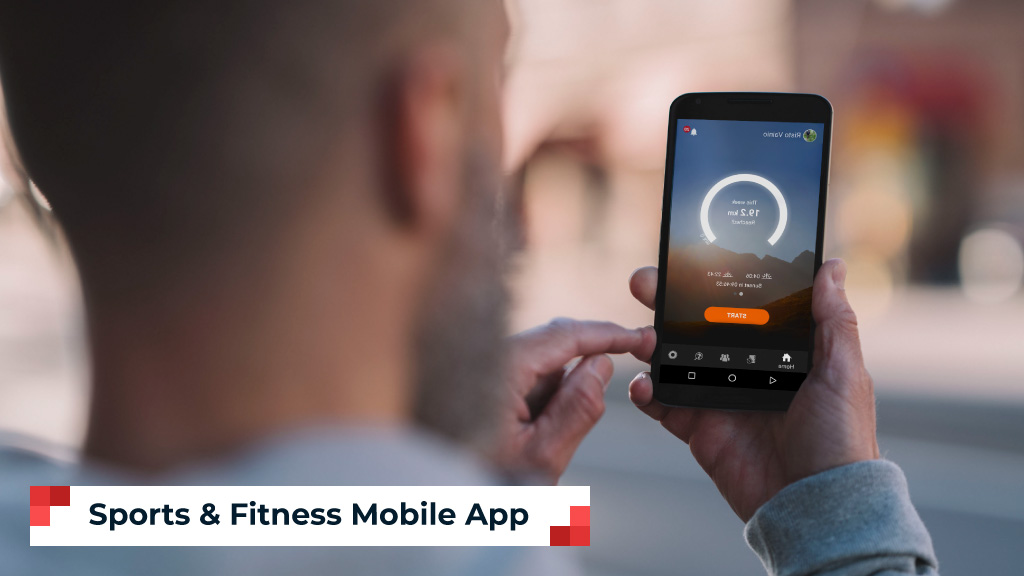
Advantages of Custom Sports & Fitness Mobile App Development

It is quite common for people to read about weight loss regimes and getting a much-needed push. But, these motivations last for a few hours and aren’t alarming at all. They need something that is permanent and keeps them on the track on a regular basis. This can be managed by a custom sports & fitness mobile app development. So, can you think of the perfect rescue to lose weight before New Year’s Eve or probably your birthday? Trust us on this, nothing can beat the assistance of a custom sports & fitness mobile app. This will boost your clients’ confidence by many times and make them even more interested in your services.

fitness and workout apps

Think like a pro in the fitness domain. You need to offer your regular customers an intriguing thing to stick around. Providing them the much-required tracking of what they eat, how many calories they burn and a report of their wellness, etc.will be an exceptional experience.

Custom Sport and Fitness Mobile App Development for your Studio

Undoubtedly, Mobile Apps are gaining popularity in every field. But in the field of sports and fitness, the response is extraordinary from the past few years. After all, this makes the life of a fitness enthusiast easier and helps them in a myriad of ways. No matter, whether you are just a beginner or an expert in your industry, you can always opt for custom app development for sports for fitness. Making it more personalized and giving the audience their desired requirements, will lead to a reliable and loyal user-base. This way you can also join the ever-revolutionizing industry of custom sports and fitness mobile apps.

fitness-trainer-app-banner

So, here are some advantages you will receive with custom sports & fitness mobile app development for your business:

Let your customers carry their studio

One can easily get the diet and workout regime on the App and can follow it without any hindrance. This will keep the user attached to your App, which will be better for your fitness business. These days, the ultimate benefit that you can give to your customers is the flexibility and comfort to practice things easily. So, with such development, you will not just facilitate your clients, but build a strong customer base for your business.

Do the product marketing on the App

Imagine your fitness App has a great active user base and you are promoting something. The chances of conversions will be so high in such a case, and you can also get the recommendations. This can be a great chance for you to have engagement as well as to make some hefty sales.

Everyday monitoring will keep your users on track

When someone is trying to lose weight, then the ones who keep them on the track means a lot. So, you can befriend your customers by giving them daily motivation by monitoring their process towards the desired goal. This is only possible when your App is tracking their movements and diet well.

Provide them healthy cooking ways and recipes

Nothing can be intriguing for the fitness enthusiasts than the healthy cooking recipes. Your App can provide them the healthy ways as well as the ideas for specific meals free of cost. And, people love things for free and this is something they can get a lot of benefit from. So, this thing is great in an overall sense. Also, giving them the alternatives of a few foods due to unavailability or any other concern is a fantastic move.

If you are thinking about the development of such an App, then here are some of the details you should know-

The investment required for the sport and fitness mobile app development

The core base for the cost of development of an App is the features are supposed to offer. Technology stack also has a role to play in deciding the amount of the capital. Each and every phase matters, from documentation of UI/UX design and from programming to QA testing. It is assumed that around 10 percent of the cost is used for the ideation and documentation and UI/UX design takes 15 percent of the money. The largest share of the capital is acquired by programming with 40 %. Whereas, project management and testing take the rest of the money equally. So, the custom sports & fitness mobile app development would be top-notch with the flexible cost.

Fitness Trainer App

Moving further, we must be sure of the features that are expected from the sport & fitness mobile app. So, here we are discussing some of the exclusive specifications that will rock your sport & fitness mobile app development for sure.

A physical activity tracker

Your App can get all the attention, with the customer-oriented physical tracker. Whether the user runs, cycle or simply walk, it should record every activity. There should be an option for the user to choose the overall activity or stick to a specific workout record only.

Read the success story of  physical activity tracker developed by us.

A personal coach app

The most intriguing feature would be to guide the user with the workout sessions and illustration of the right way to do any exercise. One can receive all the guidelines at their own comfort without any hassle.

Read the success story of a personal fitness trainer app developed by us.

A proper diet plan

We all know it is not beneficial to exercise without controlling diet. So, your sports & fitness mobile app development should provide a proper dietary regime as you can lose weight or gain muscles easily. A little customization won’t harm you, but definitely give a personalized sense to the App users.

Read the success story of fitness app that provides modern-day fitness tracking with dietary suggestions from experts.

Get your sports and fitness app developed soon

Now, as you are aware of how beneficial this sports and fitness app development can be for your business, skimping on it anymore would not be right. So, find a great mobile app development company right away and get your custom fitness and sports application development done. Also, do not forget to create a sense of uniqueness with the most advanced features in your App. Once the development is done, go ahead with the promotions. All the work should be done authentically to get benefited. And, once you get some customers, it will become easy for you to get great references. After all, facilitating the people greatly will lead to recommendations for sure.


Obstacles of Online Grocery Delivery Apps And Their Solutions

Undoubtedly, the most challenging sector of the retail market in the coming time is the grocery segment, focusing mainly on e-commerce grocers. Since a decade, different companies are trying to enter the online grocery market. But, many have failed, while few are able to seek the attention of potential customers. Online grocery delivery is a never ending process where the basic needs of the customers are first served. In other words, on-demand grocery delivery app is like any other grocery shop where customers can fulfill their basic demand.

According to survey, women dominates online shopping. And, at least 84% of women are the sole preparer of meals in the household. So of course, they have better knowledge of grocery products they need to buy  when there is a shortage. But, do you think online grocery delivery apps is really their cup of tea?  Well, I mean do they each time, when they need any grocery product they go to the different website make the comparison with others? And, then look for a discount and then wait for delivery? Of course, it sounds a bit of a hassle and  impractical to seek a great future of online grocery delivery apps. Here we have covered some major challenges faced by online grocery delivery apps development and popularity along with their solutions:

Obstacles of Online Grocery Delivery Apps And Their Solutions

online grocery shopping

1. Purchaser Habit 

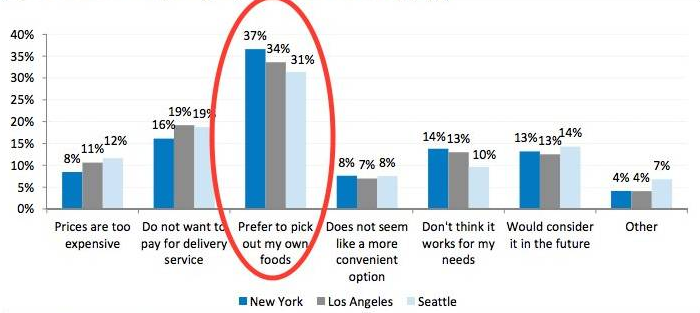
Notwithstanding the number of online supermarkets opening up, and the accommodation of shopping on the web, individuals still lean toward purchasing staple things from a physical store. The chart beneath obviously mirrors that shopper conduct.

Shopping Behavior

The details are from the US, yet only one look at it and you will understand this inclination of picking their very own nourishment is more typical than everything else on the planet. What’s more,  this is a result of the human instinct, we simply need to take a whiff of that melon, we need to grab a potato before being certain, and then mash it in the crate.

Arrangements:  Merging your online and disconnected shopping for food encounter is a smart thought in such a manner. Here are some ways on how you can enhance client encounter while keeping your costs low with your on-demand grocery app development

  • The client gets the chance to check things accessibility online & then visit the store, affirms the quality and gets them.
  • Client submits the request through the online entryway and gets the things  arranged at the store 

The over two models spare the conveyance cost. Presently, how about we talk around two interchanges that diminish operational expense while enhancing client encounter?

2. Capacity and Delivery Cost 

Transitory things require greater venture on capacity and conveyance framework (refrigeration). Exceptional warehouses, delivery holders and particular conveyance vans must be there to guarantee perishables are conveyed new. This requires heaps of capital. 

Arrangement:  Just-in-time supply framework coordinated with cutting-edge stock administration API can limit stock expenses. Aside from that, collaborating with a proficient conveyance specialist organization that has the correct vehicles to guarantee consumer loyalty is a smart thought from financial and operational points of view. 

3. Low-Profit Margins 

Clients are hesitant to pay for accommodation charges and need to get quicker conveyance and quality affirmation. Taking into account this specific need can really turn out as a budgetary bad dream for online food merchants. 

Arrangement: Implement resource light plan of action. Rather than securing your own armada of vehicles and staff to complete the conveyances for you, enlist a coordination organization. That will cost you not exactly the expense of vehicles and compensations consolidated. While consenting to the agreement arrangement with the conveyance specialist co-op, ensure you notice that between your office entryway and client’s doorstep, the merchandise to be conveyed is the specialist co-ops’ obligation. 

4. Wasteful Delivery 

It’s difficult to break the limit called hyper-nearby fragments with one conveyance framework, particularly when the clients anticipate same-hour conveyance. Item quality, time, and conveyance cost all these basic components force a tremendous test for an effective conveyance framework. Likewise, if there should arise an occurrence of unacceptable basic need items like expiry products, unlocked bundles or miss of any item or some other mishappening will dependably support hyper-nearby sections. 

Arrangement: Logical choice has collaborated with solid hyper nearby conveyance specialist organizations. And after that, there’s a cutting-edge arrangement conveyance through automatons. It might appear a feasible arrangement just in not so distant future, yet it would soon turn into a basic one.

Read More: How To Boost Your Grocery Business Through On Demand Mobile App

Conclusion:

Leaving on the hope that the true potential of online grocery delivery apps will soon be recognized and in upcoming time this sector will also take place. Of course, there will be ups and downs that will make the online grocery delivery all the more challenging. However, this will definitely get fixed by silver lining showed by new technologies and a user-oriented on-demand grocery app development. And, with a happy note, the business will seek the advantage of being an early bird, as the technologies will help online grocery to become mainstream. In the coming time, it will become a most reliable source for each one of us. Because, on-demand grocery delivery apps not only save our time and money but also you can seek quality fresh products at the best price.

Paint Visualizer App: Key Features and Cost Analysis

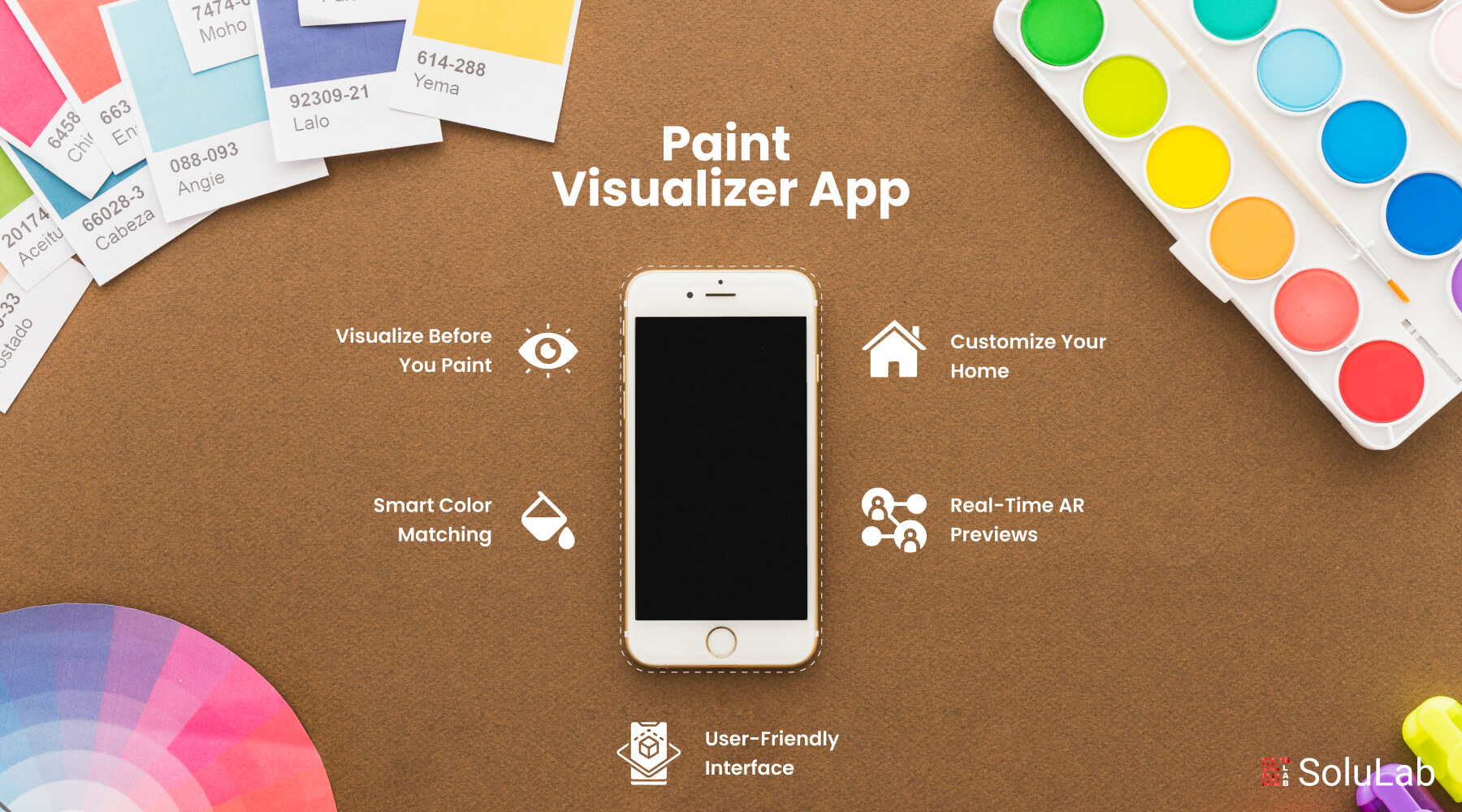
Paint Visualizer App

When it comes to home design, the colors you choose for your walls can make a significant impact on the overall atmosphere and aesthetic of your space. However, selecting the right paint color can be daunting, especially when you consider the numerous options available. Fortunately, technology has provided a solution that simplifies the decision-making process: paint visualizer apps. These apps empower you to see how different colors will look in your space before you even pick up a paintbrush. In this comprehensive guide, we’ll explore the ins and outs of paint visualizer apps, their features, benefits, and why partnering with an Augmented Reality App Development Company can elevate your home improvement projects to the next level.

What is a Paint Visualizer App?

A paint visualizer app is a digital tool that allows users to virtually apply different paint colors to the walls of a room using either pre-loaded templates or photos of their actual space. These apps are designed to provide a realistic preview of how a room will look with different colors, helping users make informed decisions without the guesswork.

The Evolution of Paint Visualizer Apps

Initially, selecting a paint color meant sifting through countless paint swatches, testing samples on your walls, and hoping for the best. The advent of paint color visualizer apps has changed this process by leveraging advanced technologies like AI and AR. Modern apps now offer a more immersive experience, enabling users to visualize color changes in real time.

Key Features of the Best Paint Visualizer Apps

When it comes to choosing the best paint visualizer app, several features stand out:

1. User-Friendly Interface: A good paint app should be easy to navigate, with a clean layout that makes it simple to switch between colors and apply them to your space.

2. Extensive Color Database: The app should offer a wide range of colors, including options from major paint brands, ensuring you have plenty of choices. If you need more customization, you might want to hire AI developer to create tailored features that align with your specific needs.

CTA1

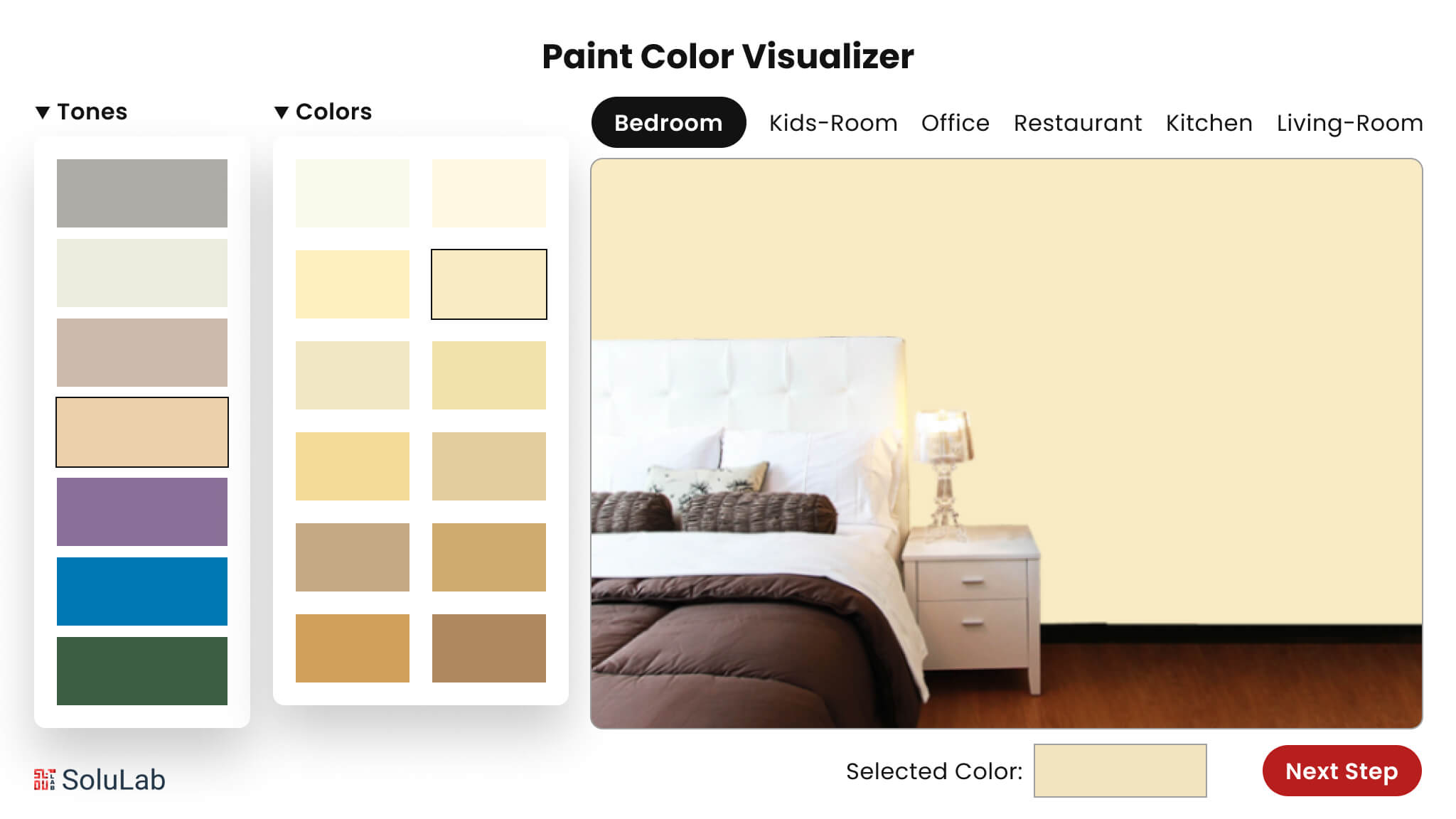
3. Room Paint Visualizer: This feature allows you to apply colors to different walls in a room, helping you visualize how the entire space will look.

4. Color Matching App: A color matching app lets you find the perfect paint shade that complements your existing decor or furnishings.

5. Augmented Reality (AR) Integration: AR paint visualizer features allow you to see colors applied in real time to your walls using your smartphone’s camera, providing a more accurate preview.

6. AI-Powered Recommendations: Advanced apps include AI paint color visualizer tools that suggest complementary colors based on your preferences and existing decor.

7. Virtual Room Painter: Some apps offer a virtual room painter feature that lets you experiment with different colors and combinations, giving you a complete look at your room’s transformation.

How to Use a Paint Visualizer App?

How to Use Paint Visualizer App

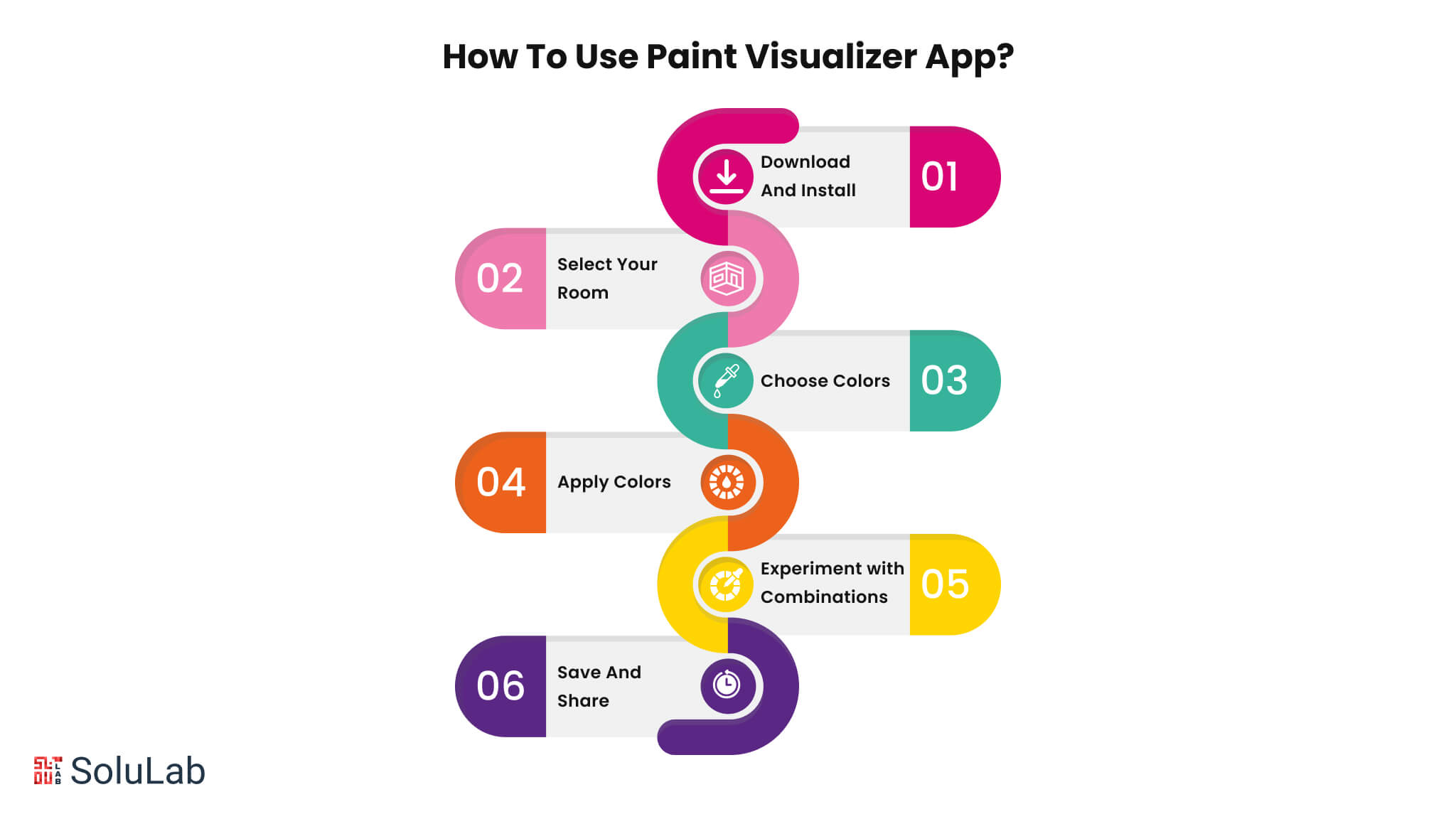
Using a paint visualizer app is straightforward:

  • Download and Install: First, download the app from your preferred app store.
  • Select Your Room: You can either use pre-loaded room templates or upload a photo of your room.
  • Choose Colors: Browse through the color options and select the shades you’re interested in.
  • Apply Colors: Use the app’s tools to apply the chosen colors to your walls, either in the template or directly in your photo.
  • Experiment with Combinations: Try out different color combinations until you find the one that fits your vision.
  • Save and Share: Most apps allow you to save your visualizations and share them with others for feedback, a feature often enhanced by an AR/VR in Manufacturing approach to ensure seamless collaboration and decision-making.

Top Use Cases for Paint Visualizer Apps

  • Homeowners: Whether you’re painting a single room or your entire house, a house paint visualizer app is invaluable for seeing how different colors will look before making a purchase.
  • Interior Designers: Professionals use these apps to present color options to clients, providing a clear visual representation of their ideas, and demonstrating the effectiveness of AI applications in streamlining the design process.
  • Retailers: Paint companies and home improvement stores use visualizer apps as a sales tool, helping customers choose the right colors with confidence.

Paint Visualizer

The Benefits of Using a Paint Visualizer App

1. Cost-Effective: By avoiding the trial-and-error method of testing paint samples, you save both time and money. The Paint Visualizer app cost is typically low, with many apps offering free versions with basic features.

2. Time-Saving: Quickly narrow down your color choices without having to physically paint and repaint your walls.

3. Enhanced Creativity: Experiment with bold or unconventional colors that you might not have considered otherwise, knowing you can see the results before committing.

4. Improved Decision-Making: With the ability to visualize colors in your actual space, you can make more confident decisions, showcasing one of the practical AI use cases in enhancing user experiences.

Developing a Paint Visualizer App

For those interested in creating their own paint visualizer app, it’s essential to incorporate the latest technologies like AI and AR. A successful app should feature an extensive color database, high-quality rendering, and an intuitive user interface. The process to develop paint visualizer app involves collaboration between developers, designers, and color experts to create a tool that meets the needs of modern users.

The Future of Paint Visualization

As AI and AR technologies continue to evolve, the capabilities of paint visualizer apps are expanding. AI home color visualizer tools can now analyze your room’s lighting and decor to suggest the best paint colors, while AR paint visualizer features bring a new level of realism to the process, allowing you to see colors in real-time through your smartphone.

CTA2

Conclusion

In conclusion, a paint visualizer app is an invaluable tool for anyone looking to refresh their home with confidence. Whether you’re using an AR paint visualizer to see how different colors will look in your space or relying on an AI paint color visualizer to find the perfect match, these apps provide a seamless experience. The best paint visualizer apps offer features like saving and sharing visualizations, making it easier to collaborate and make decisions. If you’re looking to develop a paint visualizer app or enhance an existing one, working with an AI development company like SoluLab can ensure your app stands out. With their expertise, you can create a room paint visualizer or virtual room painter that meets user needs while keeping paint visualizer app costs manageable. When you hire an AI developer from SoluLab, you gain access to top-tier talent that can bring your vision to life, ensuring your house paint visualizer app offers the best user experience and features.

FAQs

1. What is a paint visualizer app, and how does it work? 

A paint visualizer app allows users to see how different paint colors will look in their space before making a purchase. By uploading a photo of your room or using a preset image, the app virtually applies selected colors, helping you make confident decisions.

2. What are the key features to look for in the best paint visualizer app? 

The best paint visualizer apps should include features like a wide range of color options, the ability to save and share visualizations, and compatibility with major paint brands. Some apps also offer AI paint color visualizer capabilities for more accurate color matching.

3. How much does it cost to develop a paint visualizer app? 

The paint visualizer app cost can vary depending on the complexity of features, design, and the expertise of the AI APP development company you choose. Costs can range from a few thousand to tens of thousands of dollars.

4. Can I use a paint color visualizer app to match colors from different brands? 

Yes, many paint color visualizer apps and color matching apps allow you to match colors from different brands, helping you find the perfect shade across various options.

5. How does an AI paint visualizer enhance the experience compared to a standard paint app? 

An AI paint visualizer uses artificial intelligence to provide more accurate color matching and predictive analytics, offering personalized color recommendations based on user preferences and trends.

6. How does Generative AI impact the future of AR and VR in paint visualizer apps? 

Generative AI in the future of AR and VR is revolutionizing paint visualizer apps by offering more immersive and interactive experiences. This technology enables real-time visualization with precise color rendering, making it easier to visualize and choose the perfect paint colors for your space.

Know How blockchain in retail Industry is beyond inventory management

Prior to introduction of enterprise blockchain developmentdid you have any idea it is coming into the retail industry too? People are working on making the retail industry to reach to the highest pace! Like every industry, retail is also facing some of the major issues. Well, blockchain in retail and inventory management can alter these situations, read how? 

Blockchain In Retail And Inventory Management

For starters, let’s get to know the general functions which blockchain provides us with!

  1. The recording of data without the alteration of third party keeping it away from all the threats of being fake ones.
  2. Blockchain records the data in a sequence. This makes it even harder  for any person or professional hackers to hack.

Now let’s think how the blockchain technology can bless the retail industry. The retail industry is one of those which requires and consist of the supply chain. Further, it has numerous parties involved within the procedure like manufacturers, suppliers, retailers and the end consumer. 

blockchain in retail market

Situations where the retail industry needs blockchain for the better and free flow of goods!

  • There are many products for which we cannot make out if they are the real or the fake ones. This is an era where  many frauds and fraudulent activities take place. Here, we need to find a solution to fight these bugs that are the main obstacles in the way. Blockchain helps in making the product get through some of the measures to ensure that the product passes all the details in order to be referred to as the real ones.
  • Blockchain eliminates the gap between the supply chain and the parties involved in it! When the products reach from the supplier or manufacturer to the retailer, there is always an involvement of the third party. Third-party involvement in a way may pay some tricks to modify the goods and take advantage of it. Blockchain helps in the verification of the good to safely reach the retailer and then to the consumer. 

Other than these, there are many major aspects of the retail industry about which the blockchain workers are taking care of and would help in the revolutionizing of the industry.

Managing the inventory

It is quite difficult to know where the product is coming from or stored in. It could be in the store or online or in the warehouse. However, it is important to know the status in order to make your business away from fraudulent activities. Blockchain helps in the inventory management. It tracks the location of the goods in order to keep the receiver aware of the updates of the product. Blockchain makes it quite easier for the supply chain to know the status of the goods.

Tracking the goods with the blockchain is more reliable which will make the consumers have trust over the retailers for the goods as all the information will be transparent for them too. 

Securing the product

As we already know that the products came from the particular supplier. And, the blockchain ledger records the entire journey of the product. This transparency helps the consumer to take steps and know whom to contact in case of some problems with the product. 

There are many cases in which the consumer finds themselves clueless about the safety of the product and get to know that product that reached them has some wrong with it. In these cases, blockchain come to the rescue. It helps the consumer to contact the one who is actually responsible for the loss. 

This feature of blockchain again helps the consumer and retailer to build a trustworthy and reliable relationship among them for a long run. Hence, building the retailers reputation in the market with other consumers at the end.

Protecting the odds

Products like luxury goods, cosmetics and, high-end products come with a measure to be gone through in order to be certified as the real ones. Many of the online websites sell duplicate ones and divert the consumer of purchasing the real ones. Blockchain help in these products of passing these measures and get to the market with certain certification.

Transparency 

This feature adds up to one of the most reliable ones helping the consumer with their right to information for everything they buy. Information, with the help of the ledgers, is notified to all the users of the chain and in turn, provides a glass through which consumer can see everything about the product.

Storing data

There is a lot of information about the consumers that are needed to be recorded. The tasks are made easy with the help of blockchain as the record one added into it will never be modified or deleted by any third party.

Over to you – Blockchain in retail is beyond inventory management

Providing a decentralized system to the retail industry would be benefiting for all of us as you could make out from the article! How do you think the blockchain has something to gift us within the retail industry? Do let us know about it.


[Infograph] Blockchain in Sportsbetting

Since a long time the sportsbetting industry is being guarded by a shield of secrecy. The misinterpretations on sportsbetting slowly washed out with the implementation of advanced technologies, However, still, sportsbetting falls back in offering transparency and trust. Sportsbetting operators face few issues and they try to detect the spam or fraudulent accounts and secure all credited funds. If anything goes off the plan, things might become difficult for the operators. Also, they may find themselves in deep trouble. To protect users accounts, funds, and their personal information, betting sites started using blockchain development technology.

Before the introduction of blockchain technology in sportsbetting, odds were finalized without users knowledge. But, blockchain transformed this system completely. This novel technology has made betting sites and their odds transparent and enough  trustworthy to believe in them.

Blockchain in Sportsbetting

Blockchain gives bettors to get complete control over the sportsbetting procedure. From rectifying odds to placing bets and then executing this process with the help of blockchain betting becomes painless than ever. Blockchain will stop the intervention of third-parties with the help of peer-to-peer betting system. With the help of blockchain, one can place their bets and make deposits. Also, this technology keeps players away from slow betting procedures and makes sportsbetting faster and smoother.

Transactions on the blockchain are quicker with less or no transaction charges at all. As all of us know that the sportsbetting industry has been through a lot of ups and downs, the interest and enthusiasm of players for betting never faded. We can’t disregard the truth that betting is entirely based on luck and the outcome of something. Blockchain becomes an add-on to sportsbetting with its advanced security methods and transparency.

To provide complete information on ‘Blockchain in sportsbetting’, here we present an informative and attractive infographic.

blockchain in sportsbetting


WhatsApp Telegram