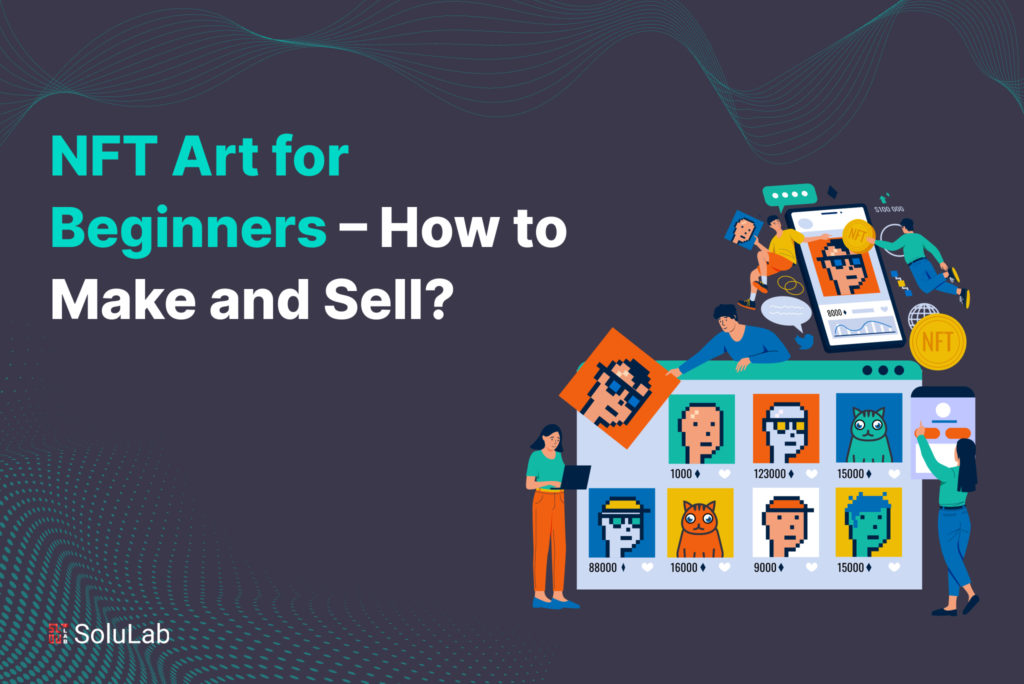
Art keeps changing, and one of the biggest shifts of the last few years has been Non-Fungible Tokens (NFTs). These digital tokens changed how people make art, own it and trade it. New to NFTs? Curious whether you could sell your own digital work? Good. This guide walks you through NFT art from the ground up, so you finish with a clear idea of how to create a piece and actually put it up for sale.
Understanding NFT Art
NFT stands for Non-Fungible Token. It sounds technical. It isn’t, really. NFT art is digital artwork with one important twist: the technology sitting underneath it, which is blockchain.
- Blockchain Technology: Every NFT lives on a blockchain, a decentralized digital ledger that cannot be quietly edited after the fact. That ledger records who owns a piece and where it came from. With physical art, proving a work is genuine can be a headache. An NFT gives you proof of ownership that is hard to dispute, plus a one-of-a-kind digital fingerprint for every artwork.
- Digital Asset Ownership: Ownership works differently here. Buy an NFT and you are not just getting a copy of an image. You are getting a digital certificate that says this specific piece is yours. Because it sits on a blockchain, that record is transparent and very difficult to tamper with.
Check Out The Blog: How To Launch Your Own NFT Marketplace Website in Less Than 2 Days?
Why Are Artists Embracing NFTs?
For artists, the appeal is pretty simple. NFTs let you sell straight to your audience, with no gallery or agent in the middle taking a cut. You keep more of the money. You keep more say over your work, too. So it is hardly surprising that so many artists have jumped in to see what this new market can do for them.
Money is only part of it. NFTs also give artists new ways to reward the people who back them. You can attach unlockable extras, like behind-the-scenes footage or special editions, that only the collector gets. That ongoing, two-way relationship between artist and buyer is changing how the art world works.
Process of Creating NFT Art
So much for the theory. Now the fun part: making something. And no, you do not need to be some digital art prodigy. If you like making things, you can take part.
Read Our Blog Also: Everything You Need to Know About Metaverse NFT Marketplace Development
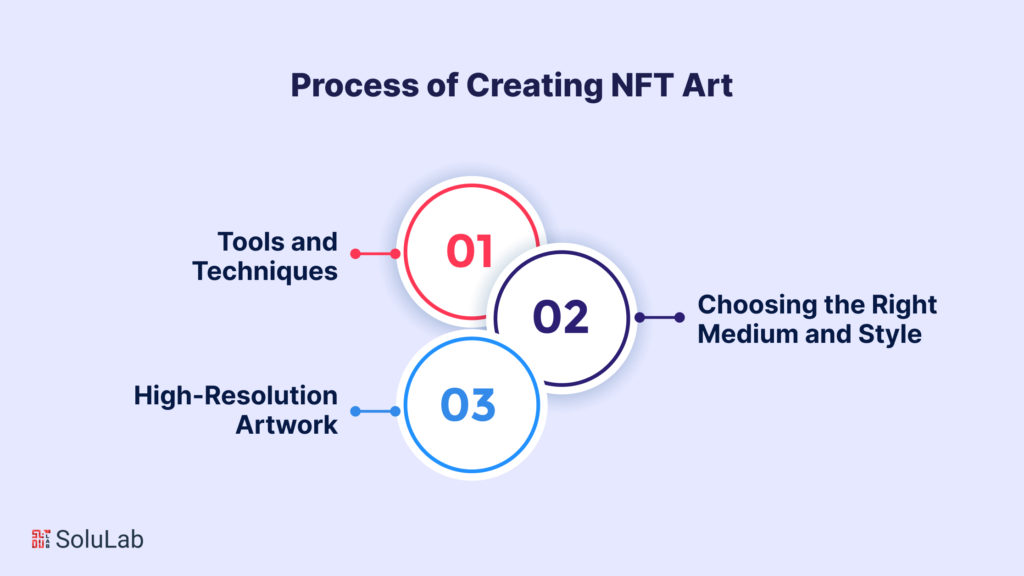
- Tools and Techniques: First, tools. There is plenty of approachable software built for digital art. Adobe Photoshop and Procreate are common picks, and GIMP is a solid free option. None of them is “the right one.” The best choice is whichever fits the way you already like to work.
- Choosing the Right Medium and Style: Almost any medium or style can become an NFT. Painters, illustrators, 3D artists and photographers all have a place here. Try a few styles and see which one feels like you. That variety is honestly one of the best things about NFT art: there is something for nearly every taste.
- High-Resolution Artwork: Work in high resolution. Always. Sharp, high-quality files show your art at its best and let buyers zoom in on the details they are paying for. It also tells collectors you take the work seriously.
Preparing Your Art for NFT Sale
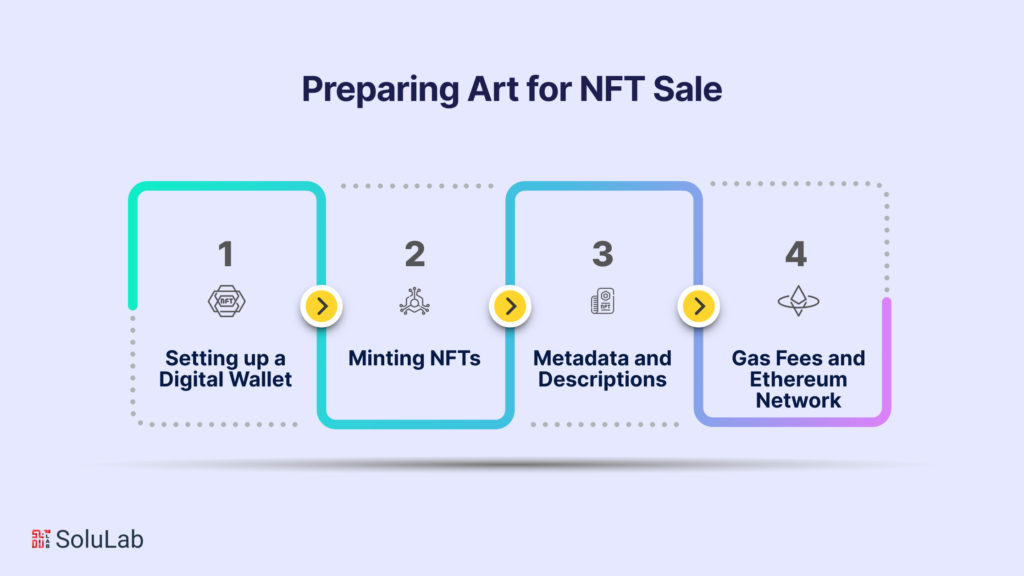
You have made the art. Next comes getting it ready to sell as an NFT, and there are a few steps you should not skip.
- Setting up a Digital Wallet: You cannot do anything with NFTs until you have a digital wallet. Think of it as a vault for your art. MetaMask and Trust Wallet are two popular choices. A wallet holds your NFTs securely and lets you connect to marketplaces. Guard your private keys carefully. Lose them, or leak them, and whatever is in that wallet can be gone for good.
- Minting NFTs: Minting turns your digital artwork into an NFT. The exact flow depends a little on the marketplace, but it usually goes like this: upload the art, add metadata (covered below), then confirm. That confirmation is the moment your piece becomes a unique asset on the blockchain.
Read Also: Benefits Of An NFT Marketplace On Cardano
- Metadata and Descriptions: Metadata is how your NFT introduces itself. Think of it as the artwork’s backstory. Say what the piece is, how you made it and anything else a buyer might want to know. People buy stories as much as images, so a good one can make your work far more appealing.
- Gas Fees and Ethereum Network: Understand gas fees before you mint anything. They are the transaction fees charged on the Ethereum network to mint and transfer NFTs, and they move around, sometimes a lot. Check current rates before you commit. Some marketplaces also let you pick when to mint, which can help keep costs down.
NFT Art Platforms
Minted and ready? Now you need somewhere to show and sell your work. Marketplaces are where collectors browse and buy, so picking one that suits your goals matters more than most beginners expect.
- Overview of Popular Platforms: There are a lot of NFT marketplaces out there, each with its own features and crowd. OpenSea, Rarible, Foundation and Mintable are among the best known. Look into these NFT marketplace platforms and see which suits your art. Compare the size of the user base, the fees and how pleasant each one is to actually use.
- Creating an Artist Profile and Portfolio: Your marketplace profile is basically your own small gallery. Write a bio that tells your story and put your best pieces up front. Then use the space to talk with buyers and other artists, and let them follow how your work develops.
One thing to keep in mind: the marketplace you pick can make a real difference to how many people see your work and how well it sells. Do not rush it. This choice shapes a lot of what comes next.
Pricing and Marketing Your NFT Art
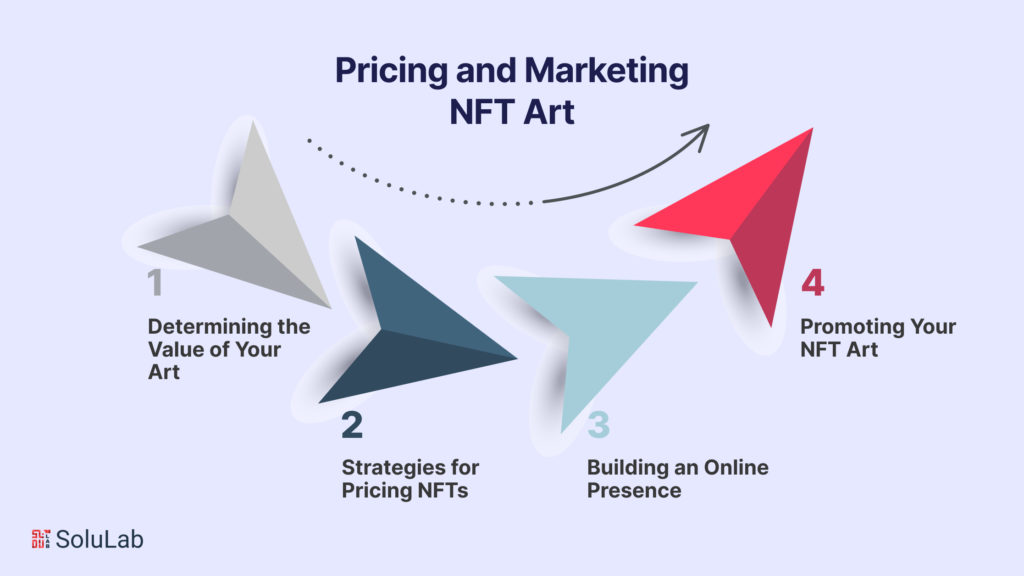
Your art is listed. Now the harder questions: what should it cost, and how do people find it?
- Determining the Value of Your Art: Pricing is tricky. Your reputation, how much demand there is for your work and how scarce each piece is all affect what it is worth. Look at what similar pieces sell for, and talk to people in the community to get a sense of fair value. Expect to adjust as you learn. Almost everyone does.
- Strategies for Pricing NFTs: You have options: fixed prices, auctions, reserve prices. Each has strengths and fits a different situation. Try a couple and stick with whatever matches your art and what you want out of it.
- Building an Online Presence: Online, your presence is your business card. Show up regularly on social media, art forums and NFT communities, and get to know buyers and fellow artists there. Share how you work, the behind-the-scenes moments, the messy drafts. A loyal following can make a big difference to your NFT sales.
- Promoting Your NFT Art: Good art does not sell itself. Post your work on Twitter, Instagram and TikTok. Join NFT conversations and talk to your audience like a person, not a billboard. Discord and Clubhouse communities are also good places to meet people who love art.
Selling Your NFT Art
Your work is out there now. But selling NFT art for beginners effectively takes its own set of skills. Here is how the selling side works, and how to give your NFT art drop the best shot at going well.
Tips for a Successful NFT Art Drop
Timing matters a lot with NFTs. When you plan a drop, think about market trends, what else is happening that week and when your audience is actually around. Build some buzz with your community ahead of time. And spell out exactly how buyers can take part, because confused buyers tend to leave.
Read Our Blog Also: How to Build an NFT Marketplace from Scratch?
- Handling Auctions and Fixed-Price Listings: You can sell NFTs by auction, at a fixed price, or with a mix of the two. Auctions add urgency and get buyers competing. Fixed prices are predictable. Try both and watch which one your collectors respond to.
- Managing Royalties and Secondary Sales: Here is one of the best parts: NFTs can pay you royalties on resales. Every time your piece changes hands, you can get a percentage of the sale. Set your royalty rate when you mint, and check how each platform handles royalties, because they do not all treat them the same way.
Navigating Legal and Ethical Considerations
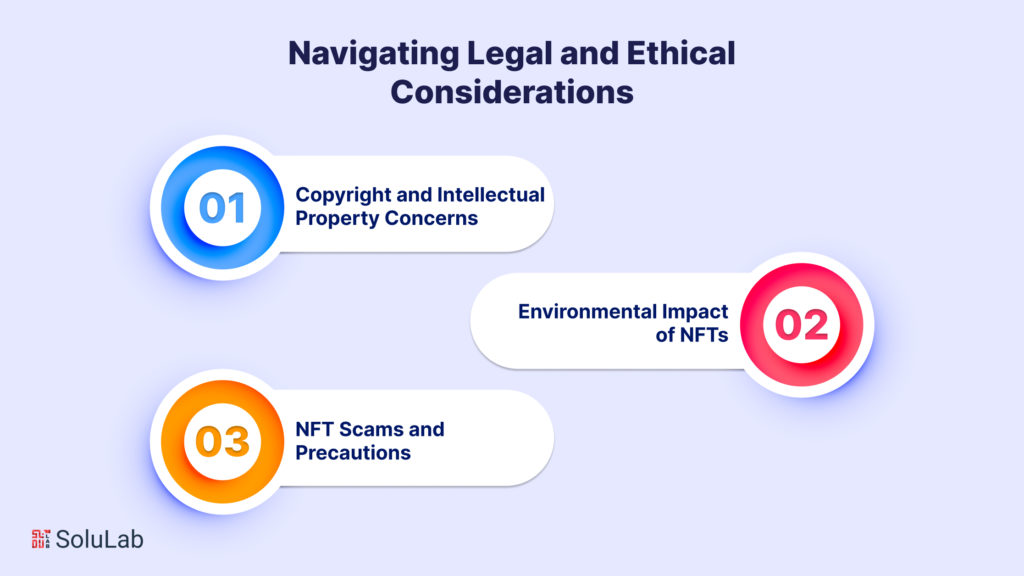
Selling art as an NFT comes with legal and ethical responsibilities. Do not treat them as an afterthought.
- Copyright and Intellectual Property Concerns: Make sure anything you mint does not break someone else’s copyright or intellectual property rights. Using third-party material? Get the permissions and licenses first. Treat other creators’ rights the way you would want yours treated.
Read Also: Best Tron NFT Marketplace Platforms of 2025
- Environmental Impact of NFTs: People have raised real concerns about the environmental cost of the blockchains behind NFTs. Some, Ethereum among them, have been criticised for heavy energy use. If that bothers you, look at greener blockchain options, or offset your footprint through things like carbon credits.
- NFT Scams and Precautions: Sadly, the NFT space has its share of scams. Be careful with buyers, stick to reputable marketplaces, and check both that the art is genuine and that the seller is who they say they are. Staying informed and a little suspicious is the best protection you have.
Conclusion
If you have followed along, you now know how to make and sell NFT art, and what to watch for on the legal and ethical side. Start small: one piece, one wallet, one marketplace. The White-label NFT marketplace development services space keeps shifting, and artists who learn by shipping real work are the ones best placed to find their opening in it.
SoluLab is a technology company known for its blockchain expertise and development services. It has a track record of building new solutions and is active in the NFT art space. Its experience with blockchain and smart contracts can help artists and creators who are just getting into NFTs. Maybe you want to mint NFTs, look at greener blockchain options, or just need help with the technical side of NFT art. Either way, SoluLab’s experience and focus on current technology make it a sensible partner to consider. Its blockchain work ties in closely with what NFTs can offer artists around the world.
Looking for top-notch NFT developers who specialise in cryptocurrency and blockchain solutions? You have found them. Our experienced NFT developers offer premium NFT services, including blockchain and smart contract development to automate your processes. We build platforms that are easy to use but technically advanced, along with highly secure custom digital wallets, all shaped around your specific business needs.
Get a fully customized white-label NFT art marketplace with support for multiple blockchains, and give your art NFT buyers a smooth way to bid and buy. Contact SoluLab today to start your NFT project with confidence.
FAQs
Shipra Garg is a tech-focused content strategist and copywriter specializing in Web3, blockchain, and artificial intelligence. She has worked with startups and enterprise teams to craft high-conversion content that bridges deep tech with business impact. Her work translates complex innovations into clear, credible, and engaging narratives that drive growth and build trust in emerging tech markets.