New marketplaces for digital collectibles pop up every day. Want a piece of that? Then you’ll need a marketplace of your own. Most of us already buy and sell on some kind of online marketplace, and by now blockchain and cryptocurrencies aren’t strange words to anyone.
An NFT (non-fungible token) is a marketplace that runs on a public blockchain. The model is still young. But it keeps getting more popular, and that’s exactly why so many developers and founders are building their own versions right now.
So, can you really build an NFT marketplace in less than 2 days? This post walks through what it takes, step by step, from the first idea to the day you go live.
What is an NFT Marketplace?
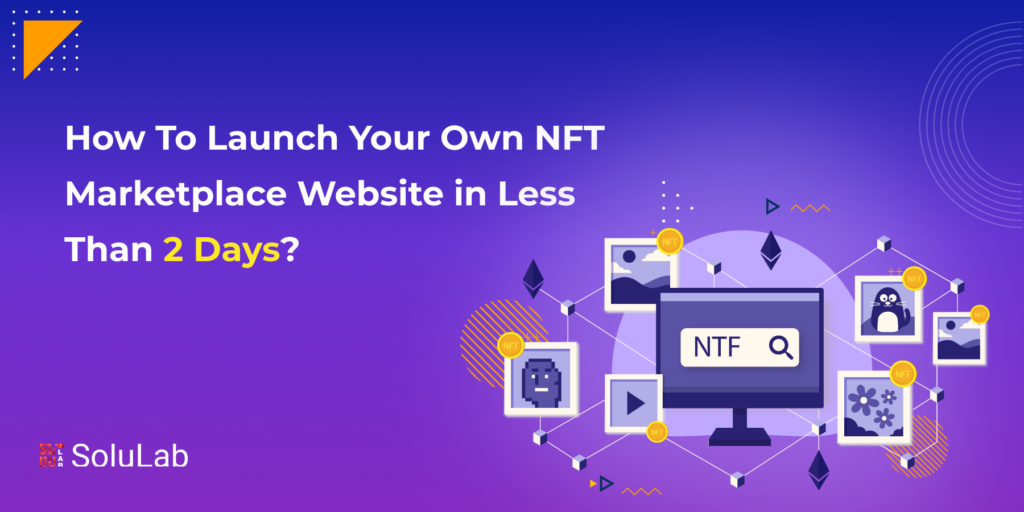
An NFT (Non-Fungible Token) marketplace is where people buy, sell, and trade one-of-a-kind digital assets called NFTs. Each NFT is a cryptographic token that proves who owns a specific digital item, or proves that item is genuine. That item could be artwork, music, a video, a collectible, a plot of virtual real estate, and plenty more.
Here’s the key difference. Bitcoin and Ethereum are fungible: one coin swaps for another, one for one. NFTs don’t work that way. They’re indivisible, and each carries its own properties that set it apart from every other token.
On the marketplace, creators and artists mint their digital work as NFTs and list it for sale. Buyers browse, find something they like, and pay in cryptocurrency. For creators, it’s a way to earn from digital work. For collectors, it’s a way to own digital assets that are scarce and actually worth something.
Transactions happen in the open, without a central gatekeeper. Because the platform runs on blockchain technology, records can’t be altered and every NFT’s history is traceable. You get proof of ownership anyone can check, and trades that are secure without either side having to trust the other.
These marketplaces have turned the digital art and collectibles business upside down. Creators and collectors both have options they never had before. What came out of it is a genuine digital economy, where unique assets change hands and virtual ownership finally carries real value.
How To Make NFT Marketplace?
That’s only the surface of the NFT boom, and for anyone with an entrepreneurial streak it’s both interesting and lucrative. If you’re thinking about launching your own NFT marketplace, you’ll likely find it a profitable business. Here is how to actually build one.
1. Identify Your Target Audience
Pick a specific audience and a specific niche. That one decision gets your NFT marketplace development project off to a much better start. Got a rough idea? Talk it through with developers and work out a plan to launch your own NFT marketplace website in less than 2 days. And resist the urge to go broad. Experts consistently recommend a specialized market over a general one.
2. Creating User Interface Design
For any web product, the UI is the step that matters most. It’s the first thing a visitor sees. So put real effort into an interface people can find their way around without thinking about it. Good teams study every goal and requirement of the NFT marketplace app development project first, then design the interface that will pull users in.
3. Selecting the Architecture of the NFT Marketplace
Build the marketplace on a microservice architecture and you get a better user experience and a platform that runs without hiccups. Why? Because you can update or fix one part of the application without redeploying the whole thing.
A microservice setup is a bunch of independent pieces, loosely wired together into one application. One service breaks? The rest keep running. In a big application, that isolation is worth a lot.
Since each service stands alone, you can scale whichever one needs it, whenever it needs it. Smaller codebases also ship faster. Put simply, microservices make large systems manageable, and they give you flexibility, productivity, and room to scale. Netflix, Uber, Amazon, and other major companies run on this architecture too.
4. Incorporating NFT Tokens
After you’ve picked a blockchain network, you define the NFT requirements around what the customer needs. The token is then built to plug into the software’s core functions. Getting it up to standard takes several steps: setting up the domain name, minting the token, locking down security, and configuring the token address.
5. Creating NFT-Based Smart Contracts
Smart contracts do the real work in an NFT marketplace. Different contracts handle different jobs, and nearly everything, from listing an NFT to trading it, runs through them. In a decentralized marketplace, they’re written to keep auctions, verification, and other processes running smoothly.
Developers write these contracts only after mapping out the marketplace’s main features and functions. Think of them as programs that run themselves: they carry out set tasks and store all the metadata tied to every NFT that gets created.
Check Out Our Article: SoluLab Recognized by GoodFirms as the Best Company to Work With
6. Including NFT Minting Attributes
Minting comes in two flavors.
- Single-mode NFT Minting: Uses ERC721 smart contract code for Non-Fungible Tokens. Each one is unique and can’t be copied or changed.
- Multi-mode NFT Minting: Uses ERC1155 for Semi-Fungible Tokens, which can be replicated, so the same smart contract code can produce many copies.
Depending on what the client’s business needs, developers can write smart contract code for single-mode minting, multi-mode minting, or both, and wire it into the platform’s backend.
7. Configuration of Database and IPFS NFT Storage
You need both a database and IPFS, for business and research purposes alike. The database gives you consistent storage, fast queries, and solid performance under load. IPFS is a popular file storage system that backs up and versions files on its own.
Design the database well and information comes back quickly. It’s also known for secure file sharing, fast streaming, and encrypted messaging.
8. Testing the Project Using Test Cases
Skip testing and you’ll pay for it later. It’s how you guarantee quality in an NFT marketplace app, or any product. Testing starts once the basic features are built and connected to the backend. Then the whole product goes through round after round of checks to catch defects, breakages, and deeper problems.
Teams use a mix of testing methods here to make sure the platform works properly. It splits into two big stages, verification and validation. Both raise the platform’s quality and keep the client happy.
9. Testnet Release or Final Deployment
When testing is done (real-time behavior like platform speed and how modules flow together has been checked, and the client has weighed in) the marketplace moves onto test networks. This is where you confirm it holds up under real-time operation.
Don’t skip it. Ever. This stage is what tells you the product is ready. Once it’s done, the marketplace, fully tested, bug-free, resilient, and working end to end, goes onto the client’s production server and opens to the public.
Let’s be honest: the NFT business is still early. A handful of established, well-known NFT marketplaces have shown what a flawless one looks like, by taking the best features and fixing what fell short.
Functions of the NFT Marketplace
Your platform needs features that make life easy for artists and buyers alike. These are the ones that count.
1. Interface of the store
The storefront is what grabs a buyer first. It should be easy to use and show off the artwork in an appealing preview. Think carefully, too, about how much information you cram onto the screen for each item up for sale.
2. Search and Filtering Options
Buyers have to be able to find what they want among all the listings, fast. Let them filter by artist, by the subject of the art, or by type of production, using keywords or tags.
Add a few more: sort by date, separate auctions from buy-now listings, and order prices low to high or high to low. The rule is simple. The easier it is for buyers to find things, the better the platform does.
3. Listings by the Creators
Buyers want an interface that just works. Artists want listing to be painless. They should be able to upload a piece, mint a token for it, name it, price it, and pick auction or direct sale. Sounds simple. In practice, though, this is where artists get stuck, because choosing the right price and listing type takes real research.
4. NFT Purchases
Buying an NFT should be painless for everyone involved. Buyers pay quickly through the marketplace’s crypto wallet. The platform takes its commission for handling the deal, and the creator gets paid soon after.
5. Cryptocurrency Wallet
You probably know this already: the crypto wallet sits at the heart of any NFT marketplace. It has to be very secure, and it has to handle more than one cryptocurrency.
One catch. Like a crypto exchange, an NFT marketplace is partly centralized, and that always costs you some security. So protect the wallet with simple measures that work, such as two-factor authentication and multi-signature login.
6. Evaluations and Rankings
Ratings keep creators motivated and point buyers toward the right artists. Rate creators on the kind of art they make, how complex it is, how strong the idea behind it is, and the value they deliver. And it should go both ways: creators rate buyers too, based on how their dealings went.
Strategies to Launch and Promote Your Marketplace Website

Building it is half the job. People have to know it exists. Below are the promotion tactics worth your time during pre-launch marketing and launch events. Run a campaign before you unveil anything, and don’t be shy about using whichever techniques fit your goals. What you’re after is maximum traction and real buzz.
Read Also: How to Create your own NFT Marketplace: Step-by-Step Guide
1. Craft a Sign-Up Message for Launching Your Marketplace Website
Write a sign-up message and send it to your contacts. It builds interest before launch and can get you your first sales. The message should make people curious about what’s coming. Build the campaign around a landing page. Start collecting sign-ups a few months ahead of release, so you already have an audience waiting on launch day.
2. Engage Online Marketplace Communities
Facebook, Twitter, LinkedIn, and Instagram get you in front of far more people. If your target buyers hang out in Facebook groups, join them. Take part in the conversations, share your marketplace idea and why it’s useful, and ask for honest feedback.
Once people are interested, send them to your landing page to sign up for emails. Make eye-catching visuals, short videos, and posts about your marketplace that stop the scroll. Paid ads can push that content further.
3. Harness the Power of Media
Know your audience inside out, especially where they get their news. Press coverage can build real buzz around your marketplace launch. It can bring in investors, too. Just make sure you pitch the outlets your audience actually reads.
4. Highlight the Key Advantages of Your Product
You spotted the need for a dynamic online platform and did the work to build it. Now get clear on every problem it removes and every fix it offers. Then tell your audience.
Your value proposition might be lower fees, easy navigation, a great user experience, a wide range of brands, or a secure payment system. Whatever channel you promote on, put that value proposition front and center.
5. Surprise Your Audience
People love a surprise. Get creative with how you promote. A giveaway sticks in people’s minds, so they remember you and what you stand for. Try personalized postcards, or ship small gifts to your subscribers’ doors. It gets attention and gets recipients excited about the launch. Most people will appreciate the creativity, and the personal touch.
6. Utilize Email Marketing
Built up a solid contact list over the years? Use it to remind people what your business is working toward. As launch gets close, email your contacts directly to let them know it’s coming. Open with a first email, then keep them updated. Later on, send the link to register on your marketplace.
7. Start Blogging
Start a blog. Publish articles on eCommerce, online business, and why your marketplace is worth using. Strong posts on related topics bring in traffic. End every post with a call-to-action and a sign-up link, and you’ll collect leads and grow an email list of people who actually care about your marketplace.
8. Engage Influencers
Partner with influencers who have a big online following. They can give your marketplace good exposure before launch and lend it credibility. Contact bloggers, social media marketers, and other well-known names in the industry.
Want them talking about you? Offer free trials, early access to the website or app, or some other perk.
Cost of Creating an NFT Marketplace
The point of building one is simple: a place where people can buy, sell, and swap non-fungible tokens (NFTs). What it costs, though, depends entirely on the project.
Your tech stack is one of the biggest cost drivers. The languages, frameworks, and databases you choose all move the final price of the platform up or down.
Read Our Blog: Everything You Need to Know About Metaverse NFT Marketplace Development
1. Designing for the Front End
“Front-end programming” means designing the site’s interface plus any client-side NFT marketplace script that lets users interact with it.
Expect front-end work to cost somewhere between $5,000 and $20,000, or more depending on your NFT marketplace developer’s hourly rate. Where you land depends on how intricate the design is and how many pages or screens you need. Front-end developers typically start at around $30/hr, and that rate climbs as they gain skill and experience.
2. Creation of the Backend
This covers the database design and the server-side code that handles transactions, NFT management, and user logins. Back-end work can run from $10,000 to $50,000. How complex the project is, and how much it needs to scale, decide where you fall.
3. Adopting Blockchain Technology
Hooking the exchange up to a blockchain network, such as Ethereum or Binance Smart Chain, is a core part of the build. Budget $10,000 to $50,000, depending on how deep the integration goes and which blockchain you pick.
4. Verification and Quality Control
Testing and QA are mostly about hunting down bugs and fixing them. Plan on $5,000 to $15,000, depending on how complex the app is and how many tests it needs.
Add it all up and an NFT marketplace can cost anywhere from $35,000 to $150,000, depending on scope. Treat those as rough numbers. Your real cost will probably differ quite a bit, based on the exact features and functions you need.
5. Privacy
You’ll need to set up security infrastructure: SSL certificates, encryption, and two-factor authentication. Depending on how involved your requirements are, security alone can reach $15,000.

Advantages of Your Own NFT Marketplace Website
NFTs run on blockchain, just like cryptocurrencies, and so do the marketplaces that sell them. That means your NFT platform picks up every benefit blockchain brings. Here are the big ones.
1. Decentralization
A decentralized NFT marketplace lets users trade assets freely, with no banks or regulators in the middle. Blockchain is what makes that possible.
2. High Level of Security
Blockchain hands NFT marketplaces strong security out of the box. Cryptography and consensus algorithms do the heavy lifting, and together they keep protection at a very high level.
3. Indivisible Nature of NFTs
Every NFT has its own digital ID and its own traits. Users get instant access to exclusive assets on your marketplace. And that uniqueness is precisely what makes these tokens so desirable.
4. Complete Transparency
With blockchain, every NFT transaction is out in the open, visible on a distributed database. Picture a ledger that shows everything happening on your marketplace, live.
5. Liquidity
Demand for cryptocurrencies and NFTs keeps climbing. People like decentralization and the lack of standardized regulation, so they put money into digital assets. The result: more liquidity across the NFT sector.
6. Authenticity and Unique Ownership
Run an NFT marketplace and you have a real chance to win users’ trust and loyalty. Every non-fungible token is a public ownership record that anyone can verify. That makes forging one impossible.
Conclusion
Getting an NFT marketplace website live in under two days is doable, but only if you plan carefully. Build on solutions that already exist, use website builders that are easy to work with, spend your time on the development pieces that matter, and have a marketing plan ready before launch. Put in the effort, take the right approach, and your idea can be a working marketplace in the NFT space sooner than you’d think.
For NFT marketplace development, SoluLab is a strong pick. The team has deep blockchain expertise and a track record of shipping successful projects. You get end-to-end NFT marketplace solutions, smart contracts that fit cleanly into the build, and secure transactions, which means SoluLab delivers a dependable, inventive platform for people and businesses stepping into non-fungible tokens. If you want your NFT marketplace built efficiently and built well, SoluLab can take it from idea to launch.
FAQs
Shipra Garg is a tech-focused content strategist and copywriter specializing in Web3, blockchain, and artificial intelligence. She has worked with startups and enterprise teams to craft high-conversion content that bridges deep tech with business impact. Her work translates complex innovations into clear, credible, and engaging narratives that drive growth and build trust in emerging tech markets.