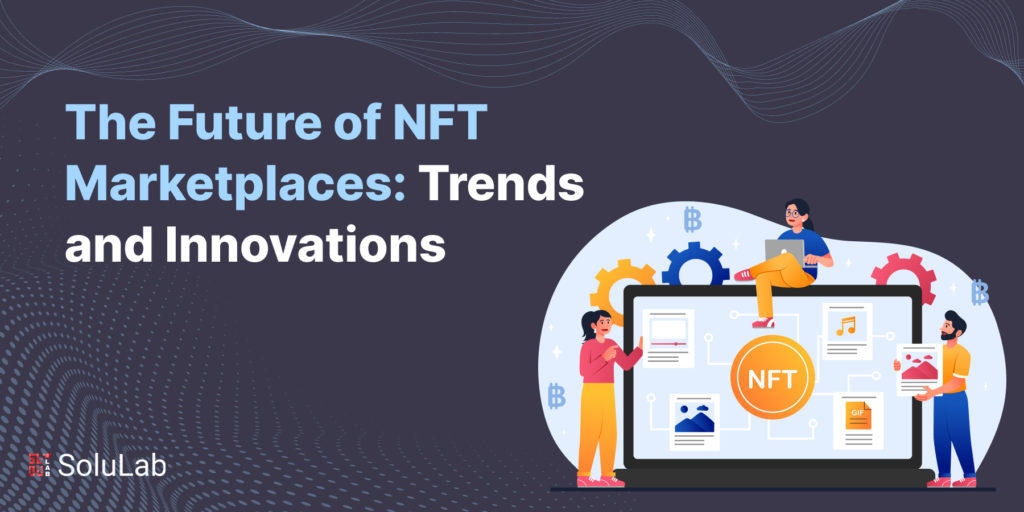
Non-fungible tokens (NFTs) turned a corner of the financial industry upside down. A token that proves you own one specific digital thing sounds simple. It wasn’t, and it broke a lot of old assumptions about ownership while handing creators and collectors a new set of options. Most of that action happens in one place: NFT marketplaces, where these assets get bought, sold, and put on display. So that’s what this piece looks at. Where marketplaces stand today, where they seem to be heading, which trends and innovations matter, what goes into building one, and where NFT developers fit into the picture.
You can’t talk sensibly about the future without a clear view of the present. NFT marketplaces sit at the center of the whole NFT scene. They give creators somewhere to mint, show, and sell their work. Strip away the branding and a marketplace is just this: the spot where one-of-a-kind digital tokens meet people who want to collect them.
What are NFTs and How Do They Work?
An NFT is a cryptographic token that stands for ownership of a particular item, digital or physical, and it usually lives on a blockchain. Bitcoin and Ether are interchangeable; one coin is as good as another. NFTs are not. Each one carries its own identity and its own value.
Creating one is called minting. The digital asset gets tokenized, and the blockchain records who owns it. After that, most NFTs change hands on NFT marketplaces, and every token carries a unique digital signature that backs up its authenticity.
Read Also: Why Should You Start Your Own NFT Marketplace Business?
Role of NFT Marketplaces in NFT Transactions
Take the NFT marketplaces away and the whole thing stalls. Artists, musicians, gamers, and every other kind of creator use them to tokenize their work and put it in front of buyers anywhere in the world. The marketplace sits in the middle. It handles the transaction, and it’s also the party checking that each NFT is secure and genuine.
Key Players in the NFT Marketplace Industry
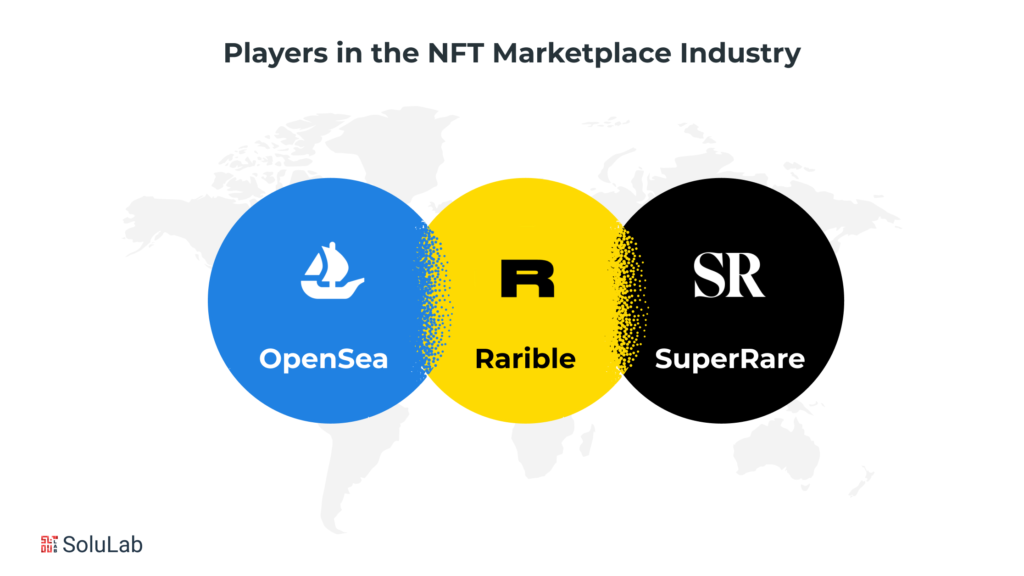
A handful of NFT marketplaces have pulled ahead of the pack, and each has its own personality. You’ve probably heard of OpenSea, Rarible, and SuperRare. They don’t all chase the same buyer. Some lean toward digital art, others toward things like virtual real estate, which gives creators and collectors real choice about where to go.
First, though, a quick look at where NFT marketplaces stand right now. Things moved fast. Market capitalization, trading volumes, and headline sales all climbed to levels nobody had seen before.
- OpenSea: One of the biggest and best-known NFT marketplaces. OpenSea carries a huge spread of digital assets: art, music, virtual real estate, and plenty more. People like it because it’s easy to use and the catalogue is enormous.
- Rarible: Rarible’s calling card is decentralization. Users create and manage their own NFTs, with no central authority holding the keys. That puts more power in the hands of both creators and collectors.
- SuperRare: SuperRare sticks to digital art. For a lot of artists it’s the first place they think of when they want to show and sell one-off pieces, and those pieces often sell for high prices.
Market Capitalization and Trading Volumes
Market capitalization in the NFT marketplace sector, meaning the combined value of every NFT out there, has grown exponentially. We’re talking billions. That alone tells you NFTs carry real economic weight.
Trading volumes on NFT marketplaces jumped too, tracking the rush of collectors and investors into the space. Some deals are small. Others are staggering. That range says a lot about how varied this market is, and how much room it still has.
Notable NFT Sales and Records
1. Record sales are what put NFTs on the front page worldwide. A couple of them show just how many shapes an NFT can take:
2. Beeple’s ”Everydays: The First 5000 Days” went for $69 million. That one sale pushed NFT art straight into the mainstream art world.
Then there’s NBA Top Shot, an officially licensed NFT marketplace platform for basketball highlights. Single video clips on it have sold for hundreds of thousands of dollars. Sports memorabilia dealers should be paying attention.
The Process of Building an NFT Marketplace
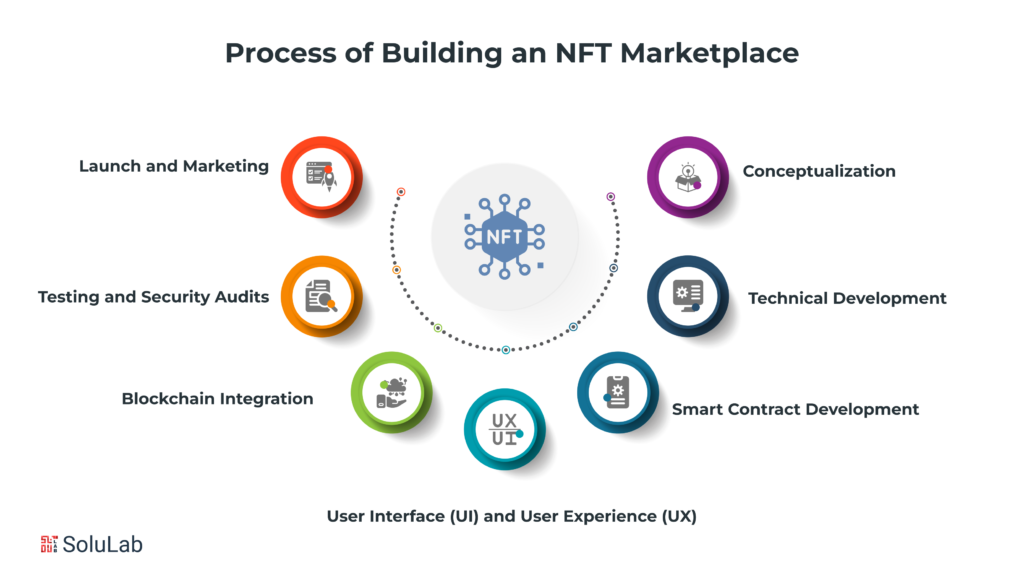
More marketplaces means more people wondering how to build one, so interest in NFT marketplace development keeps rising. Founders and established businesses alike want to create their NFT marketplace and grab a share of a growing market. What does that actually involve? Roughly these steps:
- Conceptualization: Pin down your niche, who you’re building for, and why they’d pick you over everyone else.
- Technical Development: Bring in a capable development team to build the platform, with security and scale designed in from day one.
- Smart Contract Development: NFTs run on smart contracts. They handle minting, ownership, and transactions, and they have to do it securely.
- User Interface (UI) and User Experience (UX): If the interface is clunky, people leave. A friendly one pulls users in and keeps them.
- Blockchain Integration: Pick the blockchain that suits your marketplace, whether that’s Ethereum, Binance Smart Chain, Flow, or another.
- Testing and Security Audits: Test everything properly and run security audits to catch weak spots before attackers do.
- Launch and Marketing: Once testing is done, go live and put a marketing plan behind it so users actually show up.
Watch Out: NFT Art for Beginners – How to Make and Sell
Benefits of Creating Your NFT Marketplace
Why bother running your own marketplace instead of listing on someone else’s? Because in a market growing this quickly, owning the venue can pay off both financially and strategically. The main upsides:
- Revenue Generation: Every transaction earns a fee, which gives you a business model that can keep going.
- Control and Customization: You decide what the platform does and how it looks. All of it.
- Niche Focus: Build for one niche or industry and you tend to draw users who genuinely care and stick around.
Recent Trends Shaping the NFT Marketplace Ecosystem
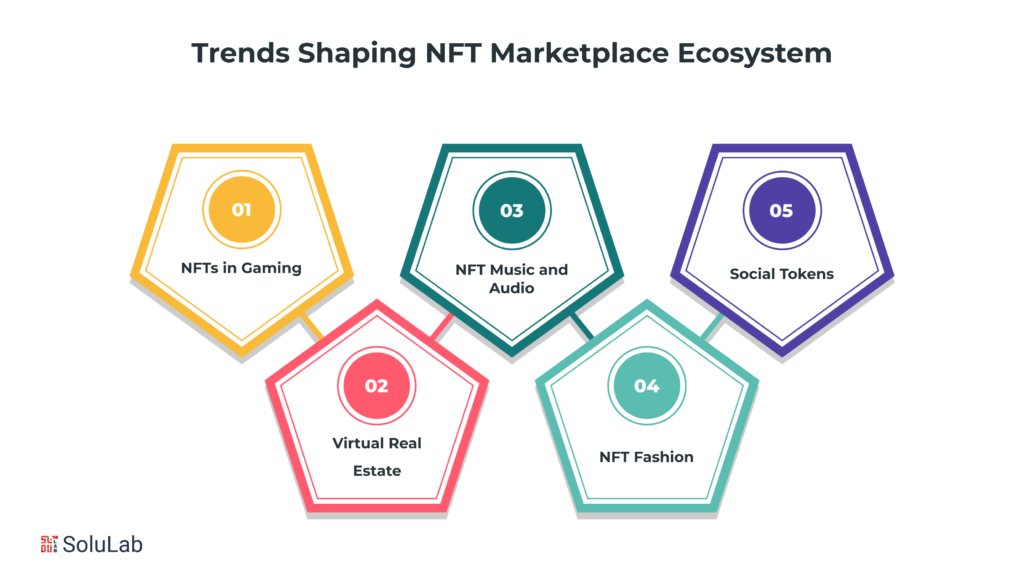
NFTs still have the world’s attention, and a few clear trends are reshaping the marketplaces. Each one follows what creators and collectors now want.
- NFTs in Gaming: Gaming was an obvious fit. NFTs changed what it means to own something inside a game. Axie Infinity and Decentraland built on this early, letting players own their in-game assets, trade them, and earn money from them.
- Virtual Real Estate: Now there are marketplaces for virtual land, where you can buy, sell, and build on digital property. For investors it’s a new kind of asset. For digital architects it’s a blank canvas.
- NFT Music and Audio: Musicians and audio makers use NFTs to sell tracks, concert tickets, and even one-off audio clips. It gives artists fresh ways to earn from their work and a more direct line to fans.
- NFT Fashion: Fashion brands have moved in as well, selling virtual clothing and wearables. Couture, but purely digital.
- Social Tokens: Some creators issue social tokens that represent a stake in their personal brand. Fans can back the influencers they follow, and the distance between a creator and their community shrinks.
Read Also: How will White-Label NFT Marketplace Development Benefit your Business?
Cutting-edge Technologies Transforming NFT Platforms
Non-Fungible Tokens (NFTs) never sit still for long. New technology keeps arriving that makes NFT platforms more useful, easier to get into, and more sustainable. The goal behind most of it is the same: platforms that are faster, can scale, and connect to one another.
- Layer 2 Solutions: Ethereum’s gas fees and slow confirmations are a real pain point. Layer 2 scaling options such as Immutable X and Optimism are tackling both.
- Cross-Chain Compatibility: NFTs are going cross-chain, so an asset can move from one blockchain network to another without friction.
- Interoperability: Work is underway to let different NFT platforms talk to each other. That means more liquidity and more choice for users.
Unique Features and Functionalities in Innovative NFT Marketplaces
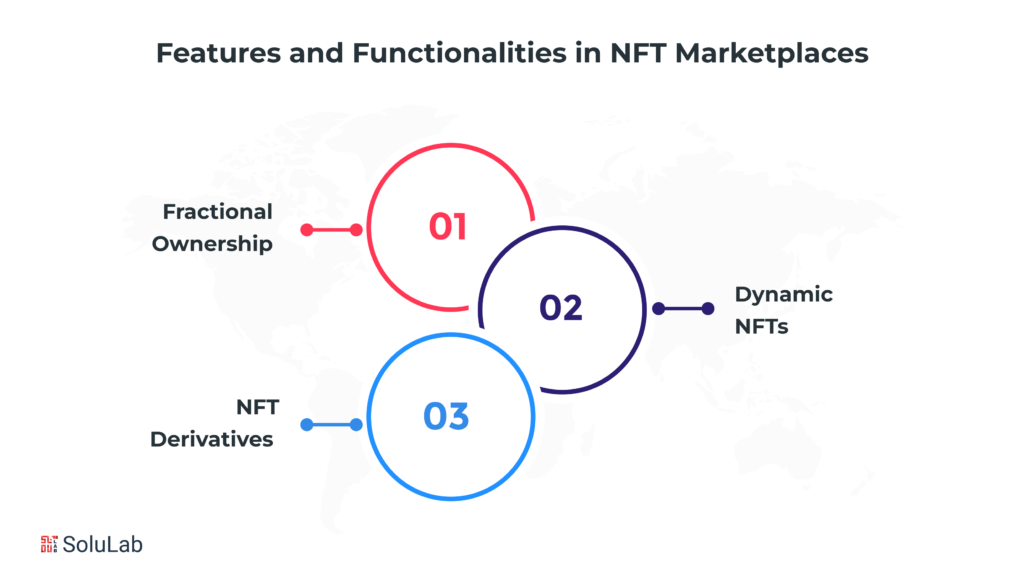
The more inventive marketplaces keep adding features that change how people think about digital assets and use them. Better user experience is part of it. The bigger part is what these features make possible for creators, collectors, and investors that simply wasn’t on the table before.
- Fractional Ownership: This one opens NFT ownership up to far more people. A high-value asset gets split into smaller shares, so you don’t need a fortune to own a piece. It’s shared ownership, and it pulls many more participants into NFT markets.
Read Also: What are some White-Label NFT Marketplace Solutions?
- NFT Derivatives: Futures, options, and other NFT derivatives are showing up as ways to bet on where NFT prices go. They give the market more depth and let holders hedge what they already own.
- Dynamic NFTs: Some NFTs don’t stay the same. They change over time or react to outside events. That makes ownership interactive, keeps holders engaged, and makes each token more distinct.
The Future of NFT Marketplaces
So where is this heading? Toward more growth, more new ideas, and NFT marketplaces becoming part of ordinary life. The closer you look, the harder it is to write NFTs off as a fad. They look more like a lasting shift, one that will shape a good chunk of our digital lives and possibly some of our physical ones too.
- Mainstream Adoption: Expect NFTs and their marketplaces to get easier for everyday users, with simpler interfaces and fewer hoops to jump through.
- Increased Regulation: As the market grows up, regulators may bring in rules on consumer protection and tax compliance.
- Cultural Impact: NFTs will keep shaping culture, from trends in digital art to how we think about owning digital things at all.
Read Our Blog: Solana NFT Marketplace: How to build your own NFT Marketplace on Solana
Regulatory Considerations and Challenges
Regulation is where NFTs get messy. The problems are legal, financial, and ethical, often all at once. Copyright and intellectual property sit at the top of the list. When an artist, musician, or other creator turns their work into an NFT, awkward questions follow. Who owns what? What does the license actually cover? And is anyone infringing on someone else’s copyright?
The fix starts in the smart contract. Spell out the licensing terms and how they’re enforced right there, and you protect the creator’s IP and head off disputes before they start.
Fraud is just as serious a problem. The space is young, and young markets attract scammers: fake NFT sales, phishing schemes, auctions nobody authorized.
Fighting that takes strong verification and authentication checks that confirm an NFT and its metadata are legitimate, plus user education so people learn to spot the traps. Then there’s the environmental question. NFTs built on energy-hungry networks, notably Ethereum when it ran on Proof of Work (PoW), have been criticized for their large carbon footprint.
Conclusion
Non-Fungible Tokens (NFTs) and the marketplaces around them have turned into one of the more exciting, and more disruptive, corners of tech. The present is already busy. The future looks busier.
Marketplaces are still where one-of-a-kind digital tokens meet the people who want them, and where creators mint, show, and sell their work. If you understand how NFTs work, what marketplaces do, and who leads the field today, you’re in a good position to read what comes next.
That’s where SoluLab comes in. We know NFT marketplace trends and innovations, the trends behind them, and the change they can bring. SoluLab offers NFT marketplace development services and solutions that help businesses get their NFT plans off the ground.
Maybe you want to build your own NFT marketplace. Maybe you’re exploring NFT development more broadly, or you just want to keep up with what’s new in the space. Either way, SoluLab can be the partner you rely on. We hold ourselves to a high bar, and that’s what has made us a leader in NFT development.
The opportunity here is wide open, and it’s creators, collectors, and builders like you who will decide what it turns into. We’d like to work through the shifting trends with you, put NFTs to real use, and help build what digital ownership looks like next.
Looking for top-notch NFT developers who know cryptocurrency and blockchain development inside out? You’ve found them. Our experienced NFT programmers build premium solutions, from core blockchain tech to smart contracts, that take friction out of your processes. We build easy-to-use, advanced platforms and secure digital wallets shaped around your business, so the experience stays smooth from start to finish. Contact SoluLab today for expert NFT solutions.
FAQs
Bhavya is driving growth through data-backed demand generation for AI and Web3 solutions. With 9+ years in digital marketing, he has spearheaded initiatives that led to a 40% increase in qualified inbound leads. Bhavya shares insights on marketing ROI and scaling a digital presence via AI workflows. He is open to connecting with startups and enterprise teams to help them overcome their challenges.