McKinsey expects electric vehicles to jump from 5% of new car sales to 50% over the course of the 2020s. Call it the EV decade. And as more of these cars hit the road, the thing quietly deciding whether the whole system holds up is how their energy gets managed. Owners want it efficient. The grid wants it sustainable. Those two goals don’t always agree, which is exactly why energy management systems for EVs matter.
Here is the honest version. A modern EV energy management system is doing three jobs at once: squeezing more out of every kilowatt-hour, cutting emissions, and keeping the grid steady. Get those right and the “EV revolution” stops being a slogan and starts working.
Wire a smart EV energy system into the charging infrastructure and you get charging that is cheaper and easier on the planet at the same time. That is the whole point of artificial intelligence: charge when it is smart to charge, not just whenever the car is plugged in, so the grid’s load stays balanced instead of spiking.
So this post walks through how these energy management systems actually push EVs forward, and why they change how we think about using energy at all.
What is a Smart Energy EV Management System?
Think of it as the brain for how an electric vehicle uses power. Built specifically for EVs, a smart energy management system tunes energy use, helps the grid keep demand in check, and makes sure charging happens in a way that is both cheap and efficient rather than wasteful.
Under the hood, these systems lean on smart algorithms and cloud platforms to dial the charging load up or down. What are they reacting to? Electricity prices, the rules you have set, what the driver actually needs, and the live state of the grid plus whatever renewables happen to be feeding into it.
Challenges to the Broad Use of Electric Vehicles
Before any of this scales, a handful of stubborn problems have to be solved. Here are the big ones standing between us and mass EV adoption.
- Inadequate Infrastructure for Charging
Not enough chargers. It sounds simple, but this one holds everything back. Rural and less-developed areas feel it worst, where stations are thin on the ground and drivers understandably think twice before going electric. Then comes range anxiety: the nagging worry that you’ll run low on a long trip with no charger in sight. That fear alone keeps a lot of people in gas cars.
- Overloaded Electrical Grids
Every EV you plug in is another draw on the grid. Multiply that by millions and peak-hour demand starts to bite. Push it too far and you get the ugly stuff: brownouts, blackouts, a power system nobody can rely on. This is where good energy management earns its keep. Spread the load, smooth the peaks, and the grid stays stable even as more cars go electric.
- Low Availability of Minerals Supply
EV batteries need certain minerals and rare earth metals, and the world only has so much of them. Demand keeps climbing as more cars roll off the line, but supply is finite. That gap does two things: it snarls supply chains and it drives up costs for manufacturers. Both slow adoption down, and neither has a quick fix.
- Energy Management Systems in EVs
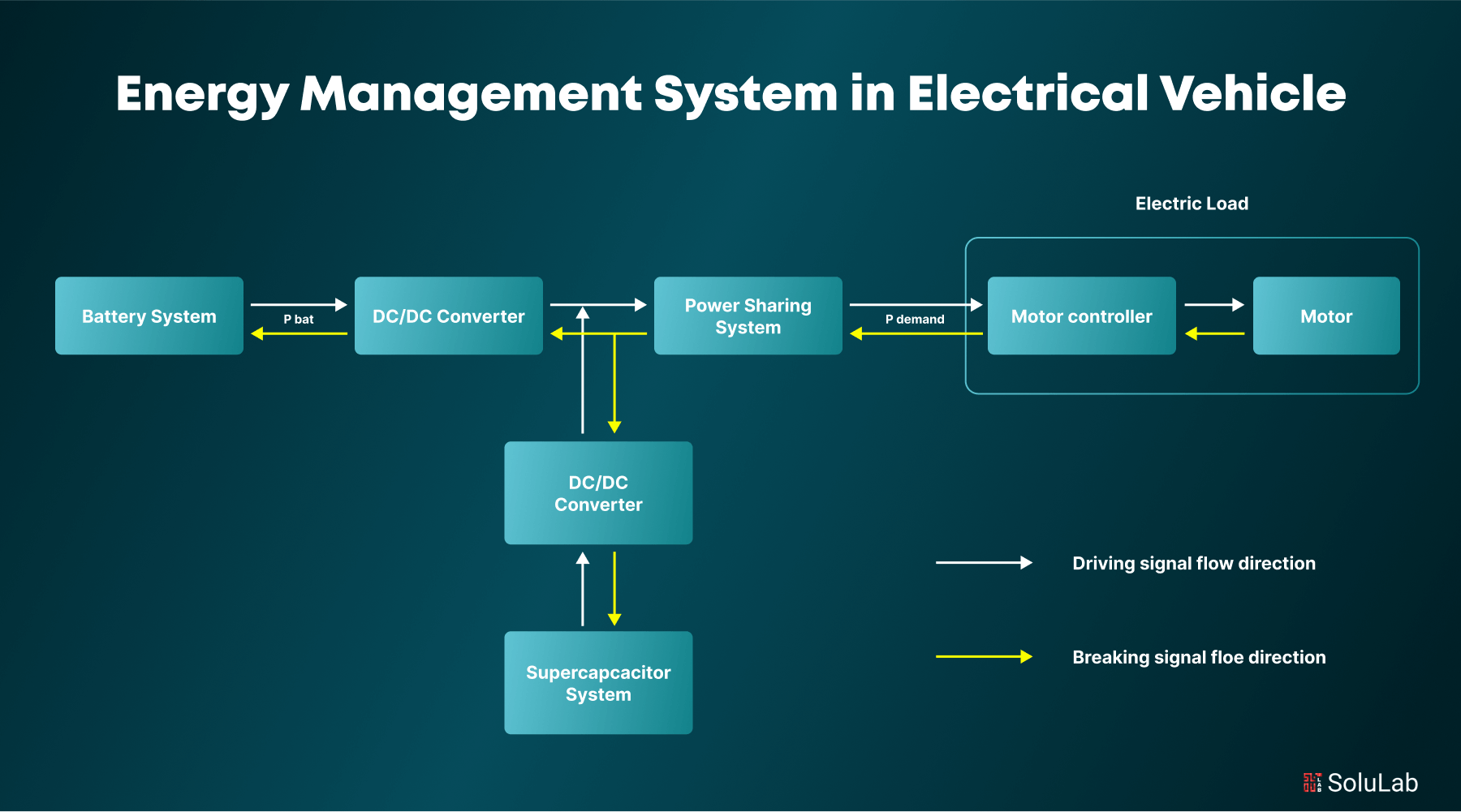
Getting energy use right inside the car is what protects battery life and keeps performance where it should be. A dependable Battery management system watches battery health, controls how energy moves, and keeps the whole thing running safely. Building one is hard, though. You need real-time monitoring, a constant balancing act on consumption, and clean integration with renewable sources. In practice, this is where teams get stuck: the system has to be smart enough to use every bit of energy well without ever dragging down how the car drives.
- Battery Technology and Costs
Batteries are still expensive, and they are still the biggest line item in what an EV costs. Yes, the technology has come a long way. But price and range remain the sticking points, and that is precisely why better energy management matters: squeeze more distance out of each charge, and the limited range stops feeling like a limit.
- Consumer Acceptance and Awareness
Interest in EVs keeps growing, but plenty of buyers still hang back. Why? Range anxiety, charging times, doubts about how these cars hold up over the years. You don’t fix that with better tech alone. People need to actually understand what EVs can do now, which makes education just as important as engineering.
How Smart Energy Management Systems Can Help Overcome These Challenges?
So how do smart EV energy systems and AI in transportation chip away at the problems above? A few concrete ways.
1. Utilizing Charging Infrastructure Efficiently
You don’t always need more chargers. Sometimes you just need to use the ones you have better. A smart system reads the signals, how much energy is being consumed, how much renewable power is coming in, where the costs are, and then wrings maximum use out of existing stations without slamming the grid. That saves you from pouring money into expensive expansions, and it makes the charging network more reliable and easier to reach. The mobile apps tied to these systems help too, showing drivers in real time which stations are free and where they are.
2. Load Balancing to Prevent Grid Overload
Grid overload has a clean answer: stop charging everyone at once. Energy management systems shift charging to off-peak windows, the hours when demand is naturally low, so the grid never takes the full hit during peak times. That keeps things stable and reliable. And there is a bonus. These systems can time charging to line up with renewable generation, pulling power when solar or wind is plentiful instead of scarce.
3. Battery Monitoring and Recycling to Reduce EVs’ Carbon Footprint
A cleaner EV depends heavily on what happens to the battery, both while it works and after it dies. Energy management systems track battery health and usage patterns, using that data to keep performance high. When a battery reaches the end of its life, these systems help make sure it gets recycled properly instead of dumped. That recovery step matters: pull back the valuable materials and rare earth elements, and you cut the need for fresh mining, which in turn lowers the carbon cost baked into every new battery.
Why Should You Use a Smart Energy Management Application for EVs?
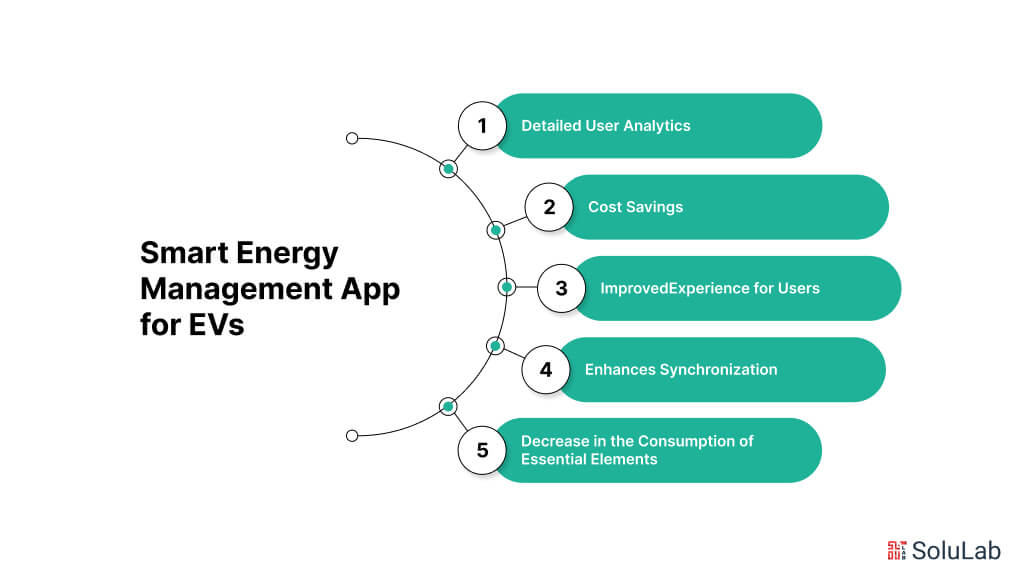
Short answer: it saves money, runs cleaner, and takes the guesswork out of owning an EV. A smart energy management app trims wasted energy, which shows up as lower bills and better efficiency. Pair it with GenAI in the Automotive Industry and owners get real control, over battery use, over when the car charges, over a stack of other energy features. The app turns rough guesses into good decisions, so the car runs efficiently and the driving does a little less damage to the planet.
- Detailed User Analytics
Data is the first big payoff. A smart EV app watches how you use energy and hands that back to you in a form you can act on. Suddenly you can see where the waste is hiding, and you can make decisions based on numbers instead of hunches.
Dig into detailed stats, the kind the Tesla app surfaces, for instance, and you get the full picture: energy use, charging history, driving trends, all in one place. From there the app can suggest tweaks. Ease off during peak hours. Charge at smarter times to stop bleeding energy. Follow through on those and your range stretches further, and the whole experience of driving the car gets better.
- Cost Savings
When energy use gets optimized, Automotive AI and ML, a smart EV energy system can bring charging bills down and make the car cheaper to run overall.
Take a real example. A strong EV energy system spots inefficiencies in the charging setup and keeps watching charging as it happens, live. Armed with that, an owner makes better calls about where and how to charge, and the wasted energy, along with the money it costs, drops.
These systems can also handle charging on their own. Schedule it for off-peak hours when electricity is cheaper, or throttle back when demand is running high. Either way, the car does the thinking for you.
- Improved Experience for Users
A better day-to-day experience is one of the quieter wins here. Build a solid EV energy system and the owner simply has an easier time. The interface is friendly enough that monitoring and controlling a charging session takes no effort, which means more convenience and more flexibility.
The software can even set up charging schedules that match how you actually drive and what you prefer, so plugging in stops being a chore and becomes something you barely think about.
- Enhances Synchronization
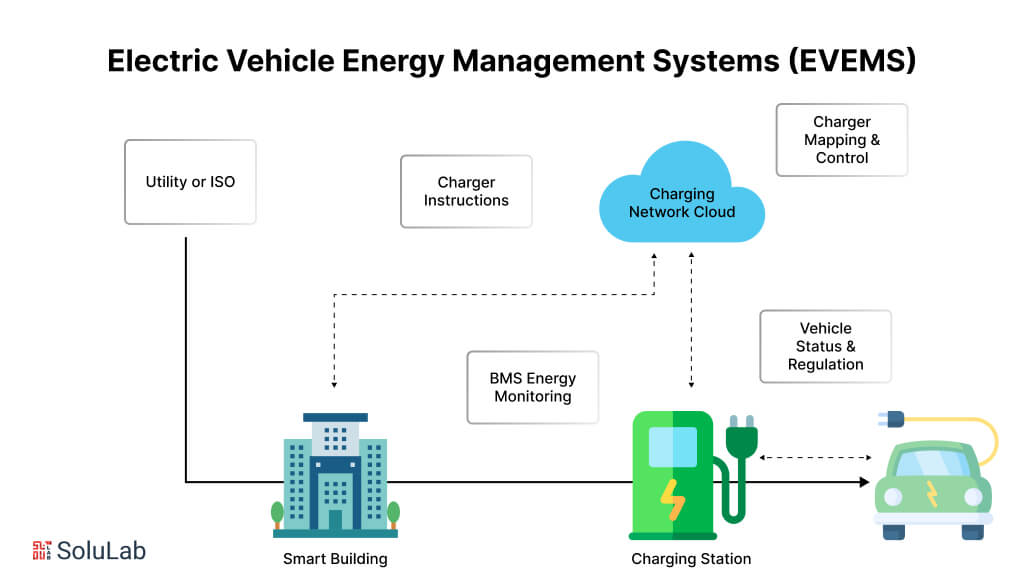
Good EMS software gets three parties talking: the power grids, the drivers, and the charging infrastructure. Through a smart EV energy app, drivers can pull live data on which stations are open and working, then plan tighter routes and skip the pointless detours.
There is a two-way street here too. When EV drivers and power grids can talk back and forth, supply and demand line up better. The app adjusts the charging rate based on how much capacity the grid has to spare, which keeps electricity demands balanced and the grid steady.
And there is the awareness angle. An EV energy system can show owners what their energy use and carbon footprint actually look like, so they make informed choices instead of blind ones. Nudge drivers toward off-peak charging on top of that, and you shave peak demand, take pressure off the grid, and cut the odds of a blackout.
- Decrease in the Consumption of Essential Elements
A smart energy app can also stretch the battery you already have. It tunes energy use and gives owners tools to extend battery life and keep tabs on its condition, watching temperature, charging habits, and consumption to flag trouble early and suggest fixes. The knock-on effect is worth noting: a longer-lasting battery means fewer new ones, which means less demand for the rare earth materials that go into building them.
On top of that, the EV energy system and Generative AI automotive systems can walk owners through proper battery disposal and recycling, which matters a lot for keeping the environmental damage low.
Factors to Consider When Developing An Effective Smart Energy Management System
Building energy management that actually works for EV charging starts with knowing what you are dealing with. A few things deserve real attention.
1. Maintain Awareness of the Existing Condition: Start by looking hard at what is already there. Study the current charging setup and the energy grid before you build anything on top of them. That means learning the patterns of demand and supply and spotting where the pain points hide. Comb through the data and the gaps start to show themselves, which is what makes the system worth building in the first place. It also lets you shape something fitted to the specific quirks and problems of the local energy environment rather than a generic template.
2. Integration and Interoperability: Nothing works in isolation. Smart energy management for EVs depends on getting many systems and technologies to cooperate, so the whole thing runs as one efficient setup instead of a pile of disconnected parts. Charging stations need to link to the energy grid so power flows where it should. And the charging process has to work across EVs from different makers and models, because a station that only serves some cars is not much of a station.
3. Selecting the Appropriate Hardware and Software: Pick the wrong gear and everything downstream suffers. The hardware has to fit the charging infrastructure and handle the load-balancing demands you throw at it. On the software side, you need something that connects to that hardware, crunches the data, and figures out the right times to charge. It also has to be genuinely easy to use, since managing and monitoring charging should not require a manual. Choose these pieces carefully and an operator ends up with a system that trims energy use, cuts costs, and lowers the carbon footprint all at once.
4. Scalability: Demand for EVs is only going up, so the infrastructure and energy systems have to keep pace. That covers station availability, grid capacity, and how much renewable supply you can tap. Newer technology helps here, think smart grids and vehicle-to-grid (V2G) systems. Smart networks route energy to charging stations more intelligently, while V2G lets EVs store power and hand it back to the grid when demand peaks. The grid gets steadier and more dependable, and EV charging energy management improves along with it.
5. Managing Cyber Risk: The more connected the system, the more ways in for an attacker. Hacking, data breaches, ransomware, all of it becomes a live threat, and a hit here can knock out the grid and trigger power outages that put security and reliability at risk. Remember the 2015 Ukraine power grid cyber-attack? A malware infection took down power across several regions. That is the kind of stakes we are talking about. You need real defenses, firewalls, intrusion detection, encryption, to keep a smart energy management system safe. And you need regular security checks to catch and fix weak spots before someone else finds them.

The Bottom Line
Put a strong energy management system inside an electric vehicle and the whole car gets better. Energy use gets tighter, the battery works more efficiently, and operation stays sustainable. Manage how and when power gets used, and you extend battery life, cut running costs, and add real driving range. Beyond that, EV energy management systems and Generative AI push transportation toward something cleaner, folding in renewable energy and smarter charging patterns.
The upside is clear, but so is the difficulty. Building an EV energy management system means wrestling with legacy infrastructure, keeping the system responsive in real time, and handling a flood of data. As an AI development company, SoluLab helped Turboplus improve its e-charging app by adding key features for iOS and Android. We developed charging station mapping, charging status, and remote charger control. Our contributions improved user experience, making EV charging and efficient artificial general intelligence enables us to develop intelligent, adaptive systems that enhance the performance and sustainability of electric vehicles. Contact us to learn how we can help you overcome these challenges and drive innovation in the electric vehicle industry.
FAQs
Shipra Garg is a tech-focused content strategist and copywriter specializing in Web3, blockchain, and artificial intelligence. She has worked with startups and enterprise teams to craft high-conversion content that bridges deep tech with business impact. Her work translates complex innovations into clear, credible, and engaging narratives that drive growth and build trust in emerging tech markets.

![Top 10 Examples of AI Being Integrated in the Real World [2026 Edition]](https://www.solulab.com/wp-content/uploads/2026/09/Examples-of-AI-Being-Integrated-in-the-Real-World.webp)