Writing and shipping a smart contract on Aptos means getting comfortable with Move, the blockchain’s programming language, and the tooling Aptos ships alongside it. Aptos itself is a high-performance Layer 1 blockchain tuned for scalability and security, which is why it keeps showing up as a default choice for teams building dApps.
As of February 2025, Aptos has grown fast. Total Value Locked (TVL) crossed $800 million, and that kind of number tells you something real: developers are finding this a solid place to deploy.
This guide walks through the whole process, start to finish: setting up your environment, writing the contract, deploying it, and using it. Let’s get into it.
What are Aptos Smart Contracts?
Aptos smart contract development runs on Move, a language built specifically for secure, adaptable blockchain applications. Move lets you define custom data structures and logic yourself, which makes building genuinely complex applications much less painful.
Most blockchains execute transactions serially, one after another. That’s accurate, but it caps how far you can scale. Aptos (APT) takes a different route: it snapshots the existing state and runs multiple transactions in parallel. The result is better network efficiency and real gains in transaction throughput.
Aptos Smart Contract Use Cases
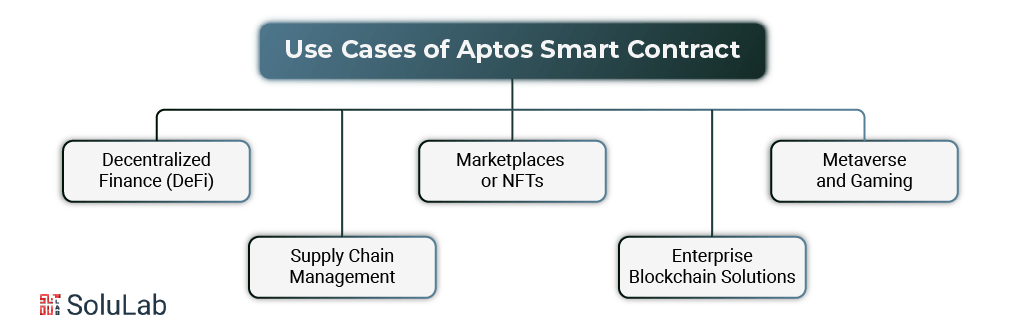
Aptos smart contracts open up real growth potential across a wide range of industries. Here’s where they’re actually being used:
1. Decentralized Finance (DeFi)
Aptos makes fast, secure DeFi platformapplications possible, including loan protocols, automated market makers (AMMs), and decentralized exchanges (DEXs).
2. Marketplaces for NFTs
Move fits NFT platforms well. Its security features, paired with Aptos’ fast throughput, keep minting, trading, and transferring digital assets smooth.
3. Metaverse and Gaming
Quick finality and low transaction costs make Aptos a natural fit for blockchain-based gaming and metaverse projects.
4. Management of the Supply Chain
Aptos smart contracts also strengthen traceability and transparency in supply chain networks, while cutting down fraud and inefficiency.
5. Enterprise Blockchain Solutions
Businesses lean on Aptos for automated processes, cross-border transactions, and secure identity management.
Read Also: What is the Sui Network?
Move Programming Language for Aptos Smart Contract Development
Move, the language behind Aptos, was built to push smart contract security, safety, and performance further. It started life on the Diem project, then got reworked and folded into Aptos. A few of its defining features:
- Resource-Oriented Programming: Move treats resources like first-class citizens. Assets can only be moved, never copied or silently discarded, which shuts down double-spending and similar fraud before it starts.
- Formal Verification: Move Prover checks that your smart contracts actually do what they’re supposed to. That’s an extra layer of protection against vulnerabilities, verified against real safety requirements, not just assumed.
- Efficiency and Flexibility: Move gives developers room to build custom modules and resources, so you get more control over how assets and state changes are handled. That flexibility is part of why the language works well for safe, efficient contracts.
- Transaction Safety: Move handles complex transactions without needing to know upfront what data will be read or written, which keeps things safe and atomic. That speeds up development and pushes throughput higher.
Put Move’s capabilities together with Aptos’ infrastructure, and you get a solid ecosystem for building safe, scalable decentralized apps.
How to Build Smart Contracts on Aptos Blockchain?
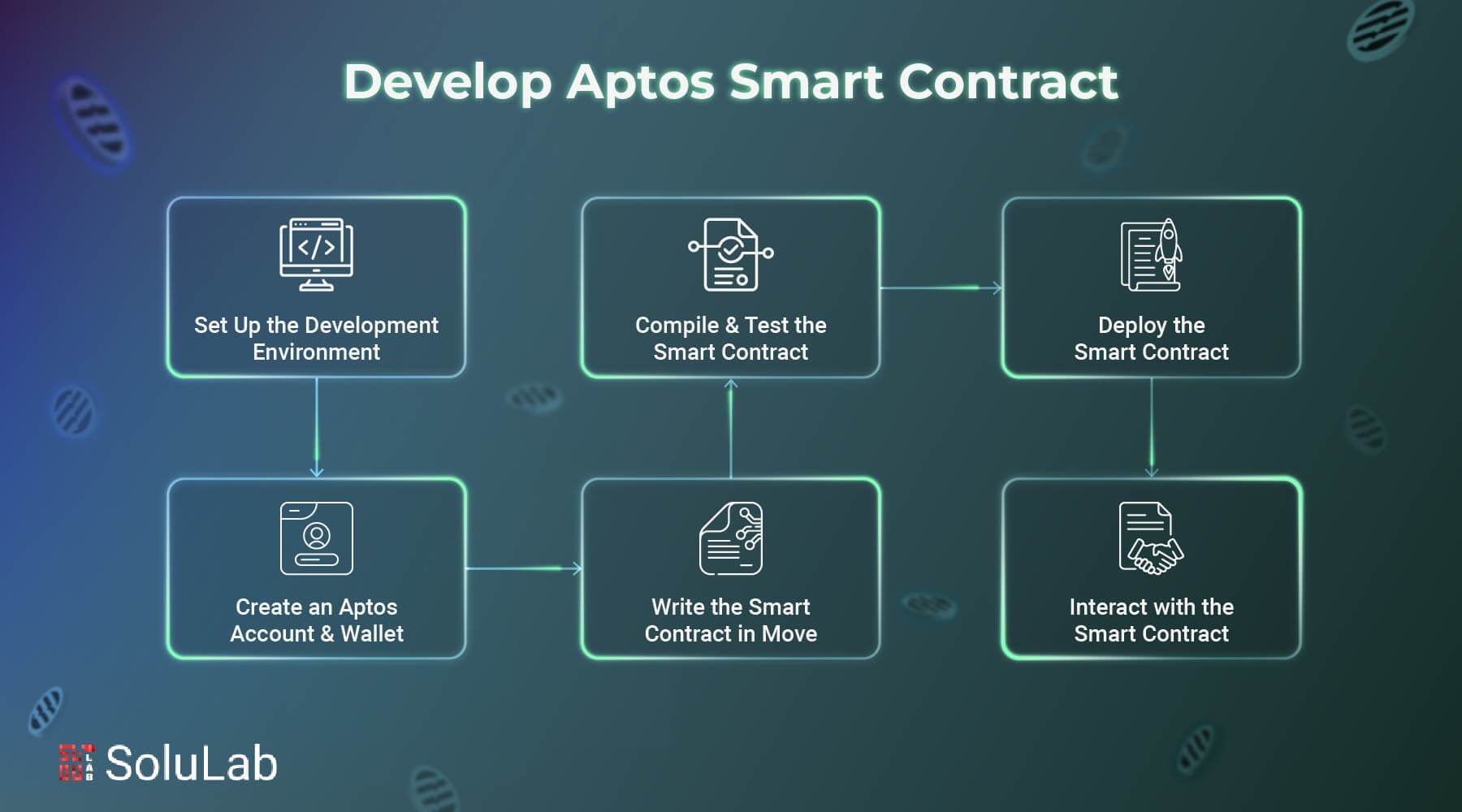
Here’s how to actually build a smart contract on Aptos using Move, covering setup, coding, deployment, and the practices that keep contracts secure and efficient. Follow these steps to build a blockchain smart contract on Aptos:
1. Set Up the Development Environment
Start by installing the Aptos CLI, your line of communication with the network. Then bring in the Move CLI to set up a Move development environment. For testing, spin up a local test net or just use Aptos’s devnet.
2. Create an Aptos Account & Wallet
Next, create your Aptos wallet and account, either through a supported wallet provider or the Aptos CLI. Grab test APT tokens from a faucet to fund the account while you’re developing.
3. Write the Smart Contract in Move
With your environment ready, start writing the Move smart contract. Build a Move module that defines the contract’s logic, using resources and structs to manage on-chain data. Make sure entry functions are defined so users actually have a way to interact with the contract.
4. Compile & Test the Smart Contract
Once it’s written, compile and test the contract. Use Move’s testing framework to check functionality and run unit tests to confirm it behaves the way you expect. Run a local simulation before deployment to catch anything that’s off.
5. Deploy the Smart Contract
When it’s ready, deploy through the Aptos CLI. Decide whether you’re publishing to mainnet, testnet, or devnet. Save the contract address and confirm the deployment actually went through.
6. Interact with the Smart Contract
Finally, interact with the deployed Solana smart contract through Aptos Explorer, SDKs, or CLI commands. Transfer assets, call functions, query contract status, whatever you need to confirm it’s running smoothly.
Benefits of Using Aptos Smart Contracts
Aptos smart contracts bring stronger security, better scalability, and real efficiency gains, cutting costs and giving developers and businesses solid on-chain asset management. Here’s what stands out:
1. High Scalability and Throughput: Aptos can push over 100,000 transactions per second (TPS). That’s the headline number. It runs on Block-STM, a parallel execution engine that processes several transactions at once instead of queuing them up like congested chains do. Latency stays low, execution stays smooth, and that’s exactly what fast-transaction dApps need.
2. Security and Dependability: Non-negotiable when you’re building smart contracts. Aptos leans on Move here, a language designed to tighten security and close off vulnerabilities. Move’s resource-oriented programming blocks double-spending and reentrancy attacks outright. Byzantine Fault Tolerance and other consensus mechanisms keep network integrity intact during execution.
3. Reduced Transaction Costs: High gas fees push plenty of Ethereum users and developers away. Aptos processes transactions in a way that drops fees dramatically without giving up speed or security. Combine Move’s resource management with Aptos’s execution architecture, and you get a genuinely cost-effective ecosystem for contracts and dApps.
4. Developer-Friendly Setting: Aptos puts real weight behind developer experience: tools, documentation, SDKs, all built for smart contract authoring. Move is secure and versatile, and it’s not a steep climb for anyone coming from Solidity or Rust developers. Aptos’ modular design makes upgrades straightforward, which lets developers scale applications without breaking the network.
5. Upgradability and Flexibility: Where conventional blockchains need hard forks to change protocol, Aptos allows easy upgrades. Developers can improve contracts, add features, fix bugs, all without disrupting the network. That flexibility means Aptos-based apps can keep pace with industry needs while still holding to security and performance standards. Working with an experienced smart contract development team helps you use this properly.
6. Interoperability: Aptos connects easily with other blockchain ecosystems, which makes cross-chain transactions genuinely workable. That means developers can build decentralized apps that talk to multiple blockchain ecosystems, making smart contracts more useful across networks. More interoperability, more adoption, and smoother asset movement between networks.
7. Strong Ecosystem and Rising Adoption: Aptos has real traction among blockchain developers, corporations, and investors. Ongoing innovation, strategic partnerships, and solid community support are shaping an environment built for next-generation decentralized apps. That growing footprint in smart contract development keeps the marketplace active for ambitious, innovative firms.
Considerations for Aptos Smart Contracts
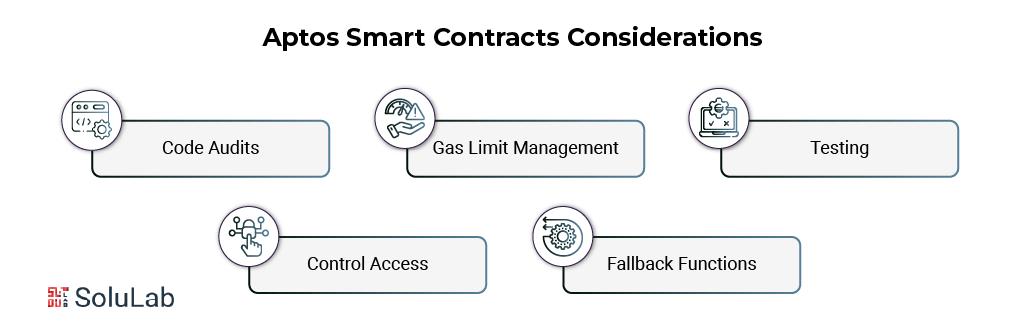
Security has to come first when you’re building on Aptos. Keep these in mind:
- Code Audits: Audit your smart contract code regularly to catch vulnerabilities early. It protects the integrity of your contracts and helps stop exploitation before it happens.
- Control Access: Put strict access control in place. Critical functions in your contracts should only ever run for authorized users.
- Testing: Test thoroughly in a controlled environment before releasing anything to mainnet. That means both integration and unit testing, not just one or the other.
- Gas Limit Management: Pay attention to gas restrictions when handling transactions. Setting sensible gas limits keeps execution reliable and prevents failed transactions.
- Fallback Functions: Build in fallback functions to handle unexpected situations. It cuts down the risk tied to failed transactions.
Stick to these, and you’ll tighten the security of your Aptos smart contracts while protecting your users’ assets.
Aptos Ecosystem
Aptos is a Layer 1 next-gen blockchain built to give the defi ecosystem (dApps) in Web3 a secure, scalable, upgradable foundation. Aptos Labs built it, a company started by ex-Meta engineers who’d worked on the Diem blockchain project. The goal was to tackle problems that current blockchains keep running into: regular outages, high transaction fees, weak throughput, security gaps.
The Aptos ecosystem is growing fast across the industry, with over 190 projects spanning DeFi, GameFi, NFTs, social networks, education, AI, and more. Some of the more well-known projects include PancakeSwap (CAKE), Rari (RARI), Ondo Finance (ONDO), Tether (USDT), LayerZero (ZRO), and Tapos (HEART), Chingari.
Read Also: Build an AI-Integrated Crypto Wallet on Aptos from Scratch
Future Trends in Aptos Smart Contract Development
As Aptos keeps evolving, here’s what developers and companies should be watching:
1. Increased Adoption of Move Language: Expect Move to pick up wider use as more developers catch on to its advantages. That should push toward a more resilient ecosystem of dApps and Aptos-based smart contracts.
2. Focus on Security: With hacks and smart contract vulnerabilities climbing, security stays front and center. Expect developers to tighten testing and auditing procedures to protect contract integrity.
3. Integration with DeFi and NFTs: As Aptos smart contracts keep expanding, expect deeper integration with decentralized finance (DeFi) systems and non-fungible token marketplaces (NFTs), opening fresh options for investment and innovation.
4. Improved User Experience: As the tech matures, expect real effort toward making Aptos-built dApps more user-friendly: faster transactions, lower costs, cleaner interfaces.
5. Regulatory Compliance: Aptos smart contracts will need to adapt as governments worldwide start imposing rules on blockchain technology. That likely means adding features that support accountability and transparency.
6. Cross-Chain Functionality: Multi-chain blockchains look like where things are heading. Expect Aptos to keep improving interoperability, enabling smoother communication between smart contracts and other blockchains.
Conclusion
Aptos brings a distinct set of strengths for both developers and businesses. Companies that understand what Aptos does well can position themselves for better operational efficiency and real innovation.
As a layer-1 blockchain with a distinct programming model and a solid ecosystem, Aptos has real potential to help developers build. Staying on top of these trends and best practices puts you in a strong position for Aptos smart contract development
SoluLab helped Morpheus.Network improve supply chain management by integrating blockchain, smart contracts, and ZK rollups. Our solutions strengthened security, automated workflows, and optimized payments across 200+ countries. By improving transparency, compliance, and efficiency, we scaled Morpheus.Network to modernize logistics and redefine decentralized supply chain operations.
SoluLab, a smart contract development company, has a team ready to help you develop and deploy smart contracts. Contact us today to talk through your business idea!
FAQs
Shipra Garg is a tech-focused content strategist and copywriter specializing in Web3, blockchain, and artificial intelligence. She has worked with startups and enterprise teams to craft high-conversion content that bridges deep tech with business impact. Her work translates complex innovations into clear, credible, and engaging narratives that drive growth and build trust in emerging tech markets.