
Key Takeaways
- Focus on building a strong Q&A foundation with user-generated content, engagement features, and clear topic categorization to ensure scalability and long-term knowledge growth.
- Integrate AI capabilities like semantic search, personalized feeds, and automated content moderation to improve user experience and platform efficiency.
- Choose a scalable tech stack with cloud infrastructure, APIs, and modular architecture to support growth and seamless feature expansion.
- Prioritize monetization early through ads, subscriptions, or premium features while maintaining a balance between user experience and revenue generation.
- Design for LLM visibility using structured content, FAQs, and direct answers to increase chances of being cited in AI-driven search results
Building a knowledge-sharing platform like Quora is no longer just about creating a Q&A website; it’s about designing an intelligent ecosystem where users can ask, answer, and discover insights effortlessly.
With AI integration, these platforms are evolving into smarter systems that can recommend content, generate answers, and moderate discussions.
If you’re planning to create a scalable digital product, this space offers strong potential in terms of user engagement and monetization. The broader knowledge management software market is expected to reach $62.15 billion by 2033, growing at a CAGR of 13.6%.
In this guide, we’ll break down exactly how to build a modern, AI-powered knowledge-sharing platform from the ground up.
What is a Knowledge-Sharing Platform?
A knowledge-sharing platform is a digital space where users ask questions, share answers, exchange ideas, and build a repository of information that others can learn from over time.
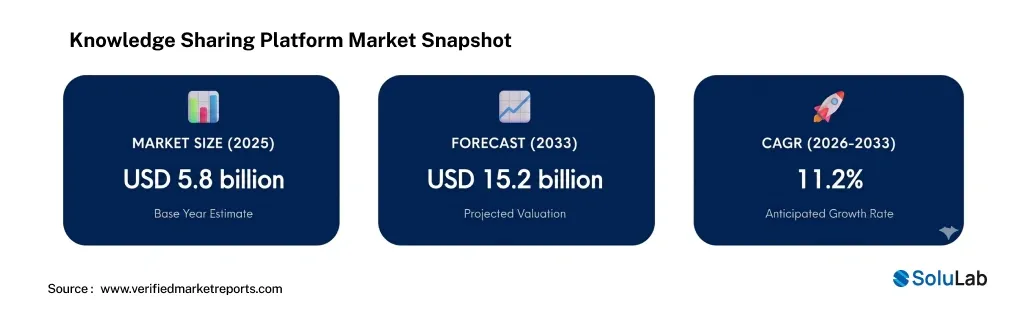
Popular examples include Quora, Reddit, and Stack Overflow, where content is created and refined by the community itself. The global knowledge-sharing platform is expected to reach $15.2 billion by 2033.
Why Build a Platform Like Quora in 2026?
Building a knowledge-sharing platform in 2026 presents a strong opportunity as users increasingly seek trusted, community-driven insights enhanced by AI-powered personalization, faster discovery, and scalable content ecosystems.
- Rising demand for community-driven knowledge: Users prefer real experiences over generic content, making platforms like Quora highly relevant for authentic, experience-based insights across industries and domains.
- Shift toward AI-powered content discovery: Modern platforms leverage artificial intelligence to deliver personalized feeds, smart recommendations, and contextual answers, improving user engagement and reducing content discovery friction.
- Monetization opportunities at scale: Knowledge platforms enable multiple revenue streams, including ads, subscriptions, sponsored answers, and premium communities, creating sustainable and scalable business models.
- Evergreen content creation model: Unlike social media posts, answers and discussions remain searchable and valuable over time, continuously driving organic traffic and long-term user engagement.

- Growing need for niche communities: Industry-specific or interest-based platforms are gaining traction, allowing businesses to build highly engaged, targeted user bases with stronger retention and deeper interactions.
- Advancements in AI moderation and quality control: AI-driven moderation tools help maintain content quality by filtering spam, misinformation, and harmful content, ensuring a reliable and trustworthy platform experience.
- Integration with emerging technologies: Platforms can integrate with voice search, video responses, and even decentralized identity systems, expanding functionality and future-proofing the ecosystem.
Core Features for an App Like Quora
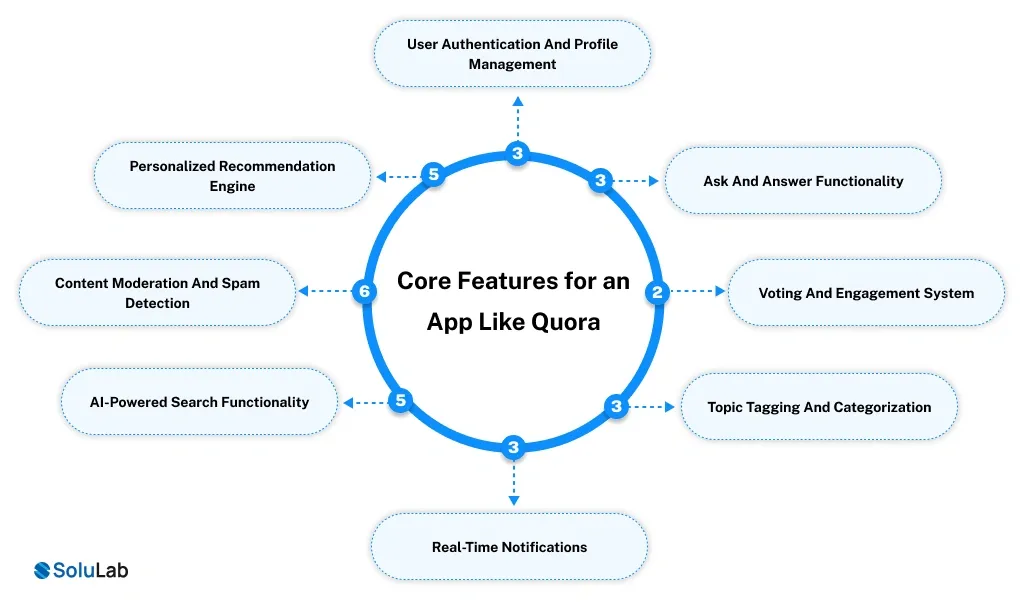
Building an AI-powered solution, like a knowledge-sharing Quora app, requires a strong foundation of scalable features that drive engagement, content quality, and seamless user interaction across diverse communities.
- User authentication and profile management: Secure login systems with personalized profiles allow users to build credibility, track contributions, follow topics, and establish authority within the platform ecosystem over time.
- Ask and answer functionality: A structured Q&A system enables users to post questions and receive detailed answers, forming the backbone of content generation and continuous knowledge exchange within the platform.
- Voting and engagement system: Upvotes, downvotes, and reactions help surface high-quality content, ensuring the most relevant and valuable answers gain visibility while encouraging community-driven moderation and participation.
- Topic tagging and categorization: Organizing content using tags and categories improves discoverability, allowing users to easily navigate subjects, follow interests, and access highly relevant discussions without friction.
- Real-time notifications: Instant alerts for answers, comments, and interactions keep users engaged, improve retention, and encourage continuous participation by ensuring they never miss important updates or conversations.
- AI-powered search functionality: Semantic search capabilities understand user intent and context, delivering more accurate and relevant results compared to traditional keyword-based search systems, enhancing overall user experience.
- Content moderation and spam detection: Automated and AI-driven moderation systems detect inappropriate, spammy, or harmful content, maintaining platform quality and building trust among users at scale.
- Personalized recommendation engine: Intelligent algorithms analyze user behavior, interests, and interactions to deliver tailored content feeds, increasing engagement and time spent on the platform significantly.
Step-by-Step Process to Build a Knowledge-Sharing Platform Like Quora
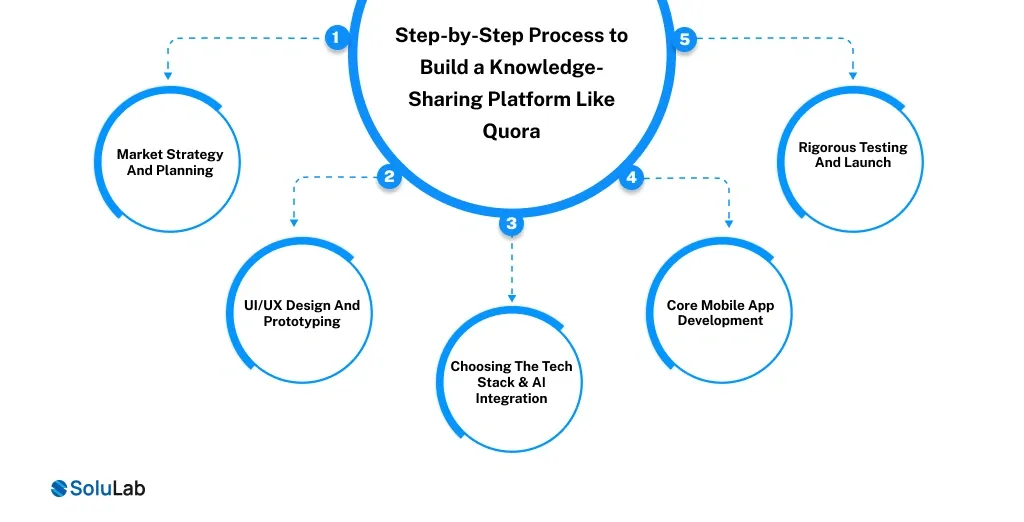
Building a knowledge-sharing platform like Quora requires a structured approach that balances user experience, scalable architecture, and AI native strategy to deliver meaningful, engaging, and high-quality interactions.
1. Market Strategy and Planning
Start by identifying your target audience, niche, and unique value proposition. Analyze competitors, define core features, and map user journeys. A clear roadmap ensures your platform solves real problems and stands out in a crowded knowledge-sharing ecosystem.
2. UI/UX Design and Prototyping
Design intuitive interfaces that encourage interaction between users. Focus on simplicity, readability, and engagement. Prototyping helps visualize user flows, validate ideas early, and refine the experience before development begins, reducing costly revisions later.
3. Choosing the Tech Stack & AI Integration
Select a scalable AI tech stack aligned with your platform’s goals. Integrate AI for semantic search, answer suggestions, moderation, and personalization. A strong technical foundation ensures performance, while AI enhances user experience and content relevance significantly.
4. Core Mobile App Development
Develop essential features such as user authentication, Q&A functionality, notifications, and content management. Ensure smooth performance across devices. This phase transforms designs into a fully functional application ready for real-world user interaction and engagement.
5. Rigorous Testing and Launch
Conduct thorough testing, including functional, performance, and security checks. Fix bugs, optimize speed, and ensure stability. A well-planned launch strategy, combined with monitoring tools, helps deliver a reliable platform and supports smooth user onboarding.
Cost to Build a Knowledge-Sharing Platform
Estimating the cost to build a knowledge-sharing platform like Quora depends on features, scalability, and AI capabilities, with budgets increasing as you move from MVP to enterprise-level AI platforms.
| Development Stage | Estimated Cost | What It Includes |
| MVP (Minimum Viable Product) | $25K – $30K | Basic Q&A features, simple UI, and limited scalability. |
| Mid-Scale Platform | $30K – $40K | Improved UX, notifications, and basic AI features. |
| Enterprise-Level Platform | $50K+ | Full AI integration, scalability, and advanced features. |
What are the Benefits of a Knowledge-Sharing Platform Like Quora?
Building an AI Knowledge-Sharing Platform like Quora offers scalable community-driven insights, improves engagement, and creates long-term value, making it a strong opportunity for businesses planning to develop an AI App Like Quora.
- Scalable knowledge creation: Community-driven contributions allow continuous content generation across topics, enabling platforms to grow organically while building a rich, searchable database of insights without heavy internal content dependency.
- Enhanced user engagement: Features like upvotes, comments, and personalized feeds keep users actively involved, increasing session time and retention while encouraging repeat visits through relevant and interactive content experiences.
- Improved content discovery: Advanced search and AI-powered recommendations help users quickly find accurate, relevant answers, reducing friction and making the platform more useful for both casual browsing and deep research.
- Cost-effective content generation: Unlike traditional content models, users generate most of the content, significantly reducing operational costs while maintaining a steady flow of fresh, diverse information.
- Strong monetization potential: Multiple revenue streams, including ads, subscriptions, and sponsored content, enable platforms to generate consistent income while effectively scaling their user base and engagement.
- Community-driven credibility: Voting systems and expert participation help surface high-quality answers, building trust and ensuring that the most valuable and accurate content gains visibility over time.
- AI-driven personalization: Intelligent algorithms analyze user behavior to deliver tailored content feeds, improving relevance, boosting engagement, and creating a more satisfying user experience.
Future Trends in Knowledge Platforms
Knowledge-sharing platforms are evolving rapidly, driven by AI-led development, new interaction formats, and decentralized technologies that reshape how users contribute, verify, and consume information in digital communities.
- AI-First Communities: Platforms will prioritize AI at their core, using intelligent systems for content creation, moderation, personalization, and search, enabling faster, more accurate knowledge discovery and improved user engagement.
- Voice-Based Q&A: Voice interfaces will allow users to ask questions and receive spoken answers, making knowledge access more conversational, accessible, and efficient, especially for mobile users and hands-free interactions.
- Web3-Based Identity Systems: Decentralized identity systems will give users ownership of their data and reputation, enabling transparent credibility scoring, cross-platform recognition, and enhanced trust within knowledge-sharing ecosystems.
How SoluLab Can Help Build an AI-Powered Knowledge-Sharing Platform?
SoluLab helps design and build scalable knowledge-sharing platforms from scratch, covering frontend, backend, and cloud infrastructure.
- AI-native community platform architecture
- LLM integration services for Q&A systems
- AI-driven semantic search implementation
- AI-powered recommendation engine development
- AI-based content moderation systems
- Generative AI answer engine integration
- AI-driven user engagement and personalization
- Vector database and embedding integration

Conclusion
Creating a knowledge-sharing platform like Quora with AI integration is a strategic move for businesses looking to build scalable, community-driven ecosystems.
By combining intuitive UX, strong engagement features, and AI capabilities like semantic search, moderation, and personalization, you can deliver a platform that grows organically while maintaining quality.
As demand for intelligent communities continues to rise, investing early can offer a strong competitive edge. SoluLab, an AI app development company, can help your business design, build, and scale such platforms effectively.
FAQs
Neha is a curious content writer with a knack for breaking down complex technologies into meaningful, reader-friendly insights. With experience in blockchain, digital assets, and enterprise tech, she focuses on creating content that informs, connects, and supports strategic decision-making.