Key Takeaways
- AI voice agents automate 60–80% of patient interactions, reducing front-desk workload and improving operational efficiency.
- Hospitals can cut administrative costs by up to 40% through call handling, scheduling, and follow-up automation.
- No-show rates drop by 30–40% with automated reminders and patient engagement workflows.
- Integration with EHR, CRM, and billing systems is critical for seamless implementation and real ROI.
- Compliance (HIPAA/GDPR) and data security must be built into the system from day one.
- Starting with a focused use case (like appointment automation) ensures faster adoption and measurable impact.
- AI voice agents are evolving into multi-agent systems, enabling end-to-end healthcare workflow automation.
Patients don’t want to wait on hold or repeat the same details again and again. Yet, many health systems still struggle with high call volumes, staff overload, and fragmented communication. This gap directly impacts patient experience and operational efficiency.
However, AI voice agents in healthcare enable conversations, automate routine interactions, and support care teams without replacing them. In fact, 82% of healthcare leaders expect positive ROI from AI implementations.
For health systems, this means faster response times, reduced costs, and improved patient satisfaction. But implementing AI Agents the right way requires clarity on workflows, compliance, and ROI.
In this guide, we’ll break down how to implement AI voice agent solutions in 2026, along with key benefits, use cases, and measurable ROI outcomes.
What Is an AI Voice Agent in Healthcare?
An AI voice agent in healthcare is a conversational system that uses speech recognition and natural language processing to interact with patients, automate routine tasks, and support clinical workflows.
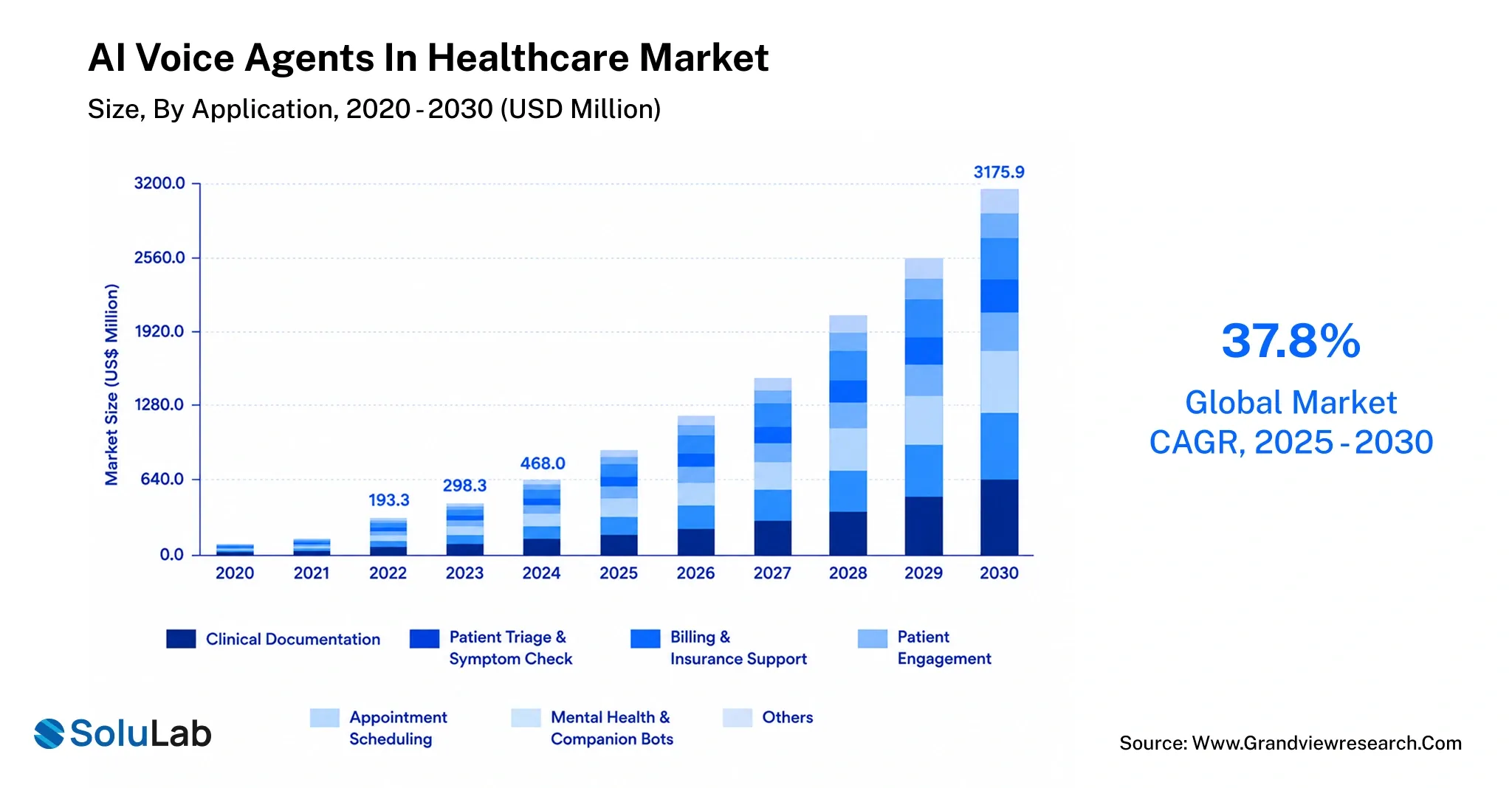
It improves efficiency, reduces administrative burden, and enhances patient engagement through real-time voice-based assistance. The AI voice agents healthcare market is projected to reach $3.17B by 2030, growing at ~37.7% CAGR.
Examples:
- Booking appointments via voice call
- Medication reminders for patients
- Answering basic health queries
- Assisting doctors with clinical notes
- Follow-up calls after discharge
How Does an AI Voice Agent in Healthcare Work?
AI agents in healthcare follow a structured workflow that converts spoken input into actionable insights, enabling seamless interaction between patients and systems while supporting faster, more efficient clinical and administrative processes.
- Voice input capture: The system records patient speech through phone or app interfaces, ensuring clear audio capture and preparing raw input for further processing without manual intervention or human dependency.
- Speech-to-text conversion: Advanced speech recognition converts spoken language into accurate text, enabling the system to understand diverse accents, medical terms, and conversational nuances in real time.
- Natural language understanding: AI analyzes intent, context, and key entities within the text, identifying patient needs such as appointment requests, symptom descriptions, or medication-related queries.
- Decision and workflow execution: The system triggers predefined workflows or integrates with healthcare databases, enabling actions like scheduling, updating records, or retrieving relevant medical information instantly.
- Response generation and delivery: The AI generates contextual, human-like responses and delivers them via voice, ensuring clear communication, quick resolutions, and an improved patient experience.

What Are the Key Benefits of AI Voice Agents for Healthcare Providers?
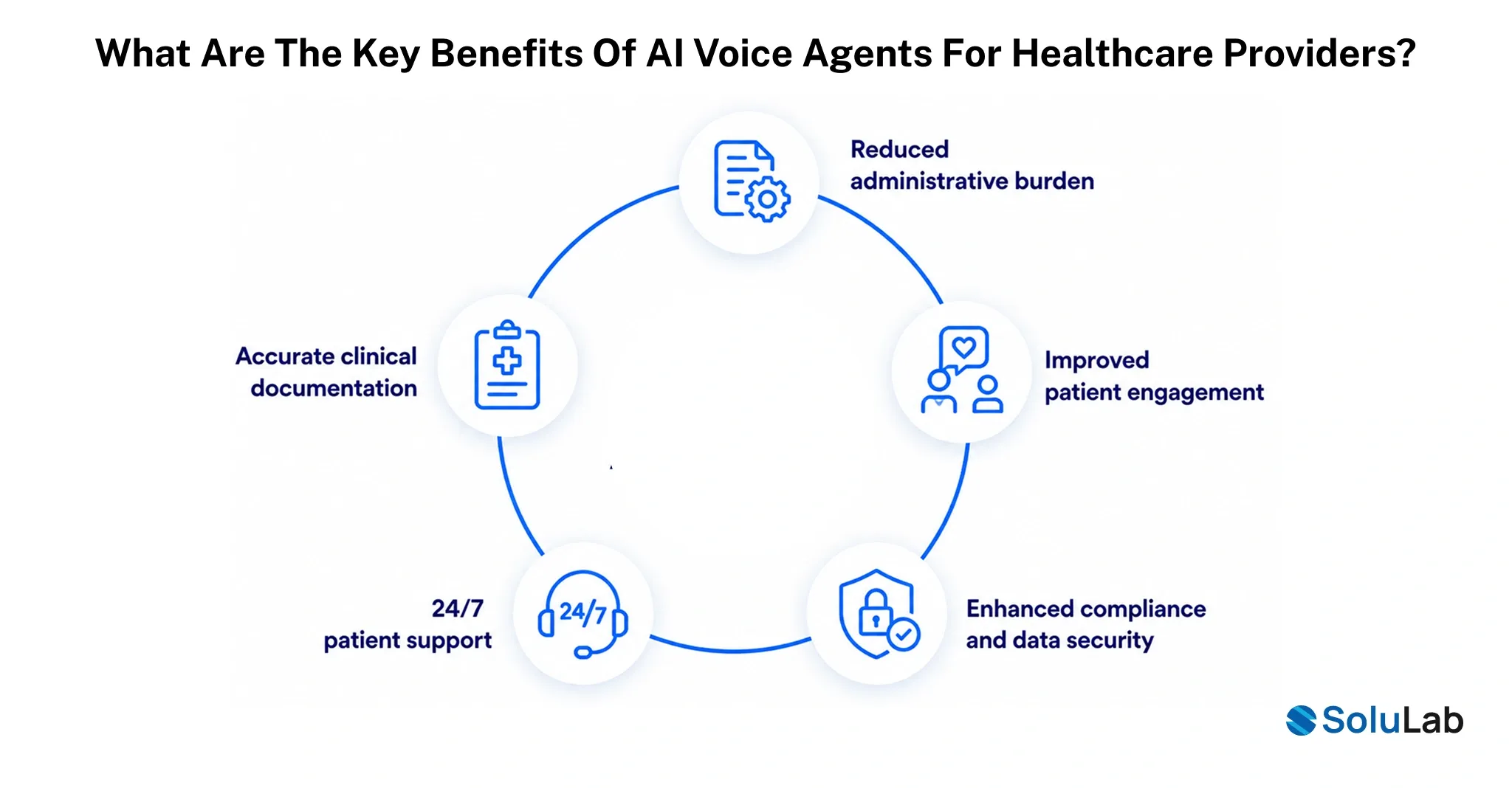
Healthcare providers are increasingly adopting AI voice agents to streamline operations, improve patient interactions, and reduce administrative workload, enabling more efficient, scalable, and patient-centric care delivery across clinical and virtual settings.
- Improved patient engagement: An AI voice agent for telehealth enables seamless, real-time conversations with patients, improving accessibility, reducing wait times, and ensuring consistent communication across virtual care environments.
- Reduced administrative burden: Automating repetitive tasks like appointment scheduling, reminders, and patient queries allows healthcare staff to focus more on clinical responsibilities, improving overall productivity and operational efficiency.
- Enhanced compliance and data security: A HIPAA-compliant AI solution ensures sensitive patient data is handled securely, maintaining privacy standards while enabling efficient voice-based interactions across healthcare workflows.
- 24/7 patient support: AI voice agents provide round-the-clock assistance, addressing patient concerns, answering FAQs, and ensuring continuous engagement without requiring constant human intervention.
- Accurate clinical documentation: Voice agents assist in capturing and transcribing doctor-patient interactions in real time, reducing manual errors and improving the quality and consistency of medical records.
How to Implement an AI Voice Agent in Healthcare?
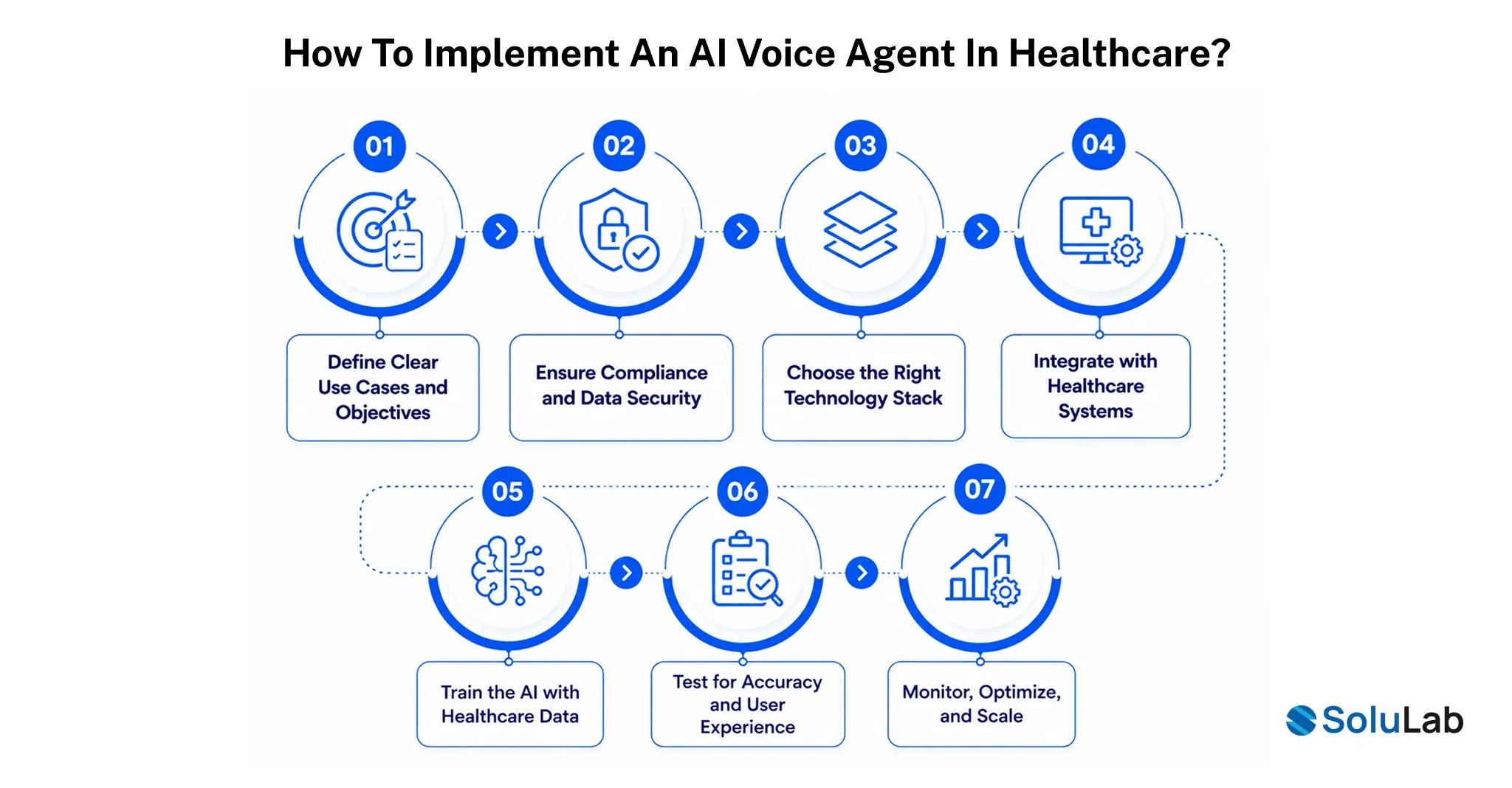
Healthcare organizations are rapidly adopting voice-based AI systems to improve operations, enhance patient engagement, and reduce manual workloads while ensuring compliance, accuracy, and seamless AI integration across clinical and administrative workflows.
1. Define Clear Use Cases and Objectives
Identify specific problems the AI voice agent will solve, such as appointment scheduling, patient triage, or follow-ups. Clear goals ensure focused development, better ROI, and measurable performance outcomes.
2. Ensure Compliance and Data Security
Build a HIPAA-compliant AI voice agent by implementing encryption, secure data storage, and strict access controls to protect sensitive patient information and meet regulatory requirements.
3. Choose the Right Technology Stack
Select reliable speech recognition, NLP, and cloud infrastructure tools that support scalability, multilingual capabilities, and healthcare-specific integrations for accurate and efficient voice interactions.
4. Integrate with Healthcare Systems
Connect the voice agent with EHRs, CRM systems, and hospital management platforms to enable real-time data access, streamline workflows, and provide personalized patient interactions.
5. Train the AI with Healthcare Data
Use domain-specific models, including medical terminology and patient interaction patterns, to improve understanding, accuracy, and contextual responses in real-world healthcare scenarios.
6. Test for Accuracy and User Experience
Conduct rigorous testing across multiple scenarios to ensure the system understands diverse accents, responds correctly, and delivers a seamless, user-friendly patient and provider experience.
7. Monitor, Optimize, and Scale
Continuously analyze performance metrics, patient feedback, and system logs to refine responses, improve efficiency, and scale the solution across departments or facilities effectively.
Real-World Use Cases of AI Voice Agent in Healthcare
AI voice agents are reshaping healthcare operations by automating communication, improving patient engagement, and reducing manual workload across clinics, hospitals, and telehealth platforms while enhancing overall care delivery efficiency.
1. Appointment Scheduling & Management
AI voice agents handle inbound and outbound calls to book, reschedule, or cancel appointments. They reduce front-desk workload, minimize no-shows through reminders, and ensure seamless patient coordination without requiring human intervention for routine scheduling tasks.
2. Medication Reminders & Adherence
These agents proactively call or interact with patients to remind them about medication timings, dosage instructions, and refill alerts. This improves adherence, especially for chronic disease patients, reducing complications and hospital readmissions over time.
3. Post-Discharge Follow-Ups
AI voice agents conduct automated follow-up calls after hospital discharge to check symptoms, recovery progress, and compliance with treatment plans. They can escalate concerns to healthcare providers, ensuring timely intervention and better patient outcomes.
4. Patient Query Handling & Triage
Voice agents answer common patient queries such as clinic hours, services, or basic health concerns. They can also perform initial symptom triage, guiding patients to the appropriate department or recommending urgent care when needed.
5. Clinical Documentation Support
Doctors can use AI voice agents to capture and transcribe patient interactions in real time. This reduces manual documentation, allows physicians to focus on patient care, and ensures accurate, structured clinical records.
6. Insurance & Billing Assistance
AI voice systems help patients understand billing details, insurance coverage, and claim status. They simplify complex processes, reduce confusion, and decrease administrative workload for hospital billing departments.
7. Telehealth Voice Assistance
In virtual consultations, AI voice agents assist with patient onboarding, collect preliminary information, and guide users through the session. This streamlines telehealth workflows and enhances the overall patient experience.
How Much Does it Cost to Implement an AI Voice Agent?
The cost of implementing an AI agent in healthcare depends on features, integrations, compliance needs, and scale, ranging from basic automation setups to fully integrated, enterprise-grade intelligent systems.
| Implementation Type | Estimated Cost | What’s Included |
| Basic Setup | $15,000 – $25,000 | Simple voice bot with appointment scheduling, FAQs, and limited integrations; suitable for small clinics or pilot use cases. |
| Mid-Level Solution | $25,000 – $35,000 | Advanced NLP, multi-use case support, EHR/CRM integration, and better accuracy for handling patient interactions across departments. |
| Enterprise-Grade System | $50,000+ | Fully scalable solution with compliance, analytics, multilingual support, deep integrations, and automation across multiple healthcare workflows. |
| Ongoing Maintenance | $2,000 – $10,000/month | Includes updates, model training, cloud hosting, monitoring, and continuous optimization for improved performance and compliance adherence. |
How Are AI Voice Agents Used in GP Clinics and Dental Practices?
AI voice agents are increasingly used in GP clinics and dental practices to automate patient communication, reduce front-desk workload, and improve service efficiency through real-time, voice-based interactions.
- Handling appointment bookings, cancellations, and rescheduling through voice calls, reducing receptionist workload, and ensuring patients get quick, hassle-free access to available slots.
- Sending automated reminders for upcoming visits or procedures, helping reduce no-shows, and improving overall clinic or practice scheduling efficiency.
- Answering common patient queries about services, clinic hours, or treatment preparation frees staff to focus on more complex patient needs.
- Conducting basic triage by gathering symptoms or concerns before visits, allowing doctors or dentists to prepare in advance and prioritize urgent cases.
- Managing post-visit follow-ups, including recovery instructions or feedback collection, improving patient engagement, and continuity of care.
The Future of AI Voice Agents in Healthcare
AI voice agents are reshaping healthcare delivery by enabling faster interactions, reducing manual workload, and improving patient experiences, with continuous advancements making them more intelligent, accessible, and deeply integrated into clinical systems.
- Hyper-personalized patient interactions: AI Voice Agent Solution platforms will leverage patient history, behavior, and preferences to deliver tailored conversations, improving engagement, adherence to treatment plans, and overall healthcare outcomes.
- Rise of multilingual accessibility: Multilingual AI Voice Agents will bridge language gaps in diverse populations, ensuring accurate communication, better diagnosis support, and inclusive care delivery across regions with varied linguistic needs.
- Integration with clinical systems: Advanced agents will integrate with EHRs, telehealth platforms, and IoT devices, enabling real-time data exchange and empowering clinicians with actionable insights during patient interactions.
- Scalable and secure deployments: Healthcare providers will adopt robust AI deployment solutions to ensure compliance, scalability, and data privacy, allowing voice agents to operate efficiently across hospitals, clinics, and remote care environments.
- Proactive and predictive care support: AI voice agents will move beyond reactive tasks by predicting patient needs, sending timely alerts, and assisting in early intervention, reducing hospital readmissions and improving preventive care strategies.
How can SoluLab help you build AI Voice Agents in Healthcare Operations?
Healthcare providers need reliable AI development partners to deploy intelligent voice automation that improves patient engagement, streamlines workflows, and ensures compliance while scaling efficiently across clinical and administrative operations.
- Custom AI voice agent development for healthcare
- AI-native voice automation solutions
- AI-driven conversational workflow design
- Multilingual AI Voice Agents deployment
- EHR/EMR integration services
- Appointment scheduling and call automation systems
- Patient triage and virtual assistance solutions
- Voice-based analytics and reporting tools
- HIPAA-compliant infrastructure setup
- Continuous optimization and AI model training
For example, a MedTech company partnered with a SoluLab team to build a clinical decision support platform that analyzes fragmented patient data.
Integrated with EHR systems, the solution delivers accurate diagnostics and guideline-based treatment recommendations. Automated clinical documentation helps clinicians reduce errors and improve patient outcomes.
Connect with us to build an AI voice agent for your business!

Conclusion
AI voice agents are becoming a crucial layer in modern healthcare operations. From reducing administrative workload to improving patient access and engagement, the ROI is increasingly measurable across both clinical and operational metrics.
Health systems that approach implementation strategically, focusing on compliance, integration, and real use cases, are seeing faster adoption and better outcomes.
If you’re planning to move in this direction, SoluLab, an AI app development company, can help your business build and scale effective solutions.
FAQs
Neha is a curious content writer with a knack for breaking down complex technologies into meaningful, reader-friendly insights. With experience in blockchain, digital assets, and enterprise tech, she focuses on creating content that informs, connects, and supports strategic decision-making.