Key Takeaways
- Jamaica’s tourism-driven property market creates strong demand for tokenized assets. This leads to real estate tokenization and global investor participation.
- Compliance-first architecture is essential for secure property tokenization in Jamaica. Along with institutional-grade security and smart contract audits, protect tokenized real estate assets.
- Scalable blockchain infrastructure supports cross-border property investment and liquidity. That can place your enterprise at the top in Jamaica and paves way towards the global market.
Instead of relying only on traditional real estate funding models, developers and investors are exploring blockchain-powered ownership structures.
Several market shifts are driving real estate transition:
- Global real-world asset tokenization is projected to reach a $2 trillion market size in 20230.
- Institutional investors are actively exploring digital ownership structures for real estate assets.
- Fractional ownership models are opening property investment to a broader global investor base.
- Blockchain platforms are improving transparency, settlement speed, and ownership verification.
At the same time, tourism-driven real estate markets like Jamaica are attracting growing international investor interest. Luxury resorts, rental properties, and hospitality developments continue to draw capital from global markets.
This creates a strong opportunity for real estate tokenization in Jamaica.
Why Is Jamaica Emerging as a Strategic Market for Real Estate Tokenization?
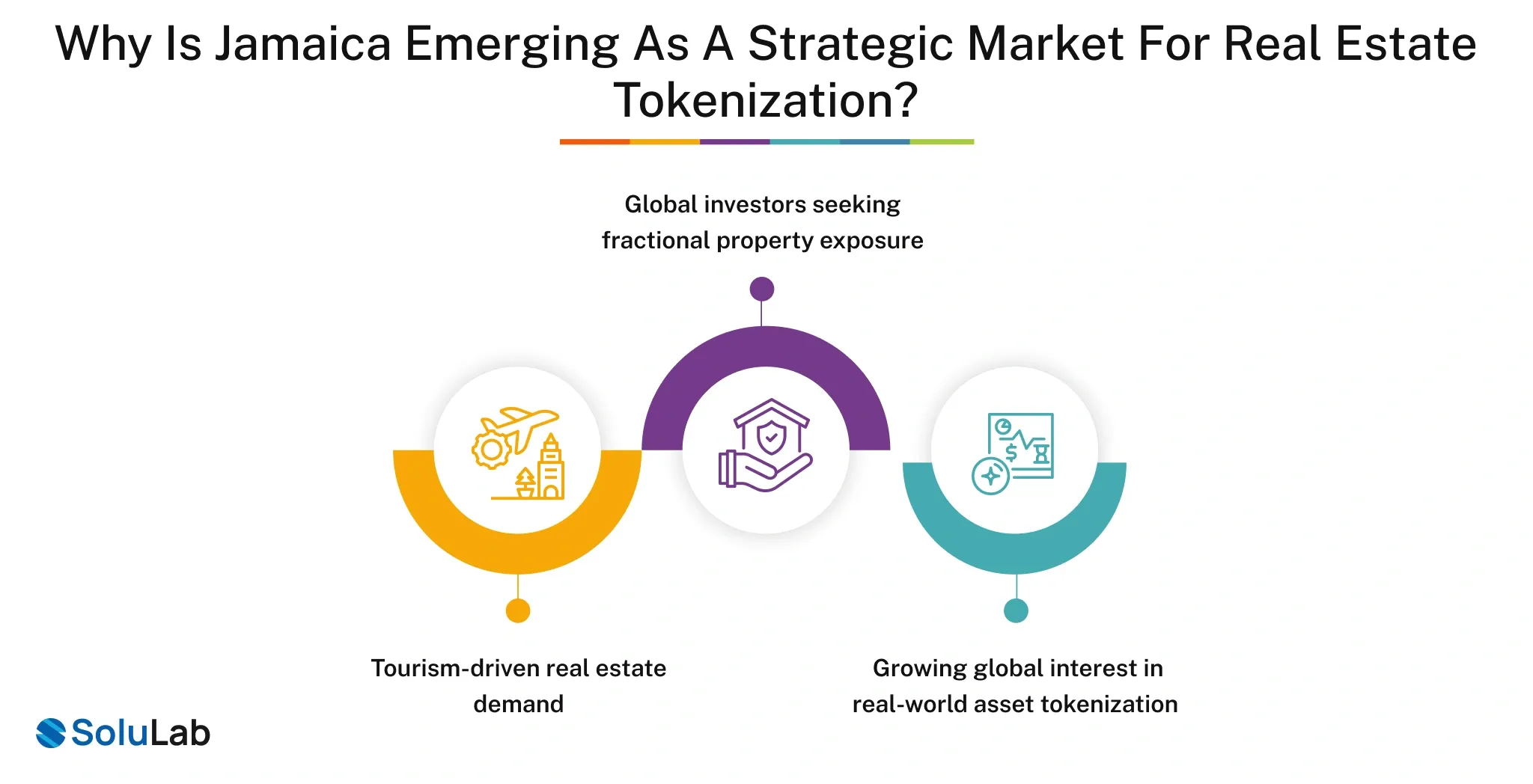
Jamaica’s property market sits at the intersection of tourism growth, international investment, and digital finance innovation.
These factors make it an attractive environment for real estate tokenization in Jamaica.
1. Tourism-driven real estate demand
Tourism contributes a significant share of Jamaica’s economy and continues to attract large numbers of international visitors every year.
High demand for resorts, rental villas, and hospitality properties drives real estate development across the island.
For developers, asset tokenization offers a new way to finance projects.
Instead of relying only on banks or private equity, property developers can attract global investors through real estate asset tokenization in Jamaica.
2. Global investors seeking fractional property exposure
Many international investors want exposure to Caribbean real estate but cannot commit large capital amounts.
Tokenization solves this problem.
Through property tokenization services in Jamaica, investors can purchase smaller digital shares of a property.
For example:
- A $5 million resort project could be divided into thousands of tokens.
- Investors can buy fractional shares instead of funding the entire property.
This approach expands investor access while improving liquidity.
3. Growing global interest in real-world asset tokenization
Tokenized real estate is gaining attention globally.
Major asset managers and banks are experimenting with blockchain platforms for asset digitization. Real estate, private credit, and infrastructure assets are among the most actively explored sectors.
As adoption grows, markets that move early can attract international investors and technology partnerships.
Jamaica’s property sector has the potential to benefit from this shift by building secure blockchain real estate platforms designed for cross-border investment.
How Can Enterprises Ensure Regulatory Compliance in Jamaica’s Evolving Digital Asset Environment?
Tokenization introduces new financial models, but regulatory compliance remains essential.
Property tokens often qualify as securities because they represent financial ownership rights.
Enterprises launching real estate tokenization services in Jamaica must design platforms that follow financial regulations and investor protection frameworks.
1. KYC and AML requirements
Investor verification is a core requirement for digital asset platforms.
A compliant tokenization platform should include:
- Know Your Customer verification
- Anti-Money Laundering monitoring
- identity authentication processes
These systems prevent fraudulent activity and protect investors.
2. Transparent ownership records
One advantage of blockchain infrastructure is transparent record-keeping.
Every token transaction can be recorded permanently on-chain, creating a verifiable fractional ownership history.
For enterprises building secure real estate tokenization platforms, this transparency improves investor trust and regulatory oversight.
3. Legal structuring of tokenized property
Tokenized property investments often use Special Purpose Vehicles (SPVs).
An SPV holds the property asset while investors purchase tokens representing ownership rights.
This structure helps bridge traditional real estate ownership with blockchain-based investment models.
For enterprises entering this space, working with a tokenization development company ensures legal frameworks align with platform technology.
What Security Architecture Is Required for Institutional-Grade Real Estate Tokenization?
Security is one of the biggest barriers to institutional adoption of digital assets. Enterprise investors require platforms that protect assets, transactions, and sensitive financial data.
A secure real estate tokenization platform typically includes several layers of security.
1. Smart contract auditing
Smart contracts manage token issuance, ownership records, and revenue distribution.
Before deployment, they must undergo detailed testing and third-party security audits.
This helps prevent vulnerabilities and reduces the risk of financial exploitation.
2. Multi-signature digital asset custody
Tokenized assets must be stored securely.
Institutional-grade custody systems often use multi-signature wallets, which require multiple approvals before funds or assets can be transferred.
This prevents unauthorized transactions.
3. Access control and identity verification
Secure platforms also use role-based access systems.
Examples include:
- administrator access levels
- investor permissions
- compliance officer dashboards
These controls ensure only verified users can perform sensitive operations.
Together, these layers create secure real estate tokenization solutions suitable for enterprise adoption.
How Should Real Estate Assets Be Structured for Tokenization in Jamaica?
Tokenization is not just a technology project. It is also a financial structuring exercise.
The design of the token model determines how investors participate in property ownership.
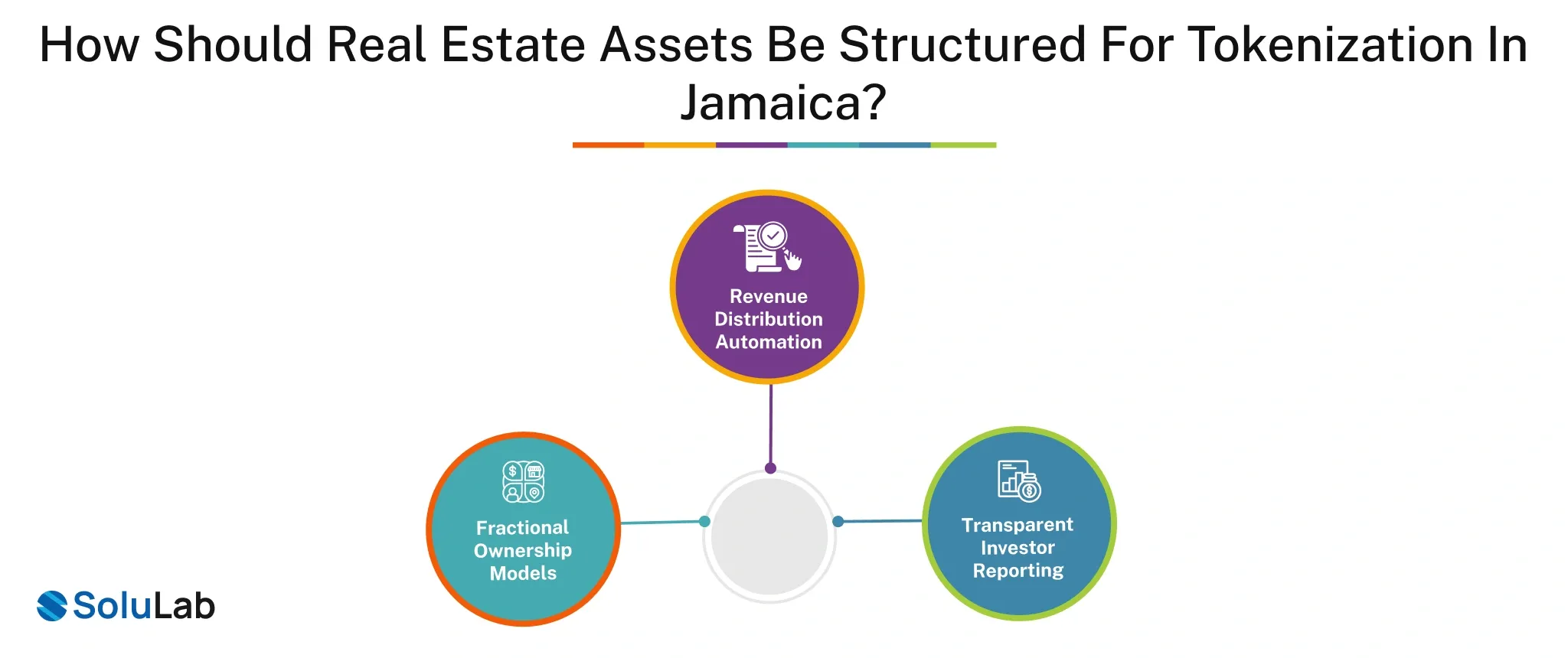
1. Fractional ownership models
In most tokenization structures, each token represents a share of the underlying asset.
For example:
- 1 property = 10,000 tokens
- Each token represents 0.01% ownership.
Investors purchase tokens based on their desired investment size.
This allows smaller investors to participate in tokenization of high-value properties.
2. Revenue distribution automation
Smart contracts can automatically distribute rental income or profits to token holders.
This reduces administrative overhead.
Instead of manual accounting processes, the platform calculates investor payouts automatically.
3. Transparent investor reporting
Enterprise investors expect detailed performance insights.
Modern real estate tokenization platforms in Jamaica often provide dashboards displaying:
- property valuation updates
- rental income performance
- token ownership distribution
This transparency improves investor confidence.
How Can Enterprises Build a Scalable and Interoperable Tokenization Platform?
Best Tokenization platforms should be built for long-term growth.
Enterprises must consider scalability, interoperability, and global accessibility.
1. Blockchain network selection
Choosing the right blockchain infrastructure is critical.
Enterprises must evaluate:
- transaction costs
- network security
- developer ecosystem
- scalability
These factors affect long-term platform performance.
2. Multi-chain platform design
Some platforms support multiple blockchain networks to improve liquidity and investor reach.
Multi-chain tokenization platforms allow assets to interact with different blockchain ecosystems and marketplaces.
3. Integration with financial infrastructure
A complete secure blockchain real estate platform integrates with external systems such as:
- digital asset wallets
- payment gateways
- compliance monitoring tools
- Investor management systems
These integrations create a full digital investment ecosystem.
SoluLab’s Key Role in Building a Real Estate Tokenization Platform in Jamaica
As you see, Jamaica’s real estate tokenization projects depend on disciplined planning and strong technology foundations. If enterprises are planning to launch a Real Estate Tokenization Platform in Jamaica, the focus should remain on building reliable digital infrastructure and compliant investment frameworks.
This includes:
- Strong property fundamentals backed by stable tourism and rental demand
- Clear SPV structuring to legally own tokenized property
- Compliance-first real estate tokenization architecture aligned with financial regulations
- Scalable blockchain infrastructure supporting global investor onboarding
Launching a successful, secure blockchain real estate platform in Jamaica requires expertise across blockchain development, asset structuring, and regulatory alignment.
SoluLab helps enterprises build secure real estate tokenization platforms that support fractional property ownership, transparent asset management, and scalable digital investment ecosystems.
Contact us today to explore how we can support your real estate tokenization development in Jamaica.
FAQs
Deepika is a content writer who blends storytelling with strategic thinking. She explores topics across digital innovation, emerging tech, and the evolving blockchain industry. She enjoys breaking down complex ideas into simple, engaging narratives in the growing global markets.