Key Takeaways
- Real estate tokenization is gaining mainstream traction, with tokenized real-world assets projected to reach $16 trillion by 2030.
- Institutional adoption is accelerating, as banks, asset managers, and fintech platforms explore tokenized real estate for portfolio diversification and efficient asset management.
- Blockchain is enabling faster and more transparent transactions, reducing settlement times, intermediaries, and operational costs compared to traditional real estate processes.
- AI and data analytics are enhancing property valuation and risk assessment, helping investors make smarter, data-driven decisions in tokenized real estate markets.
Real estate has always been one of the largest asset classes in the world. However, traditional property investment often comes with slow transactions, high entry barriers, and limited liquidity. Because of this, enterprises, institutional investors, and property developers are now exploring real estate tokenization as a more structured and digital investment approach.
Industry projections suggest that the broader tokenized asset market could reach $3 trillion by 2030, with real estate expected to account for a significant portion of this value.
Moreover, this growing adoption is driven by several factors:
- Increasing demand for fractional real estate tokenization among global investors
- The need to improve liquidity in traditionally illiquid property markets
- Faster digital settlement compared to conventional real estate transactions
Because of these developments, enterprises are now evaluating the real estate tokenization industry in 2026 in terms of ROI.
Why Is Real Estate Tokenization Becoming a Strategic Priority for Enterprises in 2026?
At this point, tokenization trends 2026 indicate innovation with blockchain support.
Property digitization is becoming a strategic initiative across investment firms, asset managers, and developers to grow in the global tokenization market.
1. Improved Liquidity for Traditionally Illiquid Assets
Real estate assets usually require large capital commitments and long holding periods. However, fractional real estate tokenization allows property ownership to be divided into digital tokens.
Therefore:
- Investors can buy smaller portions of large assets
- Asset managers can attract a broader investor base
- Enterprises can unlock 80% liquidity from existing portfolios
This liquidity layer is one of the most important tokenized real estate trends currently gaining attention among financial institutions.
2. Access to Global Capital Markets
Real estate investments were traditionally limited by geography. However, tokenization allows investors from different regions to participate in projects digitally. As per the EY report, 59% HNW (High-net-worth) inventors consider real estate as 2nd best alternative.
Because of this:
- Global investors gain access to property markets
- Enterprises can raise 60% capital across multiple jurisdictions
- Investment participation becomes more flexible
This is one of the major aspects of asset tokenization that enterprises are analyzing while designing digital asset strategies.
3. Increased Transparency and Auditability
Blockchain technology records every transaction on a distributed ledger. Therefore:
- Ownership records remain verifiable
- Transaction histories remain transparent
- Compliance and reporting become easier
This level of transparency is particularly important for institutional investors and regulators.
4. Demand for Digital Investment Infrastructure
Investment firms are now asking for:
- investor onboarding systems
- compliance automation
- dividend distribution smart contracts
- secondary trading mechanisms
These developments clearly indicate that the future of real estate tokenization depends on secure infrastructure, compliance frameworks, and enterprise-grade development capabilities.
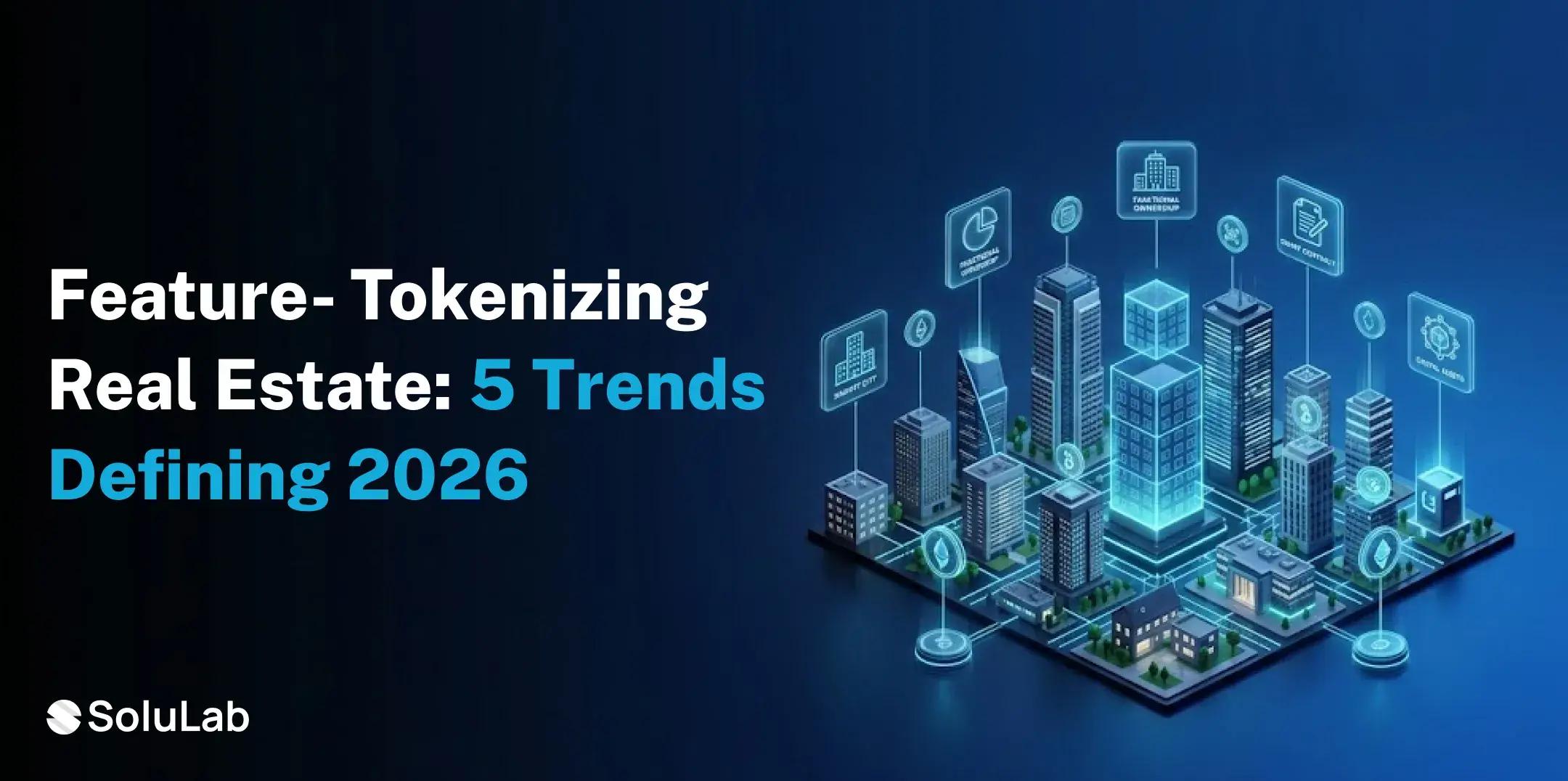
5 Real Estate Tokenization Trends Defining 2026
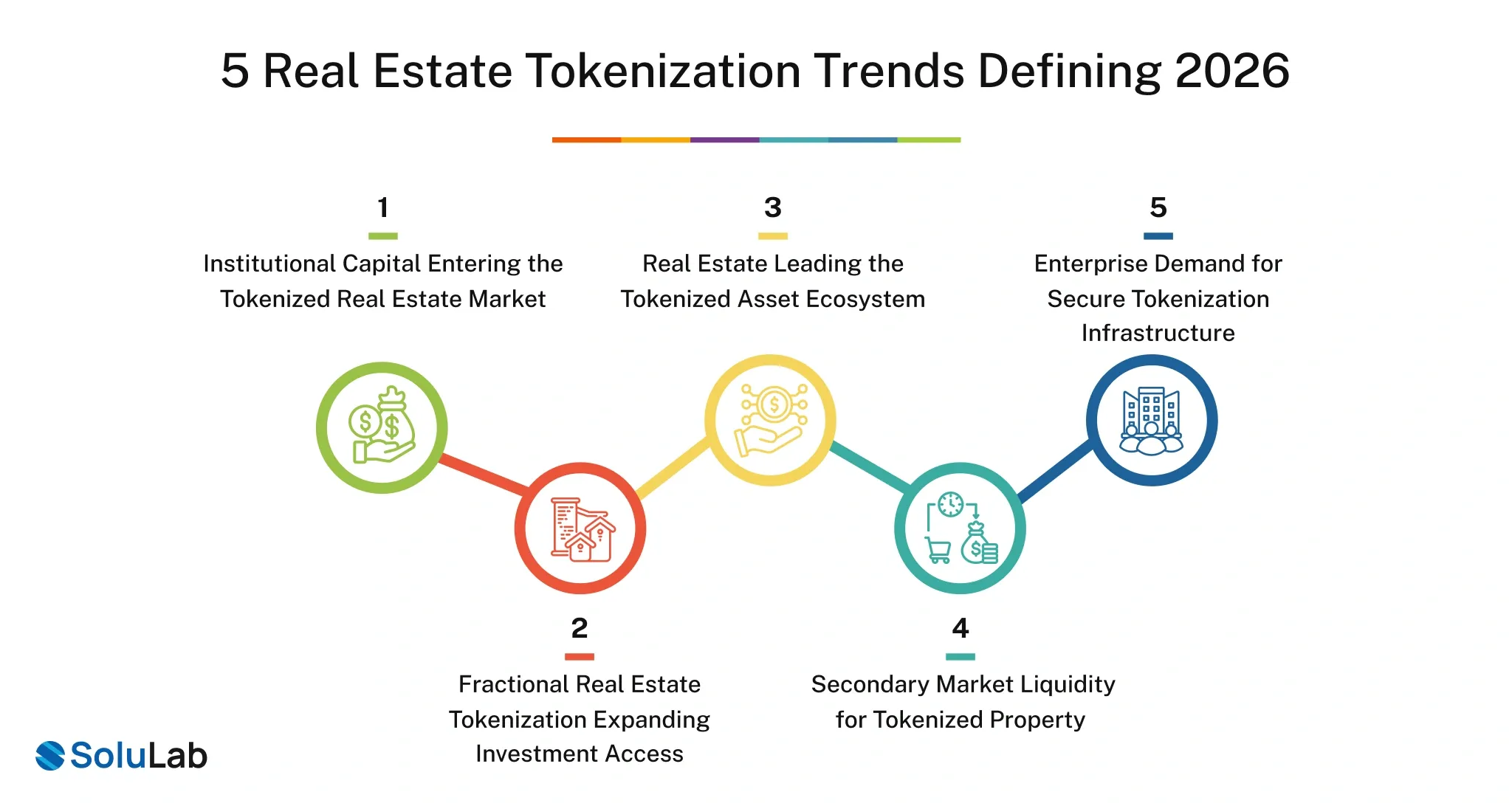
Enterprises must focus on real estate tokenization infrastructure, liquidity, and institutional participation. The following trends are expected to play a crucial role in the tokenized property trends ecosystem.
1. Institutional Capital Entering the Tokenized Real Estate Market
Institutional investors are beginning to evaluate real estate tokenization as part of digital asset portfolios. Research shows 65% of institutional investors expect allocations to tokenized assets by 2026. Real estate ranks among the top tokenized alternatives because property generates predictable income and structured ownership.
Key signals
- Institutional investors expect 5.6% portfolio allocation to tokenized assets by 2026.
- Real estate is ranked among the top 2 tokenized alternative asset classes.
- Enterprises are exploring white label real estate tokenization platforms for regulated asset issuance.
2. Fractional Real Estate Tokenization Expanding Investment Access
Fractional real estate investing allows property ownership to be divided into digital tokens. This lowers capital requirements and attracts a wider investor base.
Key signals
- 56 tokenization providers support
- of real-world assets.
- Fractional ownership models enable smaller investment tickets for commercial property.
- Enterprises use real estate tokenization development services to build investor portals and token issuance systems.
3. Real Estate Leading the Tokenized Asset Ecosystem
Across the RWA ecosystem, property has become one of the most widely tokenized assets. Many platforms prioritize real estate because ownership rights and income streams are easy to structure digitally.
Key signals
- 34 tokenization platforms currently support real estate tokenization.
- Property assets provide clear valuation and rental yield models.
- Enterprises are prioritizing tokenization platform development within broader RWA strategies.
4. Secondary Market Liquidity for Tokenized Property
Liquidity is a major factor driving the tokenized real estate market. Digital tokens allow ownership transfers without traditional property settlement delays.
Key signals
- 56 tokenization platforms operate digital asset marketplaces.
- Enterprises are exploring regulated trading systems for property tokens.
- Liquidity infrastructure is becoming critical for blockchain real estate investment.
5. Enterprise Demand for Secure Tokenization Infrastructure
As adoption grows, enterprises require compliant systems for issuing and managing property tokens.
Key signals
- The RWA ecosystem includes 80+ tokenization service providers globally.
- Platforms now include KYC, investor onboarding, and compliance monitoring.
- Many enterprises partner with an asset tokenization development company to build secure real estate tokenization services for institutional markets.
How Are Regulatory Frameworks Maturing to Support Enterprise-Grade Tokenization?
Regulation has always been a critical factor in property investments. Therefore, regulatory clarity is becoming a key driver behind the real estate tokenization industry in 2026.
Governments and financial authorities are now actively studying digital asset frameworks for property-backed tokens.
1. Emergence of Digital Asset Regulations
Several jurisdictions have introduced digital asset regulations that support tokenized securities and asset-backed tokens.
These regulations usually cover:
- investor protection rules
- digital asset issuance frameworks
- compliance reporting standards
- custody and asset management requirements
Because of this, enterprises can launch real estate tokenization platforms with stronger legal alignment and gain user trust.
2. Institutional Compliance Requirements
Institutional investors require strict compliance systems before participating in tokenized markets.
Therefore, tokenization platforms must include:
- KYC and AML verification
- Investor accreditation systems
- regulatory reporting modules
- digital asset custody infrastructure
These compliance layers are now a fundamental part of real estate tokenization development services.
3. Smart Contract Governance and Audit
Smart contracts define how tokens operate, how revenue is distributed, and how ownership transfers occur.
However, enterprises require:
- smart contract security audits
- governance frameworks
- investor protection mechanisms
Because of this, professional real estate tokenization development services now focus on secure contract architecture and regulatory compatibility.
How Should Enterprises Build a Future-Ready Real Estate Tokenization Strategy?
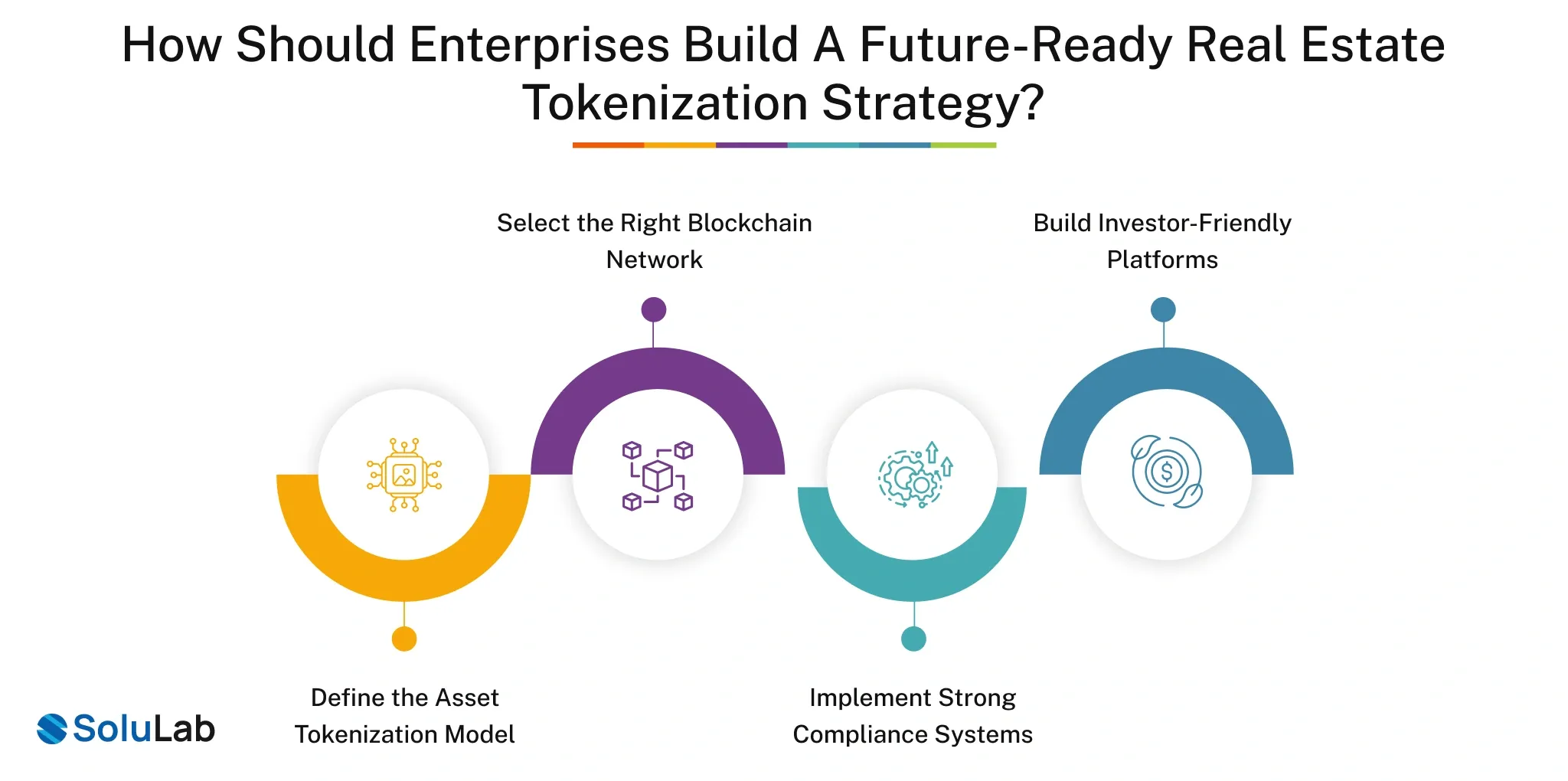
A well-structured blockchain-based tokenization development strategy ensures enterprise long-term growth, regulatory compliance, and investor confidence.
1. Define the Asset Tokenization Model
Enterprises must first decide how property ownership will be represented.
Common models include:
- equity-based property tokens
- revenue-sharing tokens
- asset-backed security tokens
The selected structure should align with legal and financial requirements.
2. Select the Right Blockchain Network
Different blockchain networks, like Solana for tokenization, offer different advantages.
Enterprises must evaluate:
- transaction costs
- scalability
- security
- interoperability
These factors influence the performance of tokenization platforms.
3. Implement Strong Compliance Systems
Investor protection and regulatory alignment based on region (VARA-UAE, SEC-US, MiCa-EU, Hong Kong regulations) remain crucial.
Therefore, platforms must include:
- KYC verification
- AML monitoring
- investor accreditation checks
- regulatory reporting systems
Compliance infrastructure is a mandatory component of professional real estate tokenization development services.
4. Build Investor-Friendly Platforms
Investors expect simple and transparent digital experiences.
Therefore, platforms must provide:
- investor dashboards
- token ownership tracking
- dividend distribution systems
- real-time reporting tools
User-friendly real estate tokenization platforms increase investor participation and improve trust.

Partner With Experienced Tokenization Platform Development Experts
Until now, we have discussed key aspects, trends, and how the numbers are increasing in RWA tokenization. It’s time to launch a tokenized property platform. It requires expertise in blockchain, financial systems, and regulatory frameworks.
Therefore, many enterprises partner with an experienced real estate tokenization development company like SoluLab that can deliver:
- end-to-end platform development
- smart contract architecture
- Investor onboarding systems
- token issuance infrastructure
These development capabilities are essential for building secure and scalable tokenized property platforms. Hence, contact us today to make your business grow 2x.
FAQs
Deepika is a content writer who blends storytelling with strategic thinking. She explores topics across digital innovation, emerging tech, and the evolving blockchain industry. She enjoys breaking down complex ideas into simple, engaging narratives in the growing global markets.