


Decentralized Physical Infrastructure Networks, DePINs for short, are picking up steam with enterprises that see the potential in handling real hardware services through a decentralized model.
DePIN combines blockchain and AI, two of the biggest shifts in modern tech. Put together, they’re aimed at widening access to essential resources and systems, pushing more equality and transparency into how those systems run. This can genuinely reshape multiple sectors and change how we interact with both digital and physical objects day to day. Over 650 projects were building DePIN solutions last year, according to Messari’s“The DePIN Sector Map” publication.
That’s part of why DePIN’s market value has climbed to $25 billion. If you want the real picture of what DePIN is, how it works, and why it matters, keep reading.
In this blog, we will discuss DePIN (decentralized physical infrastructure network) and the use cases of decentralized physical infrastructure networks. Let’s get into it.
What is DePIN?
DePIN, short for Decentralized Physical Infrastructure Networks, is a new model for building and running physical infrastructure through decentralized tech. It blends blockchain technology with physical assets to make infrastructure development, operation, and maintenance more effective, transparent, and secure.
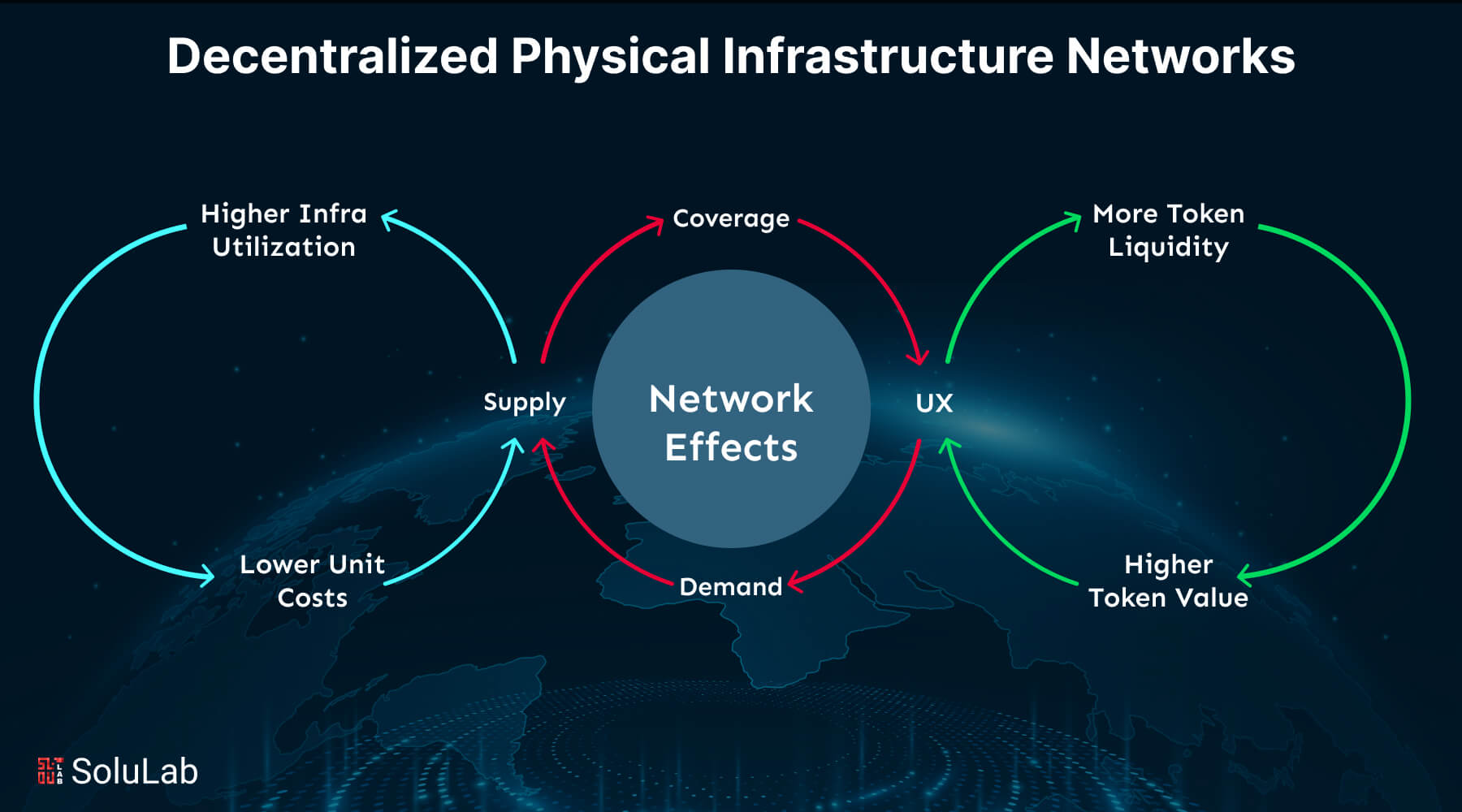
Historically, big organizations and centralized entities have run physical infrastructure, data centers, telecom networks, energy grids. That setup tends to breed inefficiency, high costs, and little transparency. DePIN flips that: individuals and organizations contribute resources directly, processing power, storage, even renewable energy, into a decentralized network. In return, they earn tokens or other incentives. The result is a system that’s more collaborative and, frankly, more efficient.
What sets DePIN apart is how it builds trust and transparency. Blockchain records every transaction and activity inside the network on a tamper-proof ledger. That doesn’t just keep resource use honest, it also lets scattered assets connect seamlessly across a global network.
As digital transformation keeps pushing forward, DePIN has a real shot at redefining how we think about physical infrastructure. Decentralizing critical system management gives businesses a genuine alternative to methods that can be slow, expensive, and vulnerable to a single point of failure. DePIN makes infrastructure more resilient, more flexible, and accessible to a wider range of people, which points toward a more inclusive, sustainable future.
Benefits of DePIN
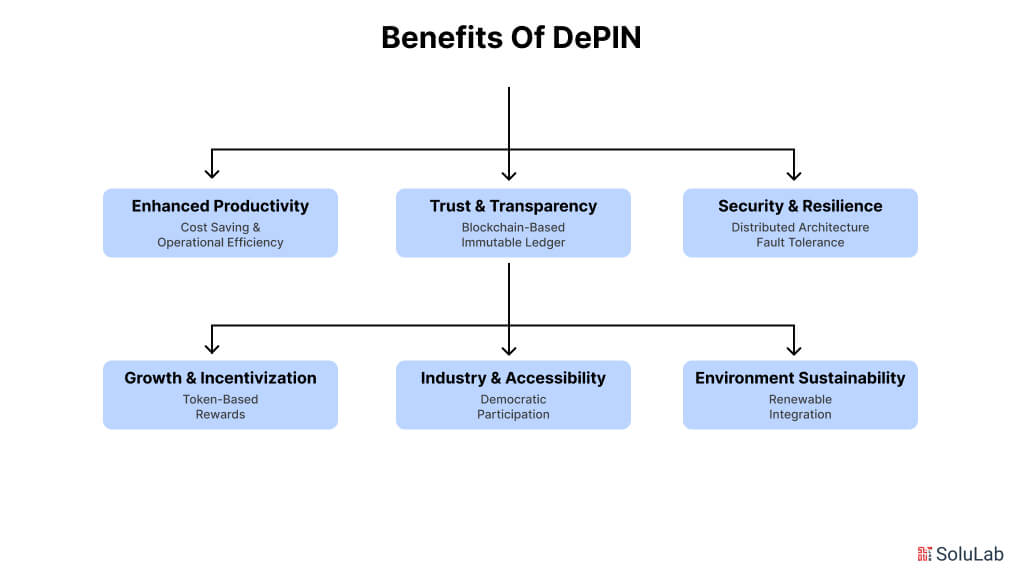
DePIN changes how infrastructure gets designed and maintained, and not just by making systems run more efficiently. It also opens the door to innovation, wider accessibility, and long-term sustainability. Here’s where the real benefits show up:
1. Enhanced Productivity and Cost Savings
Streamlining operations is one of DePIN’s biggest wins. Traditional centralized systems stack layer on layer of management, and that tends to breed inefficiency and higher costs. DePIN cuts out unnecessary middlemen and reduces overhead by letting participants communicate directly. Suppliers and customers both end up with cheaper, better solutions.
2. Trust and Transparency
DePIN leans on blockchain to make sure every action and transaction on the network gets recorded on a secure, unchangeable ledger. Since anyone in the network can verify what happened, trust goes up. It also closes the door on fraud and resource abuse, which makes the whole system more dependable and accountable.
3. Security and Resilience
Decentralized infrastructure isn’t tied to a single point of failure, and that matters. Centralized systems are sitting targets for cyberattacks, natural disasters, and other disruptions that can take out large chunks of infrastructure at once. DePIN spreads resources and operations across many participants instead, which makes the whole system harder to hack or knock offline.
4. Growth and Incentivization
DePIN opens doors that conventional infrastructure models never could, letting people and organizations get directly involved in building and maintaining it. Token rewards drive broad participation and creativity. That doesn’t just spark community-driven solutions, it also keeps infrastructure evolving to match what users actually need.
5. Inclusivity and Accessibility
Size and location stop being barriers. Anyone can contribute resources to decentralized infrastructure, which means smaller players get to join and benefit from a network that used to be gatekept. Whether someone’s offering storage, processing power, or renewable energy, DePIN’s inclusive model has a place for them.
6. Sustainability of the Environment
Renewable energy integration is another real advantage. A lot of DePIN projects lean on hydroelectric, solar, or wind power to run more sustainably. That cuts infrastructure’s environmental footprint and pushes green technology further into the mainstream.
Related: Why are Startups, Businesses, and Governments Looking for DePIN Development?
How Does the DePIN Network Work?
A working Decentralized Physical Infrastructure Network comes down to a lot of moving parts working together, human contributors and technical components alike, all of them essential to keeping the network running smoothly.
1. Participants and Providers of Resources
Participants, individuals, companies, organizations, whoever provides the resources, form the backbone of every DePIN network. Depending on the particular DePIN use cases, those resources vary a lot: physical assets like infrastructure gear or renewable energy sources, processing power, storage, bandwidth. Anyone can join a decentralized system, and that’s what builds a more diverse ecosystem shaped by a wide range of contributions.
Someone might contribute extra energy from solar panels, unused data center storage, or idle computing resources, that’s what blockchain-based physical infrastructure projects run on. By pooling these contributions, DePIN networks build bigger, more effective systems without needing a conventional central authority.
2. The Use of Blockchain Technology
Blockchain is the foundation of any DePIN network, guaranteeing security, transparency, and immutability. It’s the distributed ledger recording every activity and transaction on the network, building confidence by making sure each action, trade, and contribution is authenticated and can’t be altered. Its decentralized structure also removes the need for a central authority entirely, letting the network run on established standards on its own.
Blockchain doesn’t just protect transactions, it makes asset tokenization easier too. Members of a DePIN network earn tokens or other digital rewards for their contributions. That token-based economy is what keeps the network dynamic and sustainable over time.
3. Physical Assets and Infrastructure
Blockchain matters, but the actual physical assets are just as essential to how a DePIN network runs. Think energy grids, sensor networks, data storage facilities, telecom infrastructure. DePIN networks need underutilized or scattered physical infrastructure they can decentralize and sharpen for better efficiency.
Someone with solar panels can feed extra energy into the network in DePIN use cases tied to energy grids, and someone with spare hard drives can donate space to distributed storage systems in data storage networks. The trick is in how these physical assets get linked and coordinated through blockchain protocols, enabling resource sharing in real time.
4. Automation and Smart Contracts
Another core piece of the DePIN network is smart contracts, self-executing agreements written directly into the blockchain. They remove the need for manual intervention, automatically executing and enforcing terms the moment specific conditions are met. That guarantees contributors get paid fairly and on time, which builds trust and keeps people coming back.
In a decentralized energy network, for example, a smart contract might automatically send tokens to a user’s wallet every time they feed extra solar energy into the grid. That kind of automation simplifies the whole process and cuts down on transaction friction.
Use Cases for DePIN in 2026
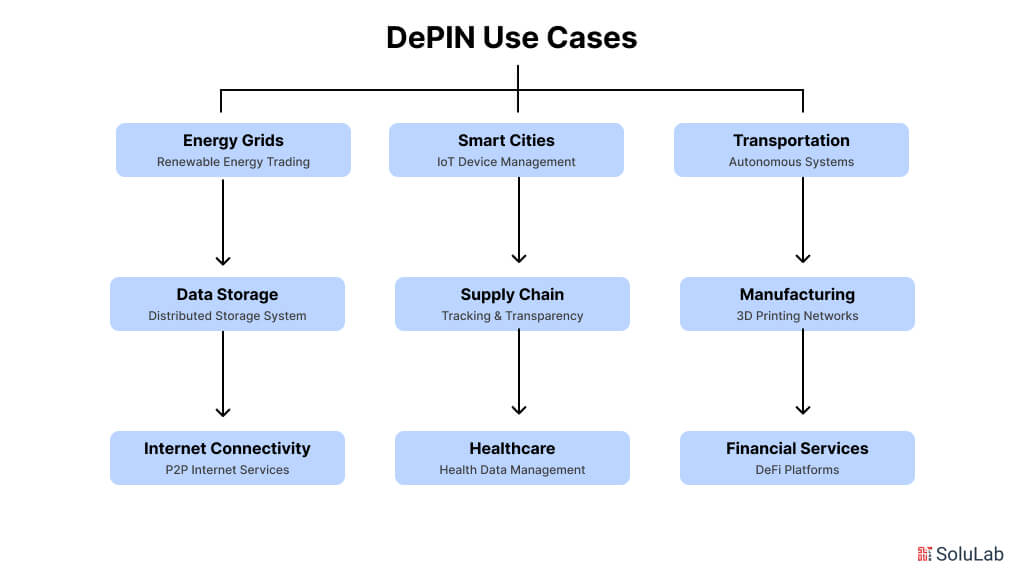
The power of decentralized physical infrastructure networks (DePIN) to transform businesses and shake up conventional systems keeps getting more obvious as these networks mature. DePIN use cases are set to grow significantly by 2026 across industries like telecommunications and energy, delivering solutions built around inclusivity, sustainability, and efficiency. Here are the DePIN use cases that will matter most in 2026.
Decentralized Energy Grids
Energy is set to be one of the biggest DePIN application areas. By 2026, decentralized energy systems will let residences and commercial buildings pool excess energy from wind turbines and solar panels. Blockchain-based systems will let participants buy and sell energy directly, pushing sustainable energy use up and reliance on centralized networks down.
Decentralized Data Storage
Rising demand for safe, scalable, accessible data storage will drive distributed storage systems forward. Participants build an international storage network just by offering unused space from SSDs or hard disks. That lowers costs, hands customers more control over their own data, and reduces dependence on central cloud providers.
Peer-to-Peer Internet Connectivity
Decentralized networks will widen internet access globally by 2026, especially in underserved areas. By offering peer-to-peer services, anyone with spare bandwidth can support a global decentralized network. That’s a real way to shrink the digital divide, giving low-income or remote areas access to reliable, affordable internet.
Smart Cities Infrastructure
Decentralized systems will be core to how smart cities get built. Managing IoT devices, sensors for trash management, pollution monitoring, traffic control, is one clear DePIN use case for smart cities. These devices exchange information over decentralized networks, making urban living more sustainable and efficient.
Decentralized Telecommunications Networks
Top DePIN use cases will also take off in telecommunications infrastructure. By 2026, people and companies could donate underused network hardware, routers, signal towers, to boost global connectivity. That’s what makes a more robust, affordable, adaptable telecom system possible.
Supply Chain Monitoring and Transparency
Supply chains will use blockchain to track and validate transactions, giving customers and companies real-time visibility into where goods actually came from and where they’ve been. That transparency reduces fraud and encourages more sustainable, ethical sourcing behavior across the board.
Decentralized Management of Health Data
Healthcare is another industry DePIN will reshape by 2026. Decentralizing health data management gives patients more control over their own medical records. DePIN applications here mean better privacy, accessibility, and interoperability while still safely storing and sharing health data across a decentralized network.
Self-Driving Cars and Transportation Systems
Decentralized infrastructure will heavily shape how autonomous transportation evolves. Through a decentralized system, vehicles will talk to the infrastructure around them and to each other, enabling safer transportation with real-time traffic control and route optimization. The shift toward autonomous vehicles and intelligent transportation systems will lean hard on this DePIN use case.
3D Printing and Distributed Manufacturing
Decentralized 3D printing will be one of DePIN’s most popular manufacturing applications. Using 3D printers, people and companies can join a distributed manufacturing network, building goods or parts on demand instead of relying on massive centralized factories.
Decentralized Financial Services (DeFi)
Platforms for decentralized finance (DeFi) will keep expanding what financial services they can offer through 2026. People can lend, borrow, or trade assets without going through a traditional bank at all, using DePIN apps built for exactly that. That opens up financial tools to more people, especially in regions where banking infrastructure is weak.
DePIN’s reach in 2026 will touch nearly every part of modern life. The potential uses in energy distribution, healthcare, and transportation won’t just improve what already exists, they’ll create entirely new models for resource sharing and collaboration. What the top DePIN use cases offer is a more equitable, sustainable, secure future where physical infrastructure is easier to access and managed by a global network of contributors, not a handful of gatekeepers.
Challenges in the Usage of DePIN
DePIN brings real benefits, but broad adoption still runs into some real obstacles. These span technology, regulation, and day-to-day operations, and all of them can affect how well DePIN systems actually perform and scale. Here are the biggest challenges standing in the way of blockchain-based physical infrastructure.
1. Scalability and Network Efficiency: Growing efficiently is one of the toughest problems for DePIN networks. As the network grows, so does the number of participants and transactions, and that can mean congestion and slower processing. The underlying blockchain has to handle a huge transaction volume while staying fast and dependable. That gets harder still when different physical infrastructure types, energy grids versus telecom, demand very different transaction speeds and data storage needs.
2. Interoperability Between Networks: DePIN systems typically depend on a wide range of devices and resources that need to work together seamlessly. Getting separate blockchain-based physical infrastructure networks to connect and share resources with each other is genuinely hard. A decentralized energy grid, for instance, might need to link up with a decentralized data storage network or a telecom network. Without shared protocols for interoperability, these networks end up isolated, which limits what DePIN applications can actually do.
3. Security and Privacy Concerns: Blockchain provides strong security, but DePIN’s decentralized structure introduces its own vulnerabilities. Because these networks depend on a large number of players, each contributing resources and information, a weak spot in one part of the system can hurt the entire network. Privacy is its own issue too, especially with sensitive data. In healthcare and banking especially, balancing personal privacy against transparency is genuinely tricky. Solid encryption and secure protocols are non-negotiable here.
4. Regulatory and Legal Issues: DePIN networks are still new enough that most existing legal and regulatory frameworks don’t clearly define them. That’s a real problem in heavily regulated sectors like energy, healthcare, and telecommunications. Governments and regulators are still working out how to classify and govern decentralized infrastructure. Legal uncertainty can slow adoption, since organizations hesitate to invest in a system without clear legal footing. Accountability, taxation, and intellectual property in decentralized contexts all need answers before DePIN networks can grow sustainably long term.
Read Blog: How DePIN Transforms Web3 Space
5. Adoption & Trust: Every DePIN network needs broad engagement and real trust from a wide range of stakeholders to survive. Convincing individuals, organizations, and enterprises to hand over resources to a decentralized network is genuinely hard, especially in industries that centralized authority has dominated for decades. Overcoming skepticism about security, dependability, and real utility is a serious hurdle. New users also tend to struggle with blockchain systems themselves, which becomes its own barrier to wider adoption.
6. Energy Consumption and Environmental Impact: Interest in blockchain-based physical infrastructure for decentralized energy grids keeps growing, but the environmental cost of blockchain technology itself is still a real concern. Some blockchains, especially proof-of-work ones, use enormous amounts of energy. That can cancel out the sustainability gains DePIN systems promise, particularly in energy-intensive use cases. Finding energy-efficient alternatives, like proof-of-stake or hybrid models, will matter a lot here.
7. Maintenance and Reliability: DePIN’s decentralized nature means no single authority oversees maintenance or upkeep. Centralized infrastructure gives one organization control over maintenance and changes, which tends to mean smooth, predictable operations. In a DePIN system, maintenance responsibilities get split across many participants instead, which can lead to inconsistent performance and reliability. Keeping the system robust and resilient through resource limits or failures is a real ongoing challenge.
8. Financial and Incentive Structures: Tokenizing resources sits at the core of DePIN networks, rewarding participants for their contributions. But building fair, sustainable funding mechanisms around that isn’t simple. Token values fluctuate, which creates real uncertainty for anyone depending on the system for income. And since token-based incentive systems are inherently complex, new users often struggle to understand or trust the underlying economics.

Final Words
In short, DePIN use cases in 2026 could reshape industries worldwide by bringing a more decentralized, effective, sustainable approach to managing physical infrastructure. As energy, data storage, telecommunications, and healthcare experiment further with decentralized models, the case for better accessibility, transparency, and resilience keeps getting stronger. DePIN’s most popular use cases, decentralized energy grids, peer-to-peer internet access, distributed manufacturing, are really just the start of a more connected, collaborative future.
SoluLab helped Spherium Finance build an all-in-one decentralized finance platform that brings together a wide range of DeFi products and services in one accessible place. With this platform live, Spherium now lets users well beyond core crypto enthusiasts pursue strong returns on their DeFi investments. Multi-asset support, cross-chain swaps, and crypto financing solutions combine to make low-risk, high-reward investment management genuinely usable.
SoluLab builds blockchain-based physical infrastructure solutions tailored to what each business actually needs. As a leading decentralized physical infrastructure and blockchain development company, we help businesses put DePIN to work building more efficient, scalable solutions. Whether you want to bring blockchain into your energy network, upgrade data storage, or build a decentralized telecom platform, SoluLab has the team to make it happen. Ready to rethink your infrastructure with decentralized solutions? Contact SoluLab today and let’s start building.
FAQs
Shipra Garg is a tech-focused content strategist and copywriter specializing in Web3, blockchain, and artificial intelligence. She has worked with startups and enterprise teams to craft high-conversion content that bridges deep tech with business impact. Her work translates complex innovations into clear, credible, and engaging narratives that drive growth and build trust in emerging tech markets.


![How to Choose a Blockchain Development Company [2026 Edition]](https://www.solulab.com/wp-content/uploads/2026/09/Banner-Before-You-Hire-Check-These-Blockchain-Essentials.webp)