

















Key Takeaways
- Financial institutions are actively adopting blockchain asset management systems to reduce settlement delays and operational costs.
- Digital asset tokenization enables real-time ownership transfers, programmable compliance, and improved liquidity.
- Major firms, including Visa, Circle, and Securitize, are expanding enterprise-grade tokenization infrastructure.
- Tokenized securities can reduce settlement cycles from T+2 to T+0 while lowering custody and reconciliation costs.
- Growing regulatory clarity around digital securities and real-world asset tokenization is accelerating institutional participation.
- Enterprises now demand custom compliance layers, interoperable tokenization platforms, smart contract automation, and blockchain-native registries.
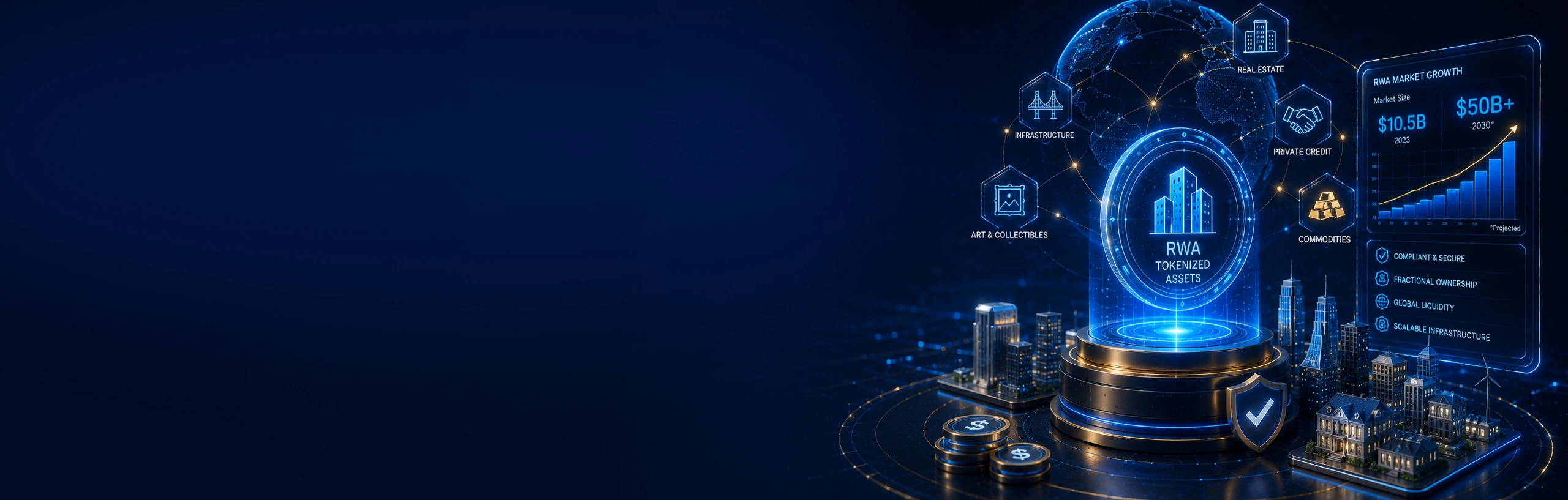
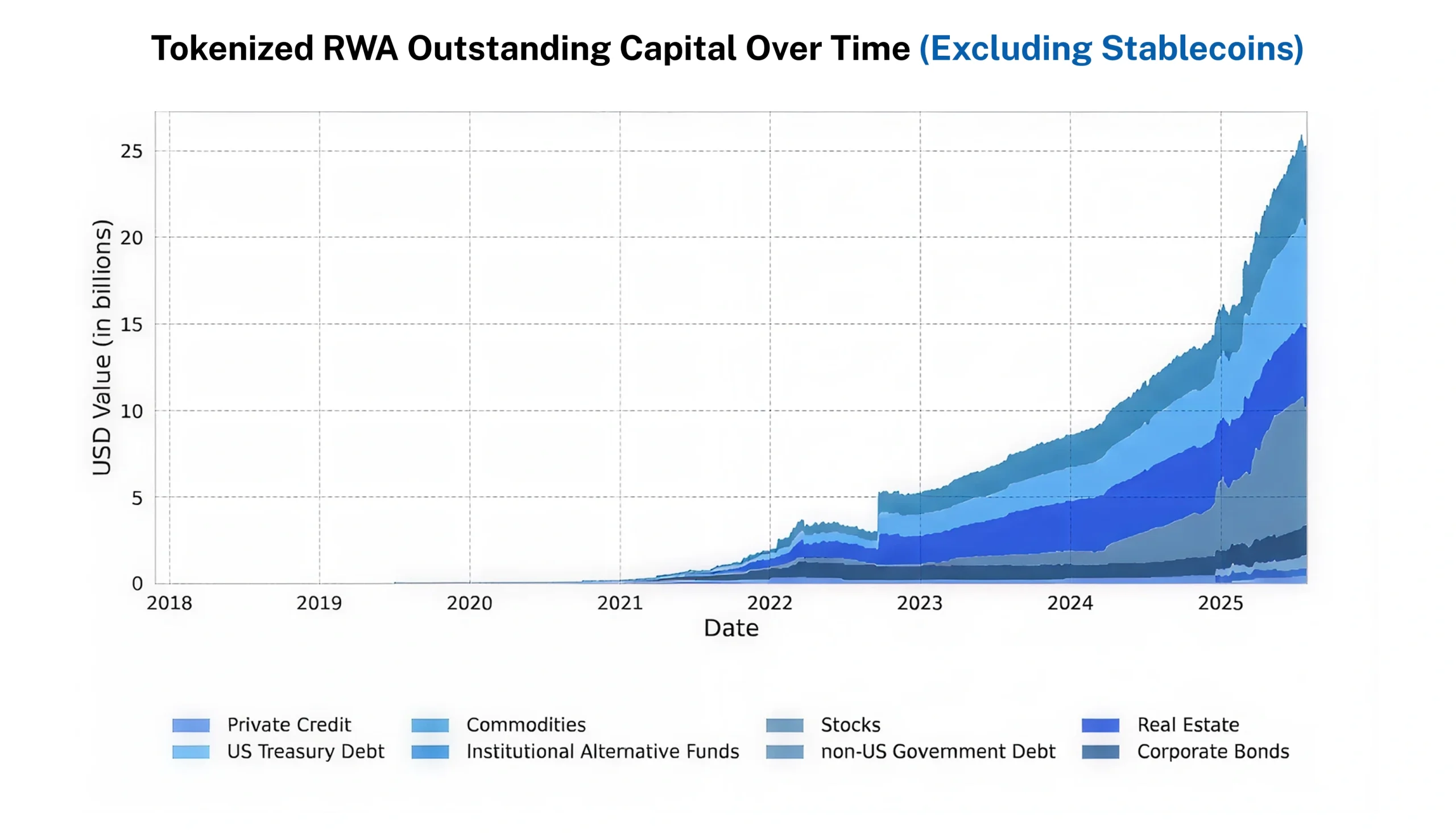
Global financial markets are quietly entering a new infrastructure era. According to multiple industry estimates from firms like McKinsey & Company and Boston Consulting Group, the tokenized asset market could cross $16 trillion by 2030. Meanwhile, settlement inefficiencies in traditional securities systems continue costing financial institutions billions annually.
Recent news around Securitize partnering with one of the world’s largest transfer agents clearly highlights where the industry is heading. Traditional registries are no longer enough for digital-first markets demanding 24/7 liquidity, real-time ownership validation, programmable compliance, and global accessibility.
Hence, enterprises are increasingly investing in blockchain-powered asset tokenization services, advanced asset tokenization platforms, and blockchain-native registries to modernize capital markets infrastructure.
How do Issuer-Sponsored Tokens (ISTs) redefine the master registry for S&P 500 companies?
Traditional registries were originally designed for paper-based ownership records. Even after digitization, most systems still depend heavily on intermediaries, custodians, reconciliation teams, brokers, and fragmented databases. However, blockchain-based registries introduce a unified and transparent ownership layer.
Issuer-Sponsored Tokens (ISTs) are becoming particularly attractive for enterprise issuers because they enable companies to directly manage ownership records on-chain while maintaining regulatory compliance. You can see the latest changes and adaptations going on in IST in the following section.
1. Why the Computershare–Securitize Partnership Matters
In April 2026, Computershare partnered with Securitize to allow U.S.-listed companies to issue blockchain-based securities called Issuer-Sponsored Tokens (ISTs).
These ISTs provide:
- Direct ownership rights
- Voting rights
- Legal claims on underlying securities
- Blockchain-native shareholder records
Unlike synthetic stock products from trading apps, ISTs are integrated into official shareholder registries.
Computershare currently manages:
- 35 million shareholder accounts
- Over 25,000 public and private companies
- $267 billion in assets under administration
The company generated $3.1 billion in revenue and $607 million in profit in 2025.
This clearly shows that even large traditional registry operators are investing heavily in blockchain tokenization services and digital asset tokenization infrastructure.
Computershare serves as the official record keeper for companies including Amazon, Microsoft, and Tesla, making this partnership highly significant for institutional blockchain adoption.
2. Why enterprises are evaluating IST models
Real-time ownership visibility
With digital ownership on blockchain, enterprises gain immediate access to shareholder records, wallet-based ownership tracking, and immutable transaction histories.
This becomes highly valuable for:
- Public equities
- Corporate bonds
- Private equity funds
- Real estate investment structures
- Infrastructure investment vehicles
In late 2025, Computershare also submitted a detailed letter to the SEC’s Crypto Task Force supporting issuer-sponsored blockchain securities over third-party synthetic tokenized stock models.
This clearly reflects how regulated institutions increasingly prefer compliant blockchain tokenization structures tied directly to official ownership registries.
Then continue:
- KYC/AML
- whitelist layers
- programmable compliance
- investor permissions
This makes the compliance section much stronger.
2. Enterprise pain point: fragmented shareholder systems
Many public companies still operate with disconnected systems:
- Transfer agency software
- Corporate action systems
- Custody networks
- Proxy voting systems
- Settlement layers
Therefore, enterprises are now investing in tokenization platform development to centralize these operational layers into programmable blockchain infrastructure.

Can blockchain-native cap table management eliminate T+2 settlement risk?

One of the biggest inefficiencies in traditional securities markets is delayed settlement.
The standard T+2 model creates:
- Counterparty risks
- Capital lockups
- Reconciliation delays
- Liquidity bottlenecks
- Operational complexity
With tokenization in finance, ownership transfers can settle almost instantly using smart contracts and blockchain validation.
1. Why T+0 settlement matters
Financial institutions managing billions in trading volume are increasingly focused on capital efficiency.
Through blockchain tokenization services, firms can:
- Reduce collateral requirements
- Minimize failed trades
- Improve treasury efficiency
- Lower operational costs
- Enhance transparency
2. Institutional adoption is accelerating
Visa has already expanded AI-based stablecoin settlement initiatives and blockchain payment infrastructure. Meanwhile, BlackRock continues exploring tokenized fund structures and digital asset settlement rails.
Similarly, JPMorgan Chase developed blockchain-based settlement systems for institutional finance operations.
This growing enterprise adoption clearly indicates that traditional vs blockchain registries is no longer a theoretical discussion. It is now an infrastructure decision.
3. Core technologies driving tokenized settlement
Smart contract execution layers: AI native integrations to automated ownership transfers reduce manual intervention.
Permissioned blockchain infrastructure: Institutions require privacy-focused blockchain environments with compliance governance.
Custody integration APIs: Enterprise-grade custody integrations help connect legacy systems with tokenized asset environments.
Multi-chain interoperability: Modern asset tokenization platforms increasingly support:
- Ethereum
- Polygon
- Avalanche
- Stellar
- Hyperledger
- Cosmos ecosystems
Hence, enterprises can scale tokenization strategies across multiple networks.
Will programmable corporate actions automate dividend distribution and proxy voting?
Corporate actions remain one of the most operationally expensive functions in traditional finance.
Dividend distribution, shareholder communication, proxy voting, and compliance reporting often require:
- Third-party processing
- Delayed record reconciliation
- Manual approvals
- Custodial coordination
However, blockchain asset management introduces programmable automation.
1. Smart contracts reduce operational overhead
With security token development services, enterprises can automate:
- Dividend payouts
- Voting rights
- Revenue sharing
- Equity conversion
- Compliance reporting
This improves transparency while significantly reducing processing timelines.
2. Why institutional investors prefer programmable assets
Institutional investors increasingly demand:
- Real-time reporting
- Transparent audit trails
- Instant ownership validation
- Automated compliance monitoring
- AI prediction market platforms
Therefore, digital asset tokenization becomes highly attractive for modern investment structures.
3. Enterprise-grade Blockchain tokenization governance layers
Modern custom asset tokenization platforms now include:
- DAO-inspired governance modules
- Institutional voting systems
- Automated cap table management
- Treasury dashboards
- On-chain analytics
Meanwhile, enterprises still maintain regulatory oversight through permissioned governance architecture.
Industry Insight:
According to multiple institutional reports, financial firms could reduce settlement and custody costs by over 40% through blockchain-enabled infrastructure.
Why are digital-native liquidity pools essential for modern institutional investor relations?
Liquidity has historically remained a major challenge for private markets.
Assets like:
- Real estate
- Infrastructure funds
- Art investments
- Private equity
- Venture debt
- Energy projects
often suffer from limited secondary market access.
This is where real world asset tokenization becomes commercially valuable.
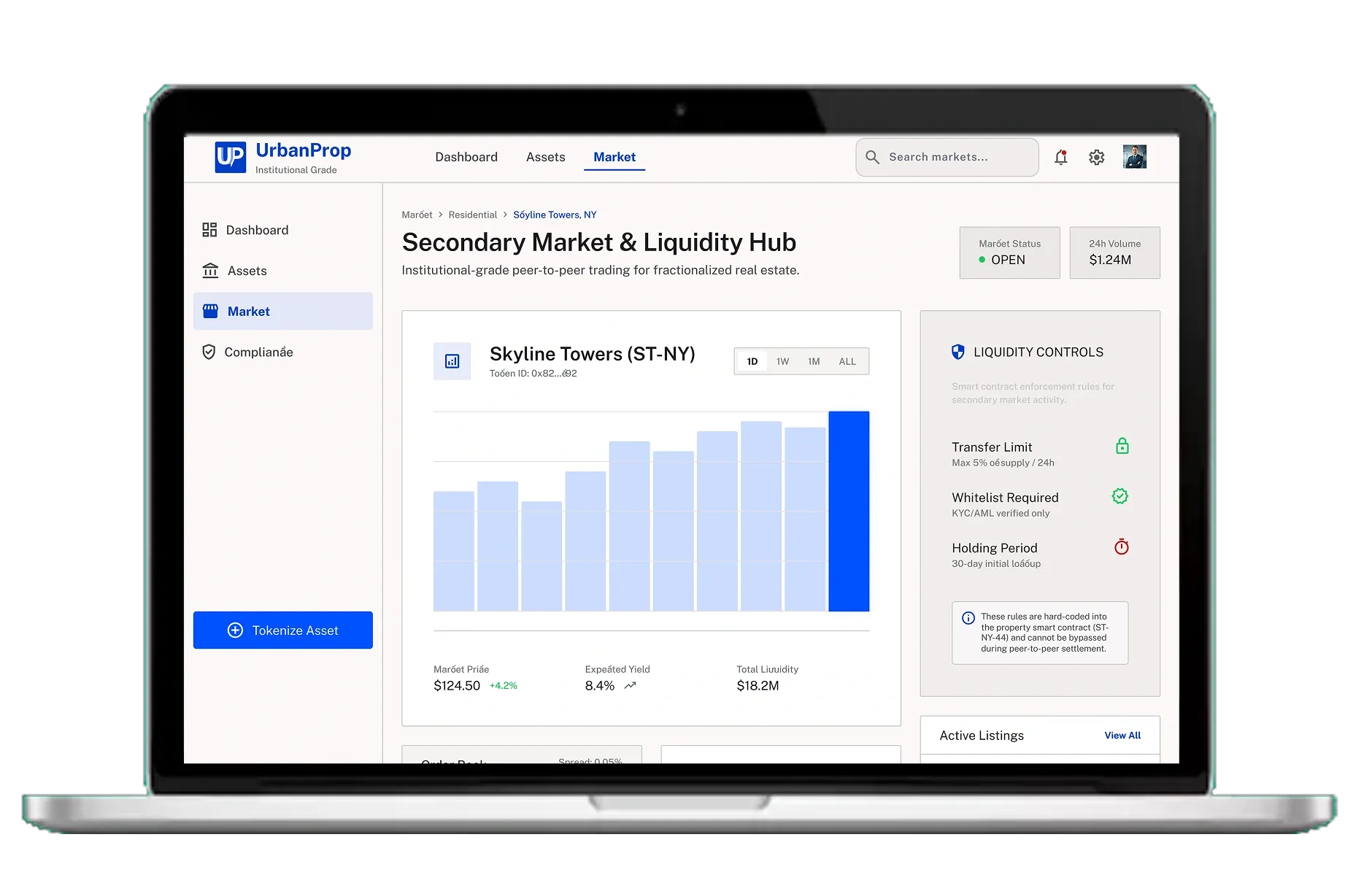
1. Fractional ownership improves market participation
Tokenized assets can be divided into smaller digital units, allowing broader investor participation with fractional ownership.
Hence:
- Retail investors gain access to premium markets
- SMEs access global capital pools
- Institutions improve liquidity efficiency
2. Secondary trading opportunities
Modern blockchain tokenization platform development increasingly includes:
- Integrated secondary marketplaces
- Automated liquidity pools
- DeFi-compatible trading infrastructure
- Institutional OTC settlement systems
This creates liquidity layers previously unavailable in traditional securities environments.
3. Real-world use cases are expanding globally
Several enterprises are already tokenizing:
- Commercial real estate
- Renewable energy assets
- Treasury products
- Carbon credits
- Luxury collectibles
- Commodity-backed securities
Meanwhile, stablecoin ecosystems from firms like Circle continue improving blockchain-based payment liquidity for institutional transactions.
Enterprise Interoperability: Merging Legacy Transfer Agency with On-Chain Tokenization Compliance

Most enterprises cannot completely replace legacy systems overnight.
Therefore, modern enterprise blockchain development services increasingly focus on interoperability rather than replacement.
The enterprise reality
Large financial institutions already operate:
- Core banking systems
- Custody infrastructure
- Compliance software
- ERP systems
- Investor management platforms
Hence, successful asset tokenization services require seamless integration layers.
Key interoperability layers enterprises now demand
API-driven compliance engines
These systems synchronize on-chain and off-chain compliance data.
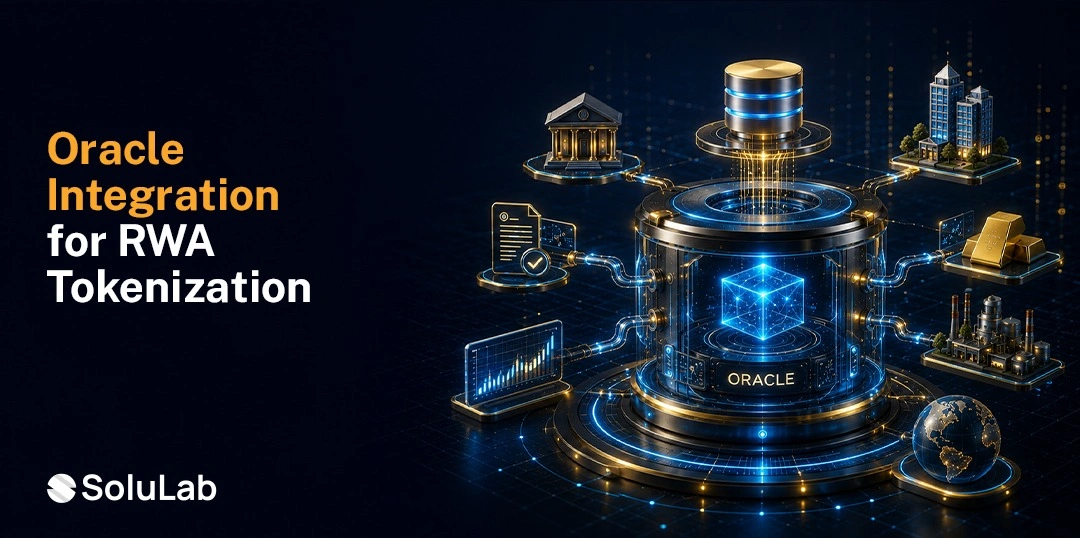
Oracle integrations
Real-world asset pricing, interest rates, and financial data require reliable external feeds.
Identity verification layers
Institutions increasingly integrate:
- Decentralized identity systems
- Biometric verification
- KYC providers
- AML monitoring tools
Multi-chain settlement frameworks
Institutions do not want blockchain dependency on a single ecosystem.
Therefore, modern RWA tokenization platform development strategies support cross-chain asset mobility.
Regulatory clarity is improving adoption
Recent developments around digital asset regulation, stablecoin oversight, and securities compliance are helping institutions move forward more confidently.
The growing conversation around the CLARITY Act and broader digital asset frameworks indicates increasing regulatory maturity for blockchain technology adoption within capital markets.
Meanwhile, enterprises still prioritize:
- Auditability
- Permission controls
- Data privacy
- Governance frameworks
- Institutional custody standards
Therefore, the demand for blockchain consulting for asset tokenization continues to grow rapidly.
The Growing Market for Tokenized Assets
The market opportunity for tokenized assets is expanding beyond institutional finance.
SMEs, creators, infrastructure firms, and real estate developers increasingly use real-world asset tokenization services to unlock liquidity and global investor access.
1. Why SMEs are adopting tokenization
Traditional financing often involves:
- Lengthy approval cycles
- Geographic limitations
- High intermediary fees
- Limited investor access
With asset tokenization platforms, SMEs can create programmable digital securities with greater flexibility.
2. Industries actively adopting tokenization
Real Estate: Fractional ownership and global investor participation.
Energy Infrastructure: Tokenized renewable energy investments and carbon credit systems.
Private Credit: Digital debt issuance with automated repayment structures.
Supply Chain Finance: Tokenized invoices and trade finance solutions.
Entertainment and IP Rights: Royalty-backed tokenized revenue structures.
3. Enterprise demand is becoming more sophisticated
Modern institutions now require:
- AI-powered compliance monitoring
- Predictive risk analytics
- Institutional-grade custody
- Automated governance systems
- Multi-jurisdiction compliance frameworks
Therefore, advanced blockchain development companies for tokenization are increasingly integrating AI, analytics, identity infrastructure, and interoperability layers into tokenization ecosystems.

Conclusion
Amid all these changes, the future of capital markets are increasingly depends on how efficiently enterprises manage ownership, liquidity, compliance, and settlement infrastructure. With the tokenized asset market projected to cross $16 trillion by 2030, institutions now require scalable blockchain tokenization services backed by enterprise-grade security and interoperability.
SoluLab helps businesses accelerate this adoption through
- custom asset tokenization platforms,
- AI-powered compliance layers,
- smart contract automation, and
- multi-chain RWA infrastructure.
From digital securities to real estate tokenization platform development services, SoluLab delivers institutional-ready blockchain ecosystems. These are designed to reduce operational costs, improve investor accessibility, and strengthen long-term market positioning in an increasingly digital financial economy.
Contact us today and integrate the latest blockchain integrations into your tokenization platform.
FAQs
Traditional registries rely on intermediaries and centralized databases, while blockchain-based registries provide transparent, immutable, and programmable digital ownership records.
Real estate, equities, bonds, commodities, carbon credits, private equity, infrastructure funds, royalties, and treasury products can all be tokenized.
Yes. Enterprise-grade blockchain tokenization platforms use encryption, smart contracts, identity verification, and compliance layers to improve security and transparency.
Finance, real estate, energy, supply chain, private equity, entertainment, and infrastructure sectors are actively adopting tokenization solutions.
SoluLab provides enterprise-grade blockchain tokenization services, smart contract development, compliance integrations, and custom RWA tokenization platform development for institutions and growing businesses.
Deepika is a content writer who blends storytelling with strategic thinking. She explores topics across digital innovation, emerging tech, and the evolving blockchain industry. She enjoys breaking down complex ideas into simple, engaging narratives in the growing global markets.