Visa applications in the UAE are not what they were five years ago. The country has been quietly rebuilding how its immigration system works, pulling in artificial intelligence across document checks, identity verification, and approval workflows. This is part of a deliberate push: the UAE National Strategy for Artificial Intelligence 2031 targets global AI leadership, and immigration is one of the sectors where the effects are already visible. The goals are practical ones. Faster processing. Fewer errors. An application experience that doesn’t feel like it was designed in 1997.
The economic case is clear too. By 2031, AI is projected to add around $91 billion to the UAE’s GDP. That’s not a figure anyone is treating casually. Integrating AI into public services like visa processing is part of how the country plans to get there, and so far the approach is working.
This post looks at what AI is actually doing inside the UAE’s visa system: the problems it’s fixing, what that means for applicants, and where this is likely heading.
Challenges AI Solved in Traditional Visa Processing Systems
Traditional visa processing was slow by design. Manual data entry, paper document checks, inconsistent decisions from officer to officer. If you’ve submitted a visa application in the last decade, you probably know what waiting in uncertainty feels like.
AI has started chipping away at several of the biggest failure points in that old model. Here’s where the change is showing up:
Errors in Manual Data Entry
Automated data extraction pulls information directly from submitted documents instead of relying on someone to type it in. Fewer hands in the process means fewer transcription mistakes making it into the system.
Processing Speed
AI systems can work through large application volumes without slowing down. What used to take days can now take hours. That speed compounds quickly when you’re processing hundreds of thousands of applications a year.
Excessive Documentation
Document review used to be a bottleneck. AI systems can verify papers against requirements automatically, reducing the pile-up on human reviewers and cutting the overall load on the process.
Document Verification
AI can cross-reference passports and identity documents against international databases in real time. That’s a much harder standard for fraudulent documents to clear than a manual spot-check.
Managing High Application Volumes
Volume spikes during peak travel seasons used to create backlogs that lasted weeks. AI scales with demand. The system doesn’t care whether it’s processing 500 applications or 50,000.
Forecasting Trends
Using historical application data, AI can flag when demand is likely to surge. That gives immigration authorities the chance to prep resources in advance rather than scrambling after the fact.
Mitigating Bias in the Procedure
AI algorithms assess applications against defined criteria rather than human judgment calls. That doesn’t make bias impossible, but it does make the evaluation more consistent across cases.
Improved Security
Advanced detection algorithms flag suspicious applications that would likely slip past manual review. artificial intelligence adds a layer of scrutiny that makes the overall system harder to game.
Read Also: How to Select the Best Crypto Development Company in the UAE?
Benefits of AI Integration in Visa Processing in the UAE
The UAE brings in travelers, workers, and tourists from all over the world. Millions of applications a year. Getting that volume through a manual system at any reasonable speed was always a losing battle. AI integration into the visa system changed the math. Faster, more reliable, easier to navigate.
Platforms like Visarun.ai are a good example of how the market is moving. They cut down approval time by running applications through automated checks instead of manual queues. Visarun.ai has already raised $700,000 to build out its AI-driven visa application system, which is a reasonable signal of where investor attention is going.
Here’s what this shift looks like in practice:
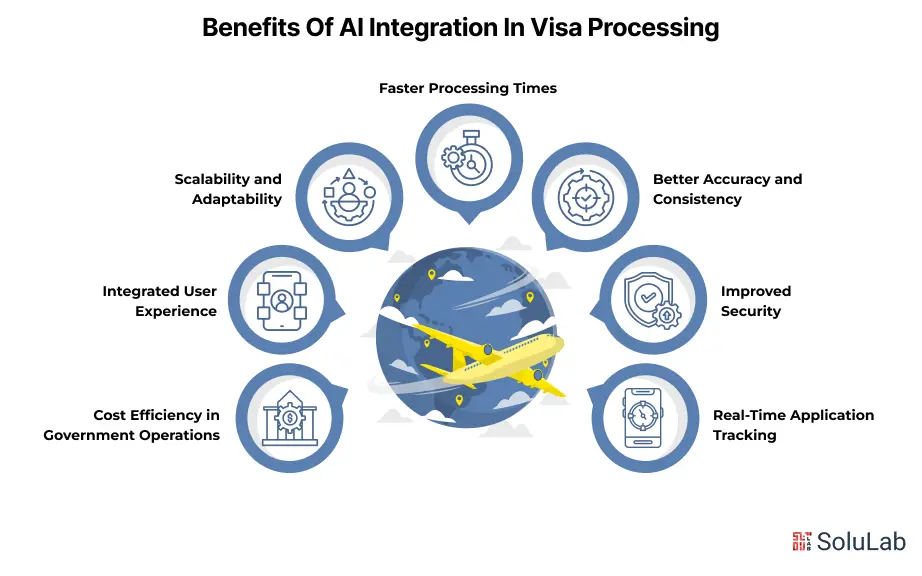
Faster Processing Times
Manual processing meant queues. Lots of them. Automating data entry and document checks removes the biggest time sinks. The system handles multiple applications at once, so waiting times drop significantly.
Better Accuracy and Consistency
Human reviewers are inconsistent. Not because they’re careless, just because reviewing thousands of applications is exhausting work. AI applies the same criteria to every case, which means fewer decisions that look right on one Tuesday and wrong on the next.
Improved Security
AI cross-references submitted documents against international databases automatically. Discrepancies get flagged before a fraudulent application can move forward. This is a step change from what manual spot-checks can realistically catch.
Real-Time Application Tracking
Applicants used to wait with no clear view of where their application stood. Now, tracking updates come in real time throughout the process. That transparency matters, especially when work or travel plans are riding on the outcome.
Cost Efficiency in Government Operations
Automating routine tasks means fewer staff hours going into work that doesn’t require human judgment. Government agencies can redirect those resources toward cases that actually need careful review, keeping costs down without compromising quality.
Integrated User Experience
Less paperwork. Faster turnarounds. Clearer communication at each step. The experience on the applicant’s side has gotten noticeably simpler as the backend has gotten smarter.
Scalability and Adaptability
Peak season used to mean delays. AI-driven systems scale with demand, so high-volume periods don’t collapse the process. The system handles more without slowing down.
The combination of speed, consistency, and security is what makes the AI-powered shift compelling. As these tools continue developing, the visa application process for top AI development companies will likely get faster and more straightforward still, keeping the UAE ahead of the curve on immigration services.

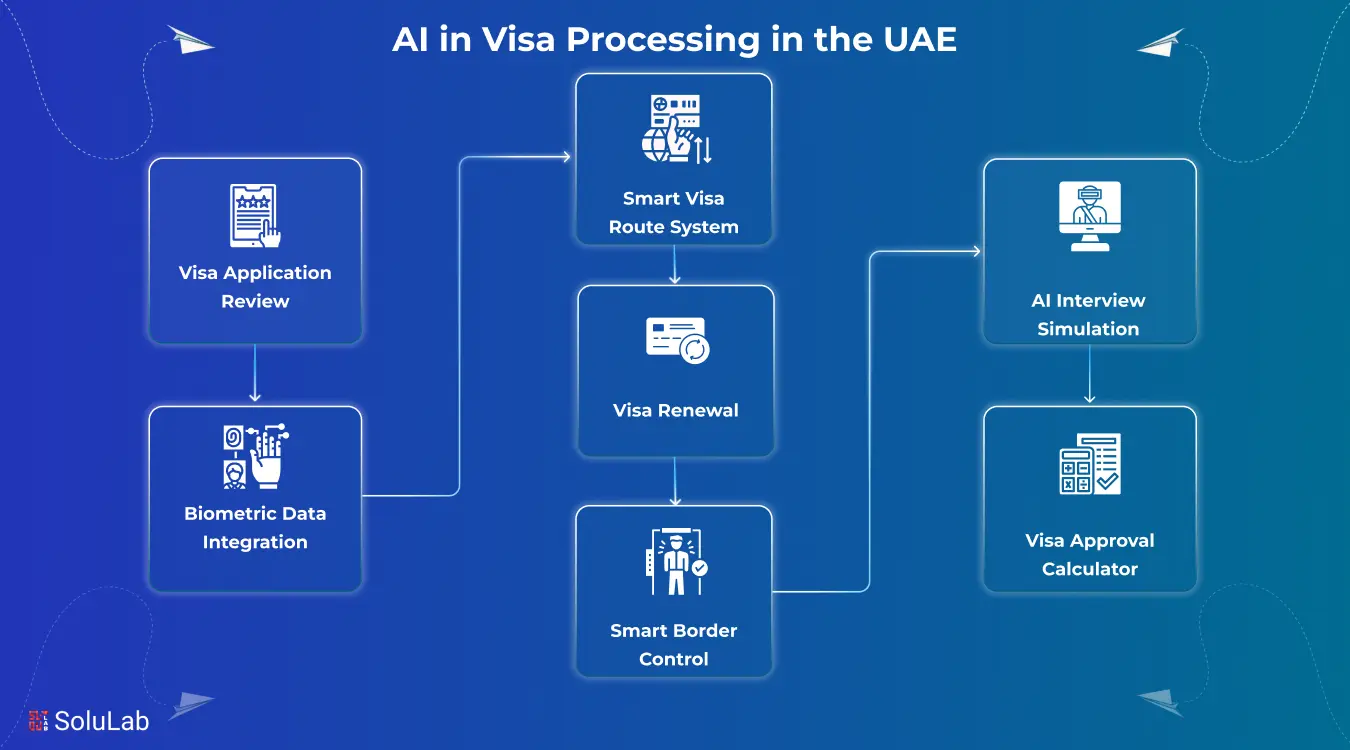
How is AI Transforming Visa Processes in the UAE?
The UAE has never been shy about adopting new technology, and visa processing is no exception. As the country handles more travelers every year, across business, tourism, and residency categories, the pressure on the immigration system has grown. Technology is how the UAE has been absorbing that pressure rather than buckling under it.
1. Visa Application Review
Automated review tools now handle the initial pass through each application. They verify submitted information against requirements, flag inconsistencies early, and pass clean applications forward quickly. The practical effect: fewer errors reaching human reviewers, and a faster path through the queue for straightforward cases.
2. Biometric Data Integration
Fingerprints, facial recognition, iris scans: biometric data is now part of how the UAE confirms identity. It’s faster than manual document checking and harder to fake. The result is a system where legitimate applicants get through quicker and fraudulent ones have a harder time slipping past. Security improved while processing time dropped. That combination is not easy to achieve with manual methods.
3. Smart Border Control
AI-enabled kiosks at border points check passports and biometric data without manual intervention. No queue for a desk officer. No waiting while someone types your details into a system. Travelers move through faster, and the checks that matter most are happening automatically in the background.
4. Visa Renewal
Renewals used to require showing up in person with a stack of paperwork. AI-driven systems can assess an applicant’s history and determine renewal eligibility automatically. That removes the in-person requirement for many cases, saves time on both sides, and reduces the administrative backlog.
5. Smart Visa Route System
Visa categories are genuinely confusing. Business, tourist, residence, golden visa, green visa: the options pile up fast and the differences between them aren’t always obvious. The UAE’s Smart Visa Route System uses AI to look at travel history, purpose of visit, and other factors to point applicants toward the right option. It doesn’t replace the need for a decision, but it gets people to the right starting point without the guesswork.
6. AI Interview Simulation
For applicants who face interviews as part of the process, AI-powered AI-driven interview simulations offer a way to prepare. The tools mimic actual interview conditions, give feedback on responses, and help applicants know what to expect. In practice, this kind of prep makes a real difference for people who aren’t fluent in the language or haven’t been through the process before.
7. Visa Approval Calculator
Not knowing whether an application will be approved is one of the most stressful parts of the whole process. The visa approval calculator addresses this directly. It takes inputs like travel history, financial situation, and purpose of visit, and returns an estimate of approval likelihood. That gives applicants a more realistic picture before they invest time and money in submitting.
The Role of AI in Travel and Tourism
The visa system is just one piece of a larger picture. AI in travel and tourism is changing how visitors plan and experience trips to the UAE, from personalized hotel and flight suggestions to real-time travel information based on current conditions. For travelers, this means fewer generic recommendations and more options that actually fit their itinerary. The UAE becomes a more compelling destination when the friction of getting there is lower and the experience after arrival is better calibrated to what each visitor actually wants.
AI-powered chatbots are another practical addition to the system. These chatbots run around the clock, answering questions about visa requirements, processing timelines, and application status without anyone needing to staff a phone line. For applicants in different time zones trying to sort out a question at 2am, that availability matters.
Taken together, these changes are shifting the UAE’s immigration system from something people dread into something that mostly just works. The underlying technology will keep improving. The direction is clear.
How AI in Visa Processing is Being Used Globally?
The UAE isn’t operating in isolation here. Countries around the world have been rebuilding their visa and immigration systems with AI at the center, each approaching it slightly differently depending on their infrastructure and priorities.
Here’s how several countries are putting it to work:
1. United Arab Emirates
The UAE has moved aggressively. Document verification and application review are automated. AI assistants handle traveler inquiries day and night, walking applicants through requirements and status updates without human agents. The system is built for scale, which matters when you’re processing applications from a workforce and tourist population drawn from nearly every country in the world.
2. Australia
Australia uses AI to assess whether applicants meet eligibility criteria and to run automated risk and background checks. The use of AI tools in assessing risk factors and background checks has reduced the manual workload significantly. Biometric data, including facial recognition, is also in the mix for entry processing, making border clearance faster and more secure.
3. United States
US immigration authorities use AI to verify documents quickly and review applicant histories in detail. The goal is catching fraud and reducing processing time at the same time. AI in travel has made the process faster on both the applicant-facing side and within the internal review workflow.
4. United Kingdom
The UK has automated document review and built smarter eligibility assessment tools into its visa processing pipeline. Risk and security analysis runs through AI systems at the border, which has helped speed up entry processing without reducing the scrutiny applied to each traveler.
5. Canada
Canada applies AI-driven solutions across visa and immigration assessment, including biometric analysis and automated eligibility checks. Human reviewers focus their time on complex or flagged cases rather than routine processing. The automation has cut processing times and made compliance more consistent across the board.
6. New Zealand
New Zealand uses AI to match applicants to the right visa categories based on travel history, employment status, and other factors. The system handles a higher volume of applications than manual processing could sustain, without sacrificing the accuracy and security standards the country holds to.
7. Singapore
Singapore has automated document verification and uses biometric confirmation for identity checks. Processing is fast and the security layer is solid. AI in travel and tourism adds another dimension by offering personalized services and recommendations to visitors once they arrive.
8. South Korea
South Korea runs biometric analysis through AI systems at its borders, catching fraudulent applications while clearing legitimate travelers quickly. The detection capability has made the overall process both faster and more secure, and it’s been recognized as one of the more efficient immigration systems in the region.
The pattern is consistent across all eight countries: AI reduces manual processing time, improves accuracy, and catches fraud more reliably than human-only systems can. The specifics differ, but the direction is the same. More countries are moving this way, and the ones that got there first have a meaningful operational advantage.
Barriers to AI-Driven Visa Processing in the UAE
The progress is real. So are the obstacles. Anyone building or implementing AI systems in government immigration contexts will run into a consistent set of friction points.
1. Data Privacy and Security Concerns
AI-powered applications handles some of the most sensitive personal data that exists: passport details, biometrics, travel history, financial records. If that data isn’t stored and processed carefully, breaches become a serious risk, and trust in the system takes damage that’s hard to repair.
2. Integration with Legacy Systems
A lot of government agencies are still running visa processing on infrastructure that predates modern AI by decades. Getting AI workflow automation tools to work with that older stack is technically complex and expensive. It’s not just a software problem: staff need training, processes need redesigning, and in some cases the underlying infrastructure needs replacing before any of the AI layer can function properly.
3. Ethical Concerns and Bias
AI systems reflect the data they were trained on. If that training data carries biases, and in visa processing there are real historical ones to contend with, the AI will reproduce them at scale. The concern isn’t hypothetical. AI models that disadvantage certain applicant groups create fairness problems that are harder to spot than human bias, precisely because the system looks neutral on the surface.
4. High Implementation Costs
Building AI-powered applications at government scale requires serious investment upfront: the technology itself, the infrastructure to run it, and the people who can manage it. AI technology doesn’t have a low entry cost, and ongoing maintenance adds to that over time. For governments managing tight budgets, that’s a real constraint.
5. Regulatory Challenges
There are still very few established rules for how AI can be used in immigration decisions. That regulatory gap creates genuine uncertainty for governments trying to build compliant systems and for applicants trying to understand what governs the decisions affecting them. An AI development company can help provide the technical expertise needed to work through these challenges, but the wider regulatory clarity has to come from policymakers. Without it, AI-powered applications in visa processing will keep running into delays.
6. Public Acceptance and Trust
Immigration decisions carry enormous weight for the people they affect. Many applicants are wary of having those decisions made by an algorithm, especially when the reasoning isn’t visible to them. Building public trust requires more than deploying good technology. Governments need to explain clearly how AI fits into the process, where human review still applies, and what recourse applicants have if something goes wrong.
None of these obstacles are permanent. The UAE is in a strong position to work through them, particularly with access to specialized AI development partners. As the technology matures, most of these barriers become smaller, not larger.
The Future of AI in Immigration
The UAE is already well into this transition, not approaching it. Application reviews are faster. Human error in document processing has dropped. Outcomes are more consistent. That’s not a projection, it’s the current state.
What comes next is more automation of the tasks that still have human bottlenecks: complex document verification, multi-factor background checks, edge-case eligibility decisions. AI-powered applications will take on more of that workload without compromising accuracy. In practice, this means fewer delays for applicants and fewer routine tasks eating up reviewer time.
The role of AI-powered chatbot development in this picture isn’t minor either. Around-the-clock support for applicants, available in multiple languages, answering the kind of process questions that currently clog up call centers. That layer of availability makes the system more accessible, especially for first-time applicants who don’t know where to start.

Conclusion
The UAE’s visa system is genuinely getting better, and AI is the reason why. Faster approvals, better fraud detection, a more transparent process for applicants. The challenges around data privacy, legacy systems, and public trust are real, but they’re engineering and policy problems, not reasons to stop.
As a leading AI development company, SoluLab has worked directly in this space. Their partnership with Digital Quest, a travel service provider called Digital Quest, produced an AI-powered ChatGPT system that improved user interaction and delivered tailored travel recommendations, making both communication and customer engagement meaningfully better.
If you want to bring that kind of capability to your business, Get in touch with us and we can talk through what’s actually possible.
FAQs
Shipra Garg is a tech-focused content strategist and copywriter specializing in Web3, blockchain, and artificial intelligence. She has worked with startups and enterprise teams to craft high-conversion content that bridges deep tech with business impact. Her work translates complex innovations into clear, credible, and engaging narratives that drive growth and build trust in emerging tech markets.