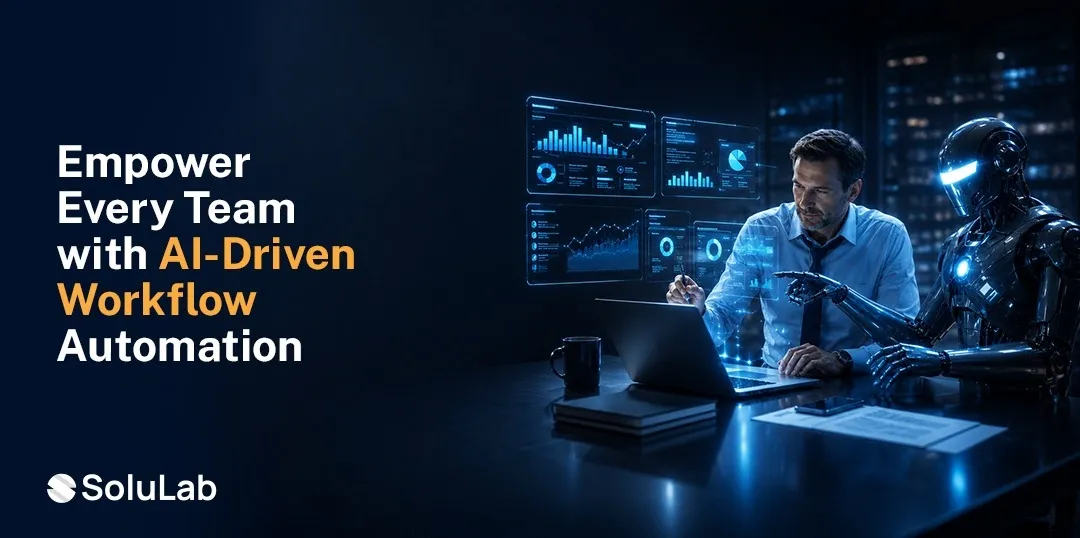
Enterprises are facing rising operational complexity, disconnected workflows, and delayed approvals to do more with leaner teams. Traditional automation tools can handle repetitive tasks, but they often fail when workflows require context, decision-making, or coordination across multiple systems.
However, AI agent development for internal operations can analyze information, interact with enterprise tools, automate multi-step processes, and execute tasks with minimal human intervention.
From HR and finance to IT and customer operations, enterprises are deploying AI agents to reduce manual workload and improve response times.
Continue reading this blog to learn how AI agents can be integrated into existing workflows and more.
Key Takeaways
- AI agents are helping enterprises automate repetitive internal workflows across HR, finance, operations, compliance, IT support, and customer service with faster execution and fewer manual dependencies.
- Enterprises in 2026 are using AI agents to reduce operational costs, improve productivity, minimize errors, and enable employees to focus on strategic business initiatives instead of routine tasks.
- Industries like banking, manufacturing, healthcare, retail, and logistics are already deploying AI agents for predictive maintenance, internal knowledge management, reporting, and workflow orchestration.
- Successful AI agent implementation depends on strong enterprise integration, secure data infrastructure, scalable AI architecture, and alignment with existing operational and compliance requirements.
What Are AI Agents in Internal Operations?
AI agents in internal operations are autonomous software systems that handle repetitive, decision-based, and workflow-driven business tasks with minimal human intervention. Unlike traditional automation tools that follow fixed rules, AI agents can understand context, learn from data, make decisions, and coordinate actions across multiple systems.
In enterprise operations, these agents work behind the scenes to improve efficiency across departments like HR, finance, IT, procurement, customer support, compliance, and logistics.
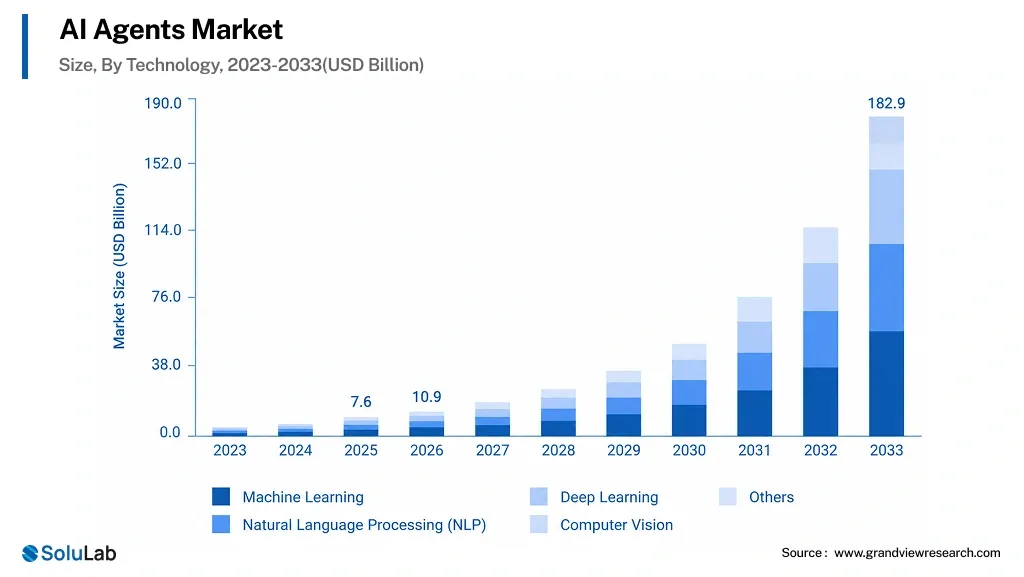
The global AI agents market is projected to reach $182.97 billion by 2033, growing at a 49.6% CAGR from 2026 onward as enterprises accelerate workflow automation initiatives.
For example, an AI agent can:
- Automatically approve low-risk expense claims
- Monitor inventory and trigger restocking requests
- Assign support tickets based on urgency and expertise
- Generate internal reports from multiple data sources
- Detect anomalies in invoices or payroll
- Schedule meetings and manage follow-ups
- Assist employees through internal chat systems
Why Enterprises Are Investing in AI Agents for Internal Operations?
As enterprises scale across departments, manual operations create delays, inefficiencies, and workforce pressure. This is why AI agent adoption is crucial for internal workflows.
- Operational bottlenecks: Repetitive manual approvals, fragmented systems, and disconnected communication channels create delays in execution. 85% of enterprises are already deploying AI agents internally to automate tasks, support employees, and improve operational efficiency across business functions.
- Workflow inefficiencies: Traditional workflows often depend on human intervention across multiple stages, increasing processing time, duplication of tasks, and operational inconsistencies across departments and business functions.
- Employee burnout: Employees spending excessive time on repetitive administrative work experience reduced productivity, mental fatigue, and lower engagement, impacting retention and overall organizational performance over time.
- Slow decision-making: Enterprises relying on siloed data and manual reporting struggle to generate timely insights, delaying strategic decisions in environments where responsiveness directly impacts business competitiveness.
How to Successfully Implement AI Agents in Internal Operations?
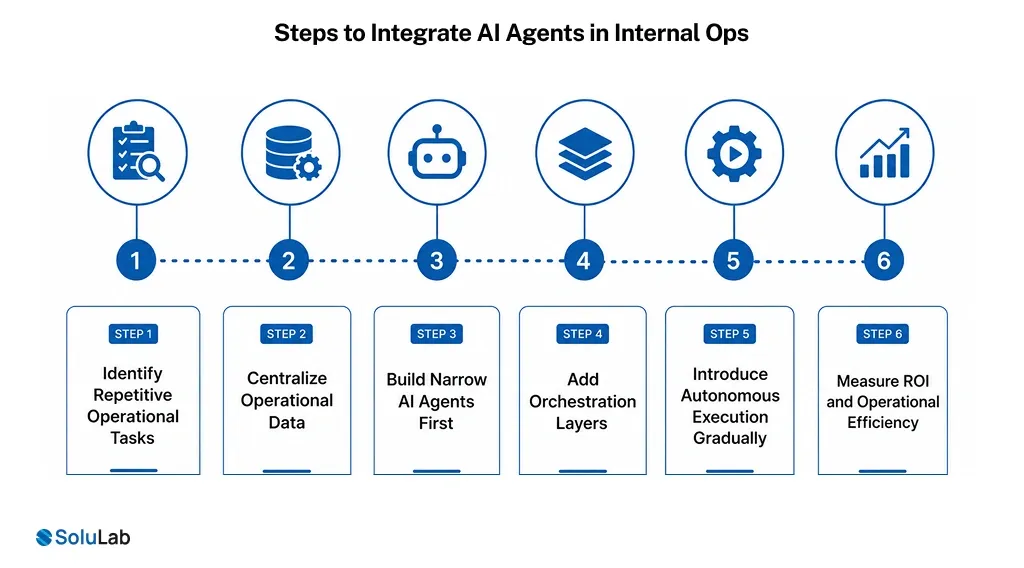
AI agents are improving internal operations by automating repetitive workflows, improving decision-making speed, and reducing operational inefficiencies across enterprise departments through intelligent, data-driven execution and continuous process optimization.
1. Identify Repetitive Operational Tasks
Operational inefficiencies often emerge from repetitive manual tasks, delayed approvals, and disconnected workflows that reduce productivity and increase employee dependency on constant human intervention.
- Manual approval dependencies
- Repetitive cross-functional workflows
- High operational turnaround time
2. Centralize Operational Data
Fragmented enterprise data creates visibility gaps across departments, limiting AI agents from accessing consistent information required for accurate automation and intelligent operational decision-making.
- Unified enterprise data access
- Real-time workflow visibility
- Improved cross-team coordination
3. Build Narrow AI Agents First
Organizations should initially deploy specialized AI agents focused on single operational tasks to minimize implementation risks and improve measurable performance outcomes before scaling automation.
- Task-specific operational automation
- Easier performance optimization
- Lower implementation complexity
4. Add Orchestration Layers
AI orchestration layers enable multiple agents, enterprise tools, and workflows to collaborate efficiently, ensuring synchronized execution across departments and reducing operational silos.
- Multi-agent workflow coordination
- Centralized task management
- Seamless system integrations
5. Introduce Autonomous Execution Gradually
Gradual autonomy allows enterprises to maintain operational control while AI agents progressively handle approvals, actions, and workflow execution with reduced human supervision.
- Controlled automation deployment
- Reduced operational disruptions
- Human oversight during transition
6. Measure ROI and Operational Efficiency
Continuous performance evaluation helps organizations assess cost savings, workflow speed improvements, and operational productivity gains generated through AI agent implementation.
- Workflow efficiency tracking
- Cost reduction analysis
- Productivity improvement measurement
Use Cases of AI Agents for Internal Operations in 2026
AI agents are changing internal operations by reducing manual workloads, improving cross-functional coordination, and enabling faster decision-making through automation across enterprise departments and daily operational workflows.
1. HR and People Operations
AI agents improve employee onboarding, attendance tracking, leave approvals, and workforce coordination by automating repetitive HR tasks, improving employee experiences, and reducing operational dependency on manual administrative processes.
2. Finance & Accounting
AI in financial firms automates invoice processing, expense auditing, transaction validation, and financial reporting, helping organizations reduce accounting errors, strengthen compliance monitoring, and improve operational efficiency across finance departments.
3. Sales and Marketing Operations
AI agents in sales improve lead qualification, campaign monitoring, customer segmentation, and sales coordination by analyzing behavioral data in real time, enabling faster decision-making and stronger conversion-focused operational workflows.
4. Legal & Compliance
AI agents monitor compliance activities, review contracts, identify regulatory risks, and automate policy tracking, helping enterprises maintain governance standards while reducing delays caused by manual legal review processes.
5. Marketing Content Operations Agent
AI agents coordinate content workflows, manage publishing schedules, analyze engagement metrics, and optimize SEO performance, helping marketing teams maintain consistent communication and improve digital content efficiency at scale.
6. Procurement and Supply Chain
AI agents automate supplier management, procurement tracking, inventory forecasting, and logistics coordination, enabling enterprises to reduce operational disruptions, improve supply chain visibility, and optimize inventory planning decisions.
Real World Examples of AI Agents for Internal Operations
AI agents are changing enterprise operations by automating repetitive workflows, improving decision-making speed, and enabling organizations to manage internal processes with greater accuracy, scalability, and operational intelligence across departments.
1. Bank of America
Bank of America uses AI-powered virtual assistants and internal automation systems to support employee productivity, customer service operations, fraud monitoring, and workflow optimization across banking infrastructure.
2. Billerud
Billerud implemented AI agents within manufacturing operations to monitor equipment performance, predict maintenance needs, and improve efficiency across paper and packaging production facilities.
3. Morgan Stanley
Morgan Stanley deployed AI assistants powered by generative AI to help financial advisors retrieve research, summarize documents, and access institutional knowledge in real time.
4. BMW Group
BMW Group integrates AI agents into manufacturing and logistics operations to optimize production planning, quality inspections, predictive maintenance, and supply chain coordination across global facilities.
Future Trends in AI Agents for Internal Operations
As enterprises move toward autonomous operations, AI agents are evolving from task-based assistants into intelligent systems capable of managing workflows, coordinating teams, and continuously optimizing business processes in real time.
- Multi-agent enterprise systems: Organizations will deploy multi-agent systems across departments, enabling finance, HR, IT, and operations teams to collaborate autonomously while sharing contextual business instantly.
- Self-improving operational workflows: AI agents will continuously analyze operational performance, identify inefficiencies, and optimize workflows automatically using real-time data, reducing dependency on manual process management and intervention.
- Voice-enabled enterprise agents: Voice-driven AI agents will simplify enterprise interactions by allowing employees to execute tasks, retrieve reports, approve requests, and manage workflows through natural conversational commands.
- AI workforce orchestration: Enterprises will use AI agents to coordinate human employees, software bots, and digital systems together, improving productivity, resource allocation, and operational decision-making across large organizations.
How SoluLab Helps in Building AI Agents for Internal Operations
SoluLab helps build enterprise AI integration that automate internal workflows, improve operational efficiency, streamline decision-making, and integrate seamlessly with existing enterprise systems across departments and business functions.
- Workflow Automation Systems
- AI-Powered Employee Assistants
- ERP and CRM AI Integrations
- Enterprise AI Integration Services
- Intelligent Process Automation
- Predictive Analytics Solutions
- Multi-Agent System Development
For example, SoluLab built UpdateIA, a multi-agent AI platform for a French startup, enabling 14+ autonomous agents coordinated by Jarvis.
It unified enterprise workflows, reduced manual effort, ensured compliance, and improved real-time decision-making across HR, CRM, Finance, and Legal systems.
Conclusion
AI agents are changing how enterprises run daily operations. In 2026, businesses are using AI agents to handle repetitive workflows, reduce operational delays, improve internal collaboration, and support faster decision-making across departments.
Companies are moving toward systems that can think, respond, and execute tasks autonomously. As competition grows, enterprises investing in AI-driven operations today will be better prepared for tomorrow’s demands.
SoluLab, an AI agent development company, can help your business build AI agent solutions tailored for modern enterprise operations.
FAQs
Neha is a curious content writer with a knack for breaking down complex technologies into meaningful, reader-friendly insights. With experience in blockchain, digital assets, and enterprise tech, she focuses on creating content that informs, connects, and supports strategic decision-making.