Web3 gaming hands players something traditional games never did: real ownership of what they earn in-game, and a say in where a project goes next. That shift puts pressure on the people building these games. Pick the wrong white-label crypto wallet and you put player assets, player patience, and your own growth at risk. And the stakes keep rising. The gaming crypto wallet stats point to fast growth, with projections putting the Web3 gaming market at over $5 billion by 2027.
As blockchain technology reshapes how games are built, studios and platforms want a faster way to bolt on crypto features. A white-label wallet is the shortcut: a secure, brandable wallet you configure instead of writing from zero. Below, we walk through what actually matters when you pick one for a Web3 gaming platform, so the integration goes cleanly and players barely notice the wallet is there.
Think of this as a working reference for game creators and project owners who have a decision to make. The goal is simple. Help you find Web3 white-label wallet gaming platform options that fit your company’s requirements and goals, not someone else’s.
What are White-Label Wallets?
A white-label wallet is a pre-built wallet that a business rebrands and ships as its own, for holding crypto and digital assets. The core infrastructure already exists. You adjust it to your users. That is why these wallets suit Web3 gaming platforms so well. With a white-label wallet for Web3 gaming, a company can offer multi-currency support, smooth transactions, and strong security, all carrying its own name.
The real win is time. A white-label crypto wallet for gaming cuts the development timeline, which frees budget and people for marketing and user engagement. You launch sooner. Your brand stays front and center. In digital finance and Web3, where products move quickly, both of those count for a lot. Choose the right Web3 wallet solution for gaming platforms and you stay competitive while giving players a wallet that simply works.
What is Web3 Gaming?
Web3 gaming builds games on blockchain platforms, so the experience is decentralized and centered on the player. Players get more control over their in-game assets. Through digital ownership and NFTs, they can buy, sell, and trade items directly inside the game. None of that works without a custom crypto wallet for gaming, the piece that lets players store, manage, and move their digital assets securely.
The numbers behind it are large. Valued at a projected $128.62 billion in 2022 and growing at a compound annual growth rate (CAGR) of 21.8%, the blockchain gaming market is estimated to reach $614.91 billion by 2030. North America led the market in 2022, with a 23.87% share.
Demand like that explains the interest in white-label crypto wallet solutions. They give players a secure, efficient place to earn, trade, and generate revenue without leaving the game. Every transaction is visible, and players can manage and trade in-game assets without friction.
Building one well is another matter. You want experienced crypto wallet gaming platform developers on it, people who can shape the wallet around the platform’s specific goals. Get that right and players get a smooth experience, which is what keeps Web3 gaming growing.
Critical Factors for Developing a Crypto Wallet Gaming Platform
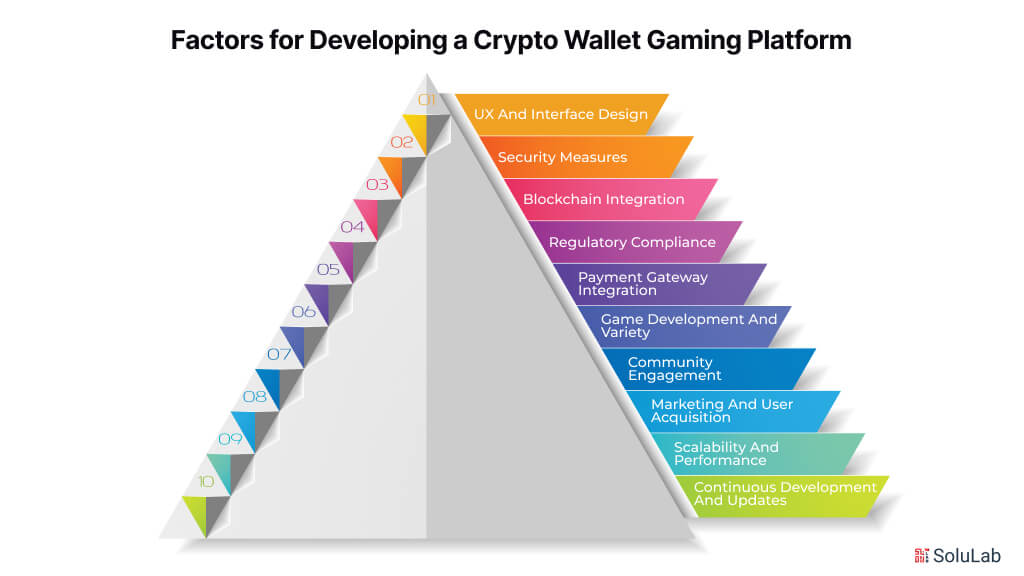
A crypto wallet gaming platform has a lot of moving parts, and each one affects whether it ends up secure, useful, and successful. These are the areas to get right during crypto wallet gaming platform development:
1. UX and Interface Design
- Intuitive Navigation: Build an interface people can move around without thinking about it.
- Responsive Design: The platform has to hold up on PCs, tablets, and smartphones alike.
- Onboarding Process: Give new users a gentle start, including a short walkthrough of how the crypto wallet and the gaming features work.
2. Security Measures
- Encryption: Use strong encryption protocols to protect user data and transaction details.
- Two-Factor Authentication (2FA): Turn on 2FA so account access has a second lock.
- Smart Contract Audits: Audit your smart contracts on a regular schedule. Finding and fixing vulnerabilities early cuts the risk of hacks and exploits.
- Cold Wallet Storage: Hold most funds in cold storage. Less money online means less exposure.
3. Blockchain Integration
- Choose the Right Blockchain: Pick a blockchain development platform that matches what your Web3 white-label gaming platform is trying to do (Ethereum if you need smart contracts, say, or Binance Smart Chain if low transaction fees matter more).
- Interoperability: Look at cross-chain compatibility so users can work with several cryptocurrencies, which makes the platform far more flexible.
4. Regulatory Compliance
- Legal Considerations: Know the rules in every region where the platform runs, and follow them.
- KYC/AML Policies: Put Know Your Customer (KYC) and Anti-Money Laundering (AML) procedures in place so you stay within regulatory requirements.
5. Payment Gateway Integration
- Multiple Cryptocurrency Support: Let users deposit and withdraw a range of cryptocurrencies. More coins, wider audience.
- Fiat On-Ramp Solutions: Offer simple fiat-to-crypto options so newcomers can get into the Web3 white-label crypto wallet environment without a detour through an exchange.
6. Game Development and Variety
- Diverse Game Offerings: Offer different kinds of games (skill-based, chance-based, multiplayer) because players do not all want the same thing.
- Fairness and Transparency: Run provably fair algorithms so users can check outcomes for themselves. Trust follows.
7. Community Engagement
- Incorporate Social Features: Give players ways to talk, compete, and share what they have done. That is how a real community forms.
- Feedback Mechanism: Open channels for feedback and suggestions, then actually use what comes in to improve the platform.
8. Marketing and User Acquisition
- Targeted Marketing Strategies: Use social media, influencer partnerships, and crypto forums to reach the people most likely to sign up.
- Referral Programs: Tools like ReferralCandy make it easy to reward users who bring in friends, and that grows the user base.
9. Scalability and Performance
- Load Testing: Load test hard, so you know the Web3 white label crypto wallet can take heavy traffic and high transaction volumes before launch day proves otherwise.
- Optimized Performance: Keep watching performance and trimming latency. Players notice lag fast.
10. Continuous Development and Updates
- Regular Updates: Ship security patches, feature improvements, and the updates users ask for, on a steady cadence.
- Adapt to Market Trends: Watch where the industry and your users are heading, and adjust the platform to match.
Get these ten areas right and you end up with a Web3 white-label crypto wallet gaming platform that performs well, stays on the right side of regulators, and keeps players coming back, the standard set by leading web3 development companies.
How to Choose the Right White Label Crypto Platform for Business Owners?
If you are launching a crypto-based service, the white-label platform you pick is a big call. A good one gets you into the market quickly on infrastructure that is already built and still yours to customize. A bad one haunts you for years. So how do you tell them apart? Work through the checks below.
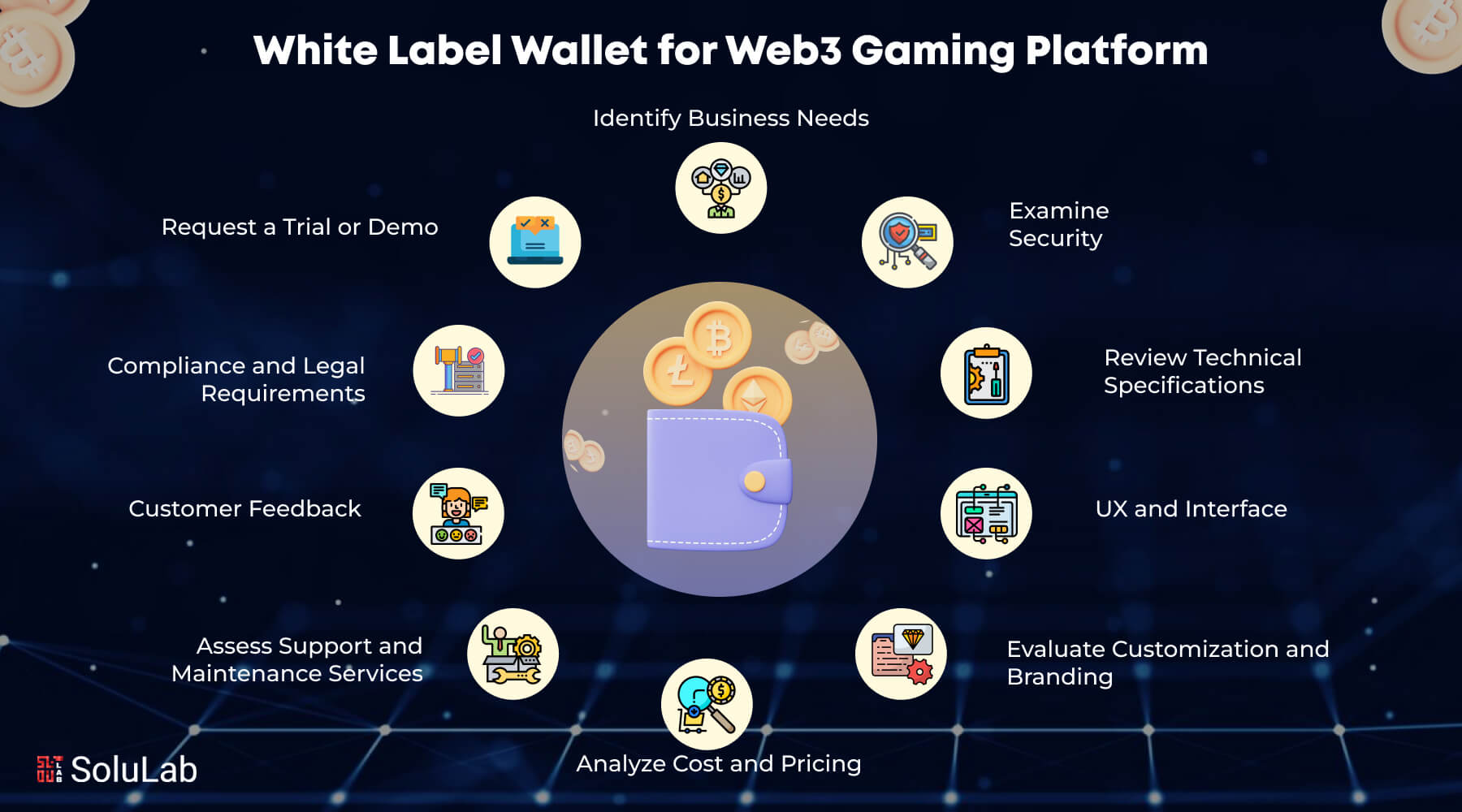
Identify Your Business Needs
- Target Audience: Start with who your users are. Traders? Gamers? Investors? The answer tells you which features to look for, like advanced trading tools for traders or in-game asset management for gamers.
- Service Offerings: Decide what you will actually offer: crypto exchange, wallet services, staking, lending. When the platform already covers those, you customize less and your product fits your users better from day one.
- Regulatory Considerations: Map out the legal and compliance rules in each target market. Crypto regulation differs a lot from region to region. Pick a platform that can meet those specific rules and ships with compliance tooling such as KYC (Know Your Customer) and AML (Anti-Money Laundering) protocols.
Examine Security Features
- Robust Security Protocols: Security is the foundation of any crypto platform. Full stop. Look for advanced encryption for user data, careful private key management, and two-factor authentication (2FA) on account access.
- Audit and Compliance: Favor platforms that have passed third-party security audits such as SOC 2 or ISO/IEC 27001. An audit shows the platform was tested for vulnerabilities and follows accepted security practice.
- Incident Management: Ask to see the incident response plan. A documented plan spells out what happens after a breach or hack, and knowing it exists lets you sleep better.
Review Technical Specifications
- Blockchain Compatibility: Confirm support for the exact blockchains and tokens your business needs. Planning to support Ethereum-based tokens? Then Ethereum support is non-negotiable.
- Scalability: If you expect your user base and transaction volume to grow, scalability matters a great deal. Choose a platform that absorbs more traffic and data without slowing down.
- APIs and Integrations: Check that the APIs are solid enough to connect third-party tools and your existing systems. You need this now for functionality, and later for flexibility as the business changes.
Consider User Experience (UX) and Interface
- Intuitive Design: A first-time user should be able to find their way around. When people locate what they need without confusion, they engage more.
- Mobile Accessibility: Plenty of your users will arrive on a phone. Make sure the platform is properly optimized for mobile so you do not lose them.
- Onboarding Efficiency: Quick onboarding does a lot for retention. Look for simple registration, a painless KYC flow, and clear instructions, because the first session sets the tone.

Evaluate Customization and Branding Options
- Branding Flexibility: Branding is how users learn to trust you. You should be able to change logos, color schemes, and layouts so the platform looks like your product, not a template.
- Feature Customization: How easily can you add or remove features? Ideally, very. Your needs will change as the business grows, and the platform should bend with them.
Analyze Cost and Pricing Structure
- Upfront Costs: Know what setup costs before you sign. The figure swings widely depending on features, so check it against your budget and expected ROI.
- Ongoing Fees: List every recurring charge, including maintenance, support, and updates. You want these spelled out at the start so your operating budget holds.
- Transaction Fees: These hit your revenue model directly, and hardest when your platform processes lots of transactions. Make sure the fee structure fits your pricing and does not pile needless costs on your users.
Assess Support and Maintenance Services
- Technical Assistance: Look for 24/7 technical support. When something breaks at 3 a.m., fast help is the difference between a blip and real downtime, and users remember which one they got.
- Updates and Improvements: Go with a provider that ships regular updates for security and new features. That is what keeps your platform competitive and aligned with current industry standards.
Look Into Reputation and Customer Feedback
- Industry Standing: Dig into the provider’s reputation through feedback, testimonials, and whatever performance metrics you can find. A well-regarded provider is more likely to hand you a platform that holds up.
- Case Studies: Ask for case studies or examples of how other companies made it work. Case studies show how the platform behaves in real conditions and how well it adapts to different business models.
Ensure Compliance and Legal Requirements
- Licensing Requirements: Check that the platform meets the licensing and regulatory standards in each region you operate in. It keeps you compliant and lowers your legal risk.
- KYC and AML Policies: Confirm full support for KYC and AML protocols. You need them for regulatory compliance and for stopping fraud.
Request a Trial or Demo
- Demo Access: Try before you commit. A demo or trial shows you the core functions and how usable the thing really is.
- Testing Environment: If there is a sandbox or test environment, use it. Push on the integrations and performance until you are sure they meet your technical and operational needs.
Work through each of these and you will make a choice that fits your goals: a secure, scalable, user-friendly white-label crypto platform for a Web3 wallet for gaming or for crypto wallet gaming platform development. Taking the time here saves time and money later. It also sets you up for a clean launch and steady growth in a crowded crypto market.
Top Web3 White-Label Crypto Wallet Recommendations for Gaming Developers
There are a lot of Web3 white-label wallet options out there, and sorting through them is tiring. To narrow things down, here are some of the most frequently recommended Web3 wallet solutions for gaming platforms:
1. Trust Wallet: Trust Wallet is known for supporting a wide range of assets. It is secure and easy to use, which makes it popular with both dedicated developers and players inside gaming apps.
2. MetaMask: One of the most widely adopted wallets around. MetaMask integrates smoothly with Ethereum, has strong security features, and is easy to customize for Web3 gaming platforms.
3. Exodus: Exodus wins people over with a clean interface and support for many assets. Developers who want multi-currency compatibility in their games tend to like it.
4. Enjin: Built with gaming in mind. Enjin handles NFTs and in-game asset management, giving players an immersive experience and giving developers extra tools for game-centered economies.
5. Coinbase Wallet: Coinbase Wallet carries a strong reputation for reliability. It fits gaming platforms that put security and ease of use first, especially when many players are new to crypto.
Each one has its own strengths. Which is right depends on your players, but any of them can help developers build a Web3 white-label crypto wallet that makes the gaming experience better.
Essential Features of a White Label Custodial Wallet for Web3 Gaming
A white-label custodial wallet for Web3 gaming needs features built for how games actually work, not just for holding coins. Here is what every Web3 wallet for gaming should have:
1. Multi-Currency Support
If you want a broad user base, the wallet has to handle many cryptocurrencies and tokens so players can use whatever assets they hold. That flexibility also makes wallet integration for Web3 games easier, since you can serve users on several different blockchain networks.
2. Enhanced Security Features
Digital assets are sensitive. Security cannot be an afterthought. Look for strong encryption, multi-signature wallets support, and two-factor authentication (2FA). With those in place, players can trust their assets are safe, and that trust is a basic requirement for the best Web3 white-label crypto wallet.
3. User-Friendly Interface
People stay when things are simple. Even someone brand new to crypto gaming should find the wallet easy to get around. Keep onboarding short, transaction management clear, and settings where people expect them, and engagement goes up.
4. In-Game Asset Integration
The wallet should plug straight into in-game assets, so players can view, manage, and trade items like non-fungible tokens (NFTs) without leaving the platform. This is where Web3 gaming starts to feel different: in-game items stop being decoration and become assets with value you can trade.
5. Fiat On-Ramp and Off-Ramp Solutions
Want mainstream gamers? Then you need fiat on-ramps and off-ramps. Users can buy crypto with ordinary money and cash out when they choose, which makes wallet integration for Web3 games far more approachable for people outside crypto.
6. Customizability and Branding Options
Developers should be able to make the wallet look and feel like their game. Logos, color schemes, in-app features: all adjustable. The point is for the wallet to feel like part of the game, not a separate app that happens to be attached.
7. Real-Time Notifications and Alerts
Real-time notifications tell users about transaction status, updates, and promotions as they happen. That adds transparency and keeps people engaged. In a fast-moving game, players want to know right away when a transaction clears or an asset changes.
8. Customer Support Integration
Support inside the wallet lets users fix problems without leaving the app. Good support channels help people through technical questions. They also build trust in the platform, quietly, one resolved ticket at a time.
Make sure a white-label custodial wallet covers these core features, and you can deliver the best Web3 white-label crypto wallet solution for a gaming platform. Players get a better experience. The wallet fits cleanly into the game’s economy. And the whole platform becomes more engaging and more secure.
Top Benefits of Investing in White-label Crypto Wallets
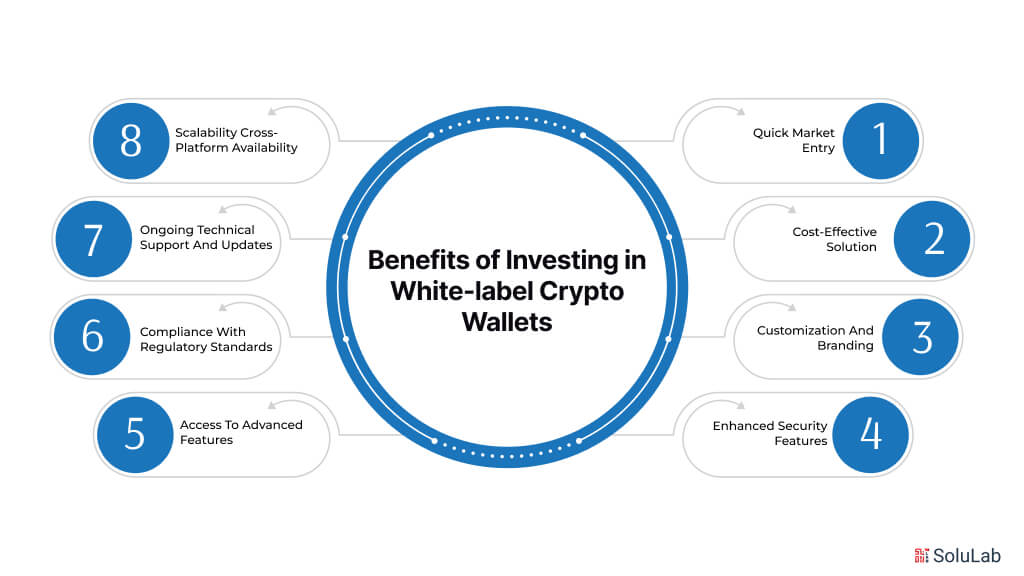
A white-label crypto wallet is a fast, cost-effective way into a competitive crypto market with a product that is customized and secure. Because the platform is already built, you can offer users a branded, feature-rich, scalable wallet without a long development cycle. Here is what you get from white-label crypto wallet integration for Web3 games:
Quick Market Entry
White-label crypto wallets come pre-built, so time to market shrinks a lot. Businesses skip the long, expensive development grind and launch their wallets quickly. Being early gives you an edge. It also lets you catch market interest while it is still fresh.
Cost-Effective Solution
Building a crypto wallet from scratch takes serious money for development, design, and security. White-label wallets are a one-time or subscription purchase instead, so you avoid the cost of building and maintaining your own. The budget you save can go to marketing and customer acquisition, where it usually does more good.
Customization and Branding
You can customize a white-label crypto wallet heavily and brand it as yours. Logos, user interfaces, the overall look and feel: all of it can match your brand identity. The result is a consistent branded experience, and consistency is what builds trust and loyalty.
Enhanced Security Features
In crypto, security comes first. White-label wallet providers often build in advanced protections like multi-signature support, biometric authentication, and encryption. Using those built-in features helps protect user funds, lowers the risk of breaches, and gives users a reason to believe in you.
Access to Advanced Features
Most white-label wallets ship with advanced features out of the box: in-wallet exchange, multi-currency support, staking. These improve the user experience and appeal to a wide range of users, which helps with both engagement and retention.
Compliance with Regulatory Standards
Providers often build their wallets to meet regulatory standards, which makes compliance much easier for you. With that groundwork already done, you carry less of the legal load, can operate across regions more easily, and your users stay protected.
Ongoing Technical Support and Updates
White-label providers keep supporting and updating the wallet, so it stays current with security patches and feature improvements. You focus on growth. Someone else worries about the wallet’s upkeep.
Scalability
White-label cryptocurrency wallets are designed for a user base that keeps growing. As your business gets bigger, the wallet scales to handle more transactions and new features, so you are not rebuilding it every time you hit a new stage of long-term growth in crypto.
Cross-Platform Availability
Many white-label wallets run on the web and on mobile (iOS and Android). Users can reach their wallets from whatever device they have on hand. That makes the experience better, and it widens the pool of people you can reach.
Put simply, a white-label crypto wallet gives you speed, security, and room to scale in one package. That lets businesses offer first-rate crypto services while they spend their energy on growth and keeping users happy.
Future Advancements to Expect in Web3 White Label Gaming Platforms
Gaming keeps changing, and Web3 technology is a growing part of why. White-label gaming platforms in particular are moving toward decentralized tech, with tighter links to Web3 wallet for gaming setups and economies shaped by players rather than publishers. Here is where Web3 white-label gaming platforms look to be heading:
1. Enhanced Integration with Web3 Wallets for Gaming
Expect much deeper integration of Web3 wallet for gaming products built specifically for games. They will hold more than cryptocurrency. NFTs, tokens, and rewards will all sit in one secure place. Players will be able to move assets between games and platforms easily, which makes Web3 gaming more convenient and far more interoperable.
2. Customizable White Label Crypto Wallets for Gaming
White-label crypto wallets for gaming are becoming fully customizable. Game developers and publishers will be able to build branded wallet experiences shaped around their own players. Advanced security, friendly interfaces, and custom branding will come standard, building loyalty and keeping the experience consistent across a game’s world. A custom crypto wallet for gaming is also expected to pick up gamified features that reward players for achievements, loyalty, and engagement.
3. Improved Cross-Platform Asset Compatibility
Cross-platform compatibility will sit at the center of future Web3 gaming platforms. Players will carry one white-label crypto wallet for gaming across multiple games, consoles, and devices. Their in-game assets, currencies, and NFTs go wherever they play. Better compatibility also opens the door wider, so players can join different gaming economies and move assets between them with little effort.
4. Advanced Tokenomics and Play-to-Earn (P2E) Models
Web3 white-label gaming platforms will keep building out their tokenomics, adding more sophisticated Play-to-Earn mechanics that reward both engagement and skill. Those systems will connect directly to the platform’s crypto wallet, so players earn, store, and trade tokens without leaving the game. As demand for custom crypto wallets for gaming rises, players will be able to hold and trade what they earn securely, which gives in-game rewards real-world value.
5. Decentralized Governance and Community Control
Decentralized Autonomous Organizations (DAOs) are set to show up in more Web3 gaming platforms. Players will get a bigger voice in where their games go, voting on updates, tokenomics changes, and other major decisions. A Web3 wallet for gaming becomes the entry point to that governance, with voting rights going to players who hold tokens. The community, in effect, helps steer the game.
6. Interoperable NFT Marketplaces and In-Game Asset Ownership
Owning in-game assets as NFTs will keep gaining ground, with white-label gaming platforms offering built-in NFT marketplaces. Players will trade, sell, and buy assets across games and platforms, all through their crypto wallets. A Custom crypto wallet for gaming will make it simpler to manage and show off unique assets, so the experience feels more personal and more tied to real value.
7. Augmented Reality (AR) and Virtual Reality (VR) Integration
As AR and VR technology advances, Web3 gaming platforms will lean further into immersive features that let players experience games in new ways. With a white-label crypto wallet for gaming, players can buy items and manage digital assets in real time while they explore those virtual worlds, and that pulls them deeper into the game.
Put these together and the picture is clear enough. Web3 white-label gaming platforms are changing how players relate to games, assets, and each other. Better Web3 wallets for gaming, custom crypto wallets for gaming, and decentralized governance all push in one direction: immersive, flexible, rewarding games where control and ownership sit with the players.
The Bottom Line
Web3 gaming changes the deal between players and games. Players control their digital assets, get stronger security, and get experiences shaped around them. White-label platforms are improving quickly, so players can already manage in-game items, earn rewards, and trade assets through built-in crypto wallets. What you end up with is a more immersive, community-driven game where the player genuinely owns what they have earned.
At SoluLab- a cryptocurrency development company, we build white-label wallet solutions for Web3 gaming that are secure, fully branded, and smooth to use. As a leading crypto wallet development company, we deliver scalable wallets with advanced security, cross-platform compatibility, and features you can customize to your platform’s needs. When Clicktool– an accounting platform with crypto assets came to us to launch their ICO and build a native cryptocurrency wallet for their click-tracking software, we built them a secure, user-friendly wallet that strengthened the platform’s support for ROI-driven campaigns. If you are ready to look at white-label wallet solutions for Web3 gaming, contact us and tell us what you are building. We will show you how a custom solution can lift engagement and improve the experience for your players.
FAQs
Shipra Garg is a tech-focused content strategist and copywriter specializing in Web3, blockchain, and artificial intelligence. She has worked with startups and enterprise teams to craft high-conversion content that bridges deep tech with business impact. Her work translates complex innovations into clear, credible, and engaging narratives that drive growth and build trust in emerging tech markets.