Key Takeaways
- Stock tokenization is changing how equity is issued, traded, and managed. As AI-driven market infrastructure grows, firms can automate compliance, improve AI-based financial analytics, and build smarter systems for tokenized equity markets. This shift makes real-world asset tokenization more practical, scalable, and business-ready.
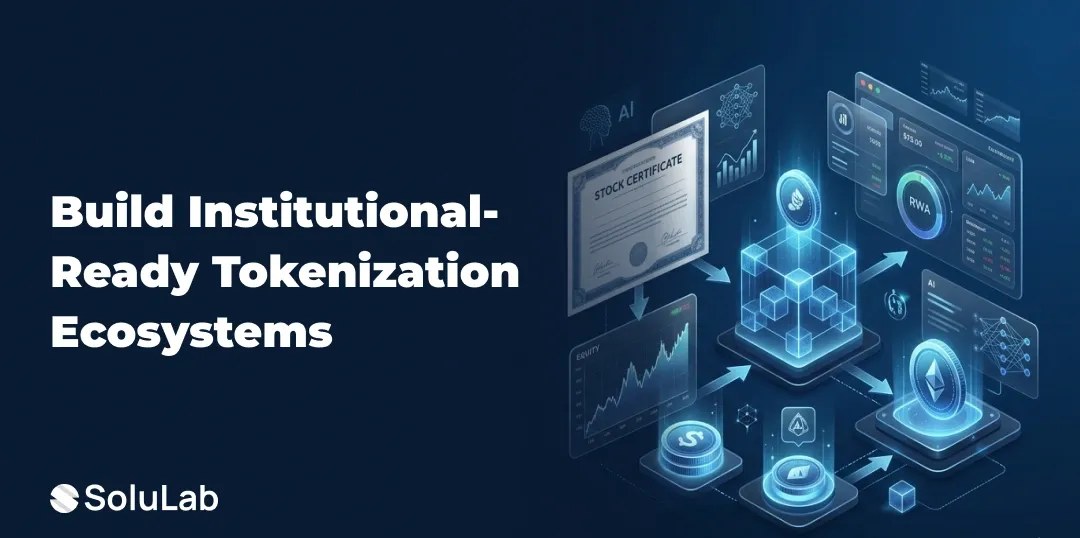
Stock tokenization has surpassed early blockchain speculation and is becoming a crucial segment of the fintech sector. While the platform enables fintech businesses to improve transparency, efficiency, and accessibility in the current process. The process of scaling it requires stronger legal, operational, and compliance foundations. Here comes the AI-driven market infrastructure!
AI integration solutions in tokenized equity markets require integration that enables smart onboarding, surveillance, pricing intelligence, settlement controls, investor servicing, and compliance operations. The blog explains why tokenization of stocks matters, where AI fits into the market stack, and what businesses should consider before building tokenized financial platforms.
The Significance Of Stock Tokenization in a Regulated Market
Stock tokenization is the digital representation of equity interests on a programmable ledger. In simple terms, ownership rights linked to shares are recorded, transferred, and managed through token-based infrastructure rather than through fragmented legacy systems alone. It must address:
- Investor identity and access controls
- Settlement logic and transfer restrictions
- Corporate actions such as dividends, splits, and voting
- Custody, reporting, and auditability
- Cross-system reconciliation with existing market infrastructure
When designed properly, it can support fractional ownership, faster transfer workflows, improved traceability, and more configurable ownership logic. When designed poorly, it creates legal ambiguity and operational risk.

Why is Stock Tokenization Demand Rising In 2026?
The interest in real-world asset tokenization is growing because traditional infrastructure still leaves capital trapped in slow, expensive, and disconnected processes. About $25 trillion of securities are currently eligible for collateral use out of a potential $230 trillion pool, which suggests major room for improvement in liquidity and capital efficiency.
This is the reason tokenization in finance becomes a strategic conversation about how markets issue, move, pledge, and settle value.
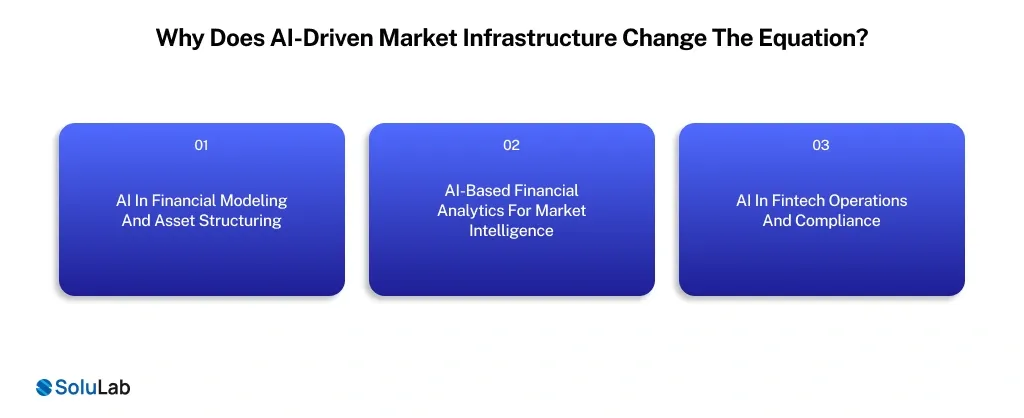
Why Does AI-Driven Market Infrastructure Change The Equation?
Tokenization creates a programmable asset layer. AI technology creates an intelligent operating layer. The strongest market infrastructure will combine both.
An AI-driven market infrastructure can help institutions manage the complexity that arrives with tokenized issuance, wallet-linked ownership records, real-time transfer events, and continuous compliance checks. This is not limited to chat interfaces or generic automation. In capital markets, AI has a more specific role.
AI In Financial Modeling And Asset Structuring
Before an asset is tokenized, firms need models for valuation, liquidity assumptions, investor segmentation, risk controls, and issuance structure. AI in financial modeling can support scenario analysis, historical pattern detection, and structuring decisions for different classes of tokenized assets.
For tokenization of stocks, which can include cap table simulation, transfer restriction logic, price sensitivity analysis, and liquidity planning for private or semi-liquid equity products.
AI-Based Financial Analytics For Market Intelligence
Once an asset is issued, AI-based financial analytics becomes critical. Tokenized markets generate large event streams across wallets, trade activity, compliance states, and ownership changes. AI can help institutions monitor anomalies, detect suspicious activity, forecast liquidity pressure, and improve post-trade intelligence.
AI In Fintech Operations And Compliance
Many firms enter tokenization through a product vision, but the true bottleneck usually appears in operations. KYC checks, sanctions screening, document review, exception handling, investor communications, reconciliations, and regulatory reporting can quickly become expensive if they rely on manual teams alone.
Financial automation platforms supported by AI agents create real value. They can reduce review time, prioritize exceptions, automate repetitive controls, and keep compliance teams focused on high-risk cases instead of routine workflows.
How Tokenization and AI Work Together Across The Trade Lifecycle?
The strongest tokenized equity markets will not run on token issuance alone. They will depend on orchestration across the full lifecycle.
Issuance And Investor Onboarding
AI-powered solutions can classify investor documents, flag inconsistent disclosures, assess onboarding risks, and route cases for human review. Meanwhile, the tokenization layer can encode investor permissions, lock-up periods, holding limits, and jurisdiction rules directly into transfer logic.
Smart Contract-Based Stock Trading
In smart contract-based stock trading, execution logic can be tied to whitelisted wallets, compliance states, and settlement conditions. AI can sit above this layer to monitor order behavior, detect abnormal patterns, and help optimize execution rules over time. This is especially relevant for firms designing environments for trading tokenized stocks where market access, investor protection, and audit trails must coexist.
Post-Trade, Corporate Actions, And Reporting
One of the hardest problems in tokenized stocks is not initial issuance. It is everything that happens after issuance. Dividends, shareholder communications, transfer restrictions, tax reporting, beneficial ownership visibility, and ledger reconciliation all need dependable workflows. AI can improve these processes by matching records, identifying breaks, generating exception summaries, and supporting more accurate reporting across systems. That makes asset tokenization development far more practical for institutional use.

Why Stock Tokenization Is Becoming A Business Strategy?
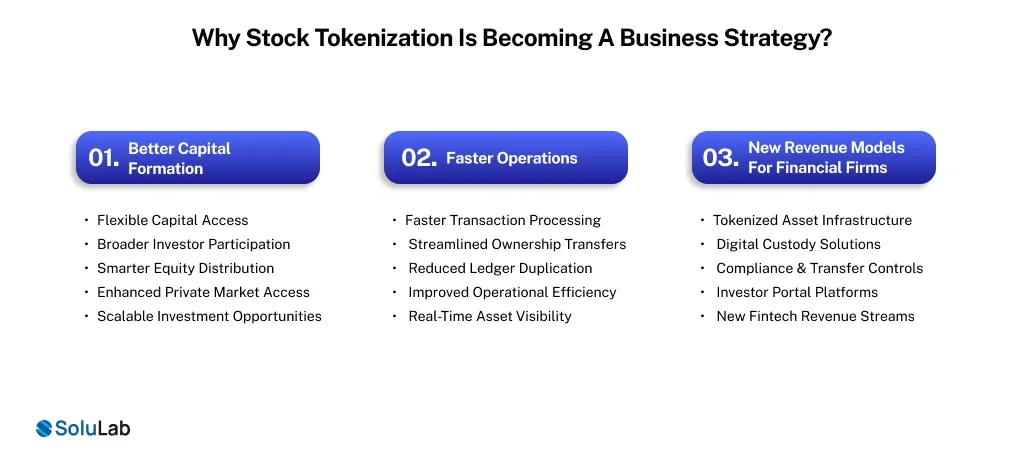
The commercial case for tokenization of stocks is getting stronger because it touches multiple business levers at once.
Better Capital Formation
Tokenized equity can create more flexible distribution models, smaller ticket sizes, and broader investor participation frameworks where regulation permits. For private markets, which can improve capital access. For platforms, it can support new product formats and differentiated investor experiences.
Faster Operations
With blockchain-based equities, businesses can reduce duplication across ledgers and support more direct visibility into ownership and transfers. This results in faster business operations with better operational efficiency.
New Revenue Models For Financial Firms
Tokenizing financial assets introduces new revenue models for fintech firms. This involves issuance tooling, compliance engines, transfer controls, digital custody, investor portals, analytics products, and white-label infrastructure.
What Is Slowing Down Tokenized Equity Markets?
Recent regulatory reviews show that tokenization on blockchain remains a small part of the financial sector, even though experimentation has grown. IOSCO noted that tokenization arrangements are still limited in scale and may introduce new or amplified risks related to investor protection, market integrity, cyber exposure, and legal clarity.
The Main Frictions
Legal Rights And Regulatory Classification
A token is only useful if the underlying investor rights are enforceable. Tokenized stocks must answer a basic question clearly: what exactly does the holder own, and under which legal framework?
Liquidity Fragmentation
Creating a tokenized share is easier than creating a liquid market around it. Without credible venues, market makers, compliant access rules, and enough demand concentration, trading tokenized stocks can remain thin.
Interoperability With Traditional Systems
Most firms cannot replace existing market infrastructure overnight. They need tokenized systems that can work with registrars, custodians, broker-dealers, settlement processes, and reporting obligations already in place.
Parallel Market Structure Risk
Recent SEC discussion around tokenized U.S. equities has highlighted the risk that exemptive approaches could create parallel regulatory regimes with different standards from established equity markets, potentially affecting market quality and investor protection.
Read more: Issuer-Sponsored vs. Third-Party
What A Production-Ready Stock Tokenization Platform Should Include?
Fintech companies should not treat tokenization as a front-end wallet feature. For stock tokenization, a production-ready platform usually needs:
- Asset issuance and lifecycle management
- Identity, KYC, AML, and jurisdiction controls
- Smart contract governance and upgrade policies
- Corporate action handling
- Compliance-aware transfer logic
- Custody and key management models
- Audit trails and reporting tools
- AI-assisted monitoring, analytics, and exception management
This is where a capable AI development company becomes relevant. The AI layer should not be added as decoration. It should support measurable outcomes across risk, operations, and market intelligence.
A Note On AI In Marketing
Although AI in marketing sits outside core market infrastructure, it still plays a supporting role for issuers and platforms. Investor education, product segmentation, campaign analytics, and lifecycle communication for tokenized assets can all benefit from AI systems, especially when firms are introducing unfamiliar financial products to new market segments.

Conclusion
The rise of tokenization of stocks is about rebuilding parts of market infrastructure so that ownership, transfer, compliance, and reporting become more programmable, visible, and efficient. AI-driven market infrastructure makes that shift more practical by helping institutions manage the complexity that tokenization introduces. Tokenization gives AI-rich financial systems a cleaner, more programmable asset layer to operate on. Together, they point toward a new operating model for capital markets. The firms that move early with the right legal, technical, and operational design will be in a stronger position to define that market rather than react to it.
SoluLab is a trusted tokenization platform development company and blockchain innovation partner that helps businesses build smart, secure, and scalable digital solutions tailored to real market needs. From stock tokenization platforms to AI-powered financial workflows, SoluLab focuses on creating technology that supports growth, efficiency, and long-term business value.
For companies planning the next step in AI-driven market infrastructure, SoluLab brings the technical depth and strategic clarity needed to move forward with confidence.
FAQs
Shipra Garg is a tech-focused content strategist and copywriter specializing in Web3, blockchain, and artificial intelligence. She has worked with startups and enterprise teams to craft high-conversion content that bridges deep tech with business impact. Her work translates complex innovations into clear, credible, and engaging narratives that drive growth and build trust in emerging tech markets.