Indonesia is quietly becoming one of the most important crypto markets in the world. More than 19 million Indonesians already trade crypto, and yearly transaction volumes are climbing into the tens of billions of dollars.
At the same time, the government is no longer treating crypto as a grey-area experiment. It is now a regulated digital financial asset under the Financial Services Authority (OJK), which means serious businesses can build compliant platforms with long-term certainty.
For founders, this creates a rare window. You have a large, fast-growing user base, improving regulation, and a market that is still early compared to the US, Europe, or Korea. In other words, the opportunity is not just to participate in the crypto ecosystem, but to build the infrastructure that millions of users will depend on.
If you already have capital, a defined exchange model, and access to the right crypto exchange development services, the real question is no longer whether Indonesia is a good market. The real question is: How quickly can you launch a compliant, liquid, and scalable crypto exchange before the next wave of competitors arrives? Let’s find out.
Key Takeaways
- The problem: Entering Indonesia’s crypto market requires regulatory‑ready architecture, institutional‑grade security, and deep liquidity, all of which are time‑ and capital‑intensive if you build from scratch.
- The solution: You can launch a crypto exchange in Indonesia in 14 days by using a white-label crypto exchange software stack, paired with a crypto exchange development company that understands OJK/Bappebti rules.
- How can we help? As a crypto exchange development company, we help you launch a crypto exchange in Indonesia in 14 days with a white-label crypto exchange software provider approach, so you focus on branding, compliance, and go‑to‑market, not coding.
Why Is Indonesia a High-Growth Market to Launch a Crypto Exchange?
Indonesia is already the fourth‑most populous country and the largest economy in Southeast Asia, which gives it a massive retail base. Data from 2025 shows that Indonesia’s crypto market volume exceeded $30–32 billion in a single year, with around 19–21 million traders and crypto‑related tax revenue in the tens of millions of dollars.
On-chain activity in Indonesia consistently ranks among the top in Asia‑Pacific, driven by young, mobile‑first users who treat crypto as a portfolio‑level asset, not just a speculative toy. The World Economic Forum and other analyses also highlight that Indonesia’s digital‑payment infrastructure (banking, e‑wallets, BNPL, remittances) is increasingly intertwined with crypto rails.
From a business operator’s perspective, this means:
- You are entering a live, high‑velocity liquidity pool.
- Retail volumes are strong, but institutions are starting to move in, especially after OJK reclassified crypto as a digital financial asset in 2025.
Types of Crypto Exchange Models You Can Launch in Indonesia
If you want to launch a crypto exchange in Indonesia, you first need to decide on the model that fits your capital, risk appetite, and regulatory comfort.
1. Centralized Exchange (CEX)
Most regulated players in Indonesia operate as centralized crypto exchanges, where you control custody, matching, and order‑book logic. This is the easiest to license and the most familiar to regulators and users.
Pros:
- Stronger KYC/AML and compliance traceability for OJK.
- Easier to integrate with local banks and payment rails.
Cons:
- You bear custodial risk and need a robust security architecture.
2. Decentralized Exchange (DEX)
A decentralized exchange can be a compliant add‑on to your CEX model, especially if you want to serve Web3‑native users and token projects.
Pros:
- Lower custodial and regulatory burden for certain trading flows.
- Better for token listings and DeFi‑style liquidity.
Cons:
- Harder to tie into local fiat on‑ramps and tax reporting.
3. Hybrid Exchange
A hybrid model lets you keep the core matching engine on‑chain while relying on off‑chain systems for KYC, compliance, and reporting.
Pros:
- You get some decentralization benefits while still maintaining OJK‑compatible control over user identity and risk.
Cons:
- More complex architecture, so you need a strong crypto exchange development company.
From our perspective, a CEX‑first, DEX‑enabled model is usually the most practical way to launch a crypto exchange in Indonesia in 14 days because you can plug in a white-label crypto exchange software and focus on liquidity and compliance, not rebuilding the engine.

Understanding Indonesia’s Regulations Before You Launch a Crypto Exchange
If you’re thinking about starting a crypto exchange software in Indonesia, you cannot ignore the regulatory layer.
Who Regulates Crypto Now?
Since early 2025, crypto assets and derivatives have been classified as digital financial assets under the OJK (Financial Services Authority), which took over from Bappebti (Commodity Futures Trading Supervisory Agency).
This shift is important because:
- OJK is a bank‑style regulator, so it expects capital adequacy, governance, and risk‑management at the institutional level.
- Existing Bappebti licenses remain valid unless they conflict with newer OJK rules.
Capital and Licensing Requirements
Publicly available data for Indonesia’s crypto exchange licensing framework shows that:
- Minimum paid‑up capital is around 100 billion IDR (~$6 million).
- Minimum equity must be maintained at roughly 50 billion IDR (~$3 million).
- You must set up a local legal entity, provide audited financial statements, and document a full KYC/AML and risk‑management program.
Why This Matters for Your Launch
If you try to build a digital asset exchange from scratch, you’ll spend months on architecture, security, and compliance design before you can even submit to OJK.
A white-label crypto exchange software provider can help you pre‑build the compliant architecture so you are essentially ready to submit once your legal entity and capital are in place.
How to Launch a Crypto Exchange in Indonesia in 14 Days?
Now let’s talk about timing and execution. You asked: How can you launch a crypto exchange in Indonesia in 14 days? Here’s how a crypto exchange development company can make that realistic.
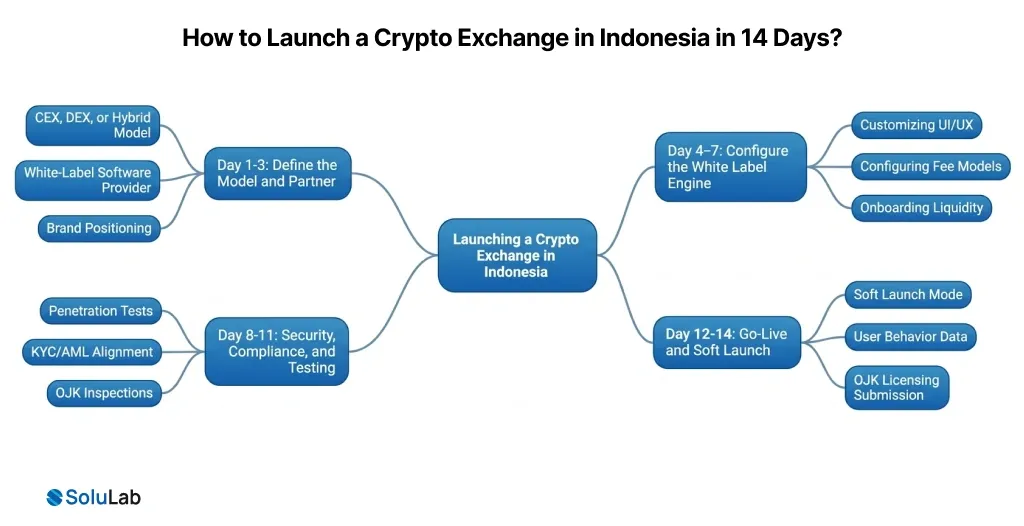
Day 1–3: Define the Model and Partner
In the first 72 hours, you need to:
- Decide on CEX, DEX, or a hybrid model for Indonesia.
- Select a crypto exchange development company that offers white-label crypto exchange software and understands OJK/Bappebti rules.
- Confirm your brand positioning, target users, and initial pair list (e.g., BTC, ETH, USDT, and popular local‑asset pegs).
At this stage, you are not coding; you are aligning business model, compliance, and tech stack.
Day 4–7: Configure the White Label Engine
Once you choose a white-label crypto exchange software provider, days 4–7 are mostly about configuration, not coding.
- The platform will already have a matching engine, wallet layer, admin panel, and basic KYC/AML.
- Your team focuses on:
- Customizing UI/UX to match your brand and local language.
- Configuring fee models, tiered trading, and fiat‑pair strategy for Indonesia.
- Onboarding basic liquidity (market‑maker or API‑linked pools).
By the end of day 7, you can have a technically live, OJK‑ready staging environment.
Day 8–11: Security, Compliance, and Testing
Days 8–11 are where most crypto exchange development service providers distinguish themselves.
A professional crypto exchange platform development team will:
- Run penetration tests, smart‑contract audits, and cloud security checks.
- Align your KYC/AML flows with Indonesian thresholds (e.g., enhanced checks above USD 1,000).
- Ensure your logging, reporting, and monitoring layers are ready for OJK inspections.
This usually happens in parallel with your legal and licensing team, so you are not waiting for tech to finish before you file with regulators.
Day 12–14: Go‑Live and Soft Launch
By the end of day 14, you’re ready to:
- Launch a crypto exchange software in Indonesia in a soft‑launch mode (invite‑only or limited user cap).
- Collect initial user behavior and liquidity data to refine UX and pricing.
- Prepare for full OJK licensing submission once you have real‑world usage and transaction history.
This 14‑day timeline assumes you already have a clear use case, capital, and a partner that provides white-label crypto exchange software and crypto exchange development services.
Must-Have Features for Crypto Exchange Software When Launching in Indonesia
If you want to launch a crypto exchange in Indonesia that actually sticks, you need more than just an engine. From our perspective, these features are non‑negotiable:
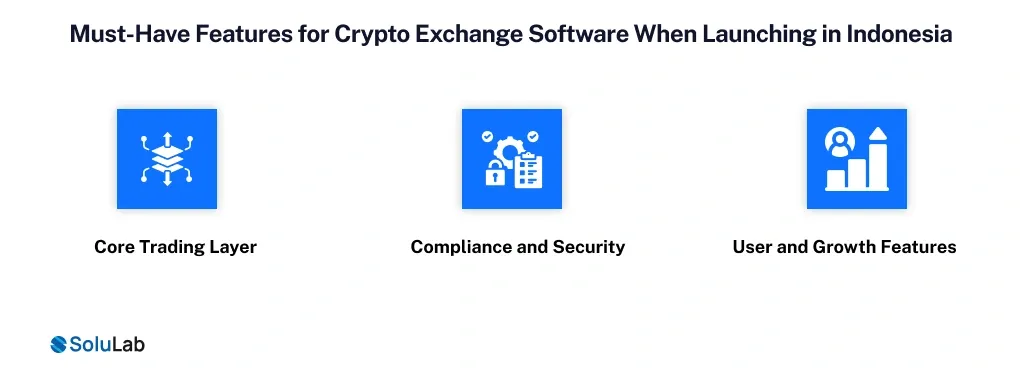
1. Core Trading Layer
- Spot trading engine with multiple order types (market, limit, stop‑loss).
- Multi‑pair support for major cryptos plus local fiat pairs (IDR–crypto).
- Real‑time order book and low‑latency matching so you don’t lose traders to competitors.
2. Compliance and Security
- OJK‑aligned KYC/AML with document verification, biometric checks, and risk‑based thresholds.
- Multi‑signature wallets, cold‑storage strategy, and 2FA/MFA for users and admins.
- Audit‑ready logs and reporting for regulators and internal risk teams.
3. User and Growth Features
- Mobile‑first design because Indonesia is a smartphone‑dominated market.
- Referral programs, staking options, and simple educational content to onboard new users.
- APIs for liquidity providers, market‑makers, and partner integrations so you can grow volume without rebuilding.
When you choose a DeFi exchange development company, you want to leverage existing feature packs instead of building every module from scratch.
This is how you launch a crypto exchange software in Indonesia fast and still keep it enterprise‑grade.
Key Technologies Required for Crypto Exchange Development
As a crypto exchange development company, we typically recommend a stack that balances speed, security, and scalability for Indonesia.
Backend
- Microservices architecture using Node.js, Go, or Rust for matching, wallet, and trading services.
- PostgreSQL or MongoDB for user data and Redis for real‑time order‑book caching.
- Cloud‑native design (AWS, GCP, or Azure) so you can scale during peak volatility.
Frontend
- React‑based web UI plus React Native or Flutter for mobile apps.
- Light‑mode and dark‑mode options with Indonesian localization from day one.
Security and Operations
- WAF, DDoS protection, and endpoint hardening are layered on top of your cloud stack.
- CI/CD pipelines, automated testing, and monitoring dashboards so you can fix issues before regulators notice them.
If you choose a white-label crypto exchange software provider, a lot of this stack is already optimized and battle‑tested. We usually focus on custom integrations rather than rebuilding the core.
Security Architecture Behind a Modern Crypto Exchange Software Platform
Security is a licensing requirement and a brand‑survival requirement. A strong crypto exchange development company will build:
- Cold‑wallet‑centric custody, where the majority of user funds are offline.
- Multi‑signature schemes that require multiple approvals for large withdrawals.
- Real‑time anomaly detection for suspicious trading patterns, withdrawals, and logins.
On the regulatory side, you need:
- Encryption standards that meet OJK’s expectations for data in transit and at rest.
- Incident‑response protocols that outline how you handle breaches, plus reporting workflows for regulators.
This is why choosing a centralized crypto exchange platform development partner that has already helped others launch a crypto exchange in Indonesia makes a big difference.
You avoid the mistakes first‑time founders make in custody and logging.
Liquidity Strategies When You Launch a Crypto Exchange in Indonesia
If you launch a crypto exchange in Indonesia, you need liquidity or you will be empty.
1. Market‑Maker Partnerships
- Onboarding professional market‑makers gives you tight spreads and depth from day one.
- Many white-label crypto exchange software providers can introduce you to vetted makers
2. API‑Linked Liquidity
- Liquidity aggregation APIs let you pull order books from major exchanges without building your own maker base.
- This is especially useful in the first 12–24 months while you build your own user‑side liquidity.
3. Incentive Programs
- Fee rebates, referral bonuses, and staking can attract both retail and institutional users.
- Some crypto exchange development services can help you design token‑based incentive models if you want to issue your own exchange‑token.
When you launch a crypto exchange in Indonesia, you don’t need to build everything yourself. A white-label crypto exchange software can already plug into liquidity aggregators and market‑maker APIs, so you’re trading on their depth while you build your own user base.

Cost to Launch a Cryptocurrency Exchange in Indonesia
One of the most practical questions for a CXO or founder is: What will it actually cost to launch a crypto exchange in Indonesia?
Building from Scratch
If you attempt to build a crypto exchange entirely in‑house:
- You’ll need to budget for backend, frontend, security, and compliance teams for at least 9–12 months.
- Public estimates for custom‑built crypto exchanges often start around $150,000–$200,000+, depending on features and security level.
Using White Label Solutions
If you instead choose a white-label crypto exchange software provider, you can reduce:
- Initial capital risk because the core engine is already written.
- Development timeline from months to days, which is why you can launch a crypto exchange in Indonesia in 14 days.
Typical white-label crypto exchange software pricing ranges from low‑five‑figure licensing for basic setups to mid‑six‑figure custom packages for enterprise‑grade stacks with advanced liquidity and compliance.
Hidden Costs You Shouldn’t Ignore
- Licensing and legal fees for OJK/Bappebti engagement.
- Market‑maker and liquidity fees, especially in the first 6–12 months.
- Ongoing cloud, security, and compliance monitoring costs.
From our perspective, the cost‑to‑launch is not just the software price; it’s the total ecosystem build‑out. That’s why a crypto exchange development company should help you model realistic TCO before you commit.
Regulatory & Compliance Requirements for Crypto Exchange Software in Indonesia
If you want to launch a crypto exchange software in Indonesia and keep it running, you can’t treat compliance as an afterthought.
1. OJK‑Style Expectations
- Minimum capital and equity requirements (around 100 billion IDR and 50 billion IDR, respectively).
- Local legal entity, audited financials, and documented risk‑management framework.
2. KYC/AML and Reporting
- Tiered KYC (light for small users, heavier for large‑volume accounts).
- Real‑time transaction monitoring, suspicious activity reporting, and audit‑ready logs for OJK inspections.
We have already helped others launch a crypto exchange in Indonesia, so we can bake these flows into the white-label crypto exchange software, so you are not retrofitting compliance after launch.
Common Mistakes When Launching a Crypto Exchange Software Platform
Most crypto exchange failures in the first year are the same story, just in different countries.
1. Under‑resourcing Liquidity
- Founders focus on UI and branding, then wonder why traders vanish.
- Without deep liquidity, spreads are wide, and users bounce to competitors.
2. Building Tech Instead of a Business
- Teams spend 12–18 months coding a perfect engine, but the market has moved.
- A white-label crypto exchange software lets you treat the platform as infrastructure, not a R&D project.
3. Ignoring Compliance Until It’s Too Late
- Regulators shut down or fine exchanges that treat compliance as a checkbox rather than a continuous process.
- OJK‑friendly architecture from day one is cheaper than a rebuild after a sanction.
If you want to launch a crypto exchange in Indonesia in 14 days, the key is to avoid these classic traps altogether.
Why Most Crypto Exchanges Fail in the First Year After Launch?
If you’re a CXO, you probably already know that most crypto exchanges fail in the first year.
1. Liquidity and Trust
- New exchanges often launch with thin order books, which destroy trader trust quickly.
- Users vote with their wallets and move to platforms with deeper liquidity and proven track records.
2. Misaligned Incentives
- Some teams focus on token listing fees or vanity metrics, not on organically building user base and liquidity.
- Sustainable exchanges reward users and makers, not just the house.
3. Operational and Security Gaps
- Small teams underestimate the 24/7 operational load of running a live exchange.
- Security incidents, even small ones, can destroy reputation in a market that’s already skeptical of crypto.
That’s why we always suggest our clients to invest in white-label crypto exchange software that can dramatically reduce their odds of falling into these traps.
How SoluLab’s Crypto Exchange Development Services Launch Exchanges in 14 Days?
At this point, you’re likely thinking: Okay, but how do I actually execute this in Indonesia
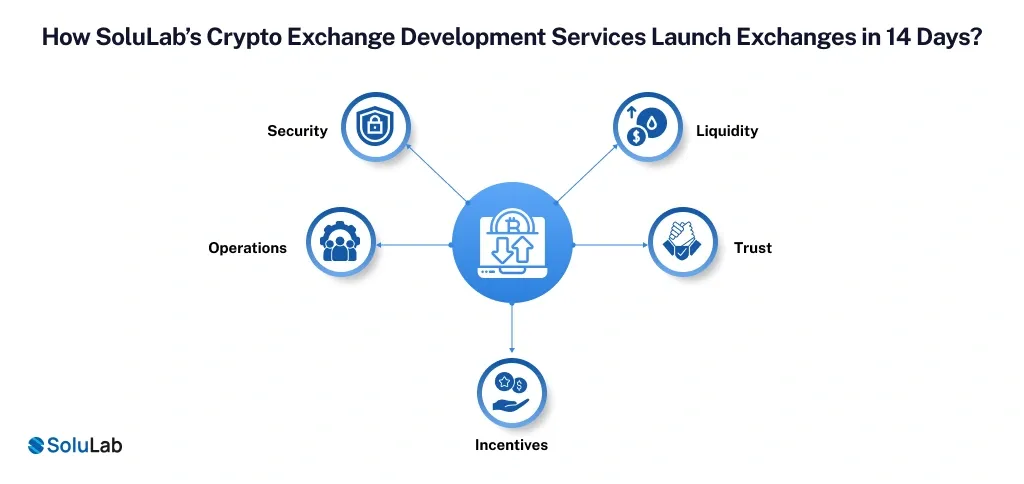
Our approach is straightforward:
- First, we align your business model, target users, and regulatory constraints in Indonesia.
- Then, we plug your business into a white-label crypto exchange software that already has:
- OJK‑ready KYC/AML and compliance‑aligned architecture.
- Pre‑built liquidity integrations and security foundations.
With this setup, you can launch a crypto exchange in Indonesia in 14 days focused on:
- User‑side go‑to‑market (local marketing, partnerships, onboarding).
- Compliance and licensing strategy, not code.
We act as your crypto exchange development services layer, so you, as a founder, can stay in the business‑level driver’s seat instead of debugging matching engines at 3 AM.
Conclusion
Launching a crypto exchange in Indonesia is a real business opportunity in a high‑volume, regulated market that’s growing fast right now. The key is to treat it like a serious financial‑infrastructure bet and connect with a crypto exchange development company like SoluLab, that had already helped others launch crypto exchanges in Indonesia.
If your goal is to build a crypto exchange, you don’t need to reinvent the engine. You need a partner who can help you move quickly, stay compliant, and launch a crypto exchange in Indonesia in 14 days, so you can focus on users, liquidity, and growth, not debugging code at 3 AM.
FAQs
With over 3 years of experience, I specialize in breaking down complex Web3 and crypto concepts into clear, actionable content. From deep-dive technical explainers to project documentation, I help brands educate and engage their audience through well-researched, developer-friendly writing.