The global carbon market is projected to reach $2.68 trillion by 2028. Ask a room of founders, startup teams, or even people inside large enterprises what a carbon credit actually is, though, and how one works, and most of them will go quiet.
That silence is the opportunity. A carbon credit education platform fills the gap: it teaches people what carbon credits mean, how they cut emissions, and what an individual or a business can really do about climate change. Call it education if you like. In practice it also hands people agency, some transparency, and a path to growth.
Are you a sustainability startup, an NGO, or a founder who wants a mission-driven product that can also make money? Then the timing is on your side. Below, we walk through how to build a carbon credit learning platform that mixes blockchain, transparency, and design people actually enjoy using, built by a team that knows climate impact and knows how to ship software.
How Carbon Markets Work & Why Education Is Crucial?
First, the basics. What are carbon credits, and how do carbon credits work? Get this part right and everything about the platform makes more sense.
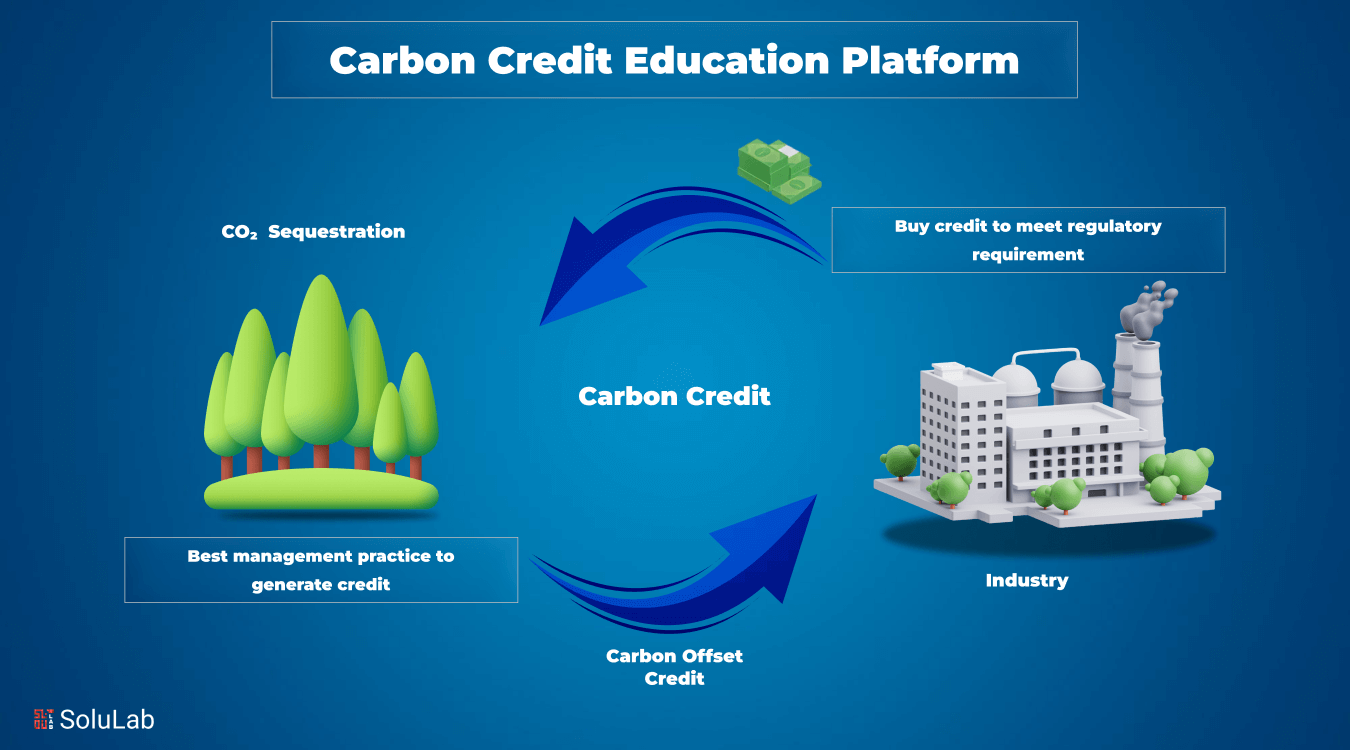
A carbon credit gives a company or a person the legal right to emit a set amount of carbon dioxide, usually one metric ton. Credits can be bought and sold. So whoever cuts emissions below their allowance ends up with spare credits to sell, and that turns climate action into a market.
But here’s the problem: hardly anyone understands how these credits get created, checked, or traded. Hence the need for education.
A carbon credit education platform closes that gap. It shows users how carbon markets run, corrects the myths, and puts the process in the open. Trust follows. And no climate initiative survives long without it.
Plenty of people also get lost on what carbon assets are, or how they connect to real offset projects like tree planting or new renewable energy capacity. People don’t join what they can’t follow. No participation, no impact.
That is the job of a carbon credit learning platform. It makes dense topics plain, explains the concepts that matter, and gives users a reason to take part. Nonprofit, startup, government program: whoever you are building for, this is how awareness becomes action.
Read more: Natural Resource Tokenization Platform Development
How Blockchain Can Transform Carbon Credit Education?
The older systems in the carbon credit world tend to be slow, opaque, and hard to trust. The result? Confusion, weak participation, and sometimes outright fraud. Blockchain technology tackles this by making every step visible, secure, and impossible to quietly tamper with.
Here are concrete blockchain use cases that change how people learn about carbon credits and act on them:
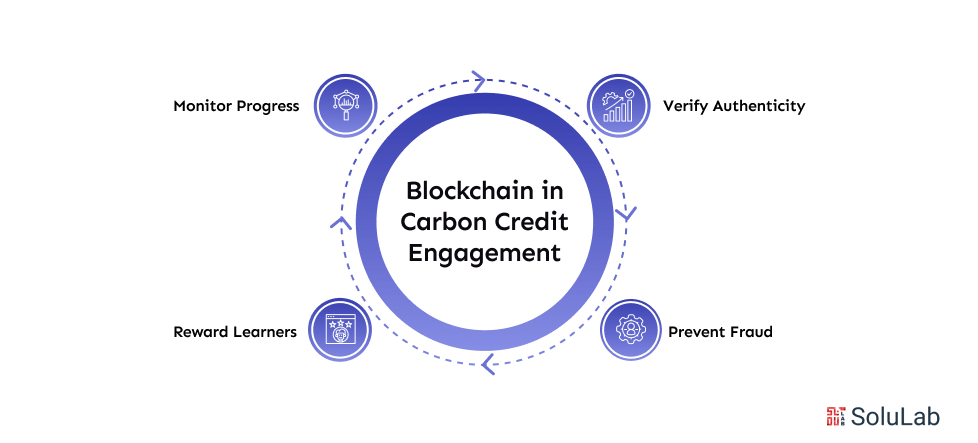
- Proves a credit is genuine through audit trails nobody can rewrite
- Stops fraud and double-counting because every credit is tracked in the open
- Pays learners back through smart contracts and token incentives
- Tracks learning progress and offset activity as it happens
None of this is hype. These are working tools, and they earn trust and move numbers.
Choosing the Right Blockchain Stack
Once you start scaling, you need to know the difference between Layer 1 vs. Layer 2 . Quick version:
- Layer 1 (like Ethereum) gives you strong security, but it can be slow and pricey
- Layer 2 (like Polygon) runs faster and cheaper, which suits an education product well
Which one wins comes down to who your users are, what you can spend, and how big you plan to get.
Not sure which setup fits your project? Talk it through with our team.
Core Features of a Carbon Credit Education Platform
A good carbon credit education platform is easy to use, easy to grow, and built so people keep coming back. It explains how carbon credits work, and it makes the learning hands-on and believable.
These are the features we would not ship without:
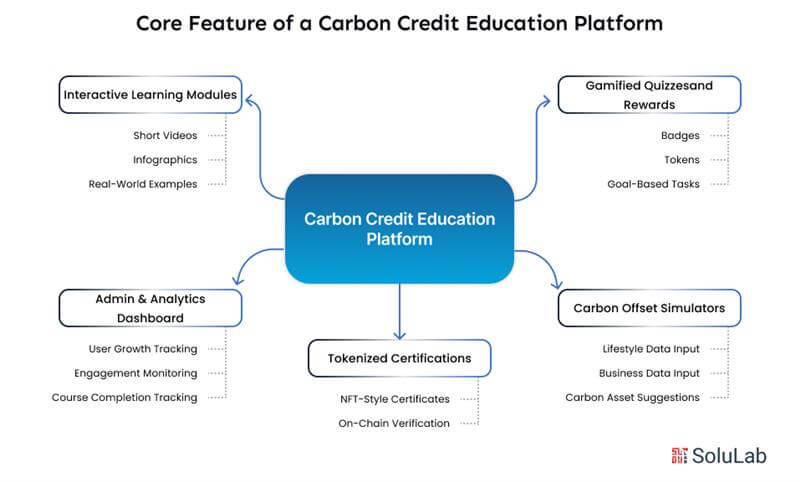
1. Interactive Learning Modules
Short, lively lessons on what carbon credits are and why anyone should care.
- Lean on short videos, infographics, and real-world examples
- Cover the core vocabulary: carbon offset, carbon assets, emissions
- Chop heavy ideas into small, digestible pieces
2. Gamified Quizzes and Rewards
Gamification makes the whole thing feel less like homework.
- Hand out badges or tokens when someone finishes a module
- Keep people around with small tasks that each have a clear goal
- Tie every quiz to a verified learning outcome
3. Carbon Offset Simulators
Let users see their own footprint, personal or business, and what it would take to offset it.
- Type in basic lifestyle or company data
- Receive suggested carbon asset purchases
- See how each action maps to a real environmental result
Read Our Blog: What Makes Germany a Natural Fit for Carbon Credit Tokenization?
4. Tokenized Certifications
Every milestone earns a certificate that lives on the blockchain.
- Issue NFT-style proof that a course was completed
- Put progress on-chain so anyone can check it
- Give learners digital records that employers and partners can trust
5. Admin & Analytics Dashboard
Your team needs the controls, and a clear view of what is happening.
- Follow user growth, engagement, and course completion
- Watch carbon credit tokenization activity live
- Tweak content based on what the numbers tell you
At our blockchain development company, we wire all of these together with your own branding, a secure backend, and smart contract logic underneath.
We also build in carbon credit tokenization. That way users learn about climate action and actually take it, buying or retiring carbon credits right inside the course.
Cost to Build a Carbon Credit Education Platform
So what does it cost? It depends on a handful of factors. If you are a startup founder or an enterprise planning a platform that teaches people what carbon credits are and how carbon credits work, weigh these first:
Key Cost Factors
| Cost Factor | Details |
| Feature Set | Basic education modules, tokenization, gamification, multilingual access |
| Blockchain Choice | Hinges on picking Layer 1 vs. Layer 2 blockchains (Ethereum, Polygon, etc.) |
| Time-to-Market | Tighter timelines can push development costs up |
| Custom vs. White-Label Solution | Custom builds cost more; white-label options launch sooner and cost less |
| Maintenance & Scaling | Ongoing updates, new features, and security upgrades |
Estimated Pricing Ranges
| Project Type | Estimated Cost | Description |
| MVP (Minimum Viable Product) | $20,000 – $60,000 | The essentials: education modules, dashboards, token support |
| Full-Scale Enterprise Platform | $60,000+ | Adds automation, multilingual content, analytics, and regulatory tools |
| Using Blockchain-as-a-Service | Flexible pricing | Good fit if you want to launch fast and keep the in-house tech burden light |
Real-World Case Studies
Theory is cheap. Here are five real companies using blockchain to change how carbon credits get tracked, traded, and understood. Each one shows how carbon credit tokenization, education, and compliance get simpler, and more believable, with the right tech underneath.
1. Carbify (Built on Moonbeam)
Trees meet tokens.
- Created NFTrees: tokens that stand for real trees in the Amazon
Built a dashboard that shows CO₂ absorption over time - Used carbon credit tokenization so the learning is backed by something with real-world value
Why it matters: Tie a digital asset to a physical tree and a carbon credit education platform suddenly gets a lot more engaging. It also helps against double-counting.
2. Toucan Protocol & KlimaDAO
Old-school carbon credits, turned into tokens you can trade.
- Moved Verra-certified credits on-chain as BCT tokens
- Made on-chain retirement and trading possible
- Put climate actions on a public, traceable record
Lesson learned: Tokenizing low-quality credits caused issues. It is the reason blockchain use cases in carbon trading has to put quality control and verified standards first.
3. AirCarbon Exchange (ACX)
A working exchange where people buy and sell tokenized carbon credits.
- Headquartered in Singapore and aligned with Verra and Gold Standard
- Runs real-time carbon trading on smart contracts
- Aimed squarely at serious businesses; a complete carbon credit platform
Why it’s relevant: It shows what a blockchain development company can deliver for B2B: quick, transparent carbon trading tools that don’t waste anyone’s time.
4. IBM & Energy Blockchain Lab (China)
Blockchain at industrial scale, for systems with government backing.
- Used Hyperledger to build a carbon trading system for China’s ETS
- Plugged blockchain into national compliance tracking
- Reduced processing time and fraud risk thanks to records that can’t be altered
Impact: Proof that blockchain reaches well past education. Here it supports compliance for whole countries and industries.
5. Matter Labs (Thallo & zkSync)
A Web3 company that practiced what it preaches.
- Audited its own emissions using zkSync
- Bought verified offsets through the Thallo’s Carbon-as-a-Service API
- Published the full records on-chain, nothing hidden
Takeaway: A good look at how Web3 development companies and tech teams can fold carbon asset tracking into education and corporate responsibility at the same time.
How SoluLab Builds Carbon Credit Education Platforms?
We are a full-stack blockchain development company. Businesses, climate-focused startups, and NGOs come to us with an idea for a carbon credit education platform, and we turn it into a product: custom, able to scale, simple to use, and aimed at a real problem.
Here’s how we do it:
- Design clean, intuitive UX/UI shaped around climate-tech users
- Write smart contracts that track and verify carbon assets and user actions
- Hook in third-party APIs for live carbon credit data and tokenization
- Keep the platform compliant with regulations and ready for audits or reporting
We also offer dedicated developer teams when you need to move faster and want support for the long haul. Established company or brand-new venture, you can hire blockchain developers from our team and build your platform, then grow it, knowing the foundations hold.

Conclusion
Thinking about building a carbon credit platform? Now is a good moment. Real impact starts with people understanding the system, and blockchain makes what they learn reliable and open to inspection.
Get the design right, make it scale, and keep it engaging, and a carbon credit education platform can take passive users and turn them into informed people who make climate-conscious decisions. Awareness first. Then action.
As a trusted blockchain development company in the USA, we can help you get this built. Tell us what you have in mind.
FAQs
Shipra Garg is a tech-focused content strategist and copywriter specializing in Web3, blockchain, and artificial intelligence. She has worked with startups and enterprise teams to craft high-conversion content that bridges deep tech with business impact. Her work translates complex innovations into clear, credible, and engaging narratives that drive growth and build trust in emerging tech markets.