Key Takeaways
- AI in nutrition apps enables hyper-personalized diet plans, real-time tracking, and smarter health insights, helping users make better wellness decisions while improving long-term engagement and retention.
- Building a smart platform requires the right mix of AI models, clean data, a scalable tech stack, and seamless integrations with wearables and nutrition databases.
- Strong focus on user experience, data privacy, and compliance is critical to gain trust and ensure consistent adoption across different user segments.
- The future of AI Nutrition App Development lies in predictive analytics, real-time personalization, and deeper integration with healthcare ecosystems for more accurate and proactive wellness solutions.
Most nutrition apps today still rely on generic plans, manual tracking, and limited insights, leaving users confused, disengaged, and struggling to achieve real health outcomes. The lack of personalization and real-time guidance often results in poor retention and inconsistent results across different user needs.
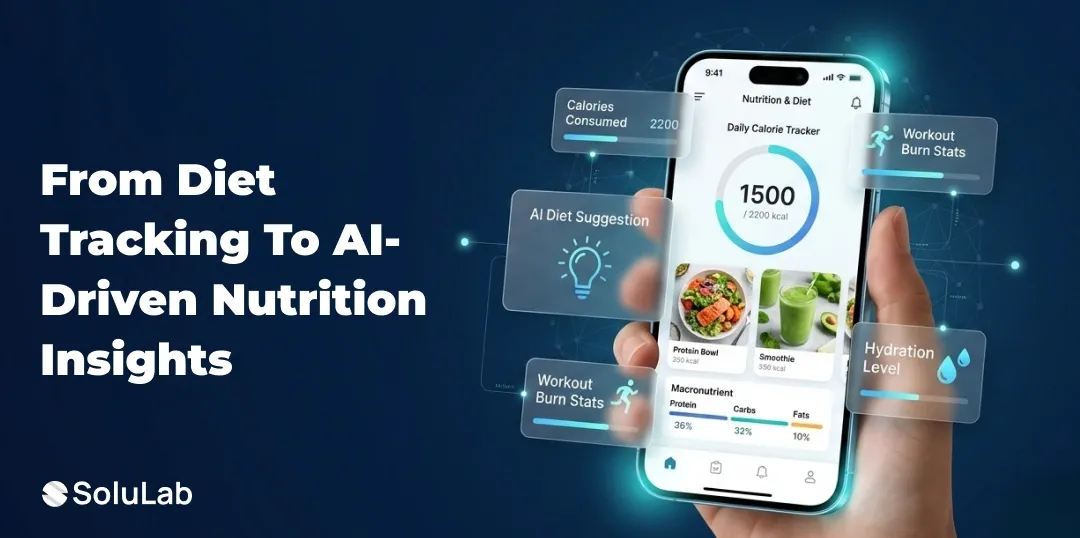
AI development is changing this by enabling smart nutrition apps that deliver personalized meal plans, real-time recommendations, and predictive health insights based on user behavior and data. These platforms go beyond basic tracking to actively guide users toward better decisions.
For businesses, building an AI-powered nutrition app means combining the right technology, data, and user experience to create scalable, engaging, and outcome-driven wellness platforms that truly stand out in a competitive market.
Why AI-Driven Nutrition Matters Now?
AI is changing how nutrition apps deliver value, shifting from static tracking to adaptive, data-driven experiences that respond to individual health needs, lifestyle patterns, and evolving wellness goals in real time.
The global diet and nutrition apps market is expected to reach $4.56 billion by 2030.
- Rising demand for AI diet personalization: Users expect tailored recommendations based on health data, preferences, and habits, making personalization a core requirement rather than an optional feature in modern nutrition platforms.
- Growth of preventive healthcare: Consumers are focusing more on long-term wellness, pushing apps to provide proactive insights, early risk detection, and continuous monitoring rather than reactive diet-tracking approaches.
- Increased adoption of AI-driven meal planning: Intelligent systems now automate meal suggestions based on nutritional goals, allergies, and lifestyle, reducing manual effort while improving consistency and adherence to diet plans.
- Explosion of health data from wearables: AI Integration with fitness trackers and smart devices enables apps to process real-time activity, sleep, and calorie data for more accurate and dynamic nutrition recommendations.
- Need for smarter automation with ai meal planner: Automation helps users save time, reduce decision fatigue, and maintain dietary discipline through instant, context-aware meal suggestions aligned with daily health metrics.
- Competitive pressure in the health tech market: Companies are rapidly adopting AI to differentiate their platforms, improve user engagement, and deliver measurable health outcomes that drive retention and long-term user loyalty.
Key Features of AI Nutrition Apps
AI-powered nutrition apps are evolving into intelligent wellness companions, combining data, machine learning, and behavioral insights to deliver personalized, real-time dietary guidance for improved health outcomes and long-term lifestyle changes.
- Personalized diet recommendations: AI analyzes user data like age, weight, preferences, and health goals to deliver tailored meal plans that adapt over time, improving accuracy and long-term adherence.
- AI Calorie Counter: Uses image recognition and food databases to estimate calorie intake instantly, reducing manual tracking effort while improving accuracy for users managing weight, fitness, or medical dietary needs.
- Real-time nutrition tracking: Continuously monitors food intake and activity levels, providing instant feedback and suggestions that help users make better dietary decisions throughout the day without delays.
- Smart food recognition: Identifies meals through images or barcodes, mapping them to nutritional databases, simplifying logging while minimizing errors associated with manual food entry in traditional apps.
- AI-powered virtual assistants: Chatbots and AI voice assistants guide users with meal suggestions, reminders, and health tips, creating a more interactive and supportive nutrition management experience.
- Predictive health insights: AI forecasts potential health risks like deficiencies or weight fluctuations by analyzing patterns, enabling proactive dietary adjustments before issues become serious.
- Integration with wearables: Syncs with fitness trackers and smartwatches to combine activity, sleep, and nutrition data, offering a holistic view of user health for more accurate recommendations.
- Behavioral coaching and habit tracking: Uses AI to understand user habits and triggers, offering nudges and actionable insights that encourage consistency and sustainable lifestyle changes over time.
Key Steps to Develop an AI Nutrition App for Businesses in 2026
Building an AI-powered app in 2026 requires a balanced approach across strategy, data, technology, and user experience to deliver personalized, scalable, and impactful wellness solutions for modern users.
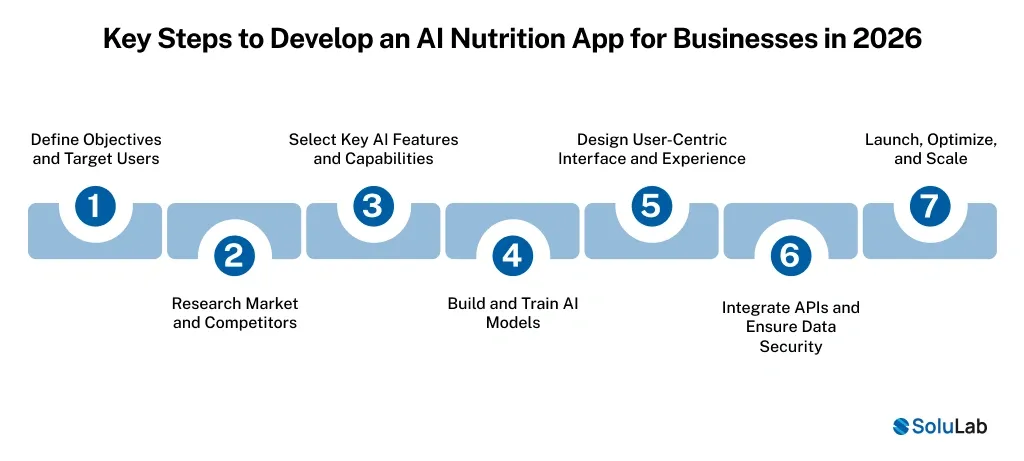
1. Define Objectives and Target Users
Identify your core purpose, such as fitness, clinical nutrition, or lifestyle wellness. Clearly mapping user personas helps tailor features, ensuring better personalization, engagement, and long-term retention.
2. Research Market and Competitors
Study apps like MyFitnessPal and Noom to understand user expectations, feature gaps, and positioning opportunities for differentiation.
3. Select Key AI Features and Capabilities
Choose functionalities like personalized meal plans, AI chat assistants, calorie tracking, and predictive insights that align with business goals and deliver measurable value to users.
4. Build and Train AI Models
Leverage high-quality datasets to develop models for food recognition, nutrition analysis, and recommendations, ensuring continuous learning for improved accuracy and smarter personalization.
5. Design User-Centric Interface and Experience
Create intuitive navigation, seamless logging, and engaging dashboards. A well-designed experience simplifies user interactions and increases daily usage consistency and satisfaction.
6. Integrate APIs and Ensure Data Security
Connect with food databases, wearable devices, and health platforms while implementing strong encryption and compliance standards to safeguard user data and build trust.
7. Launch, Optimize, and Scale
Test thoroughly before launch, then use analytics and feedback to refine features. Implement growth and monetization strategies to scale adoption and maximize long-term business impact.
Use Cases of AI Nutrition App Development Across Industries
AI native strategy is improving how nutrition apps serve diverse industries, enabling smarter decision-making, personalized experiences, and scalable health solutions through data-driven insights and intelligent automation across multiple business models.
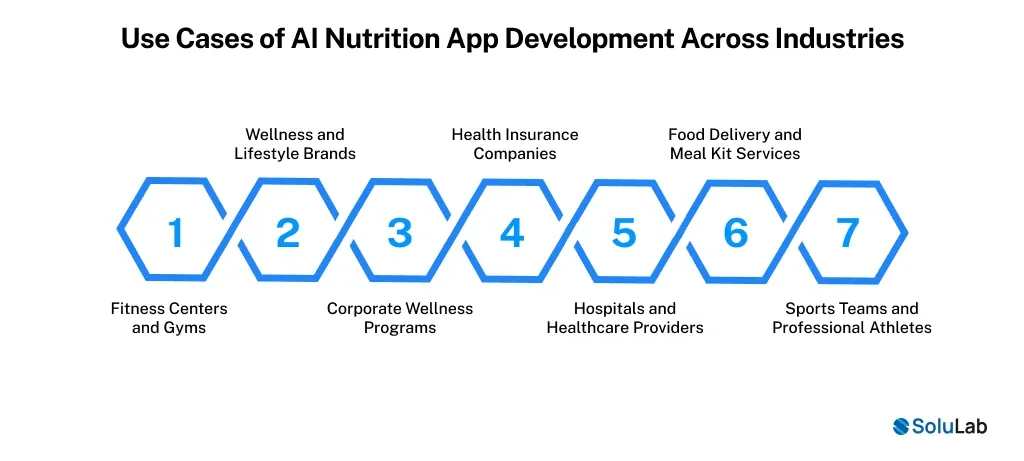
1. Fitness Centers and Gyms
Traditional fitness programs lack adaptive diet insights, but Artificial Intelligence in Nutrition and Dietetics enables meal plans aligned with workout intensity, improving member retention and performance outcomes.
2. Wellness and Lifestyle Brands
Static wellness offerings fail to engage users, while AI-Driven Personalized Nutrition Apps analyze preferences, habits, and goals to deliver tailored product suggestions and holistic lifestyle guidance.
3. Corporate Wellness Programs
Standard wellness initiatives often see poor participation, but a Personal Nutrition Assistant powered by AI app development delivers individualized diet plans, boosting engagement, productivity, and overall employee health outcomes.
4. Health Insurance Companies
Insurers traditionally focus on claims rather than prevention, whereas AI nutrition apps enable proactive risk assessment, healthier policyholders, and reduced long-term healthcare costs through preventive care strategies.
5. Hospitals and Healthcare Providers
Manual diet monitoring limits accuracy, while AI-powered healthcare systems enable real-time nutritional analysis, personalized recovery plans, and better patient outcomes through integrated health data systems.
6. Food Delivery and Meal Kit Services
Standard menus ignore individual dietary needs, but AI-driven nutrition insights allow platforms to recommend customized meals based on health goals, allergies, and user preferences.
7. Sports Teams and Professional Athletes
Traditional diet planning lacks precision, while AI nutrition apps provide data-backed meal strategies, recovery tracking, and performance optimization tailored to each athlete’s physiological requirements.
Tech Stack Required to Build AI Nutrition Apps
A strong AI tech stack is the backbone of any AI nutrition app, enabling performance, accurate insights, and scalable infrastructure needed to deliver personalized diet and wellness experiences effectively.
| Component | Technologies | Description |
|---|---|---|
| Frontend | React Native / Flutter | Builds cross-platform apps with smooth UI and consistent performance. |
| Backend | Node.js / Python | Manages server logic, data processing, and secure integrations. |
| AI/ML | TensorFlow, PyTorch, NLP models | Enables recommendations, food recognition, and smart interactions. |
| APIs | Food databases, health APIs | Adds nutrition data, tracking, and wearable integrations. |
| Cloud | AWS / GCP / Azure | Supports scalability, storage, and reliable app performance. |
Future Trends in AI Nutrition & Wellness Platforms
Modern wellness platforms are evolving beyond tracking calories, using intelligent systems and data-driven insights to deliver personalized, adaptive, and proactive health experiences tailored to individual lifestyles and biological needs.
- AI + genomics for personalized diets: Combining genetic insights with AI-Powered Nutrition Apps enables highly tailored diet plans based on metabolism, nutrient absorption, and health risks, improving long-term wellness outcomes and precision nutrition strategies.
- Voice-based nutrition assistants: Voice-enabled AI app interfaces simplify food logging, meal recommendations, and daily tracking, making nutrition management more accessible, interactive, and efficient while reducing manual input and improving overall user engagement.
- Integration with mental wellness platforms: Connecting nutrition apps with mental health tools enhances holistic well-being by aligning diet, mood tracking, and behavioral insights, creating a more balanced and comprehensive health management ecosystem.
- Hyper-personalized recommendations: Leveraging custom nutrition app development, platforms can deliver real-time, context-aware suggestions based on user habits, activity levels, and health data, driving deeper engagement and sustained lifestyle improvements.
Why Choose SoluLab for AI Nutrition App Development?
SoluLab, an AI native strategy company, has proven expertise with years of experience. Here are a few reasons why you should choose us:
- Proven AI Expertise: Strong experience in building AI-driven solutions, including recommendation engines, chatbots, and predictive analytics tailored for personalized nutrition and wellness platforms.
- End-to-End Development Support
Covers everything from ideation and UX design to AI model development, deployment, and post-launch optimization, ensuring a smooth and scalable product journey.
- Custom-Built Solutions: Focuses on fully tailored nutrition apps aligned with specific business goals, user personas, and industry requirements rather than one-size-fits-all approaches.
- Advanced Tech Stack: Uses modern frameworks, AI/ML tools, and cloud infrastructure to build high-performance, secure, and scalable applications ready for real-world usage.
- Focus on Data Security & Compliance: Implements strong security protocols and follows global compliance standards to protect sensitive health and user data effectively.
- Agile Development Approach: Ensures faster delivery, continuous improvements, and flexibility to adapt features based on user feedback and evolving market needs.
For example, SoluLab built a GenAI-powered clinical decision support platform for a MedTech client, integrating EHR data, enabling real-time diagnostics, and ensuring HIPAA compliance.
The solution reduced diagnostic errors, improved clinical efficiency, and delivered actionable, evidence-based insights for better patient outcomes across healthcare systems.
Conclusion
AI is changing nutrition apps into wellness platforms that go beyond basic tracking to deliver personalized, data-driven health insights.
By combining advanced AI models, scalable infrastructure, and user-centric design, businesses can create impactful solutions that drive engagement and long-term value.
As demand for smarter health solutions grows, investing in AI-powered nutrition platforms becomes a strategic advantage. If you’re planning to build one, SoluLab, an AI development company, can help your business design, develop, and scale a future-ready nutrition app.
FAQs
Neha is a curious content writer with a knack for breaking down complex technologies into meaningful, reader-friendly insights. With experience in blockchain, digital assets, and enterprise tech, she focuses on creating content that informs, connects, and supports strategic decision-making.