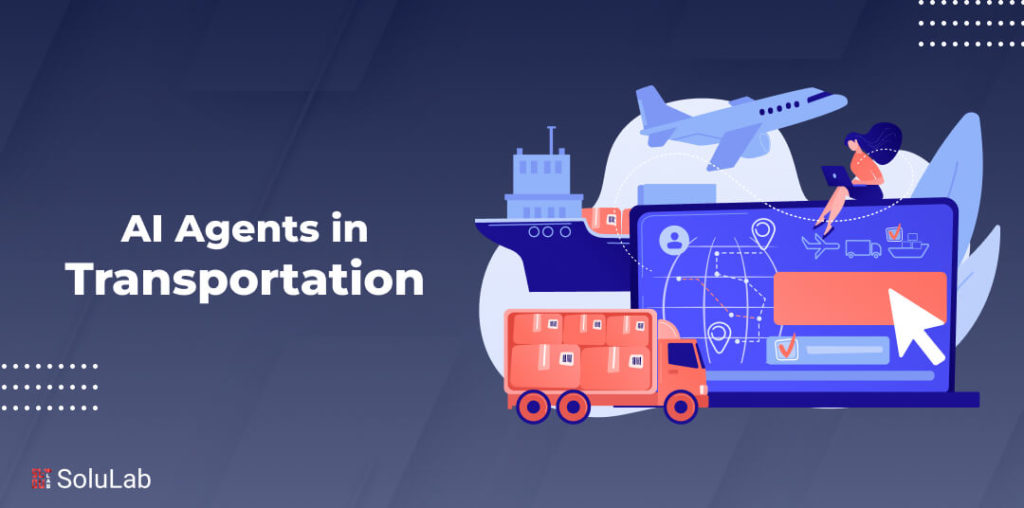
How much does the way we moved yesterday tell us about how we will move tomorrow? Quite a lot, if you look at the pattern. Every big jump in transportation traced back to some piece of technology: the steam engine, then the car, then air travel. The next jump is happening now, and AI agents are the ones pushing it. Think predictive demand forecasting. Think logistics that reroute themselves. Think autonomous vehicles. These are all ways that artificial intelligence (AI) in transportation keeps that same thread of invention going. According to recent sources, the North American AI in transportation market was estimated to be worth USD 1.80 billion in 2024, with an expected compound annual growth rate (CAGR) of 22.83% across the forecast period.
Smart mobility is where these agents earn their keep. They plan routes intelligently, tailor services to the individual rider, and quietly make public transit run better. Riders feel it. And because these AI agents for customer service chew through real-time data as it arrives, they cut operating costs while nudging cities toward more sustainable urban transport. A city that leans on this kind of AI ends up with a transit system that bends to demand instead of fighting it.
In this article, we will look at how agentic AI sharpens day-to-day operations and lays the groundwork for a transportation future that is more sustainable, more connected, and simply more effective.
What are AI Agents?
AI agents are self-directed systems. They read their surroundings, talk to people, decide what to do, and then do it. To pull this off, they draw on LLMs or other AI/ML models along with whatever context they can gather, which lets them handle jobs as different as customer service, data analysis, autonomous driving, and smart home management. The interesting part: many of them learn from what happens and adjust to new situations. That adaptability is why they show up across so many industries, pushing productivity and user experience up a notch.
Agentic AI speeds up how a business runs. Here is where it can reshape companies across sectors:
- Automation of Difficult Tasks: AI agents for IT can take on hard jobs, the kind that need real decision-making, strategy, and the ability to adapt on the fly. AI-driven analysis, diagnostics, and autonomous operations are already reshaping banking, healthcare, and transportation.
- Better Efficiency: By automating both the routine and the messy, agentic AI frees human experts to spend their hours on inventive, higher-value work. Productivity climbs across the board.
- Increased User Experience: In customer service and any setting where people interact with a system, agentic AI can answer in a way that feels personal and aware of context. That keeps users happier and more engaged.
- Innovative Applications: Smart homes, creative services, advanced robotics, self-driving cars. AI agents fit all of these, and they often spark applications nobody planned for.
Understanding the Necessity for Agentic AI in Transportation
Transportation holds up global trade. Freight logistics, public travel, all of it runs through this one sector. And yet, for something so important, it is dogged by inefficiency, rising costs, and a real environmental toll. Most of those problems get worse when you try to coordinate sprawling operations across many networks and regions at once.
This is where AI agents in transportation come in. They bring a smarter, data-informed way to tackle those headaches, handing you automated support for decisions and real-time information to run operations better. Pull in predictive analytics, autonomy, traffic scheduling, and ongoing research, and AI systems start raising safety standards while sharpening service delivery. With autonomous cars and intelligent traffic management moving into the mainstream, agentic AI is quietly rewriting how both goods and people get from A to B.

How Can Agentic AI Improve the Way Transportation Services Are Offered and Received?
AI turns up all over transportation, and the payoff lands on both sides of the counter. Agentic AI in transportation automates a wide range of operational chores, tightens fleet management, and smooths out supply chains for the companies running them. For the people using those services, it shows up as better quality, faster deliveries, and a trip that just feels smoother.
For Transportation Companies:
- Operational Efficiency: Autonomous scheduling and dynamic route optimization let providers run tighter operations for less. Vehicles show up when and where they should, so service improves and costs come down at the same time.
- Reduced Costs: Automate invoicing, payment processing, and predictive maintenance, and transportation firms start saving money. Admin overhead shrinks. So does the risk of a pricey repair or a service that grinds to a halt.
- Fleet Management: Autonomous fleet management systems let AI agents watch and steer the whole fleet: where each vehicle is, how fast it is going, how much fuel it is burning.
Read Our Blog Post: Build AI Agents For Logistics
For Consumers:
- Better Travel Experience: On-demand rides, accurate public transport predictions, whatever the case, riders get service that is more dependable and quicker to respond. The trip gets better.
- Safe Journeys: Rides are safer than they have ever been. Driver safety monitoring and autonomous cars have cut down on accidents and delays, and predictive signals plus real-time rerouting keep traffic flowing and predictable.
- Improved Environmental Impact: If you care about the planet, this matters. Transit solutions that optimize fuel use point toward cleaner, greener transportation and a lighter footprint down the road.
How Do AI Agents for Transportation Work?
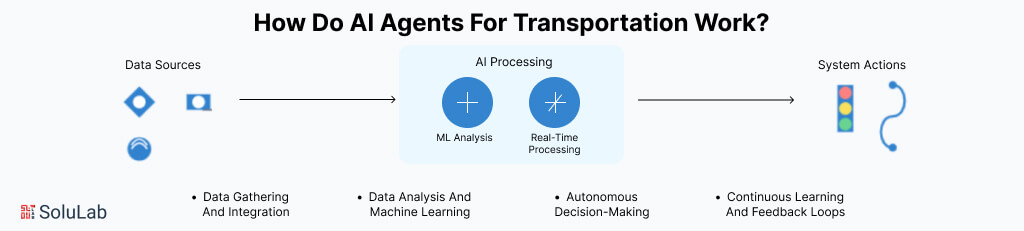
Strip agentic AI down to its core and you find intelligent systems built to run certain tasks on their own, using machine learning and instant analysis of incoming data to keep improving. For transport operations, these agents get wired into the infrastructure itself. They feed on inputs from a mix of connected devices, sensors, GPS, and communication systems.
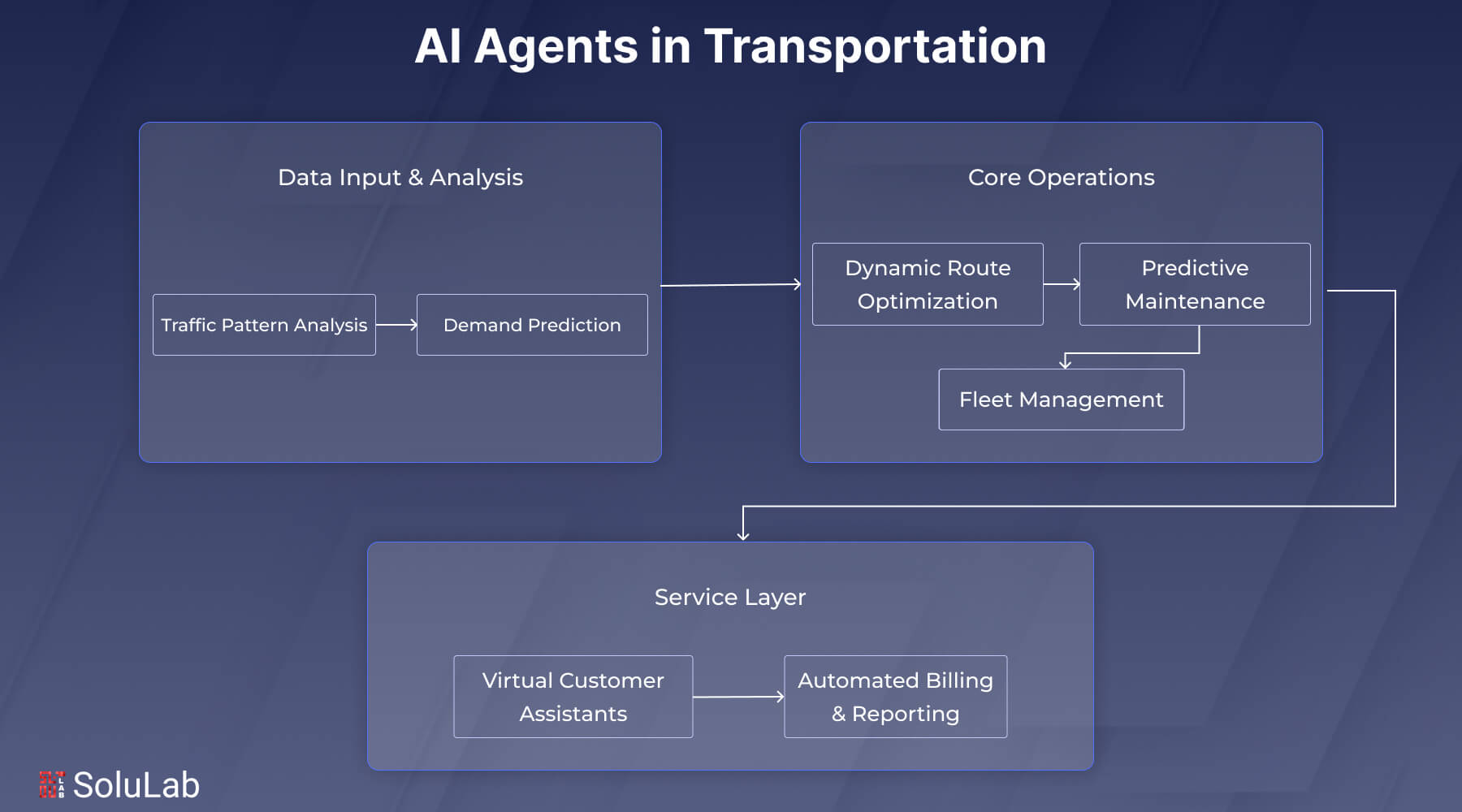
1. Data Gathering and Integration: These agents live on a constant flow of data: sensors, GPS units, traffic cameras, connected cars. Because it arrives in real time, the AI can keep an eye on everything from traffic to how a given vehicle is performing. Stitch that data together across platforms, and the system can predict accurately and act at the right moment.
2. Data Analysis and Machine Learning: Machine learning algorithms sit at the heart of agentic AI systems. They comb through historical and current data to spot trends, forecast what is coming, and make sharper decisions. Take predictive maintenance: by studying past data pulled from a car, the model can flag when it is due. It can also read demand for public transit off of usage history.
3. Autonomous Decision-Making: Once the data is collected and evaluated, AI systems can decide for themselves, in real time. That means changing routes when traffic shifts, moving resources around to meet demand, and pushing automatic feedback to operators or customers. Fleet management systems tweak schedules and routes to squeeze out efficiency, while autonomous cars lean on agents for the actual driving calls.
4. Continuous Learning and Feedback Loops: AI agents are built to learn from what they do. Every action they take feeds a loop, and every loop makes the next decision a little better. It is this constant feedback that lets agentic AI systems adapt to new problems and get sharper over time.
Benefits of AI Agents in Transportation
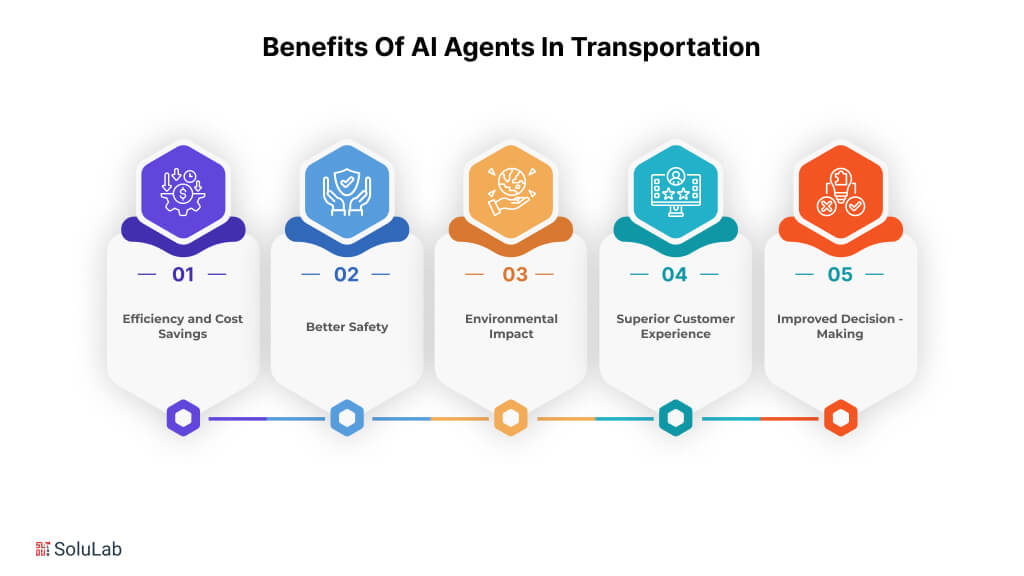
Bring AI into transportation and a handful of concrete advantages follow:
- Efficiency and Cost Savings: Scheduling, invoicing, compliance reports, transportation businesses can hand all of it to automation. Predictive maintenance catches trouble early, which trims direct costs and the downtime nobody sees coming. And with predictive demand planning, companies can size up capacity and stop wasting it.
- Better Safety: Safety is where AI agents really pull their weight. Autonomous cars take human error out of the equation; driver safety monitoring watches how people actually drive. On top of that, real-time traffic monitoring anticipates accidents and lowers the odds of one happening.
- Environmental Impact: AI-powered sustainable transportation is helping push emissions down. Better fuel consumption and autonomous cars are making fleets more energy-efficient, which shrinks the sector’s carbon footprint.
- Superior Customer Experience: Customers get more out of the ride when AI is behind it: customized amenities, on-demand options, prices that adjust to the moment. Smarter routing and early flight delay prediction mean shorter travel times and fewer disruptions.
- Improved Decision-Making: AI agents keep decision-makers fed with current operational information. Whether the question is public transit demand or a shifting traffic pattern, AI helps transportation managers make well-informed calls that lift both the effectiveness and the efficiency of what they offer.
Traditional vs. AI-Powered Real-Time Cargo Tracking
| Aspect | Traditional Cargo Tracking | AI-Powered Cargo Tracking |
| Data Collection | Relies on manual updates or basic tools like barcodes. | Uses advanced tools like sensors, GPS, IoT devices, and live data. |
| Real-Time Visibility | Updates are periodic and may face delays, offering limited visibility. | Delivers live updates on cargo location and status, ensuring real-time tracking. |
| Predictive Capabilities | Focuses on reactive measures without predictive insights. | Uses AI to forecast potential delays and optimize routes for better outcomes. |
| Customer Communication | Notifications are manual and static, offering limited transparency. | Provides automated, real-time updates for seamless customer communication. |
| Efficiency | Inefficient due to manual processes and slow responses. | Enhances operations with AI-driven proactive decisions and faster responses. |
| Cost Management | Higher costs arise from inefficiencies and frequent delays. | Reduces expenses by optimizing routes and minimizing disruptions. |
| Customization | Limited in adapting to unique customer or cargo needs. | Personalizes solutions using AI to meet specific requirements efficiently. |
How Do AI Agents Help With Cargo Tracking?
Cargo monitoring is getting a rework. AI agents bring real-time insight, predictive analytics, and automated operations that lift both efficiency and transparency. Here is how they change freight tracking:
1. Real-Time Monitoring and Updates: AI-powered systems use sensors, GPS, and IoT devices to report on where a shipment is, what state it is in, and how it is doing, all in real time. AI Agents for IT cut the lag that manual updates create, so stakeholders are never working off stale information.
2. Predictive Analytics for Proactive Decisions: Feed an AI system historical and real-time data and it starts forecasting the disruptions ahead, weather, traffic, a logistical bottleneck. Armed with that, firms can move first: reroute, resequence, and keep delivery on schedule.
Read Blog: How Vertical AI Agents Are Changing the Enterprise Game?
3. Optimized Customer Communication: AI takes over customer alerts, pushing real-time shipment status by email, SMS, or a mobile app. That openness builds trust and makes the whole client experience better.
4. Operational Efficiency: Automate the manual grind, data entry, route planning, and human error drops while things move faster. AI agents can also sniff out bottlenecks in the supply chain and suggest a fix, which makes the whole operation run cleaner.
5. Cost Optimization: Better route planning, fewer delays, fewer interruptions. AI cuts operating expenses hard. It puts resources to work efficiently, so firms save money and lift service quality at the same time.
6. Customization and Scalability: AI agents bend to the specific cargo and the specific business, offering tailored solutions across sectors. They can properly track and manage temperature-sensitive goods just as well as high-value shipments.
Fold AI agents into cargo monitoring and a business tends to move faster, run more reliably, and pull ahead in a crowded global supply chain.
Use Cases of AI Agents in Transportation
Agentic AI has reworked transportation by fitting itself to very different operating needs. A few of the standout use cases for agentic AI in transportation are below:
- Optimization of Freight Loads
Pack the volume better, shorten the trips, spread the weight right, and freight loads get more efficient. That is what agentic AI does here. The result is tighter operations, fuller vehicles, and less fuel burned.
- Self-Scheduling
AI systems handle their own scheduling. They read the data, then pick the best windows for maintenance, delivery, and pick-ups. Efficiency goes up, and the need for someone to babysit the calendar goes down.
- Automating the Processing of Bills and Payments
AI-powered tools work out charges on the spot, which takes the friction out of billing and payments. Accuracy improves, and the back-and-forth between clients and service providers gets a lot smoother.
- Dynamic Route Optimization
Agent AI pulls in real-time data on weather, road conditions, and vehicle capacity to build the best route schedules it can. Deliveries land on time, needless miles disappear, and both time and money get saved.
- Automated Reporting on Compliance
AI gathers and analyzes the data by itself to keep regulatory compliance in check. Operations stay inside the rules, and the paperwork burden shrinks.
- Demand Prediction Planning
Agentic AI builds quantitative models to predict demand for transportation services. Supply and demand line up, resources land where they are needed, and costs come down.
- Customer Service Virtual Assistants
AI-driven virtual assistants field reservations, complaints, and questions around the clock. In transportation, that keeps clients happier and communication flowing.
- Fuel Efficiency Improvement
AI agents for enterprises watch and adjust driving habits, routes, and plans to cut emissions and fuel use. Costs drop, and the environment gets a break.
- Automation of SLA Reporting
AI reads the performance data and automates SLA reporting. Operators hit the agreed-on marks without anyone stepping in by hand.
- Public Transportation Forecasting
By forecasting demand, Agent AI helps operators draw up timetables that actually work, trim wait times, and make getting around the city easier.
- Analysis of Traffic Patterns and Real-Time Surveillance
Agentic AI reads real-time traffic data, surfaces the congestion patterns hiding in it, and helps cities manage traffic and move people more efficiently.
- Cargo Tracking Solutions
AI-powered cargo tracking keeps products moving safely and on schedule, with real-time updates on where a shipment is and what state it is in.
- Smart Parking Management
Artificial intelligence (AI) makes parking less of a fight. It hands drivers real-time information, eases the traffic that circling causes, and puts every spot to use.
- Predictive Vehicle Maintenance
AI-powered predictive maintenance keeps a close watch on vehicle condition and calls out problems before they land, which means repairs happen on time and expensive downtime gets avoided.
- Fleet Management
AI automates the fleet management grind, vehicle scheduling, route planning, so operations run smoothly with barely any human input.
- Monitoring of Driver Safety
Artificial intelligence (AI) systems read sensor data straight from the car to track how a driver behaves and offer feedback, which lowers the chance of a collision.
How to Prepare for Agentic AI in Transportation?
Rolling out agentic AI is not a flip of a switch. Transportation businesses have to take a few deliberate steps first:
- Build Data Infrastructure: None of this works without the right data architecture underneath it. Companies need one that can pull in and compile real-time operational data so the systems have something solid to run on.
- Integrate AI Technology: To improve service and simplify processes, you have to weave AI into the transportation systems you already run.
- Train Employees: The transition goes smoothly only if staff know how to work alongside AI agents and grasp what the technology is doing. Training is the hinge.
- Work with Experts: Team up with AI consultants or startups in transportation tech, and a business can build and run AI solutions shaped to its own needs.
How Can Agentic AI Improve Transportation?
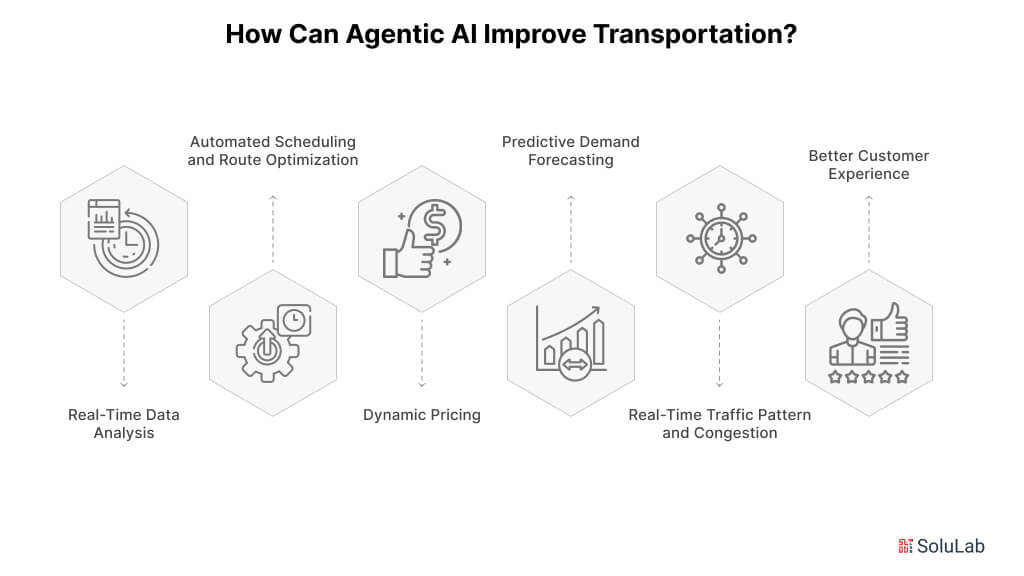
With automation, real-time data, and predictive algorithms behind them, autonomous AI agent systems help transportation firms tighten up how they run. Operations get more efficient, costs come down, and service quality rises as dynamic pricing, demand forecasting, and traffic management all improve.
1. Real-Time Data Analysis: AI agents pull real-time data from sensors and GPS to fine-tune timetables, routes, and operations. They study traffic patterns and vehicle condition to keep things moving and cut delays.
2. Automated Scheduling and Route Optimization: The system routes and schedules vehicles on its own, based on what is happening right now. It shifts with demand and traffic on the fly, shaving travel time and making the fleet run better.
3. Dynamic Pricing: With AI in the mix, fares can move in response to things like demand. That lets a business protect its margins while keeping prices reasonable for the rider.
4. Predictive Demand Forecasting: AI agents read both past and present data to predict what demand for transportation services will look like. So companies can use their resources wisely and still deliver good service when things get busy.
5. Real-Time Traffic Pattern and Congestion: Here, autonomous agents watch conditions and steer cars around the jams. Delays shrink, fuel use drops, and deliveries land sooner.
6. Better Customer Experience: Real-time monitoring and proactive alerts from an AI agent make for a better trip. Clients like the sharper communication and the service they can count on.
New Trends Influencing the Future of AI Agents in the Transportation Sector
Connected cars, smart cities, AI-powered transport systems: recent progress on all three is reshaping what AI agents do in transportation, and fast. As these technologies mature, agentic AI will shape the transport ecosystem even more, bringing greater efficiency, more sustainability, and better experiences for the people using it.
- Proliferation of Autonomous Vehicles: As AI agents in the automative industry sharpen how autonomous cars navigate and decide, more of them will hit the road. These vehicles will rethink both passenger and freight transport, optimizing routes, raising safety, and cutting the human mistakes that cause so many problems.
- Improved Traffic Management: AI agents that tune traffic flow in real time will take a bite out of congestion and delay. By adjusting traffic lights and routes to match current conditions, these tools will make urban mobility both more efficient and more sustainable.
- Collaborative Multiagent Systems: Multiagent systems will let a whole set of AI technologies work in concert across a transport network. Picture logistics systems, traffic management, and autonomous cars all coordinating to improve service, lower operating costs, and smooth out traffic flow.
- Personalized Mobility Solutions: By reading a user’s tastes and habits, AI will serve up on-demand transport that fits the person, not the average. That gives riders options built around them, which makes travel more convenient, more flexible, and simply better.
- Sustainable Transportation: To use energy well, burn less fuel, and hold down emissions, these agents will be central to building sustainable transportation solutions. With AI-powered tools helping, we can build transport networks that work better and go easier on the planet.
- Predictive Analysis for Demand Supply: AI agents will lean on predictive analytics to see demand shifts coming and place resources accordingly. Spot the peaks early, allocate for them, and transportation companies waste far less.
- Integration With Upcoming Technologies: For faster data processing and smarter calls, agentic AI will increasingly hook into emerging tech like 5G, the Internet of Things, and edge computing. That gives us transport systems that are more connected, more responsive, and more efficient, which makes for a better trip whether you are a passenger or a pallet.

Conclusion
AI agents are stirring up transportation, making it more efficient, safer, and easier to live with. These systems open the door to predictive analysis, real-time decisions, and near-effortless back-and-forth between cars and infrastructure, which pays off whether you are wrangling smart city traffic or running a fleet. And it is not only about automating a few tasks. They put data-driven decisions in the hands of governments and companies, the kind that build a transportation system that is both sustainable and connected.
At SoluLab, as an AI agent development company, we build AI solutions made for transportation specifically. Take Gearnetics, our recently launched project and a good example of what our team can do. Gearnetics is an intelligent transportation solution that leans on modern AWS IoT technology to track and manage fleets of up to 10,000 cars. It retires the old analog systems, serves up both real-time and historical fleet data, and holds its accuracy and scale against what transportation demands today. We come at it from a fresh angle, and that is how we make sure companies can turn AI into an edge and stay in the race.
Ready to change what your transportation company is capable of with serious AI? Talk to us about building smart, future-proof solutions shaped around what you actually need. Hire AI agent developers now to walk through your project and start building a smarter transportation system.
FAQs
Shipra Garg is a tech-focused content strategist and copywriter specializing in Web3, blockchain, and artificial intelligence. She has worked with startups and enterprise teams to craft high-conversion content that bridges deep tech with business impact. Her work translates complex innovations into clear, credible, and engaging narratives that drive growth and build trust in emerging tech markets.