Early 2026 marked a turning point for digital assets. Retail activity hit USD 979 billion, down 11% year-over-year (TRM Labs, Q1 2026 Global Crypto Adoption Index), and the drop said something: traders were pulling back toward the exchanges they actually needed, not the ones they liked.
The same index tells a split story. Macroeconomic tightening drove that 11% global contraction, yet emerging markets moved the other way. Turkey climbed 7% year-over-year, pushed by real, structural demand for decentralized liquidity.
Read together, the numbers point to one thing. Global liquidity no longer leans on a single intermediary. It runs through peer-based networks that hold up when the middle breaks.
That is why enterprises are moving toward P2P crypto exchange development built for the same kind of stability institutions expect. The win comes down to two decisions: pick a high-performance framework, then tune it to your regional payment rails and compliance rules.
What are P2P Exchanges?
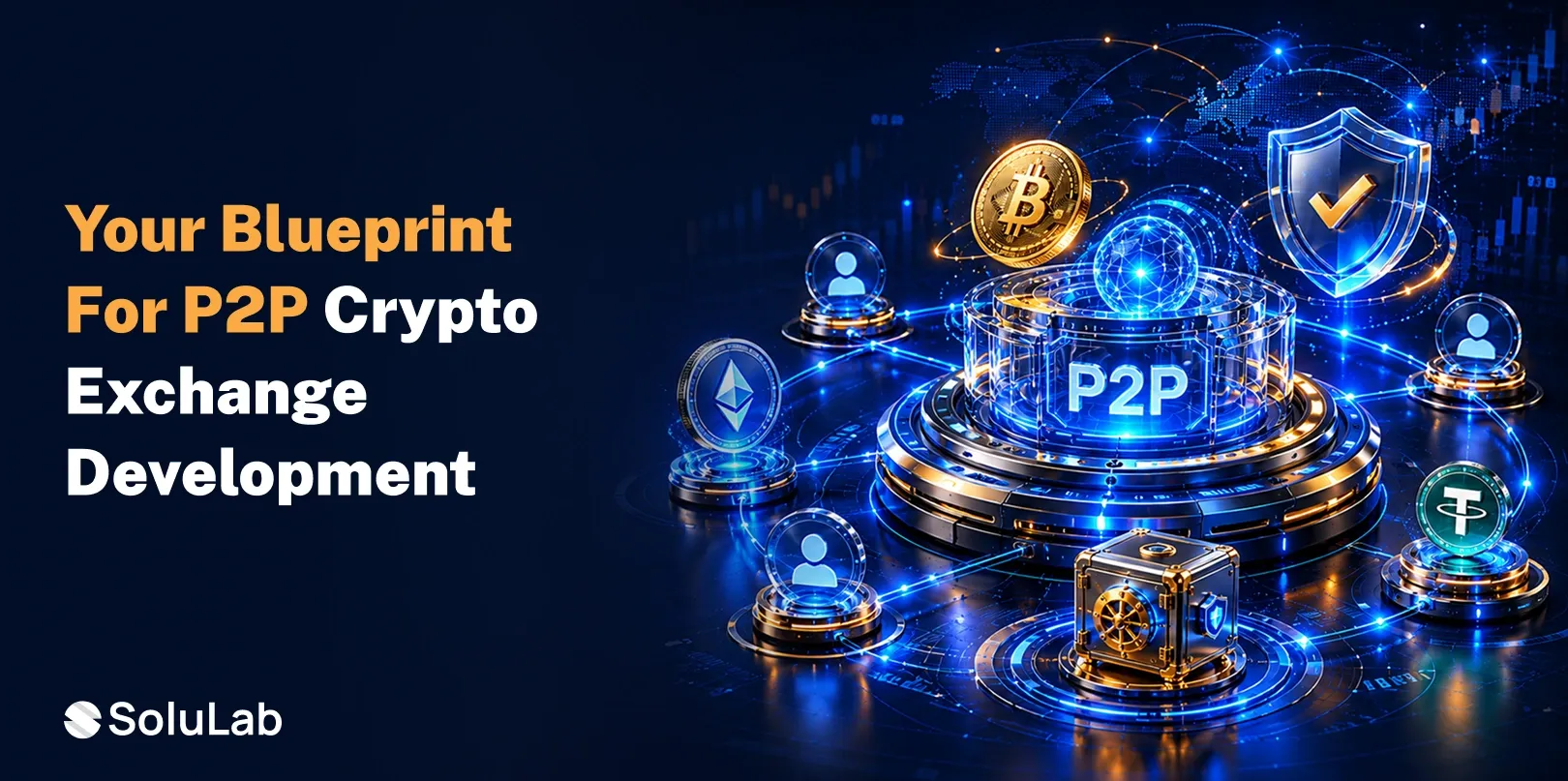
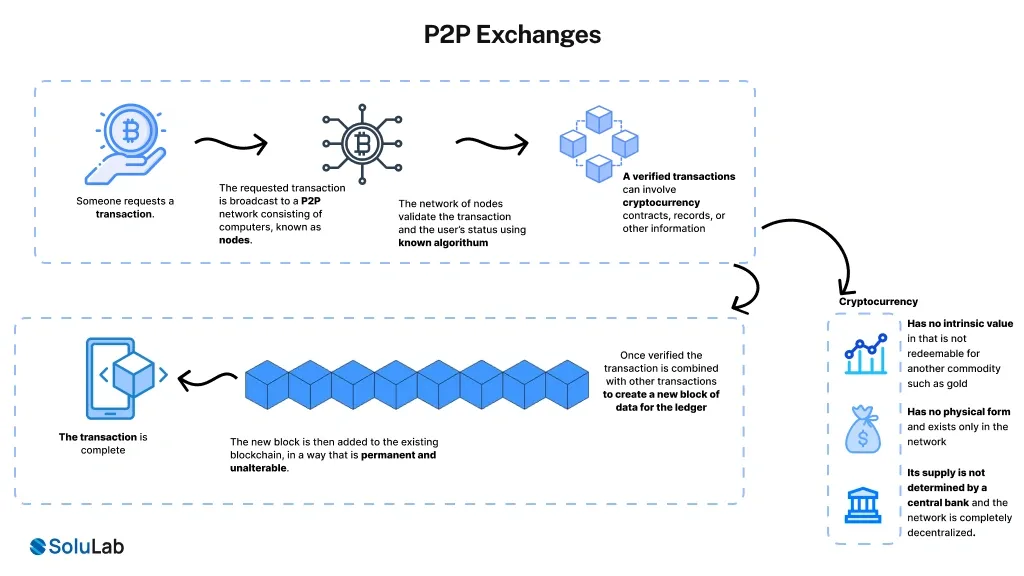
P2P exchanges have grown up. They started as simple marketplaces and turned into decentralized settlement engines built for speed. A 2026 P2P platform is more of a matchmaker than a middleman: it moves liquidity directly between users over local bank rails, skipping the slow, expensive drag of international SWIFT corridors.
Technical & AI Integration
- Smart Escrow: No more manual oversight. A cryptographic smart contract escrow locks assets in non-custodial vaults, so neither side can default mid-settlement.
- AI Sentinels: Providers like Binance P2P now run AI-Powered Cryptocurrency Exchange layers. These models read 200+ data points per trade to catch “triangle scams” and odd behavior as it happens.
- Stablecoin Standard: P2P has quietly become the main “shadow dollar” system. In hyper-inflationary markets like Venezuela, 90.2% of active Binance P2P listings were USDT-denominated as of April 2026, and for many people that is a financial lifeline, not a convenience.
See More Top Picks → Top Decentralized Crypto Exchanges
Why Enterprises Build P2P in 2026?
- Operational Agility: You can scale into 100+ jurisdictions without the heavy capital a centralized crypto exchange build demands.
- Regulatory Efficiency: Since the platform never holds fiat, your liability drops. It runs on a secure P2P crypto exchange with KYC/AML built in.
- Monetization: Better margins through merchant verification fees and fiat-gateway partnerships.
Importance of P2P Crypto Exchanges
In 2026, the story shifted from retail convenience to institutional resilience. What drives that shift is a simple property: the P2P model routes around banking de-risking instead of fighting it.
centralized crypto exchange development is carrying roughly 20% more operational friction right now because of global tightening. P2P, meanwhile, keeps doing the job it does best: onboarding users in high-growth markets.
P2P vs. Centralized: Tactical & ROI Comparison
| Feature | Centralized Exchange (CEX) | P2P Exchange Architecture |
|---|---|---|
| Liquidity Model | Capital-heavy; requires constant market-making. | Zero-inventory uses user-driven liquidity. |
| Settlement Rail | Internal order book (Off-chain friction). | Direct A2A/Bank rails (On-chain Escrow). |
| Regulatory Burden | High; requires full banking licenses. | Lean operates as a technology facilitator. |
| Tech ROI Driver | High overhead via custody & security. | 15-20% higher margins via merchant tiers. |
| Revenue Stream | Transaction spreads & withdrawal fees. | Ads, verified merchant fees & dispute fees. |
Discover More → Top Artificial Intelligence (AI) Cryptocurrencies
The Technical Shift to Profitability
Enterprises are choosing to build P2P crypto exchange platforms for one reason: it is a low-CapEx, high-yield way into the market.
- Look at OKX P2P. It has rolled out high-concurrency B2B settlement features while pushing merchant recruitment across Latin America, the Middle East, and the CIS region, on top of the 28 countries where it already runs.
- When you plug AI-powered exchange filters into dispute resolution, the cost to develop and run a P2P crypto exchange drops sharply.
That frees the P2P crypto exchange software provider to spend its energy on global scaling instead of manual moderation. The platform starts paying for itself.

Advantages of Using P2P Crypto Exchanges
P2P (peer-to-peer) crypto exchanges are picking up speed for a straightforward reason: they hand control back to users and cut out the middle layers. Here is why traders and businesses keep choosing this model.
1. Greater Control Over Funds: On a P2P exchange you keep your own assets instead of parking them on a centralized platform. Escrow secures the funds during a trade, so custodial risk stays low.
2. Flexible Payment Options: Bank transfers, digital wallets, even cash. P2P exchanges accept a wide mix, and that flexibility pulls in more users and widens the platform’s reach.
3. Lower Transaction Fees: Where centralized exchanges stack fee on top of fee, P2P platforms just connect buyers and sellers directly. Costs fall, and high-volume traders feel it the most.
4. Global Accessibility: P2P platforms let people trade across borders without much red tape. They support local payment methods, which keeps crypto reachable even where banking is thin.
5. Faster Transactions: With no centralized approval layer in the way, trades close quickly once both sides agree on terms. Better for users, better for liquidity.
6. Reduced Risk of Platform Downtime: Because P2P exchanges run in a decentralized way, they dodge the single points of failure that take centralized systems offline. Trading keeps going, and that reliability is a big reason adoption is climbing in DeFi exchange development.
7. Increased Trust Through Escrow Mechanisms: Most P2P exchanges lean on smart contract escrow to make sure both parties hold up their end. It builds trust without breaking decentralization, which is another core benefit of DEX development.
Explore Related Picks → Top DeFi Lending Platforms
Types of P2P Crypto Exchanges
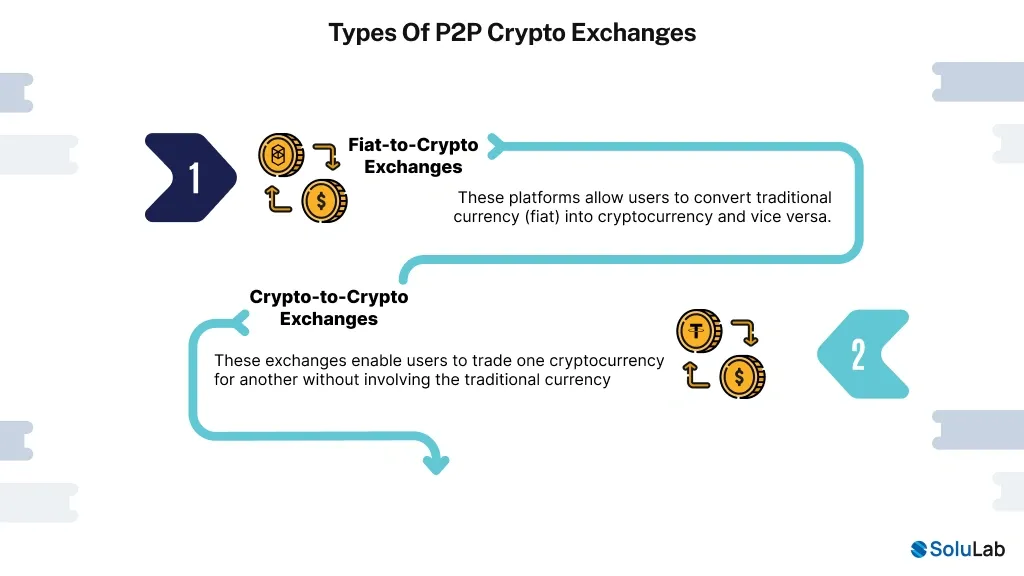
There are two main types:
- Fiat-to-Crypto Exchanges: You convert traditional currency (fiat) into cryptocurrency and back again.
- Crypto-to-Crypto Exchanges: You swap one cryptocurrency for another, with no fiat in the middle.
Top 10 P2P Crypto Exchanges in 2026
Here is the short version first. The table maps each platform’s core strength, custody model, and best-fit user. The breakdown after it goes deeper on each one.
| Exchange | Primary Strength | Custody Model | Best For |
|---|---|---|---|
| Binance P2P | High Liquidity | Custodial | Global traders & bulk liquidity |
| OKX P2P | User-Friendly Interface | Custodial | Diverse payment methods |
| KuCoin P2P | Global Reach | Custodial | Altcoin traders |
| Hodl Hodl | Privacy | Non-Custodial | Bitcoin purists & privacy |
| Bybit P2P | Transaction Speed | Custodial | Scalability & speed |
| MEXC P2P | Asset Variety | Custodial | Altcoin & meme coin access |
| Bitget P2P | Social Integration | Custodial | Copy-traders & beginners |
| Bisq | Decentralization | Non-Custodial | Censorship-resistance |
| Remitano | Regional Focus | Custodial | Developing markets |
| Gate.io P2P | Token Variety | Custodial | Rare/new token access |
1. Binance P2P
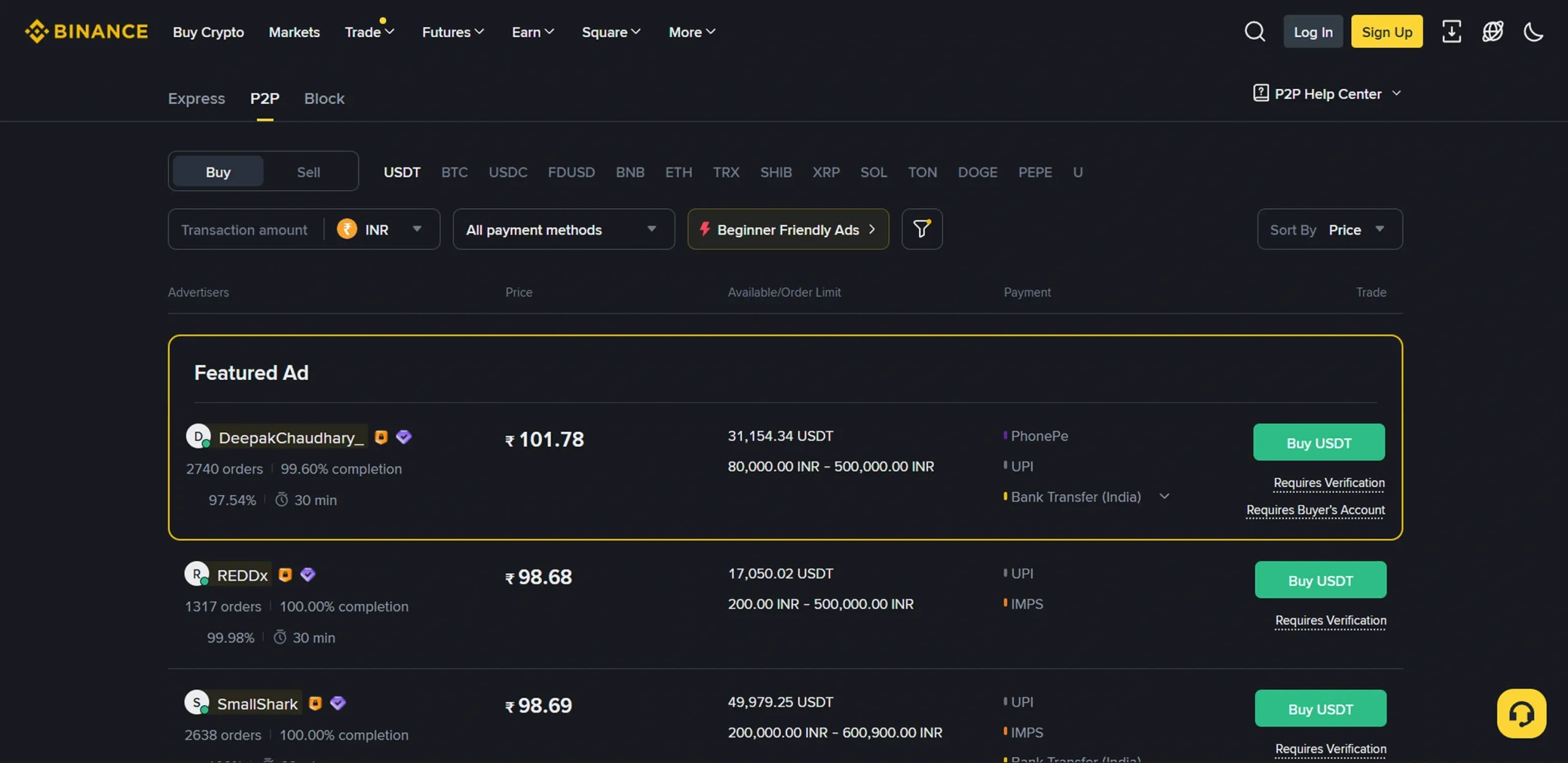
Binance P2P is about as dominant as it gets in crypto. It backs over 700 payment methods and 99 fiat currencies across 100+ countries, runs an escrow system for safe trades, and charges zero trading fees on P2P. With 323 million registered users across the Binance platform and deep liquidity, trades still clear fast even when demand spikes. And because P2P ties into the rest of Binance, you can shift assets between spot, staking, and DeFi products in a step or two.
2. OKX P2P (formerly OKEx P2P)
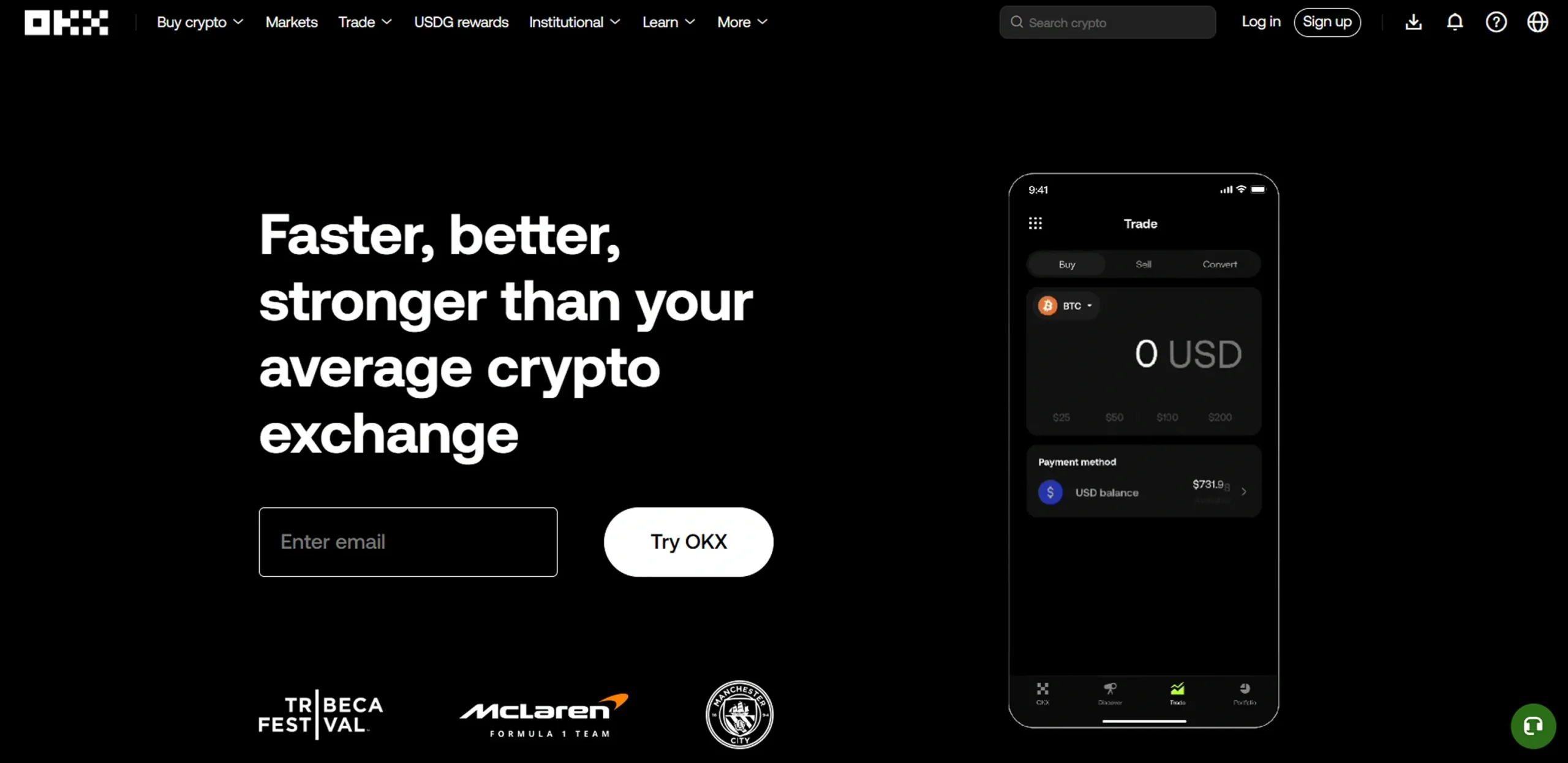
OKX P2P built its name on zero-fee trading and fast settlement, and that combination keeps it competitive. It covers a broad set of fiat currencies and local payment systems, with real strength in Europe and Southeast Asia. Tight spreads and solid liquidity have driven quick growth, which makes it a favorite for arbitrage and frequent traders.
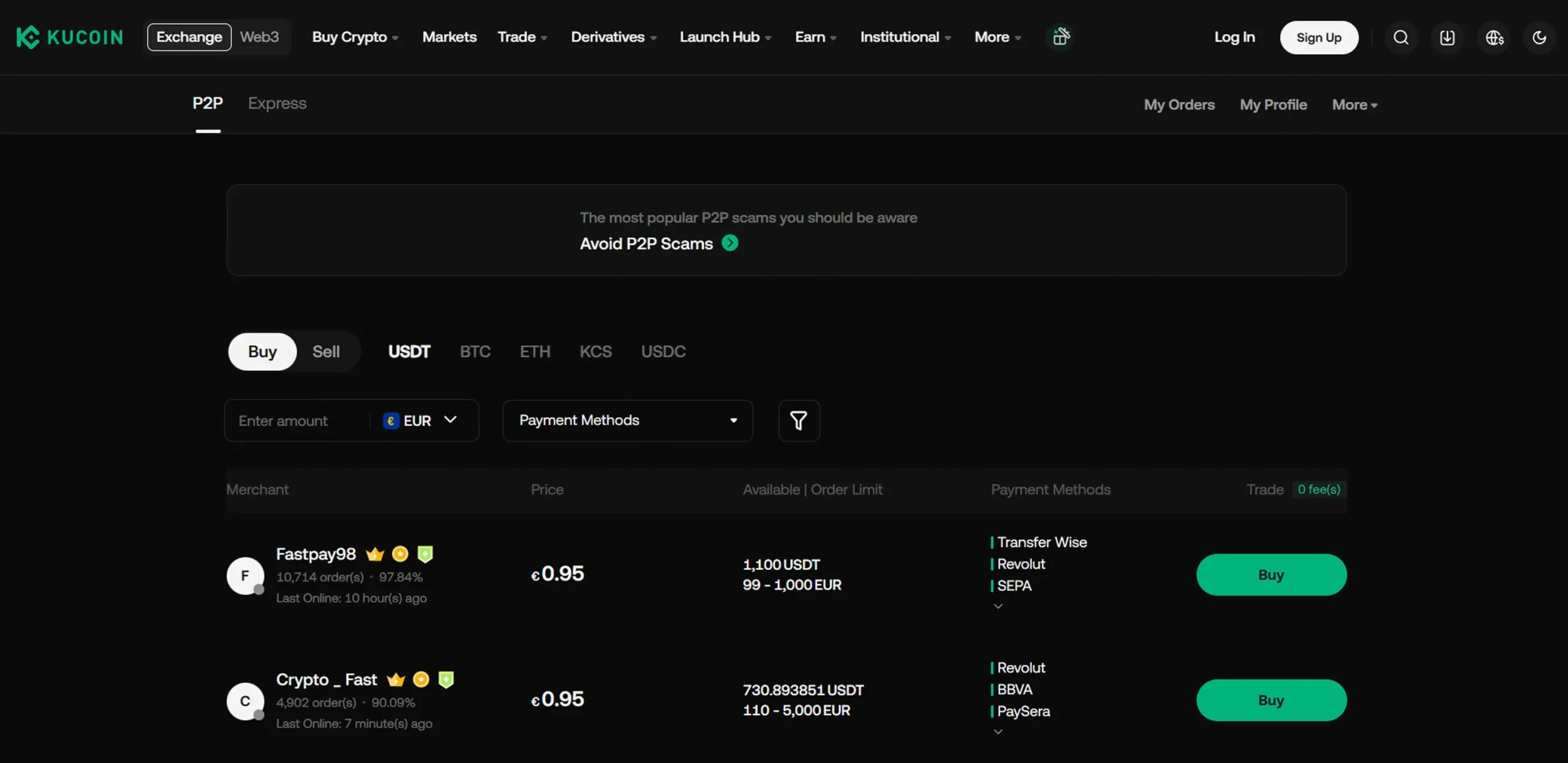
3. KuCoin P2P
KuCoin P2P is growing fast, backed by 30+ million users. It offers competitive pricing, flexible payment options, and quick onboarding, which pulls in people who are new to crypto. As its liquidity deepens and it ties in spot and derivatives trading, it starts to feel like one place to do everything.
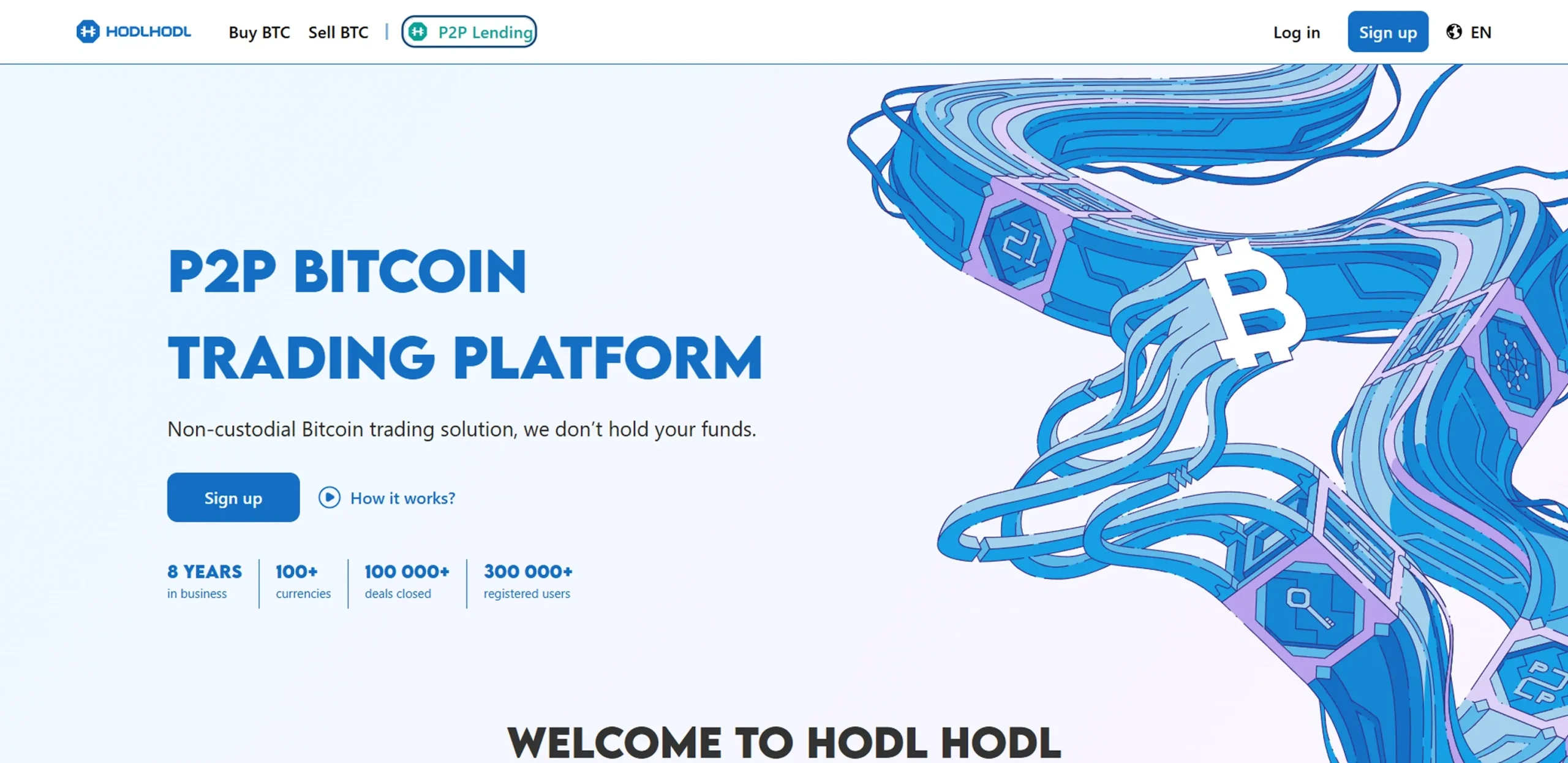
4. Hodl Hodl
Hodl Hodl is different: it is non-custodial, so users keep full control of their funds the whole time. It uses multisig escrow contracts to cut counterparty risk. It has a strong following among privacy-minded traders because it does not require mandatory KYC, which makes it a real player in decentralized trading.
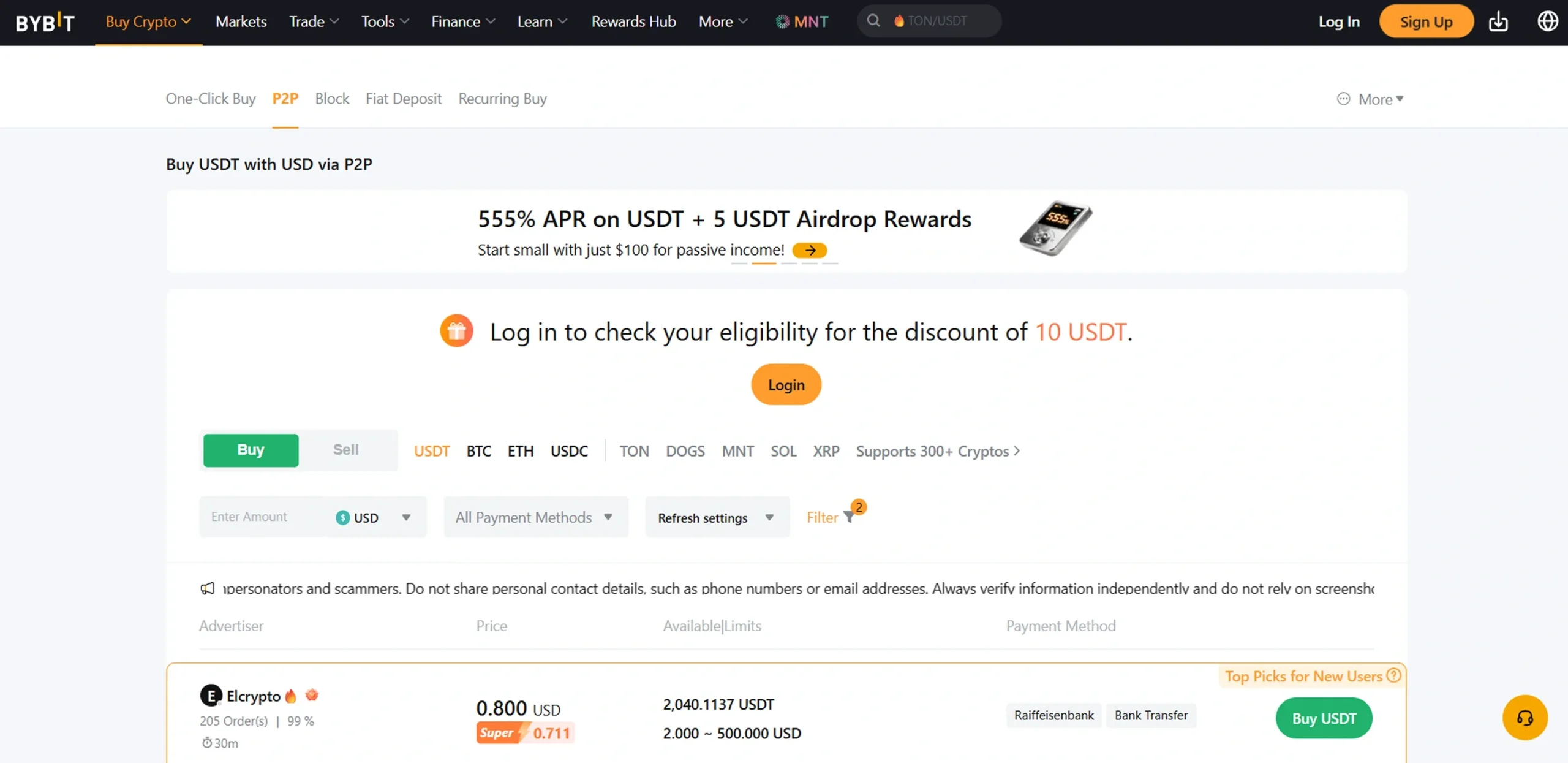
5. Bybit P2P
Bybit P2P grew right alongside its derivatives exchange and now serves tens of millions of users worldwide. Zero fees, strong liquidity, and fast matching keep transactions smooth. Because it plugs into the wider Bybit platform, you can move between P2P, spot, and derivatives without much friction.
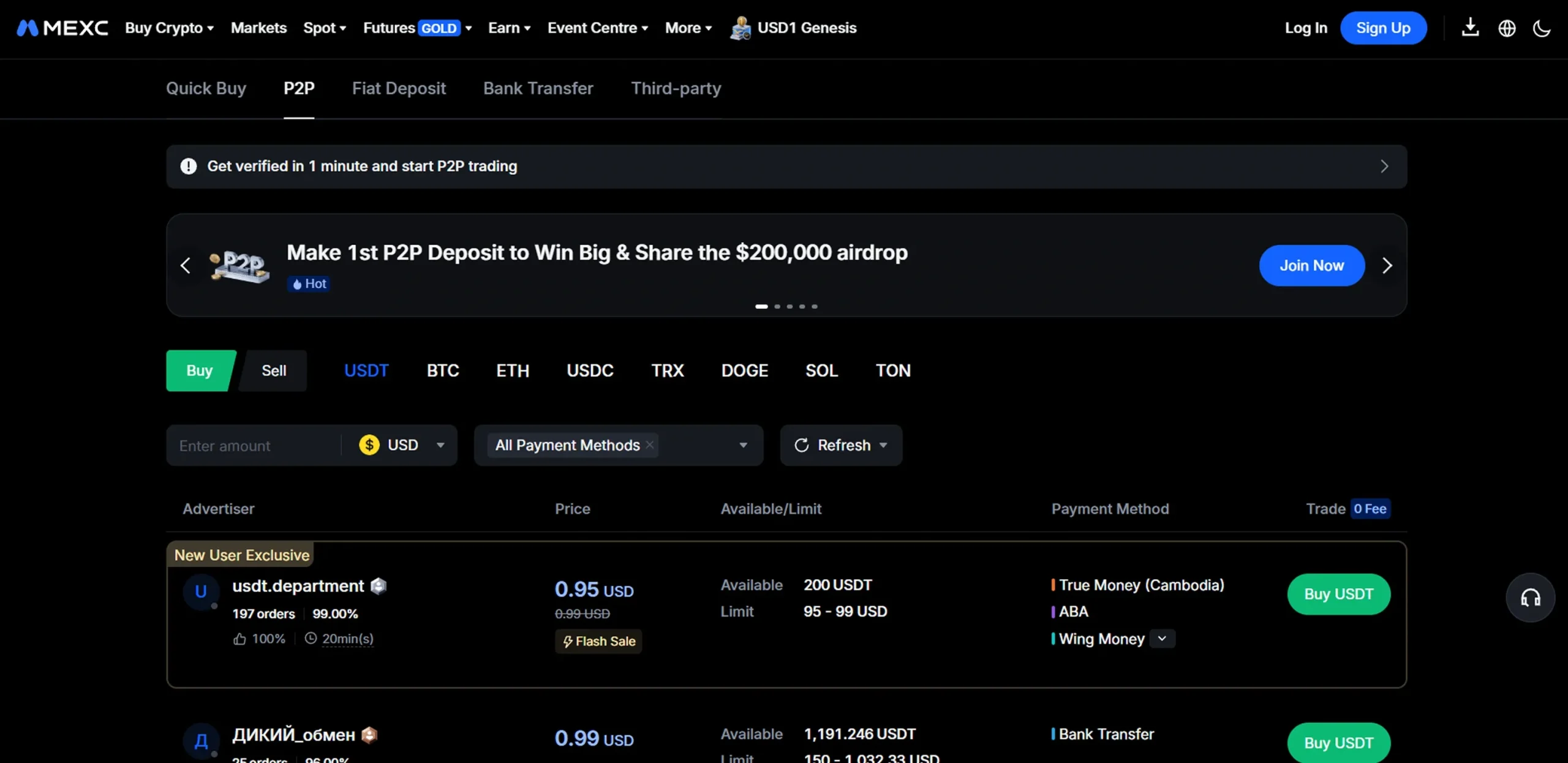
6. MEXC P2P
MEXC P2P is picking up steam, with adoption growing fast in emerging markets. It supports a wide range of tokens at competitive rates, which appeals to price-sensitive traders. It is especially strong where access to traditional banking is limited, so it does real work for financial inclusion.
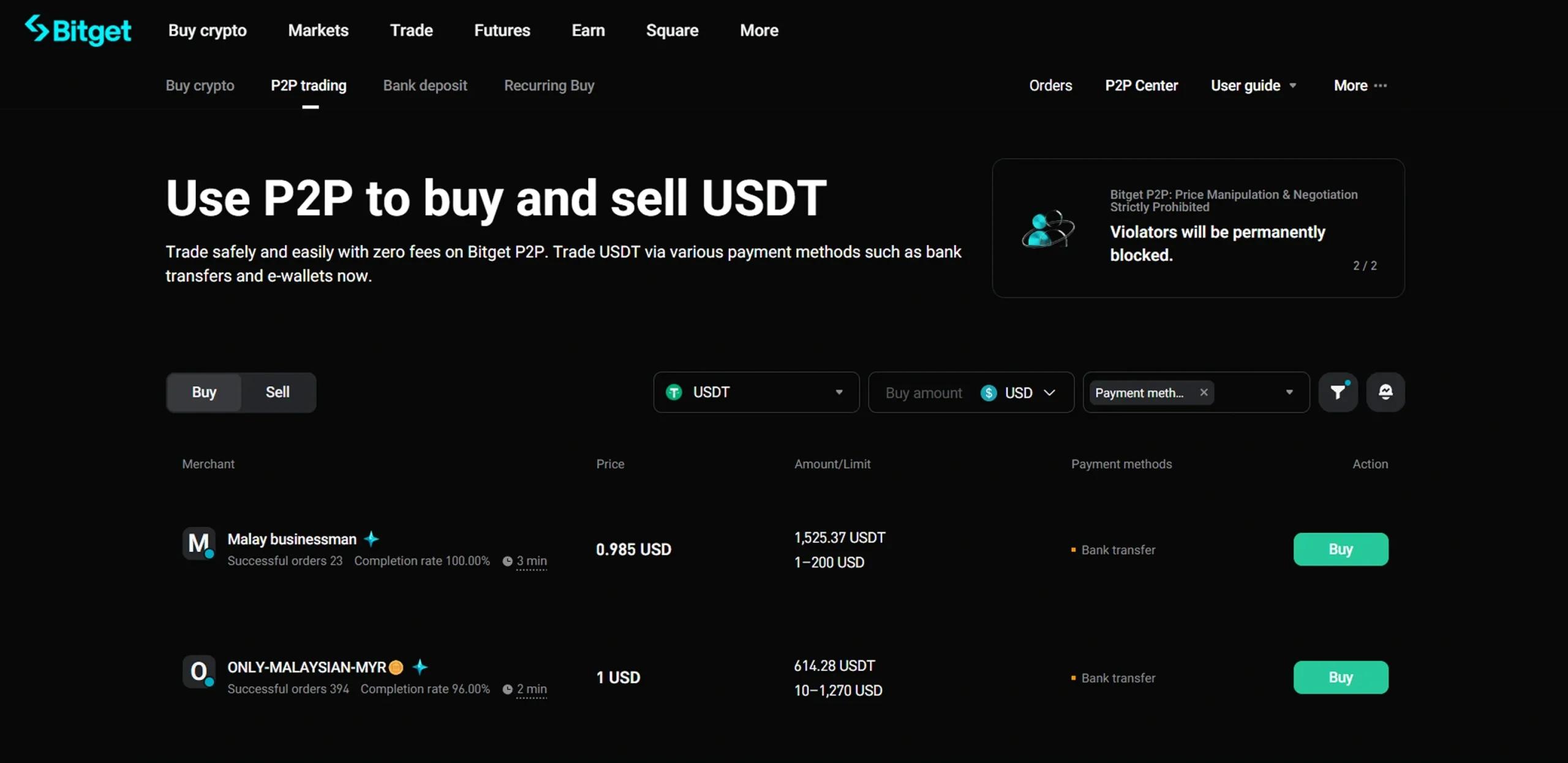
7. Bitget P2P
Bitget pairs P2P trading with its popular copy-trading feature, which keeps pulling in retail users. It has millions of active users, dependable escrow, and competitive pricing. That hybrid setup, trading plus P2P, works well for people who want both an investment angle and direct trading in one place.
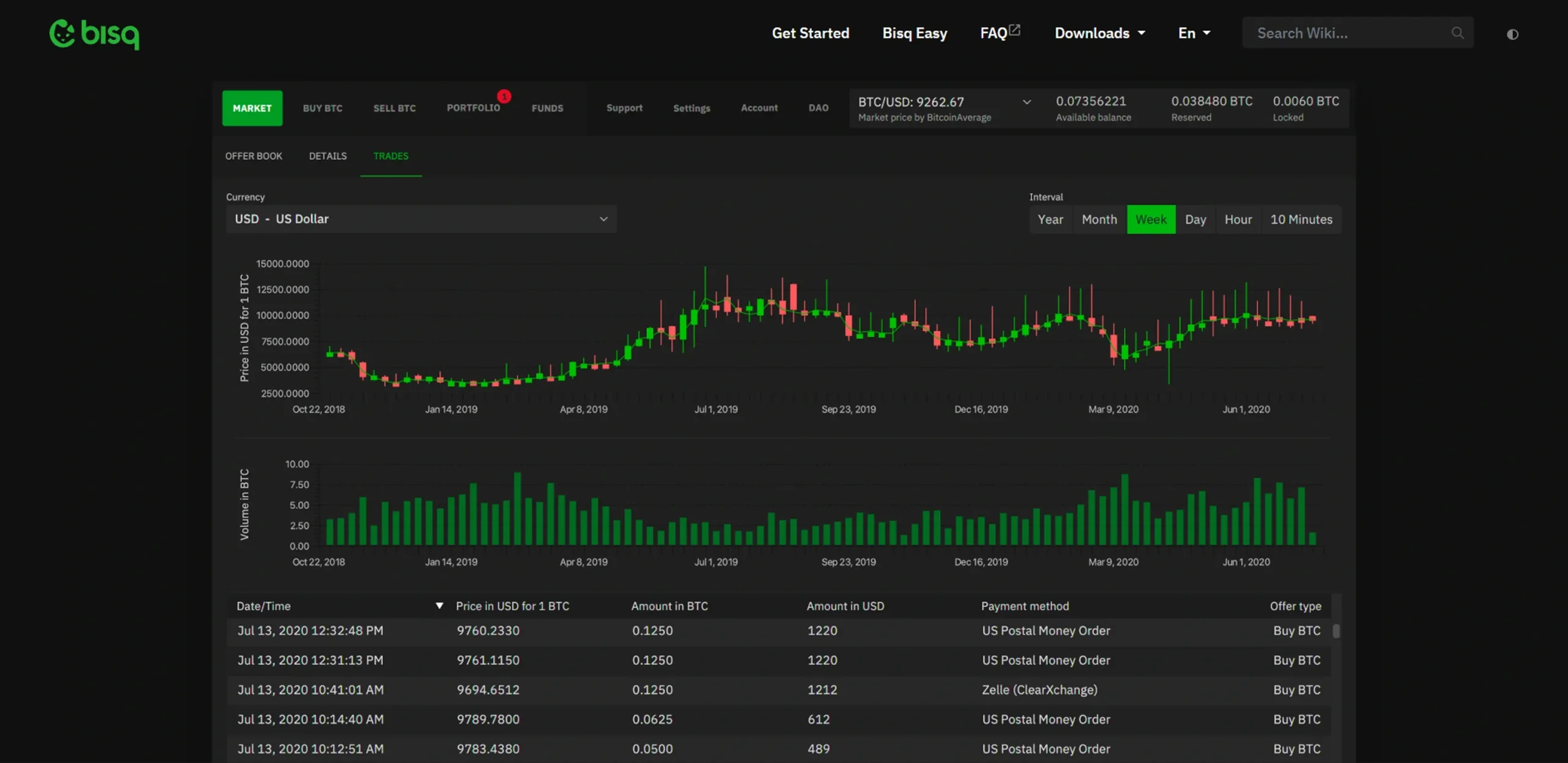
8. Bisq
Bisq is fully decentralized, with no central authority and no custodial control. It handles Bitcoin plus several fiat payment methods while keeping privacy and censorship resistance high. Volumes run smaller than the big centralized platforms, but that is not the point. For users who put security, anonymity, and decentralization first, Bisq matters.
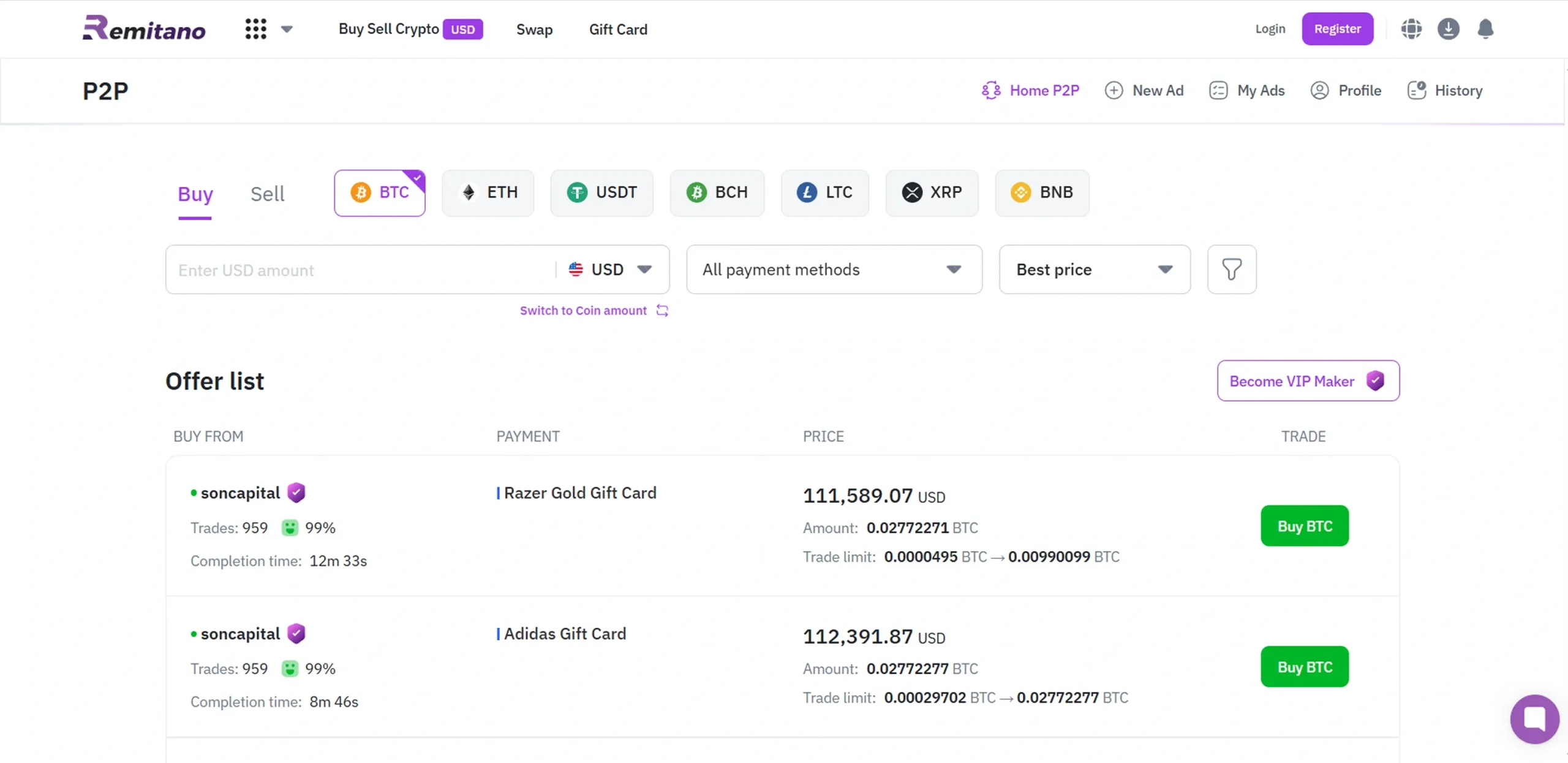
9. Remitano
Remitano is widely used across Africa, Southeast Asia, and Latin America, regions where P2P trading dominates. It has processed millions of transactions, offers strong escrow protection, and keeps its interface simple. Its local focus and support for regional payment systems make it easy to reach in emerging markets.
10. Gate.io
Gate.io P2P sits on top of a well-established exchange with millions of users worldwide. It offers several payment options, reliable liquidity, and strong security. It suits people who want P2P trading and advanced crypto investment products under one roof.
How to Choose the Right P2P Crypto Exchange Platform For Your Business?
Skip the long evaluation framework. If you are building or picking a P2P crypto exchange in 2026, here is a simpler way to think about it. Weigh what actually shows up in real-world usage.
1. Start with a Quick Feature Checklist
Before you compare platforms, check that these basics are there:
- Strong security (escrow, 2FA, dispute system)
- Multiple payment options (bank, UPI, wallets, cash)
- Low and clear fee structure
- Easy-to-use interface (for both new and experienced users)
- Merchant ratings and trust system
- Support for multiple cryptocurrencies
Miss more than two of these, and the platform probably is not worth your time.
2. Decide What Kind of Platform You Need
Not every P2P exchange fits the same use case. Start from your goal:
- For startups: A ready-made or white-label P2P platform gets you live fast
- For enterprises: Custom-built platforms give you tighter control over security, compliance, and scaling
- For niche markets: Pick platforms that support local payment methods and currencies
3. Balance Cost vs Control
Low-cost platforms launch faster, but they usually box in your customization. Build your own and you spend more upfront, yet you get full say over features, fees, and the user experience.
4. Think Long-Term, Not Just Launch
A good P2P platform grows with you. Look for options that handle high transaction volumes, hold up under load, and leave room for future integrations like wallets or DeFi features.
Bottom line: the right P2P crypto exchange comes down to your business goals, who you are serving, and how much control you want over the platform.

Conclusion
Everything above points the same direction: P2P crypto exchanges give users more choices and a smoother experience than they used to have. More flexibility, more payment methods, more privacy. That is why P2P keeps standing out.
What people want most is P2P trading that is secure and built around them. The exchanges that put escrow, verified merchants, and a clean interface first are the ones that will keep leading. At SoluLab, as a crypto exchange development company, we build customized, secure P2P cryptocurrency exchange platforms with reliable functionality and user-first features.
Whether you want to launch a new exchange or upgrade one you already run, our team can take it end to end and tailor it to what you need. Contact us today to see how SoluLab can help you build a secure, scalable, efficient P2P crypto exchange that keeps up with how fast crypto moves.
FAQs
Deepika is a content writer who blends storytelling with strategic thinking. She explores topics across digital innovation, emerging tech, and the evolving blockchain industry. She enjoys breaking down complex ideas into simple, engaging narratives in the growing global markets.