Raising capital is no longer limited to venture capital rounds and bank debt. Over the last few years, digital assets have moved from experimental to institutional.
- In Q4 2025, global digital asset adoption reached new highs.
- USDC transaction volume rose 96% year over year, reaching $3.7 trillion.
- On-chain transaction volumes increased 247% to $11.9 trillion.
Institutional asset tokenization adoption strengthened as regulatory clarity improved, despite a late-year market pullback.
At the same time, venture capital has become more selective. Funding cycles are longer. Valuations are tighter. Founders are more cautious about dilution.
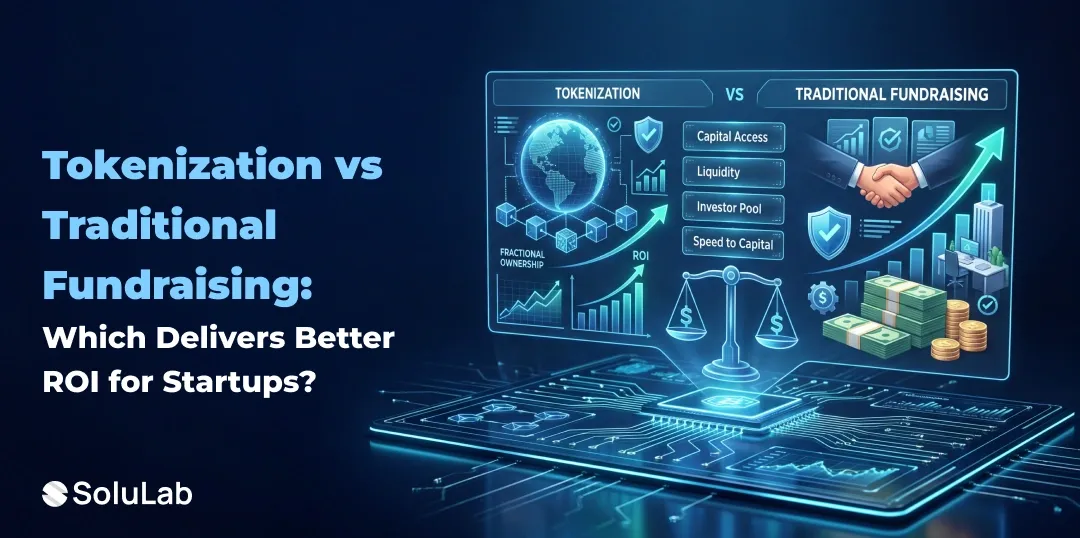
This shift has created a real debate: tokenization vs traditional fundraising. Which model delivers better ROI for startups? And which increases 2x enterprise control, liquidity, and scalability?
Key Takeaways
- Tokenization vs traditional fundraising is no longer theoretical. It is a strategic capital decision shaping ownership, liquidity, and scalability.
- Blockchain fundraising for startups can reduce settlement friction by up to 60% through automation, smart contracts, and real-time reporting.
- Startups can reduce dilution by 15–30% per round through structured startup equity tokenization instead of repeated VC equity loss.
- Startups leveraging tokenization can unlock faster capital deployment, particularly in Web3, fintech, and digital asset ecosystems.
- SoluLab has delivered 150+ blockchain solutions globally, helping startups and enterprises build secure tokenization platforms and blockchain-based fundraising infrastructure.
Why Are Startups Reconsidering Traditional Fundraising in 2026?
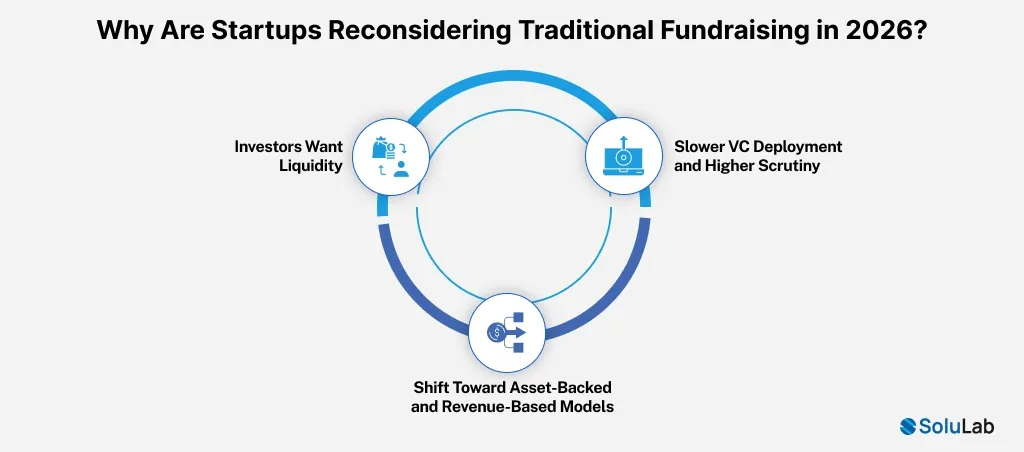
Traditional venture funding still works. But the latest AI and Blockchain regulations and security consents change the view on traditional fundraising.
1. Slower VC Deployment and Higher Scrutiny
Recent industry reports show that global VC funding volumes remain below peak 2021 levels. Deal sizes are more conservative. Due diligence timelines have increased.
For startups, that means:
- Longer fundraising cycles
- Increased ownership dilution
- More board control given to investors
In comparison, tokenization in startup funding allows startups to structure capital differently. Instead of giving away large equity stakes early, founders can:
- Offer fractionalized equity tokens
- Tokenize revenue streams
- Structure project-based funding
This flexibility is driving interest in tokenization vs venture capital discussions across fintech and SaaS sectors.
2. Shift Toward Asset-Backed and Revenue-Based Models
Institutional reports from firms like Deloitte and IBM highlight how blockchain is improving capital efficiency and settlement speed.
Tokenized assets can represent:
- Equity
- Revenue share agreements
- Real-world assets
- Infrastructure-backed projects
This is especially relevant for startups working on capital-intensive projects. Instead of waiting for Series A, they can explore tokenized project financing for startups with structured compliance layers.
3. Investors Want Liquidity
Private equity often locks capital for 5–10 years. That model is increasingly unattractive for global investors seeking flexibility.
Tokenization introduces programmable ownership and faster transferability. That’s a strong reason why founders are reassessing the old playbook.

How Do Capital Costs Compare: Equity Dilution vs Tokenized Asset Structuring?
When evaluating ROI, the cost of capital is critical.
1. Traditional Fundraising Costs
In venture capital:
- Founders may dilute 15–30% per funding round
- Board seats are negotiated
- Exit expectations are aggressive
The long-term cost of dilution compounds. By Series C, founders can lose majority ownership.
Startup Equity Tokenization Model
With startup equity tokenization, ownership can be structured differently:
- Fractional shares
- Smart contract-driven governance
- Tiered voting rights
- Revenue-linked tokens
The capital raised can be structured without large ownership transfers.
Additionally, underwriting, intermediary, and settlement costs are often reduced due to blockchain automation.
2. Operational Efficiency
Traditional capital raises involve:
- Lawyers
- Bank intermediaries
- Custodians
- Manual compliance checks
Blockchain fundraising for startups integrates:
- Automated KYC
- On-chain reporting
- Smart contract execution
- Real-time cap table updates
That improves efficiency and reduces administrative overhead.
For enterprises analyzing tokenization trends, operational savings and control flexibility are major ROI drivers.
Why Growth-Stage Startups Are Using Tokenization to Access Global Investors?
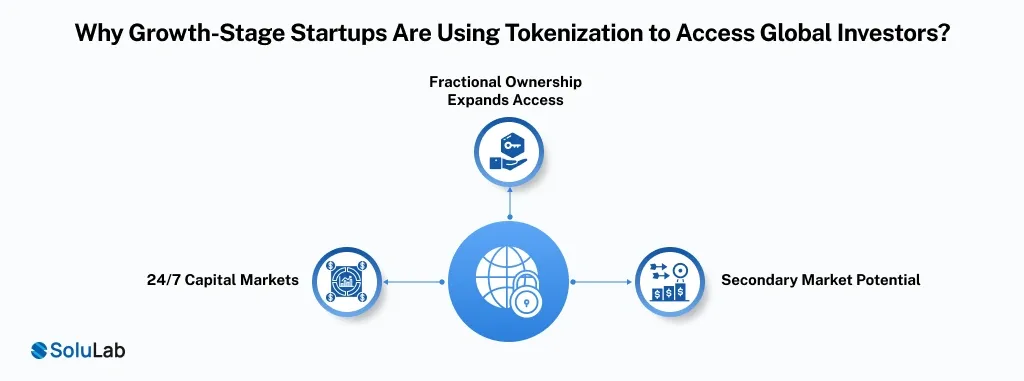
Liquidity is where tokenized fundraising for startups becomes powerful.
1. Fractional Ownership Expands Access
Tokenization allows assets to be split into smaller units. This lowers minimum ticket sizes.
Instead of requiring $250,000 minimum investment, startups can allow smaller, regulated participation tiers.
This increases:
- Retail participation (where compliant)
- Global accredited investors
- Cross-border engagement
2. Secondary Market Potential
In traditional fundraising, private shares are illiquid.
In contrast, liquidity in tokenized fundraising can be enabled through:
- Regulated digital exchanges
- Alternative trading systems
- Peer-to-peer compliant transfers
Major players like Microsoft have also explored blockchain-backed digital asset infrastructure in enterprise environments.
Faster settlement times compared to traditional clearing systems reduce friction.
3. 24/7 Capital Markets
Blockchain operates continuously. There is no dependency on banking hours.
This opens global participation. Investors from Asia, Europe, and North America can participate without traditional banking bottlenecks.
For startups seeking digital asset fundraising for startups, this global reach can accelerate growth-stage funding rounds.
What Are the Regulatory and Risk Considerations in Tokenized vs Traditional Funding Models?
Regulation is the biggest concern in tokenization vs traditional fundraising debates.
1. Traditional Fundraising: Established but Rigid
Venture capital follows established securities frameworks. Compliance is clear but geographically limited.
Cross-border fundraising involves:
- Multiple regulatory approvals
- Legal entity structuring
- Complex reporting
2. Tokenized Fundraising: Compliance by Design
A compliant tokenized fundraising platform integrates:
- KYC/AML verification
- Jurisdictional rule enforcement
- Transfer restrictions
- Audit-ready smart contracts
Security token offerings in the U.S. must align with SEC exemptions such as Regulation D or Regulation S. Europe has MiCA frameworks. Singapore has MAS guidelines.
Smart contract audits and legal structuring are essential. Without them, risk increases.
3. Technology Risks
Key risk factors include:
- Smart contract vulnerabilities
- Custody management failures
- Key management issues
- Regulatory changes
That is why enterprises increasingly partner with a tokenization platform development company experienced in compliant architecture.
Risk is manageable. But only with structured governance and enterprise-grade infrastructure.
Small Checklist Table for you:
| Factor | Traditional Fundraising | Tokenization |
| Starting Cost | Legal + banking heavy | From $10K+ |
| Dilution | 15–30% per round | Flexible structuring |
| Liquidity | 5–10 year lock | Potential secondary markets |
| Speed | Months | 3–6 months |
| ROI Impact | Lower control | Higher ownership retention |
How Can Enterprises Build a Compliant Tokenization Strategy That Outperforms Traditional Fundraising?
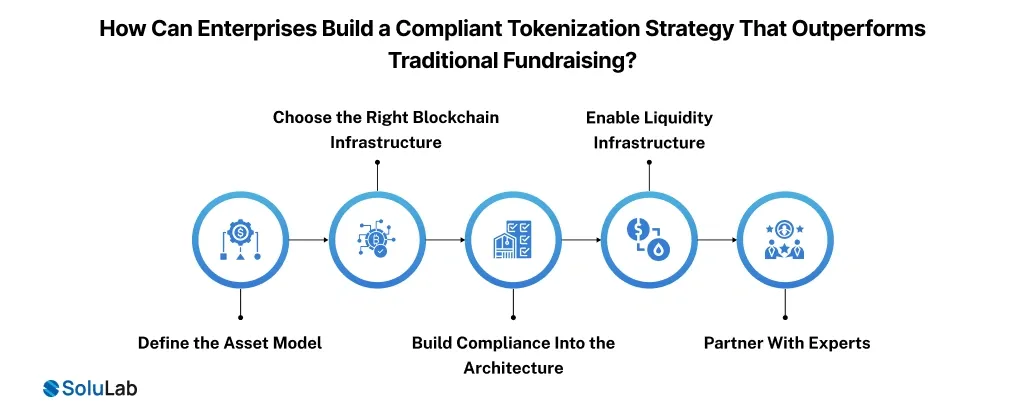
Building a strong strategy requires more than minting tokens.
Step 1: Define the Asset Model
Decide what is being tokenized:
- Equity
- Revenue
- Infrastructure projects
- Real-world assets
Clear structuring defines investor rights and ROI expectations.
Step 2: Choose the Right Blockchain Infrastructure
Options include:
- Ethereum-based networks
- Permissioned enterprise chains
- Hybrid models
The selection depends on compliance, scalability, and settlement requirements.
Step 3: Build Compliance Into the Architecture
Enterprise-grade tokenization platform development solutions include:
- Integrated KYC engines
- On-chain compliance rules
- Identity-linked wallet access
- Audit reporting modules
Step 4: Enable Liquidity Infrastructure
Liquidity requires:
- Secondary trading integrations
- Custody partnerships
- Investor dashboards
- Transparent reporting
Step 5: Partner With Experts
A specialized provider offering RWA tokenization can design:
- Smart contracts
- Tokenomics models
- Regulatory workflows
- Investor management systems
This is where a strong tokenization platform development company becomes strategic, not just technical.

Conclusion
As discussed above, traditional venture capital still works for high-growth startups seeking strong institutional backing.
But tokenization introduces:
- Reduced dilution
- Expanded global access
- Fractional ownership
- Improved liquidity
- Automated compliance
- Faster settlement
To get these in your system, you need the support of asset tokenization development company. We at SoluLab, with 250+ skilled developers help enterprises design compliant, scalable tokenization strategies tailored to institutional standards.
If you are evaluating your next capital raise, contact us today to explore how we can support your tokenization roadmap- This is where real ROI begins.
FAQs
Deepika is a content writer who blends storytelling with strategic thinking. She explores topics across digital innovation, emerging tech, and the evolving blockchain industry. She enjoys breaking down complex ideas into simple, engaging narratives in the growing global markets.